
Regenerative Menu Sourcing Programs Market Report 2026
Global Outlook – By Program Type (Menu Consulting And Design Programs, Procurement And Vendor Sourcing Programs, Regenerative Certification Programs, Regenerative Organic Certification, Technology-Based Sourcing Programs), By Technology Integration (AI-Driven Menu Sourcing Platforms, Blockchain Traceability Systems, Carbon Footprint And Impact Analytics, Digital Procurement Management Systems, IoT-Based Soil And Supply Monitoring Systems), By Sourcing Type (Plant-Based Regenerative Ingredients, Animal-Based Regenerative Ingredients), By Certification And Compliance (Regenerative Organic Certified (ROC), By End User (Foodservice And Hospitality, Institutional Kitchens, Retail And Consumer-Facing) – Market Size, Trends, Strategies, and Forecast to 2030
Regenerative Menu Sourcing Programs Market Overview
• Regenerative Menu Sourcing Programs market size has reached to $4.35 billion in 2025 • Expected to grow to $9.88 billion in 2030 at a compound annual growth rate (CAGR) of 17.8% • Growth Driver: Surge In Consumer Demand For Sustainable Food Fueling The Growth Of The Market Due To Increasing Focus On Environmental Responsibility And Ethical Sourcing • Market Trend: Advanced Farming Techniques Enhance Ecosystem Vitality And Biodiversity • North America was the largest region in 2025 and Asia-Pacific is the fastest growing region.What Is Covered Under Regenerative Menu Sourcing Programs Market?
Regenerative menu sourcing programs refer to structured sustainability-focused initiatives that guide foodservice operators in selecting ingredients and suppliers that actively restore soil health, biodiversity, and ecosystem balance. These programs integrate environmental principles, sourcing standards, and traceability practices to ensure that menus are designed with measurable regenerative impact. They help businesses transition toward climate-positive and ethically sourced ingredients by offering expert guidance, evaluation frameworks, and continuous improvement tools. The main program types of regenerative menu sourcing programs include menu consulting and design programs, procurement and vendor sourcing programs, regenerative certification programs, regenerative organic certification, and technology-based sourcing programs. Menu consulting and design programs refer to expert-led initiatives that help foodservice operators and culinary teams create menus that incorporate regenerative ingredients, optimize nutritional value, enhance sustainability, and align with consumer preferences while supporting environmental stewardship. There are technology integrations such as AI-driven menu sourcing platforms, blockchain traceability systems, carbon footprint and impact analytics, digital procurement management systems, and IoT-based soil and supply monitoring systems. The sourcing types include plant-based regenerative ingredients and animal-based regenerative ingredients. The certification and compliance options include regenerative organic certified (ROC), fair trade certified, soil health certification, carbon neutral or climate positive labels, and biodiversity and water stewardship certifications, and they are used by several end-users such as foodservice and hospitality, institutional kitchens, and retail and consumer-facing organizations.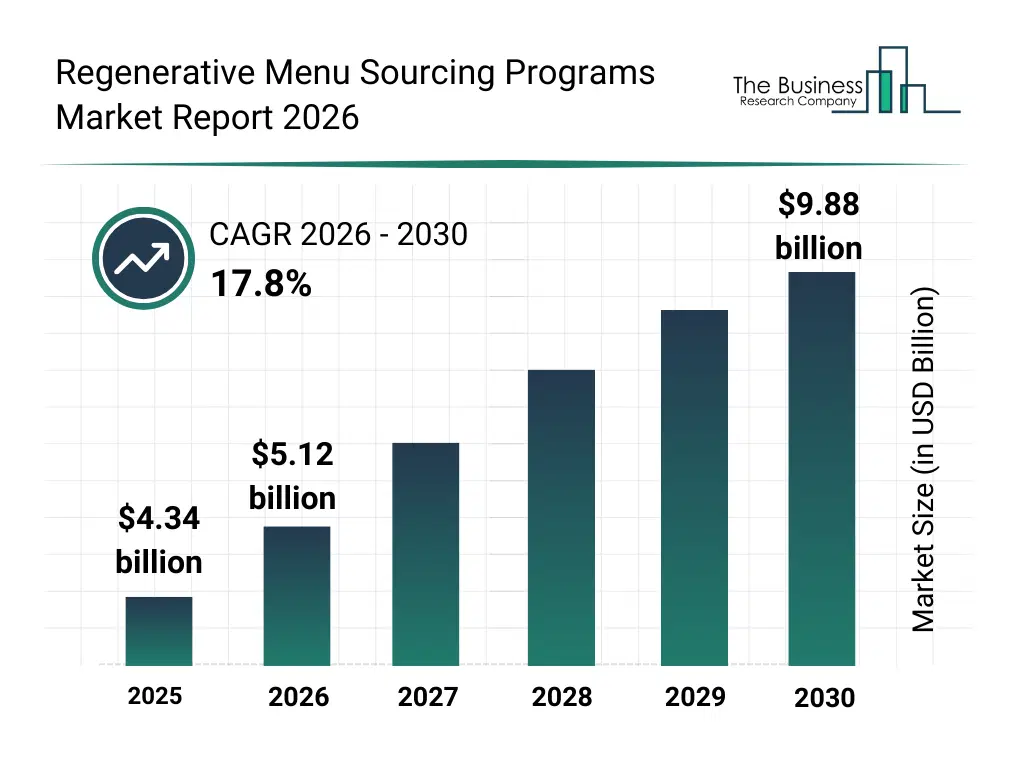
What Is The Regenerative Menu Sourcing Programs Market Size and Share 2026?
The regenerative menu sourcing programs market size has grown rapidly in recent years. It will grow from $4.35 billion in 2025 to $5.14 billion in 2026 at a compound annual growth rate (CAGR) of 18.1%. The growth in the historic period can be attributed to growing awareness of sustainable agriculture, rising consumer demand for ethically sourced food, early government incentives for regenerative farming, initial adoption by niche restaurants and farm-to-table businesses, and expansion of organic and eco-label certifications.What Is The Regenerative Menu Sourcing Programs Market Growth Forecast?
The regenerative menu sourcing programs market size is expected to see rapid growth in the next few years. It will grow to $9.88 billion in 2030 at a compound annual growth rate (CAGR) of 17.8%. The growth in the forecast period can be attributed to increasing corporate sustainability commitments, integration of ai and blockchain in supply chain transparency, rise in climate resilience and soil restoration initiatives, government policies supporting regenerative sourcing, and growing demand for carbon-neutral and biodiversity-positive menus. Major trends in the forecast period include ai-driven ingredient traceability, carbon labelling on menus, partnerships between restaurants and regenerative farms, development of regenerative certification platforms, and use of digital procurement and impact analytics.
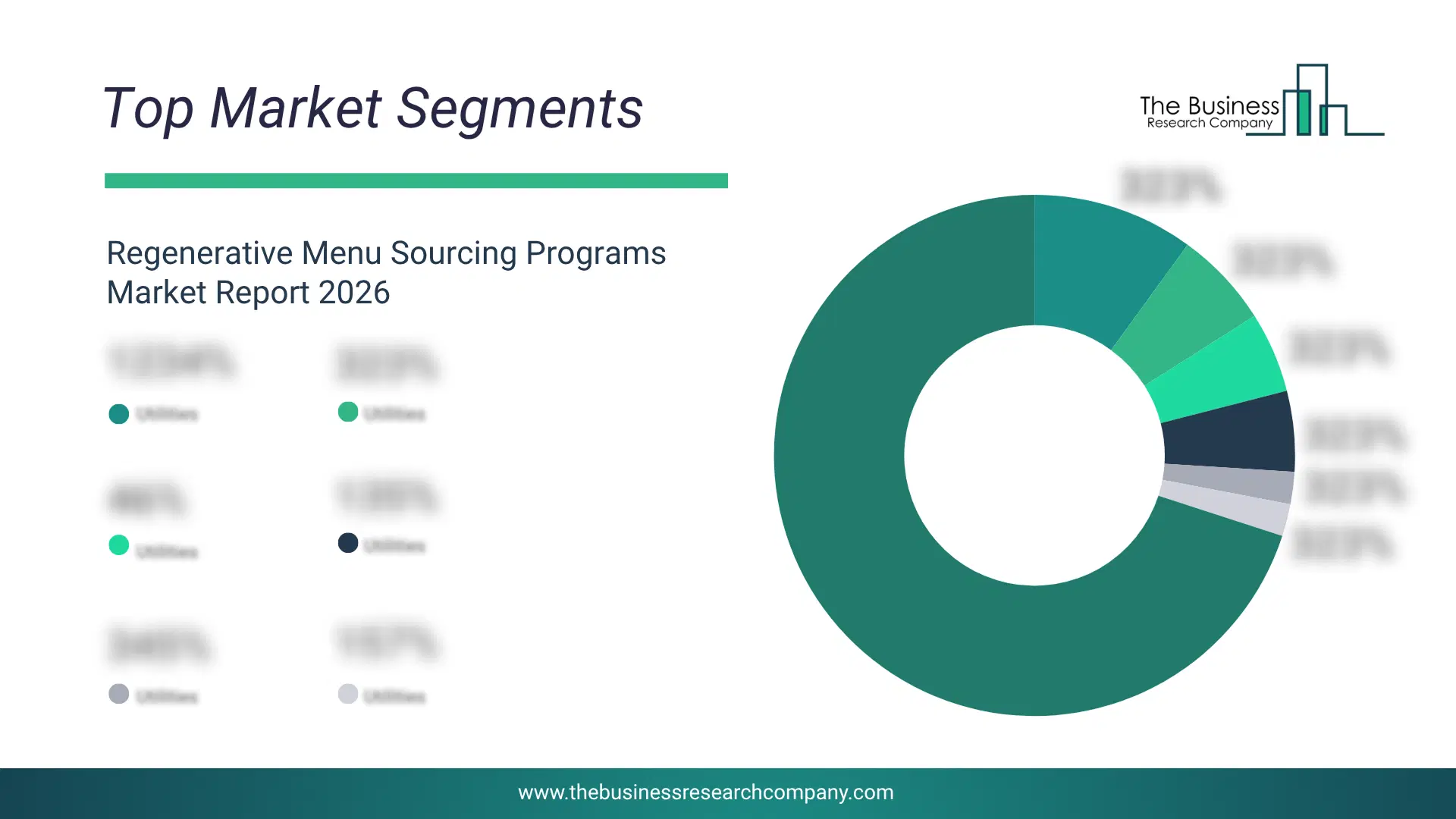
Global Regenerative Menu Sourcing Programs Market Segmentation
2) By Technology Integration: AI-Driven Menu Sourcing Platforms, Blockchain Traceability Systems, Carbon Footprint And Impact Analytics, Digital Procurement Management Systems, IoT-Based Soil And Supply Monitoring Systems 3) By Sourcing Type: Plant-Based Regenerative Ingredients, Animal-Based Regenerative Ingredients 4) By Certification And Compliance: Regenerative Organic Certified (ROC), Fair Trade Certified, Soil Health Certification, Carbon Neutral Or Climate Positive Labels, Biodiversity And Water Stewardship Certifications 5) By End User: Foodservice And Hospitality, Institutional Kitchens, Retail And Consumer-Facing Subsegments: 1) By Menu Consulting And Design Programs: Concept Development, Recipe Development, Regenerative Ingredient Planning, Seasonal Menu Optimization, Culinary Sustainability Training 2) By Procurement And Vendor Sourcing Programs: Local Farm Partnerships, Ethical Supplier Evaluation, Regenerative Ingredient Sourcing, Fair Trade Producer Collaboration, Sustainable Supply Chain Management 3) By Regenerative Certification Programs: Soil Health Certification, Biodiversity Compliance Programs, Ecosystem Restoration Certification, Sustainable Farming Practice Assessment, Regenerative Standards Verification 4) By Regenerative Organic Certification: Organic Soil Management Compliance, Regenerative Crop Certification, Ethical Livestock Standards, Sustainable Land Stewardship Validation, Holistic Farm Ecosystem Certification 5) By Technology-Based Sourcing Programs: Blockchain Traceability Systems, Digital Supplier Matching Platforms, Artificial Intelligence Sourcing Tools, Sustainable Procurement Software, Data Driven Ingredient TrackingWhat Is The Driver Of The Regenerative Menu Sourcing Programs Market?
The growing consumer demand for sustainable food is expected to propel the growth of the regenerative menu sourcing programs market going forward. Sustainable food refers to products that are produced, processed, and sourced in ways that minimize environmental impact, support biodiversity, promote ethical labor practices, and ensure long-term food system resilience. The growing consumer demand for sustainable food is due to increasing awareness of environmental and climate issues, as consumers seek to reduce their ecological footprint and support environmentally responsible food production. Regenerative menu sourcing programs help address consumer demand for sustainable food by enabling restaurants, caterers, and foodservice providers to procure ingredients from suppliers practicing regenerative agriculture, which restores soil health, reduces carbon footprint, and supports local communities. For instance, in May 2024, according to PricewaterhouseCoopers (PwC), a UK-based professional services firm, more than 80 percent of consumers reported being willing to pay more for sustainably produced or sourced goods, with some consumers willing to pay an average premium of 9.7 percent for products that meet specific environmental criteria such as being locally sourced, made from recycled or eco-friendly materials, or produced in a supply chain with a lower carbon footprint. Therefore, the growing consumer demand for sustainable food is driving the growth of the regenerative menu sourcing programs industry.Key Players In The Global Regenerative Menu Sourcing Programs Market
Major companies operating in the regenerative menu sourcing programs market are Cargill Incorporated, Nestlé S.A., Archer-Daniels-Midland Company, PepsiCo Inc., Unilever plc, Tyson Foods Inc., Compass-Group plc, Danone S.A., McDonald’s Corporation, Sodexo S.A., Whole Foods Market Inc., General Mills Inc., Land O' Lakes Inc, Chipotle Mexican Grill Inc., PaneraBread Inc., Bon Appetite Company, SweetGreen Inc., Nature's Path Foods Inc., Alter Eco Foods, Patagonia Provisions Inc., Regenerative Organic Certified, Applegate Farms LLC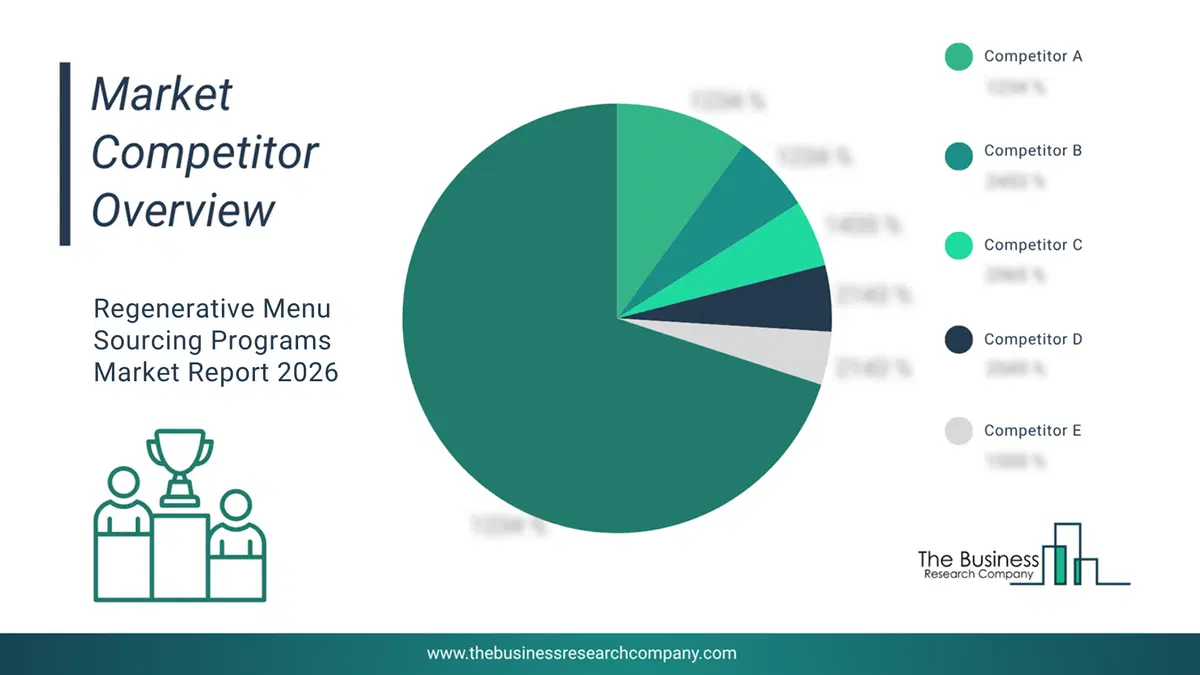
This chart is for illustrative purposes; the full report includes a detailed competitor analysis and comprehensive overview of the top 10 companies in the market.
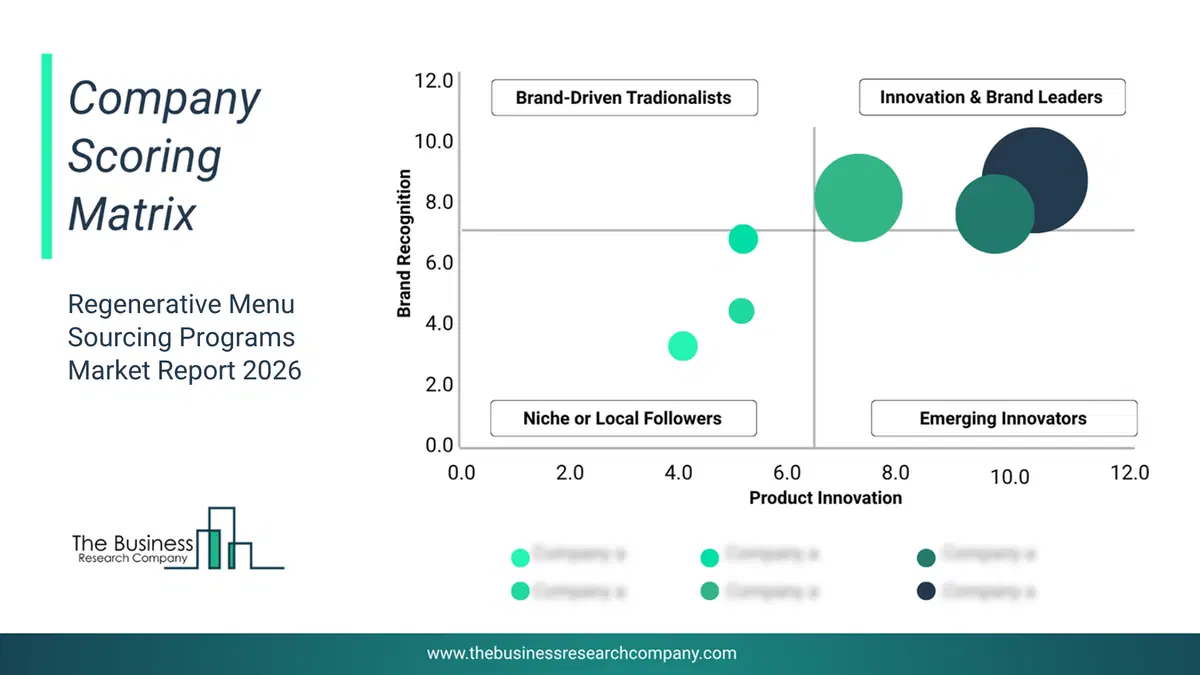
This chart maps companies by product innovation and brand strength, with bubble size indicating relative revenue, helping identify market leaders, challengers, and niche players. This is an illustrative chart; the full report provides a complete and accurate competitive analysis.
Global Regenerative Menu Sourcing Programs Market Trends and Insights
Major companies operating in the regenerative menu sourcing programs market are focusing on developing advanced products, such as regenerative agriculture practices, to boost sustainability, enhance soil health, and reduce environmental impact. Regenerative agriculture refers to advanced farming techniques that aim to improve and restore ecosystem health, focusing on soil vitality, water management, and biodiversity. For instance, in March 2025, McCain Foods Limited, a Canada-based frozen food company, launched Regen Fries along with the Taste Good Feel Good Campaign, aimed at promoting potatoes sourced through regenerative agriculture practices. The initiative works closely with farmers to implement soil-enriching, water-conserving, and carbon-reducing methods, ensuring the supply chain supports both environmental sustainability and high-quality product standards.What Are Latest Mergers And Acquisitions In The Regenerative Menu Sourcing Programs Market?
In August 2024, Mad Markets PBC, a US-based regenerative agriculture company, acquired Timeless Seeds Inc. for an undisclosed amount. Through this acquisition, Mad Markets aims to enhance its regenerative menu sourcing programs by integrating Timeless Seeds’ expertise in sustainable and high-quality seed production, enabling more resilient supply chains and expanding offerings of regenerative ingredients. Timeless Seeds Inc. is a US-based company that provides organic and regenerative pulses, grains, and seeds for sustainable menu sourcing programs.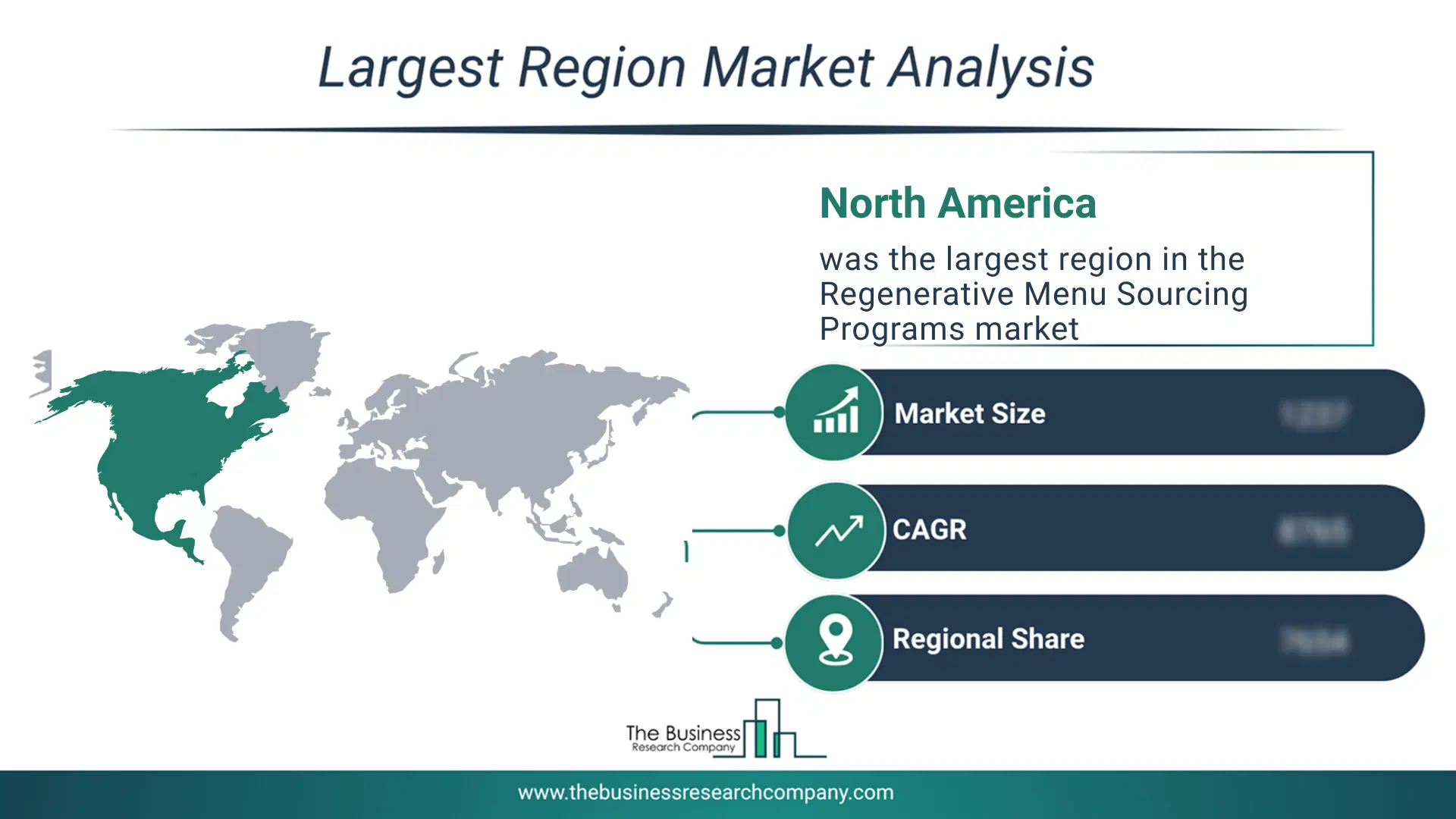
Regional Outlook
North America was the largest region in the regenerative menu sourcing programs market in 2025. Asia-Pacific is expected to be the fastest-growing region in the forecast period. The regions covered in this market report are Asia-Pacific, South East Asia, Western Europe, Eastern Europe, North America, South America, Middle East, Africa. The countries covered in this market report are Australia, Brazil, China, France, Germany, India, Indonesia, Japan, Taiwan, Russia, South Korea, UK, USA, Canada, Italy, Spain.What Defines the Regenerative Menu Sourcing Programs Market?
The regenerative menu sourcing programs (RMSP) market includes revenues earned by entities from services such as ingredient traceability and data analytics, sustainable sourcing consulting, supply chain optimization, certification services, and digital menu planning platforms. The market value also includes related goods (such as certified regenerative products and sourcing tools) sold by service providers or bundled within the service offering. Only goods and services traded between entities or sold to end consumers are included.How is Market Value Defined and Measured?
The market value is defined as the revenues that enterprises gain from the sale of goods and/or services within the specified market and geography through sales, grants, or donations in terms of the currency (in USD unless otherwise specified). The revenues for a specified geography are consumption values that are revenues generated by organizations in the specified geography within the market, irrespective of where they are produced. It does not include revenues from resales along the supply chain, either further along the supply chain or as part of other products.
This chart presents market attractiveness based on a quantitative evaluation of growth, competition, strategic alignment, and risk, offering a clear view of opportunity areas for decision-making. This chart is for illustrative purposes; the full report contains the complete analysis.

This chart highlights the Total Addressable Market (TAM) by estimating the maximum revenue opportunity using an assumption-driven approach, supporting strategic planning and opportunity sizing across markets. The chart is illustrative; the full report provides a more comprehensive analysis.
What Key Data and Analysis Are Included in the Regenerative Menu Sourcing Programs Market Report 2026?
The regenerative menu sourcing programs market research report is one of a series of new reports from The Business Research Company that provides market statistics, including industry global market size, regional shares, competitors with the market share, detailed market segments, market trends and opportunities, and any further data you may need to thrive in the regenerative menu sourcing programs industry. The market research report delivers a complete perspective of everything you need, with an in-depth analysis of the current and future state of the industry.Regenerative Menu Sourcing Programs Market Report Forecast Analysis
| Report Attribute | Details |
|---|---|
| Market Size Value In 2026 | $5.14 billion |
| Revenue Forecast In 2030 | $9.88 billion |
| Growth Rate | CAGR of 17.8% from 2026 to 2030 |
| Base Year For Estimation | 2025 |
| Actual Estimates/Historical Data | 2020-2025 |
| Forecast Period | 2026 - 2030 |
| Market Representation | Revenue in USD Billion and CAGR from 2026 to 2030 |
| Segments Covered | Program Type, Technology Integration, Sourcing Type, Certification And Compliance, End User |
| Regional Scope | Asia-Pacific, Western Europe, Eastern Europe, North America, South America, Middle East, Africa |
| Country Scope | The countries covered in the report are Australia, Brazil, China, France, Germany, India, Indonesia, Japan, Taiwan, Russia, South Korea, UK, USA, Canada, Italy, Spain. |
| Key Companies Profiled | Cargill Incorporated, Nestlé S.A., Archer-Daniels-Midland Company, PepsiCo Inc., Unilever plc, Tyson Foods Inc., Compass-Group plc, Danone S.A., McDonald’s Corporation, Sodexo S.A., Whole Foods Market Inc., General Mills Inc., Land O' Lakes Inc, Chipotle Mexican Grill Inc., PaneraBread Inc., Bon Appetite Company, SweetGreen Inc., Nature's Path Foods Inc., Alter Eco Foods, Patagonia Provisions Inc., Regenerative Organic Certified, Applegate Farms LLC |
| Customization Scope | Request for Customization |
| Pricing And Purchase Options | Explore Purchase Options |