

Relapsing-Remitting Multiple Sclerosis Market Report 2026
Global Outlook – By Drug Type (Beta-Interferon, Cladribine, Dimethyl Fumarate, Fingolimod, Ozanimod, Other Drug Types), By Route Of Administration (Subcutaneous, Intravenous), By Treatment (Immunomodulating Drugs, NrF2 Activators, Interferons, Other Treatments), By End-User (Hospitals, Clinics, Other End-Users) - Market Size, Trends, Strategies, and Forecast to 2030
Relapsing-Remitting Multiple Sclerosis Market Overview
• Relapsing-Remitting Multiple Sclerosis market size has reached to $4.8 billion in 2025 • Expected to grow to $6.02 billion in 2030 at a compound annual growth rate (CAGR) of 4.6% • Growth Driver: Rise In Personalized Medicine Driving The Growth Of The Market Due To Advancements In Genomic Sequencing • Market Trend: Breakthrough Blockbuster Therapy Transforming Multiple Sclerosis Treatment • North America was the largest region in 2025 and Asia-Pacific is the fastest growing region.What Is Covered Under Relapsing-Remitting Multiple Sclerosis Market?
Relapsing-remitting multiple sclerosis (RRMS) is a chronic neurological disorder characterized by recurring episodes of symptoms (relapses) followed by periods of partial or complete recovery (remissions). It results from immune system attacks on the myelin sheath, affecting nerve signal transmission in the central nervous system. The main drug types of relapsing-remitting multiple sclerosis are beta-interferon, cladribine, dimethyl fumarate, fingolimod, ozanimod, and others. Beta-interferon is a type of drug that helps control the immune system to reduce inflammation and slow down damage to the nervous system. The multiple routes of administration are subcutaneous and intravenous. The various treatments include immunomodulating drugs, NrF2 activators, interferons, and others, and they are used by several end-users such as hospitals and clinics.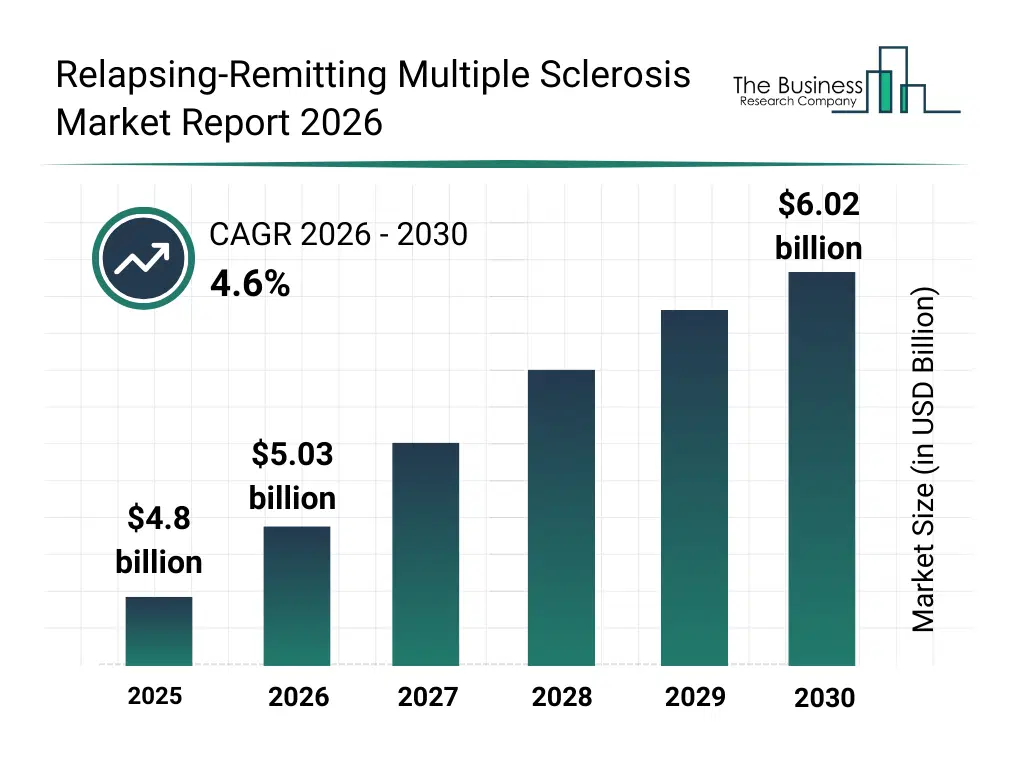
What Is The Relapsing-Remitting Multiple Sclerosis Market Size and Share 2026?
The relapsing-remitting multiple sclerosis market size has grown steadily in recent years. It will grow from $4.8 billion in 2025 to $5.03 billion in 2026 at a compound annual growth rate (CAGR) of 4.9%. The growth in the historic period can be attributed to improvements in multiple sclerosis diagnosis rates, wider availability of immunomodulating therapies, increased clinical research in autoimmune diseases, growing neurologist awareness of rrms, expansion of specialty neurology clinics.What Is The Relapsing-Remitting Multiple Sclerosis Market Growth Forecast?
The relapsing-remitting multiple sclerosis market size is expected to see steady growth in the next few years. It will grow to $6.02 billion in 2030 at a compound annual growth rate (CAGR) of 4.6%. The growth in the forecast period can be attributed to increasing development of next-generation rrms therapies, rising focus on precision medicine approaches, expansion of oral and less invasive treatments, growing patient adherence programs, increasing investments in neurodegenerative disease research. Major trends in the forecast period include increasing adoption of targeted disease-modifying therapies, rising use of personalized treatment protocols, growing focus on early diagnosis and disease monitoring, expansion of oral immunomodulatory drugs, enhanced emphasis on long-term disease management.
Global Relapsing-Remitting Multiple Sclerosis Market Segmentation
1) By Drug Type: Beta-Interferon, Cladribine, Dimethyl Fumarate, Fingolimod, Ozanimod, Other Drug Types 2) By Route Of Administration: Subcutaneous, Intravenous 3) By Treatment: Immunomodulating Drugs, NrF2 Activators, Interferons, Other Treatments 4) By End-User: Hospitals, Clinics, Other End-Users Subsegments: 1) By Beta-Interferon: Interferon Beta-1a, Interferon Beta-1b 2) By Cladribine: Oral Cladribine, Injectable Cladribine 3) By Dimethyl Fumarate: Tecfidera, Vumerity 4) By Fingolimod: Gilenya Fingolimod, Generic Fingolimod 5) By Ozanimod: Zeposia, Generic Ozanimod Formulations 6) By Other Drug Types: Natalizumab, Alemtuzumab, Ocrelizumab, Siponimod, TeriflunomideWhat Is The Driver Of The Relapsing-Remitting Multiple Sclerosis Market?
The increasing adoption of personalized medicine is expected to fuel the growth of the relapsing-remitting multiple sclerosis (RRMS) market going forward. Personalized medicine is a medical approach that tailors treatments and therapies to an individual's genetic, environmental, and lifestyle factors for optimized healthcare outcomes. Personalized medicine is increasing due to advancements in genomic sequencing, which enable precise identification of genetic variations and biomarkers, leading to more targeted and effective treatments. Relapsing-remitting multiple sclerosis (RRMS) highlights the need for personalized medicine by showcasing how tailored treatments can address individual variations in disease progression, symptom severity, and treatment response, ultimately improving patient outcomes. For instance, in February 2024, according to the Personalized Medicine Coalition, a US-based organization advocating for personalized medicine, the U.S. Food and Drug Administration approved 16 new personalized treatments for rare disease patients, a significant rise from 6 in 2022. Therefore, the increasing adoption of personalized medicine is driving the growth of the relapsing-remitting multiple sclerosis industry.Key Players In The Global Relapsing-Remitting Multiple Sclerosis Market
Major companies operating in the relapsing-remitting multiple sclerosis market are Johnson And Johnson Services Inc., F Hoffmann La Roche Ltd, Bayer AG, Sanofi S.A., Bristol Myers Squibb Company, Novartis AG, Merck KGaA, Viatris Inc., Teva Pharmaceutical Industries Ltd., Biogen Inc., Genentech Inc., Hikma Pharmaceuticals LLC, Glenmark Pharmaceuticals Limited, CinnaGen Co, Zenas BioPharma Inc., Roche Diagnostics GmbH, Sandoz AG, Sun Pharmaceutical Industries Ltd., Dr Reddys Laboratories Ltd., Zydus Lifesciences Ltd., AbbVie Neurology Division, Almirall S.A., UCB S.A., Otsuka Pharmaceutical Co. Ltd.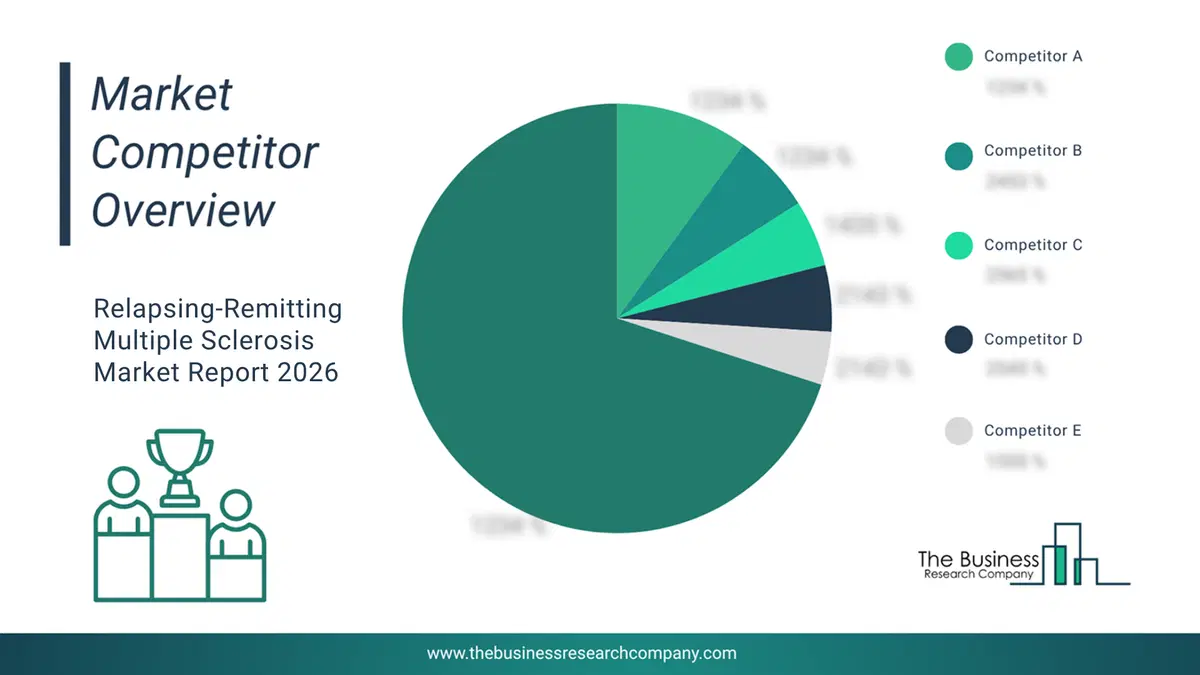
This chart is for illustrative purposes; the full report includes a detailed competitor analysis and comprehensive overview of the top 10 companies in the market.
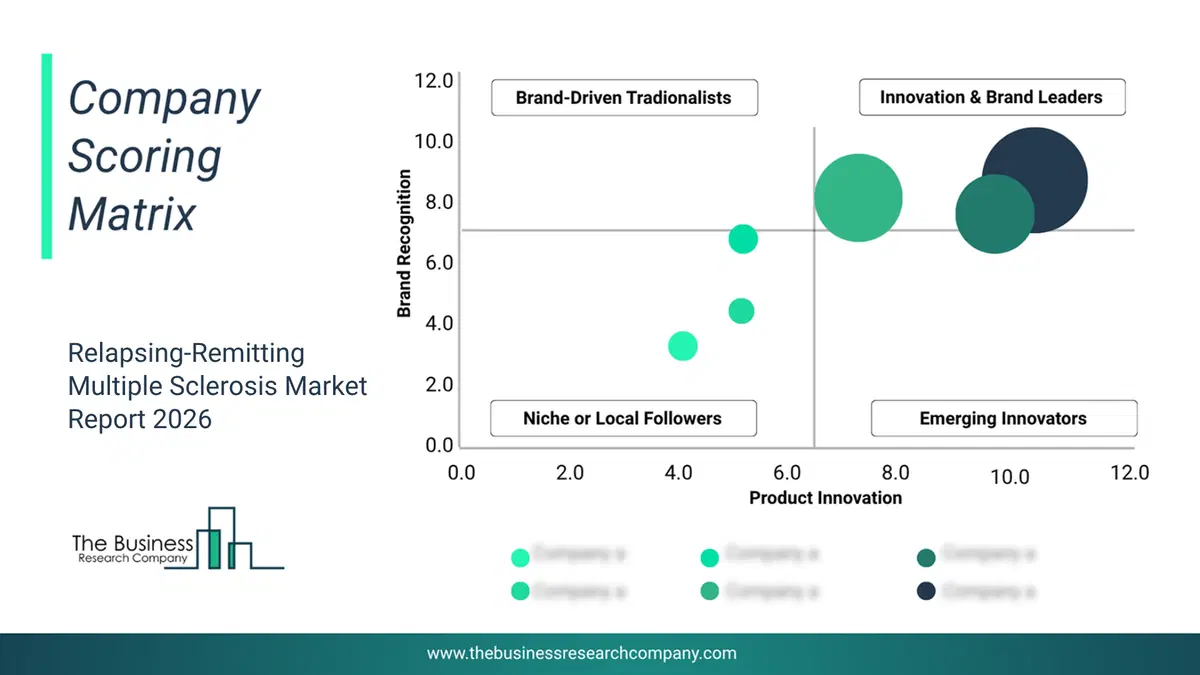
This chart maps companies by product innovation and brand strength, with bubble size indicating relative revenue, helping identify market leaders, challengers, and niche players. This is an illustrative chart; the full report provides a complete and accurate competitive analysis.
Global Relapsing-Remitting Multiple Sclerosis Market Trends and Insights
Major companies operating in the relapsing-remitting multiple sclerosis market are focusing on developing innovative treatment approaches, such as breakthrough blockbuster therapy, to enhance treatment efficacy, improve patient outcomes, and redefine the standard of care for relapsing-remitting multiple sclerosis (RRMS). Breakthrough blockbuster therapy refers to an innovative and highly effective treatment that significantly advances medical care, often addressing unmet needs or providing superior outcomes compared to existing therapies. For instance, in February 2024, Roche Products (India) Pvt. Ltd., an India-based pharmaceutical company, launched Ocrevus (Ocrelizumab), a groundbreaking treatment for multiple sclerosis (MS), to strengthen its neurology portfolio and address the unmet medical needs of patients in India. Ocrevus is designed to target CD20-positive B cells, which are implicated in MS progression, aiming to reduce relapses and slow the advancement of disability in affected individuals. It is equipped with a unique mechanism of action that selectively depletes B cells, helping to modify the disease course and improve long-term patient outcomes.What Are Latest Mergers And Acquisitions In The Relapsing-Remitting Multiple Sclerosis Market?
In January 2025, Cycle Pharmaceuticals Ltd., a UK-based biopharmaceutical company, acquired Banner Life Sciences for an undisclosed amount. With this acquisition, Cycle Pharma aims to expand its portfolio of treatments for neurological disorders, including multiple sclerosis, and strengthen its presence in the U.S. pharmaceutical market. Banner Life Sciences is a US-based company that offers BAFIERTAM as a treatment for relapsing forms of multiple sclerosis (MS), including relapsing-remitting MS.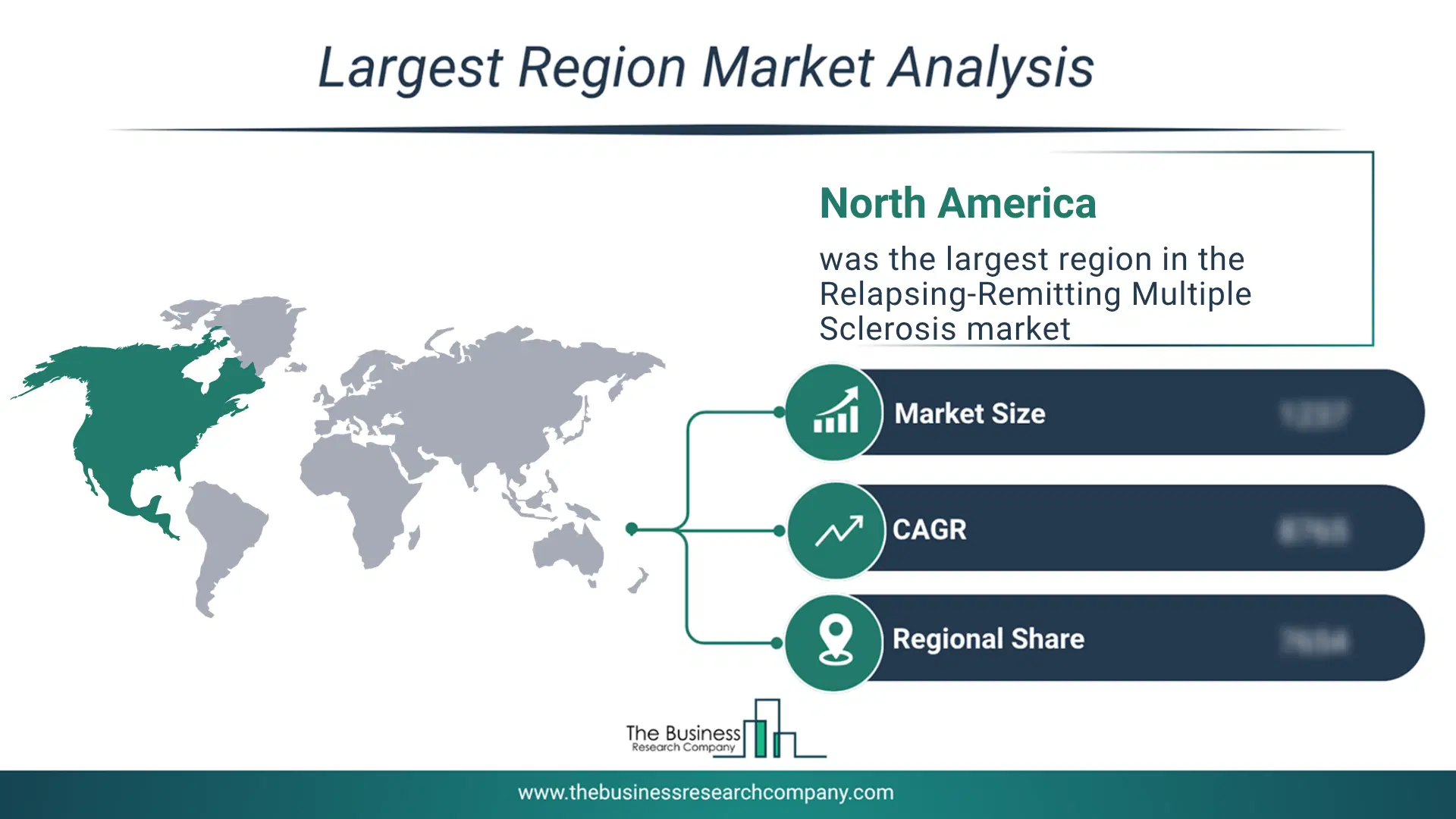
Regional Outlook
North America was the largest region in the relapsing-remitting multiple sclerosis market in 2025. Asia-Pacific is expected to be the fastest-growing region in the forecast period. The regions covered in this market report are Asia-Pacific, South East Asia, Western Europe, Eastern Europe, North America, South America, Middle East, Africa. The countries covered in this market report are Australia, Brazil, China, France, Germany, India, Indonesia, Japan, Taiwan, Russia, South Korea, UK, USA, Canada, Italy, Spain.What Defines the Relapsing-Remitting Multiple Sclerosis Market?
The relapsing-remitting multiple sclerosis market consists of revenues earned by entities by providing services such as disease-modifying therapies (DMTs), immunosuppressants, and symptom management solutions. The market value includes the value of related goods sold by the service provider or included within the service offering. The relapsing-remitting multiple sclerosis market also includes sales of pharmaceuticals, assistive devices, and diagnostic tools used in disease management and monitoring. Values in this market are ‘factory gate’ values, that is the value of goods sold by the manufacturers or creators of the goods, whether to other entities (including downstream manufacturers, wholesalers, distributors and retailers) or directly to end customers. The value of goods in this market includes related services sold by the creators of the goods.How is Market Value Defined and Measured?
The market value is defined as the revenues that enterprises gain from the sale of goods and/or services within the specified market and geography through sales, grants, or donations in terms of the currency (in USD unless otherwise specified). The revenues for a specified geography are consumption values that are revenues generated by organizations in the specified geography within the market, irrespective of where they are produced. It does not include revenues from resales along the supply chain, either further along the supply chain or as part of other products.
This chart presents market attractiveness based on a quantitative evaluation of growth, competition, strategic alignment, and risk, offering a clear view of opportunity areas for decision-making. This chart is for illustrative purposes; the full report contains the complete analysis.

This chart highlights the Total Addressable Market (TAM) by estimating the maximum revenue opportunity using an assumption-driven approach, supporting strategic planning and opportunity sizing across markets. The chart is illustrative; the full report provides a more comprehensive analysis.
What Key Data and Analysis Are Included in the Relapsing-Remitting Multiple Sclerosis Market Report 2026?
The relapsing-remitting multiple sclerosis market research report is one of a series of new reports from The Business Research Company that provides market statistics, including industry global market size, regional shares, competitors with the market share, detailed market segments, market trends and opportunities, and any further data you may need to thrive in the relapsing-remitting multiple sclerosis industry. The market research report delivers a complete perspective of everything you need, with an in-depth analysis of the current and future state of the industry.Relapsing-Remitting Multiple Sclerosis Market Report Forecast Analysis
| Report Attribute | Details |
|---|---|
| Market Size Value In 2026 | $5.03 billion |
| Revenue Forecast In 2030 | $6.02 billion |
| Growth Rate | CAGR of 4.6% from 2026 to 2030 |
| Base Year For Estimation | 2025 |
| Actual Estimates/Historical Data | 2020-2025 |
| Forecast Period | 2026 - 2030 |
| Market Representation | Revenue in USD Billion and CAGR from 2026 to 2030 |
| Segments Covered | Drug Type, Route Of Administration, Treatment, End-User |
| Regional Scope | Asia-Pacific, Western Europe, Eastern Europe, North America, South America, Middle East, Africa |
| Country Scope | The countries covered in the report are Australia, Brazil, China, France, Germany, India, Indonesia, Japan, Taiwan, Russia, South Korea, UK, USA, Canada, Italy, Spain |
| Key Companies Profiled | Johnson And Johnson Services Inc., F Hoffmann La Roche Ltd, Bayer AG, Sanofi S.A., Bristol Myers Squibb Company, Novartis AG, Merck KGaA, Viatris Inc., Teva Pharmaceutical Industries Ltd., Biogen Inc., Genentech Inc., Hikma Pharmaceuticals LLC, Glenmark Pharmaceuticals Limited, CinnaGen Co, Zenas BioPharma Inc., Roche Diagnostics GmbH, Sandoz AG, Sun Pharmaceutical Industries Ltd., Dr Reddys Laboratories Ltd., Zydus Lifesciences Ltd., AbbVie Neurology Division, Almirall S.A., UCB S.A., Otsuka Pharmaceutical Co. Ltd. |
| Customization Scope | Request for Customization |
| Pricing And Purchase Options | Explore Purchase Options |