

Remote Irritable Bowel Syndrome (IBS) Monitoring Market Report 2026
Global Outlook – By Component (Devices, Software, Services), By Application (Diagnosis, Symptom Tracking, Treatment Management, Patient Education, Other Applications), By End-User (Hospitals And Clinics, Homecare Settings, Research Institutes, Other End-Users) - Market Size, Trends, Strategies, and Forecast to 2030
Remote Irritable Bowel Syndrome (IBS) Monitoring Market Overview
• Remote Irritable Bowel Syndrome (IBS) Monitoring market size has reached to $1.4 billion in 2025 • Expected to grow to $2.92 billion in 2030 at a compound annual growth rate (CAGR) of 15.7% • Growth Driver: Rising Prevalence Of Gastrointestinal Disorders Fueling The Growth Of The Market Due To Changing Lifestyle Patterns • Market Trend: Adoption Of White-Label And Co-Branded Models Enhances Remote IBS Monitoring Capabilities • North America was the largest region in 2025 and Asia-Pacific is the fastest growing region.What Is Covered Under Remote Irritable Bowel Syndrome (IBS) Monitoring Market?
Remote irritable bowel syndrome (IBS) monitoring refers to a digital health platform that enables continuous tracking and management of IBS symptoms. It collects real-time patient data, analyzes patterns, and provides actionable insights to support proactive health decisions. Remote irritable bowel syndrome (IBS) monitoring enhances patient engagement and allows timely interventions, improving overall symptom control and quality of life. The main components of remote irritable bowel syndrome (IBS) monitoring are devices, software, and services. Devices refer to hardware tools and wearable technologies used to track, record, and monitor patients’ digestive health and IBS symptoms. It is applied in various application types such as diagnosis, symptom tracking, treatment management, patient education, and others, and the key end-users include hospitals and clinics, homecare settings, research institutes, and others.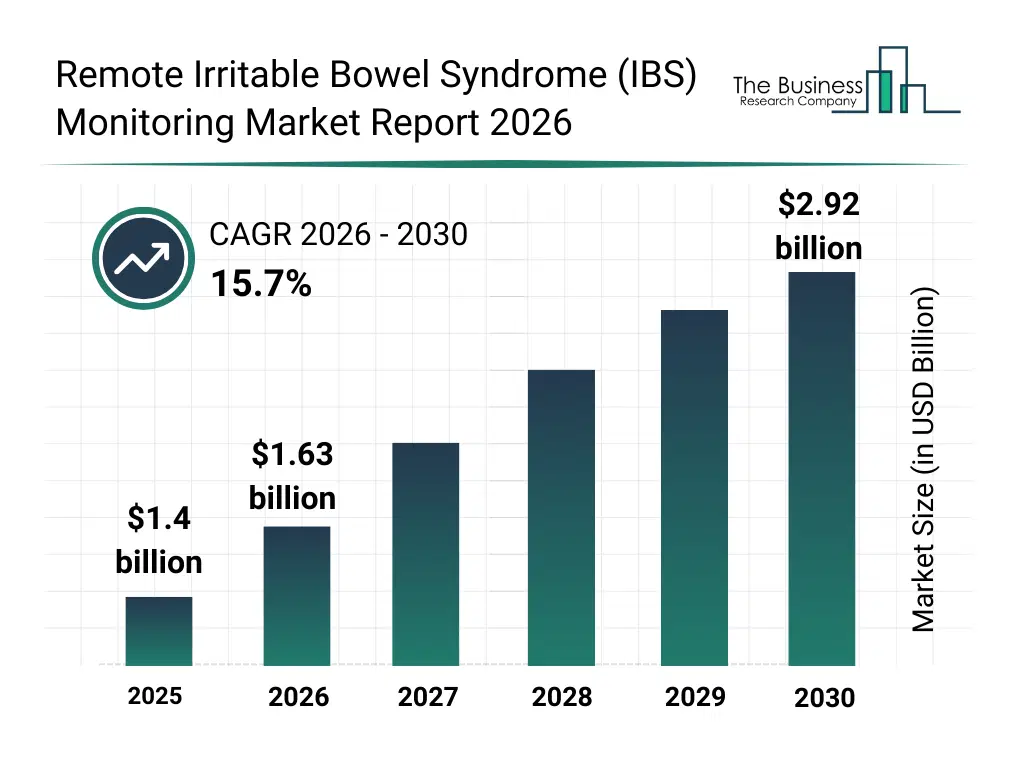
What Is The Remote Irritable Bowel Syndrome (IBS) Monitoring Market Size and Share 2026?
The remote irritable bowel syndrome (ibs) monitoring market size has grown rapidly in recent years. It will grow from $1.4 billion in 2025 to $1.63 billion in 2026 at a compound annual growth rate (CAGR) of 16.0%. The growth in the historic period can be attributed to increasing prevalence of irritable bowel syndrome, growth of digital health platforms, rising adoption of telehealth services, expansion of smartphone-based health monitoring, availability of cloud-based patient data systems.What Is The Remote Irritable Bowel Syndrome (IBS) Monitoring Market Growth Forecast?
The remote irritable bowel syndrome (ibs) monitoring market size is expected to see rapid growth in the next few years. It will grow to $2.92 billion in 2030 at a compound annual growth rate (CAGR) of 15.7%. The growth in the forecast period can be attributed to increasing demand for personalized gastrointestinal care, rising integration of remote diagnostics, expansion of value-based healthcare models, growing use of predictive analytics in disease management, increasing investments in digital therapeutics. Major trends in the forecast period include increasing use of AI-driven symptom analytics, rising adoption of mobile health monitoring platforms, growing integration of wearable ibs tracking devices, expansion of personalized treatment management tools, enhanced focus on patient engagement solutions.
Global Remote Irritable Bowel Syndrome (IBS) Monitoring Market Segmentation
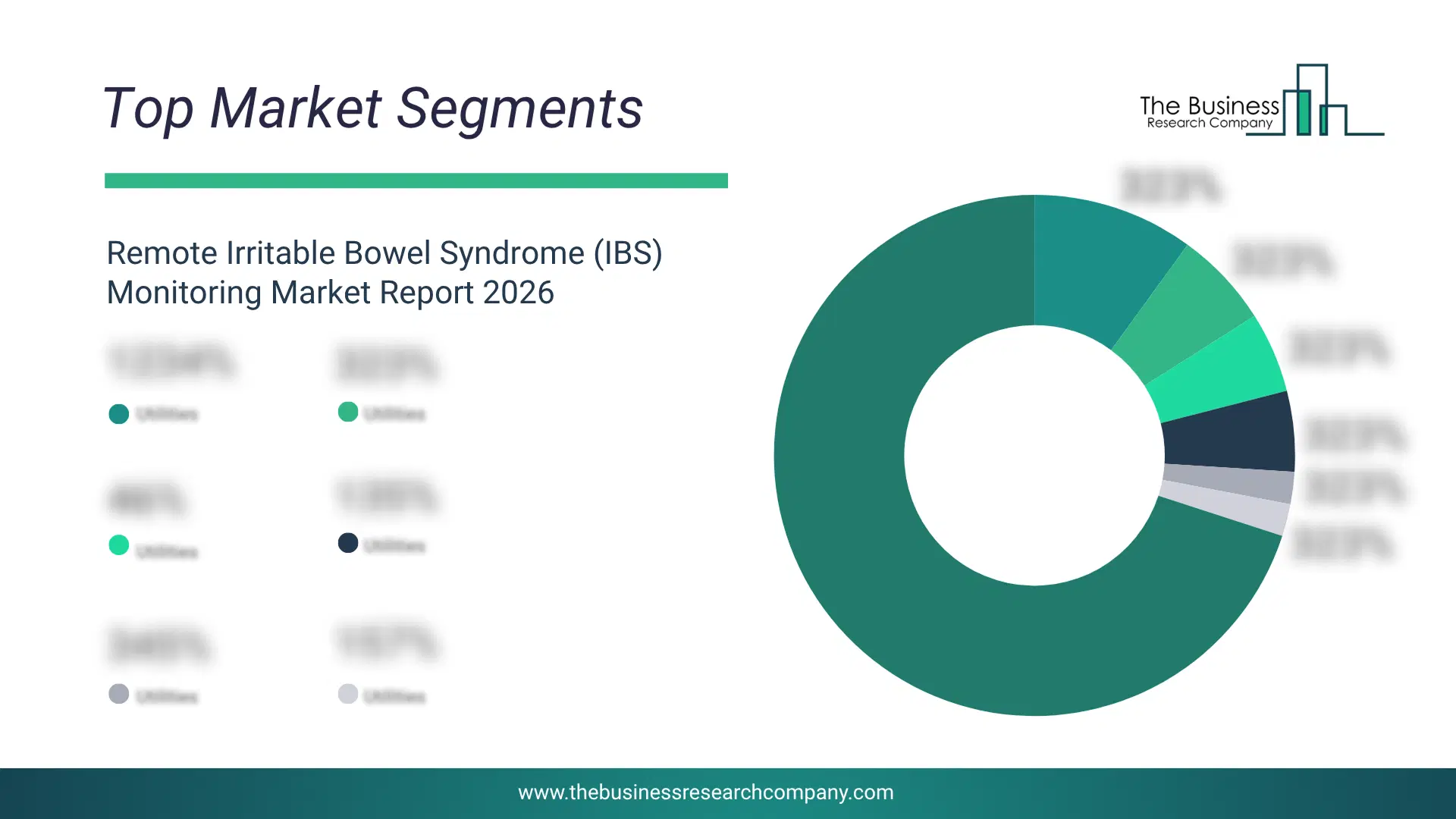
1) By Component: Devices, Software, Services 2) By Application: Diagnosis, Symptom Tracking, Treatment Management, Patient Education, Other Applications 3) By End-User: Hospitals And Clinics, Homecare Settings, Research Institutes, Other End-Users Subsegments: 1) By Devices: Wearable Monitoring Devices, Non-Wearable Monitoring Devices, Portable Monitoring Devices, Implantable Monitoring Devices 2) By Software: Data Analytics Software, Mobile Health Applications, Remote Monitoring Platforms, Cloud-Based Software Solutions 3) By Services: Teleconsultation Services, Data Management Services, Technical Support Services, Training And Education ServicesWhat Is The Driver Of The Remote Irritable Bowel Syndrome (IBS) Monitoring Market?
The increasing prevalence of gastrointestinal disorders is expected to propel the growth of the remote irritable bowel syndrome (IBS) monitoring market going forward. Gastrointestinal disorders are diseases that impair the normal function of the digestive system and interfere with digestion and bowel regulation. The increase in gastrointestinal disorders is mainly driven by poor dietary habits that harm gut health and digestion, causing inflammation and digestive problems such as bloating and discomfort. Remote irritable bowel syndrome (IBS) monitoring helps mitigate symptom severity and slow disease progression by facilitating early identification of triggers and ongoing management, leading to better patient outcomes and an improved quality of life. For instance, in February 2025, according to Crohn's & Colitis Australia, an Australia-based national organization, the projected prevalence of inflammatory bowel disease (IBD) in Australia is expected to increase from 20,511,881 cases in 2023 to 23,067,771 cases by 2030. Therefore, the growing prevalence of gastrointestinal disorders is driving the growth of the remote irritable bowel syndrome (IBS) market.Key Players In The Global Remote Irritable Bowel Syndrome (IBS) Monitoring Market
Major companies operating in the remote irritable bowel syndrome (ibs) monitoring market are Indegene, Vivante Health, Thryve Health, Heali AI Corp., Mahana Therapeutics Inc., metaMe Health Inc., Seed Health, Ayble Health, Oshi health, Salvo Health Inc., modifyhealth Inc., Food marble, nerva health, MyGiHealth, Sun Genomics, Dietahealth, Dige Health, Nori health, Sequenex, Bowelle.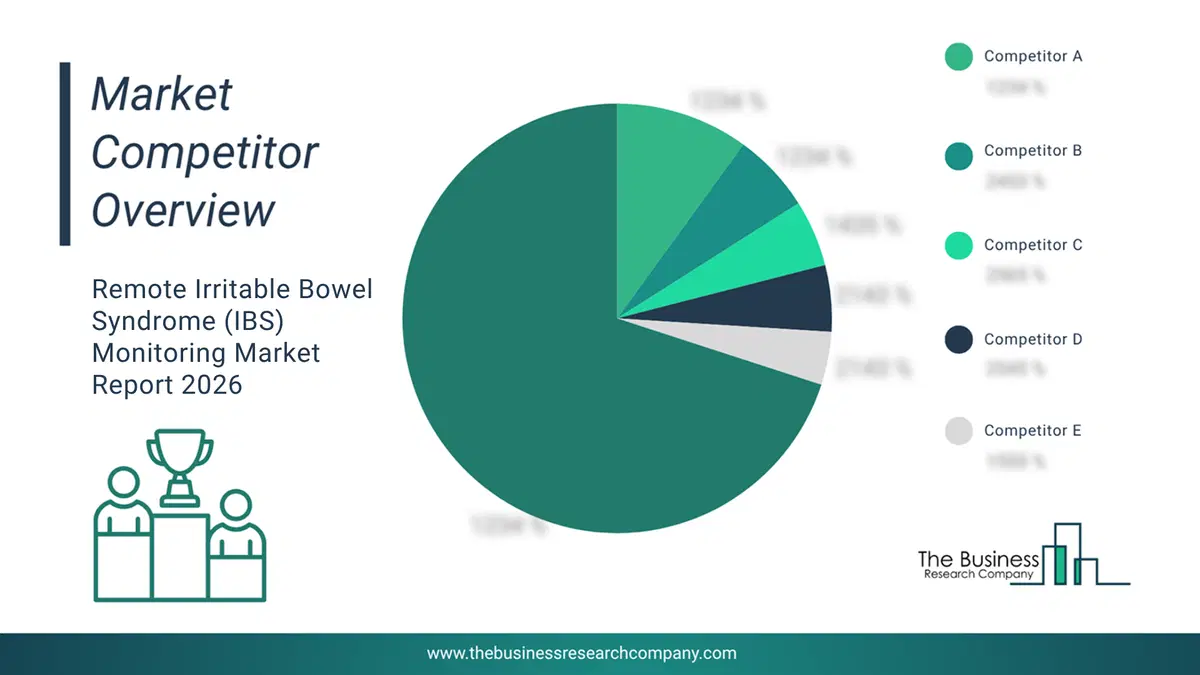
This chart is for illustrative purposes; the full report includes a detailed competitor analysis and comprehensive overview of the top 10 companies in the market.
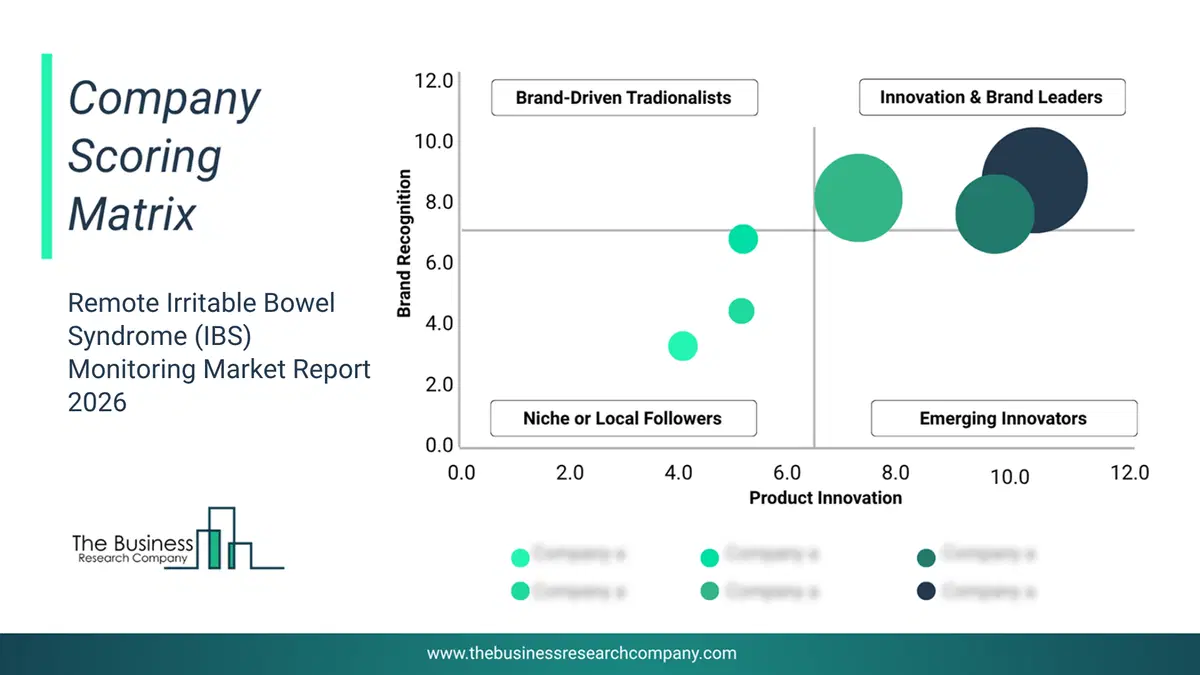
This chart maps companies by product innovation and brand strength, with bubble size indicating relative revenue, helping identify market leaders, challengers, and niche players. This is an illustrative chart; the full report provides a complete and accurate competitive analysis.
Global Remote Irritable Bowel Syndrome (IBS) Monitoring Market Trends and Insights
Major companies operating in the remote irritable bowel syndrome (IBS) monitoring market are focusing on developing white-label or co-branded service models to leverage established digital infrastructure and clinical support systems. A white-label or co-branded service model enables healthcare providers to deliver ready-made digital health solutions under their brand, combining trusted identity with proven technology to ensure faster deployment, lower costs, and a seamless patient experience. For instance, in May 2024, Salvo Health, a US-based digital gastrointestinal care company, launched its first-ever remote patient monitoring (RPM) enablement for gastrointestinal (GI) chronic conditions. The program offers a new digital care option for conditions such as IBS, GERD, dyspepsia, celiac disease, and SIBO, allowing GI practices to combine remote monitoring with traditional in-person care. Salvo equips local GI providers with digital tools, clinical staff, and home monitoring devices through its white-label or co-branded model, allowing them to track heart rate variability (HRV) and connect it with patient diet, behavior, and symptoms to improve chronic care outcomes and practice efficiency.What Are Latest Mergers And Acquisitions In The Remote Irritable Bowel Syndrome (IBS) Monitoring Market?
In March 2024, Mahana Therapeutics, a US-based provider of digital chronic condition management programs, acquired HiDoc Technologies GmbH for an undisclosed amount. The acquisition aims to strengthen Mahana Therapeutics’ global presence in digital chronic disease management, expand its digestive health portfolio, and enhance patient outcomes through digital CBT programs while accelerating commercialization in the US and Europe. HiDoc Technologies GmbH is a Germany-based company that provides remote monitoring for Irritable Bowel Syndrome (IBS) through its digital health application, Cara Care.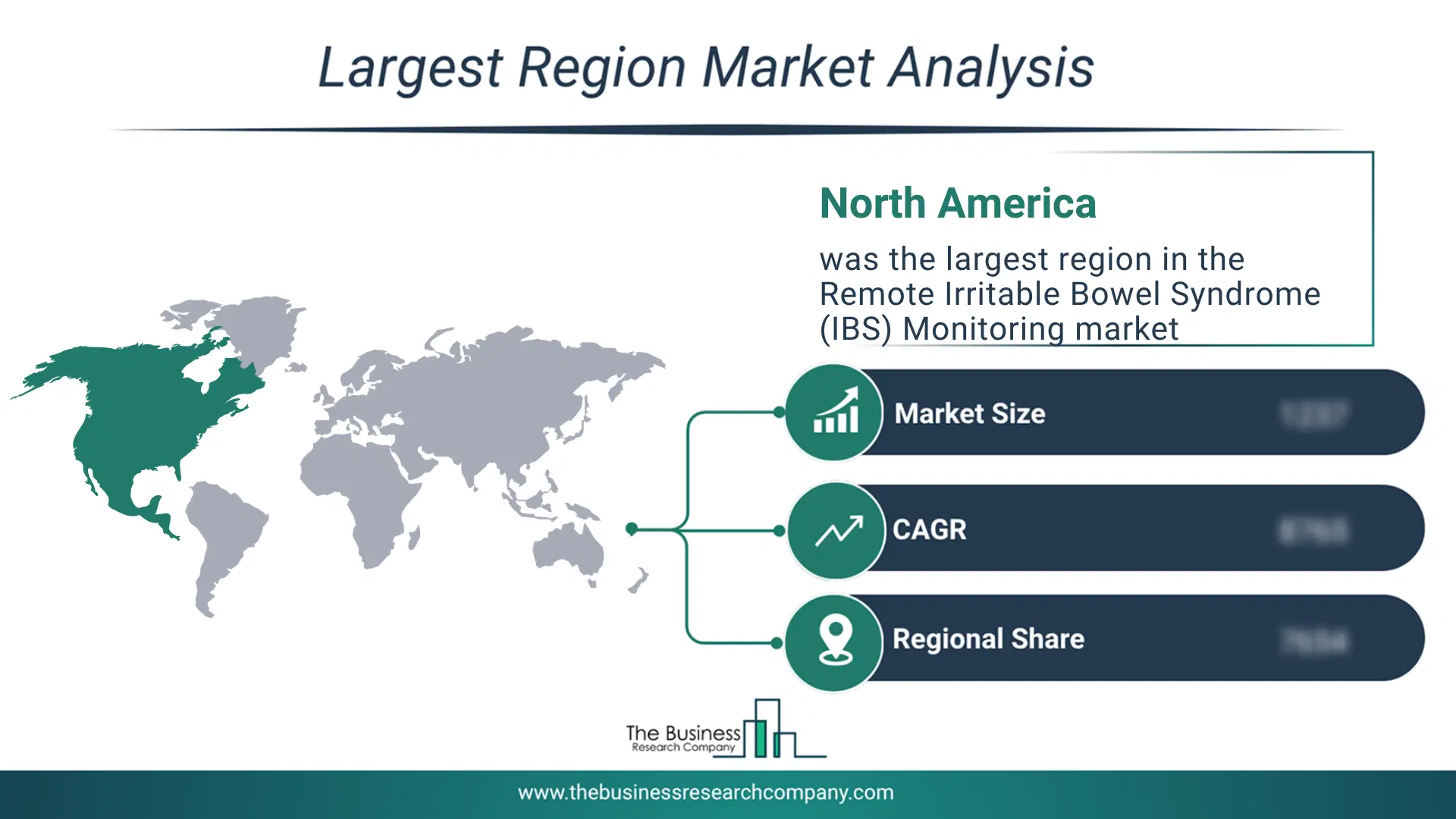
Regional Outlook
North America was the largest region in the remote irritable bowel syndrome (IBS) monitoring market in 2025. Asia-Pacific is expected to be the fastest-growing region in the forecast period. The regions covered in this market report are Asia-Pacific, South East Asia, Western Europe, Eastern Europe, North America, South America, Middle East, Africa. The countries covered in this market report are Australia, Brazil, China, France, Germany, India, Indonesia, Japan, Taiwan, Russia, South Korea, UK, USA, Canada, Italy, Spain.What Defines the Remote Irritable Bowel Syndrome (IBS) Monitoring Market?
The remote irritable bowel syndrome (IBS) monitoring market consists of revenues earned by entities by providing services such as teleconsultations with gastroenterologists, dietary and lifestyle management guidance, digital health coaching, and patient data analytics. The market value includes the value of related goods sold by the service provider or included within the service offering. The remote irritable bowel syndrome (IBS) monitoring market also includes sales of wearable gut activity monitors, smart sensors, mobile monitoring devices, and connected health tools. Values in this market are ‘factory gate’ values, that is, the value of goods sold by the manufacturers or creators of the goods, whether to other entities (including downstream manufacturers, wholesalers, distributors, and retailers) or directly to end customers. The value of goods in this market includes related services sold by the creators of the goods.How is Market Value Defined and Measured?
The market value is defined as the revenues that enterprises gain from the sale of goods and/or services within the specified market and geography through sales, grants, or donations in terms of the currency (in USD unless otherwise specified). The revenues for a specified geography are consumption values that are revenues generated by organizations in the specified geography within the market, irrespective of where they are produced. It does not include revenues from resales along the supply chain, either further along the supply chain or as part of other products.
This chart presents market attractiveness based on a quantitative evaluation of growth, competition, strategic alignment, and risk, offering a clear view of opportunity areas for decision-making. This chart is for illustrative purposes; the full report contains the complete analysis.

This chart highlights the Total Addressable Market (TAM) by estimating the maximum revenue opportunity using an assumption-driven approach, supporting strategic planning and opportunity sizing across markets. The chart is illustrative; the full report provides a more comprehensive analysis.
What Key Data and Analysis Are Included in the Remote Irritable Bowel Syndrome (IBS) Monitoring Market Report 2026?
The remote irritable bowel syndrome (ibs) monitoring market research report is one of a series of new reports from The Business Research Company that provides market statistics, including industry global market size, regional shares, competitors with the market share, detailed market segments, market trends and opportunities, and any further data you may need to thrive in the remote irritable bowel syndrome (ibs) monitoring industry. The market research report delivers a complete perspective of everything you need, with an in-depth analysis of the current and future state of the industry.Remote Irritable Bowel Syndrome (IBS) Monitoring Market Report Forecast Analysis
| Report Attribute | Details |
|---|---|
| Market Size Value In 2026 | $1.63 billion |
| Revenue Forecast In 2030 | $2.92 billion |
| Growth Rate | CAGR of 15.7% from 2026 to 2030 |
| Base Year For Estimation | 2025 |
| Actual Estimates/Historical Data | 2020-2025 |
| Forecast Period | 2026 - 2030 |
| Market Representation | Revenue in USD Billion and CAGR from 2026 to 2030 |
| Segments Covered | Component, Application, End-User |
| Regional Scope | Asia-Pacific, Western Europe, Eastern Europe, North America, South America, Middle East, Africa |
| Country Scope | The countries covered in the report are Australia, Brazil, China, France, Germany, India, Indonesia, Japan, Taiwan, Russia, South Korea, UK, USA, Canada, Italy, Spain |
| Key Companies Profiled | Indegene, Vivante Health, Thryve Health, Heali AI Corp., Mahana Therapeutics Inc., metaMe Health Inc., Seed Health, Ayble Health, Oshi health, Salvo Health Inc., modifyhealth Inc., Food marble, nerva health, MyGiHealth, Sun Genomics, Dietahealth, Dige Health, Nori health, Sequenex, Bowelle. |
| Customization Scope | Request for Customization |
| Pricing And Purchase Options | Explore Purchase Options |