
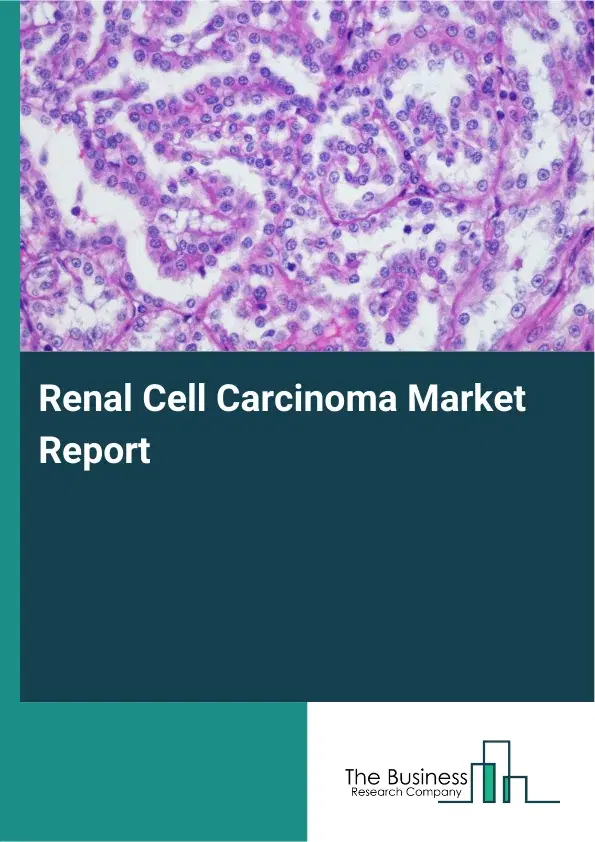
Renal Cell Carcinoma Market Report 2026
Global Outlook – By Type (Clear Cell Renal Cell Carcinoma (RCC), Papillary Renal Cell Carcinoma (RCC), Chromophobe Renal Cell Carcinoma (RCC)), By Diagnosis (Urine Tests, Computed Tomography (CT) Scan, Nephrectomy, Blood Tests, Ultrasound, Biopsy), By Treatment (Medication, Ablation, Targeted Therapy, Chemotherapy, Surgery, Other Treatments), By End-Users (Hospitals, Specialty Clinics, Oncology Treatment Centers, Other End-Users ) - Market Size, Trends, Strategies, and Forecast to 2030
Renal Cell Carcinoma Market Overview
• Renal Cell Carcinoma market size has reached to $4.96 billion in 2025 • Expected to grow to $6.09 billion in 2030 at a compound annual growth rate (CAGR) of 4.4% • Growth Driver: Impact Of The Growing Geriatric Population On Healthcare Demands • Market Trend: Technological Advancements In AI For Enhanced Cancer Diagnosis And Treatment • North America was the largest region in 2025 and Asia-Pacific is the fastest growing region.What Is Covered Under Renal Cell Carcinoma Market?
Renal cell carcinoma (RCC) is a form of kidney cancer originating in the renal tubules, the structures in the kidneys responsible for filtering waste and producing urine. This cancer begins when cells in the kidney become abnormal and grow uncontrollably, forming a tumor. This can disrupt the kidney's function, including its ability to filter waste from the blood and produce urine. The main types of renal cell carcinoma are clear cell renal cell carcinoma (RCC), papillary RCC, and chromophobe RCC. Clear cell RCC is the most prevalent form of kidney cancer, originating in the kidney's tubules responsible for blood filtration. Microscopically, these cancer cells exhibit a clear or pale appearance due to lipid and carbohydrate accumulation. Diagnosis involves various methods, including urine tests, blood tests, computed tomography (CT) scans, ultrasound, nephrectomy, and biopsy. Treatment options encompass surgery, targeted therapy, chemotherapy, ablation, medication, and other approaches, catering to diverse settings such as hospitals, specialty clinics, homecare, and additional end-users.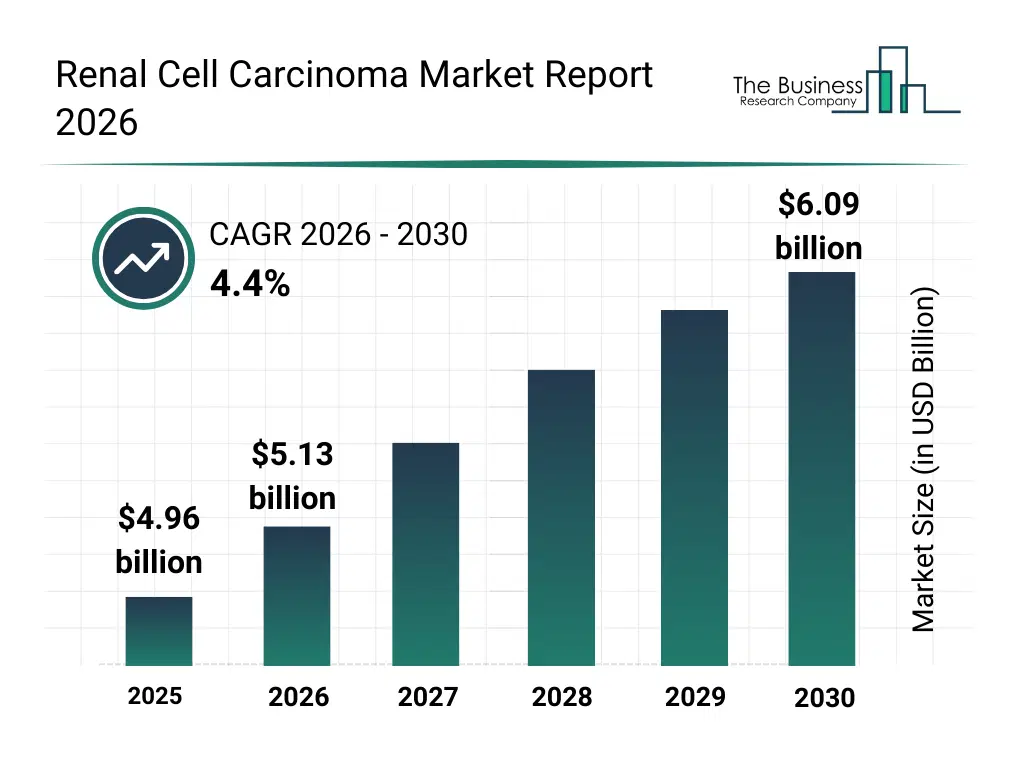
What Is The Renal Cell Carcinoma Market Size and Share 2026?
The renal cell carcinoma market size has grown steadily in recent years. It will grow from $4.96 billion in 2025 to $5.13 billion in 2026 at a compound annual growth rate (CAGR) of 3.5%. The growth in the historic period can be attributed to increasing incidence of kidney cancer, wider availability of imaging-based diagnostics, adoption of surgical nephrectomy procedures, expansion of oncology treatment centers, improved survival rates through early diagnosis.What Is The Renal Cell Carcinoma Market Growth Forecast?
The renal cell carcinoma market size is expected to see steady growth in the next few years. It will grow to $6.09 billion in 2030 at a compound annual growth rate (CAGR) of 4.4%. The growth in the forecast period can be attributed to increasing development of novel targeted therapies, rising use of immunotherapy combinations, expansion of precision oncology programs, growing adoption of biomarker-guided treatment selection, increasing investment in oncology research and trials. Major trends in the forecast period include increasing adoption of targeted cancer therapies, rising use of combination treatment regimens, growing focus on early and accurate diagnosis, expansion of minimally invasive surgical approaches, enhanced emphasis on personalized oncology care.
Global Renal Cell Carcinoma Market Segmentation
1) By Type: Clear Cell Renal Cell Carcinoma (RCC), Papillary Renal Cell Carcinoma (RCC), Chromophobe Renal Cell Carcinoma (RCC) 2) By Diagnosis: Urine Tests, Computed Tomography (CT) Scan, Nephrectomy, Blood Tests, Ultrasound, Biopsy 3) By Treatment: Medication, Ablation, Targeted Therapy, Chemotherapy, Surgery, Other Treatments 4) By End-Users: Hospitals, Specialty Clinics, Oncology Treatment Centers, Other End-Users Subsegments: 1) By Clear Cell Renal Cell Carcinoma (RCC): Sporadic Clear Cell RCC, Hereditary Clear Cell RCC 2) By Papillary Renal Cell Carcinoma (RCC): Type 1 Papillary RCC, Type 2 Papillary RCC 3) By Chromophobe Renal Cell Carcinoma (RCC): Classic Chromophobe RCC, Hybrid Chromophobe RCCWhat Is The Driver Of The Renal Cell Carcinoma Market?
The rise in the geriatric population is expected to drive the growth of the renal cell carcinoma market going forward. The geriatric population consists of elderly individuals, usually aged 65 and above, who may have particular healthcare and social requirements. The growing elderly population is driven by healthcare improvements, better nutrition, and longer life spans. Renal cell carcinoma (RCC) is increasingly prevalent in the geriatric population, highlighting the need for tailored screening and treatment strategies for older adults. For instance, in January 2024, according to a report published by the Population Reference Bureau, a US-based non-profit organization responsible for collecting stats for research and academic purposes, the number of Americans aged 65 and older is expected to rise from 58 million in 2022 to 82 million by 2050, marking a 47% increase. Therefore, the rise in the geriatric population is driving the growth of the renal cell carcinoma industry.Key Players In The Global Renal Cell Carcinoma Market
Major companies operating in the renal cell carcinoma market are Pfizer Inc., Johnson And Johnson, F Hoffmann La Roche Ltd, Merck And Co Inc, Bayer AG, Bristol Myers Squibb Company, AstraZeneca Plc, Novartis AG, GSK plc, Takeda Pharmaceutical Company Limited, Amgen Inc., Viatris Inc, Astellas Pharma Inc., Eisai Co Ltd, Sun Pharmaceutical Industries Ltd, Ipsen Pharma, Cipla Inc., Hikma Pharmaceuticals PLC, Amneal Pharmaceuticals LLC, Exelixis Inc., Nektar Therapeutics, BeiGene Ltd, Incyte Corporation, Regeneron Pharmaceuticals Inc., AbbVie Inc.
This chart is for illustrative purposes; the full report includes a detailed competitor analysis and comprehensive overview of the top 10 companies in the market.
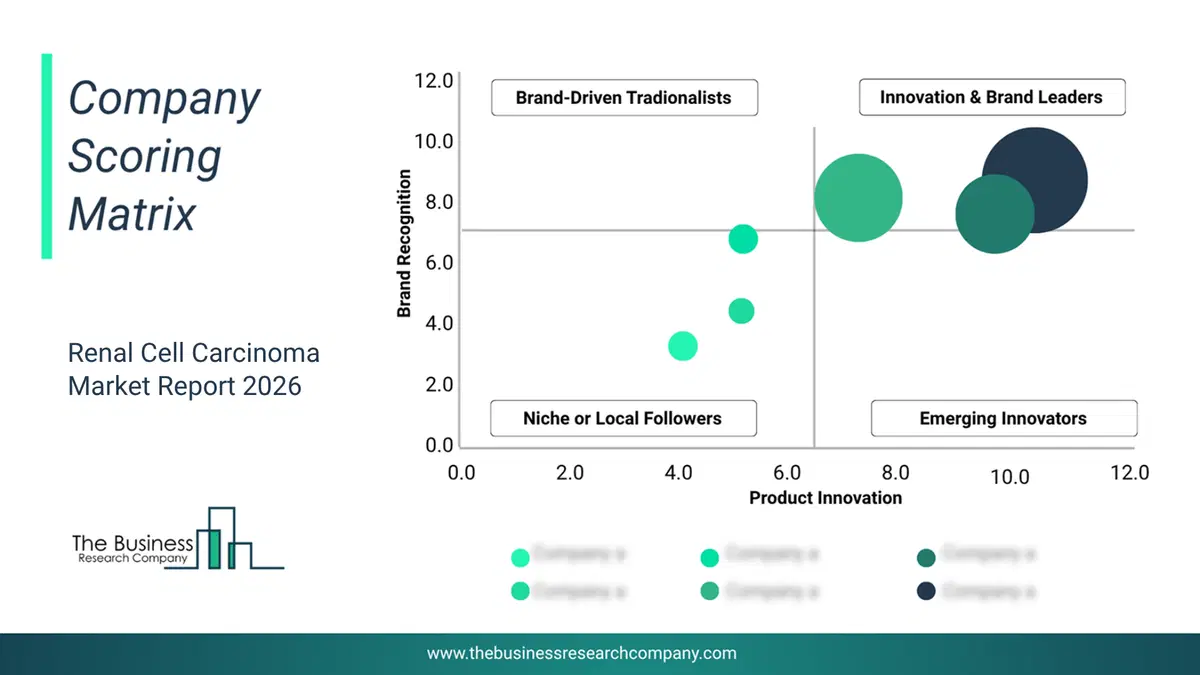
This chart maps companies by product innovation and brand strength, with bubble size indicating relative revenue, helping identify market leaders, challengers, and niche players. This is an illustrative chart; the full report provides a complete and accurate competitive analysis.
Global Renal Cell Carcinoma Market Trends and Insights
Major companies operating in the renal cell carcinoma market are focusing on developing technologically advanced products, such as integrating artificial intelligence (AI)-powered solutions designed for the analysis of kidney biopsies to enhance diagnostic accuracy, streamline procedures, and improve patient outcomes. An artificial intelligence (AI)-powered solution for analyzing kidney biopsies is a technology-driven tool that leverages machine learning algorithms and computer vision to assist pathologists and nephrologists in evaluating kidney tissue samples. These solutions aim to enhance accuracy, efficiency, and consistency in diagnosing kidney diseases and assessing kidney health. For instance, in March 2024, Aiosyn, a Netherlands-based software company, launched the NephroPath platform, an advanced AI-powered solution designed to analyze kidney biopsies. The NephroPath platform uses computational pathology algorithms to analyze histological biomarkers in kidney biopsies, including identifying tissue types, measuring interstitial fibrosis, and precisely counting and assessing glomeruli. This AI-driven analysis ensures consistent, detailed, and reproducible scoring of renal pathology biomarkers, overcoming the drawbacks of traditional scoring methods and observer subjectivity.What Are Latest Mergers And Acquisitions In The Renal Cell Carcinoma Market?
In October 2024, Arcus Biosciences, a US-based biotechnology company, partnered with AstraZeneca plc to assess the combination of casdatifan (AB521) and volrustomig in patients with clear cell renal cell carcinoma (ccRCC). The collaboration aims to enhance ccRCC treatment by advancing a novel drug combination, leveraging expertise to accelerate development and improve patient outcomes. AstraZeneca plc is a UK-based pharmaceutical company specializing in oncology diagnosis and treatment.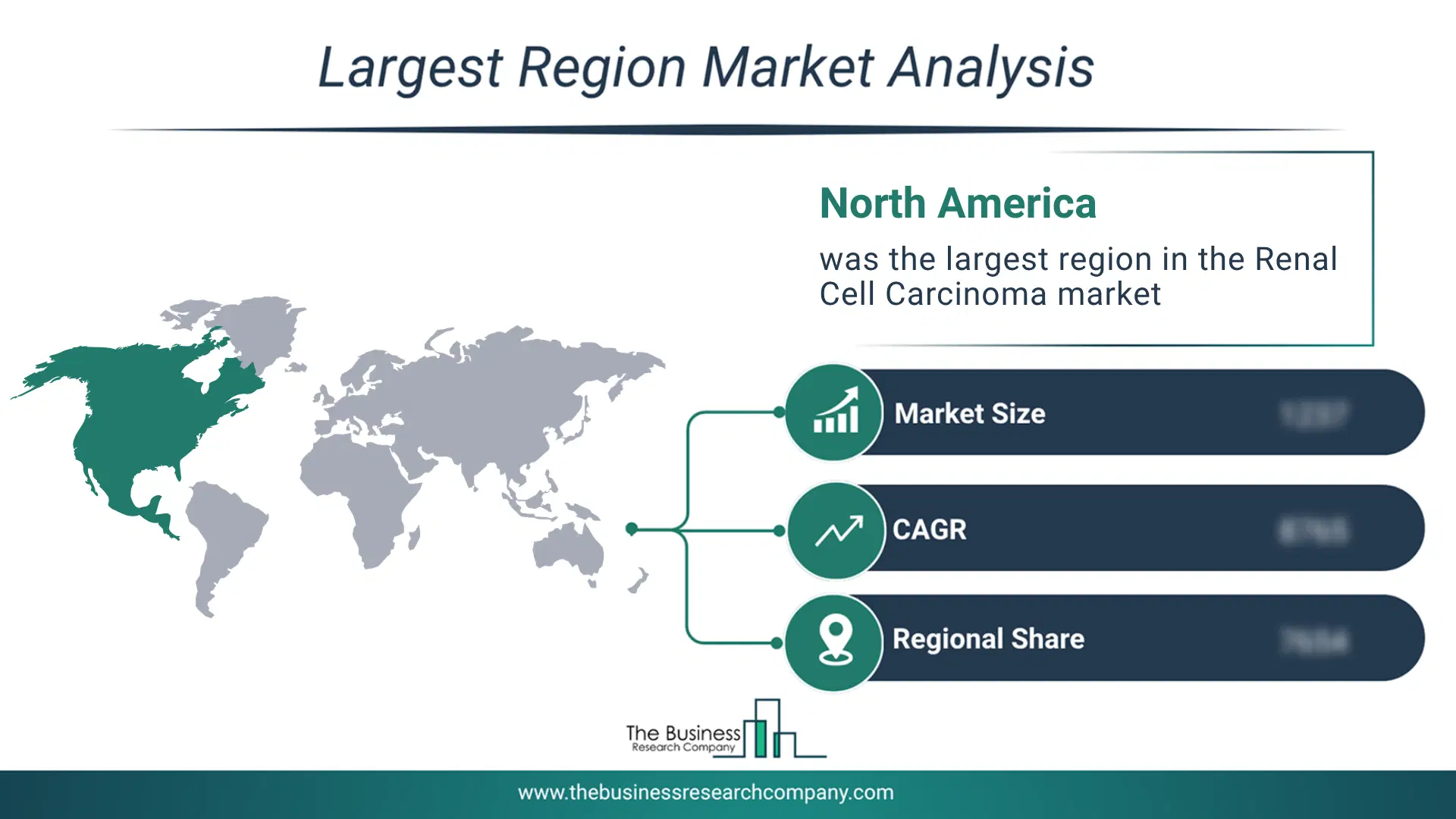
Regional Outlook
North America was the largest region in the renal cell carcinoma market in 2025. Asia-Pacific is expected to be the fastest-growing region in the forecast period. The regions covered in this market report are Asia-Pacific, South East Asia, Western Europe, Eastern Europe, North America, South America, Middle East, Africa. The countries covered in this market report are Australia, Brazil, China, France, Germany, India, Indonesia, Japan, Taiwan, Russia, South Korea, UK, USA, Canada, Italy, Spain.What Defines the Renal Cell Carcinoma Market?
The renal cell carcinoma market consists of revenues earned by entities by providing services such as CT scans, ultrasounds, chemotherapy and targeted therapy, immunotherapy, and supportive care and counseling. The market value includes the value of related goods sold by the service provider or included within the service offering. The renal cell carcinoma market also includes sales of needle biopsy systems, laser ablation devices, biopsy trays and kits, and biopsy specimen containers. Values in this market are ‘factory gate’ values, that is the value of goods sold by the manufacturers or creators of the goods, whether to other entities (including downstream manufacturers, wholesalers, distributors and retailers) or directly to end customers. The value of goods in this market includes related services sold by the creators of the goods.How is Market Value Defined and Measured?
The market value is defined as the revenues that enterprises gain from the sale of goods and/or services within the specified market and geography through sales, grants, or donations in terms of the currency (in USD unless otherwise specified). The revenues for a specified geography are consumption values that are revenues generated by organizations in the specified geography within the market, irrespective of where they are produced. It does not include revenues from resales along the supply chain, either further along the supply chain or as part of other products.
This chart presents market attractiveness based on a quantitative evaluation of growth, competition, strategic alignment, and risk, offering a clear view of opportunity areas for decision-making. This chart is for illustrative purposes; the full report contains the complete analysis.

This chart highlights the Total Addressable Market (TAM) by estimating the maximum revenue opportunity using an assumption-driven approach, supporting strategic planning and opportunity sizing across markets. The chart is illustrative; the full report provides a more comprehensive analysis.
What Key Data and Analysis Are Included in the Renal Cell Carcinoma Market Report 2026?
The renal cell carcinoma market research report is one of a series of new reports from The Business Research Company that provides market statistics, including industry global market size, regional shares, competitors with the market share, detailed market segments, market trends and opportunities, and any further data you may need to thrive in the renal cell carcinoma industry. The market research report delivers a complete perspective of everything you need, with an in-depth analysis of the current and future state of the industry.Renal Cell Carcinoma Market Report Forecast Analysis
| Report Attribute | Details |
|---|---|
| Market Size Value In 2026 | $5.13 billion |
| Revenue Forecast In 2030 | $6.09 billion |
| Growth Rate | CAGR of 4.4% from 2026 to 2030 |
| Base Year For Estimation | 2025 |
| Actual Estimates/Historical Data | 2020-2025 |
| Forecast Period | 2026 - 2030 |
| Market Representation | Revenue in USD Billion and CAGR from 2026 to 2030 |
| Segments Covered | Type, Diagnosis, Treatment, End-Users |
| Regional Scope | Asia-Pacific, Western Europe, Eastern Europe, North America, South America, Middle East, Africa |
| Country Scope | The countries covered in the report are Australia, Brazil, China, France, Germany, India, Indonesia, Japan, Taiwan, Russia, South Korea, UK, USA, Canada, Italy, Spain |
| Key Companies Profiled | Pfizer Inc., Johnson And Johnson, F Hoffmann La Roche Ltd, Merck And Co Inc, Bayer AG, Bristol Myers Squibb Company, AstraZeneca Plc, Novartis AG, GSK plc, Takeda Pharmaceutical Company Limited, Amgen Inc., Viatris Inc, Astellas Pharma Inc., Eisai Co Ltd, Sun Pharmaceutical Industries Ltd, Ipsen Pharma, Cipla Inc., Hikma Pharmaceuticals PLC, Amneal Pharmaceuticals LLC, Exelixis Inc., Nektar Therapeutics, BeiGene Ltd, Incyte Corporation, Regeneron Pharmaceuticals Inc., AbbVie Inc. |
| Customization Scope | Request for Customization |
| Pricing And Purchase Options | Explore Purchase Options |