
Renewable Energy Integration Systems Market Report 2026
Global Outlook – By Components ( Hardware, Software, Services), By Power Sources ( Wind power, Solar power, Hydro power), By End-User ( Residential Consumers, Commercial Consumers, Industrial Consumers, Government Agencies) – Market Size, Trends, Strategies, and Forecast to 2030
Renewable Energy Integration Systems Market Overview
• Renewable Energy Integration Systems market size has reached to $146.78 billion in 2025 • Expected to grow to $228.04 billion in 2030 at a compound annual growth rate (CAGR) of 9.2% • Growth Driver: Rising Investments Driving Growth In The Renewable Energy Integration Systems Market • Market Trend: Introduction of Next-Generation Solar Inverter Solutions • Asia-Pacific was the largest region in 2025.What Is Covered Under Renewable Energy Integration Systems Market?
Renewable energy integration systems refer to the technologies and strategies used to incorporate renewable energy sources. These systems are designed to manage the intermittency and variability of renewable energy generation, ensuring a stable and reliable supply of electricity. The main types of components in renewable energy integration systems are hardware, software, and services. Hardware refers to the physical components, devices, and equipment used to facilitate the integration of renewable energy sources into existing energy systems. It includes various power sources, such as wind power, solar power, and hydropower, and is used by several end-users, including residential consumers, commercial consumers, industrial consumers, and government agencies.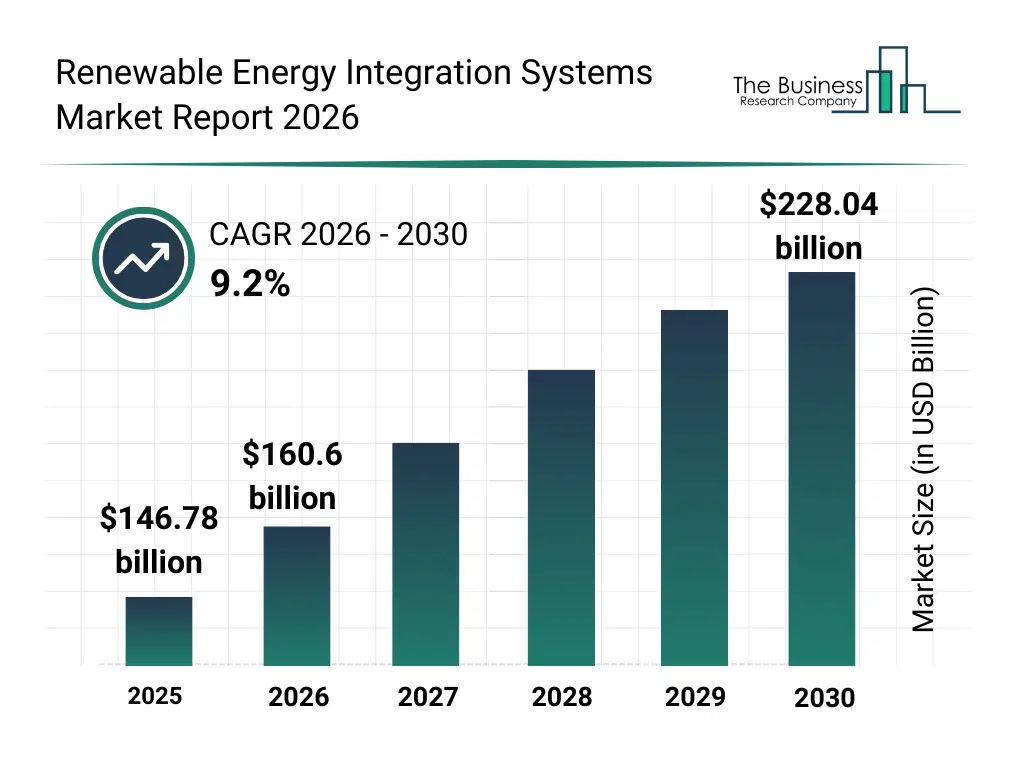
What Is The Renewable Energy Integration Systems Market Size 2026 And Growth Rate?
The renewable energy integration systems market size has grown strongly in recent years. It will grow from $146.78 billion in 2025 to $160.6 billion in 2026 at a compound annual growth rate (CAGR) of 9.4%. The growth in the historic period can be attributed to initial rise in renewable energy capacity additions, early deployment of grid connected solar and wind farms, increasing variability management requirements, emergence of smart grid initiatives, growth in distributed power generation.What Is The Renewable Energy Integration Systems Market Growth Forecast?
The renewable energy integration systems market size is expected to see strong growth in the next few years. It will grow to $228.04 billion in 2030 at a compound annual growth rate (CAGR) of 9.2%. The growth in the forecast period can be attributed to rising investments in grid modernization, increasing adoption of large scale energy storage systems, expanding integration of renewables into national grids, growth in microgrid and hybrid system deployments, rising emphasis on grid resilience and reliability. Major trends in the forecast period include growing integration of hybrid renewable systems, increasing demand for grid stability and flexibility solutions, expansion of distributed renewable energy resources, rising adoption of energy storage for load balancing, advancements in renewable grid synchronization technologies.
Global Renewable Energy Integration Systems Market Segmentation
1) By Components: Hardware, Software, Services 2) By Power Sources: Wind power, Solar power, Hydro power 3) By End-User: Residential Consumers, Commercial Consumers, Industrial Consumers, Government Agencies Subsegments: 1) By Hardware: Inverters, Batteries and Storage Systems, Power Control Systems, Transformers, Switchgear and Protection Devices 2) By Software: Energy Management Software, Grid Management Software, Data Analytics and Monitoring Software 3) By Services: Consulting Services, Integration and Deployment Services, Maintenance and Support ServicesWhat Is The Driver Of The Renewable Energy Integration Systems Market?
The rising investments in the energy sector are expected to propel the growth of the renewable energy integration systems market going forward. Investments in the energy sector refer to the allocation of financial resources, capital, or funds towards activities, projects, or assets related to the production, distribution, and utilization of energy resources. Investments are used in renewable energy integration systems (REIS) to maximize the benefits of renewable energy deployment, enhance grid reliability and resilience, and accelerate the transition to a sustainable energy future. For instance, in January 2025, Bloomberg New Energy Finance (BNEF), a UK-based research organization, reported that investment in the low-carbon energy transition worldwide grew 11% to hit a record $2.1 trillion in 2024. Therefore, rising investments in the energy sector are driving the growth of the renewable energy integration systems industry.Key Players In The Global Renewable Energy Integration Systems Market
Major companies operating in the renewable energy integration systems market are Hitachi Ltd., Huawei Technologies Co. Ltd., Siemens AG, General Electric Renewable Energy LLC, Schneider Electric SE, ASEA Brown Boveri Ltd., Toshiba Corporation, Exelon Generation Company LLC, Vestas Wind Systems AS, Emerson Electric Co., Delta Electronics Inc., Sungrow Power Supply Co. Ltd., Enercon GmbH, SolarEdge Technologies Inc., Enphase Energy, Advanced Energy Industries Inc., SMA Solar Technology AG, Fronius International GmbH, Cyber Power Systems Inc., Nidec Industrial Solutions, Kaco New Energy GmbH, FlexGen Power Systems, Doosan GridTech, Voltus Inc., Ideal Power Inc.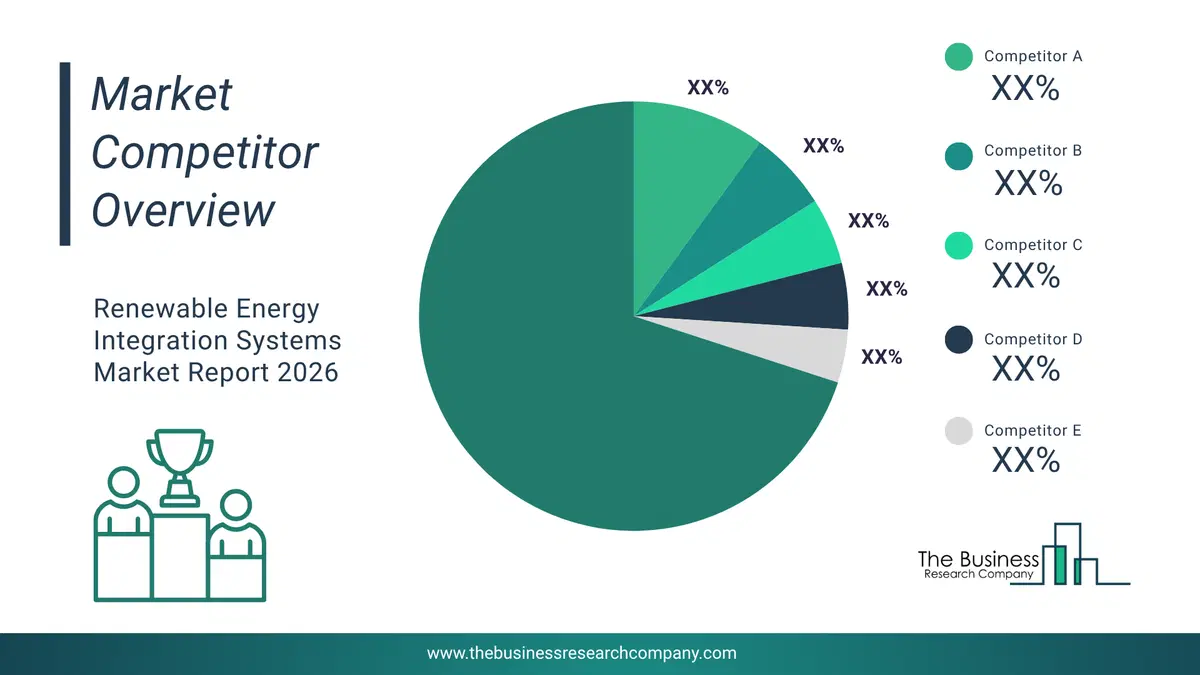
This chart is for illustrative purposes; the full report includes a detailed competitor analysis and comprehensive overview of the top 10 companies in the market.
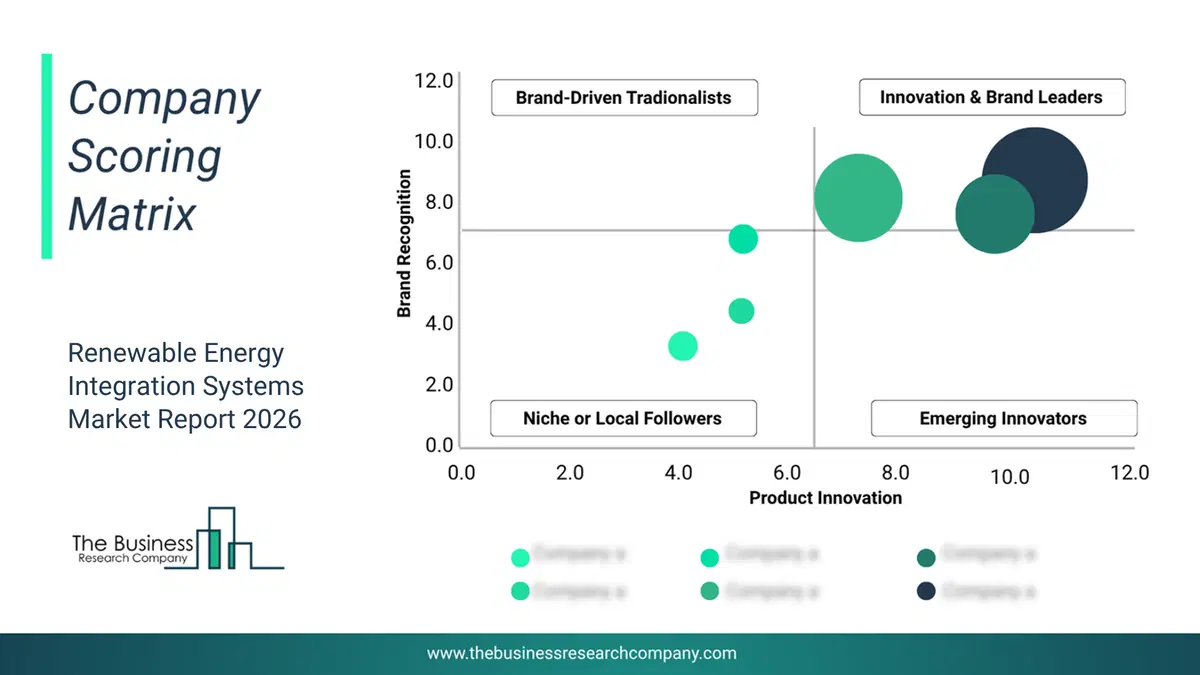
This chart maps companies by product innovation and brand strength, with bubble size indicating relative revenue, helping identify market leaders, challengers, and niche players. This is an illustrative chart; the full report provides a complete and accurate competitive analysis.
Global Renewable Energy Integration Systems Market Trends and Insights
Major companies operating in renewable energy integration systems are focusing on introducing innovative solutions such as next-generation solar inverter solutions to enhance energy efficiency. Next-generation solar inverter solutions are advanced technologies that enhance solar energy conversion efficiency, reliability, and integration with smart grids and energy storage systems. They offer improved performance, real-time monitoring, and support for renewable energy sources. For instance, in September 2024, EPC Power Corporation, a US-based manufacturing company, launched M System. The M System is a modular solar inverter platform designed to optimize energy storage and solar plant design, offering configurations from a single 5.3 MVA inverter block to ten independent 537 kVA inverters. Its flexible architecture enhances production efficiency and profitability while supporting U.S. renewable energy manufacturing.What Are Latest Mergers And Acquisitions In The Renewable Energy Integration Systems Market?
In October 2023, Hitachi Energy Ltd., a Switzerland-based technology company, acquired Eks Energy for an undisclosed amount. This acquisition adds superior power electronics and energy management software capabilities to address the growing global demand for battery energy storage solutions. Eks Energy is a UK-based provider of renewable energy integration systems.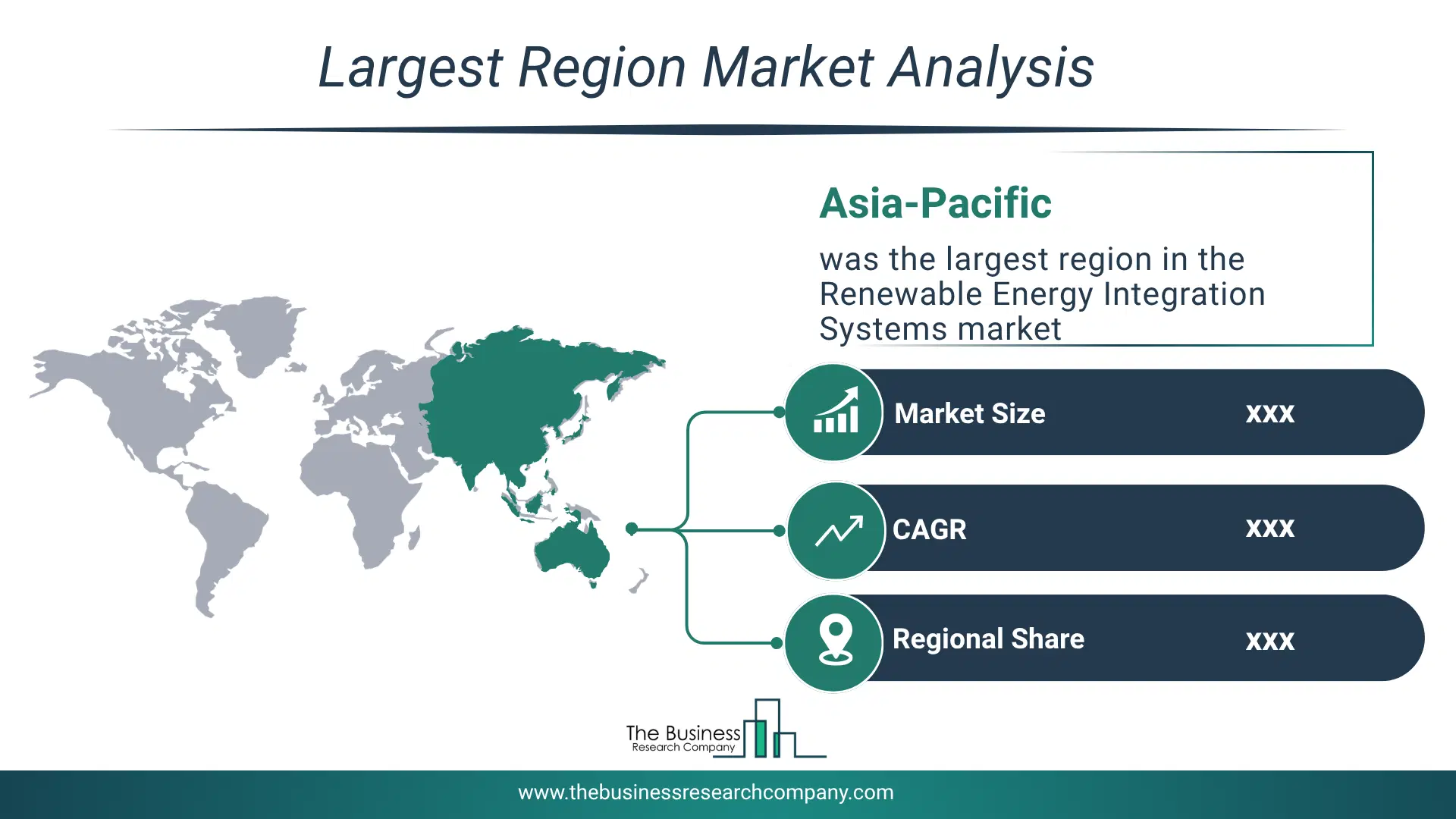
Regional Outlook
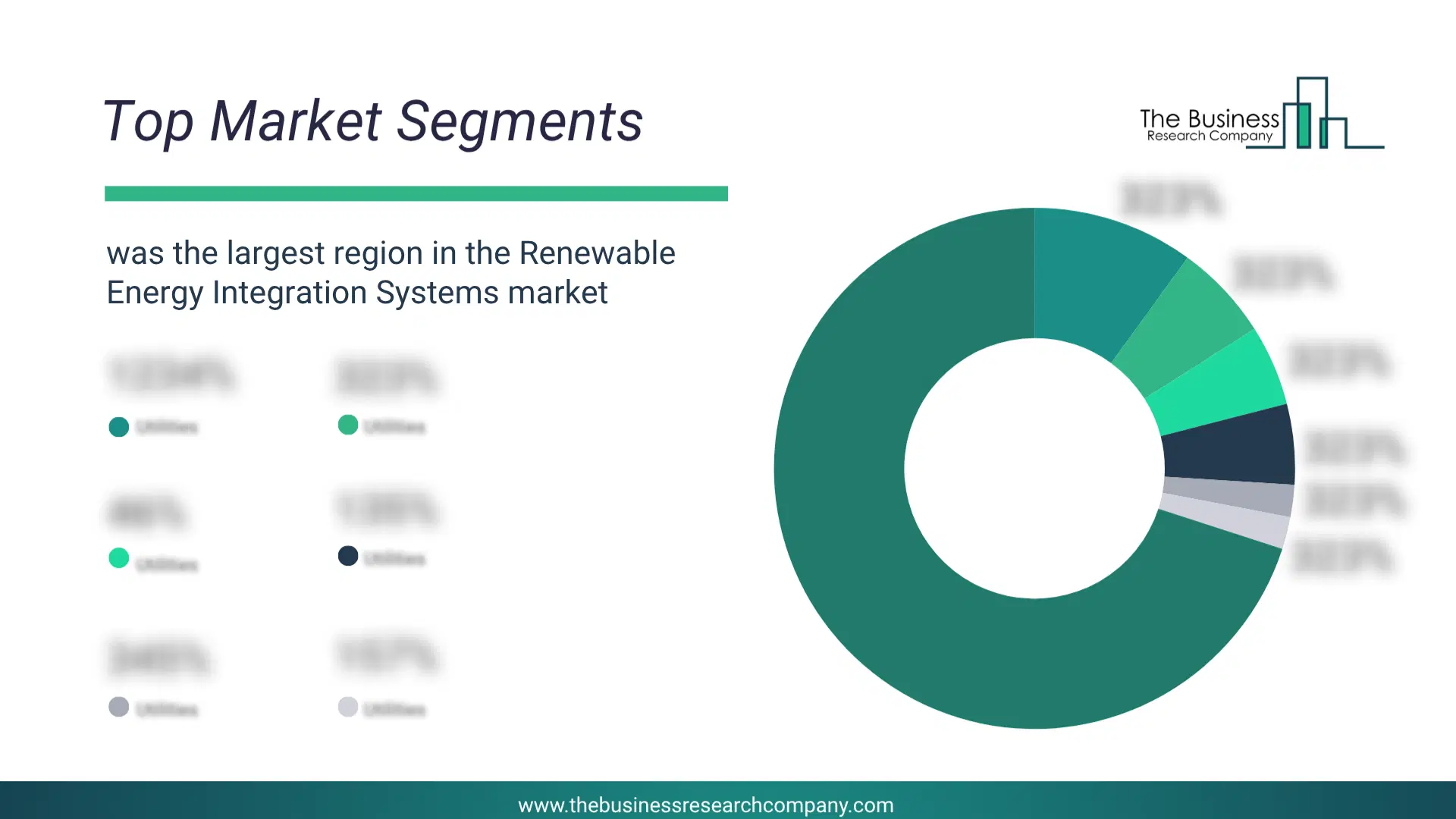
Asia-Pacific was the largest region in the renewable energy integration systems market in 2025. The regions covered in this market report are Asia-Pacific, South East Asia, Western Europe, Eastern Europe, North America, South America, Middle East, Africa. The countries covered in this market report are Australia, Brazil, China, France, Germany, India, Indonesia, Japan, Taiwan, Russia, South Korea, UK, USA, Canada, Italy, Spain.What Defines the Renewable Energy Integration Systems Market?
The renewable energy integration system market consists of revenues earned by entities by providing services such as grid integration services, smart grid solutions, grid management and stability, regulatory compliance and reporting, system optimization and efficiency, and energy storage solutions. The market value includes the value of related goods sold by the service provider or included within the service offering. The renewable energy integration system market also includes sales of products such as smart inverters, energy storage systems, energy forecasting tools, and grid-tied solar PV systems. Values in this market are ‘factory gate’ values, that is, the value of goods sold by the manufacturers or creators of the goods, whether to other entities (including downstream manufacturers, wholesalers, distributors, and retailers) or directly to end customers. The value of goods in this market includes related services sold by the creators of the goods.How is Market Value Defined and Measured?
The market value is defined as the revenues that enterprises gain from the sale of goods and/or services within the specified market and geography through sales, grants, or donations in terms of the currency (in USD unless otherwise specified). The revenues for a specified geography are consumption values that are revenues generated by organizations in the specified geography within the market, irrespective of where they are produced. It does not include revenues from resales along the supply chain, either further along the supply chain or as part of other products.
This chart presents market attractiveness based on a quantitative evaluation of growth, competition, strategic alignment, and risk, offering a clear view of opportunity areas for decision-making. This chart is for illustrative purposes; the full report contains the complete analysis.

This chart highlights the Total Addressable Market (TAM) by estimating the maximum revenue opportunity using an assumption-driven approach, supporting strategic planning and opportunity sizing across markets. The chart is illustrative; the full report provides a more comprehensive analysis.
What Key Data and Analysis Are Included in the Renewable Energy Integration Systems Market Report 2026?
The renewable energy integration systems market research report is one of a series of new reports from The Business Research Company that provides market statistics, including industry global market size, regional shares, competitors with the market share, detailed market segments, market trends and opportunities, and any further data you may need to thrive in the renewable energy integration systems industry. The market research report delivers a complete perspective of everything you need, with an in-depth analysis of the current and future state of the industry.Renewable Energy Integration Systems Market Report Forecast Analysis
| Report Attribute | Details |
|---|---|
| Market Size Value In 2026 | $160.6 billion |
| Revenue Forecast In 2030 | $228.04 billion |
| Growth Rate | CAGR of 9.2% from 2026 to 2030 |
| Base Year For Estimation | 2025 |
| Actual Estimates/Historical Data | 2020-2025 |
| Forecast Period | 2026 - 2030 |
| Market Representation | Revenue in USD Billion and CAGR from 2026 to 2030 |
| Segments Covered | Components, Power Sources, End-User |
| Regional Scope | Asia-Pacific, Western Europe, Eastern Europe, North America, South America, Middle East, Africa |
| Country Scope | The countries covered in the report are Australia, Brazil, China, France, Germany, India, Indonesia, Japan, Taiwan, Russia, South Korea, UK, USA, Canada, Italy, Spain. |
| Key Companies Profiled | Hitachi Ltd., Huawei Technologies Co. Ltd., Siemens AG, General Electric Renewable Energy LLC, Schneider Electric SE, ASEA Brown Boveri Ltd., Toshiba Corporation, Exelon Generation Company LLC, Vestas Wind Systems AS, Emerson Electric Co., Delta Electronics Inc., Sungrow Power Supply Co. Ltd., Enercon GmbH, SolarEdge Technologies Inc., Enphase Energy, Advanced Energy Industries Inc., SMA Solar Technology AG, Fronius International GmbH, Cyber Power Systems Inc., Nidec Industrial Solutions, Kaco New Energy GmbH, FlexGen Power Systems, Doosan GridTech, Voltus Inc., Ideal Power Inc. |
| Customization Scope | Request for Customization |
| Pricing And Purchase Options | Explore Purchase Options |