

Renewable Integration In Oil And Gas Market Report 2026
Global Outlook – By Renewable Energy Source (Solar Energy, Wind Energy, Hydropower, Bioenergy, Geothermal Energy, Hybrid Renewable Energy Systems), By Application (Upstream Operations, Midstream Operations, Downstream Operations, Offshore Platforms, Onshore Oilfields, Refineries And Petrochemical Facilities), By End User (Exploration And Production Companies, Refining Companies, Petrochemical Companies, Other End Users) – Market Size, Trends, Strategies, and Forecast to 2030
Renewable Integration In Oil And Gas Market Overview
• Renewable Integration In Oil And Gas market size has reached to $7.1 billion in 2025 • Expected to grow to $13.53 billion in 2030 at a compound annual growth rate (CAGR) of 13.7% • Growth Driver: The Increasing Regulatory Pressure To Reduce Carbon Emissions Driving The Growth Of The Market Due To Growing Concerns Over Climate Change • Market Trend: Strategic Partnerships And Captive Renewable Procurement Accelerate Decarbonization Of Upstream Oilfield Operations • North America was the largest region in 2025 and Asia-Pacific is the fastest growing region.What Is Covered Under Renewable Integration In Oil And Gas Market?
Renewable integration in oil and gas refers to the strategic incorporation of clean energy systems into conventional oil and gas operations to reduce dependence on fossil-based power. It focuses on lowering carbon emissions and improving operational sustainability while maintaining energy reliability and efficiency in industrial processes. The main renewable energy sources for renewable integration in oil and gas include solar energy, wind energy, hydropower, bioenergy, geothermal energy, and hybrid renewable energy systems. Solar energy refers to the use of photovoltaic and solar power technologies to provide clean electricity for oil and gas operations, reducing reliance on conventional energy sources and lowering carbon emissions. These renewable solutions are applied across upstream operations, midstream operations, downstream operations, offshore platforms, onshore oilfields, and refineries and petrochemical facilities and are adopted by end users including exploration and production companies, refining companies, petrochemical companies, and others.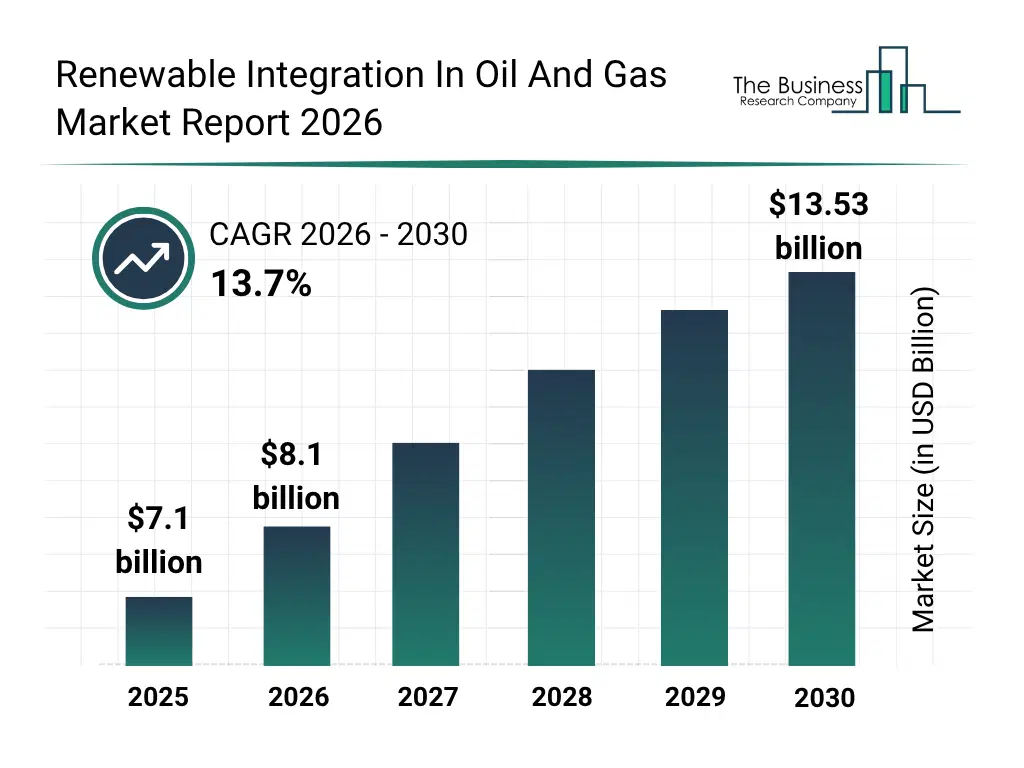
What Is The Renewable Integration In Oil And Gas Market Size and Share 2026?
The renewable integration in oil and gas market size has grown rapidly in recent years. It will grow from $7.1 billion in 2025 to $8.1 billion in 2026 at a compound annual growth rate (CAGR) of 14.1%. The growth in the historic period can be attributed to increasing energy consumption in oil and gas operations, rising fuel cost volatility, growing focus on operational efficiency, expanding investments in renewable energy projects, increasing environmental sustainability initiatives.What Is The Renewable Integration In Oil And Gas Market Growth Forecast?
The renewable integration in oil and gas market size is expected to see rapid growth in the next few years. It will grow to $13.53 billion in 2030 at a compound annual growth rate (CAGR) of 13.7%. The growth in the forecast period can be attributed to growing demand for low carbon oil and gas operations, rising investments in hybrid renewable energy systems, increasing deployment of renewable powered industrial facilities, expanding decarbonization initiatives across energy infrastructure, growing adoption of renewable energy integration technologies. Major trends in the forecast period include increasing integration of hybrid renewable energy systems in oil and gas operations, growing deployment of onsite renewable power generation across oilfields, rising adoption of low carbon energy solutions for industrial operations, expanding investments in renewable powered offshore and onshore facilities, increasing development of energy efficient oil and gas infrastructure.
Global Renewable Integration In Oil And Gas Market Segmentation
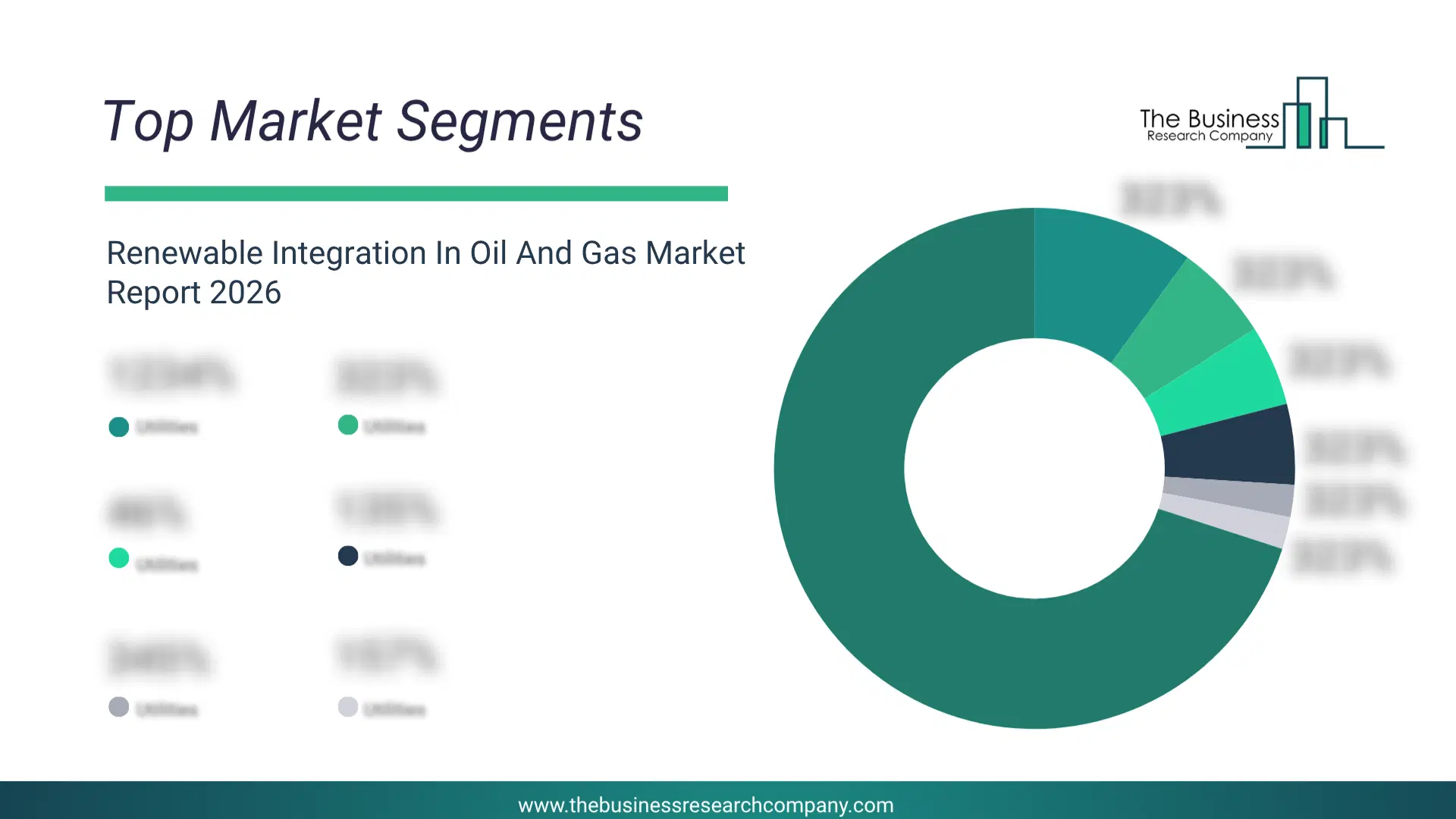
2) By Application: Upstream Operations, Midstream Operations, Downstream Operations, Offshore Platforms, Onshore Oilfields, Refineries And Petrochemical Facilities 3) By End User: Exploration And Production Companies, Refining Companies, Petrochemical Companies, Other End Users Subsegments: 1) By Solar Energy: Ground Mounted Solar Photovoltaic Systems, Rooftop Solar Photovoltaic Systems, Floating Solar Photovoltaic Systems, Concentrated Solar Power Systems, Solar Thermal Systems 2) By Wind Energy: Small Wind Turbine Systems, Onshore Wind Turbine Systems, Offshore Wind Turbine Systems, Utility Scale Wind Power Systems, Distributed Wind Energy Systems 3) By Hydropower: Large Hydropower Systems, Small Hydropower Systems, Run Of River Hydropower Systems, Pumped Storage Hydropower Systems, Micro Hydropower Systems 4) By Bioenergy: Biogas Energy Systems, Biomass Power Generation Systems, Biofuel Production Systems, Waste To Energy Systems, Renewable Natural Gas Systems 5) By Geothermal Energy: Dry Steam Geothermal Systems, Flash Steam Geothermal Systems, Binary Cycle Geothermal Systems, Enhanced Geothermal Systems, Direct Use Geothermal Systems 6) By Hybrid Renewable Energy Systems: Solar And Battery Energy Storage Systems, Wind And Battery Energy Storage Systems, Solar And Wind Hybrid Systems, Solar Wind And Battery Hybrid Systems, Multi Source Renewable Energy SystemsWhat Are The Drivers Of The Renewable Integration In Oil And Gas Market?
The increasing regulatory pressure to reduce carbon emissions is expected to propel the growth of renewable integration in the oil and gas market going forward. Regulatory pressure to reduce carbon emissions refers to the increasing legal and policy requirements imposed by governments and regulatory bodies on organizations to limit greenhouse gas emissions and transition toward lower-carbon or sustainable operations. Increasing regulatory pressure to reduce carbon emissions is due to growing concerns over climate change, as governments aim to limit global warming, reduce environmental damage, and meet international sustainability targets. Renewable integration in oil and gas enables a reduction in carbon emissions by replacing a portion of fossil fuel-based power with cleaner energy sources such as solar and wind, thereby lowering operational greenhouse gas output and improving overall energy efficiency. For instance, in November 2025, according to the Department for Energy Security and Net Zero, a UK-based government agency, industry will not meet its 2040 target of reducing production emissions by 90%. Emissions from upstream oil and gas still account for just over 3% of total UK greenhouse gas emissions. Therefore, the increasing regulatory pressure to reduce carbon emissions is driving the growth of renewable integration in the oil and gas market. The expansion of off-grid energy projects is expected to propel the growth of renewable integration in the oil and gas market going forward. Off-grid energy projects are energy generation and distribution systems that operate independently of centralized electricity grids and typically utilize renewable energy sources, energy storage systems, and localized power infrastructure. The expansion of off-grid energy projects is due to increasing electricity demand in remote and underserved areas where extending conventional grid infrastructure remains costly and technically challenging. Renewable integration in oil and gas supports off-grid energy projects by providing reliable and cost-effective power through the deployment of solar, wind, bioenergy, and energy storage systems at remote exploration, production, processing, and transportation sites that lack access to centralized electricity grids. For instance, in April 2024, according to the Solar Power Portal, a UK-based renewable energy news platform, offshore wind’s contribution to the UK’s electricity rose from 13.8% in 2022 to 17.3% in 2023, showing a clear year-on-year increase in its share of power generation. Therefore, the expansion of off-grid energy projects is driving the growth of renewable integration in the oil and gas market.Key Players In The Global Renewable Integration In Oil And Gas Market
Major companies operating in the renewable integration in oil and gas market are Shell plc, TotalEnergies SE, BP p.l.c., Siemens AG, Schneider Electric SE, Chevron Corporation, Equinor ASA, Mitsubishi Electric Corporation, GE Vernova Inc., ABB Limited, Emerson Electric Co., Eaton Corporation plc, TechnipFMC plc, Worley Limited, KBR Inc., AtkinsRéalis Group inc., Tetra Tech Inc., Black & Veatch Holding Company, Yokogawa Electric Corporation, DNV Group AS, Burns & McDonnell Engineering Company Inc., Arup Group Limited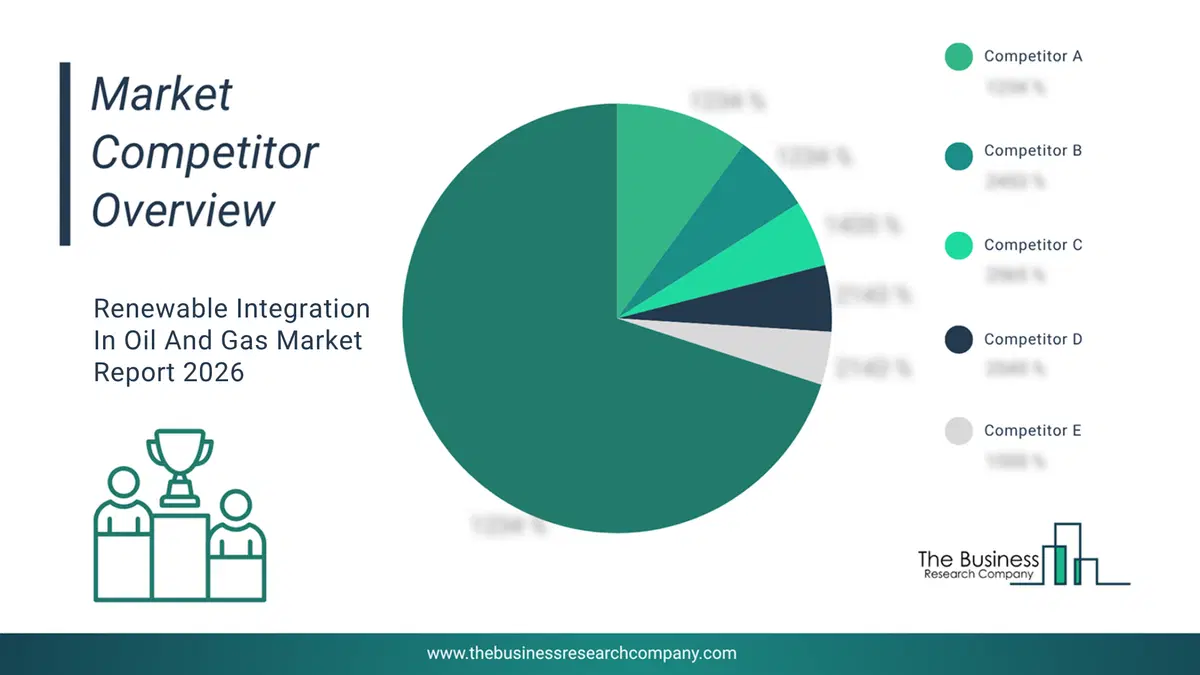
This chart is for illustrative purposes; the full report includes a detailed competitor analysis and comprehensive overview of the top 10 companies in the market.
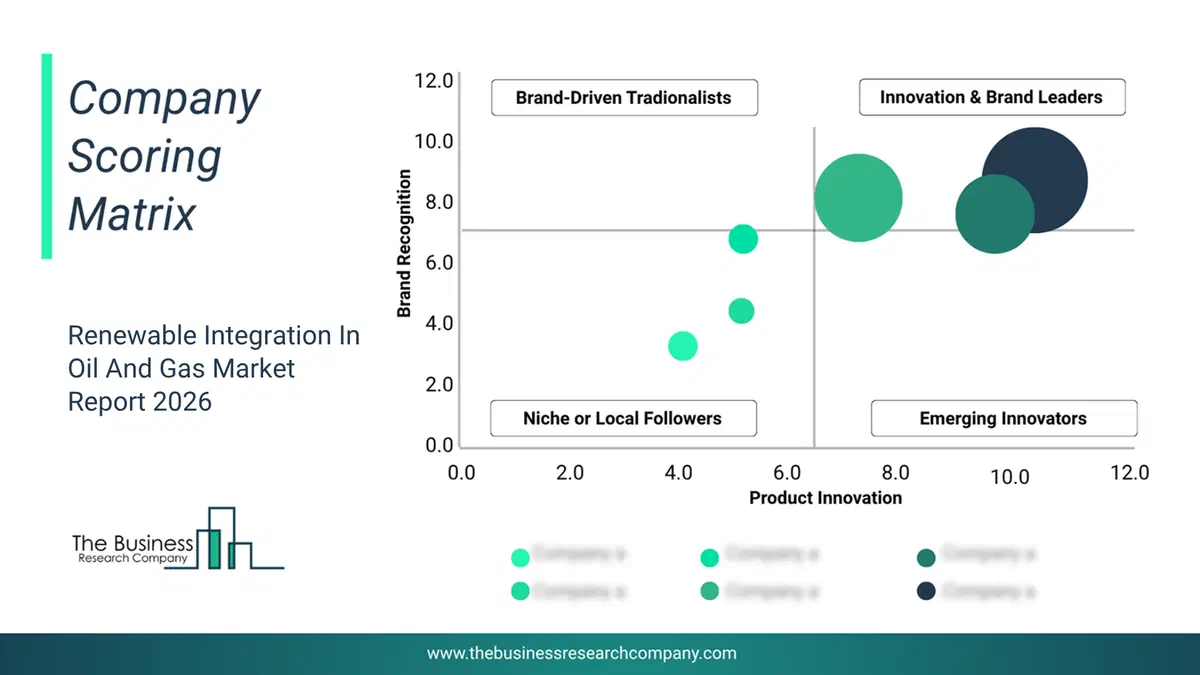
This chart maps companies by product innovation and brand strength, with bubble size indicating relative revenue, helping identify market leaders, challengers, and niche players. This is an illustrative chart; the full report provides a complete and accurate competitive analysis.
Global Renewable Integration In Oil And Gas Market Trends and Insights
Major companies operating in the renewable integration in the oil and gas market are focusing on developing strategic partnerships and captive renewable procurement models to decarbonize upstream operations, reduce operational emissions, and improve energy efficiency across oilfield activities. Strategic partnerships are long-term collaborations between companies to achieve shared goals, while captive renewable procurement models refer to companies directly sourcing renewable power from dedicated solar or wind projects for their own use. For instance, in April 2026, Cairn Oil And Gas, a subsidiary of Vedanta Limited, an India-based natural resources and technology company, partnered with Serentica Renewables India Pvt. Ltd., an India-based renewable green energy company, to commence the sourcing of renewable power for its oilfield operations in Rajasthan, India. Under this arrangement, Cairn Oil & Gas procures 25 MW of captive renewable hybrid energy to power its upstream facilities, marking a shift toward cleaner energy consumption in conventional oil production assets. This initiative enables the company to reduce its carbon footprint while ensuring a reliable energy supply for continuous field operations.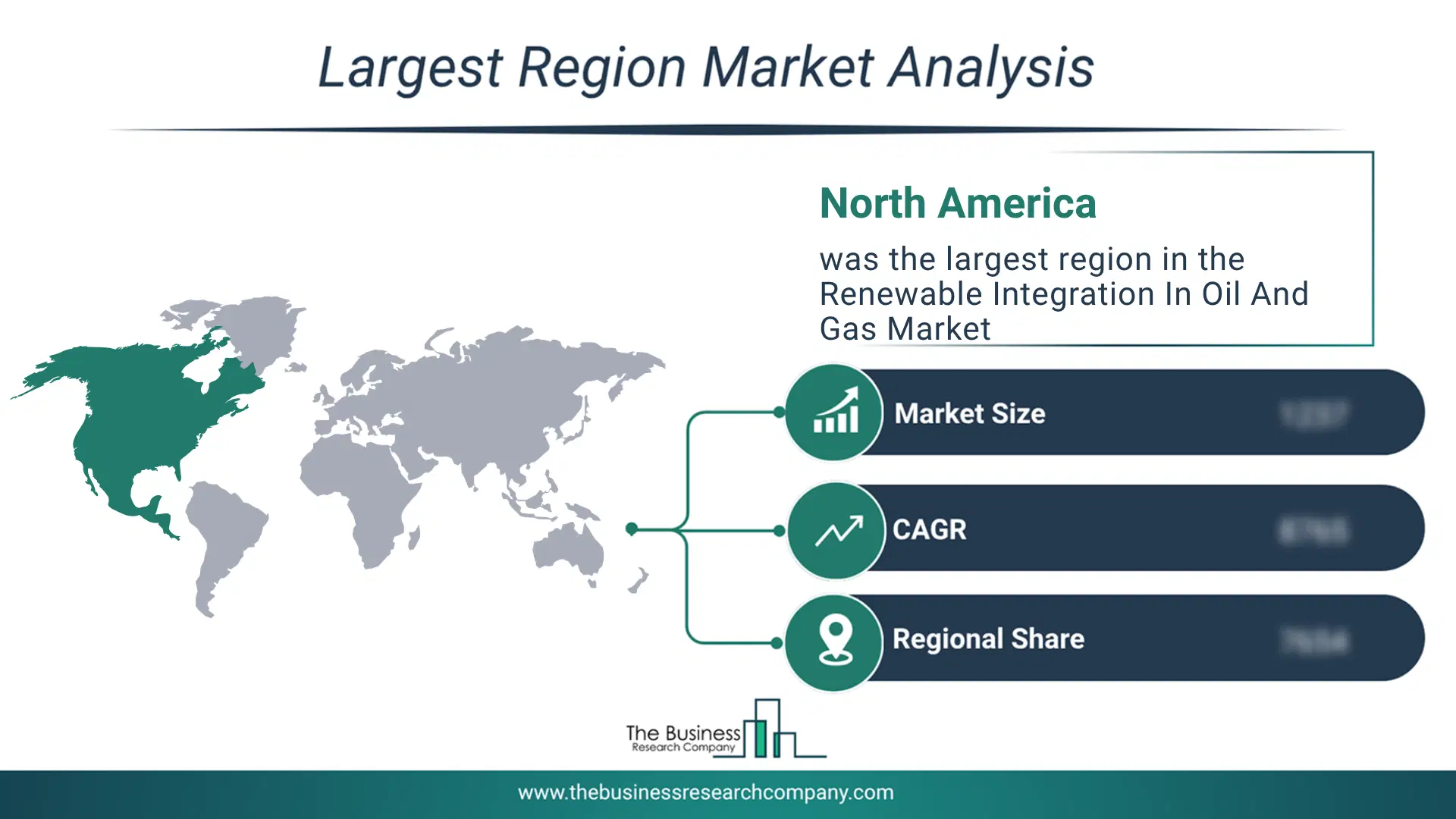
Regional Outlook/Insights
North America was the largest region in the renewable integration in oil and gas market in 2025. Asia-Pacific is expected to be the fastest-growing region in the forecast period. The regions covered in this market report are Asia-Pacific, South East Asia, Western Europe, Eastern Europe, North America, South America, Middle East, Africa. The countries covered in this market report are Australia, Brazil, China, France, Germany, India, Indonesia, Japan, Taiwan, Russia, South Korea, UK, USA, Canada, Italy, Spain.What Defines the Renewable Integration In Oil And Gas Market?
The renewable integration in oil and gas market includes revenues earned by entities by providing services such as engineering and design of hybrid systems, installation of renewable solutions, energy optimization, maintenance of integrated facilities, and decarbonization consulting. The market value includes the value of related goods sold by the service provider or included within the service offering. Only goods and services traded between entities or sold to end consumers are included.How is Market Value Defined and Measured?
The market value is defined as the revenues that enterprises gain from the sale of goods and/or services within the specified market and geography through sales, grants, or donations in terms of the currency (in USD unless otherwise specified). The revenues for a specified geography are consumption values that are revenues generated by organizations in the specified geography within the market, irrespective of where they are produced. It does not include revenues from resales along the supply chain, either further along the supply chain or as part of other products.
This chart presents market attractiveness based on a quantitative evaluation of growth, competition, strategic alignment, and risk, offering a clear view of opportunity areas for decision-making. This chart is for illustrative purposes; the full report contains the complete analysis.

This chart highlights the Total Addressable Market (TAM) by estimating the maximum revenue opportunity using an assumption-driven approach, supporting strategic planning and opportunity sizing across markets. The chart is illustrative; the full report provides a more comprehensive analysis.
What Key Data and Analysis Are Included in the Renewable Integration In Oil And Gas Market Report 2026?
The renewable integration in oil and gas market research report is one of a series of new reports from The Business Research Company that provides renewable integration in oil and gas market statistics, including renewable integration in oil and gas industry global market size, regional shares, competitors with a renewable integration in oil and gas market share, detailed renewable integration in oil and gas market segments, market trends and opportunities, and any further data you may need to thrive in the renewable integration in oil and gas industry. This renewable integration in oil and gas market research report delivers a complete perspective of everything you need, with an in-depth analysis of the current and future scenario of the industry.Renewable Integration In Oil And Gas Market Report Forecast Analysis
| Report Attribute | Details |
|---|---|
| Market Size Value In 2026 | $8.1 billion |
| Revenue Forecast In 2030 | $13.53 billion |
| Growth Rate | CAGR of 13.7% from 2026 to 2030 |
| Base Year For Estimation | 2025 |
| Actual Estimates/Historical Data | 2020-2025 |
| Forecast Period | 2026 - 2030 |
| Market Representation | Revenue in USD Billion and CAGR from 2026 to 2030 |
| Segments Covered | Renewable Energy Source, Application, End User |
| Regional Scope | Asia-Pacific, Western Europe, Eastern Europe, North America, South America, Middle East, Africa |
| Country Scope | The countries covered in the report are Australia, Brazil, China, France, Germany, India, Indonesia, Japan, Taiwan, Russia, South Korea, UK, USA, Canada, Italy, Spain. |
| Key Companies Profiled | Shell plc, TotalEnergies SE, BP p.l.c., Siemens AG, Schneider Electric SE, Chevron Corporation, Equinor ASA, Mitsubishi Electric Corporation, GE Vernova Inc., ABB Limited, Emerson Electric Co., Eaton Corporation plc, TechnipFMC plc, Worley Limited, KBR Inc., AtkinsRéalis Group inc., Tetra Tech Inc., Black & Veatch Holding Company, Yokogawa Electric Corporation, DNV Group AS, Burns & McDonnell Engineering Company Inc., Arup Group Limited |
| Customization Scope | Request for Customization |
| Pricing And Purchase Options | Explore Purchase Options |