
Rescue Robot Market Report 2026
Global Outlook – By Component (Hardware, Software, Services), By Type (Wheeled, Tracked, Legged, Hybrid), By Operation Mode (Autonomous, Remotely Operated), By Application (Search And Rescue, Demining, Explosive Ordnance Disposal (EOD), Hazardous Material Handling, Surveillance And Reconnaissance, Firefighting, Disaster Response), By End-User (Military And Defense, Law Enforcement, Fire And Rescue Services, Disaster Management Agencies, Industrial, Mining, Construction) – Market Size, Trends, Strategies, and Forecast to 2030
Rescue Robot Market Overview
• Rescue Robot market size has reached to $38.17 billion in 2025 • Expected to grow to $83.12 billion in 2030 at a compound annual growth rate (CAGR) of 16.8% • Growth Driver: Increasing Industrial Accidents Fueling The Growth Of The Market Due To Rising Workplace Hazards And Worker Safety Risks • Market Trend: Advanced Firefighting Robot Enhances Emergency Response • North America was the largest region in 2025 and Asia-Pacific is the fastest growing region.What Is Covered Under Rescue Robot Market?
A rescue robot is an advanced robotic system designed to assist in search and rescue operations in hazardous or unsafe environments. It is equipped with sensors, cameras, and sometimes manipulators to navigate difficult terrains, assess disaster-affected areas, and locate victims. Its primary purpose is to provide critical support during emergencies such as earthquakes, fires, or industrial accidents while minimizing risk to human responders. The main components of rescue robot are hardware, software, and services. Rescue robot hardware refers to the physical parts of a rescue robot that enable it to perform operations in emergency and hazardous environments. It includes various types, such as wheeled, tracked, legged, and hybrid, and is operated through autonomous or remotely operated. It finds applications in search and rescue, demining, explosive ordnance disposal (EOD), hazardous material handling, surveillance and reconnaissance, firefighting, disaster response, serving end users such as military and defense, law enforcement, fire and rescue services, disaster management agencies, industrial, mining, and construction.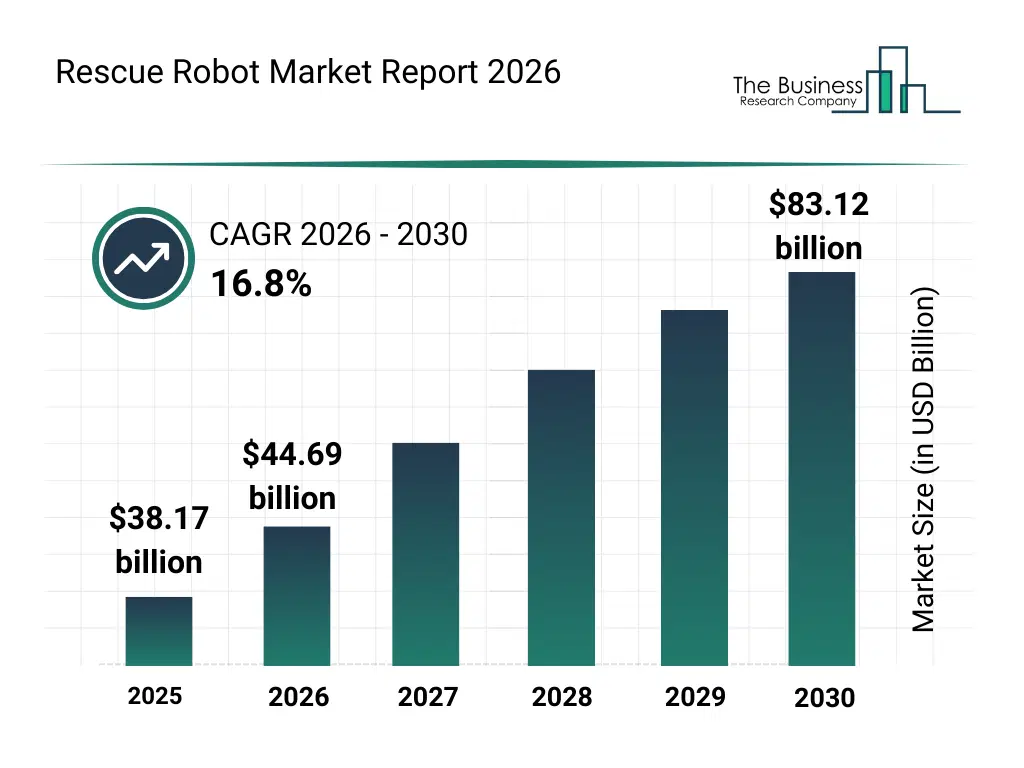
What Is The Rescue Robot Market Size and Share 2026?
The rescue robot market size has grown rapidly in recent years. It will grow from $38.17 billion in 2025 to $44.69 billion in 2026 at a compound annual growth rate (CAGR) of 17.1%. The growth in the historic period can be attributed to increasing frequency of natural disasters, rising investments in emergency response infrastructure, early adoption by military and defense agencies, growing use in hazardous industrial environments, advancements in robotics hardware reliability.What Is The Rescue Robot Market Growth Forecast?
The rescue robot market size is expected to see rapid growth in the next few years. It will grow to $83.12 billion in 2030 at a compound annual growth rate (CAGR) of 16.8%. The growth in the forecast period can be attributed to increasing demand for autonomous rescue solutions, rising government funding for disaster preparedness, growing integration of ai-driven decision support, expansion of smart city emergency systems, increasing use of robots in firefighting and EOD operations. Major trends in the forecast period include increasing deployment of ai-enabled navigation systems, rising adoption of multi-terrain rescue robots, growing integration of advanced sensor and imaging technologies, expansion of remotely operated rescue platforms, enhanced focus on rapid deployment capabilities.
Global Rescue Robot Market Segmentation
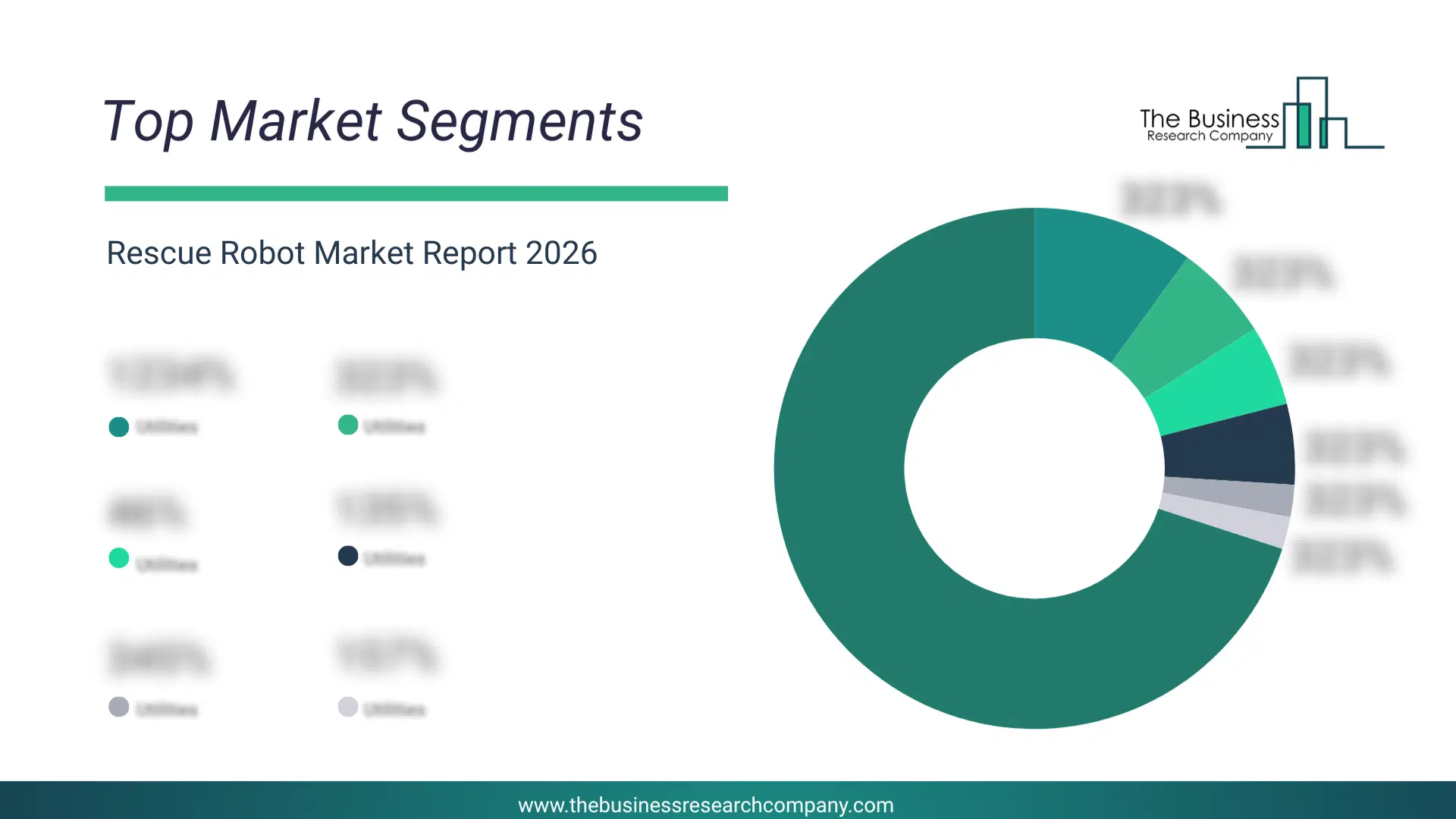
1) By Component: Hardware, Software, Services 2) By Type: Wheeled, Tracked, Legged, Hybrid 3) By Operation Mode: Autonomous, Remotely Operated 4) By Application: Search And Rescue, Demining, Explosive Ordnance Disposal (EOD), Hazardous Material Handling, Surveillance And Reconnaissance, Firefighting, Disaster Response 5) By End-User: Military And Defense, Law Enforcement, Fire And Rescue Services, Disaster Management Agencies, Industrial, Mining, Construction Subsegments: 1) By Hardware: Motors, Sensors, Cameras, Actuators, Power Supply, Communication Modules, Chassis 2) By Software: Navigation Software, Control Software, Artificial Intelligence Software, Mapping Software, Data Analysis Software, Communication Software 3) By Services: Maintenance Services, Training Services, Repair Services, Consulting Services, Integration Services, Upgradation ServicesWhat Is The Driver Of The Rescue Robot Market?
The increasing industrial accidents are expected to propel the growth of the rescue robots market going forward. Industrial accidents refer to unexpected events or incidents that occur in workplaces, especially in factories or industrial settings, causing injury, illness, damage to equipment, or disruption of operations. Industrial accidents are on the rise as aging equipment and insufficient maintenance increase the likelihood of unexpected machinery failures, putting workers at greater risk in industrial environments. Rescue robots help address industrial accidents by providing rapid response capabilities, making them ideal for hazardous and hard-to-reach environments. They reduce risks to human workers by performing search, assessment, and victim assistance tasks, improving overall workplace safety and emergency response efficiency. For instance, in July 2024, according to the British Safety Council, a UK-based health and safety organization, around 138 workers lost their lives in work-related accidents in 2023-24, an increase from 136 compared to 2022-23. Therefore, the increasing industrial accidents are driving the growth of the rescue robot industry.Key Players In The Global Rescue Robot Market
Major companies operating in the rescue robot market are LeoTronics Robotics, Lockheed Martin Corporation, BAE Systems plc, Toshiba Corporation, Kawasaki Heavy Industries Ltd., Teledyne FLIR, Saab AB, Kongsberg Gruppen ASA, QinetiQ Group plc, Hydronalix Inc., iRobot Corporation, Boston Dynamics Inc., VideoRay LLC, Vecna Technologies, Robo-Team NA, Deep Robotics, Howe & Howe Technologies Inc., Gridbots Technologies Private Limited, Shark Robotics, Pliant Energy Systems LLC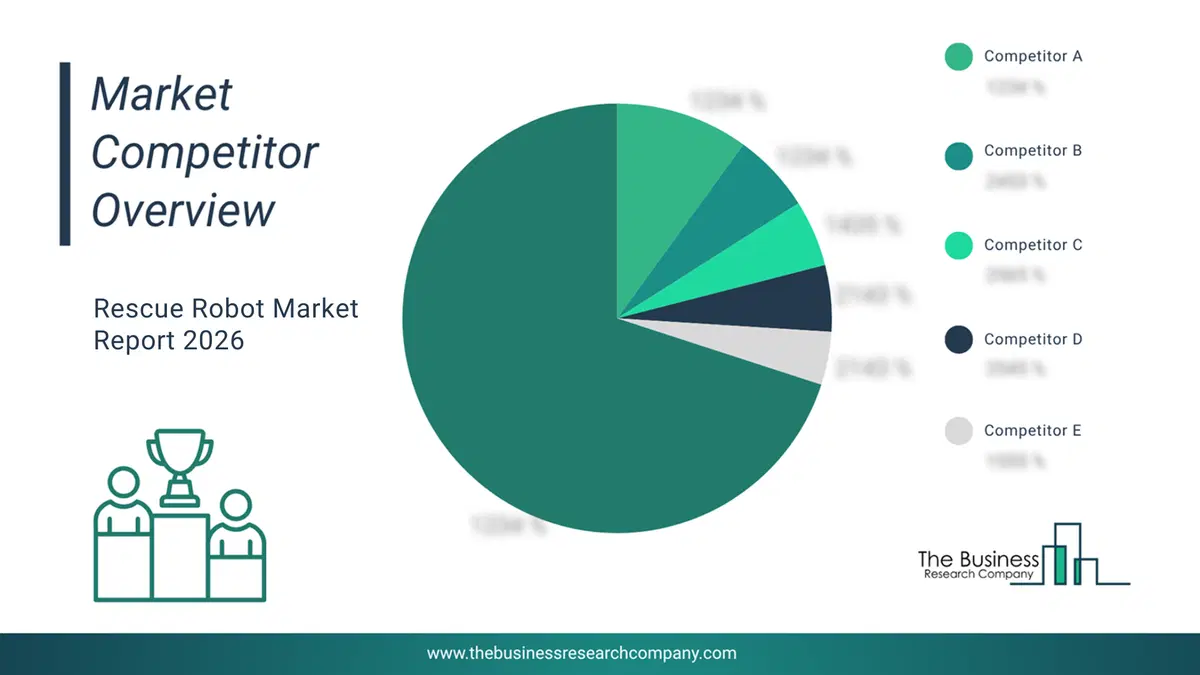
This chart is for illustrative purposes; the full report includes a detailed competitor analysis and comprehensive overview of the top 10 companies in the market.
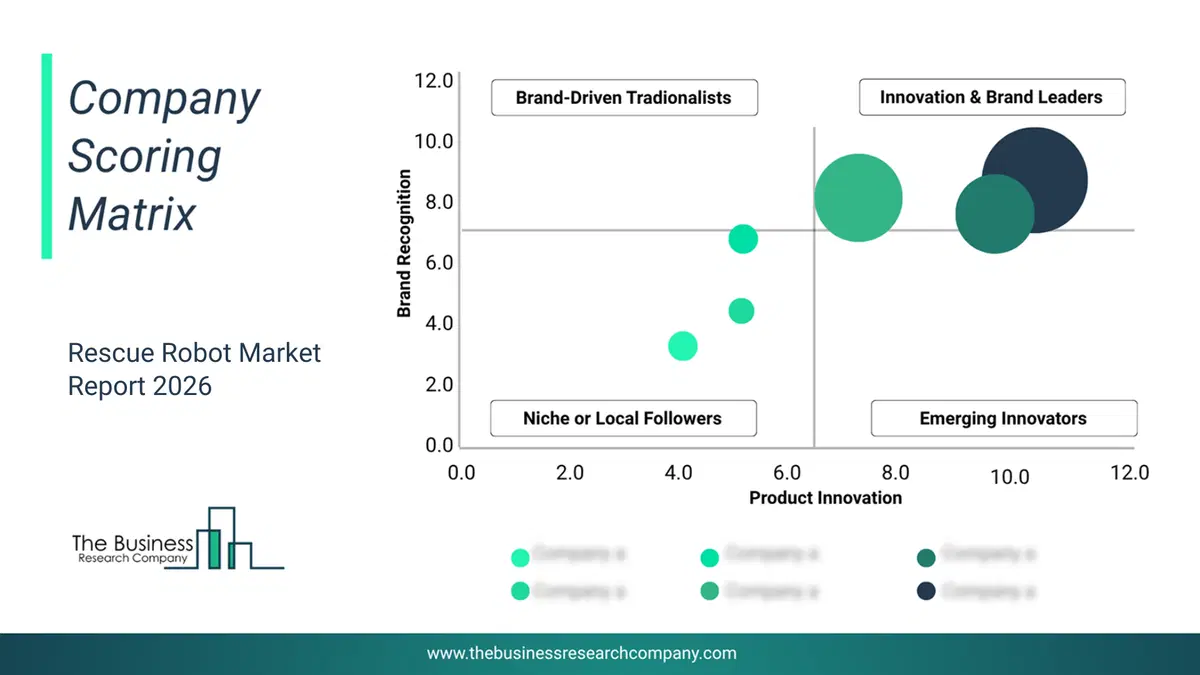
This chart maps companies by product innovation and brand strength, with bubble size indicating relative revenue, helping identify market leaders, challengers, and niche players. This is an illustrative chart; the full report provides a complete and accurate competitive analysis.
Global Rescue Robot Market Trends and Insights
Major companies operating in the rescue robot market are focusing on developing technologically advanced products, such as firefighting robots, to enhance emergency response efficiency, improve safety for first responders, and operate effectively in hazardous or inaccessible environments. A firefighting robot refers to autonomous or remotely controlled machines designed to detect, suppress, and manage fires in hazardous or inaccessible environments, enhancing safety and efficiency during fire emergencies. For instance, in April 2023, Howe & Howe Technologies Inc., a US-based armored and robotic company, launched the Thermite EV1 firefighting robot. It is an electric robot engineered for advanced firefighting operations, featuring a modular design and a high-capacity 700-gallon-per-minute nozzle. This robot is powered by advanced battery technology and can operate in high-temperature, oxygen-deficient environments where traditional fuel-powered vehicles struggle. Thermite EV1 can function for up to 20 hours with a standoff range of over 300 meters, and its robust tracks allow it to traverse rough terrain, providing fire departments with a versatile tool to enhance safety and operational efficiency in hazardous situations.What Are Latest Mergers And Acquisitions In The Rescue Robot Market?
In February 2023, EDGE Group, a United Arab Emirates-based advanced technology and defense company, acquired Milrem Robotics for an undisclosed amount. With this acquisition, EDGE aims to strengthen its global defense portfolio by integrating Milrem’s expertise in unmanned ground vehicles and robotics, expanding its reach in Northern Europe, and advancing next-generation defense capabilities. Milrem Robotics is an Estonia-based company specializing in autonomous rescue and unmanned ground robots.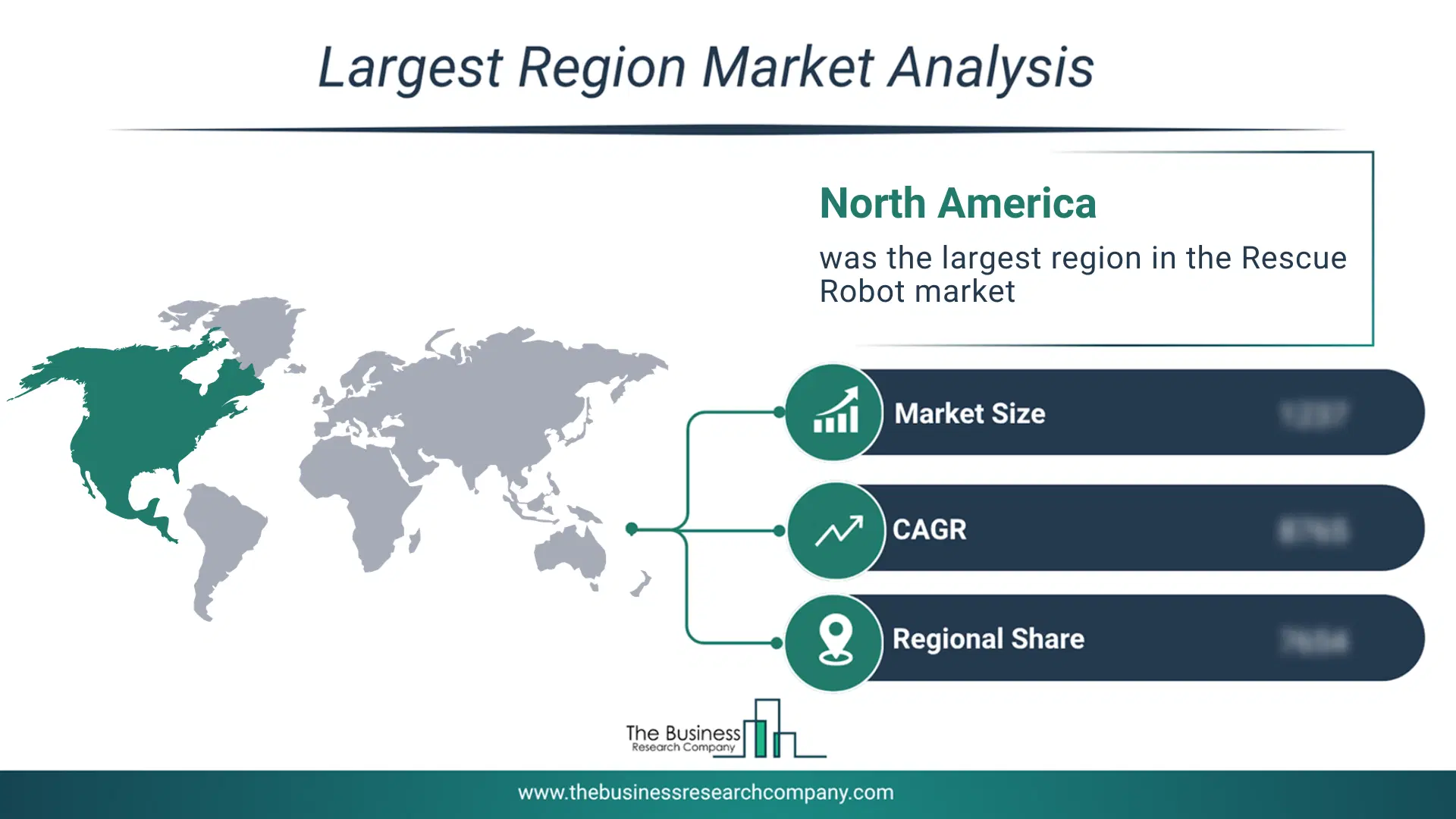
Regional Outlook
North America was the largest region in the rescue robot market in 2025. Asia-Pacific is expected to be the fastest-growing region in the forecast period. The regions covered in this market report are Asia-Pacific, South East Asia, Western Europe, Eastern Europe, North America, South America, Middle East, Africa. The countries covered in this market report are Australia, Brazil, China, France, Germany, India, Indonesia, Japan, Taiwan, Russia, South Korea, UK, USA, Canada, Italy, Spain.What Defines the Rescue Robot Market?
The rescue robot market consists of revenues earned by entities by providing services such as hazardous material handling, search and detection, surveillance and mapping, delivery of supplies, and medical assistance. The market value includes the value of related goods sold by the service provider or included within the service offering. The rescue robot market also includes sales of unmanned ground vehicles, aerial drones, autonomous underwater vehicles (AUVs), and thermal and visual cameras. Values in this market are ‘factory gate’ values, that is, the value of goods sold by the manufacturers or creators of the goods, whether to other entities (including downstream manufacturers, wholesalers, distributors, and retailers) or directly to end customers. The value of goods in this market includes related services sold by the creators of the goods.How is Market Value Defined and Measured?
The market value is defined as the revenues that enterprises gain from the sale of goods and/or services within the specified market and geography through sales, grants, or donations in terms of the currency (in USD unless otherwise specified). The revenues for a specified geography are consumption values that are revenues generated by organizations in the specified geography within the market, irrespective of where they are produced. It does not include revenues from resales along the supply chain, either further along the supply chain or as part of other products.
This chart presents market attractiveness based on a quantitative evaluation of growth, competition, strategic alignment, and risk, offering a clear view of opportunity areas for decision-making. This chart is for illustrative purposes; the full report contains the complete analysis.

This chart highlights the Total Addressable Market (TAM) by estimating the maximum revenue opportunity using an assumption-driven approach, supporting strategic planning and opportunity sizing across markets. The chart is illustrative; the full report provides a more comprehensive analysis.
What Key Data and Analysis Are Included in the Rescue Robot Market Report 2026?
The rescue robot market research report is one of a series of new reports from The Business Research Company that provides market statistics, including industry global market size, regional shares, competitors with the market share, detailed market segments, market trends and opportunities, and any further data you may need to thrive in the rescue robot industry. The market research report delivers a complete perspective of everything you need, with an in-depth analysis of the current and future state of the industry.Rescue Robot Market Report Forecast Analysis
| Report Attribute | Details |
|---|---|
| Market Size Value In 2026 | $44.69 billion |
| Revenue Forecast In 2030 | $83.12 billion |
| Growth Rate | CAGR of 16.8% from 2026 to 2030 |
| Base Year For Estimation | 2025 |
| Actual Estimates/Historical Data | 2020-2025 |
| Forecast Period | 2026 - 2030 - 2030 |
| Market Representation | Revenue in USD Billion and CAGR from 2026 to 2030 |
| Segments Covered | Component, Type, Operation Mode, Application, End-User |
| Regional Scope | Asia-Pacific, Western Europe, Eastern Europe, North America, South America, Middle East, Africa |
| Country Scope | The countries covered in the report are Australia, Brazil, China, France, Germany, India, Indonesia, Japan, Taiwan, Russia, South Korea, UK, USA, Canada, Italy, Spain. |
| Key Companies Profiled | LeoTronics Robotics, Lockheed Martin Corporation, BAE Systems plc, Toshiba Corporation, Kawasaki Heavy Industries Ltd., Teledyne FLIR, Saab AB, Kongsberg Gruppen ASA, QinetiQ Group plc, Hydronalix Inc., iRobot Corporation, Boston Dynamics Inc., VideoRay LLC, Vecna Technologies, Robo-Team NA, Deep Robotics, Howe & Howe Technologies Inc., Gridbots Technologies Private Limited, Shark Robotics, Pliant Energy Systems LLC |
| Customization Scope | Request for Customization |
| Pricing And Purchase Options | Explore Purchase Options |