
Respiratory Syncytial Virus Vaccine Market Report 2026
Epidemiology, Pipeline Analysis, Market Insights & Forecasts
Respiratory Syncytial Virus Vaccine Market Overview
• The Respiratory Syncytial Virus Vaccine market growth in the historic period has been driven by rising incidence of rsv-related hospitalizations, unmet medical need in infant immunization • Market expansion is supported by increasing approval of novel rsv vaccines, growing government immunization funding • Growth Driver: Rising Respiratory Infections Fuel Growth In RSV Vaccine Market • Market Trend: Enhancing RSV Vaccine Efficacy Through Recombinant Protein Technology • North America was the largest region in 2025 and Asia-Pacific is the fastest growing region.Market Gains By 2030 – Top Opportunities By Segment
Market Gain identifies the most promising market opportunities by highlighting the segments or products expected to generate the highest incremental revenue growth over the next five years.
What Is Covered Under Respiratory Syncytial Virus Vaccine Market?
A respiratory syncytial virus (RSV) vaccine is a medical preparation designed to protect individuals, particularly infants, older adults, and high-risk populations, from severe respiratory infections caused by RSV. It works by stimulating the immune system to recognize and fight the virus, reducing the risk of hospitalization and severe disease. The main types of respiratory syncytial virus vaccines are viral vaccines, bacterial vaccines, and combination vaccines. A viral vaccine refers to a vaccine designed to prevent infections caused by viruses. It includes various indications, such as pediatric indications, geriatric indications, and high-risk individuals, and they are distributed through hospitals and other pharmacies and government suppliers.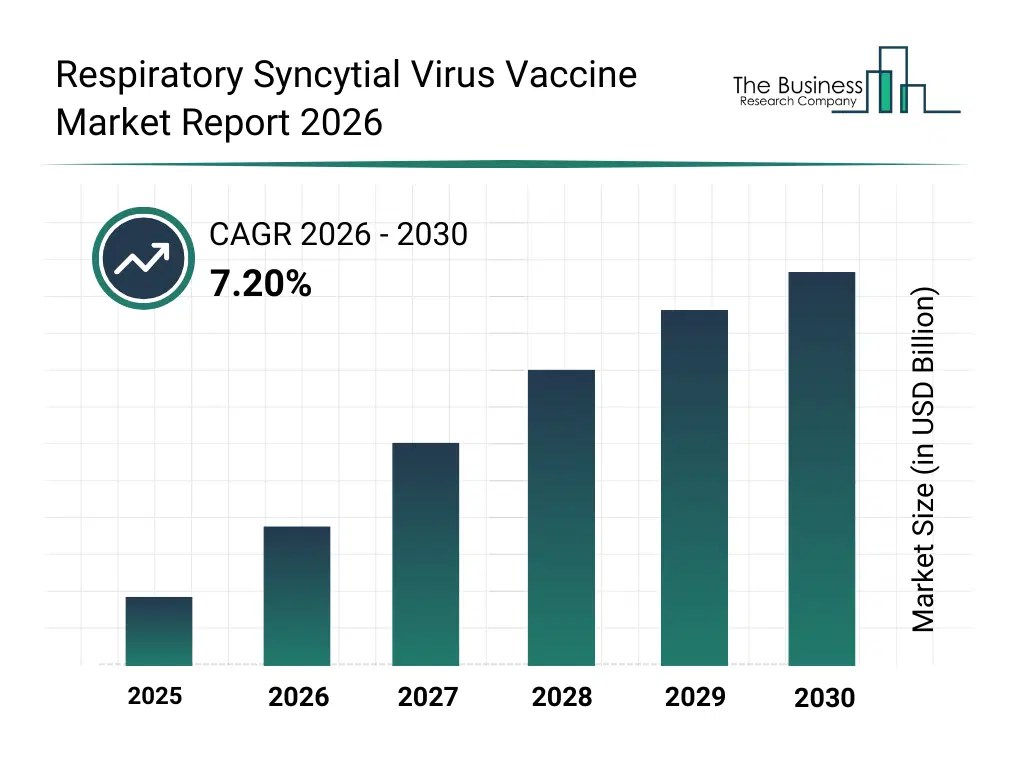
What Is The Respiratory Syncytial Virus Vaccine Market Size and Share 2026?
The respiratory syncytial virus vaccine market size has grown strongly in recent years. It will grow from $1378.59 million in 2025 to $1482.18 million in 2026 at a compound annual growth rate (CAGR) of 7.5%. The growth in the historic period can be attributed to rising incidence of rsv-related hospitalizations, unmet medical need in infant immunization, increased awareness of respiratory viral infections, public health surveillance of seasonal rsv outbreaks, expansion of clinical trial activity.What Is The Respiratory Syncytial Virus Vaccine Market Growth Forecast?
The respiratory syncytial virus vaccine market size is expected to see strong growth in the next few years. It will grow to $1957.68 million in 2030 at a compound annual growth rate (CAGR) of 7.2%. The growth in the forecast period can be attributed to increasing approval of novel rsv vaccines, growing government immunization funding, rising adoption among elderly populations, expansion of preventive healthcare programs, increasing focus on combination vaccine development. Major trends in the forecast period include increasing development of rsv vaccines for high-risk populations, rising focus on pediatric and geriatric immunization programs, growing investment in advanced vaccine formulations, expansion of hospital-based vaccination campaigns, enhanced emphasis on long-term rsv prevention.
Global Respiratory Syncytial Virus Vaccine Market Segmentation
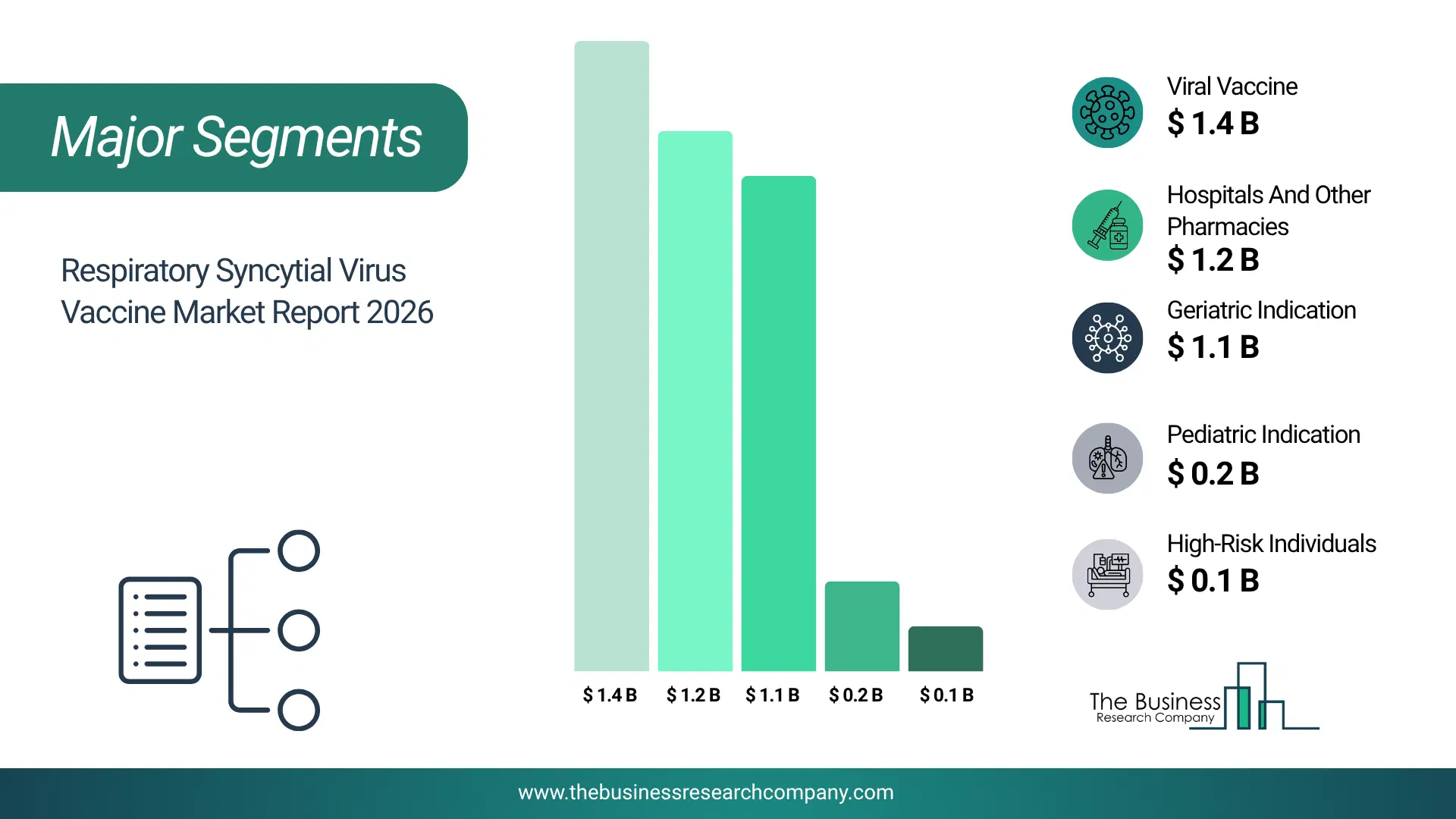
1) By Type: Viral Vaccine, Bacterial Vaccine, Combination Vaccine 2) By Clinical Indications: Pediatric Indication, Geriatric Indication, High-Risk Individuals 3) By Distribution Channel: Hospital And Others Pharmacies, Government Suppliers The top segments in the respiratory syncytial virus vaccine market will be: • Viral Vaccine will reach $1480 Million by 2030. • Hospitals And Other Pharmacies will reach $1269.25 Million by 2030. • Geriatric Indication will reach $1121.04 Million by 2030. • Pediatric Indication will reach $276.52 Million by 2030. • High-Risk Individuals will reach $98.16 Million by 2030.What Is The Driver Of The Respiratory Syncytial Virus Vaccine Market?
The rising incidence of respiratory infections is expected to propel the growth of the respiratory syncytial virus vaccine market going forward. Respiratory infections are illnesses caused by viruses, bacteria, or other pathogens that affect the respiratory system, including the sinuses, throat, airways, or lungs. The rising incidence of respiratory infections is driven by factors such as air pollution, climate change, increased urbanization, aging populations, and the emergence of drug-resistant pathogens. The respiratory syncytial virus (RSV) vaccine helps mitigate the incidence of respiratory infections by preventing RSV-related illnesses, especially in vulnerable populations such as infants and older adults. For instance, in October 2024, according to the UK Health Security Agency, a UK-based government agency, the number of tuberculosis (TB) cases in England experienced a 10.7% year-over-year increase in 2023, rising from 4,380 cases in 2022 to 4,850 cases. Therefore, the rising incidence of respiratory infections will drive the growth of the respiratory syncytial virus vaccine industry.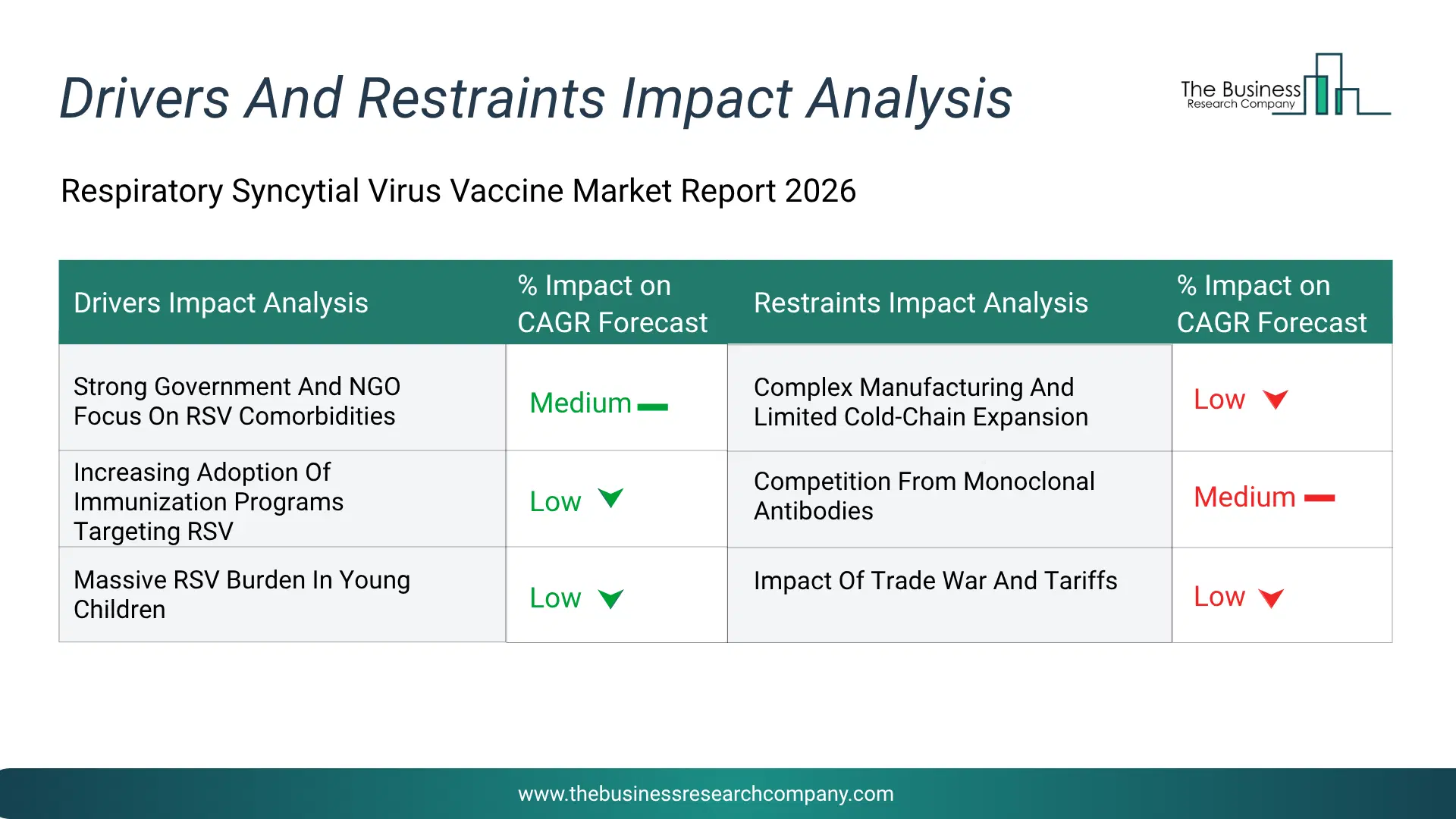
Infographic Chart Showing Key Market Drivers Analysis And Restraints For Respiratory Syncytial Virus Vaccine Market
The chart presents an impact analysis of key drivers and restraints, quantifying their relative influence on the market's growth rate and helping assess the balance between growth enablers and limiting factors. This chart offers a high-level perspective; the full report contains more detailed insights.
How Will The Drivers Impact Growth In The Global Respiratory Syncytial Virus Vaccine Market?
• Strong Government And NGO Focus On RSV Comorbidities (Medium) – During the forecast period, the strong government and ngo focus on rsv comorbidities will become a key driver of growth in the respiratory syncytial virus vaccine market by 2030. as awareness grows about the serious impact of rsv among older adults and individuals with underlying health conditions, public health authorities are more often recommending immunization to reduce disease burden, hospitalizations and long-term complications. regulatory bodies and ngos have begun to prioritize rsv prevention in national immunization strategies, especially for populations with chronic respiratory or cardiovascular diseases — populations repeatedly identified as at higher risk for severe rsv outcomes. supportive policy frameworks and targeted outreach campaigns increase vaccine acceptance and uptake among vulnerable groups, the strong government and ngo focus on rsv comorbidities is anticipated to contributing to growth in the market. The strong government and ngo focus on rsv comorbidities growth contribution during the forecast period in 2025 is 1.5%. • Increasing Adoption Of Immunization Programs Targeting RSV (Low) – During the forecast period, increasing adoption of immunization programs targeting rsv is expected to be a key driver of the growth of the respiratory syncytial virus vaccine market in the forecast period. as more countries and health authorities incorporate rsv vaccination into national immunization schedules, access to vaccine programs expands across infants, pregnant individuals, older adults and other high-risk groups. this institutional adoption reduces barriers to vaccination by standardizing delivery channels, improving supply-chain logistics and enabling large-scale public health outreach, making rsv vaccination more widely reachable. growing acceptance by public health agencies and integration into routine immunization frameworks increases demand and supports sustainable market growth for rsv vaccines. therefore, increasing adoption of immunization programs targeting rsv is expected to support the expansion of the respiratory syncytial virus vaccine market in the forecast period. The increasing adoption of immunization programs targeting rsv growth contribution during the forecast period in 2025 is 1.0%. • Massive RSV Burden In Young Children (Low) – During the forecast period, the massive rsv burden in young children will serve as a key growth catalyst for the market by 2030. young children, particularly infants under five years, experience some of the highest rates of severe rsv disease globally, leading to widespread hospitalizations and significant clinical complications. as awareness grows around the scale of rsv-related morbidity in this age group, parents, healthcare providers, and public health agencies are increasingly prioritizing preventive solutions that can reduce the need for intensive care and improve early-childhood health outcomes. as global health authorities continue to highlight rsv as a major cause of acute lower-respiratory infections in children, the demand for vaccines aimed at this high-risk population is expected to increase. The massive rsv burden in young children growth contribution during the forecast period in 2025 is 0.8%. • Rising Healthcare Costs Pushing Payers To Invest In Preventive Vaccines (Low) – During the forecast period, increasing pressure from rising healthcare costs is expected to be a key driver of the growth of the respiratory syncytial virus vaccine market in the forecast period. healthcare systems worldwide are facing escalating expenditures driven by higher hospitalization rates, a growing elderly population and the rising prevalence of chronic respiratory illnesses, prompting payers to prioritize preventive solutions that can reduce long-term financial burdens. preventive vaccines offer a practical and economically efficient approach by lowering the incidence of severe infections, decreasing the need for costly inpatient care and easing overall strain on healthcare infrastructure. the economic benefits of vaccination also align with payer strategies focused on improving population health outcomes while maintaining cost control. as global health budgets become increasingly constrained, the emphasis on interventions that provide measurable savings and improved quality of life continues to strengthen. therefore, rising healthcare costs pushing payers to invest in preventive vaccines is expected to support the expansion of the respiratory syncytial virus vaccine market in the forecast period. The increasing pressure from rising healthcare costs growth contribution during the forecast period in 2025 is 0.5%.How Will The Restraints Impact Growth In The Global Respiratory Syncytial Virus Vaccine Market?
• Complex Manufacturing And Limited Cold-Chain Expansion (Medium) – During the forecast period, complex manufacturing processes and limited cold-chain expansion are restricting the growth of the respiratory syncytial virus vaccine market during the historic period. vaccine production requires advanced biomanufacturing infrastructure, cold-storage facilities and robust distribution networks, conditions that many low- and middle-income countries (lmics) lack or struggle to sustain. where manufacturing capacity remains concentrated in a few geographic regions, the high cost and technical difficulty of scaling production and providing cold-chain logistics create bottlenecks for vaccine supply and distribution. this challenge is especially acute in resource-constrained settings, where inadequate infrastructure and weak regulatory or logistical support impede consistent vaccine delivery. as a result, many regions are unable to support large-scale rsv vaccine rollout, limiting market penetration globally. growth affected by complex manufacturing processes and limited cold-chain expansion across regions during the forecast period in 2025 is -2.0%. • Competition From Monoclonal Antibodies (Low) – During the forecast period, competition from monoclonal antibodies is restricting the growth of the respiratory syncytial virus vaccine market during the historic period. monoclonal antibody therapies offer immediate passive protection against rsv infections, which can appeal to clinicians and caregivers seeking quick and reliable immunity, especially for infants and high-risk individuals, reducing the perceived need for vaccination. because these antibody treatments bypass the time needed for an active immune response (as with vaccines), they may be preferred in acute seasonal outbreaks or for individuals unable or unwilling to wait for full vaccine-induced immunity. moreover, widespread availability and adoption of monoclonal antibody prophylaxis can dampen demand for preventative vaccination, as healthcare providers might continue prescribing antibodies instead of recommending vaccines. as a result, the potential market for rsv vaccines may have been curtailed during periods when monoclonal antibody options were viewed as effective and accessible. growth affected by competition from monoclonal antibodies across regions during the forecast period in 2025 is -1.0%. • Impact Of Trade War And Tariffs (Low) – During the forecast period, the impact of trade war and tariff policies is restricting the growth of the respiratory syncytial virus vaccine market during the historic period. tariffs on imported raw materials, active pharmaceutical ingredients (apis) and specialized biopharma components increase production costs for manufacturers, making vaccines more expensive to produce and market. this added financial burden discourages manufacturers from scaling up production or launching rsv vaccines in multiple markets, especially in regions with tight pricing pressures or limited public funding. moreover, uncertainty around import duties and global supply-chain disruptions undermines long-term investment and supply-chain planning, deterring new entrants and slowing down vaccine rollouts. as a result, many biotech firms may delay or cancel rsv vaccine projects because the cost and risk associated with tariff-inflated supply chains reduce profit margins and market viability. growth affected by trade war and tariffs across regions during the forecast period in 2025 is -0.2%.Key Players In The Global Respiratory Syncytial Virus Vaccine Market
Major companies operating in the respiratory syncytial virus vaccine market are Pfizer Inc., GlaxoSmithKline plc, Moderna Inc.
This chart is for illustrative purposes; the full report includes a detailed competitor analysis and comprehensive overview of the top 10 companies in the market.
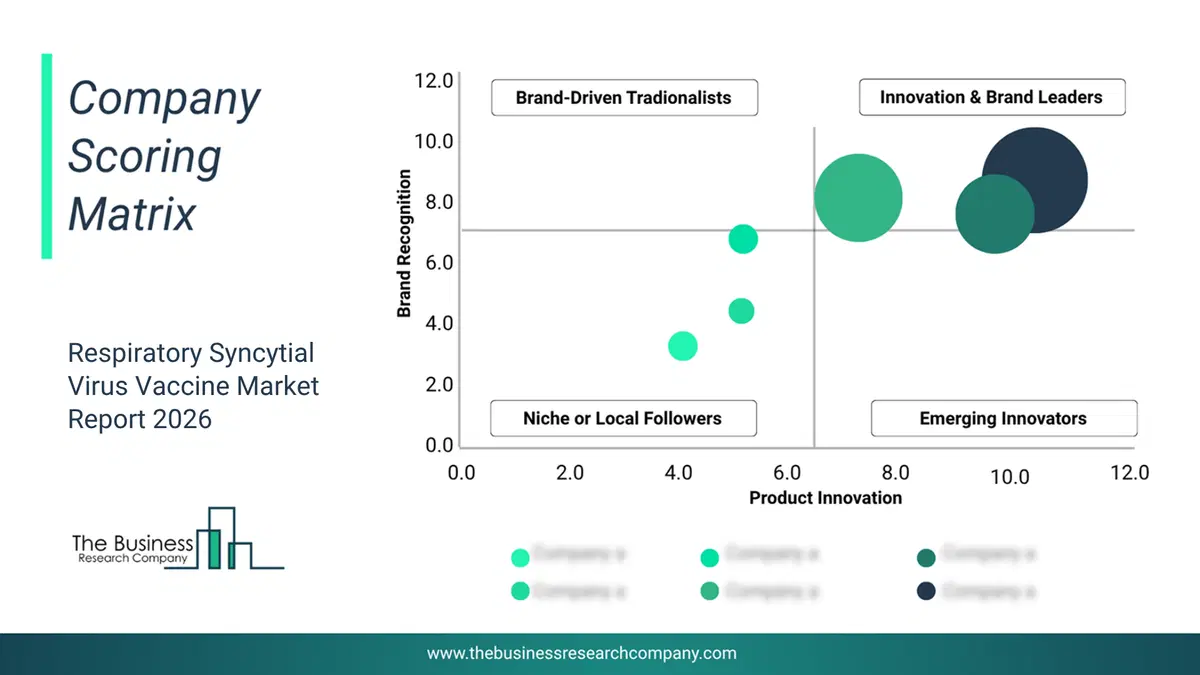
This chart maps companies by product innovation and brand strength, with bubble size indicating relative revenue, helping identify market leaders, challengers, and niche players. This is an illustrative chart; the full report provides a complete and accurate competitive analysis.
Global Respiratory Syncytial Virus Vaccine Market Trends and Insights
Major companies operating in the respiratory syncytial virus (RSV) vaccine market are focusing on developing innovative solutions, such as recombinant protein-based vaccine technologies, to meet the rising demand for high-efficacy vaccines, improved immune protection, and safer formulations for older adults at greater risk of RSV complications. Recombinant protein-based vaccines are created using genetically engineered proteins that mimic viral components, enabling strong, targeted immune responses without using live virus offering a more controlled and stable alternative to traditional vaccine approaches. For instance, in May 2023, GlaxoSmithKline plc, a UK-based pharmaceutical company, received FDA approval for Arexvy, the first RSV vaccine designed to prevent lower respiratory tract disease caused by RSV in individuals aged 60 and older. Arexvy utilizes advanced recombinant protein technology to target the RSV fusion (F) protein, a critical viral component required for infection, providing robust protection for older adults.What Are Latest Mergers And Acquisitions In The Respiratory Syncytial Virus Vaccine Market?
In February 2024, AstraZeneca PLC, a UK-based biopharmaceutical company, acquired Icosavax, Inc., for $1.1 billion. This acquisition strengthens AstraZeneca's vaccines & immune therapies pipeline, with Icosavax's lead candidate, IVX-A12, targeting respiratory syncytial virus (RSV) and human metapneumovirus (hMPV), key pathogens responsible for severe respiratory infections in high-risk groups, including the elderly and individuals with chronic conditions. Icosavax, Inc. is a US-based clinical-stage biopharmaceutical company actively developing a respiratory syncytial virus (RSV) vaccine through its lead candidate, IVX-A12.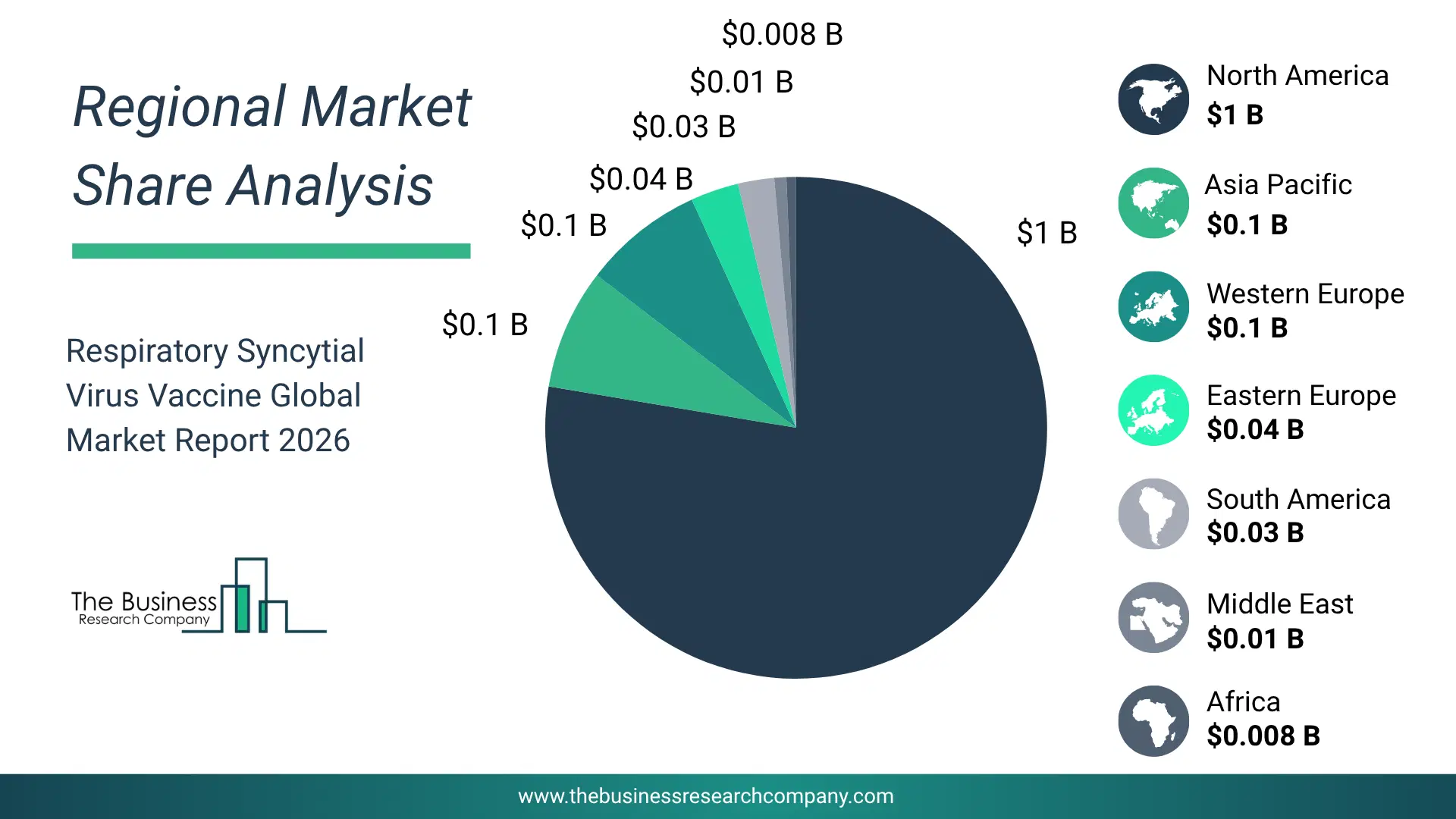
Regional Insights
North America was the largest region in the respiratory syncytial virus vaccine market in 2025. Asia-Pacific is expected to be the fastest-growing region in the forecast period. The regions covered in this market report are Asia-Pacific, Western Europe, Eastern Europe, North America, South America, Middle East, Africa. The countries covered in this market report are Australia, India, China, South Korea, Japan, UK, France, Germany, USA, Canada.What Defines the Respiratory Syncytial Virus Vaccine Market?
The respiratory syncytial virus vaccine market consists of sales of protein-based vaccines, mRNA vaccines, monoclonal antibodies, and live-attenuated vaccines. Values in this market are ‘factory gate’ values, that is, the value of goods sold by the manufacturers or creators of the goods, whether to other entities (including downstream manufacturers, wholesalers, distributors, and retailers) or directly to end customers. The value of goods in this market includes related services sold by the creators of the goods.How is Market Value Defined and Measured?
The market value is defined as the revenues that enterprises gain from the sale of goods and/or services within the specified market and geography through sales, grants, or donations in terms of the currency (in USD unless otherwise specified). The revenues for a specified geography are consumption values that are revenues generated by organizations in the specified geography within the market, irrespective of where they are produced. It does not include revenues from resales along the supply chain, either further along the supply chain or as part of other products.
This chart presents market attractiveness based on a quantitative evaluation of growth, competition, strategic alignment, and risk, offering a clear view of opportunity areas for decision-making. This chart is for illustrative purposes; the full report contains the complete analysis.

This chart highlights the Total Addressable Market (TAM) by estimating the maximum revenue opportunity using an assumption-driven approach, supporting strategic planning and opportunity sizing across markets. The chart is illustrative; the full report provides a more comprehensive analysis.
What Key Data and Analysis Are Included in the Respiratory Syncytial Virus Vaccine Market Report 2026?
The respiratory syncytial virus vaccine market research report is one of a series of new reports from The Business Research Company that provides market statistics, including industry global market size, regional shares, competitors with the market share, detailed market segments, market trends and opportunities, and any further data you may need to thrive in the respiratory syncytial virus vaccine industry. The market research report delivers a complete perspective of everything you need, with an in-depth analysis of the current and future state of the industry.Respiratory Syncytial Virus Vaccine Market Report Forecast Analysis
| Report Attribute | Details |
|---|---|
| Market Size Value In 2026 | $ billion |
| Revenue Forecast In 2030 | $ billion |
| Growth Rate | CAGR of 7.5% from 2026 to 2030 |
| Base Year For Estimation | 2025 |
| Actual Estimates/Historical Data | 2020-2025 |
| Forecast Period | 2026 - 2030 - 2035 |
| Market Representation | Revenue in USD Billion and CAGR from 2026 to 2030 |
| Segments Covered | Type, Clinical Indications, Distribution Channel |
| Regional Scope | Asia-Pacific, Western Europe, Eastern Europe, North America, South America, Middle East, Africa |
| Country Scope | The countries covered in the report are Australia, Brazil, China, France, Germany, India, Indonesia, Japan, Taiwan, Russia, South Korea, UK, USA, Canada, Italy, Spain. |
| Key Companies Profiled | Pfizer Inc., GlaxoSmithKline plc, Moderna Inc. |
| Customization Scope | Request for Customization |
| Pricing And Purchase Options | Explore Purchase Options |