

Respiratory Viral Load Quantification Market Report 2026
Global Outlook – By Technology (Polymerase Chain Reaction, Next-Generation Sequencing, Immunoassays, Other Technologies), By Product Type (Instruments, Assays And Kits, Software), By Pathogen (Influenza A And B, Respiratory Syncytial Virus, Human Metapneumovirus, Parainfluenza Viruses), By Application (Clinical Diagnostics, Research, Epidemiology, Other Applications), By End-User (Hospitals And Clinics, Diagnostic Laboratories, Research Institutes, Other End Users) – Market Size, Trends, Strategies, and Forecast to 2030
Respiratory Viral Load Quantification Market Overview
• Respiratory Viral Load Quantification market size has reached to $1.86 billion in 2025 • Expected to grow to $3.13 billion in 2030 at a compound annual growth rate (CAGR) of 11% • Growth Driver: Surge In Influenza And Respiratory Syncytial Virus Fueling The Growth Of The Market Due To Increasing Hospitalizations And Mortality Rates • Market Trend: Advancing Precision: High-sensitivity Assays Transform Viral Load Monitoring • North America was the largest region in 2025 and Asia-Pacific is the fastest growing region.What Is Covered Under Respiratory Viral Load Quantification Market?
Respiratory viral load quantification is a molecular diagnostic process that measures the amount of viral genetic material present in respiratory samples. It provides critical information on infection severity, disease progression, and potential transmissibility. This quantification is typically performed using advanced techniques such as real-time PCR or next-generation sequencing to ensure accurate and sensitive detection. The main technologies of respiratory viral load quantification include polymerase chain reaction, next-generation sequencing, immunoassays, and others. Polymerase chain reaction (PCR) is a laboratory technique used to amplify specific DNA sequences, creating millions of copies from a small DNA sample. The product types include instruments, assays and kits, and software and the various pathogens include influenza A and B, respiratory syncytial virus, human metapneumovirus, and parainfluenza viruses. The key applications of clinical diagnostics, research, epidemiology, and other applications, while the end-users include hospitals and clinics, diagnostic laboratories, research institutes, and other end users.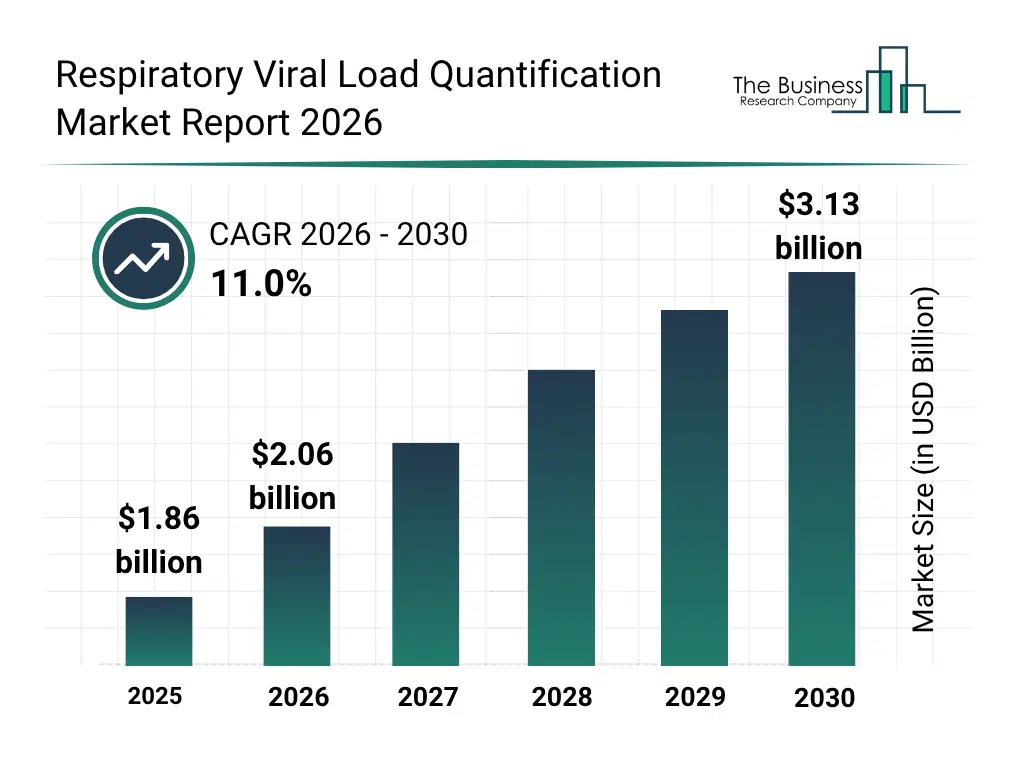
What Is The Respiratory Viral Load Quantification Market Size and Share 2026?
The respiratory viral load quantification market size has grown rapidly in recent years. It will grow from $1.86 billion in 2025 to $2.06 billion in 2026 at a compound annual growth rate (CAGR) of 10.8%. The growth in the historic period can be attributed to rising prevalence of respiratory infections, adoption of pcr-based diagnostics, increasing demand for laboratory automation, government-funded disease surveillance programs, expansion of clinical research activities.What Is The Respiratory Viral Load Quantification Market Growth Forecast?
The respiratory viral load quantification market size is expected to see rapid growth in the next few years. It will grow to $3.13 billion in 2030 at a compound annual growth rate (CAGR) of 11.0%. The growth in the forecast period can be attributed to integration of next-generation sequencing, adoption of ai-enabled diagnostic platforms, demand for multiplex assays, growth in epidemiology and outbreak monitoring, investment in rapid diagnostic technologies. Major trends in the forecast period include real-time viral load monitoring, integration with laboratory information systems, automated sample processing, high-sensitivity diagnostic assays, predictive disease progression modeling.
Global Respiratory Viral Load Quantification Market Segmentation
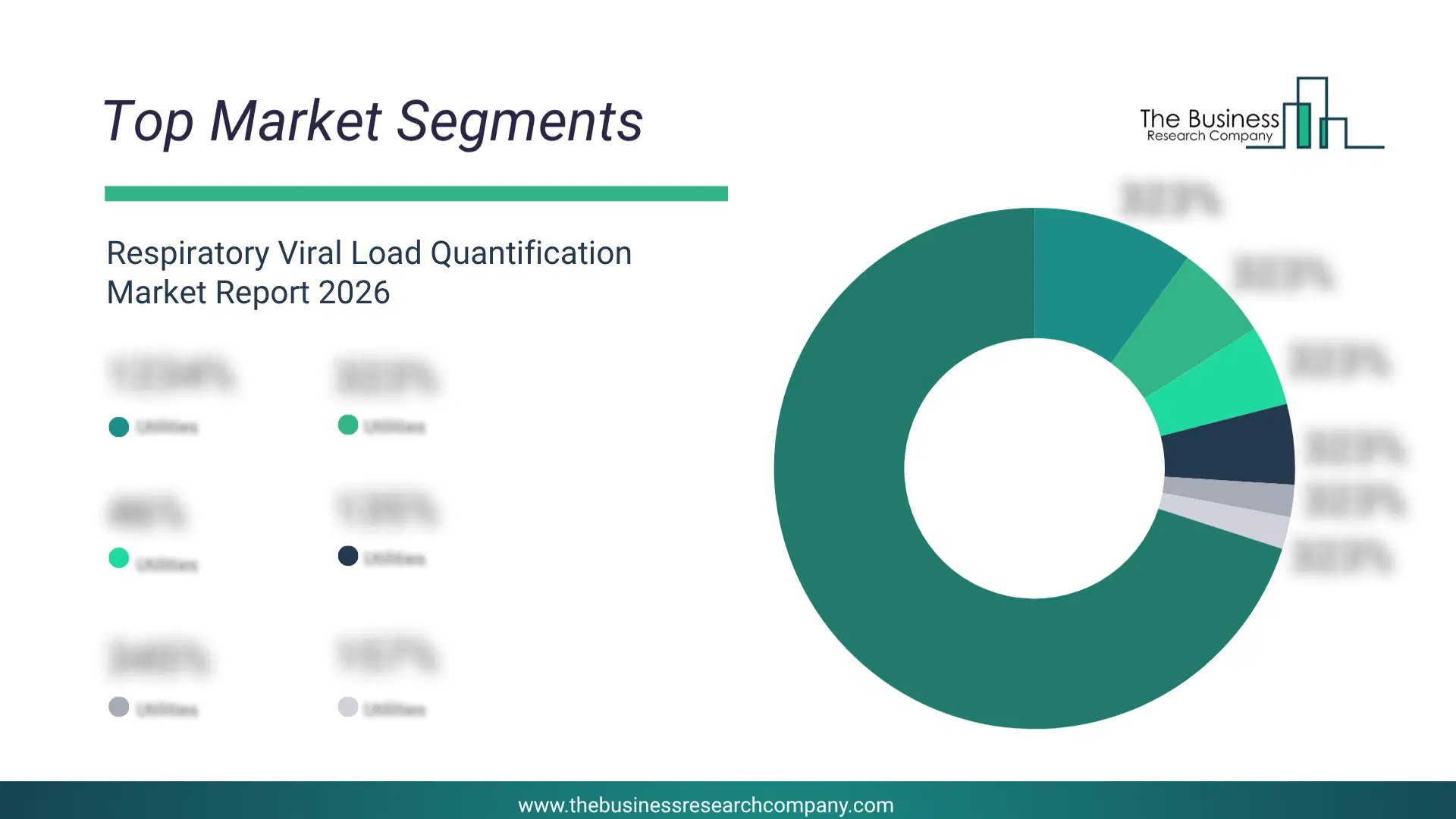
1) By Technology: Polymerase Chain Reaction, Next-Generation Sequencing, Immunoassays, Other Technologies 2) By Product Type: Instruments, Assays And Kits, Software 3) By Pathogen: Influenza A And B, Respiratory Syncytial Virus, Human Metapneumovirus, Parainfluenza Viruses 4) By Application: Clinical Diagnostics, Research, Epidemiology, Other Applications 5) By End-User: Hospitals And Clinics, Diagnostic Laboratories, Research Institutes, Other End Users Subsegments: 1) By Polymerase Chain Reaction: Real Time Polymerase Chain Reaction, Digital Polymerase Chain Reaction, Reverse Transcription Polymerase Chain Reaction, Multiplex Polymerase Chain Reaction 2) By Next Generation Sequencing: Whole Genome Sequencing, Targeted Sequencing, RNA Sequencing, Metagenomic Sequencing 3) By Immunoassays: Enzyme Linked Immunosorbent Assay, Chemiluminescent Immunoassay, Fluorescent Immunoassay, Lateral Flow Immunoassay 4) By Other Technologies: Mass Spectrometry Based Quantification, Microarray Based Detection, Biosensor Based Analysis, Hybridization Based AssaysWhat Is The Driver Of The Respiratory Viral Load Quantification Market?
The rising incidence of influenza and respiratory syncytial virus (RSV) is expected to drive growth in the respiratory viral load quantification market over the forecast period. Influenza and RSV are highly contagious respiratory infections caused by viral pathogens that affect the lungs and airways, with clinical outcomes ranging from mild illness to severe respiratory complications. The increasing prevalence of these infections is intensifying the demand for accurate viral load measurement to support timely diagnosis, treatment monitoring, and infection control efforts. Respiratory viral load quantification enables precise detection and ongoing assessment of viral burden, helping clinicians make informed decisions and optimize patient management. For instance, in February 2026, according to the Centers for Disease Control and Prevention (CDC), a US-based government department, in 2026, influenza resulted in approximately 290,000–450,000 hospitalizations and 34,000–53,000 deaths annually in the United States, while RSV accounted for an estimated 190,000–350,000 hospitalizations and 10,000–23,000 deaths. Therefore, the rising incidence of influenza and respiratory syncytial virus is driving the growth of the respiratory viral load quantification industry.Key Players In The Global Respiratory Viral Load Quantification Market
Major companies operating in the respiratory viral load quantification market are Cardinal Health, Johnson & Johnson Services Inc, Roche Diagnostics, Thermo Fisher Scientific, Abbott Laboratories, Siemens Healthineers AG, Danaher Corporation (Cepheid), Becton Dickinson Company (BD), Laboratory Corporation Of America Holdings (LabCorp), Quest Diagnostics Incorporated, Agilent Technologies, Illumina Inc, bioMérieux SA, Hologic Inc, PerkinElmer Inc, Sysmex Corporation, Bio-Rad Laboratories Inc, Qiagen NV, DiaSorin SpA, Seegene Inc, GC Diagnostics Corporation.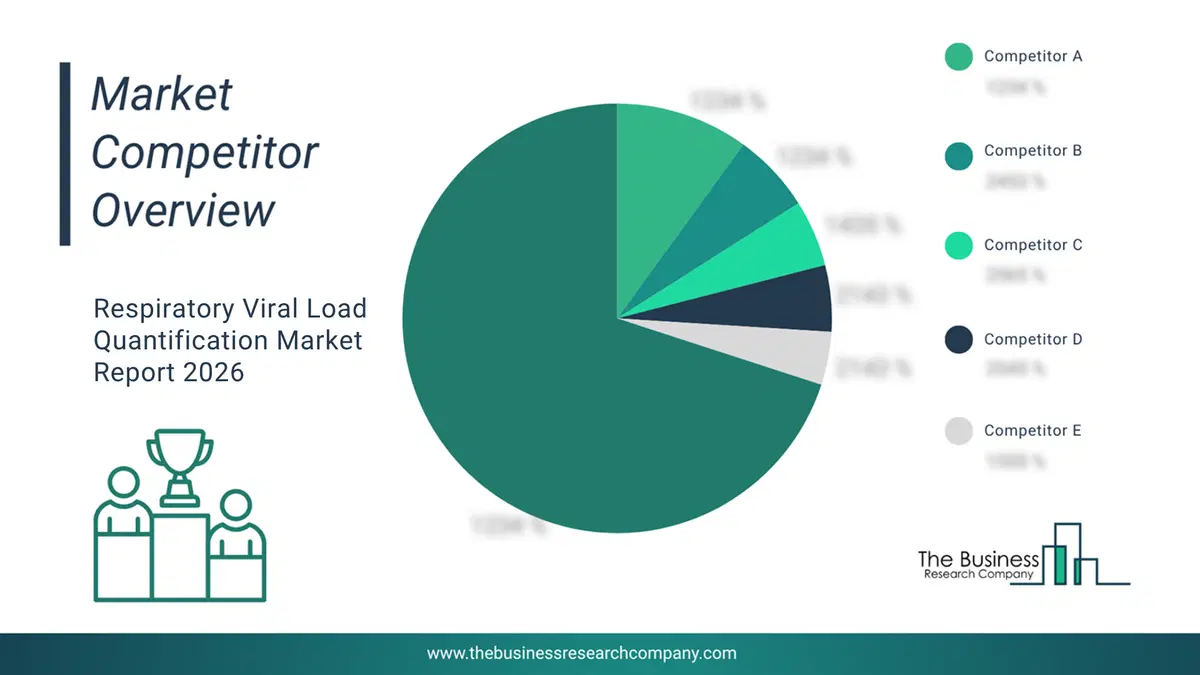
This chart is for illustrative purposes; the full report includes a detailed competitor analysis and comprehensive overview of the top 10 companies in the market.
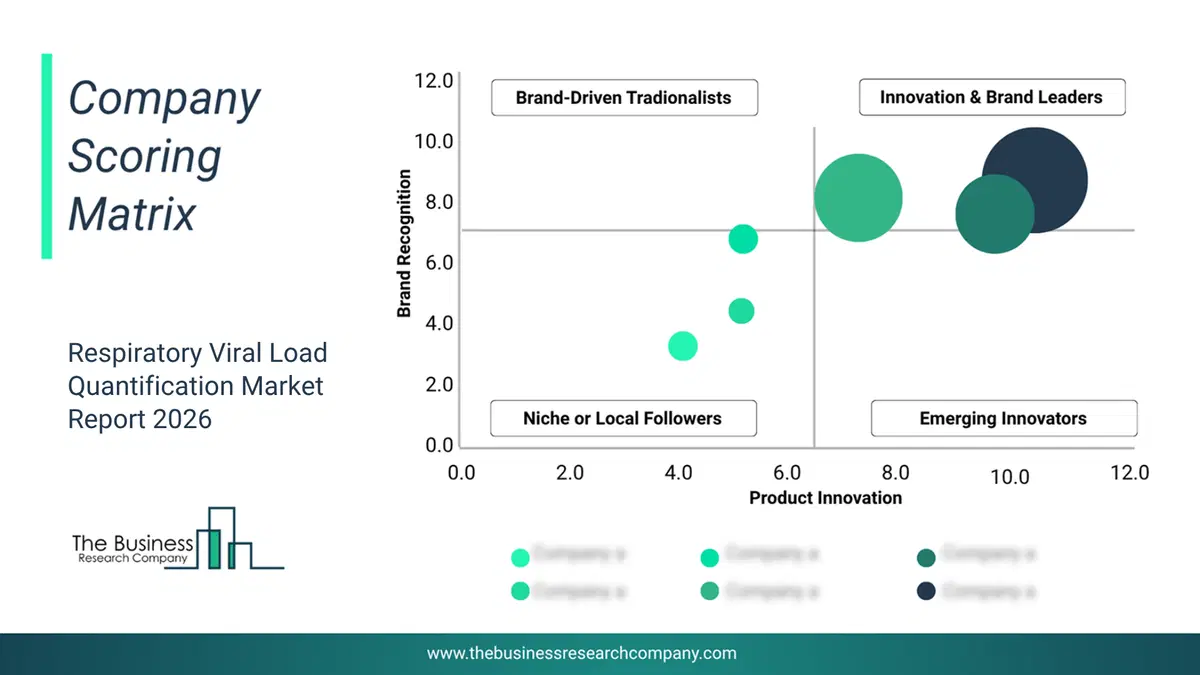
This chart maps companies by product innovation and brand strength, with bubble size indicating relative revenue, helping identify market leaders, challengers, and niche players. This is an illustrative chart; the full report provides a complete and accurate competitive analysis.
Global Respiratory Viral Load Quantification Market Trends and Insights
Major companies operating in the respiratory viral load quantification market are focusing on the developing innovative solutions, such as high-sensitivity quantitative assays, to enable precise measurement of viral loads and support improved patient monitoring and therapeutic decision-making. High-sensitivity quantitative assays are molecular- or immunoassay-based platforms designed to detect and quantify viral RNA or antigens with high accuracy, speed, and reproducibility across respiratory pathogens such as respiratory syncytial virus (RSV), influenza, and SARS-CoV-2. For instance, in January 2025, Shionogi & Co., Ltd., a Japan-based pharmaceutical company, reported positive Phase 2 trial results for its oral antiviral candidate S-337395, in which respiratory viral load quantification was used as a key endpoint to evaluate treatment efficacy and viral suppression. By leveraging advanced molecular detection technologies and optimized assay workflows, these diagnostic solutions enable rapid, reliable, and reproducible viral load measurements, supporting clinical trials, therapeutic monitoring, and public health interventions across hospital and laboratory settings.What Are Latest Mergers And Acquisitions In The Respiratory Viral Load Quantification Market?
In September 2024, Mangoceuticals, Inc., a US-based biopharmaceutical company, partnered with Vipragen Biosciences Pvt. Ltd. to advance respiratory antiviral research and expand viral load–based efficacy studies for influenza strains. Through this partnership, Mangoceuticals and Vipragen Biosciences aim to structure and execute expanded H5N1 research cohorts while strengthening preclinical and clinical evaluation frameworks centered on viral load reduction and therapeutic performance measurement. Vipragen Biosciences Pvt. Ltd. is an India-based preclinical contract research organization that provides infectious disease modeling, antiviral efficacy testing, and viral load quantification services to support drug development and translational research initiatives.
Regional Insights
North America was the largest region in the respiratory viral load quantification market in 2025. Asia-Pacific is expected to be the fastest-growing region in the forecast period. The regions covered in this market report are Asia-Pacific, South East Asia, Western Europe, Eastern Europe, North America, South America, Middle East, Africa. The countries covered in this market report are Australia, Brazil, China, France, Germany, India, Indonesia, Japan, Taiwan, Russia, South Korea, UK, USA, Canada, Italy, Spain.What Defines the Respiratory Viral Load Quantification Market?
The respiratory viral load quantification market consists of revenues earned by entities by providing services such as result interpretation, reporting and consultation, quality control, biospecimen storage, and technical support. The market value includes the value of related goods sold by the service provider or included within the service offering. The respiratory viral load quantification market includes sales of pipettes, microcentrifuge tubes, swabs, viral transport media, and automated analyzers. Values in this market are ‘factory gate’ values, that is, the value of goods sold by the manufacturers or creators of the goods, whether to other entities (including downstream manufacturers, wholesalers, distributors, and retailers) or directly to end customers. The value of goods in this market includes related services sold by the creators of the goods.How is Market Value Defined and Measured?
The market value is defined as the revenues that enterprises gain from the sale of goods and/or services within the specified market and geography through sales, grants, or donations in terms of the currency (in USD unless otherwise specified). The revenues for a specified geography are consumption values that are revenues generated by organizations in the specified geography within the market, irrespective of where they are produced. It does not include revenues from resales along the supply chain, either further along the supply chain or as part of other products.
This chart presents market attractiveness based on a quantitative evaluation of growth, competition, strategic alignment, and risk, offering a clear view of opportunity areas for decision-making. This chart is for illustrative purposes; the full report contains the complete analysis.

This chart highlights the Total Addressable Market (TAM) by estimating the maximum revenue opportunity using an assumption-driven approach, supporting strategic planning and opportunity sizing across markets. The chart is illustrative; the full report provides a more comprehensive analysis.
What Key Data And Analysis Are Included In The Respiratory Viral Load Quantification Market Report 2026?
The respiratory viral load quantification market research report is one of a series of new reports from The Business Research Company that provides market statistics, including industry global market size, regional shares, competitors with the market share, detailed market segments, market trends and opportunities, and any further data you may need to thrive in the respiratory viral load quantification industry. The market research report delivers a complete perspective of everything you need, with an in-depth analysis of the current and future state of the industry.Respiratory Viral Load Quantification Market Report Forecast Analysis
| Report Attribute | Details |
|---|---|
| Market Size Value In 2026 | $2.06 billion |
| Revenue Forecast In 2030 | $3.13 billion |
| Growth Rate | CAGR of 11% from 2026 to 2030 |
| Base Year For Estimation | 2025 |
| Actual Estimates/Historical Data | 2020-2025 |
| Forecast Period | 2026 - 2030 |
| Market Representation | Revenue in USD Billion and CAGR from 2026 to 2030 |
| Segments Covered | Technology, Product Type, Pathogen, Application, End-User |
| Regional Scope | Asia-Pacific, Western Europe, Eastern Europe, North America, South America, Middle East, Africa |
| Country Scope | The countries covered in the report are Australia, Brazil, China, France, Germany, India, Indonesia, Japan, Taiwan, Russia, South Korea, UK, USA, Canada, Italy, Spain. |
| Key Companies Profiled | Cardinal Health, Johnson & Johnson Services Inc, Roche Diagnostics, Thermo Fisher Scientific, Abbott Laboratories, Siemens Healthineers AG, Danaher Corporation (Cepheid), Becton Dickinson Company (BD), Laboratory Corporation Of America Holdings (LabCorp), Quest Diagnostics Incorporated, Agilent Technologies, Illumina Inc, bioMérieux SA, Hologic Inc, PerkinElmer Inc, Sysmex Corporation, Bio-Rad Laboratories Inc, Qiagen NV, DiaSorin SpA, Seegene Inc, GC Diagnostics Corporation. |
| Customization Scope | Request for Customization |
| Pricing And Purchase Options | Explore Purchase Options |