
Restless Leg Syndrome Market Report 2026
Global Outlook – By Type (Primary Restless Legs Syndrome, Secondary Restless Legs Syndrome), By Treatment Type (Medicine And Devices, Surgery), By Route Of Administration (Oral, Injectable), By Distribution Channel (Hospital Pharmacy, Retail Pharmacy, Online Pharmacy), By Application (Neurological Treatment, Sleep Disorders, Movement Disorders, Symptom Management) - Market Size, Trends, Strategies, and Forecast to 2030
Restless Leg Syndrome Market Overview
• Restless Leg Syndrome market size has reached to $2.16 billion in 2025 • Expected to grow to $4.01 billion in 2030 at a compound annual growth rate (CAGR) of 13% • Growth Driver: Iron Deficiency Drives The Growth Of The Market • Market Trend: Advancements In Non-Invasive Therapies For Restless Leg Syndrome • Europe was the largest region in 2025.What Is Covered Under Restless Leg Syndrome Market?
Restless leg syndrome refers to a neurological condition characterized by an uncontrollable urge to move the legs, typically due to uncomfortable sensations. Treatment options include lifestyle changes, iron supplements, medications that affect dopamine levels, and strategies to improve sleep hygiene. The main types of restless leg syndrome are primary restless legs syndrome and secondary restless legs syndrome. Primary restless leg syndrome is a condition where the symptoms of restless legs occur without any underlying medical condition. These are used for various treatment types, including medicine, devices, and surgery. These are used for various routes of administration, including oral and injectable. These are distributed through various distribution channels such as hospital pharmacy, retail pharmacy, and online pharmacy and are used by various applications such as neurological treatment, sleep disorders, movement disorders, and symptom management.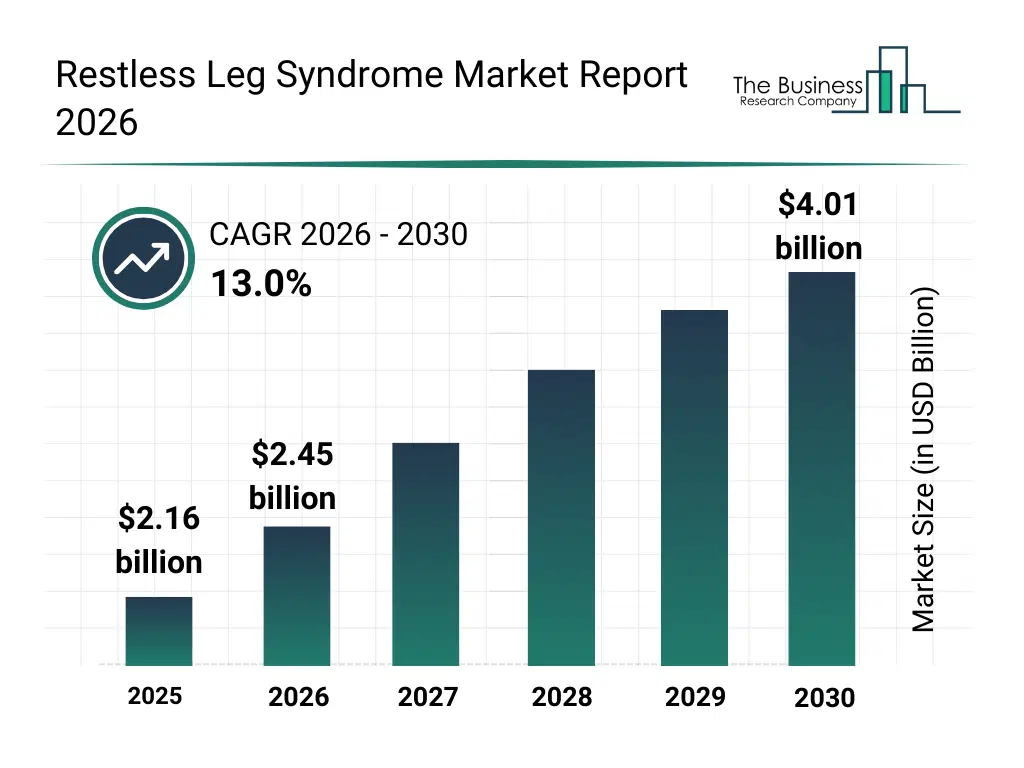
What Is The Restless Leg Syndrome Market Size and Share 2026?
The restless leg syndrome market size has grown rapidly in recent years. It will grow from $2.16 billion in 2025 to $2.45 billion in 2026 at a compound annual growth rate (CAGR) of 13.4%. The growth in the historic period can be attributed to increasing diagnosis of neurological disorders, rising prevalence of iron deficiency conditions, growing awareness of sleep-related health issues, expansion of neurology specialty clinics, improved access to oral medications.What Is The Restless Leg Syndrome Market Growth Forecast?
The restless leg syndrome market size is expected to see rapid growth in the next few years. It will grow to $4.01 billion in 2030 at a compound annual growth rate (CAGR) of 13.0%. The growth in the forecast period can be attributed to increasing focus on personalized neurological therapies, rising demand for long-term symptom management solutions, expansion of digital sleep health tools, growing research into non-dopaminergic treatments, increasing patient awareness and diagnosis rates. Major trends in the forecast period include increasing use of dopamine modulating therapies, growing adoption of non-pharmacological treatment approaches, rising focus on sleep disorder management, expansion of personalized treatment strategies, enhanced awareness of secondary rls causes.
Global Restless Leg Syndrome Market Segmentation
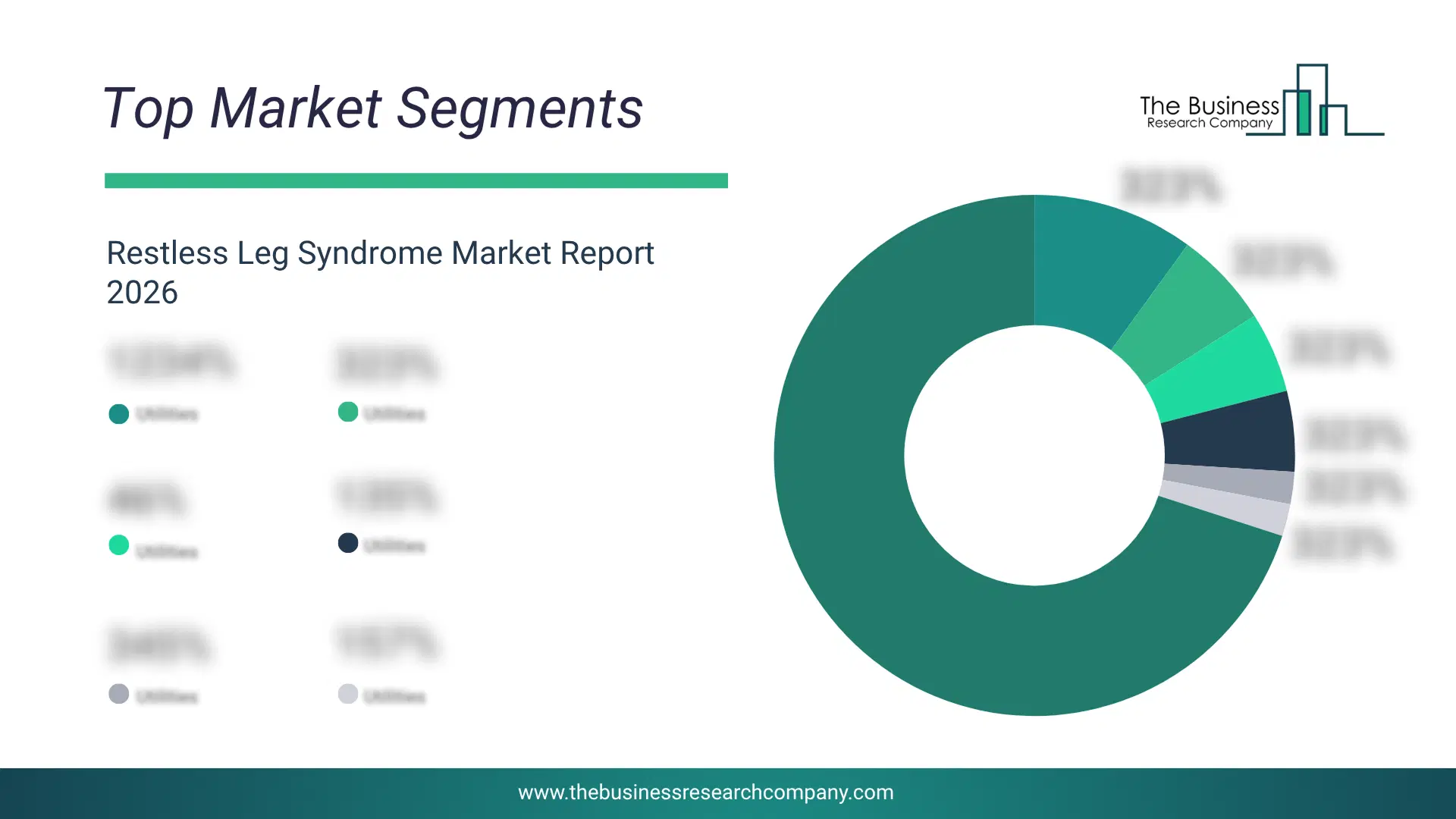
1) By Type: Primary Restless Legs Syndrome, Secondary Restless Legs Syndrome 2) By Treatment Type: Medicine And Devices, Surgery 3) By Route Of Administration: Oral, Injectable 4) By Distribution Channel: Hospital Pharmacy, Retail Pharmacy, Online Pharmacy 5) By Application: Neurological Treatment, Sleep Disorders, Movement Disorders, Symptom Management Subsegments: 1) By Primary Restless Legs Syndrome: Idiopathic Restless Legs Syndrome, Hereditary Restless Legs Syndrome 2) By Secondary Restless Legs Syndrome: Iron Deficiency-related Restless Legs Syndrome, Chronic Kidney Disease-related Restless Legs Syndrome, Pregnancy-related Restless Legs Syndrome, Medication-induced Restless Legs SyndromeWhat Is The Driver Of The Restless Leg Syndrome Market?
The increasing prevalence of iron deficiency is expected to propel the growth of the restless leg syndrome market going forward. Iron deficiency refers to a condition in which the body lacks enough iron to produce sufficient healthy red blood cells, leading to symptoms such as fatigue, weakness, and pale skin. The increasing prevalence of iron deficiency is due to factors such as poor dietary intake, blood loss, malabsorption disorders, and increased iron requirements during pregnancy or growth. Restless leg syndrome treatment often involves iron supplementation or dietary adjustments, which not only help alleviate the uncomfortable urges and sensations but also work to correct underlying iron deficiency by replenishing iron stores in the body, improving red blood cell production, and restoring proper neurological function. For instance, in January 2025, according to the Nation Health Service England, an England-based government agency, in the 2023-24 period, there were 191,927 admissions due to iron deficiency, reflecting an 11% increase compared to 2022-23. Therefore, the increasing prevalence of iron deficiency drives the growth of the restless leg syndrome industry.Key Players In The Global Restless Leg Syndrome Market
Major companies operating in the restless leg syndrome market are Pfizer Inc., Roche Holding AG, Merck And Co Inc., Novartis International AG, GlaxoSmithKline plc, Teva Pharmaceutical Industries Ltd., Boehringer Ingelheim International GmbH, Astellas Pharma Inc., UCB S.A., Kyowa Kirin Co Ltd., Amneal Pharmaceuticals Inc., Lupin Pharmaceuticals Inc., Alembic Pharmaceuticals Limited, Mundipharma International Limited, Azurity Pharmaceuticals LLC, Otsuka Pharmaceutical Co Ltd., Horizon Therapeutics plc, Mylan N.V., Sun Pharmaceutical Industries Ltd., Zydus Lifesciences Ltd., Cipla Ltd., Dr Reddys Laboratories Ltd., Hikma Pharmaceuticals plc, Almirall S.A.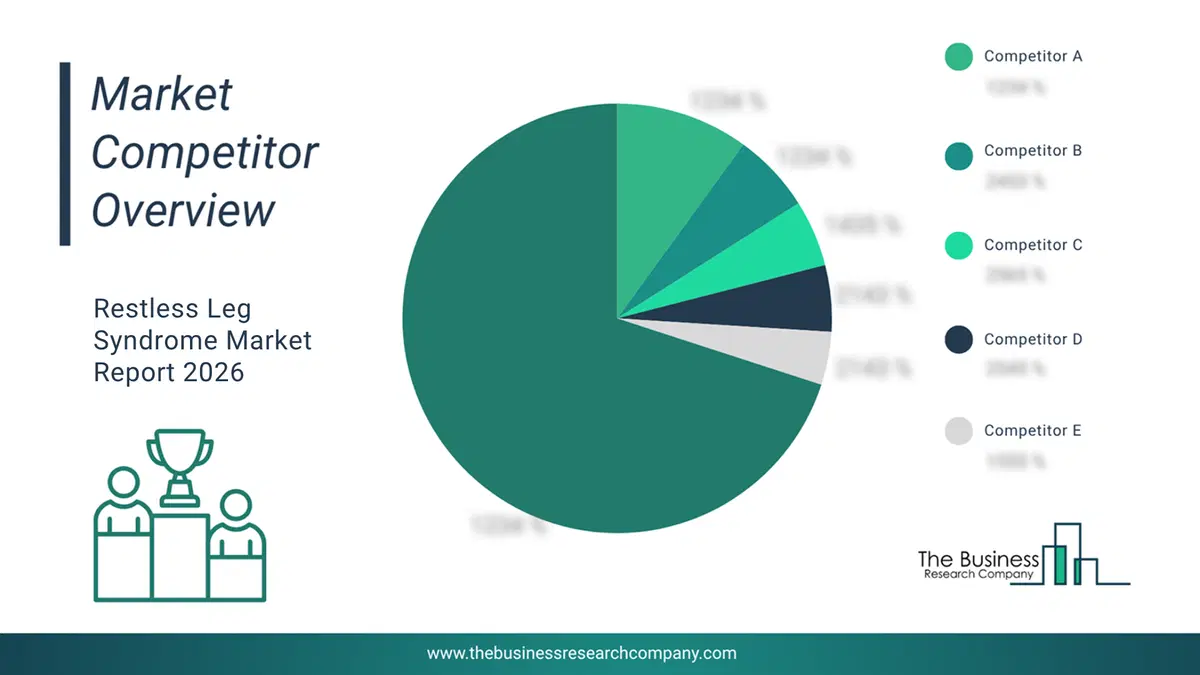
This chart is for illustrative purposes; the full report includes a detailed competitor analysis and comprehensive overview of the top 10 companies in the market.
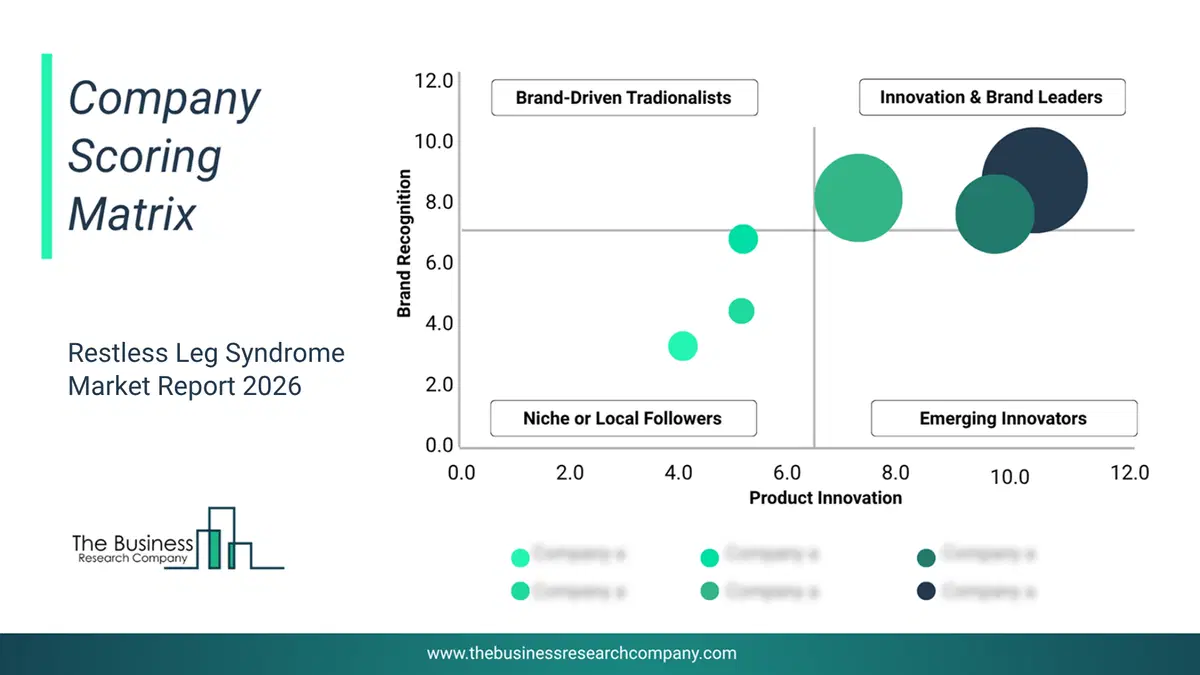
This chart maps companies by product innovation and brand strength, with bubble size indicating relative revenue, helping identify market leaders, challengers, and niche players. This is an illustrative chart; the full report provides a complete and accurate competitive analysis.
Global Restless Leg Syndrome Market Trends and Insights
Major companies operating in the restless leg syndrome (RLS) market are focused on developing innovative solutions, such as novel non-invasive therapies, to improve symptom management and enhance patient outcomes. Novel non-invasive therapies refer to innovative medical treatments that do not require surgery or penetration of the skin, aiming to provide relief from various conditions through advanced techniques such as electrical stimulation, light therapy, or external devices. For instance, in April 2023, Varco Leg Care, an India-based consumer health-technology company, received FDA De Novo approval for its NTX100 Tonic Motor Activation (TOMAC) System. The NTX100 Tonic Motor Activation (TOMAC) System is designed to treat moderate to severe symptoms of restless legs syndrome (RLS) and improve sleep quality in patients who do not respond to medications. The device works by electrically activating the peroneal nerves on both sides of the body to produce tonic, sustained muscle activation, which is compatible with sleep. This activation helps suppress the symptoms of restless leg syndrome (RLS).What Are Latest Mergers And Acquisitions In The Restless Leg Syndrome Market?
In October 2023, Amgen Inc., a US-based biotechnology company, acquired Horizon Therapeutics plc for an undisclosed amount. Through this acquisition, Amgen aims to expand its portfolio in rare and inflammatory diseases, drive revenue growth, and develop innovative treatments while increasing patient access to medications. Horizon Therapeutics plc is an Ireland-based biotechnology company that involves restless leg syndrome.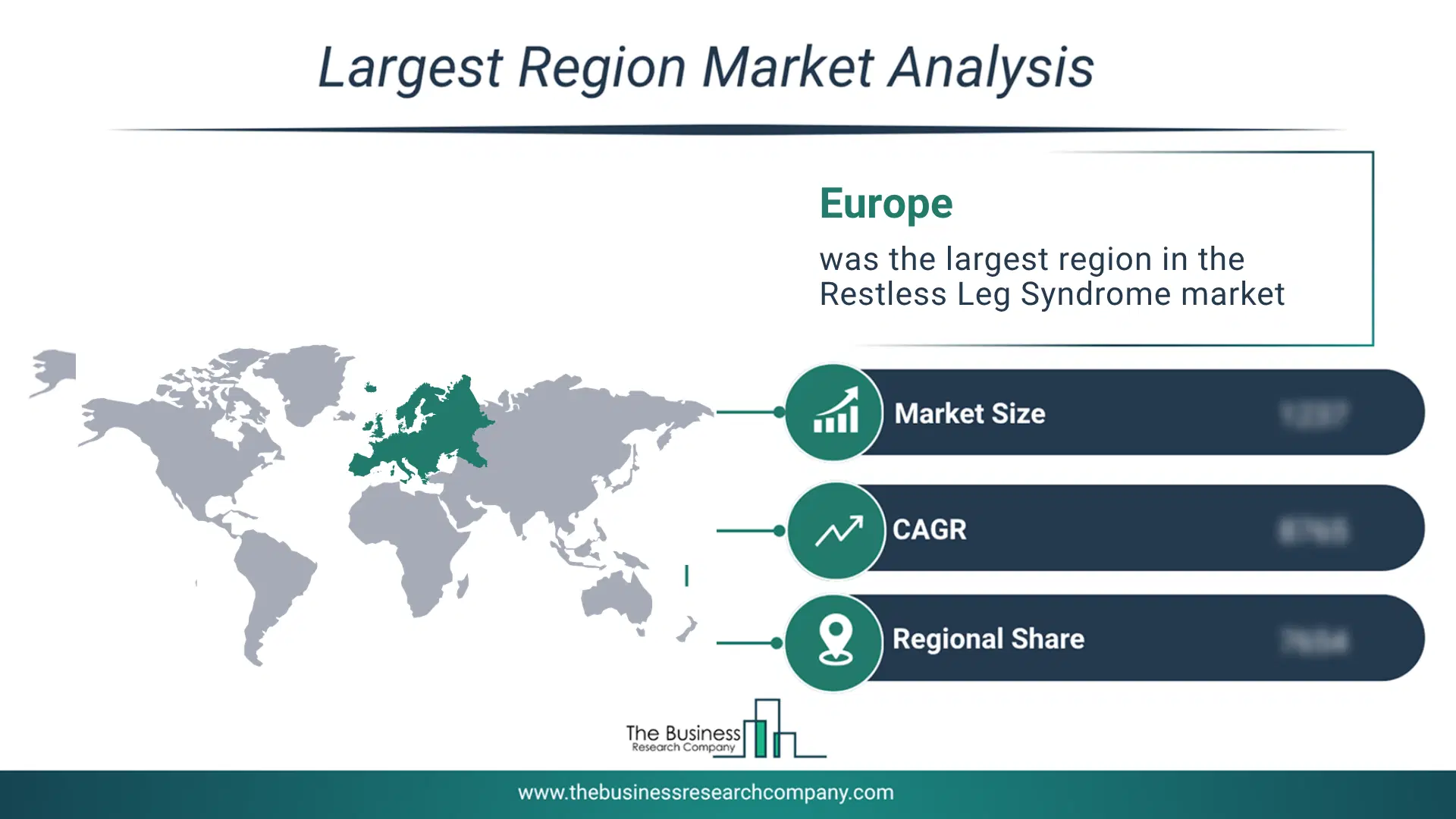
Regional Outlook
Europe was the largest region in the restless leg syndrome market in 2025. North-America is expected to be the fastest-growing region in the forecast period. The regions covered in this market report are Asia-Pacific, South East Asia, Western Europe, Eastern Europe, North America, South America, Middle East, Africa. The countries covered in this market report are Australia, Brazil, China, France, Germany, India, Indonesia, Japan, Taiwan, Russia, South Korea, UK, USA, Canada, Italy, Spain.What Defines the Restless Leg Syndrome Market?
The restless leg syndrome market consists of sales of benzodiazepines, sleep aids, transdermal patches, non-pharmacological therapies, and lifestyle management tools. Values in this market are ‘factory gate’ values, that is, the value of goods sold by the manufacturers or creators of the goods, whether to other entities (including downstream manufacturers, wholesalers, distributors, and retailers) or directly to end customers. The value of goods in this market includes related services sold by the creators of the goods.How is Market Value Defined and Measured?
The market value is defined as the revenues that enterprises gain from the sale of goods and/or services within the specified market and geography through sales, grants, or donations in terms of the currency (in USD unless otherwise specified). The revenues for a specified geography are consumption values that are revenues generated by organizations in the specified geography within the market, irrespective of where they are produced. It does not include revenues from resales along the supply chain, either further along the supply chain or as part of other products.
This chart presents market attractiveness based on a quantitative evaluation of growth, competition, strategic alignment, and risk, offering a clear view of opportunity areas for decision-making. This chart is for illustrative purposes; the full report contains the complete analysis.

This chart highlights the Total Addressable Market (TAM) by estimating the maximum revenue opportunity using an assumption-driven approach, supporting strategic planning and opportunity sizing across markets. The chart is illustrative; the full report provides a more comprehensive analysis.
What Key Data and Analysis Are Included in the Restless Leg Syndrome Market Report 2026?
The restless leg syndrome market research report is one of a series of new reports from The Business Research Company that provides market statistics, including industry global market size, regional shares, competitors with the market share, detailed market segments, market trends and opportunities, and any further data you may need to thrive in the restless leg syndrome industry. The market research report delivers a complete perspective of everything you need, with an in-depth analysis of the current and future state of the industry.Restless Leg Syndrome Market Report Forecast Analysis
| Report Attribute | Details |
|---|---|
| Market Size Value In 2026 | $2.45 billion |
| Revenue Forecast In 2030 | $4.01 billion |
| Growth Rate | CAGR of 13% from 2026 to 2030 |
| Base Year For Estimation | 2025 |
| Actual Estimates/Historical Data | 2020-2025 |
| Forecast Period | 2026 - 2030 |
| Market Representation | Revenue in USD Billion and CAGR from 2026 to 2030 |
| Segments Covered | Type, Treatment Type, Route Of Administration, Distribution Channel, Application |
| Regional Scope | Asia-Pacific, Western Europe, Eastern Europe, North America, South America, Middle East, Africa |
| Country Scope | The countries covered in the report are Australia, Brazil, China, France, Germany, India, Indonesia, Japan, Taiwan, Russia, South Korea, UK, USA, Canada, Italy, Spain |
| Key Companies Profiled | Pfizer Inc., Roche Holding AG, Merck And Co Inc., Novartis International AG, GlaxoSmithKline plc, Teva Pharmaceutical Industries Ltd., Boehringer Ingelheim International GmbH, Astellas Pharma Inc., UCB S.A., Kyowa Kirin Co Ltd., Amneal Pharmaceuticals Inc., Lupin Pharmaceuticals Inc., Alembic Pharmaceuticals Limited, Mundipharma International Limited, Azurity Pharmaceuticals LLC, Otsuka Pharmaceutical Co Ltd., Horizon Therapeutics plc, Mylan N.V., Sun Pharmaceutical Industries Ltd., Zydus Lifesciences Ltd., Cipla Ltd., Dr Reddys Laboratories Ltd., Hikma Pharmaceuticals plc, Almirall S.A. |
| Customization Scope | Request for Customization |
| Pricing And Purchase Options | Explore Purchase Options |