
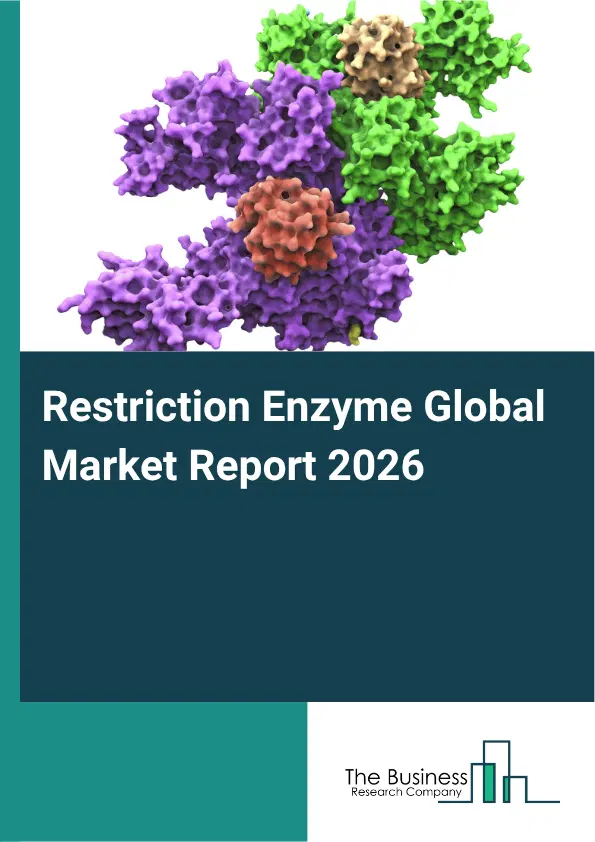
Restriction Enzyme Market Report 2026
Global Outlook – By Product Type (Type I Restriction Enzymes, Type II Restriction Enzymes, Type III Restriction Enzymes, Type IV Restriction Enzymes), By Source (Natural Enzymes, Recombinant Enzymes, Synthetic Enzymes), By Packaging Type (Single Use Packaging, Bulk Packaging, Refillable Packaging), By Application (Cloning, Genetic Engineering, Sequencing, Diagnostics, Forensics, Environmental Studies), By End User (Academic And Research Institutions, Pharmaceutical Companies, Bioscience Companies, Agricultural Companies) – Market Size, Trends, Strategies, and Forecast to 2030
Restriction Enzyme Market Report 2026 Market Overview
• Restriction Enzyme Market Report 2026 market size has reached to $1.04 billion in 2025 • Expected to grow to $1.67 billion in 2030 at a compound annual growth rate (CAGR) of 9.9% • Growth Driver: Expansion of Genomics Projects Driving The Market Growth Due To Increasing Genomic Research Activities • Market Trend: Innovation In High-Fidelity Restriction Enzyme Technologies Enhancing Precision And Efficiency In Molecular Biology Workflows • North America was the largest region in 2025 and Asia-Pacific is the fastest growing region.What Is Covered Under Restriction Enzyme Market?
Restriction enzymes are proteins that recognize specific DNA sequences and cleave DNA molecules at or near those sites. They are widely used in molecular biology and genetic research to enable precise DNA manipulation, gene cloning, genome mapping, and recombinant DNA construction. These enzymes are produced through controlled biotechnological processes to ensure high specificity, activity, and consistency for research, diagnostic, and biotechnology applications. The main product types of restriction enzyme include type I restriction enzymes, type II restriction enzymes, type III restriction enzymes, and type IV restriction enzymes. Type I restriction enzymes refer to enzymes that recognize specific DNA sequences and cleave DNA at or near those recognition sites for molecular biology applications. These enzymes are sourced from natural enzymes, recombinant enzymes, and synthetic enzymes and are available in packaging types including single use packaging, bulk packaging, and refillable packaging. They find application in cloning, genetic engineering, sequencing, diagnostics, forensics, and environmental studies, serving end users including academic and research institutions, pharmaceutical companies, bioscience companies, and agricultural companies.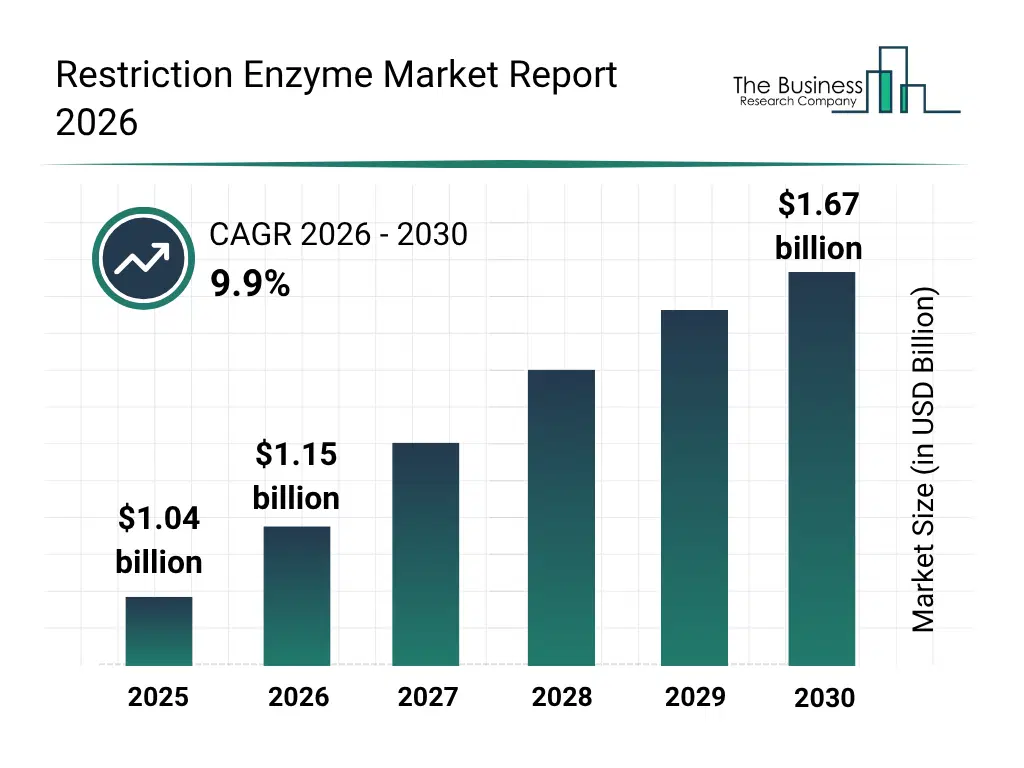
What Is The Restriction Enzyme Market Size and Share 2026?
The restriction enzyme market size has grown rapidly in recent years. It will grow from $1.04 billion in 2025 to $1.15 billion in 2026 at a compound annual growth rate (CAGR) of 10.3%. The growth in the historic period can be attributed to advances in molecular biology research, growth in recombinant dna technology adoption, expansion of academic and clinical genomics studies, increasing funding for biotechnology r&d, rising demand for cloning and sequencing tools.What Is The Restriction Enzyme Market Growth Forecast?
The restriction enzyme market size is expected to see strong growth in the next few years. It will grow to $1.67 billion in 2030 at a compound annual growth rate (CAGR) of 9.9%. The growth in the forecast period can be attributed to integration of precision medicine into healthcare systems, expansion of next-generation sequencing applications, growth in synthetic biology and gene editing research, increasing automation in laboratory workflows, rising demand for personalized diagnostics and molecular testing. Major trends in the forecast period include engineered high-fidelity restriction enzyme variants with improved sequence precision and reduced off-target activity, ultra-stable recombinant enzyme formulations enabling extended shelf life and thermal resistance in molecular workflows, automated enzyme-based dna fragmentation platforms for high-throughput sequencing and diagnostics workflows, enzyme immobilization and reusable biocatalyst systems for cost-efficient laboratory processing, advanced quality-controlled manufacturing and purification processes ensuring batch-to-batch consistency and regulatory compliance.
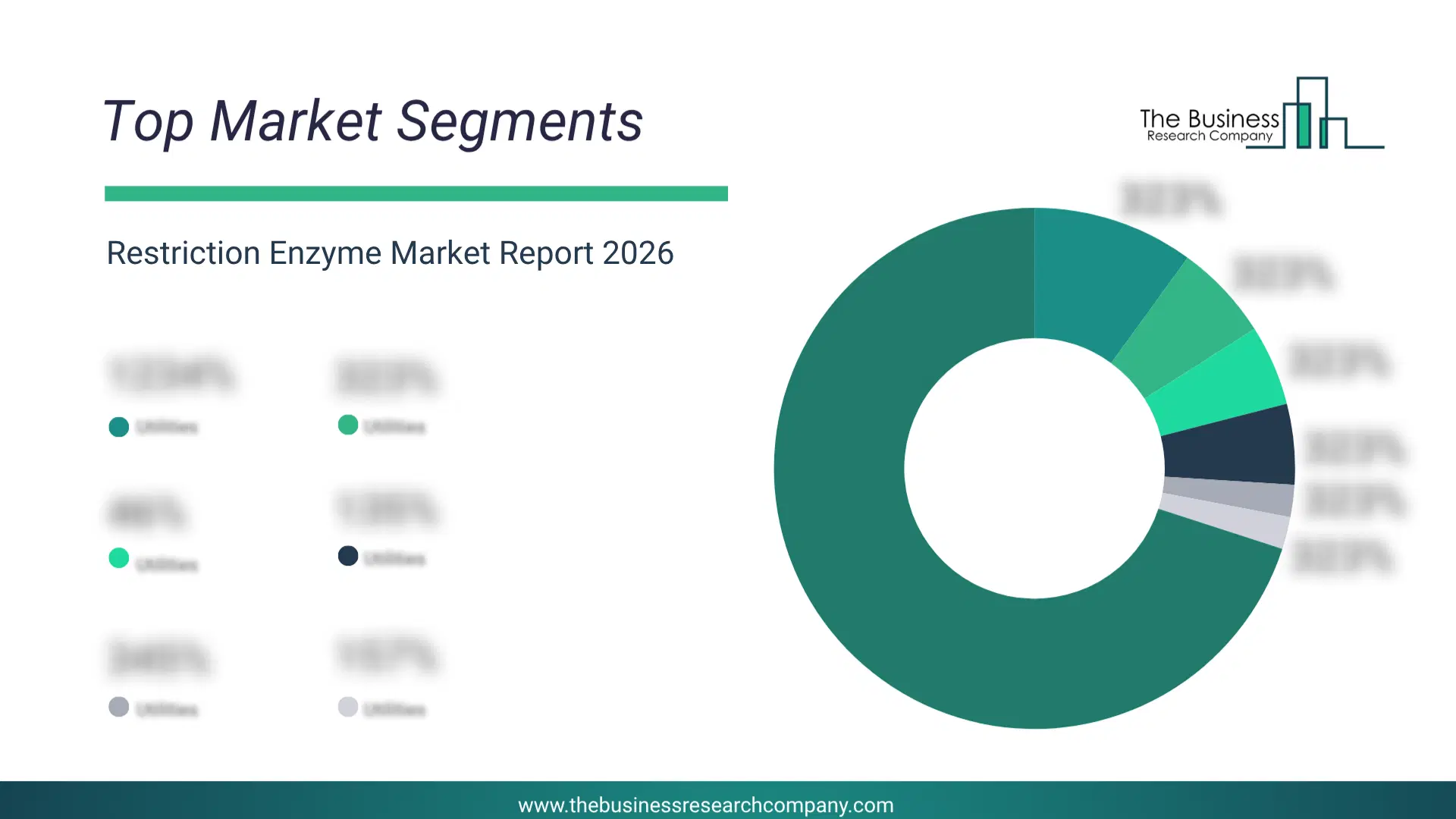
Global Restriction Enzyme Market Segmentation
1) By Product Type: Type I Restriction Enzymes, Type II Restriction Enzymes, Type III Restriction Enzymes, Type IV Restriction Enzymes 2) By Source: Natural Enzymes, Recombinant Enzymes, Synthetic Enzymes 3) By Packaging Type: Single Use Packaging, Bulk Packaging, Refillable Packaging 4) By Application: Cloning, Genetic Engineering, Sequencing, Diagnostics, Forensics, Environmental Studies 5) By End User: Academic And Research Institutions, Pharmaceutical Companies, Bioscience Companies, Agricultural Companies Subsegments: 1) By Type I Restriction Enzymes: Type IA Restriction Enzymes, Type IB Restriction Enzymes, Type IC Restriction Enzymes 2) By Type II Restriction Enzymes: Type IIA Restriction Enzymes, Type IIB Restriction Enzymes, Type IIC Restriction Enzymes, Type IIE Restriction Enzymes, Type IIF Restriction Enzymes, Type IIG Restriction Enzymes, Type IIM Restriction Enzymes, Type IIP Restriction Enzymes, Type IIS Restriction Enzymes, Type IIT Restriction Enzymes 3) By Type III Restriction Enzymes: Sequence Specific Type III Restriction Enzymes, Bifunctional Type III Restriction Enzymes 4) By Type IV Restriction Enzymes: Modified Deoxyribonucleic Acid Specific Type IV Restriction Enzymes, Methylated Deoxyribonucleic Acid Targeting Type IV Restriction Enzymes, Hydroxymethylated Deoxyribonucleic Acid Targeting Type IV Restriction Enzymes, Modification Dependent Type IV Restriction EnzymesWhat Are The Drivers Of The Restriction Enzyme Market?
The expansion of genomics projects is expected to propel the growth of the restriction enzyme market going forward. Genomics projects are large-scale research initiatives focused on sequencing, analyzing, and interpreting genetic material to advance biological and medical knowledge. The expansion of genomics projects is rising due to increasing government and institutional investments in genomic research aimed at improving disease diagnosis and precision medicine. Expansion of genomics projects increases the demand for restriction enzymes by driving higher volumes of DNA sequencing, genome mapping, gene cloning, and genetic engineering activities that require precise DNA cutting, analysis, and modification throughout genomic research workflows. For instance, in February 2025, according to the National Health Service (NHS) England, a UK-based government department, the NHS Genomic Medicine Service conducted more than 810,000 genomic tests for patients across all stages of life in England in 2024, marking an 8% increase compared to 2023 and continuing its steady year-on-year growth since its establishment. Therefore, the expansion of genomics projects is driving the growth of the restriction enzyme industry. The increasing demand for personalized medicine is expected to propel the growth of the restriction enzyme market going forward. Personalized medicine refers to a medical approach that tailors disease prevention, diagnosis, and treatment based on an individual’s genetic profile, lifestyle, and environmental factors to improve clinical outcomes. The demand for personalized medicine is increasing due to the growing prevalence of chronic and complex diseases that require targeted therapies and precise diagnostic approaches. Restriction enzymes enable personalized medicine by precisely cutting DNA at specific sequences, allowing scientists to analyze genetic variations, identify disease-related mutations, and tailor treatments to an individual’s unique genetic profile. For instance, in February 2024, according to the Personalized Medicine Coalition, a US-based non-profit organization, in 2023, the FDA approved 16 new personalized therapies for patients with rare diseases, marking a substantial rise from the six approvals recorded in 2022. Therefore, the increasing demand for personalized medicine is driving the growth of the restriction enzyme industry.Key Players In The Global Restriction Enzyme Market
Major companies operating in the restriction enzyme market report are F. Hoffmann-La Roche Ltd., Thermo Fisher Scientific Inc., Agilent Technologies Inc., Toyobo Co. Ltd., QIAGEN N.V., GenScript Biotech Corporation, Promega Corporation, New England Biolabs Inc., HiMedia Laboratories Pvt. Ltd., Bioneer Corporation, Yeasen Biotechnology Co. Ltd., Novopro Bioscience Inc., Biomatik Corporation, Norgen Biotek Corp., Jena Bioscience GmbH, Molecular Cloning Laboratories, Canvax Biotech S.L., AAT Bioquest Inc., ABclonal Technology Co. Ltd., Enzynomics Co. Ltd., Nippon Gene Co. Ltd., Takara Bio Inc., Merck KGaA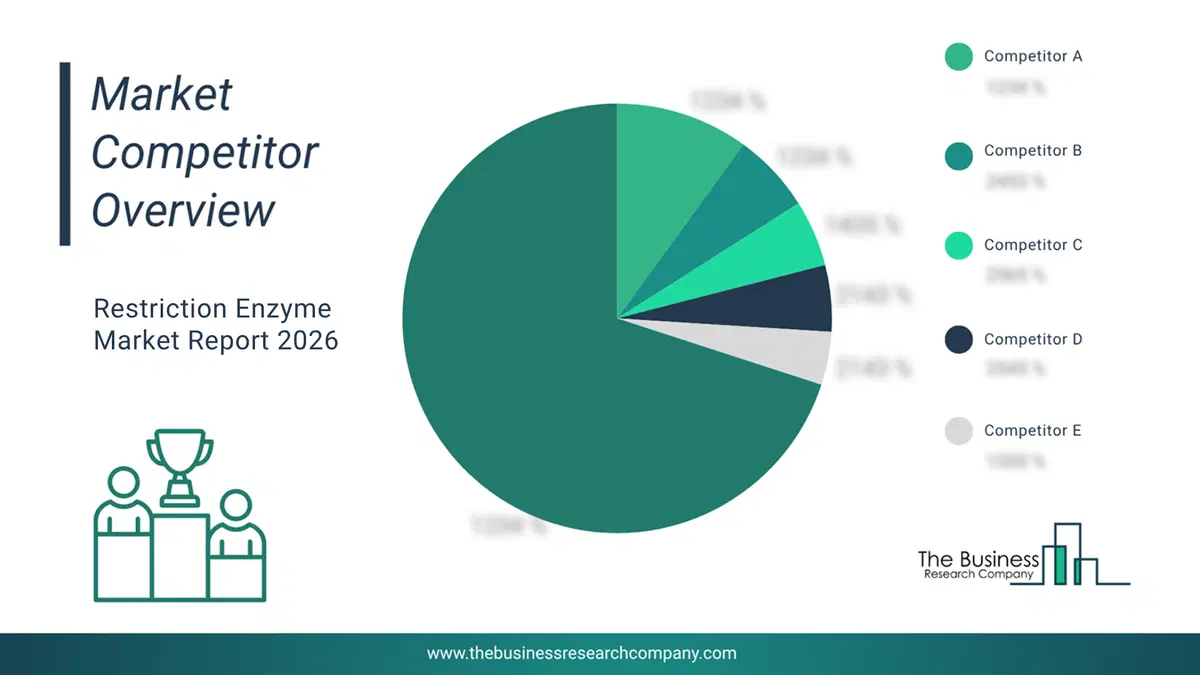
This chart is for illustrative purposes; the full report includes a detailed competitor analysis and comprehensive overview of the top 10 companies in the market.
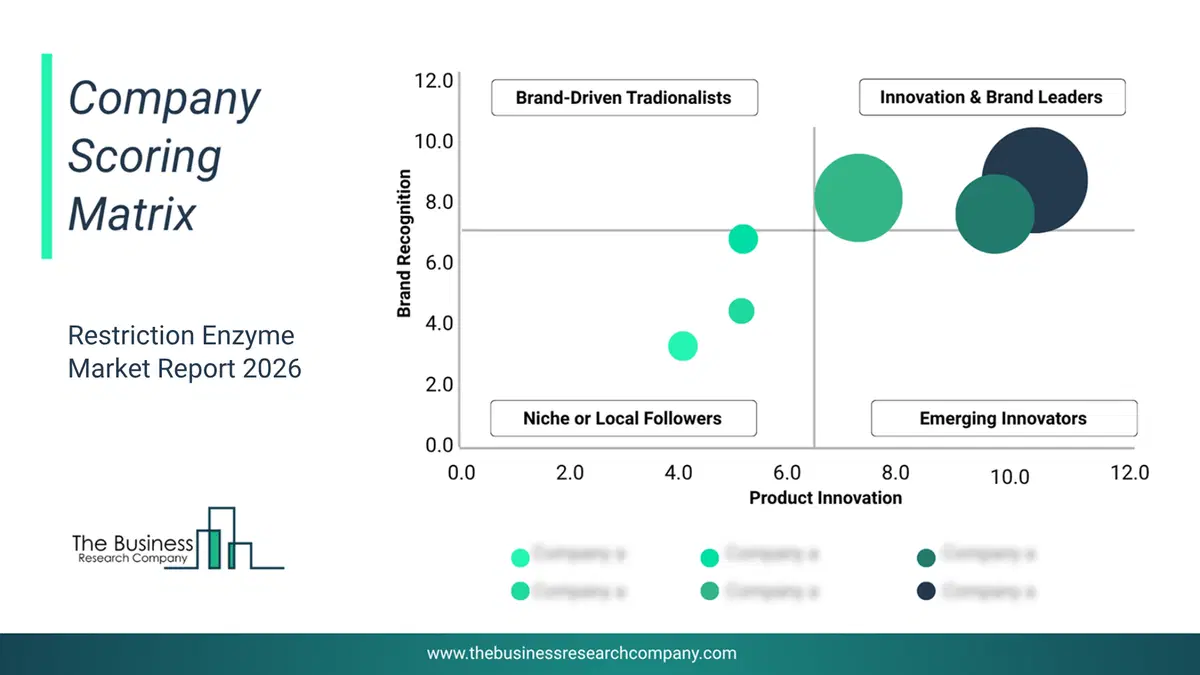
This chart maps companies by product innovation and brand strength, with bubble size indicating relative revenue, helping identify market leaders, challengers, and niche players. This is an illustrative chart; the full report provides a complete and accurate competitive analysis.
Global Restriction Enzyme Market Trends and Insights
Major companies operating in the restriction enzyme market are focusing on developing innovative solutions, such as high-fidelity rapid-digestion restriction enzymes, to enhance DNA manipulation accuracy, reduce processing time, and improve workflow efficiency in molecular biology applications. High-fidelity rapid-digestion restriction enzymes are specialized molecular biology reagents engineered to recognize and cleave specific DNA sequences with high precision and minimal off-target activity, enabling researchers to perform DNA digestion in minutes rather than the longer incubation periods typically required by conventional restriction enzymes. For instance, in October 2023, Creative Enzymes, a US-based biotechnology company, launched the Creative SuperCut Series, a new range of high-performance restriction enzymes designed to complete DNA digestion reactions within 5–15 minutes. The product line features a universal buffer system that supports multiple enzyme reactions without buffer changes, compatibility with widely used molecular biology buffers, and color-coded buffers that simplify sample loading and electrophoresis workflows. Additionally, the enzymes are engineered for high digestion efficiency and high fidelity, minimizing non-specific cleavage and star activity while maintaining reliable performance across diverse applications, including PCR product manipulation, genomic DNA studies, and vector construction.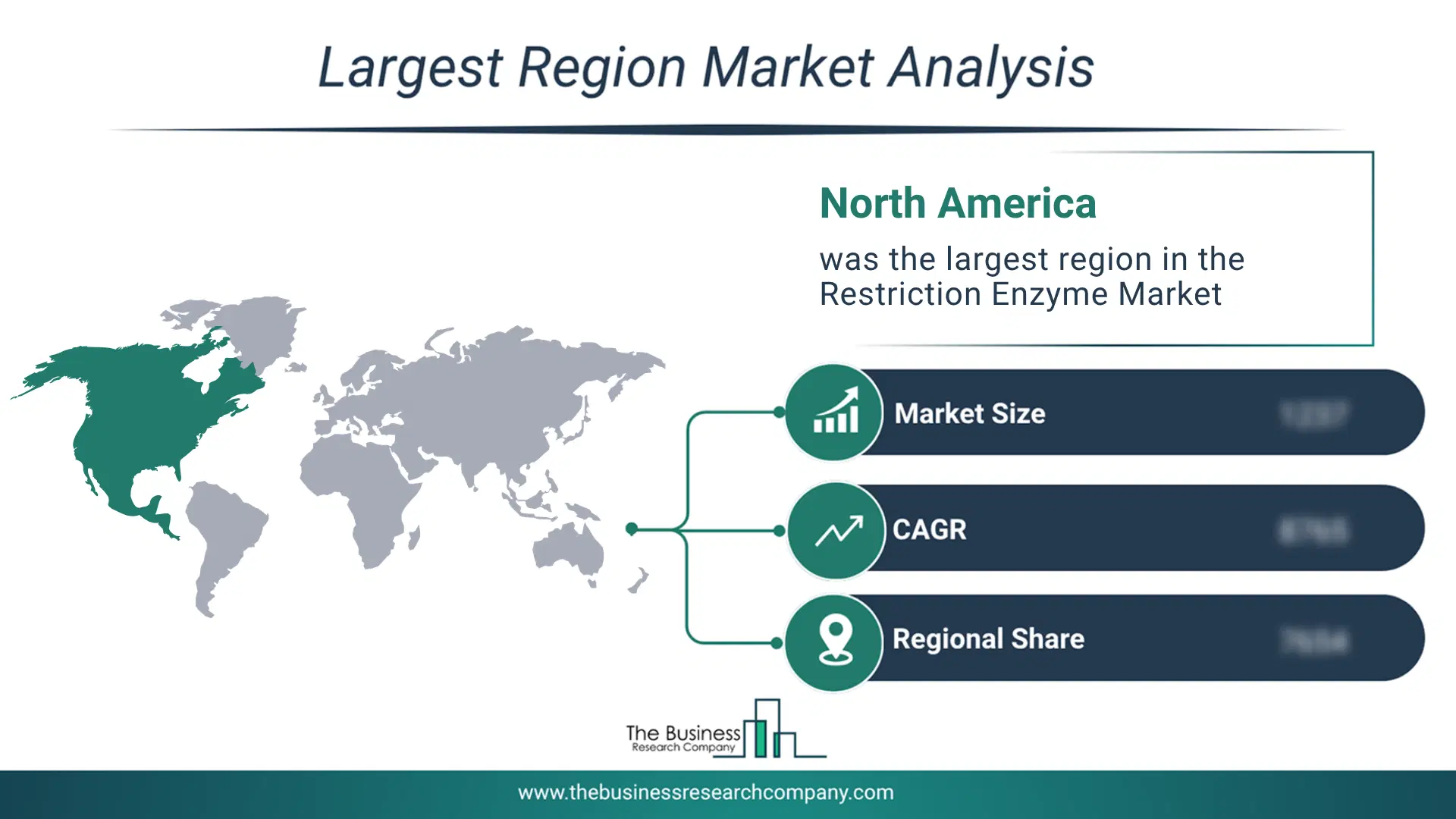
Regional Outlook
North America was the largest region in the restriction enzyme market in 2025. Asia-Pacific is expected to be the fastest-growing region in the forecast period. The regions covered in this market report are Asia-Pacific, South East Asia, Western Europe, Eastern Europe, North America, South America, Middle East, Africa. The countries covered in this market report are Australia, Brazil, China, France, Germany, India, Indonesia, Japan, Taiwan, Russia, South Korea, UK, USA, Canada, Italy, Spain.What Defines the Restriction Enzyme Market?
The restriction enzyme market consists of sales of restriction endonucleases, high-fidelity restriction enzymes, methylation-sensitive restriction enzymes, engineered restriction enzymes, DNA modification enzymes, recombinant restriction enzymes, DNA cleavage reagents, and related molecular biology enzymes. Values in this market are ‘factory gate’ values, that is, the value of goods sold by the manufacturers or creators of the goods, whether to other entities (including downstream manufacturers, wholesalers, distributors, and retailers) or directly to end customers. The value of goods in this market includes related services sold by the creators of the goods.How is Market Value Defined and Measured?
The market value is defined as the revenues that enterprises gain from the sale of goods and/or services within the specified market and geography through sales, grants, or donations in terms of the currency (in USD unless otherwise specified). The revenues for a specified geography are consumption values that are revenues generated by organizations in the specified geography within the market, irrespective of where they are produced. It does not include revenues from resales along the supply chain, either further along the supply chain or as part of other products.
This chart presents market attractiveness based on a quantitative evaluation of growth, competition, strategic alignment, and risk, offering a clear view of opportunity areas for decision-making. This chart is for illustrative purposes; the full report contains the complete analysis.

This chart highlights the Total Addressable Market (TAM) by estimating the maximum revenue opportunity using an assumption-driven approach, supporting strategic planning and opportunity sizing across markets. The chart is illustrative; the full report provides a more comprehensive analysis.
What Key Data and Analysis Are Included in the Restriction Enzyme Market Report 2026?
The restriction enzyme market research report is one of a series of new reports from The Business Research Company that provides market statistics, including industry global market size, regional shares, competitors with the market share, detailed market segments, market trends and opportunities, and any further data you may need to thrive in the restriction enzyme industry. The market research report delivers a complete perspective of everything you need, with an in-depth analysis of the current and future state of the industry.Restriction Enzyme Market Report Forecast Analysis
| Report Attribute | Details |
|---|---|
| Market Size Value In 2026 | $1.15 billion |
| Revenue Forecast In 2030 | $1.67 billion |
| Growth Rate | CAGR of 9.9% from 2026 to 2030 |
| Base Year For Estimation | 2025 |
| Actual Estimates/Historical Data | 2020-2025 |
| Forecast Period | 2026 - 2030 |
| Market Representation | Revenue in USD Billion and CAGR from 2026 to 2030 |
| Segments Covered | Product Type, Source, Packaging Type, Application, End User |
| Regional Scope | Asia-Pacific, Western Europe, Eastern Europe, North America, South America, Middle East, Africa |
| Country Scope | The countries covered in the report are Australia, Brazil, China, France, Germany, India, Indonesia, Japan, Taiwan, Russia, South Korea, UK, USA, Canada, Italy, Spain. |
| Key Companies Profiled | F. Hoffmann-La Roche Ltd., Thermo Fisher Scientific Inc., Agilent Technologies Inc., Toyobo Co. Ltd., QIAGEN N.V., GenScript Biotech Corporation, Promega Corporation, New England Biolabs Inc., HiMedia Laboratories Pvt. Ltd., Bioneer Corporation, Yeasen Biotechnology Co. Ltd., Novopro Bioscience Inc., Biomatik Corporation, Norgen Biotek Corp., Jena Bioscience GmbH, Molecular Cloning Laboratories, Canvax Biotech S.L., AAT Bioquest Inc., ABclonal Technology Co. Ltd., Enzynomics Co. Ltd., Nippon Gene Co. Ltd., Takara Bio Inc., Merck KGaA |
| Customization Scope | Request for Customization |
| Pricing And Purchase Options | Explore Purchase Options |