
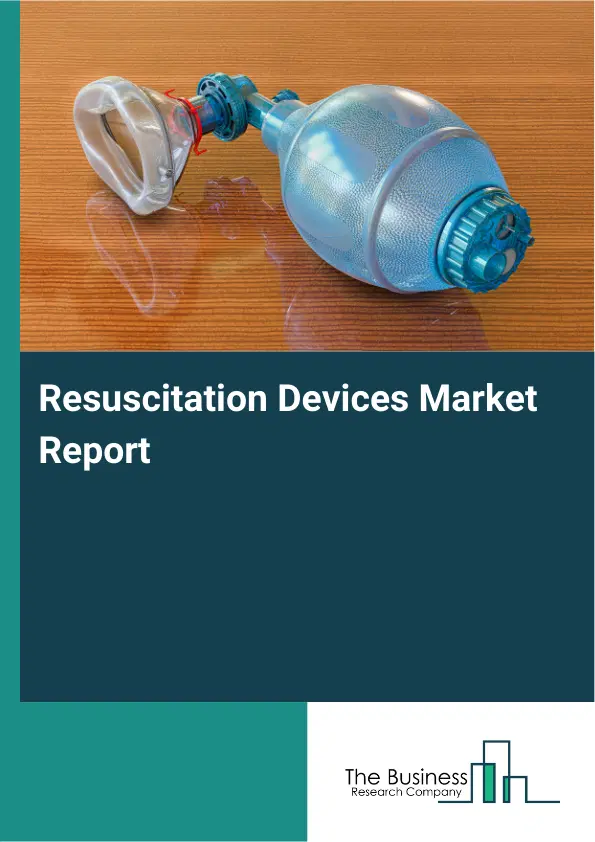
Resuscitation Devices Market Report 2026
Global Outlook – By Product (Airway Management Devices, External Defibrillators), By Patient Type (Adult Patients, Pediatric Patients), By End User (Hospitals, Ambulatory Surgical Centers, Other End-users) – Market Size, Trends, Strategies, and Forecast to 2030
Resuscitation Devices Market Overview
• Resuscitation Devices market size has reached to $9.94 billion in 2025 • Expected to grow to $15.04 billion in 2030 at a compound annual growth rate (CAGR) of 8.6% • Growth Driver: In Incidences Of Cardiac And Respiratory Diseases Drives Resuscitation Devices Market • Market Trend: Automated Device To Revolutionize Cardiac Arrest Response • North America was the largest region in 2025 and Asia-Pacific is the fastest growing region.Market Gains By 2030 – Top Opportunities By Segment
Market Gain identifies the most promising market opportunities by highlighting the segments or products expected to generate the highest incremental revenue growth over the next five years.
What Is Covered Under Resuscitation Devices Market?
Resuscitation devices are used in crises to assist in the process of reviving the patient's breath or inducing spontaneous breathing in patients who are unconscious or appear to be dead by inflating the lungs with positive pressure, which maintains the patient oxygenated. Resuscitation devices are typically disposable, latex-free, and intended for single-patient use. The main types of resuscitation devices are airway management devices, external defibrillators, convective warming blankets, and other resuscitation devices. Airway management devices include a set of equipment and medical procedures performed to prevent and relieve airway obstruction. The devices assure the gas exchange between a patient's lungs and the atmosphere is unhindered. They are used by adult patients and paediatric patients and implemented in various sectors such as hospitals, diagnostic centers, ambulatory surgical centers, and others.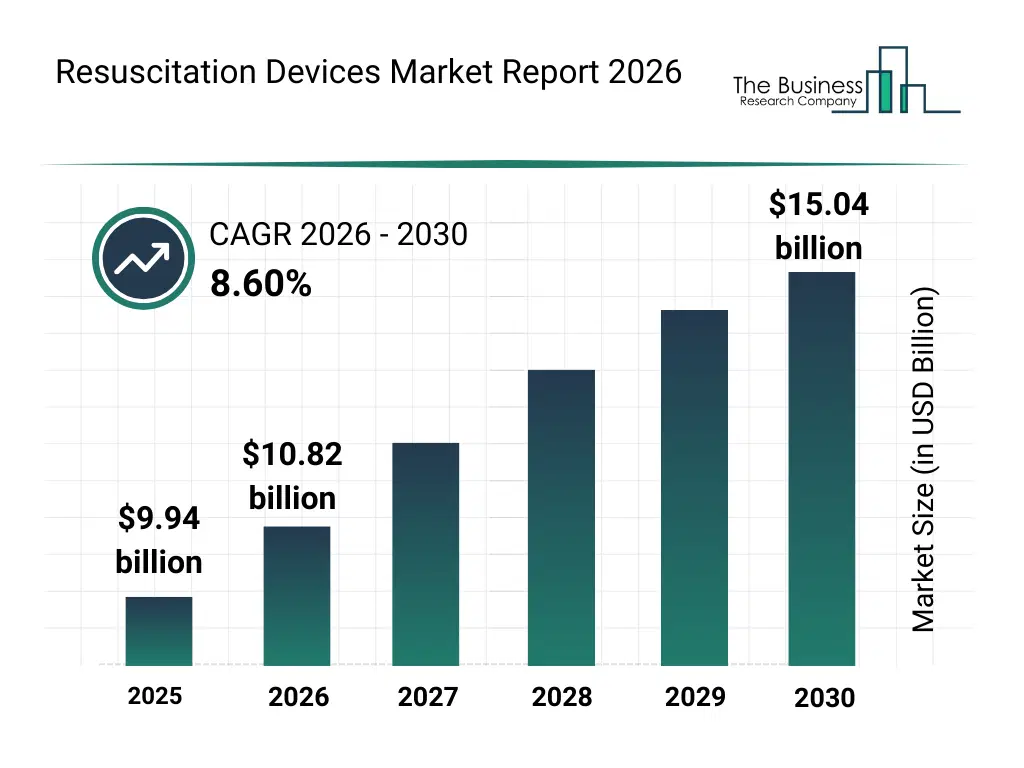
What Is The Resuscitation Devices Market Size and Share 2026?
The resuscitation devices market size has grown strongly in recent years. It will grow from $9.94 billion in 2025 to $10.82 billion in 2026 at a compound annual growth rate (CAGR) of 8.8%. The growth in the historic period can be attributed to increasing incidence of cardiac arrest emergencies, expansion of emergency medical services, rising hospital preparedness standards, improved access to critical care equipment, growth in public access defibrillation programs.What Is The Resuscitation Devices Market Growth Forecast?
The resuscitation devices market size is expected to see strong growth in the next few years. It will grow to $15.04 billion in 2030 at a compound annual growth rate (CAGR) of 8.6%. The growth in the forecast period can be attributed to increasing investments in emergency response infrastructure, rising adoption of smart resuscitation systems, expansion of pre-hospital care capabilities, growing focus on rapid response technologies, increasing regulatory emphasis on emergency medical readiness. Major trends in the forecast period include increasing adoption of automated external defibrillators, rising demand for portable and disposable resuscitation devices, growing integration of real-time monitoring and feedback systems, expansion of latex-free single-use products, enhanced focus on emergency response efficiency.
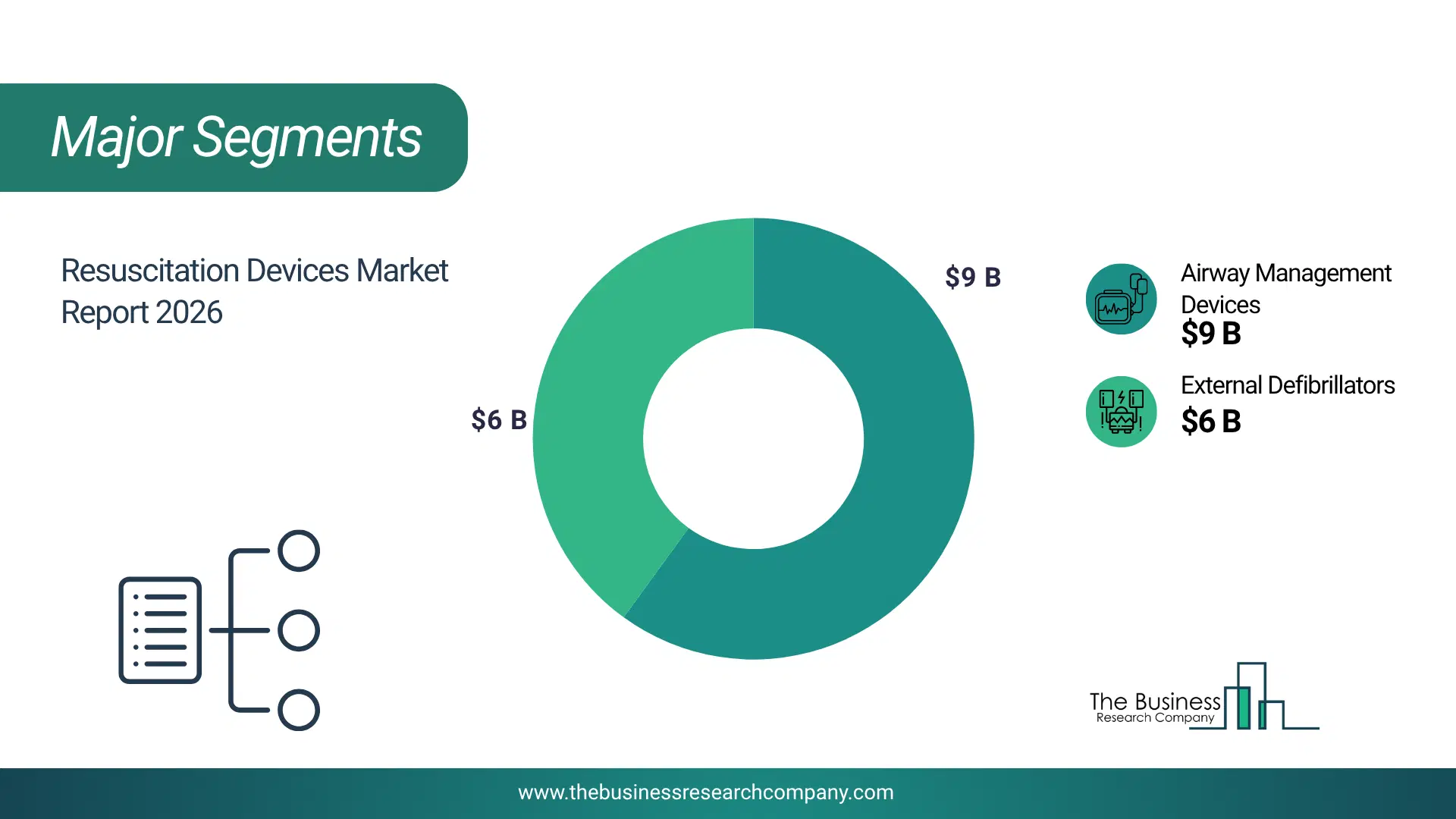
Global Resuscitation Devices Market Segmentation
1) By Product: Airway Management Devices, External Defibrillators 2) By Patient Type: Adult Patients, Pediatric Patients 3) By End User: Hospitals, Ambulatory Surgical Centers, Other End-users Subsegments: 1) By Airway Management Devices: Endotracheal Tubes, Laryngeal Masks, Bag-Valve-Mask Devices, Suction Devices 2) By External Defibrillators: Automated External Defibrillators (AEDs), Manual Defibrillators The top segments in the resuscitation devices market will be: • Airway Management Devices will reach $9.31 Billion by 2030. • External Defibrillators will reach $5.65 Billion by 2030.What Is The Driver Of The Resuscitation Devices Market?
The increase in incidences of cardiac and respiratory diseases is expected to propel the growth of the resuscitation devices market in the coming years. The main reasons for the rise in cardiac and respiratory diseases are aging, smoking, pollution, an unhealthy diet, physical inactivity, tobacco use, and harmful use of alcohol. Further, behavioral risk factors such as raised blood pressure, raised blood glucose, raised blood lipids, and overweight and obesity can also cause a high risk of cardiovascular diseases. Resuscitation devices help to restore blood circulation and breathing of a person suffering from cardiac and respiratory diseases in an emergency. For instance, according to the American College of Cardiology, a US-based non-profit medical association, all four CV risk factors are anticipated to rise in prevalence among the general U.S. population between 2025 and 2060, with diabetes showing the largest percentage increase of 39.3%, followed by dyslipidemia, hypertension, and obesity. The most significant anticipated rate increases were heart failure at 33.4% and stroke at 33.8%. Therefore, the rising prevalence of cardiac and respiratory diseases drives the growth of the resuscitation devices industry.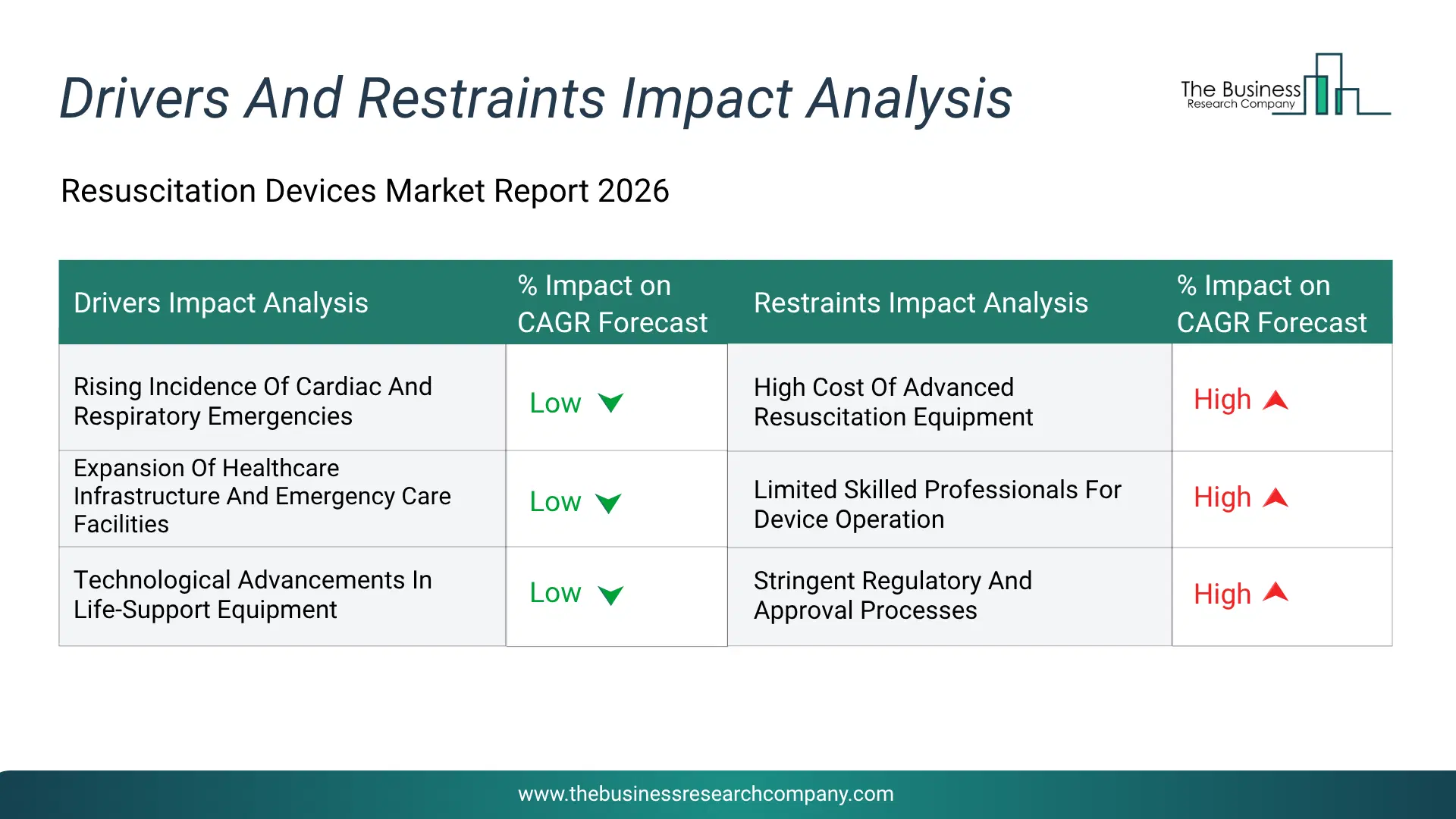
Infographic Chart Showing Key Market Drivers Analysis And Restraints For Resuscitation Devices Market
The chart presents an impact analysis of key drivers and restraints, quantifying their relative influence on the market's growth rate and helping assess the balance between growth enablers and limiting factors. This chart offers a high-level perspective; the full report contains more detailed insights.
How Will The Drivers Impact Growth In The Global Resuscitation Devices Market?
• Rising Incidence Of Cardiac And Respiratory Emergencies (Low) – During the forecast period, the rising incidence of cardiac and respiratory emergencies is expected to become a key growth driver for the resuscitation devices market by 2030. The increasing prevalence of cardiac arrest, respiratory failure, and trauma-related emergencies is significantly driving the demand for resuscitation devices. Conditions such as cardiac arrest require immediate intervention using devices like defibrillators and ventilators to restore normal breathing and circulation. With aging populations and lifestyle-related diseases on the rise, emergency cases are increasing globally. This leads to higher demand for life-saving equipment across hospitals and emergency care settings. Growing awareness about early intervention and survival rates further supports adoption. Governments are also strengthening emergency response systems, boosting device deployment. • Expansion Of Healthcare Infrastructure And Emergency Care Facilities (Low) – During the forecast period, the expansion of healthcare infrastructure and emergency care facilities is expected to emerge as a major factor driving the expansion of the resuscitation devices market by 2030. Developing regions are investing in improving access to critical care services. Newly established hospitals and ICUs require essential resuscitation equipment such as ventilators and airway management devices. Additionally, improvements in emergency medical services have increased the use of portable devices. Governments and private institutions are upgrading healthcare facilities with advanced technologies. • Technological Advancements In Life-Support Equipment (Low) – During the forecast period, the technological advancements in life-support equipment are expected to act as a key growth catalyst for the resuscitation devices market by 2030. Modern devices such as automated external defibrillators and smart ventilators are more portable and user-friendly. Integration of digital monitoring and real-time data tracking improves clinical decision-making. These innovations reduce response time and enhance patient survival rates. Continuous research and development efforts are leading to cost-effective and high-performance devices.How Will The Restraints Impact Growth In The Global Resuscitation Devices Market?
• High Cost Of Advanced Resuscitation Equipment (Low) – During the forecast period, high cost of advanced resuscitation equipment is significantly restricting the growth of the resuscitation devices market. Expensive acquisition costs, coupled with maintenance and upgrade expenses, are limiting adoption among smaller hospitals, clinics, and emergency care centers with constrained budgets. • Limited Skilled Professionals For Device Operation (Low) – During the forecast period, limited skilled professionals for device operation is significantly restricting the growth of the resuscitation devices market. The shortage of trained emergency care personnel and inadequate training in advanced resuscitation technologies are affecting effective device utilization and reducing overall clinical efficiency. • Stringent Regulatory And Approval Processes (Low) – During the forecast period, stringent regulatory and approval processes are significantly restricting the growth of the resuscitation devices market. Lengthy certification procedures, strict compliance requirements, and evolving safety standards are delaying product launches and increasing development costs for manufacturers.Key Players In The Global Resuscitation Devices Market
Major companies operating in the resuscitation devices market are Koninklijke Philips N.V., Medtronic plc, Drägerwerk AG & Co. KGaA, Ambu A/S, Nihon Kohden Corporation, Mindray Medical International Limited, Teleflex Incorporated, Intersurgical Ltd., Vyaire Medical Inc., Stryker Corporation, Hamilton Medical AG, Allied Healthcare Products Inc., SunMed LLC, Salter Labs Inc., RAPP Australia Pty Ltd., Neotech Medical Systems Pvt. Ltd., CPR Medical Devices Inc., GE Healthcare, Becton Dickinson and Company, Laerdal Medical AS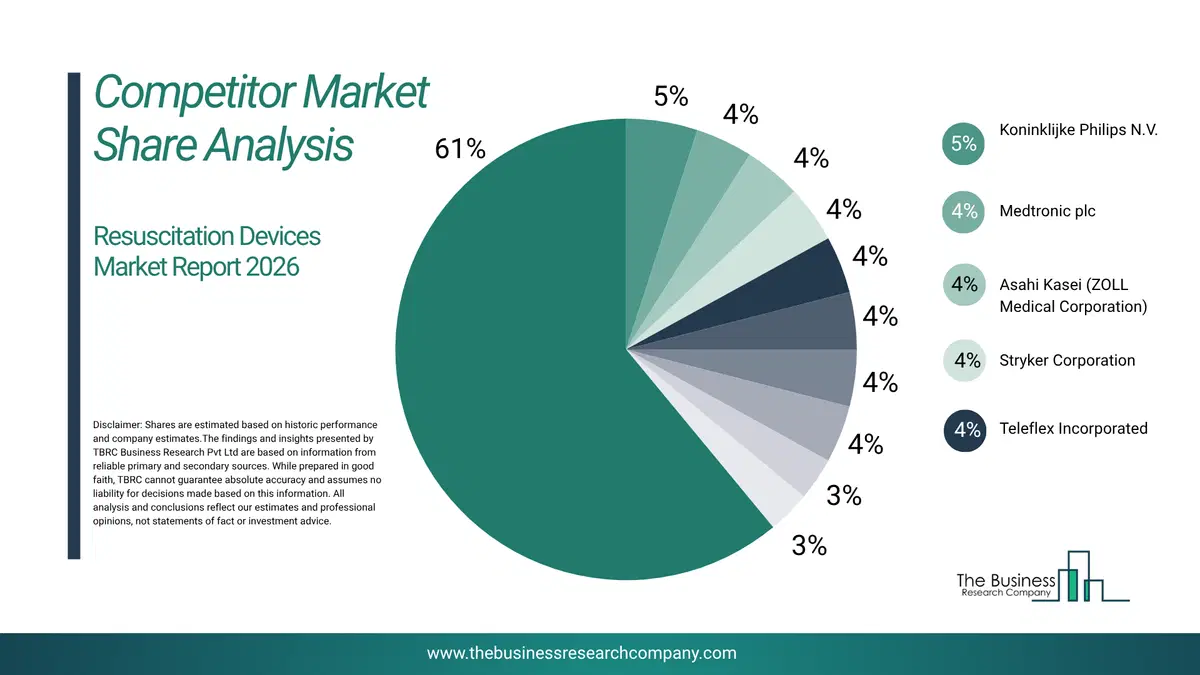
This chart is for illustrative purposes; the full report includes a detailed competitor analysis and comprehensive overview of the top 10 companies in the market.
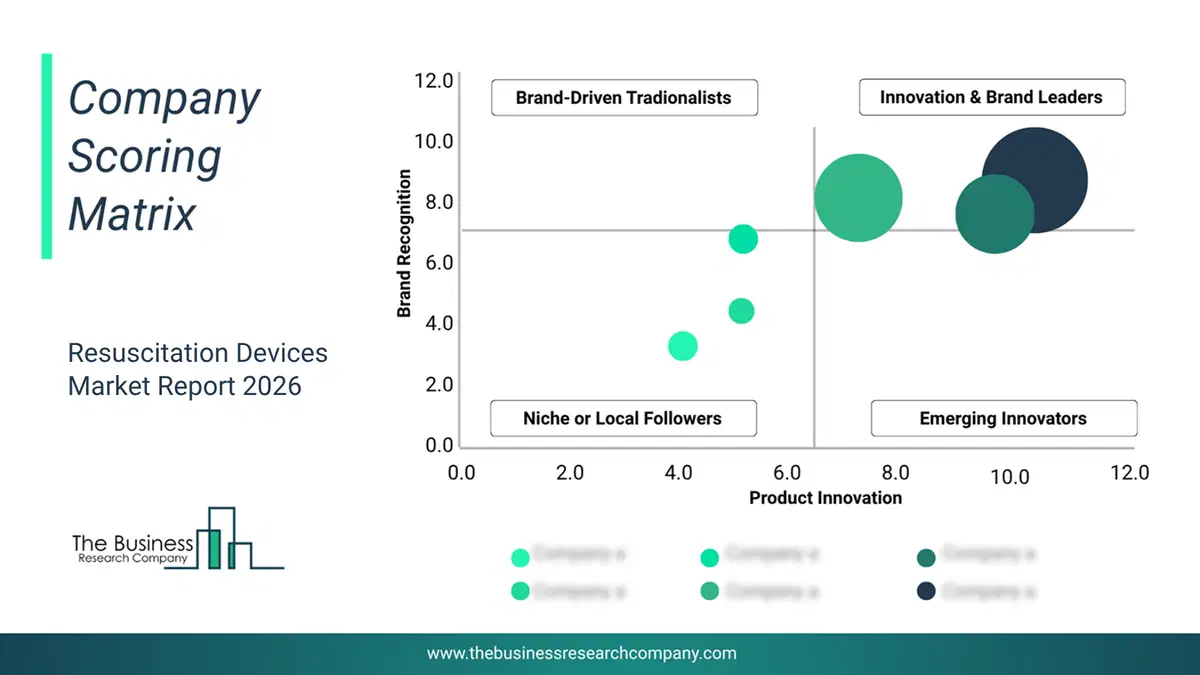
This chart maps companies by product innovation and brand strength, with bubble size indicating relative revenue, helping identify market leaders, challengers, and niche players. This is an illustrative chart; the full report provides a complete and accurate competitive analysis.
Global Resuscitation Devices Market Trends and Insights
Major companies in the resuscitation devices market are exploring automated CPR device to gain a competitive advantage and enhance their product offerings. An automated CPR (Cardiopulmonary Resuscitation) device is a medical device designed to provide automated chest compressions to individuals experiencing cardiac arrest. For instance, in April 2023, Defibtech, a U.S based manufacturer of life-saving medical equipment, launched an automated CPR device, the ARM XR. The ARM XR is intended for use by emergency medical professionals to treat patients who are in cardiac arrest. The ARM XR builds upon the technology of the original Defibtech ARM device but offers new features including a suction cup piston design that generates compressions and up to 0.6 in (1.5 cm) of recoil for chest wall expansion along with changes to the frame and backboard that allow for faster, smoother patient application.What Are Latest Mergers And Acquisitions In The Resuscitation Devices Market?
In April 2023, Nordic Capital Inc., a Sweden-based private equity company, acquired majority share in Corpuls. The acquisition will drive Corpuls' growth through innovation, broaden its product offerings, and enhance its global market reach with Nordic Capital's backing. Corpuls is a Germany-based medical technology company specializes in manufacturing resuscitation devices such as portable defibrillator and monitoring systems.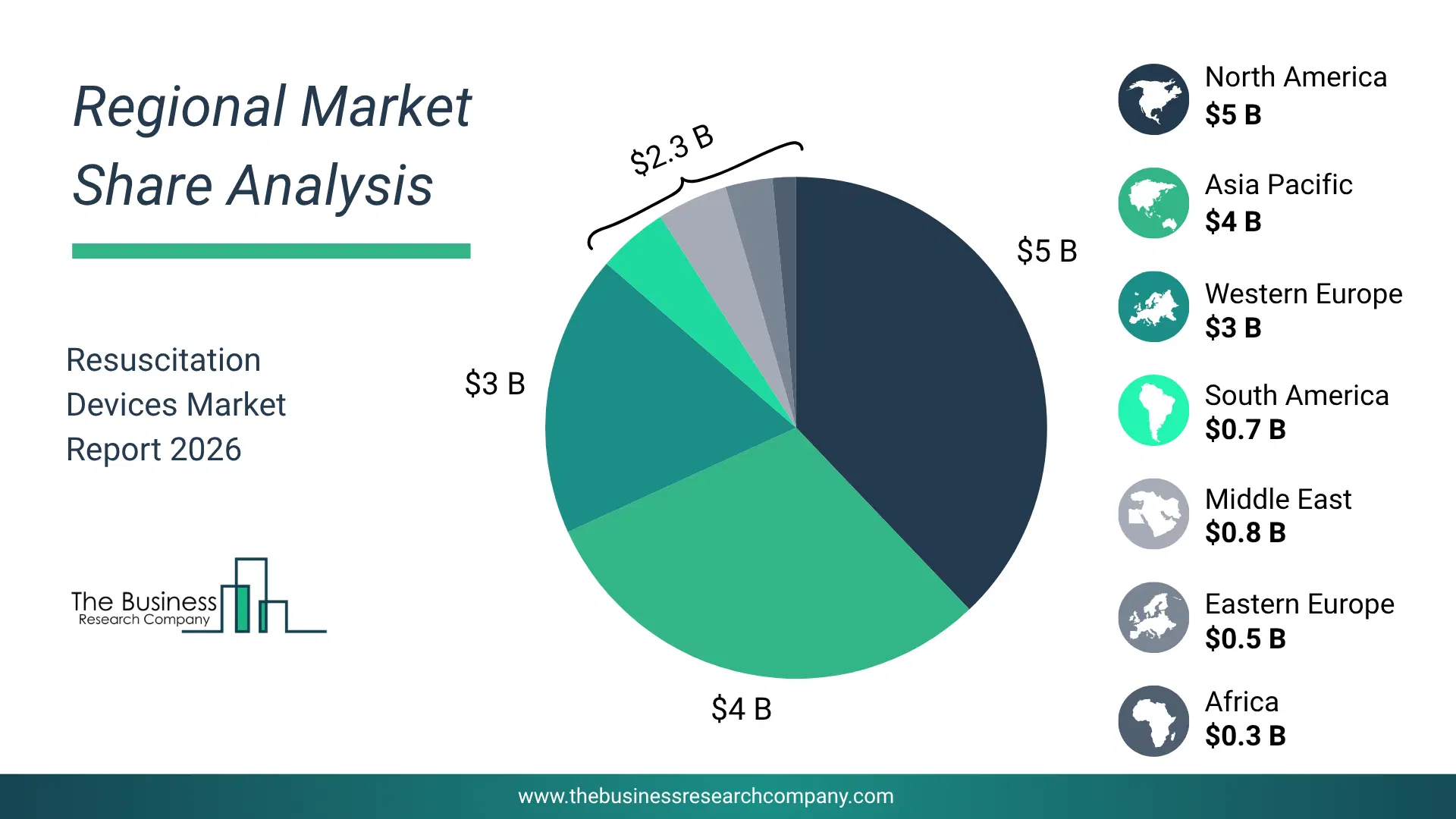
Regional Outlook
North America was the largest region in the resuscitation devices market in 2025. Asia-Pacific is expected to be the fastest-growing region in the forecast period. The regions covered in this market report are Asia-Pacific, South East Asia, Western Europe, Eastern Europe, North America, South America, Middle East, Africa. The countries covered in this market report are Australia, Brazil, China, France, Germany, India, Indonesia, Japan, Taiwan, Russia, South Korea, UK, USA, Canada, Italy, SpainWhat Defines the Resuscitation Devices Market?
The resuscitation devices market consists of sales of ICU ventilators, portable ventilators, endotracheal tubes, resuscitators, tracheostomy tubes, external defibrillators, convective warming blankets, and other resuscitation devices. Values in this market are ‘factory gate’ values, that is the value of goods sold by the manufacturers or creators of the goods, whether to other entities (including downstream manufacturers, wholesalers, distributors, and retailers) or directly to end customers. The value of goods in this market includes related services sold by the creators of the goods.How is Market Value Defined and Measured?
The market value is defined as the revenues that enterprises gain from the sale of goods and/or services within the specified market and geography through sales, grants, or donations in terms of the currency (in USD unless otherwise specified). The revenues for a specified geography are consumption values that are revenues generated by organizations in the specified geography within the market, irrespective of where they are produced. It does not include revenues from resales along the supply chain, either further along the supply chain or as part of other products.
This chart presents market attractiveness based on a quantitative evaluation of growth, competition, strategic alignment, and risk, offering a clear view of opportunity areas for decision-making. This chart is for illustrative purposes; the full report contains the complete analysis.

This chart highlights the Total Addressable Market (TAM) by estimating the maximum revenue opportunity using an assumption-driven approach, supporting strategic planning and opportunity sizing across markets. The chart is illustrative; the full report provides a more comprehensive analysis.
What Key Data and Analysis Are Included in the Resuscitation Devices Market Report 2026?
The resuscitation devices market research report is one of a series of new reports from The Business Research Company that provides market statistics, including industry global market size, regional shares, competitors with the market share, detailed market segments, market trends and opportunities, and any further data you may need to thrive in the resuscitation devices industry. The market research report delivers a complete perspective of everything you need, with an in-depth analysis of the current and future state of the industry.Resuscitation Devices Market Report Forecast Analysis
| Report Attribute | Details |
|---|---|
| Market Size Value In 2026 | $10.82 billion |
| Revenue Forecast In 2030 | $15.04 billion |
| Growth Rate | CAGR of 8.8% from 2026 to 2030 |
| Base Year For Estimation | 2025 |
| Actual Estimates/Historical Data | 2020-2025 |
| Forecast Period | 2026 - 2030 |
| Market Representation | Revenue in USD Billion and CAGR from 2026 to 2030 |
| Segments Covered | Product, Patient Type, End User |
| Regional Scope | Asia-Pacific, Western Europe, Eastern Europe, North America, South America, Middle East, Africa |
| Country Scope | The countries covered in the report are Australia, Brazil, China, France, Germany, India, Indonesia, Japan, Taiwan, Russia, South Korea, UK, USA, Canada, Italy, Spain. |
| Key Companies Profiled | Koninklijke Philips N.V., Medtronic plc, Drägerwerk AG & Co. KGaA, Ambu A/S, Nihon Kohden Corporation, Mindray Medical International Limited, Teleflex Incorporated, Intersurgical Ltd., Vyaire Medical Inc., Stryker Corporation, Hamilton Medical AG, Allied Healthcare Products Inc., SunMed LLC, Salter Labs Inc., RAPP Australia Pty Ltd., Neotech Medical Systems Pvt. Ltd., CPR Medical Devices Inc., GE Healthcare, Becton Dickinson and Company, Laerdal Medical AS |
| Customization Scope | Request for Customization |
| Pricing And Purchase Options | Explore Purchase Options |