
Retail Banking Market Report 2026
Global Outlook – By Type (Public Sector Banks, Private Sector Banks, Foreign Banks, Community Development Banks), By Service (Saving And Checking Account, Transactional Account, Personal Loan, Home Loan, Mortgages, Debit And Credit Cards, Automated Teller Machine (ATM) Cards), By Application (Personal Banking, Household and Family Banking, Housing and Property Finance, Digital and Transactional Banking, Retail Investment and Wealth Products) – Market Size, Trends, Strategies, and Forecast to 2030
Retail Banking Market Overview
• Retail Banking market size has reached to $3628.4 billion in 2025 • Expected to grow to $5093.56 billion in 2030 at a compound annual growth rate (CAGR) of 7% • Growth Driver: Online and Mobile Banking on the Growth of the Retail Banking Market • Market Trend: Innovative Core Banking Solutions With Gen AI For Enhancing Efficiency and Customer Engagement in Retail Banking • Asia-Pacific was the largest region in 2025 and North America is the fastest growing region.Market Gains By 2030 – Top Opportunities By Segment
Market Gain identifies the most promising market opportunities by highlighting the segments or products expected to generate the highest incremental revenue growth over the next five years.
What Is Covered Under Retail Banking Market?
Retail banking, also known as consumer banking or personal banking, refers to banking services that focus on individual consumers rather than businesses. It provides various financial products and services, including savings accounts, checking accounts, credit and debit cards, personal loans, and mortgages, to help individuals manage their finances effectively and securely. The primary purpose of retail banking is to assist individual consumers in managing their financial needs. The main types in the retail banking market are public sector banks, private sector banks, foreign banks, community development banks, and non-banking financial companies (NBFC). Public sector banks refer to financial institutions that are owned and operated by the government, providing banking and financial services to the public while adhering to regulatory and policy guidelines set by government authorities. The various services include saving and checking account, transactional account, personal loan, home loan, mortgages, debit and credit cards, automated teller machine (ATM) cards, and certificates of deposits, and several applications including micro enterprises, small and medium enterprises, and large enterprises.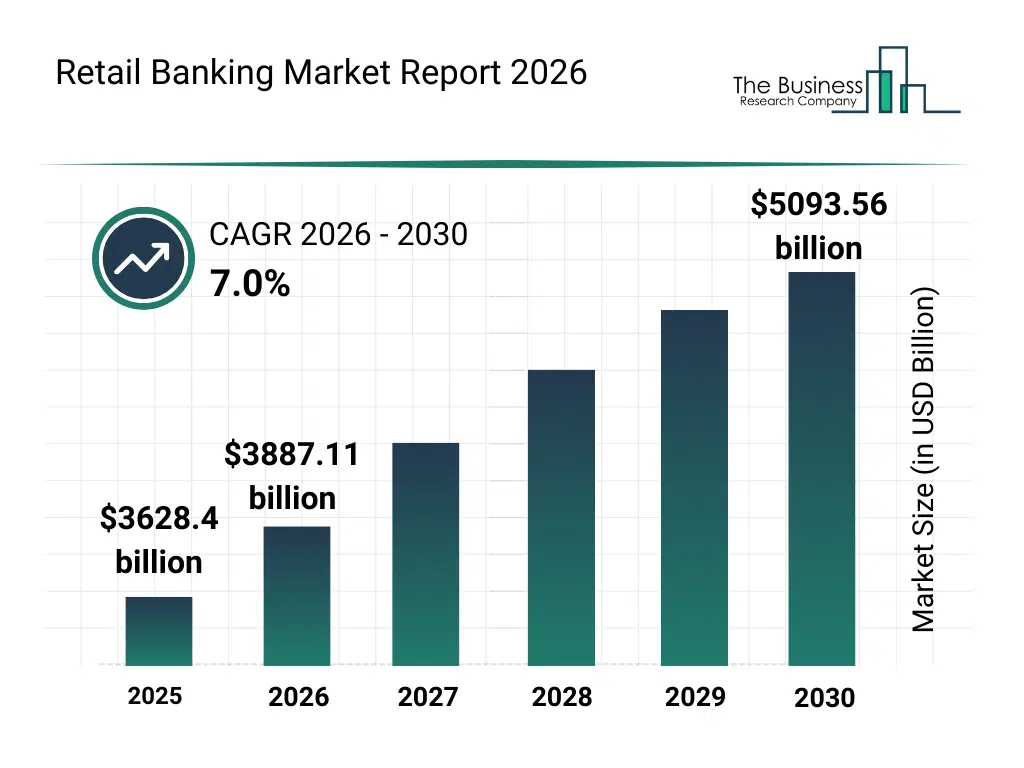
What Is The Retail Banking Market Size and Share 2026?
The retail banking market size has grown strongly in recent years. It will grow from $3628.4 billion in 2025 to $3887.11 billion in 2026 at a compound annual growth rate (CAGR) of 7.1%. The growth in the historic period can be attributed to expansion of branch banking networks, growth in personal savings accounts, increasing consumer credit demand, adoption of electronic payment systems, development of retail lending frameworks.What Is The Retail Banking Market Growth Forecast?
The retail banking market size is expected to see strong growth in the next few years. It will grow to $5093.56 billion in 2030 at a compound annual growth rate (CAGR) of 7.0%. The growth in the forecast period can be attributed to increasing adoption of open banking platforms, rising demand for embedded finance solutions, expansion of digital lending services, growing focus on financial wellness tools, increasing regulatory emphasis on data protection. Major trends in the forecast period include increasing adoption of digital-first banking models, rising use of ai-driven customer analytics, growing demand for omnichannel banking services, expansion of personalized financial products, enhanced focus on cybersecurity and fraud prevention.
Global Retail Banking Market Segmentation
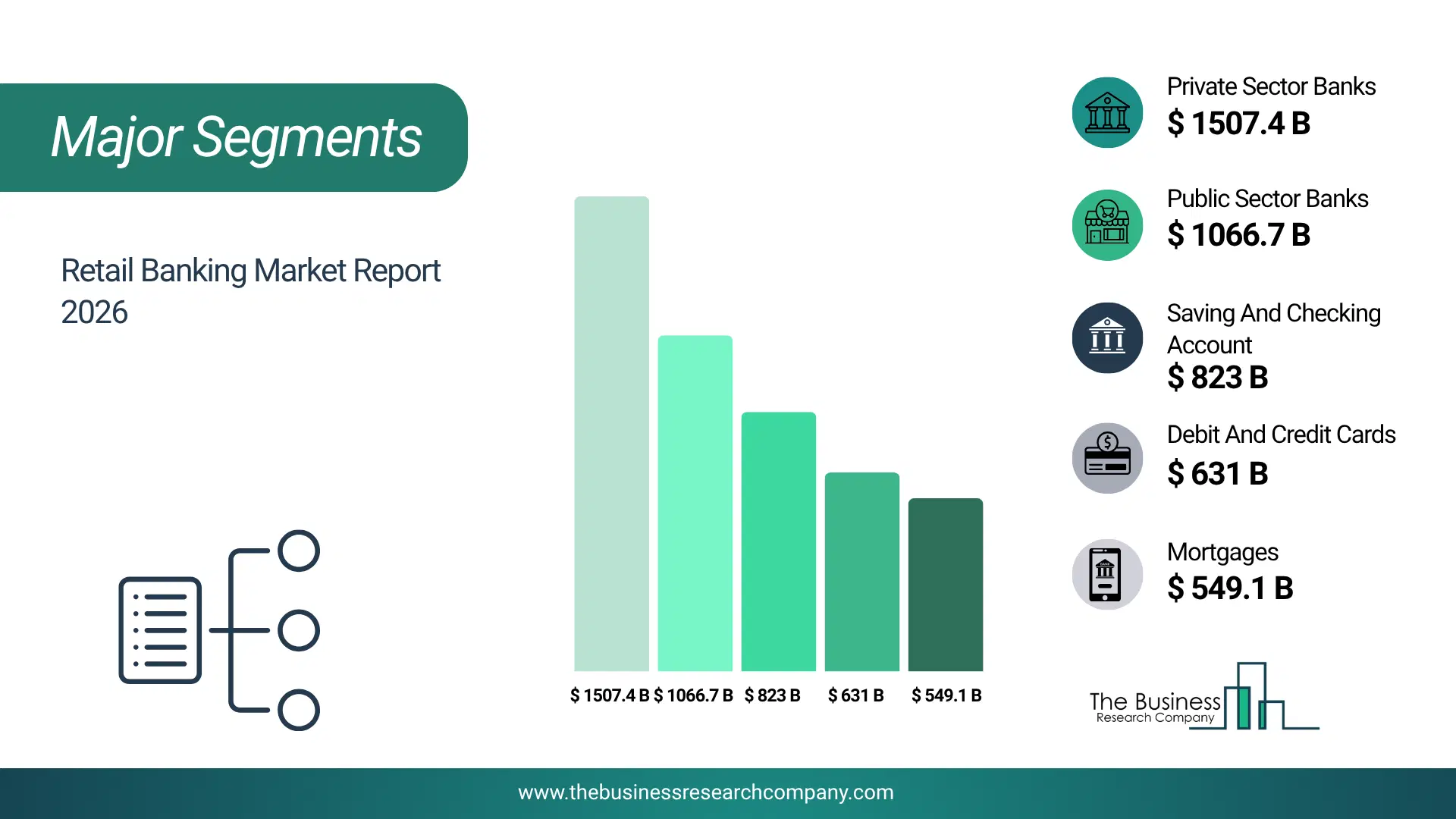
1) By Type: Public Sector Banks, Private Sector Banks, Foreign Banks, Community Development Banks 2) By Service: Saving And Checking Account, Transactional Account, Personal Loan, Home Loan, Mortgages, Debit And Credit Cards, Automated Teller Machine (ATM) Cards 3) By Application: Personal Banking, Household and Family Banking, Housing and Property Finance, Digital and Transactional Banking, Retail Investment and Wealth Products Subsegments: 1) By Public Sector Banks: Nationalized Banks, Government-Owned Banks 2) By Private Sector Banks: Domestic Private Retail Banks, International Private Retail Banks 3) By Foreign Banks: Branches Of Foreign Banks, Representative Offices Of Foreign Banks 4) By Community Development Banks: Local Community Banks, Microfinance Banks The top segments in the retail banking market will be: • Private Sector Banks will reach $1507422.65 Million by 2025. • Public Sector Banks will reach $1066725.92 Million by 2025. • Saving And Checking Account will reach $823089.12 Million by 2025. • Debit And Credit Cards will reach $631061.05 Million by 2025. • Mortgages will reach $549140.36 Million by 2025.What Is The Driver Of The Retail Banking Market?
The rise in online and mobile banking is expected to propel the growth of the retail banking market going forward. Online and mobile banking refers to using internet platforms and mobile apps to perform financial transactions without visiting a bank branch. Technological innovations have significantly boosted the functionality and appeal of online and mobile banking platforms. It offers enhanced features such as mobile check deposits and fund transfers at the tap of a button, and sophisticated security measures make these services attractive. Online and mobile banking help retail bankers by providing customers with convenient, accessible, and efficient ways to manage their finances, thus improving customer satisfaction and expanding the reach of traditional retail banking services. For instance, in July 2025, according to the Bangko Sentral ng Pilipinas, a Philippines-based central banking authority, digital retail payments accounted for 57.4% of total transaction volume in 2024, marking a year-on-year increase of 4.6 percentage points from 2023. Therefore, the rise in online and mobile banking is driving the growth of the retail banking industry.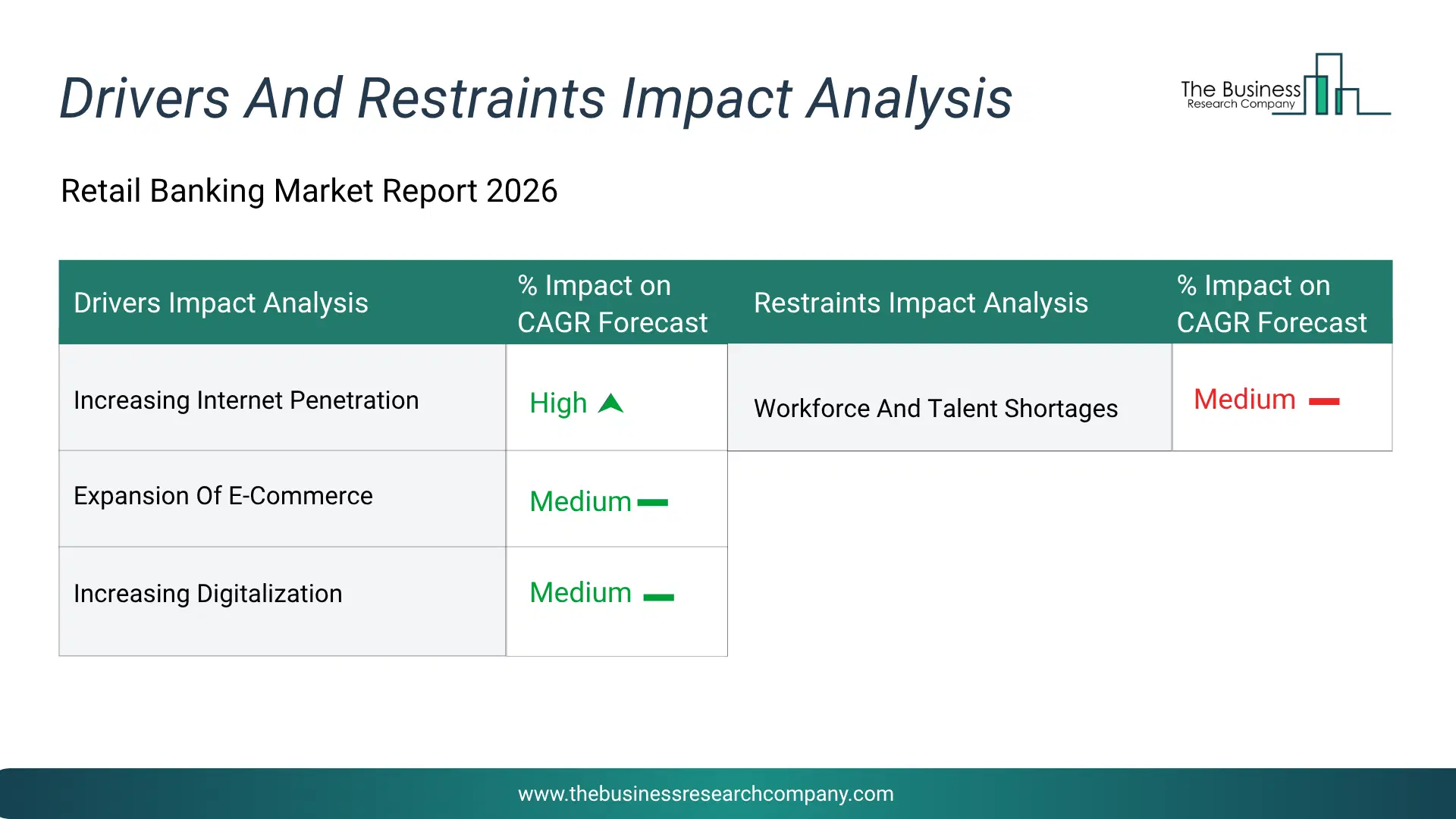
Infographic Chart Showing Key Market Drivers Analysis And Restraints For Retail Banking Market
The chart presents an impact analysis of key drivers and restraints, quantifying their relative influence on the market's growth rate and helping assess the balance between growth enablers and limiting factors. This chart offers a high-level perspective; the full report contains more detailed insights.
How Will The Drivers Impact Growth In The Global Retail Banking Market?
• Increasing Internet Penetration (High) – The increasing internet penetration will become a key driver of growth in the retail banking market by 2030. The widespread availability of the internet has enabled greater adoption of online and mobile banking, reducing the need for physical branch visits. This shift enhances customer engagement and broadens the reach of retail banks. Increased internet usage also drives growth in digital payments, e-commerce, and online transactions, further integrating banking services into everyday financial activities. To capitalize on this trend, retail banks collaborate with fintech companies to offer seamless digital payment and lending solutions. As a result, increasing internet penetration is anticipated to contributing to a 2.0% annual growth in the market. • Expansion Of E-Commerce (Medium) – The expansion of e-commerce will become a key driver of growth in the retail banking market by 2030. E-commerce drives a surge in online transactions, increasing the demand for banking services such as digital wallets, mobile banking, and card payments. This shift enhances banks’ revenue through transaction fees and deeper customer engagement with digital financial products. As businesses expand their online presence, they require merchant accounts, payment gateways and point of sale solutions, creating additional revenue streams for banks that facilitate these services. As a result, expansion of e-commerce is anticipated to contributing to a 1.5% annual growth in the market. • Increasing Digitalization (Medium) – The increasing digitalization will serve as a key growth catalyst retail banking market by 2030. The rise of e-wallets, UPI and contactless payments has significantly increased digital transactions, driving banks' revenue through transaction fees and digital services. This shift toward a cashless economy expands banking adoption, enabling financial institutions to offer a broader range of digital products, including robo-advisors, microloans, and insurance. Mobile and online banking platforms enhance customer convenience, fostering greater engagement and satisfaction. Therefore, this increasing digitalization is projected to supporting to a 1.0% annual growth in the market. • Increasing Consumer Spending (Low) – The increasing consumer spending will serve as a key growth catalyst for retail banking market by 2030. As consumer income and expenditures rise, the demand for banking products such as credit cards, loans and digital payment solutions expands. Higher earnings also contribute to increased savings and deposits, enhancing banks' lending capacity. This surge in consumer spending drives growth in personal loans, auto financing, and mortgages, which serve as significant revenue streams for retail banks. Therefore, this increasing consumer spending will be projected to supporting to a 0.7% annual growth in the market.How Will The Restraints Impact Growth In The Global Retail Banking Market?
• Regulatory Burdens (Medium) – Regulatory Burdens will restrict the growth of the Retail Banking market during the forecast period. Retail banks face increasing regulatory requirements on capital adequacy, compliance, and consumer protection. Regulatory burdens add to operational costs and affect profitability. Compliance requirements can limit product innovation and market expansion, affecting retail banking growth. • Workforce And Talent Shortages (Medium) – Workforce And Talent Shortages will restrict the growth of the Retail Banking market during the forecast period. Retail banks face shortages of skilled professionals in technology, data analytics, and digital banking. Talent gaps affect digital transformation initiatives and innovation capacity. Workforce shortages can lead to project delays and reduced competitiveness in the retail banking sector.Key Players In The Global Retail Banking Market
Major companies operating in the retail banking market are JPMorgan Chase & Co., Bank of America Corporation, Banco Santander S.A., Wells Fargo & Company, HSBC Holdings plc, Citigroup Inc., Morgan Stanley, BNP Paribas, Goldman Sachs Group Inc., ING Group, Mitsubishi UFJ Financial Group Inc., UBS Group AG, Barclays PLC, Société Générale S.A., BBVA (Banco Bilbao Vizcaya Argentaria), Sumitomo Mitsui Financial Group Inc., Deutsche Bank AG, UniCredit S.p.A., Credit Agricole Group, Credit Suisse Group AG, Intesa Sanpaolo S.p.A., Lloyds Banking Group plc, Royal Bank of Scotland Group plc, Mizuho Financial Group Inc., Commonwealth Bank of Australia, CaixaBank S.A., ABN AMRO Group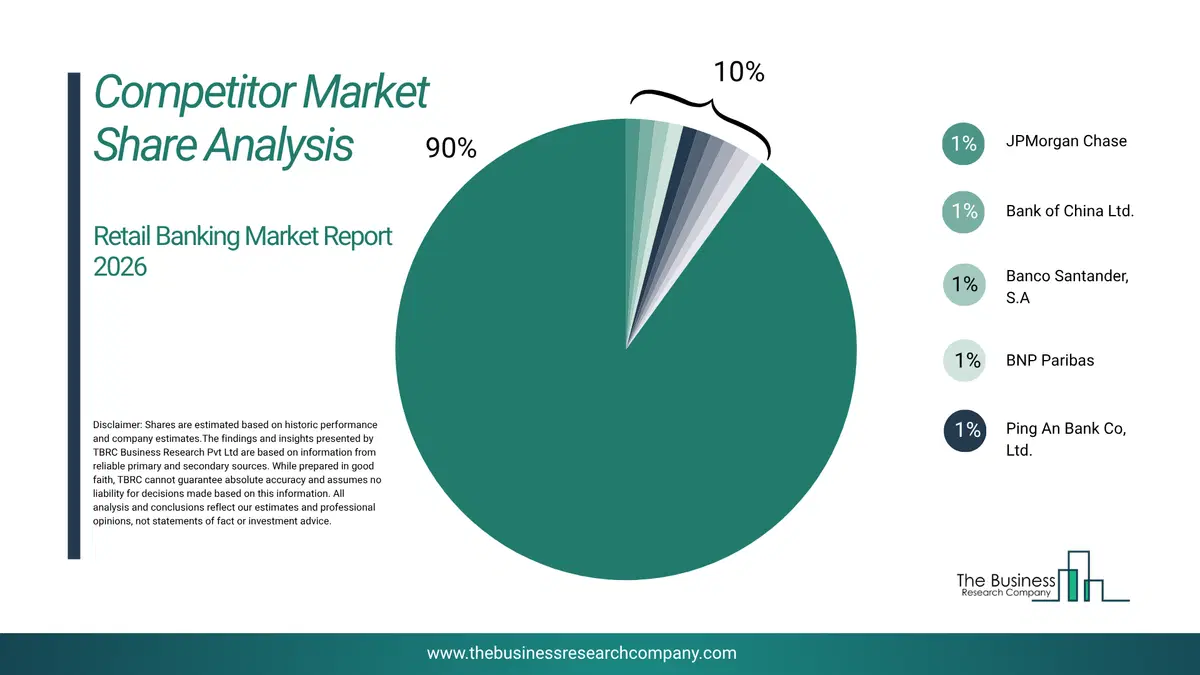
This chart is for illustrative purposes; the full report includes a detailed competitor analysis and comprehensive overview of the top 10 companies in the market.
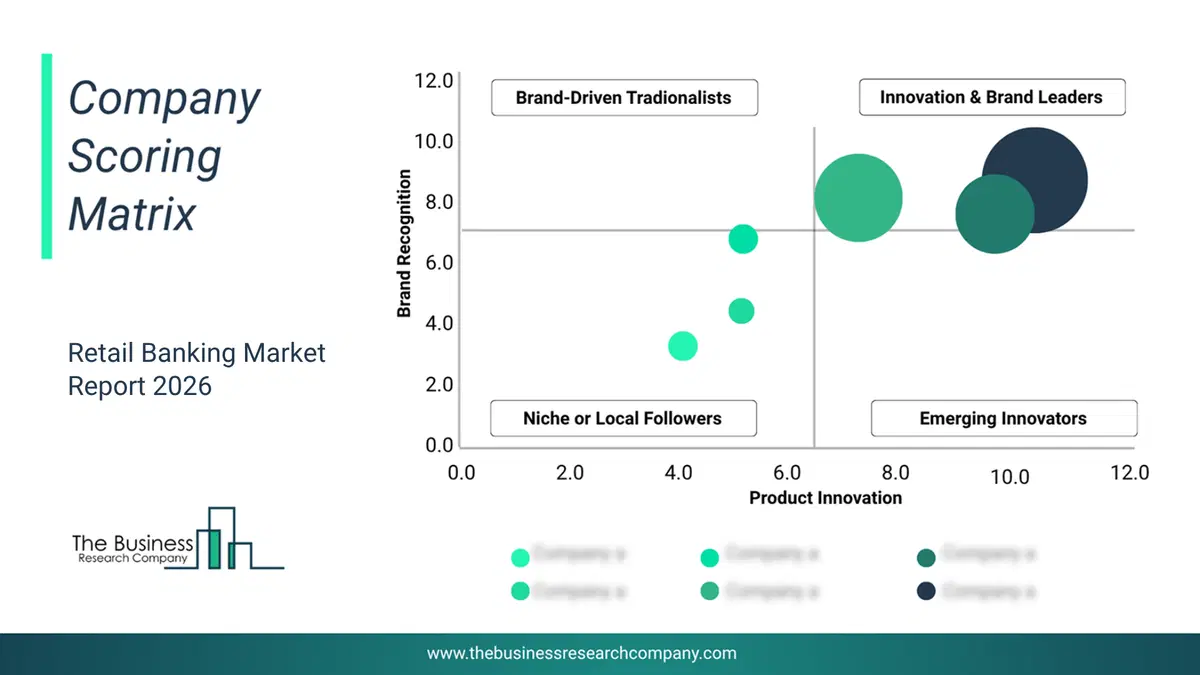
This chart maps companies by product innovation and brand strength, with bubble size indicating relative revenue, helping identify market leaders, challengers, and niche players. This is an illustrative chart; the full report provides a complete and accurate competitive analysis.
Global Retail Banking Market Trends and Insights
Major companies operating in the retail banking market are developing core banking solutions with generative artificial intelligence platforms to enhance operational efficiency. A generative artificial intelligence (AI) platform in banking solutions refers to applying advanced AI techniques, particularly generative models, to enhance and innovate various banking services and operations. For instance, in May 2024, Newgen Software, a leading global provider of low-code digital transformation platforms, launched LumYn, a groundbreaking Gen AI-powered hyper-personalization platform explicitly designed for the banking sector. LumYn blends predictive analytics and powerful conversational AI to allow corporate users to connect with consumer data smoothly. Newgen's platform is based on datasets and comparable behavioral patterns across all retail banks. The platform enables a low-code environment, allowing banks to easily design and adapt solutions to their specific business concerns. It generates precise behavioral segments based on client spending behaviors and lifestyles, maximizing customer lifetime value.What Are Latest Mergers And Acquisitions In The Retail Banking Market?
In March 2023, HSBC Holdings plc (subsidiary, HSBC UK Bank plc), a UK-based financial services company, acquired Silicon Valley Bank UK Limited (SVB UK) for £1 ($1.21). The acquisition enhances HSBC's commercial banking franchise in the UK, allowing the bank to better serve innovative and fast-growing firms, particularly in the technology and life sciences sectors. Silicon Valley Bank UK Limited is a UK-based bank offering customers a complete range of retail banking and wealth management services in personal and private banking.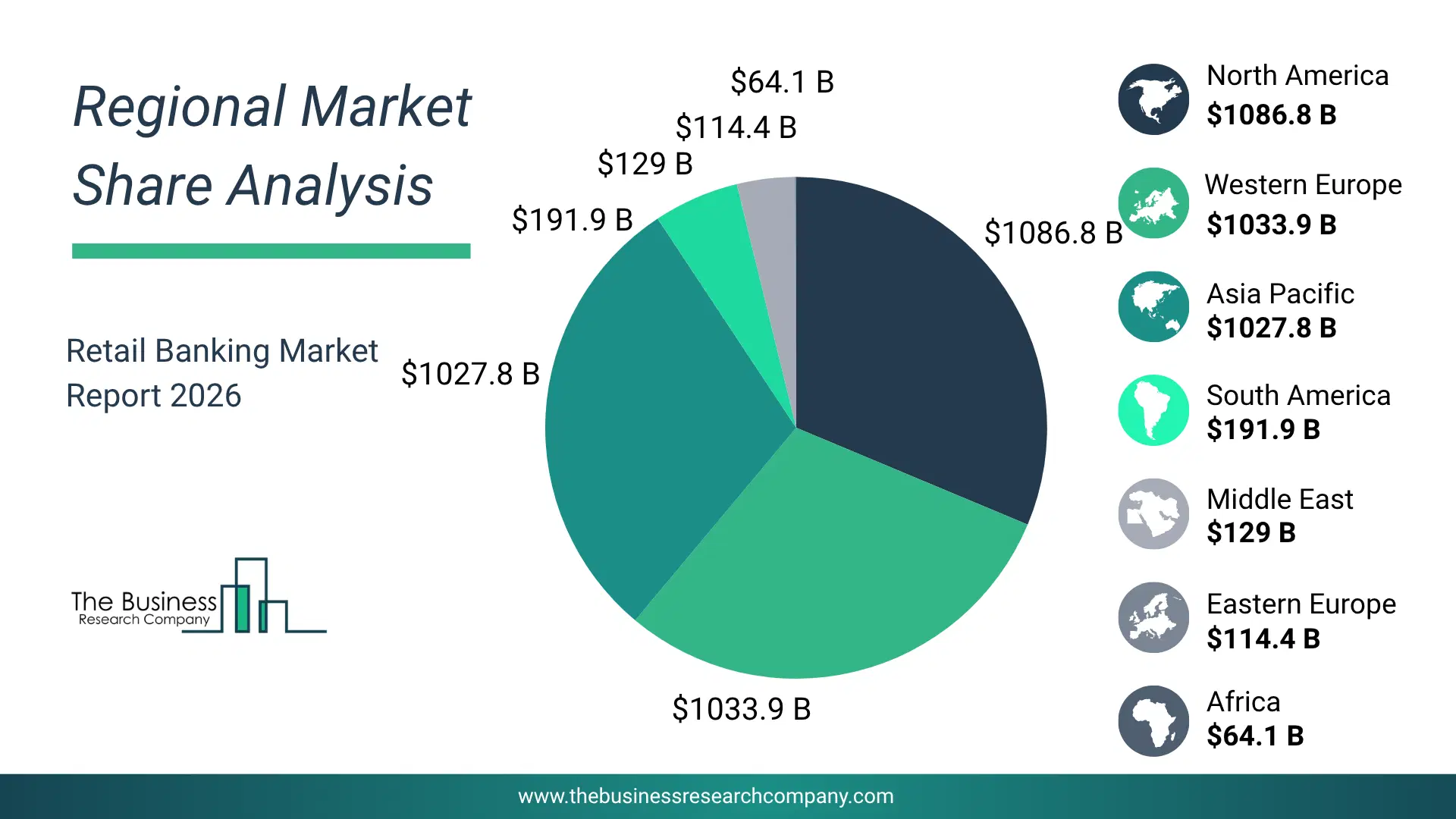
Regional Outlook
Asia-Pacific was the largest region in the retail banking market in 2025. North America is expected to be the fastest-growing region in the forecast period. The regions covered in this market report are Asia-Pacific, South East Asia, Western Europe, Eastern Europe, North America, South America, Middle East, Africa. The countries covered in this market report are Australia, Brazil, China, France, Germany, India, Indonesia, Japan, Taiwan, Russia, South Korea, UK, USA, Canada, Italy, Spain.What Defines the Retail Banking Market?
The retail banking market includes revenues earned by entities by providing services such as deposit accounts, consumer loans, home financing, credit facilities, investment solutions, insurance solutions. The market value includes the value of related goods sold by the service provider or included within the service offering. Only goods and services traded between entities or sold to end consumers are included.How is Market Value Defined and Measured?
The market value is defined as the revenues that enterprises gain from the sale of goods and/or services within the specified market and geography through sales, grants, or donations in terms of the currency (in USD unless otherwise specified). The revenues for a specified geography are consumption values that are revenues generated by organizations in the specified geography within the market, irrespective of where they are produced. It does not include revenues from resales along the supply chain, either further along the supply chain or as part of other products.
This chart presents market attractiveness based on a quantitative evaluation of growth, competition, strategic alignment, and risk, offering a clear view of opportunity areas for decision-making. This chart is for illustrative purposes; the full report contains the complete analysis.

This chart highlights the Total Addressable Market (TAM) by estimating the maximum revenue opportunity using an assumption-driven approach, supporting strategic planning and opportunity sizing across markets. The chart is illustrative; the full report provides a more comprehensive analysis.
What Key Data and Analysis Are Included in the Retail Banking Market Report 2026?
The retail banking market research report is one of a series of new reports from The Business Research Company that provides market statistics, including Market Report 2026?global market size, regional shares, competitors with the market share, detailed market segments, market trends and opportunities, and any further data you may need to thrive in the retail banking Market Report 2026? The market research report delivers a complete perspective of everything you need, with an in-depth analysis of the current and future state of the Market Report 2026?Retail Banking Market Report Forecast Analysis
| Report Attribute | Details |
|---|---|
| Market Size Value In 2026 | $3887.11 billion |
| Revenue Forecast In 2030 | $5093.56 billion |
| Growth Rate | CAGR of 7.1% from 2026 to 2030 |
| Base Year For Estimation | 2025 |
| Actual Estimates/Historical Data | 2020-2025 |
| Forecast Period | 2026 - 2030 |
| Market Representation | Revenue in USD Billion and CAGR from 2026 to 2030 |
| Segments Covered | Type, Service, Application |
| Regional Scope | Asia-Pacific, Western Europe, Eastern Europe, North America, South America, Middle East, Africa |
| Country Scope | The countries covered in the report are Australia, Brazil, China, France, Germany, India, Indonesia, Japan, Taiwan, Russia, South Korea, UK, USA, Canada, Italy, Spain. |
| Key Companies Profiled | JPMorgan Chase & Co., Bank of America Corporation, Banco Santander S.A., Wells Fargo & Company, HSBC Holdings plc, Citigroup Inc., Morgan Stanley, BNP Paribas, Goldman Sachs Group Inc., ING Group, Mitsubishi UFJ Financial Group Inc., UBS Group AG, Barclays PLC, Société Générale S.A., BBVA (Banco Bilbao Vizcaya Argentaria), Sumitomo Mitsui Financial Group Inc., Deutsche Bank AG, UniCredit S.p.A., Credit Agricole Group, Credit Suisse Group AG, Intesa Sanpaolo S.p.A., Lloyds Banking Group plc, Royal Bank of Scotland Group plc, Mizuho Financial Group Inc., Commonwealth Bank of Australia, CaixaBank S.A., ABN AMRO Group |
| Customization Scope | Request for Customization |
| Pricing And Purchase Options | Explore Purchase Options |