
Retail Inventory Management Software Market Report 2026
Global Outlook – By Type (Manually Managed Inventory Systems, Barcode Scanning Systems, Advanced Radio Frequency Systems (RFID)), By Deployment (On-Demand, On-Premise), By Pricing (Subscription, One-Time Payment), By Application (Order Management, Asset Tracking, Service Management, Product Differentiation, Inventory Optimization), By End-User (Traditional Retailers, Off-Price Retailers) – Market Size, Trends, Strategies, and Forecast to 2030
Retail Inventory Management Software Market Overview
• Retail Inventory Management Software market size has reached to $9.37 billion in 2025 • Expected to grow to $16.78 billion in 2030 at a compound annual growth rate (CAGR) of 12.3% • Growth Driver: The Expansion E-commerce Fuels Growth In The Retail Inventory Management Software Market • Market Trend: Enhancing Retail Operations With Next-Generation RFID Inventory Management Software • North America was the largest region in 2025 and Asia-Pacific is the fastest growing region.Market Gains By 2030 – Top Opportunities By Segment
Market Gain identifies the most promising market opportunities by highlighting the segments or products expected to generate the highest incremental revenue growth over the next five years.
What Is Covered Under Retail Inventory Management Software Market?
Retail inventory management software is a digital tool that helps businesses track and manage their inventory levels efficiently. It includes inventory tracking, stock monitoring, order management, and integration with other systems. Retail inventory management software's primary goal is to streamline inventory processes, reduce costs, and improve operational efficiency in retail businesses. The main types of retail inventory management software are manually managed inventory systems, barcode scanning systems, and advanced radio frequency systems (RFID). Manually managed inventory systems refer to traditional methods of tracking and controlling inventory levels without the aid of automated software or technology. This software can be deployed in on-demand and on-premise and offered at various prices, such as subscriptions and one-time payments. This software is used for order management, asset tracking, service management, product differentiation, and inventory optimization by various end-users, including traditional retailers and off-price retailers.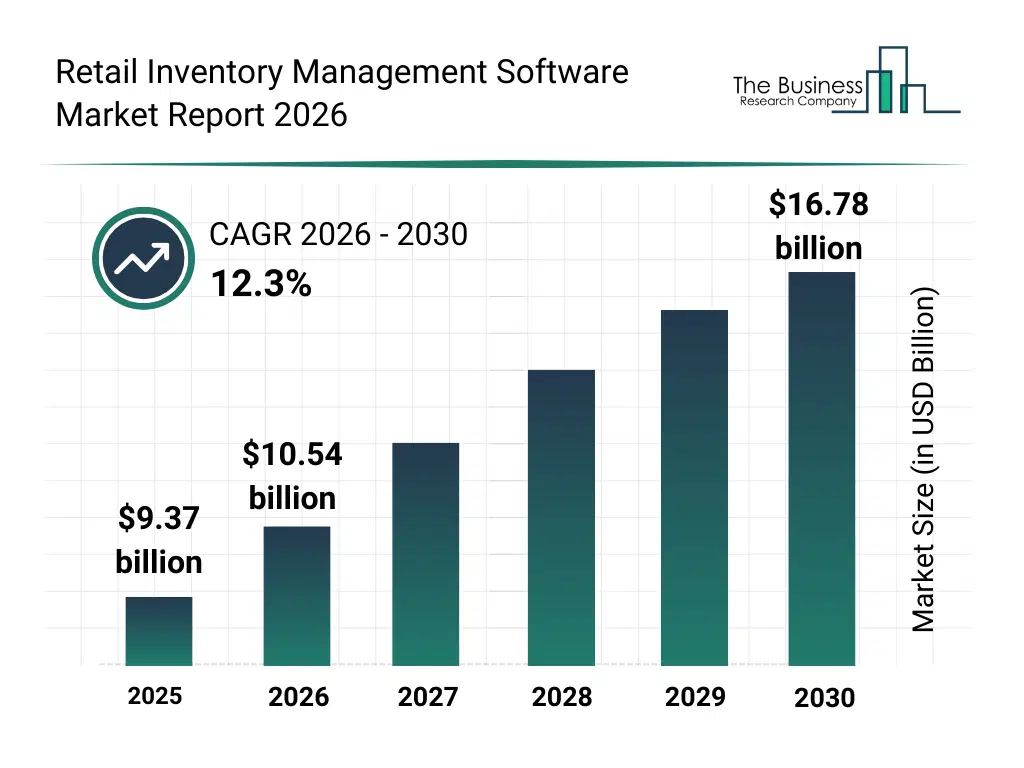
What Is The Retail Inventory Management Software Market Size and Share 2026?
The retail inventory management software market size has grown rapidly in recent years. It will grow from $9.37 billion in 2025 to $10.54 billion in 2026 at a compound annual growth rate (CAGR) of 12.5%. The growth in the historic period can be attributed to increasing adoption of barcode systems, manual inventory inefficiencies, growth of retail chains, rising demand for operational efficiency, limited integration with other systems.What Is The Retail Inventory Management Software Market Growth Forecast?
The retail inventory management software market size is expected to see rapid growth in the next few years. It will grow to $16.78 billion in 2030 at a compound annual growth rate (CAGR) of 12.3%. The growth in the forecast period can be attributed to adoption of AI-powered inventory optimization, expansion of omnichannel retailing, growth of cloud-based solutions, integration with erp and crm systems, rising demand for predictive analytics. Major trends in the forecast period include real-time inventory tracking, automated stock replenishment, multi-channel integration, predictive demand planning, mobile inventory management.
Global Retail Inventory Management Software Market Segmentation
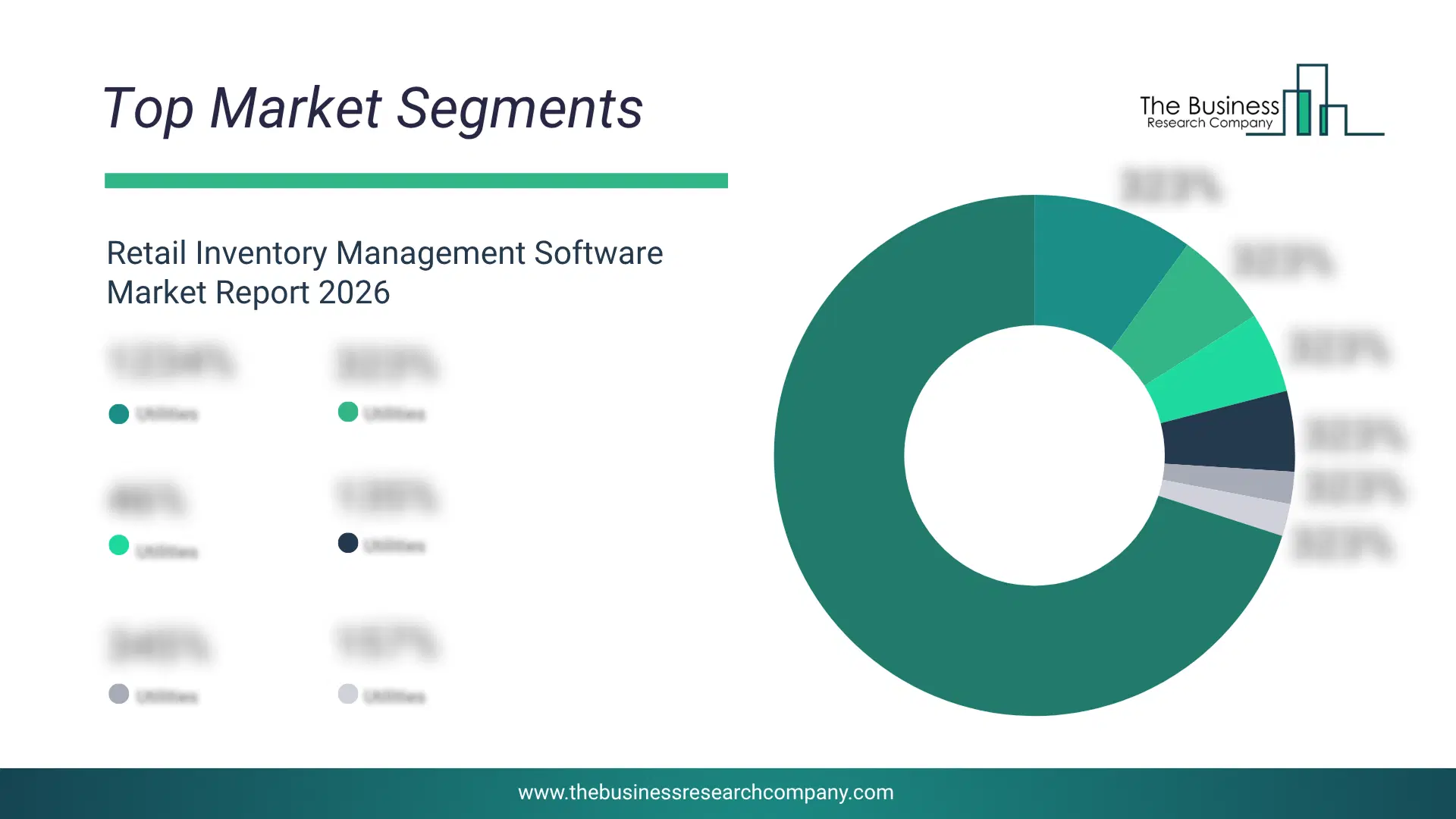
1) By Type: Manually Managed Inventory Systems, Barcode Scanning Systems, Advanced Radio Frequency Systems (RFID) 2) By Deployment: On-Demand, On-Premise 3) By Pricing: Subscription, One-Time Payment 4) By Application: Order Management, Asset Tracking, Service Management, Product Differentiation, Inventory Optimization 5) By End-User: Traditional Retailers, Off-Price Retailers Subsegments: 1) By Manually Managed Inventory Systems: Spreadsheet-Based Systems, Basic Inventory Software, Barcode Scanning Systems 2) By Barcode Scanning Systems: Handheld Barcode Scanners, Fixed Barcode Scanners, Mobile Barcode Scanners 3) By Advanced Radio Frequency Systems (RFID): Passive RFID Systems, Active RFID Systems, Semi-Passive RFID Systems The top segments in the retail inventory management software market will be: • Barcode Scanning Systems will reach $7.22 Billion by 2030. • Advanced Radio Frequency Systems (RFID) will reach $5.34 Billion by 2030. • Manually Managed Inventory Systems will reach $4.14 Billion by 2030.What Is The Driver Of The Retail Inventory Management Software Market?
The expansion of e-commerce is expected to propel the growth of the retail inventory management software market going forward. E-commerce refers to the online business model facilitating the exchange of goods and services through the Internet. The expansion of e-commerce is due to expanding internet access and shifting consumer preferences towards online shopping. Retail inventory management software in e-commerce streamlines stock control, order fulfillment, and inventory synchronization across online platforms, ensuring efficient operations and customer satisfaction. For instance, in February 2024, according to the United States Census Bureau, a US-based government agency, e-commerce sales reached $1,118.7 billion in 2023, a 7.6% increase from 2022. Therefore, the expansion of e-commerce is driving the growth of the retail inventory management software industry.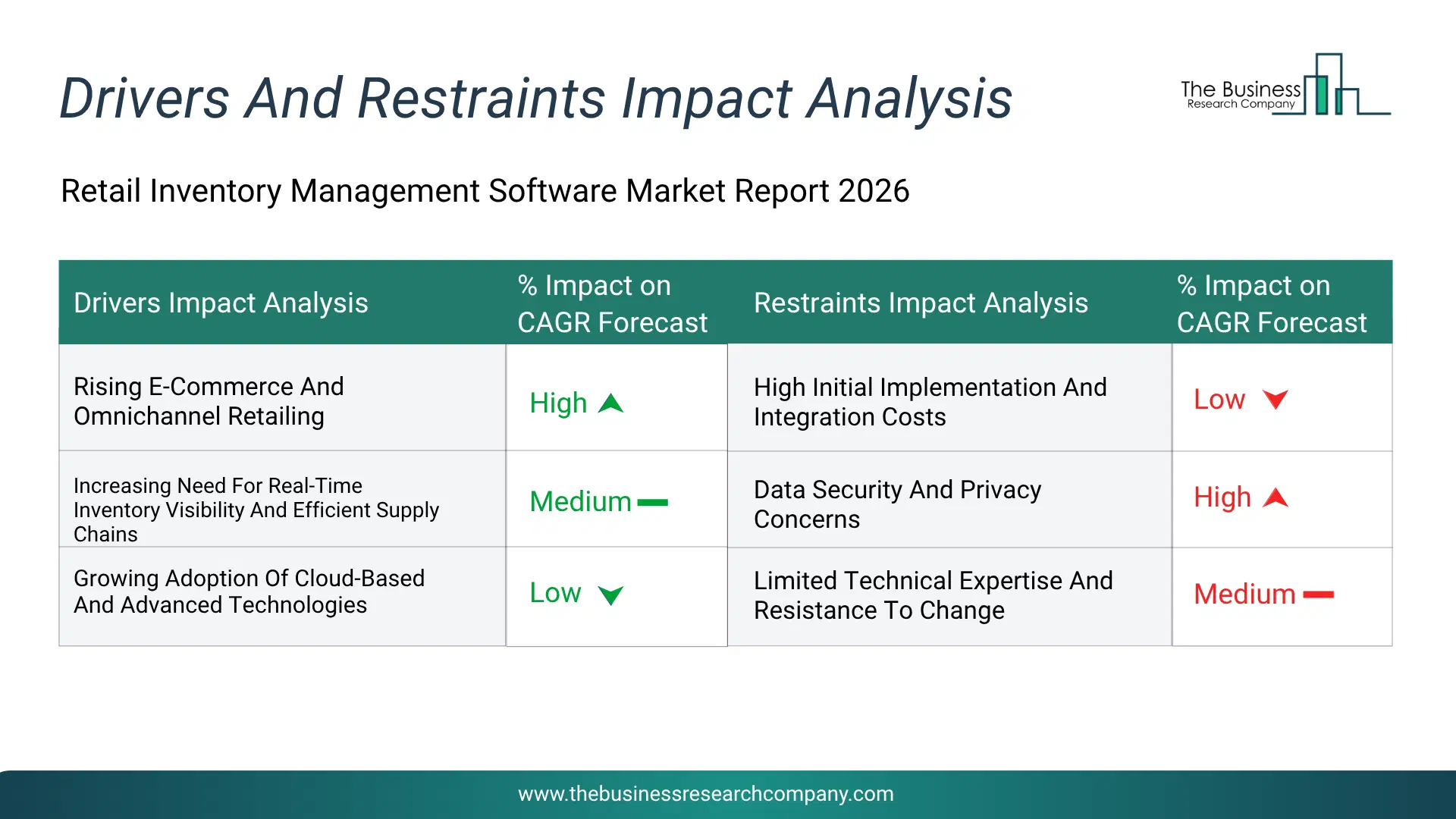
Infographic Chart Showing Key Market Drivers Analysis And Restraints For Retail Inventory Management Software Market
The chart presents an impact analysis of key drivers and restraints, quantifying their relative influence on the market's growth rate and helping assess the balance between growth enablers and limiting factors. This chart offers a high-level perspective; the full report contains more detailed insights.
How Will The Drivers Impact Growth In The Global Retail Inventory Management Software Market?
• Rising E-Commerce And Omnichannel Retailing (High) – During the forecast period, the rising e-commerce and omnichannel retailing is expected to become a key growth driver for the retail inventory management software market by 2030. Retailers are increasingly operating across multiple sales channels, including online marketplaces, mobile applications, and physical stores, creating the need for synchronized inventory systems. This shift is driving demand for software solutions that can seamlessly manage stock levels across diverse platforms while ensuring accurate order fulfillment. Retailers are also focusing on enhancing customer experience through faster delivery and improved product availability. As omnichannel retailing continues to expand, the adoption of advanced inventory management systems is expected to accelerate. • Increasing Need For Real-Time Inventory Visibility And Efficient Supply Chains (Medium) – During the forecast period, the increasing need for real-time inventory visibility and efficient supply chains is expected to emerge as a major factor driving the expansion of the retail inventory management software market by 2030. Businesses are prioritizing systems that provide instant insights into stock levels, movement, and demand patterns to improve operational efficiency. Real-time tracking enables retailers to minimize stock discrepancies, reduce losses due to shrinkage, and enhance replenishment accuracy. Additionally, the growing complexity of global and regional supply chains is encouraging the adoption of integrated inventory platforms that support end-to-end visibility. This capability is critical for maintaining optimal inventory levels and meeting customer expectations. • Growing Adoption Of Cloud-Based And Advanced Technologies (Low) – During the forecast period, the growing adoption of cloud-based and advanced technologies is expected to act as a key growth catalyst for the retail inventory management software market by 2030. Retailers are shifting toward cloud-enabled solutions to achieve scalability, flexibility, and cost efficiency in inventory management operations. Advanced technologies such as artificial intelligence, machine learning, and IoT are being integrated into inventory systems to enable predictive analytics, automated stock management, and intelligent decision-making. These technologies help retailers improve demand forecasting accuracy and optimize warehouse operations. Furthermore, cloud deployment allows seamless updates and remote accessibility, making it highly attractive for modern retail environments.How Will The Restraints Impact Growth In The Global Retail Inventory Management Software Market?
• High Initial Implementation And Integration Costs (High) – During the forecast period, high Initial Implementation And Integration Costs act as a major restraint on the retail inventory management software market because the comprehensive deployment of advanced software requires substantial upfront investment, including licensing, hardware upgrades, data migration, and system customization. For many small and medium‑sized retailers with limited budgets, these financial burdens make adopting sophisticated inventory solutions difficult and can delay purchasing decisions or push them toward manual methods. Integrating new software with existing enterprise systems, such as ERP, POS, and e‑commerce platforms, often requires professional services and extended timelines, increasing total cost of ownership. The complexities of compatibility with legacy systems further drive up customization and support costs, creating resistance among firms with older IT infrastructure. Retailers may also struggle to justify the ROI in the short term if benefits take time to materialise, adding hesitation to investment decisions. These factors combined suppress broader and faster adoption of inventory management solutions, especially among budget‑constrained organizations. Overall, high initial costs and integration challenges remain key restraints on market growth. • Data Security And Privacy Concerns (Medium) – During the forecast period, data Security And Privacy Concerns act as a significant restraint on the market because retail inventory systems handle large volumes of sensitive data, including inventory levels, sales transactions, and customer information. As more retailers embrace cloud‑based solutions, worries about data breaches, unauthorized access, and compliance with strict regulations like GDPR and other regional data protection rules increase. These concerns can deter some organisations from adopting modern inventory solutions due to fear of exposing proprietary or customer data, especially in highly regulated segments where compliance penalties are severe. Ensuring robust cybersecurity measures and achieving compliance adds operational complexity and additional costs to software deployment. Retailers that prioritise data control and risk avoidance may prefer older on‑premise systems, slowing the transition to more sophisticated, cloud‑enabled inventory tools. Additionally, anxiety about vendor lock‑in or potential service interruptions contributes to reluctance in embracing newer platforms. As a result, security and privacy issues restrain market growth by increasing perceived risk and slowing adoption rates. • Limited Technical Expertise And Resistance To Change (Low) – During the forecast period, limited Technical Expertise And Resistance To Change act as barriers to the growth of the retail inventory management software market because many retailers lack the in‑house IT skills necessary to implement and manage advanced systems effectively. Deploying and optimising software often requires specialised knowledge in system configuration, data migration, and integration with existing infrastructure, which smaller businesses may not have. This lack of expertise increases reliance on external consultants, further raising implementation costs. At the same time, employees accustomed to traditional manual methods or basic tools like spreadsheets may resist adopting new systems, slowing organisational transition and reducing software utilisation. The learning curve associated with advanced features such as automation and predictive analytics can also hinder full adoption, leading some retailers to underutilise the software’s capabilities. Internal reluctance and skill shortages collectively dampen demand for modern inventory solutions, as retailers delay or avoid upgrades due to fear of disruption or inadequate staff preparedness.Key Players In The Global Retail Inventory Management Software Market
Major companies operating in the retail inventory management software market are Microsoft Corporation, IBM Corporation, Oracle Corporation, SAP SE, Square Inc., Sage Group plc, Lawson Software, Epicor Software Corporation, Zoho Corporation, Manhattan Associates, Lightspeed Retail, Retalix Ltd, Retail Pro International, Logility Inc., Brightpearl Limited, Wasp Barcode Technologies, InFlow Inventory Software, HighJump, Fishbowl, Ordoro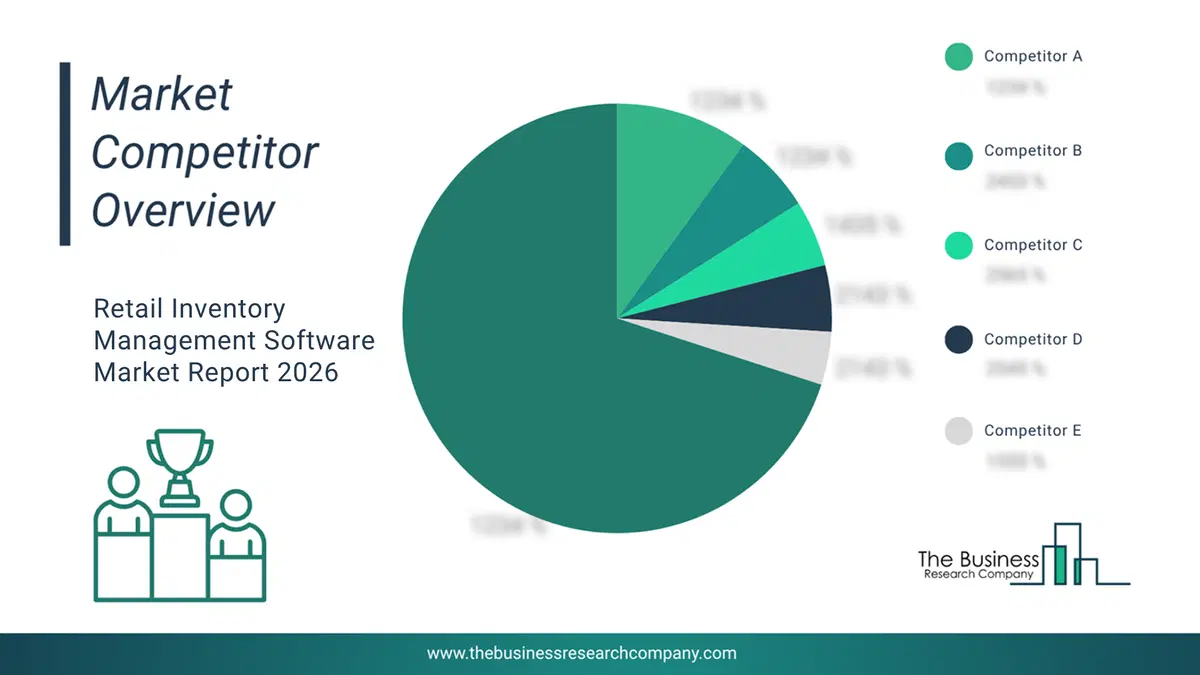
This chart is for illustrative purposes; the full report includes a detailed competitor analysis and comprehensive overview of the top 10 companies in the market.
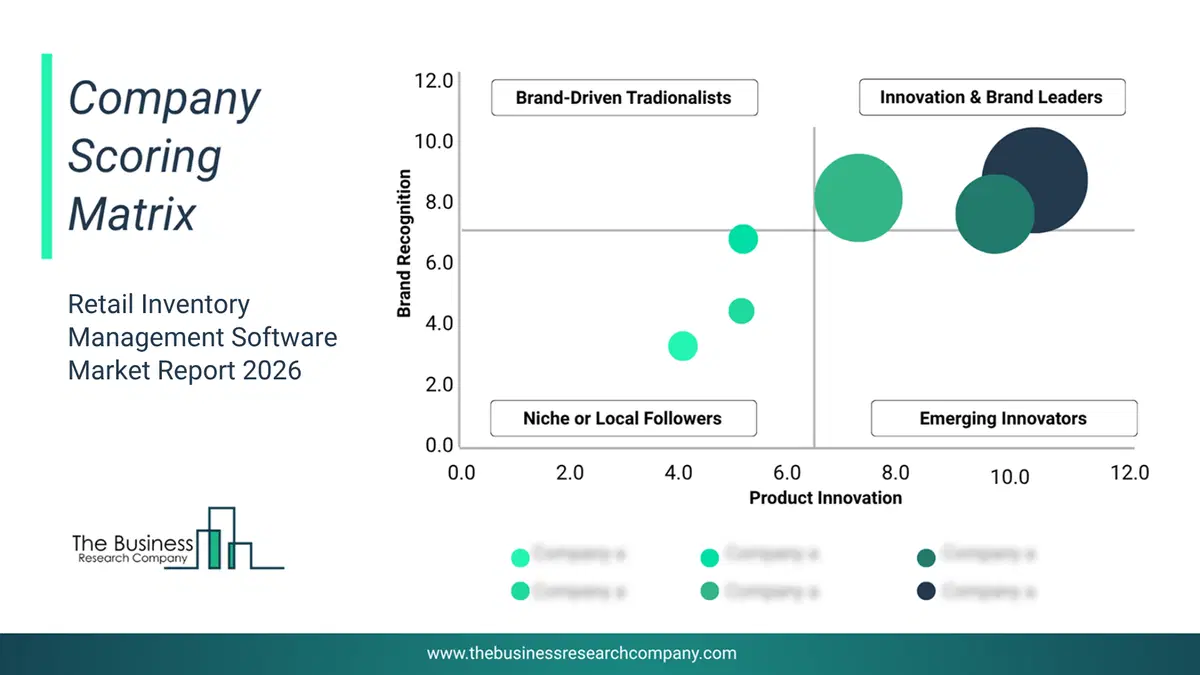
This chart maps companies by product innovation and brand strength, with bubble size indicating relative revenue, helping identify market leaders, challengers, and niche players. This is an illustrative chart; the full report provides a complete and accurate competitive analysis.
Global Retail Inventory Management Software Market Trends and Insights
Major companies operating in the retail inventory management software market are focusing on developing advanced inventory management solutions such as intelligent inventory management software to enhance inventory accuracy, operational efficiency, and in-store product availability. Intelligent inventory management software leverages digital identification and automation technologies to capture and track item-level inventory data across the supply chain and retail floor, enabling capabilities such as real-time inventory visibility, faster stock reconciliation, and reduced out-of-stock situations. For instance, in December 2023, Checkpoint Systems, a US-based software company, launched the next-generation RFID (radio-frequency identification) inventory management software ItemOptix for Retail. This software enables retailers to manage their inventory from source to shop effectively. The software has self-service functionalities that make the initial setup and ongoing system maintenance quick and straightforward. Additionally, the software has industry-standard REST APIs that allow for swift and easy integration processes. This streamlined deployment gives users more control over inventory management, providing a seamless experience.What Are Latest Mergers And Acquisitions In The Retail Inventory Management Software Market?
In May 2024, Cin7 Ltd., a US-based provider of cloud-based inventory and order management software, acquired Inventoro for an undisclosed amount. With this acquisition, Cin7 aimed to enhance its retail inventory management technology by integrating Inventoro’s AI-driven sales forecasting and replenishment optimization capabilities to improve demand prediction and stock efficiency for its customers. Inventoro is a Czech Republic-based provider of AI-powered sales forecasting and inventory optimization solutions designed to help businesses predict demand and manage inventory more intelligently.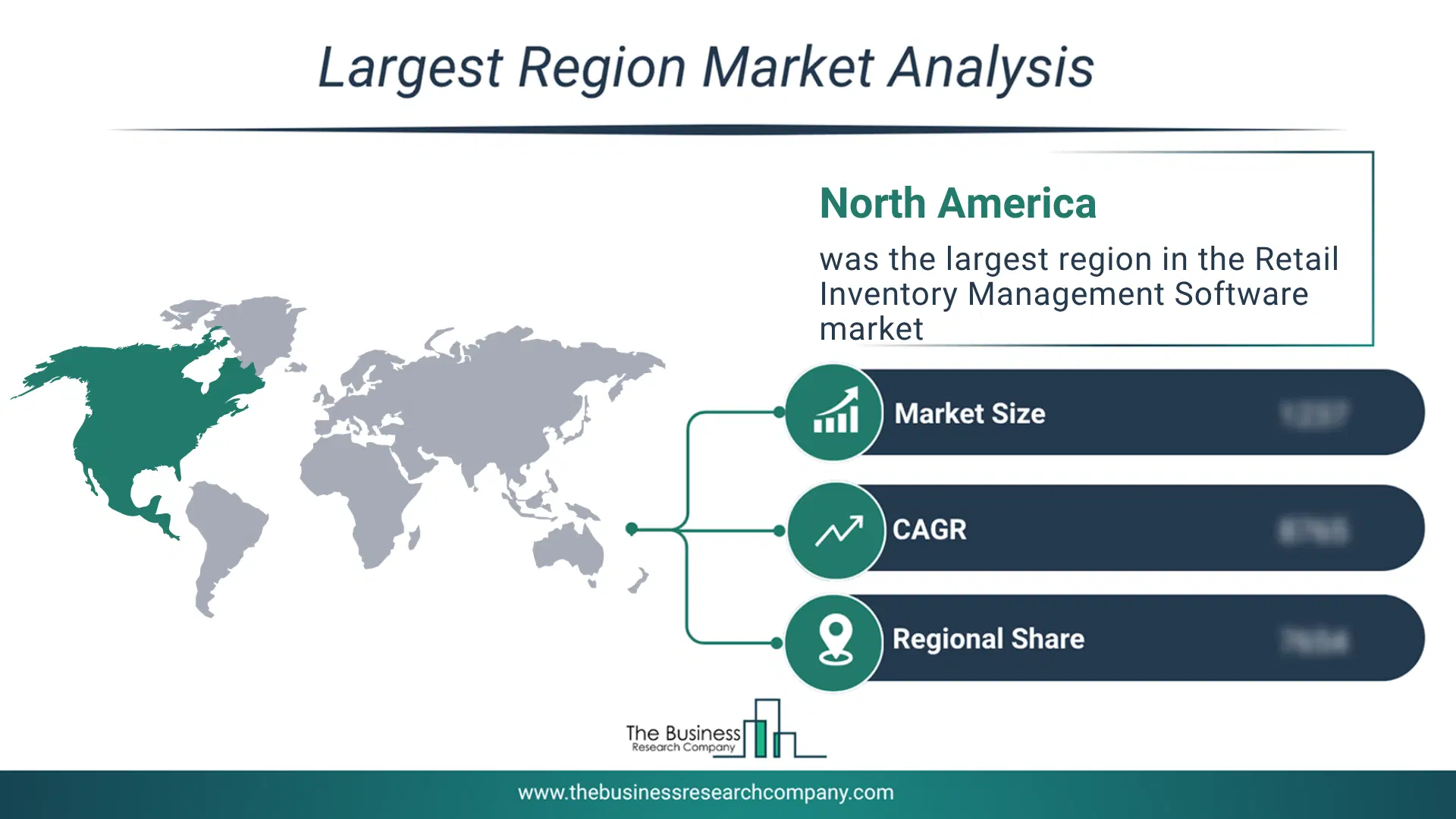
Regional Outlook
North America was the largest region in the retail inventory management software market in 2025. Asia-Pacific is expected to be the fastest-growing region in the forecast period. The regions covered in this market report are Asia-Pacific, South East Asia, Western Europe, Eastern Europe, North America, South America, Middle East and Africa. The countries covered in this market report are Australia; Brazil; China; France; Germany; India; Indonesia; Japan; Taiwan; Russia; South Korea; UK; USA; Canada; Italy; Spain.What Defines the Retail Inventory Management Software Market?
The retail inventory management software market includes revenues earned by entities by providing services such as warehouse management, order management, replenishment, reporting, and analytics. The market value includes the value of related goods sold by the service provider or included within the service offering. Only goods and services traded between entities or sold to end consumers are included.How is Market Value Defined and Measured?
The market value is defined as the revenues that enterprises gain from the sale of goods and/or services within the specified market and geography through sales, grants, or donations in terms of the currency (in USD unless otherwise specified). The revenues for a specified geography are consumption values that are revenues generated by organizations in the specified geography within the market, irrespective of where they are produced. It does not include revenues from resales along the supply chain, either further along the supply chain or as part of other products.
This chart presents market attractiveness based on a quantitative evaluation of growth, competition, strategic alignment, and risk, offering a clear view of opportunity areas for decision-making. This chart is for illustrative purposes; the full report contains the complete analysis.

This chart highlights the Total Addressable Market (TAM) by estimating the maximum revenue opportunity using an assumption-driven approach, supporting strategic planning and opportunity sizing across markets. The chart is illustrative; the full report provides a more comprehensive analysis.
What Key Data and Analysis Are Included in the Retail Inventory Management Software Market Report 2026?
The retail inventory management software market research report is one of a series of new reports from The Business Research Company that provides market statistics, including industry global market size, regional shares, competitors with the market share, detailed market segments, market trends and opportunities, and any further data you may need to thrive in the retail inventory management software industry. The market research report delivers a complete perspective of everything you need, with an in-depth analysis of the current and future state of the industry.Retail Inventory Management Software Market Report Forecast Analysis
| Report Attribute | Details |
|---|---|
| Market Size Value In 2026 | $10.54 billion |
| Revenue Forecast In 2030 | $16.78 billion |
| Growth Rate | CAGR of 12.3% from 2026 to 2030 |
| Base Year For Estimation | 2025 |
| Actual Estimates/Historical Data | 2020-2025 |
| Forecast Period | 2026 - 2030 |
| Market Representation | Revenue in USD Billion and CAGR from 2026 to 2030 |
| Segments Covered | Type, Deployment, Pricing, Application, End-User |
| Regional Scope | Asia-Pacific, Western Europe, Eastern Europe, North America, South America, Middle East, Africa |
| Country Scope | The countries covered in the report are Australia, Brazil, China, France, Germany, India, Indonesia, Japan, Taiwan, Russia, South Korea, UK, USA, Canada, Italy, Spain. |
| Key Companies Profiled | Microsoft Corporation, IBM Corporation, Oracle Corporation, SAP SE, Square Inc., Sage Group plc, Lawson Software, Epicor Software Corporation, Zoho Corporation, Manhattan Associates, Lightspeed Retail, Retalix Ltd, Retail Pro International, Logility Inc., Brightpearl Limited, Wasp Barcode Technologies, InFlow Inventory Software, HighJump, Fishbowl, Ordoro |
| Customization Scope | Request for Customization |
| Pricing And Purchase Options | Explore Purchase Options |