
Retroperitoneal Fibrosis Treatment Market Report 2026
Global Outlook – By Treatment Type ( Surgical Intervention, Medical Therapy, Immunosuppressive Therapy), By Diagnostic Method ( Imaging Techniques, Blood Tests, Urinary Biomarkers, Biopsy), By Route Of Administration ( Oral, Intravenous, Subcutaneous), By End User ( Hospitals, Clinics, Ambulatory Surgical Centers) – Market Size, Trends, Strategies, and Forecast to 2030
Retroperitoneal Fibrosis Treatment Market Report 2026 Market Overview
• Retroperitoneal Fibrosis Treatment Market Report 2026 market size has reached to $0.64 billion in 2025 • Expected to grow to $1.04 billion in 2030 at a compound annual growth rate (CAGR) of 10.2% • Growth Driver: Increasing Incidence Of Autoimmune Diseases Fueling The Growth Of The Market Due To Rising Environmental Triggers And Growing Need For Immunosuppressive Therapies To Control Inflammation And Fibrosis • North America was the largest region in 2025 and Asia-Pacific is the fastest growing region.What Is Covered Under Retroperitoneal Fibrosis Treatment Market?
Retroperitoneal fibrosis treatment refers to the medical and sometimes surgical management of a rare condition in which abnormal fibrous tissue develops behind the abdominal cavity, compressing organs like the ureters, using therapies such as corticosteroids, immunosuppressants, or surgical ureteral relief to reduce fibrosis and restore urine flow. The main treatment types of retroperitoneal fibrosis treatment include surgical intervention, medical therapy, and immunosuppressive therapy. Surgical intervention refers to procedural approaches used to relieve obstruction, remove fibrotic tissue, or restore affected organ function in patients with retroperitoneal fibrosis. These treatments are supported by diagnostic methods including imaging techniques, blood tests, urinary biomarkers, and biopsy. They are administered through oral, intravenous, and subcutaneous routes, serving end users including hospitals, clinics, and ambulatory surgical centers.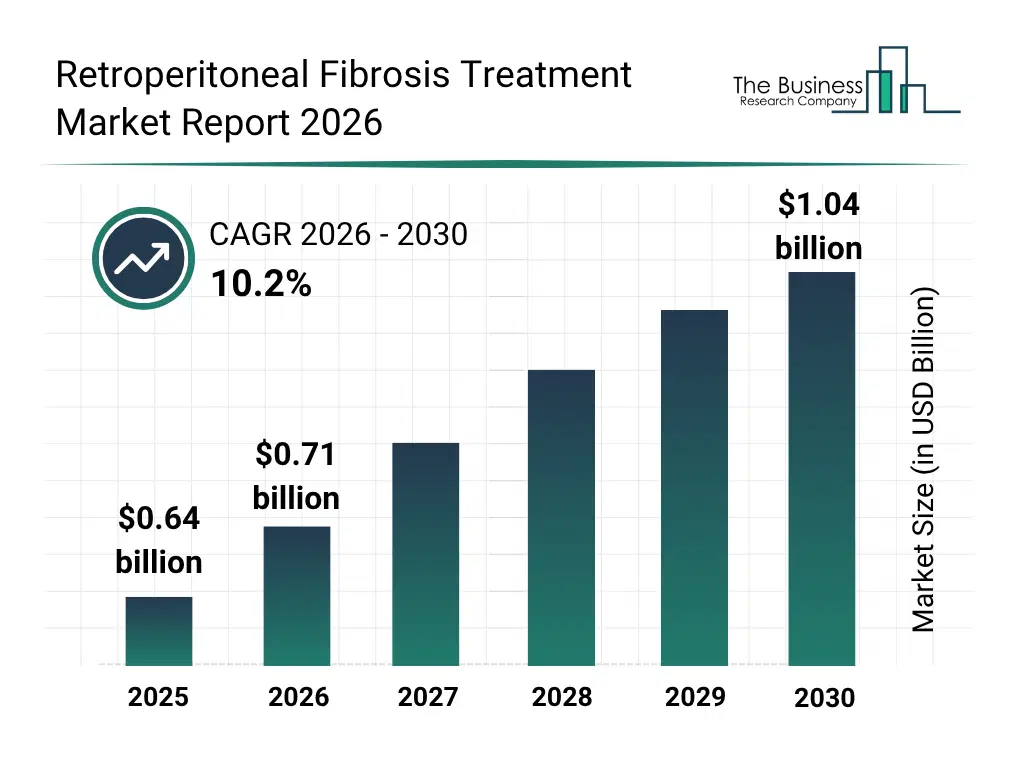
What Is The Retroperitoneal Fibrosis Treatment Market Size and Share 2026?
The retroperitoneal fibrosis treatment market size has grown strongly in recent years. It will grow from $0.64 billion in 2025 to $0.71 billion in 2026 at a compound annual growth rate (CAGR) of 10.0%. The growth in the historic period can be attributed to increasing prevalence of autoimmune associated disorders, improvements in advanced imaging accessibility, growing awareness of rare fibrotic diseases, rising adoption of corticosteroid based treatment approaches, expansion of hospital based specialty treatment centers.What Is The Retroperitoneal Fibrosis Treatment Market Growth Forecast?
The retroperitoneal fibrosis treatment market size is expected to see rapid growth in the next few years. It will grow to $1.04 billion in 2030 at a compound annual growth rate (CAGR) of 10.2%. The growth in the forecast period can be attributed to increasing development of targeted biologic therapies, rising integration of AI driven diagnostic support systems, growing demand for minimally invasive interventions, expansion of precision medicine applications, increasing healthcare expenditure for rare disease management. Major trends in the forecast period include rising adoption of personalized immunosuppressive therapy protocols, increasing preference for minimally invasive surgical procedures, growing utilization of early diagnostic imaging approaches, expansion of multidisciplinary care management models, increasing focus on long-term disease monitoring and recurrence prevention.
Global Retroperitoneal Fibrosis Treatment Market Segmentation
1) By Treatment Type: Surgical Intervention, Medical Therapy, Immunosuppressive Therapy 2) By Diagnostic Method: Imaging Techniques, Blood Tests, Urinary Biomarkers, Biopsy 3) By Route Of Administration: Oral, Intravenous, Subcutaneous 4) By End User: Hospitals, Clinics, Ambulatory Surgical Centers Subsegments: 1) By Surgical Intervention: Ureterolysis Procedures, Open Surgical Decompression, Laparoscopic Surgical Procedures, Robotic Assisted Surgery, Reconstructive Surgical Procedures 2) By Medical Therapy: Corticosteroid Therapy, Anti Inflammatory Drug Therapy, Hormonal Therapy, Pain Management Therapy, Combination Drug Therapy 3) By Immunosuppressive Therapy: Azathioprine Based Therapy, Methotrexate Based Therapy, Mycophenolate Mofetil Therapy, Cyclophosphamide Therapy, Rituximab Based TherapyWhat Are The Drivers Of The Retroperitoneal Fibrosis Treatment Market?
The increasing incidence of autoimmune diseases is expected to propel the growth of the retroperitoneal fibrosis treatment market going forward. Autoimmune diseases are conditions in which the immune system mistakenly attacks the body’s own healthy tissues. Autoimmune diseases are increasing due to rising environmental triggers such as pollution and chemical exposure. Retroperitoneal fibrosis treatment is used in autoimmune disease by suppressing immune-mediated inflammation (often with corticosteroids or immunosuppressants) to reduce fibrotic tissue formation around the retroperitoneum and prevent organ compression, especially of the ureters. For instance, in August 2024, according to the data from Public Health Scotland, a Scotland-based national organization, reported that in 2023, the Scottish Multiple Sclerosis Register (SMSR) recorded 455 newly diagnosed MS patients. Therefore, the increasing incidence of autoimmune diseases is driving the growth of the retroperitoneal fibrosis treatment industry. The rising healthcare expenditure is expected to propel the growth of the retroperitoneal fibrosis treatment market going forward. Healthcare expenditure is the total spending on medical services, treatments, and healthcare resources, funded by governments, insurers, and individuals to ensure accessible and quality care. Healthcare expenditure is rising due to the increasing prevalence of chronic diseases, which require long-term treatment, continuous monitoring, frequent healthcare services, and ongoing medication use, thereby driving up overall medical spending. Retroperitoneal fibrosis treatment requires significant long-term healthcare expenditure due to its need for repeated imaging, immunosuppressive therapies, surgical interventions, and specialist care. For instance, in May 2024, according to the Office for National Statistics, a UK-based government department, total healthcare expenditure saw a 5.6% increase in nominal terms from 2022 to 2023, marking a significant acceleration compared to the 0.9% growth observed in 2022. Therefore, the rising healthcare expenditure is driving the growth of retroperitoneal fibrosis treatment industry. The rise in aging population is expected to drive the growth of the retroperitoneal fibrosis treatment market going forward. An aging population refers to a growing proportion of older individuals within a society due to increased life expectancy and declining birth rates. The aging population is increasing due to advancements in healthcare that have extended life expectancy. Retroperitoneal fibrosis treatment in the aging population is used to relieve ureteral obstruction and organ compression through corticosteroids, immunosuppressive therapy, or surgical stenting to preserve kidney function and manage chronic inflammatory scarring associated with age-related immune dysregulation. For instance, in January 2024, according to the Population Reference Bureau, a US-based non-profit organization, reported that the number of Americans aged 65 and older is expected to rise from 58 million in 2022 to 82 million by 2050, marking a 47% increase. As a result, this age group’s proportion of the total U.S. population will grow from 17% to 23% during this period. Therefore, the rise in aging population is driving the growth of the retroperitoneal fibrosis treatment industry.Key Players In The Global Retroperitoneal Fibrosis Treatment Market
Major companies operating in the retroperitoneal fibrosis treatment market report are Abbott Laboratories, AbbVie Inc., Amgen Inc., AstraZeneca plc, B. Braun SE, Boehringer Ingelheim International GmbH, Boston Scientific Corporation, Coloplast A/S, Cook Medical LLC, Eli Lilly and Company, GSK plc, Johnson & Johnson Services Inc., Medtronic plc, Merit Medical Systems Inc., Novartis AG, Olympus Corporation, Pfizer Inc., Roche Holding AG, Sanofi S.A., Takeda Pharmaceutical Company Limited, Teva Pharmaceutical Industries Ltd., Teleflex Incorporated
This chart is for illustrative purposes; the full report includes a detailed competitor analysis and comprehensive overview of the top 10 companies in the market.
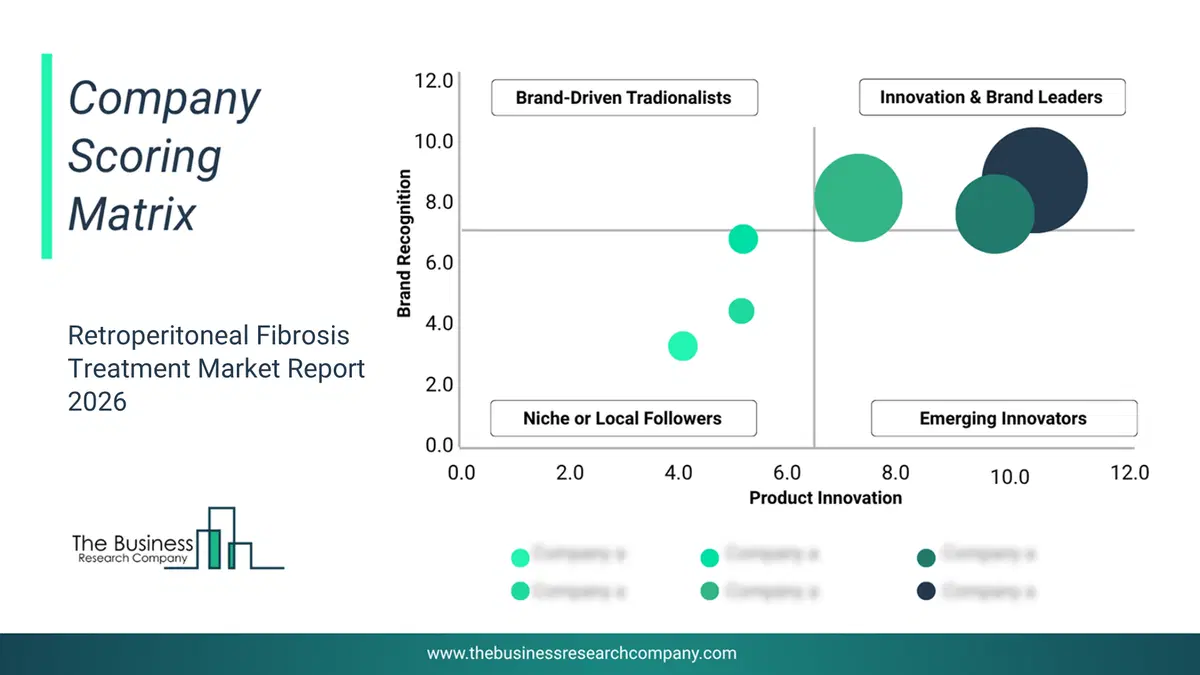
This chart maps companies by product innovation and brand strength, with bubble size indicating relative revenue, helping identify market leaders, challengers, and niche players. This is an illustrative chart; the full report provides a complete and accurate competitive analysis.
Regional Outlook
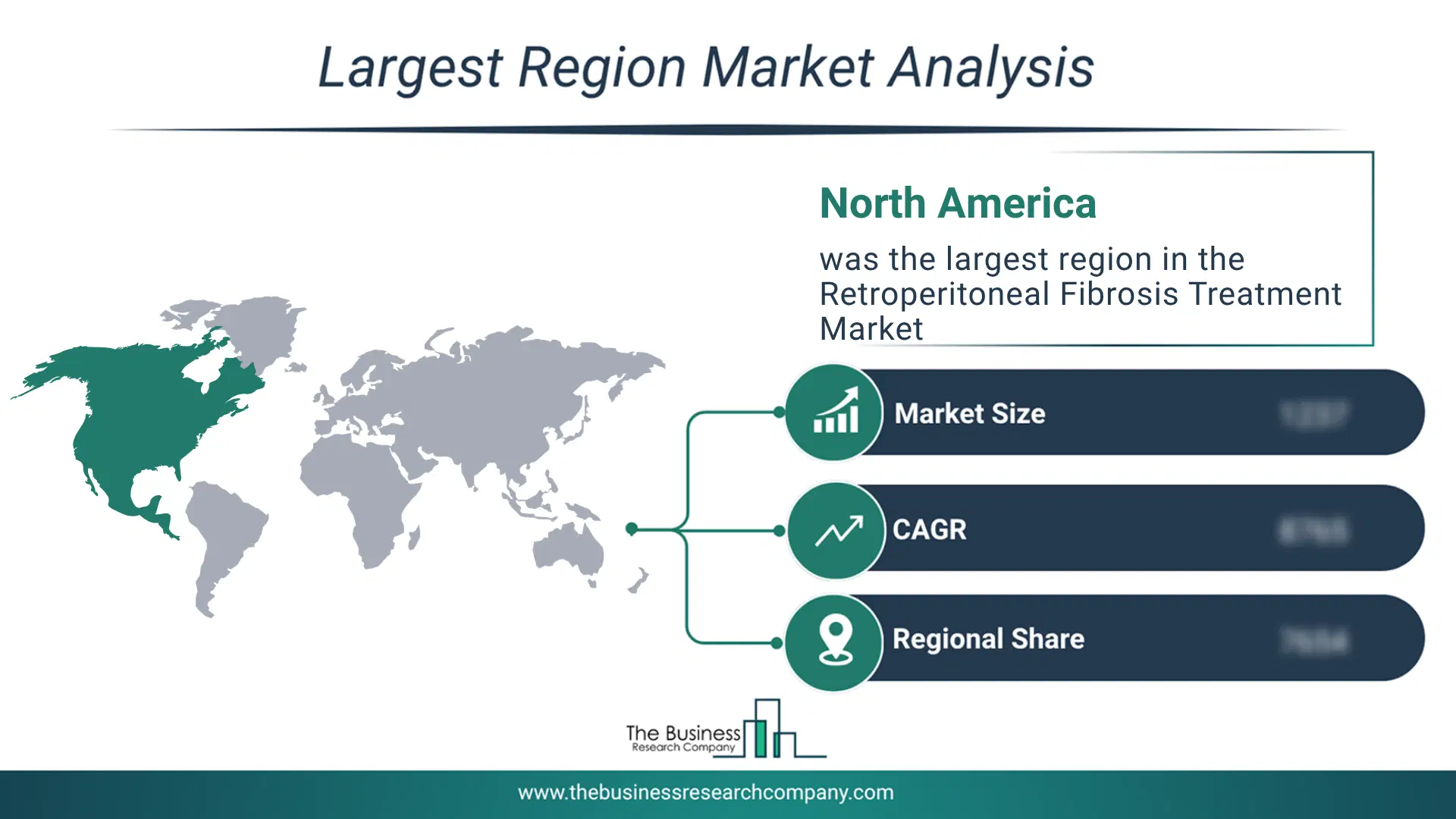
North America was the largest region in the retroperitoneal fibrosis treatment market in 2025. Asia-Pacific is expected to be the fastest-growing region in the forecast period. The regions covered in this market report are Asia-Pacific, South East Asia, Western Europe, Eastern Europe, North America, South America, Middle East, Africa. The countries covered in this market report are Australia, Brazil, China, France, Germany, India, Indonesia, Japan, Taiwan, Russia, South Korea, UK, USA, Canada, Italy, Spain.What Defines the Retroperitoneal Fibrosis Treatment Market?
The retroperitoneal fibrosis treatment market consists of revenues earned by entities by providing services such as autoimmune disease evaluation, histopathological biopsy services, specialist nephrology consultations, and urology consultation. The market value includes the value of related goods sold by the service provider or included within the service offering. The retroperitoneal fibrosis treatment market also includes sales of corticosteroid medications, immunosuppressant drugs, nephrostomy catheters, and ureteral stents. Values in this market are ‘factory gate’ values, that is the value of goods sold by the manufacturers or creators of the goods, whether to other entities (including downstream manufacturers, wholesalers, distributors and retailers) or directly to end customers. The value of goods in this market includes related services sold by the creators of the goods.How is Market Value Defined and Measured?
The market value is defined as the revenues that enterprises gain from the sale of goods and/or services within the specified market and geography through sales, grants, or donations in terms of the currency (in USD unless otherwise specified). The revenues for a specified geography are consumption values that are revenues generated by organizations in the specified geography within the market, irrespective of where they are produced. It does not include revenues from resales along the supply chain, either further along the supply chain or as part of other products.
This chart presents market attractiveness based on a quantitative evaluation of growth, competition, strategic alignment, and risk, offering a clear view of opportunity areas for decision-making. This chart is for illustrative purposes; the full report contains the complete analysis.

This chart highlights the Total Addressable Market (TAM) by estimating the maximum revenue opportunity using an assumption-driven approach, supporting strategic planning and opportunity sizing across markets. The chart is illustrative; the full report provides a more comprehensive analysis.
What Key Data and Analysis Are Included in the Retroperitoneal Fibrosis Treatment Market Report 2026?
The retroperitoneal fibrosis treatment market research report is one of a series of new reports from The Business Research Company that provides market statistics, including industry global market size, regional shares, competitors with the market share, detailed market segments, market trends and opportunities, and any further data you may need to thrive in the retroperitoneal fibrosis treatment industry. The market research report delivers a complete perspective of everything you need, with an in-depth analysis of the current and future state of the industry.Retroperitoneal Fibrosis Treatment Market Report Forecast Analysis
| Report Attribute | Details |
|---|---|
| Market Size Value In 2026 | $0.71 billion |
| Revenue Forecast In 2030 | $1.04 billion |
| Growth Rate | CAGR of 10.2% from 2026 to 2030 |
| Base Year For Estimation | 2025 |
| Actual Estimates/Historical Data | 2020-2025 |
| Forecast Period | 2026 - 2030 |
| Market Representation | Revenue in USD Billion and CAGR from 2026 to 2030 |
| Segments Covered | Treatment Type, Diagnostic Method, Route Of Administration, End User |
| Regional Scope | Asia-Pacific, Western Europe, Eastern Europe, North America, South America, Middle East, Africa |
| Country Scope | The countries covered in the report are Australia, Brazil, China, France, Germany, India, Indonesia, Japan, Taiwan, Russia, South Korea, UK, USA, Canada, Italy, Spain. |
| Key Companies Profiled | Abbott Laboratories, AbbVie Inc., Amgen Inc., AstraZeneca plc, B. Braun SE, Boehringer Ingelheim International GmbH, Boston Scientific Corporation, Coloplast A/S, Cook Medical LLC, Eli Lilly and Company, GSK plc, Johnson & Johnson Services Inc., Medtronic plc, Merit Medical Systems Inc., Novartis AG, Olympus Corporation, Pfizer Inc., Roche Holding AG, Sanofi S.A., Takeda Pharmaceutical Company Limited, Teva Pharmaceutical Industries Ltd., Teleflex Incorporated |
| Customization Scope | Request for Customization |
| Pricing And Purchase Options | Explore Purchase Options |