

Rett Syndrome Market Report 2026
Global Outlook – By Type (Classic Rett Syndrome, Atypical Rett Syndrome), By Stages (Stage IV Late Motor Deterioration, Stage III Plateau, Stage II Rapid Destruction, Stage I Early Onset), By Treatment (Medication, Physical Therapy, Occupational Therapy, Speech Language Therapy, Other Treatments), By Diagnosis (Blood Test, Genetic Testing, Other Diagnosis), By End-Users (Hospitals, Specialty Clinics, Homecare, Other End Users) - Market Size, Trends, Strategies, and Forecast to 2030
Rett Syndrome Market Overview
• Rett Syndrome market size has reached to $0.69 billion in 2025 • Expected to grow to $1.11 billion in 2030 at a compound annual growth rate (CAGR) of 9.7% • Growth Driver: Rising Prevalence Of Inherited Disorders Fueling The Growth Of The Market Due To Genetic Mutations And Advanced Parental Age • Market Trend: Innovative Epigenetic Therapies Transforming Rett Syndrome Treatment • North America was the largest region in 2025 and Asia-Pacific is the fastest growing region.What Is Covered Under Rett Syndrome Market?
Rett syndrome is a rare genetic disorder that mainly affects girls, causing severe cognitive and motor impairments. It typically develops after normal early growth and is caused by mutations in the methyl-CpG binding protein 2 (MECP2) gene, which is crucial for brain development. The symptoms include loss of purposeful hand movements, speech, and repetitive behaviors such as hand-wringing. The main types of rett syndrome are classic rett syndrome and atypical rett syndrome. Classic rett syndrome is a rare genetic disorder, mainly in females, characterized by early normal development followed by loss of motor and communication skills due to MECP2 gene mutations. The disorder progresses through four stages such as stage IV late motor deterioration, stage III plateau, stage II rapid destruction, and stage I early onset, and treatment options include medications, physical therapy, occupational therapy, speech and language therapy, and others. Diagnosis is typically made through blood tests, genetic testing, and others catering to end-users, including hospitals, specialty clinics, homecare settings, and other healthcare providers.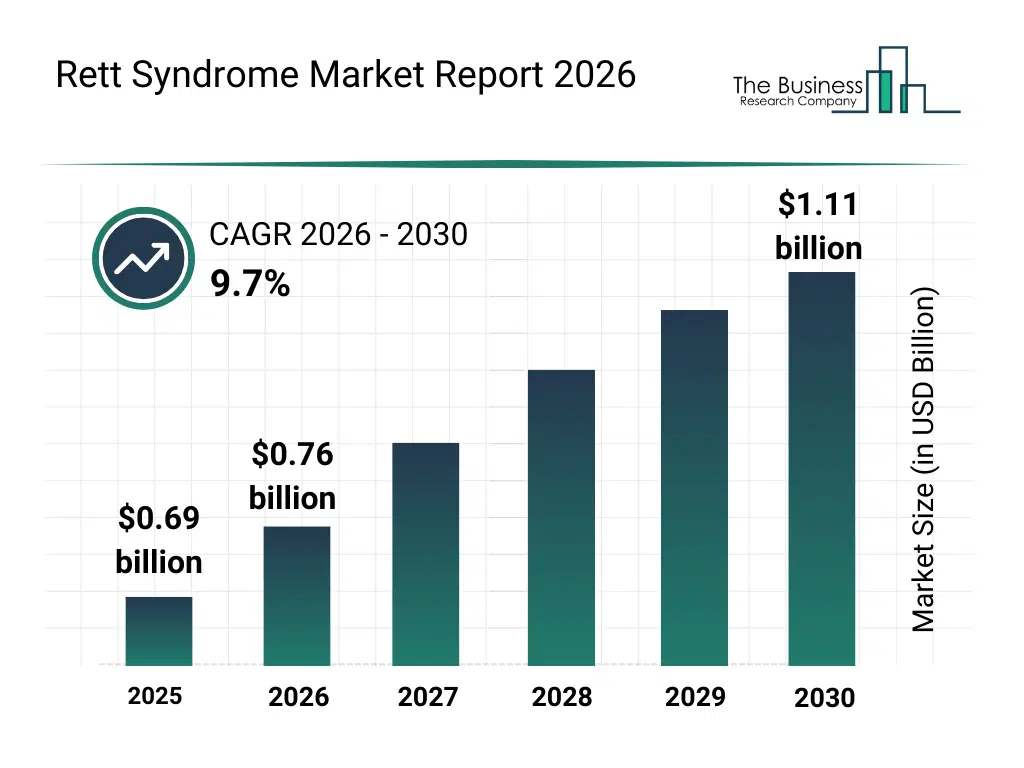
What Is The Rett Syndrome Market Size and Share 2026?
The rett syndrome market size has grown strongly in recent years. It will grow from $0.69 billion in 2025 to $0.76 billion in 2026 at a compound annual growth rate (CAGR) of 9.9%. The growth in the historic period can be attributed to increased clinical awareness of rare neurological disorders, availability of genetic testing for MECP2 mutations, establishment of specialized care centers, growth in supportive therapy programs, rising advocacy and patient support initiatives.What Is The Rett Syndrome Market Growth Forecast?
The rett syndrome market size is expected to see strong growth in the next few years. It will grow to $1.11 billion in 2030 at a compound annual growth rate (CAGR) of 9.7%. The growth in the forecast period can be attributed to advancement in gene therapy platforms, increasing investment in rare disease drug development, expansion of personalized medicine approaches, growing use of digital health tools in neurology, rising focus on early-stage diagnosis and intervention. Major trends in the forecast period include expansion of gene-based therapeutic research, increasing focus on precision diagnosis tools, rising adoption of multidisciplinary care approaches, growing development of symptom-targeted therapies, enhanced integration of digital patient monitoring.
Global Rett Syndrome Market Segmentation
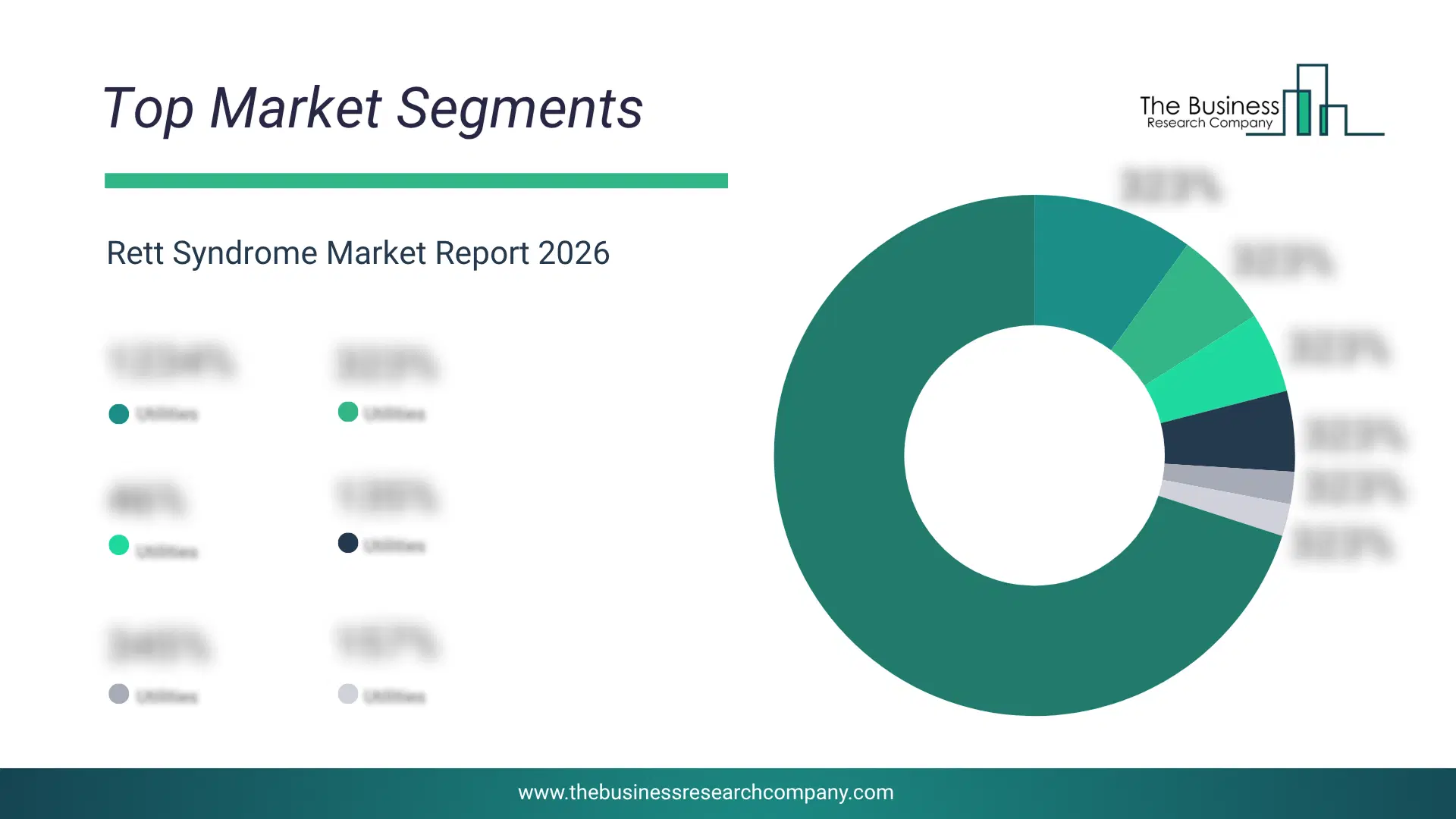
1) By Type: Classic Rett Syndrome, Atypical Rett Syndrome 2) By Stages: Stage IV Late Motor Deterioration, Stage III Plateau, Stage II Rapid Destruction, Stage I Early Onset 3) By Treatment: Medication, Physical Therapy, Occupational Therapy, Speech Language Therapy, Other Treatments 4) By Diagnosis: Blood Test, Genetic Testing, Other Diagnosis 5) By End-Users: Hospitals, Specialty Clinics, Homecare, Other End Users Subsegments: 1) By Classic Rett Syndrome: Early-Onset Classic Rett Syndrome, Late-Onset Classic Rett Syndrome 2) By Atypical Rett Syndrome: Rett-Like Syndrome, Syndrome With Neurodevelopmental Delays, Sporadic Atypical Rett SyndromeWhat Is The Driver Of The Rett Syndrome Market?
The rising prevalence of inherited disorders is expected to propel the growth of the rett syndrome market going forward. Inherited disorders are diseases or conditions caused by genetic mutations passed from parents to their children. It includes cystic fibrosis, sickle cell anemia, hemophilia, and Huntington’s disease. The increasing inherited disorders can be attributed to advanced parental age, which raises the likelihood of genetic mutations being passed to offspring. Rett syndrome enhances understanding of inherited disorders by highlighting the role of genetic mutations, particularly in the methyl-CpG-binding protein 2 (MECP2) gene. It provides insight into neurodevelopmental processes, advancing research into genetically based treatments and therapies for other similar conditions. For instance, in February 2024, according to the Genetic Alliance UK, a UK-based national alliance of organizations, rare conditions, defined as affecting fewer than 1 in 2,000 people, impact over 3.5 million individuals in the UK, with 1 in 17 people experiencing such conditions at some point in their lives. Among the 7,000 identified rare conditions 70% of which affect children over 30% of affected children die before their fifth birthday due to these severe disorders. Therefore, the rising prevalence of inherited disorders is driving the growth of the rett syndrome industry.Key Players In The Global Rett Syndrome Market
Major companies operating in the rett syndrome market are Sarepta Therapeutics Inc., Ionis Pharmaceuticals Inc., Acadia Pharmaceuticals Inc., Regenxbio Inc., Beam Therapeutics Inc., Shape Therapeutics Inc., Unravel Biosciences Inc., Neuren Pharmaceuticals Limited, Taysha Gene Therapies, Prilenia Therapeutics Inc., Anavex Life Sciences Corp, Neurogene Inc., Neurolixis Inc., Neurotech International Limited, PTC Therapeutics Inc., Ultragenyx Pharmaceutical Inc., Zogenix Inc., Bluebird Bio Inc., Astellas Gene Therapies Inc., Rocket Pharmaceuticals Inc., Passage Bio Inc., Homology Medicines Inc., Abeona Therapeutics Inc., Orchard Therapeutics plc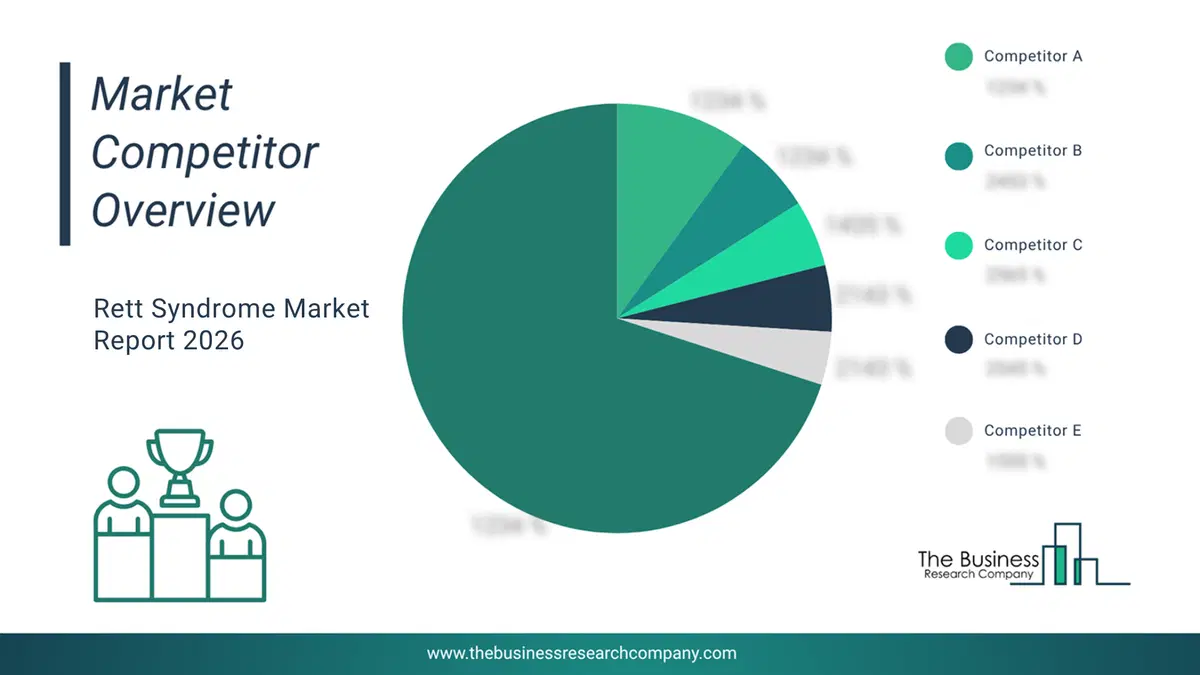
This chart is for illustrative purposes; the full report includes a detailed competitor analysis and comprehensive overview of the top 10 companies in the market.
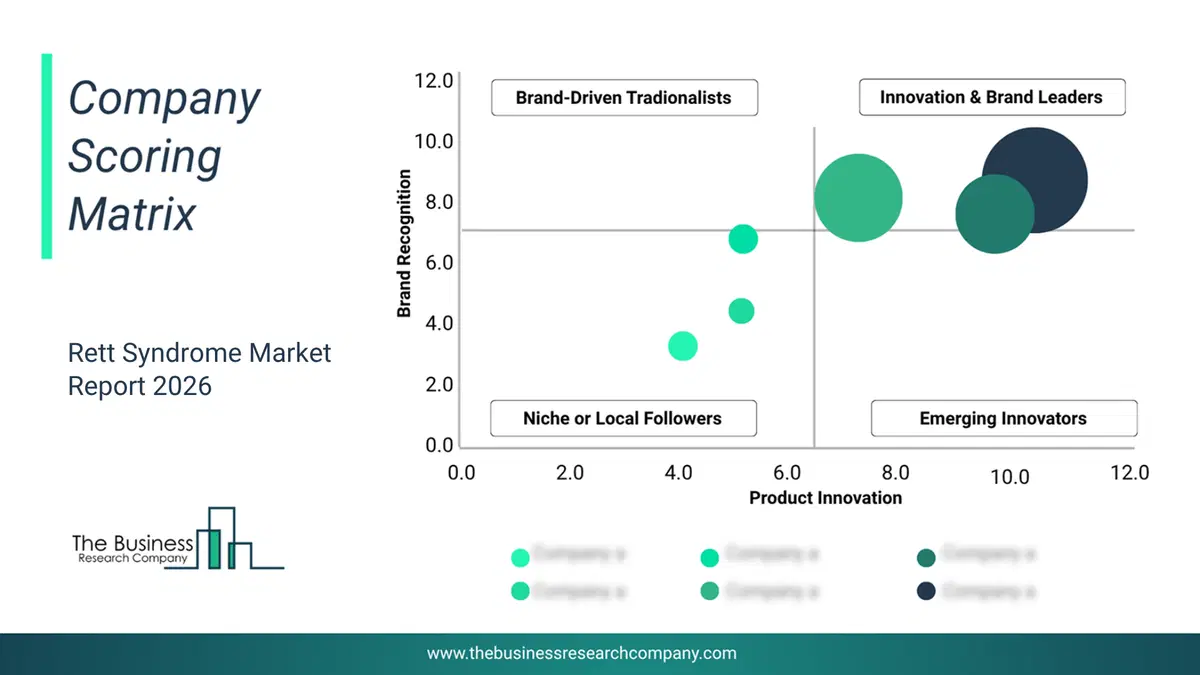
This chart maps companies by product innovation and brand strength, with bubble size indicating relative revenue, helping identify market leaders, challengers, and niche players. This is an illustrative chart; the full report provides a complete and accurate competitive analysis.
Global Rett Syndrome Market Trends and Insights
Major companies operating in the rett syndrome market are focusing on developing innovative products, such as epigenetic therapies to target the root genetic causes of the disorder, restore methyl-CpG-binding protein 2 (MECP2) function, and potentially reverse or significantly reduce symptoms. Epigenetic therapies refer to treatments that aim to modify gene expression without altering the underlying deoxyribonucleic acid (DNA) sequence, typically by targeting mechanisms such as DNA methylation, histone modification, or ribonucleic acid (RNA) regulation to influence gene activity. For instance, in May 2024, Unravel Biosciences Inc., a US-based biotechnology company, received approval from the U.S. Food and Drug Administration (FDA) for vorinostat (RVL-001) as a potential treatment for rett syndrome. RVL-001 is an epigenetic therapy that works by inhibiting histone deacetylases (HDACs), which restores proper gene expression in neurons. This epigenetic modulation helps compensate for the methyl-CpG-binding protein 2 (MECP2) mutation, potentially improving neural function.What Are Latest Mergers And Acquisitions In The Rett Syndrome Market?
In December 2024, ProQR Therapeutics N.V., a Netherlands-based biotechnology company, expanded its collaboration with the Rett Syndrome Research Trust (RSRT) to advance ribonucleic acid (RNA) editing therapies targeting methyl-CpG-binding protein 2 (MECP2) mutations, notably the R270X mutation, using its Axiomer platform. This partnership aims to accelerate the development of AX-2402 into clinical trials, offering a potential disease-modifying treatment for rett syndrome. Rett Syndrome Research Trust is a US-based nonprofit organization focused on funding and accelerating research to cure rett syndrome.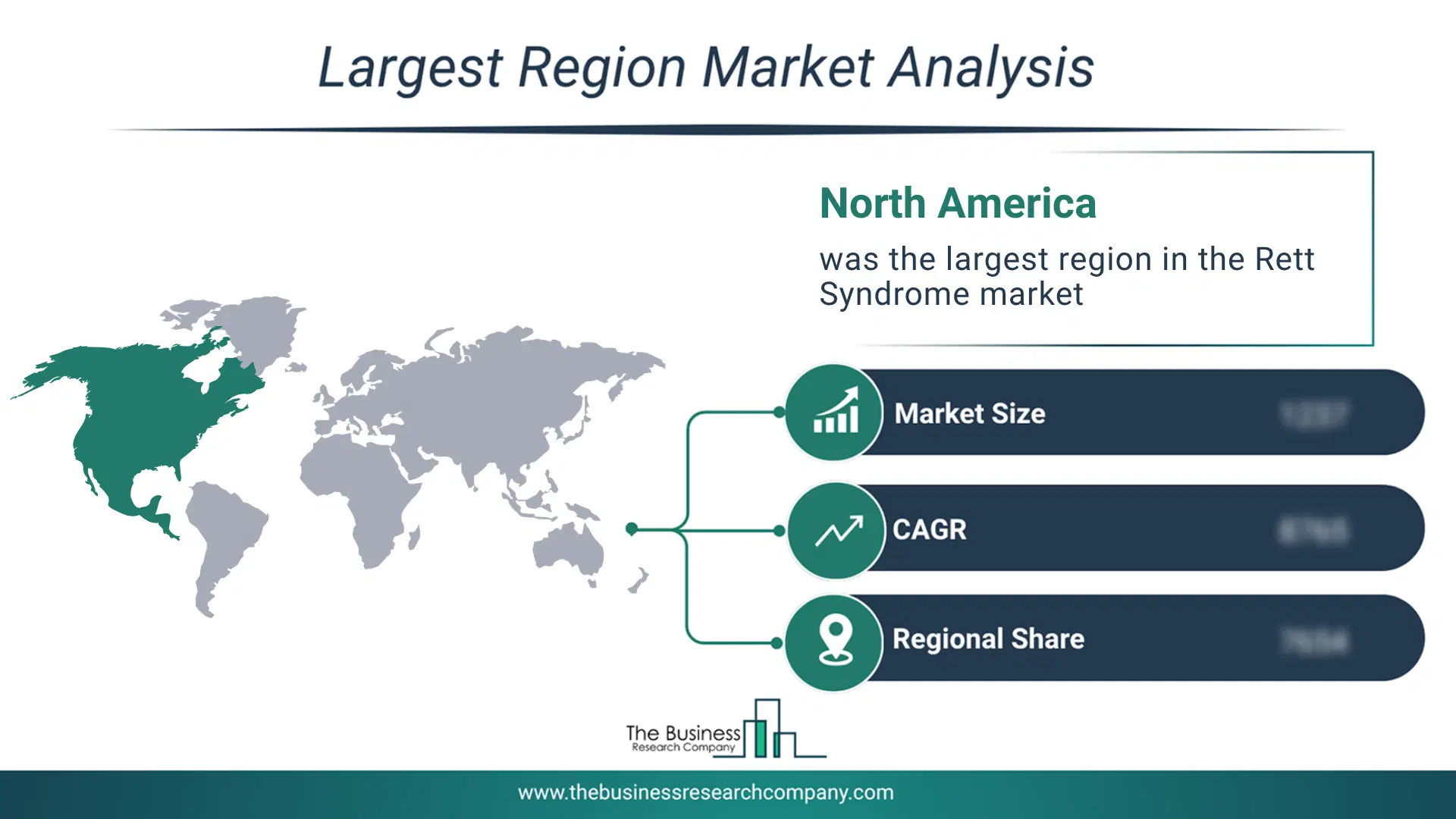
Regional Outlook
North America was the largest region in the rett syndrome market in 2025. Asia-Pacific is expected to be the fastest-growing region in the forecast period. The regions covered in this market report are Asia-Pacific, South East Asia, Western Europe, Eastern Europe, North America, South America, Middle East, Africa. The countries covered in this market report are Australia, Brazil, China, France, Germany, India, Indonesia, Japan, Taiwan, Russia, South Korea, UK, USA, Canada, Italy, Spain.What Defines the Rett Syndrome Market?
The rett syndrome market consists of revenues earned by entities by providing services such as diagnostic testing, genetic counseling, specialized therapeutic interventions, ongoing medical care, and support for affected individuals. The market value includes the value of related goods sold by the service provider or included within the service offering. The rett syndrome market also includes sales of medical devices, nutritional supplements, assistive communication devices, adaptive equipment, and therapeutic tools. Values in this market are ‘factory gate’ values, that is, the value of goods sold by the manufacturers or creators of the goods, whether to other entities (including downstream manufacturers, wholesalers, distributors, and retailers) or directly to end customers. The value of goods in this market includes related services sold by the creators of the goods.How is Market Value Defined and Measured?
The market value is defined as the revenues that enterprises gain from the sale of goods and/or services within the specified market and geography through sales, grants, or donations in terms of the currency (in USD unless otherwise specified). The revenues for a specified geography are consumption values that are revenues generated by organizations in the specified geography within the market, irrespective of where they are produced. It does not include revenues from resales along the supply chain, either further along the supply chain or as part of other products.
This chart presents market attractiveness based on a quantitative evaluation of growth, competition, strategic alignment, and risk, offering a clear view of opportunity areas for decision-making. This chart is for illustrative purposes; the full report contains the complete analysis.

This chart highlights the Total Addressable Market (TAM) by estimating the maximum revenue opportunity using an assumption-driven approach, supporting strategic planning and opportunity sizing across markets. The chart is illustrative; the full report provides a more comprehensive analysis.
What Key Data and Analysis Are Included in the Rett Syndrome Market Report 2026?
The rett syndrome market research report is one of a series of new reports from The Business Research Company that provides market statistics, including industry global market size, regional shares, competitors with the market share, detailed market segments, market trends and opportunities, and any further data you may need to thrive in the rett syndrome industry. The market research report delivers a complete perspective of everything you need, with an in-depth analysis of the current and future state of the industry.Rett Syndrome Market Report Forecast Analysis
| Report Attribute | Details |
|---|---|
| Market Size Value In 2026 | $0.76 billion |
| Revenue Forecast In 2030 | $1.11 billion |
| Growth Rate | CAGR of 9.7% from 2026 to 2030 |
| Base Year For Estimation | 2025 |
| Actual Estimates/Historical Data | 2020-2025 |
| Forecast Period | 2026 - 2030 |
| Market Representation | Revenue in USD Billion and CAGR from 2026 to 2030 |
| Segments Covered | Type, Stages, Treatment, Diagnosis, End-Users |
| Regional Scope | Asia-Pacific, Western Europe, Eastern Europe, North America, South America, Middle East, Africa |
| Country Scope | The countries covered in the report are Australia, Brazil, China, France, Germany, India, Indonesia, Japan, Taiwan, Russia, South Korea, UK, USA, Canada, Italy, Spain |
| Key Companies Profiled | Sarepta Therapeutics Inc., Ionis Pharmaceuticals Inc., Acadia Pharmaceuticals Inc., Regenxbio Inc., Beam Therapeutics Inc., Shape Therapeutics Inc., Unravel Biosciences Inc., Neuren Pharmaceuticals Limited, Taysha Gene Therapies, Prilenia Therapeutics Inc., Anavex Life Sciences Corp, Neurogene Inc., Neurolixis Inc., Neurotech International Limited, PTC Therapeutics Inc., Ultragenyx Pharmaceutical Inc., Zogenix Inc., Bluebird Bio Inc., Astellas Gene Therapies Inc., Rocket Pharmaceuticals Inc., Passage Bio Inc., Homology Medicines Inc., Abeona Therapeutics Inc., Orchard Therapeutics plc |
| Customization Scope | Request for Customization |
| Pricing And Purchase Options | Explore Purchase Options |