

Revenue-Based Financing Market Report 2026
Global Outlook – By Enterprise Size (Micro Enterprises, Small-Sized Enterprises, Medium-Sized Enterprises), By Revenue Source (Recurring Revenue Businesses, Transaction-Based Revenue Businesses, Subscription-Based Revenue Businesses), By Industry Vertical (Information Technology And Telecommunication, Healthcare, Media And Enterprises, Banking, Financial Services And Insurance (BSFI), Consumer Goods, Energy And Utilities, Other Industry Verticals) – Market Size, Trends, Strategies, and Forecast to 2030
Revenue-Based Financing Market Overview
• Revenue-Based Financing market size has reached to $9.77 billion in 2025 • Expected to grow to $109.75 billion in 2030 at a compound annual growth rate (CAGR) of 62.2% • Growth Driver: Startups Fueling The Surge Driving Growth In The Revenue-Based Financing Market • Market Trend: Innovative Financing Solutions Redefining The Landscape With Hybrid Revenue-Based Financing • North America was the largest region in 2025 and Asia-Pacific is the fastest growing region.Market Gains By 2030 – Top Opportunities By Segment
Market Gain identifies the most promising market opportunities by highlighting the segments or products expected to generate the highest incremental revenue growth over the next five years.
What Is Covered Under Revenue-Based Financing Market?
Revenue-based financing refers to a funding strategy in which a company obtains capital in exchange for a portion of future sales until a set amount is repaid. It provides an alternative to standard stock or debt funding by matching repayment terms with the company's financial performance. The enterprises in revenue-based financing are micro-enterprises, small-sized enterprises, and medium-sized enterprises. Microenterprises refer to a small business that offers goods and services to a local community or market. The funding can be done through online and offline modes for information technology and telecommunication, healthcare, media and enterprises, banking, financial services and insurance (BFSI), consumer goods, energy and utilities, and other industry verticals.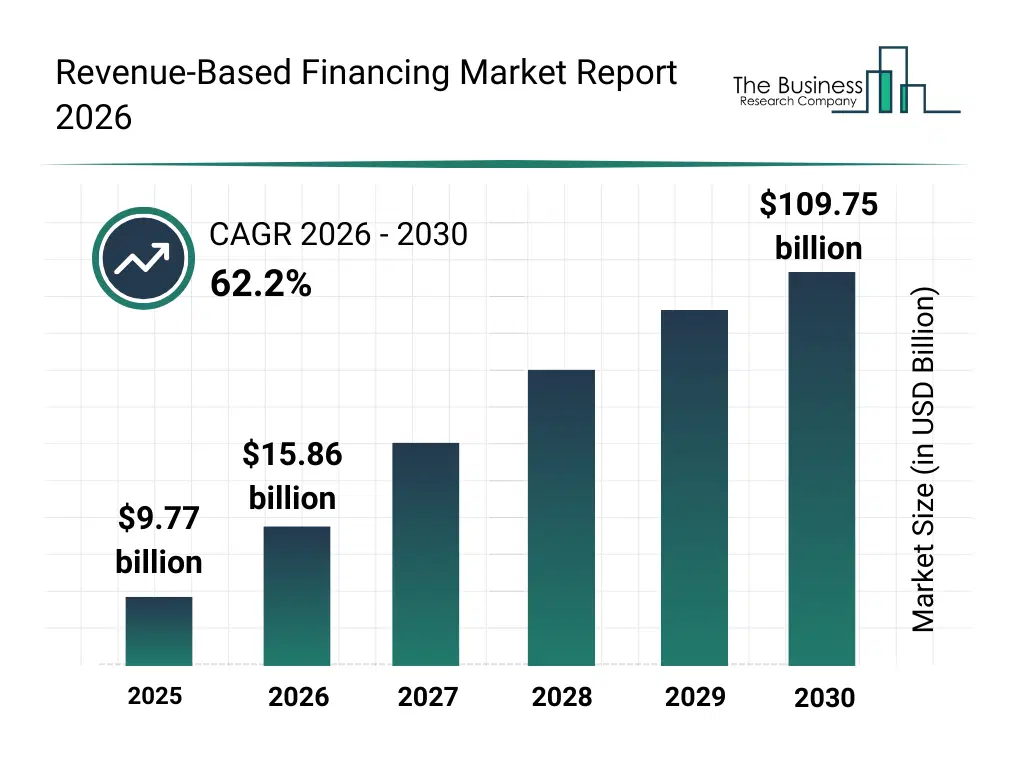
What Is The Revenue-Based Financing Market Size and Share 2026?
The revenue-based financing market size has grown exponentially in recent years. It will grow from $9.77 billion in 2025 to $15.86 billion in 2026 at a compound annual growth rate (CAGR) of 62.2%. The growth in the historic period can be attributed to expansion of startup and SME ecosystems, limited access to traditional bank loans, increasing demand for non-dilutive funding, growth of subscription-based business models, rising use of digital lending platforms.What Is The Revenue-Based Financing Market Growth Forecast?
The revenue-based financing market size is expected to see exponential growth in the next few years. It will grow to $109.75 billion in 2030 at a compound annual growth rate (CAGR) of 62.2%. The growth in the forecast period can be attributed to increasing adoption of fintech-enabled funding solutions, rising focus on cash-flow-aligned financing, expansion of sector-specific financing offerings, growing use of ai-based underwriting models, increasing demand from high-growth SMEs. Major trends in the forecast period include increasing adoption of alternative financing models, rising demand for flexible repayment structures, growing use of data-driven credit assessment, expansion of online revenue-based financing platforms, enhanced focus on founder-friendly capital solutions.
Global Revenue-Based Financing Market Segmentation
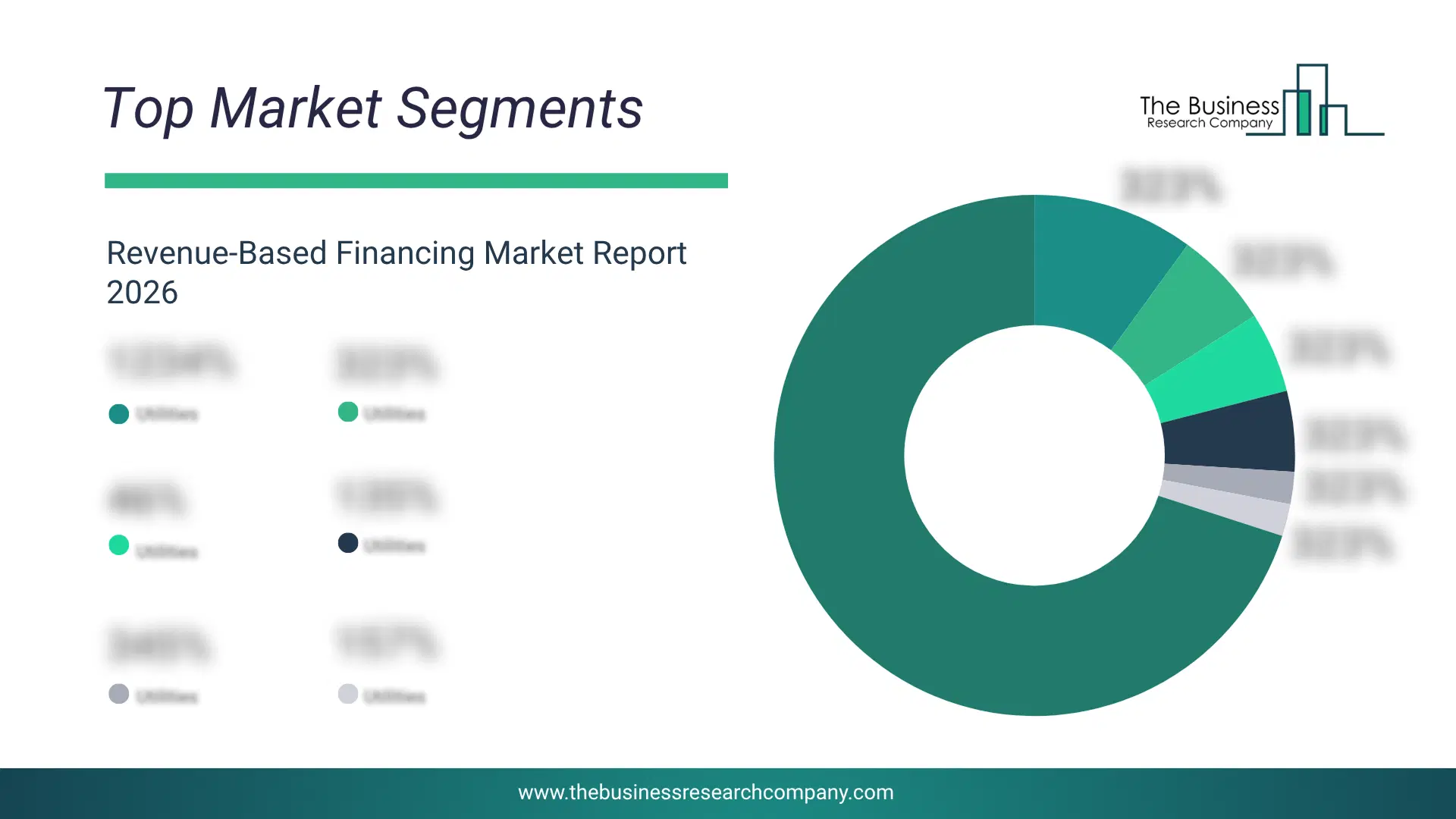
1) By Enterprise Size: Micro Enterprises, Small-Sized Enterprises, Medium-Sized Enterprises 2) By Revenue Source: Recurring Revenue Businesses, Transaction-Based Revenue Businesses, Subscription-Based Revenue Businesses 3) By Industry Vertical: Information Technology And Telecommunication, Healthcare, Media And Enterprises, Banking, Financial Services And Insurance (BSFI), Consumer Goods, Energy And Utilities, Other Industry Verticals Subsegments: 1) By Micro Enterprises: Revenue Thresholds, Specific Industry Focus 2) By Small-Sized Enterprises: Revenue Thresholds, Industry-Specific Financing Trends 3) By Medium-Sized Enterprises: Revenue Thresholds, Growth Stage Considerations And Funding Needs The top segments in the revenue-based financing market will be: • Small-Sized Enterprises will reach $48.4 Billion by 2030. • Micro Enterprises will reach $33.55 Billion by 2030. • Medium-Sized Enterprises will reach $27.36 Billion by 2030.What Is The Driver Of The Revenue-Based Financing Market?
The rising number of startups is expected to propel the growth of the revenue-based financing market going forward. Startups refer to newly formed companies that are usually started by one or more entrepreneurs who focus on capitalizing upon a perceived market demand by developing a viable product, service, or platform. Startups help build the revenue-based financing industry by delivering innovative financial products and platforms that cater to the needs of small businesses, such as providing them with accessible and flexible finance options to help them grow and increase revenue streams. For instance, In February 2024, a report from Startups.co.uk, a UK-based online resource and advice platform, revealed that in 2023, the number of new businesses rose by a notable 19.5%, amounting to 39,966 new establishments. This growth also represents a 6.5% increase compared to the previous year, 2022. Therefore, the rising number of startups is driving the revenue-based financing industry.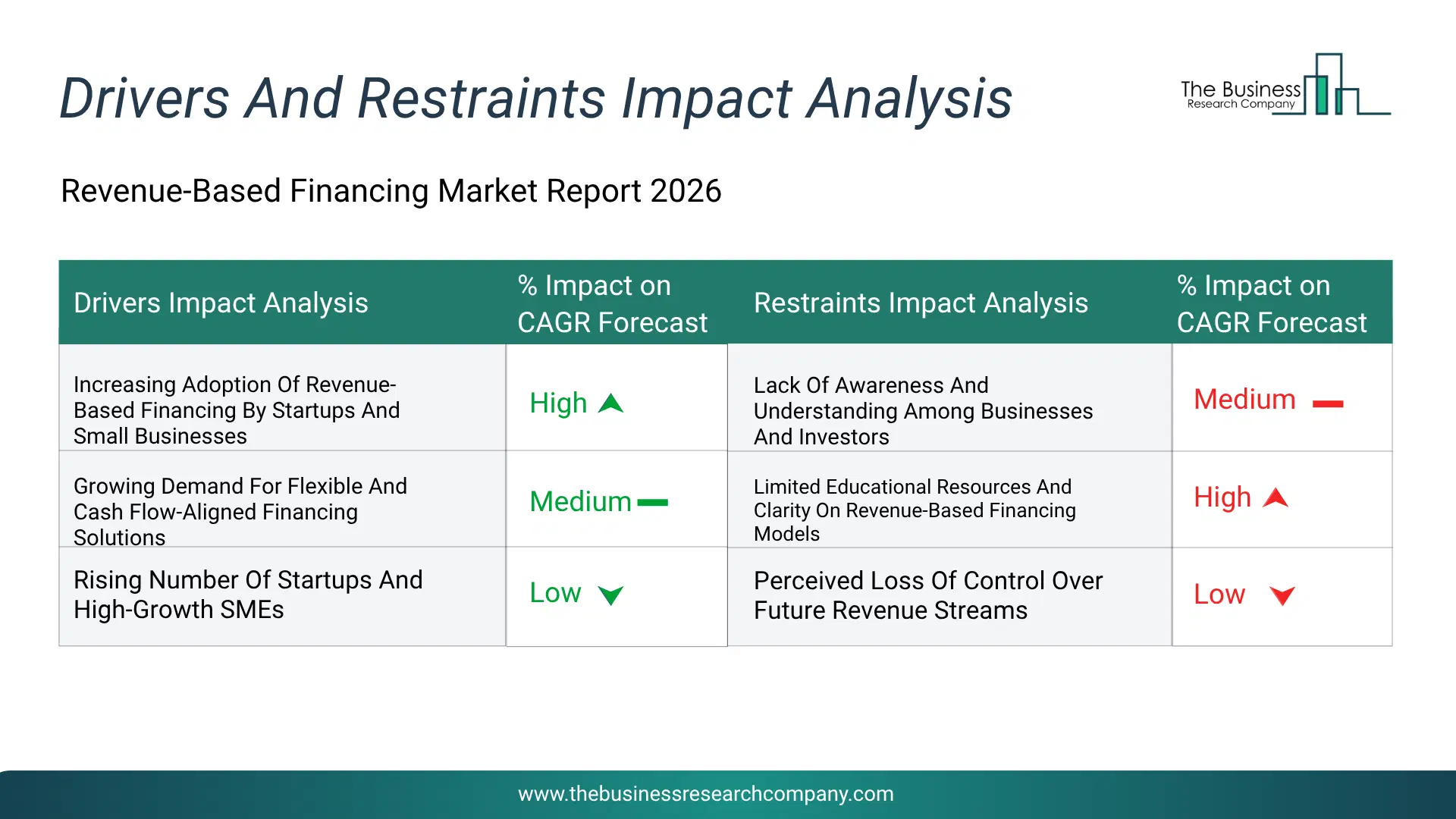
Infographic Chart Showing Key Market Drivers Analysis And Restraints For Revenue-Based Financing Market
The chart presents an impact analysis of key drivers and restraints, quantifying their relative influence on the market's growth rate and helping assess the balance between growth enablers and limiting factors. This chart offers a high-level perspective; the full report contains more detailed insights.
How Will The Drivers Impact Growth In The Global Revenue-Based Financing Market?
• Increasing Adoption Of Revenue-Based Financing By Startups And Small Businesses (High) – During the forecast period, the increasing adoption of revenue-based financing by startups and small businesses is expected to become a key growth driver for the revenue-based financing market by 2030. Early-stage and growth-stage companies are increasingly turning toward this model to secure funding without giving up ownership stakes or facing rigid repayment schedules. The flexibility of tying repayments to revenue performance makes it particularly attractive for businesses with fluctuating income streams. Fintech platforms are also simplifying access by offering faster approvals and minimal collateral requirements. This shift toward founder-friendly financing solutions is accelerating widespread adoption across emerging and developed markets. • Growing Demand For Flexible And Cash Flow-Aligned Financing Solutions (Medium) – During the forecast period, the growing demand for flexible and cash flow-aligned financing solutions is expected to emerge as a major factor driving the expansion of the revenue-based financing market by 2030. Businesses are increasingly seeking funding structures that adjust repayment obligations based on real-time financial performance, reducing the burden during low-revenue periods. This model enables companies to better manage liquidity while continuing to invest in growth initiatives such as marketing, product development, and expansion. Financial institutions and alternative lenders are responding by designing customized financing solutions tailored to sector-specific revenue patterns. • Rising Number Of Startups And High-Growth SMEs (Low) – During the forecast period, the rising number of startups and high-growth SMEs is expected to act as a key growth catalyst for the revenue-based financing market by 2030. The expansion of entrepreneurial ecosystems across technology, e-commerce, and digital services sectors is creating a strong demand for accessible growth capital. Many of these businesses operate with scalable models and recurring or transaction-based revenues, making them well-suited for revenue-linked financing structures. Additionally, traditional lending constraints and increasing competition for venture capital are encouraging businesses to explore alternative funding channels. As startup activity continues to accelerate globally, demand for revenue-based financing is expected to rise significantly.How Will The Restraints Impact Growth In The Global Revenue-Based Financing Market?
• Lack Of Awareness And Understanding Among Businesses And Investors (High) – During the forecast period, the lack of awareness and understanding among businesses and investors acts as a significant restraint on the revenue-based financing market, as many potential users remain unfamiliar with its structure and benefits. Without clear knowledge of how repayments are linked to revenue or how it differs from traditional funding, companies may hesitate to adopt this model. Investors, too, may be cautious due to limited understanding of risk-return dynamics, slowing capital inflow into the market. This knowledge gap reduces overall market penetration and limits adoption, particularly in emerging regions. As a result, insufficient awareness continues to hinder the widespread growth of revenue-based financing solutions. • Limited Educational Resources And Clarity On Revenue-Based Financing Models (Medium) – During the forecast period, limited educational resources and lack of clarity around revenue-based financing models act as a restraint on market growth by creating confusion among potential users and investors. Many businesses struggle to fully understand the structure, repayment terms, and long-term financial implications of this funding approach. This uncertainty often leads to hesitation in adoption, especially when compared to more familiar financing options like bank loans or equity funding. Additionally, insufficient guidance and standardized information make it difficult for stakeholders to evaluate suitability and risks effectively. As a result, the absence of clear educational support slows market acceptance and broader implementation. • Perceived Loss Of Control Over Future Revenue Streams (Low) – During the forecast period, the perceived loss of control over future revenue streams acts as a restraint on the revenue-based financing market, as businesses may feel hesitant to commit a portion of their ongoing earnings to investors. Since repayments are tied directly to revenue, companies may worry about reduced financial flexibility, especially during periods of growth when higher revenues lead to larger repayments. This concern can create uncertainty around long-term cash flow planning and profitability. Additionally, founders may prefer financing options that allow them to retain full control over their income allocation. As a result, such perceptions can limit the adoption of revenue-based financing despite its advantages.Key Players In The Global Revenue-Based Financing Market
Major companies operating in the revenue-based financing market are Wayflyer, Capchase, Lighter Capital, Decathlon Capital, Timia Capital, Earnest Capital, Novel Capital, Liberis, Silvr, GetVantage, Flow Capital, Ritmo, Arc Capital, Feenix Venture Partners, Pipe, Clearco, Uncapped, Founderpath, Settle, Outfund, Parafin, Levenue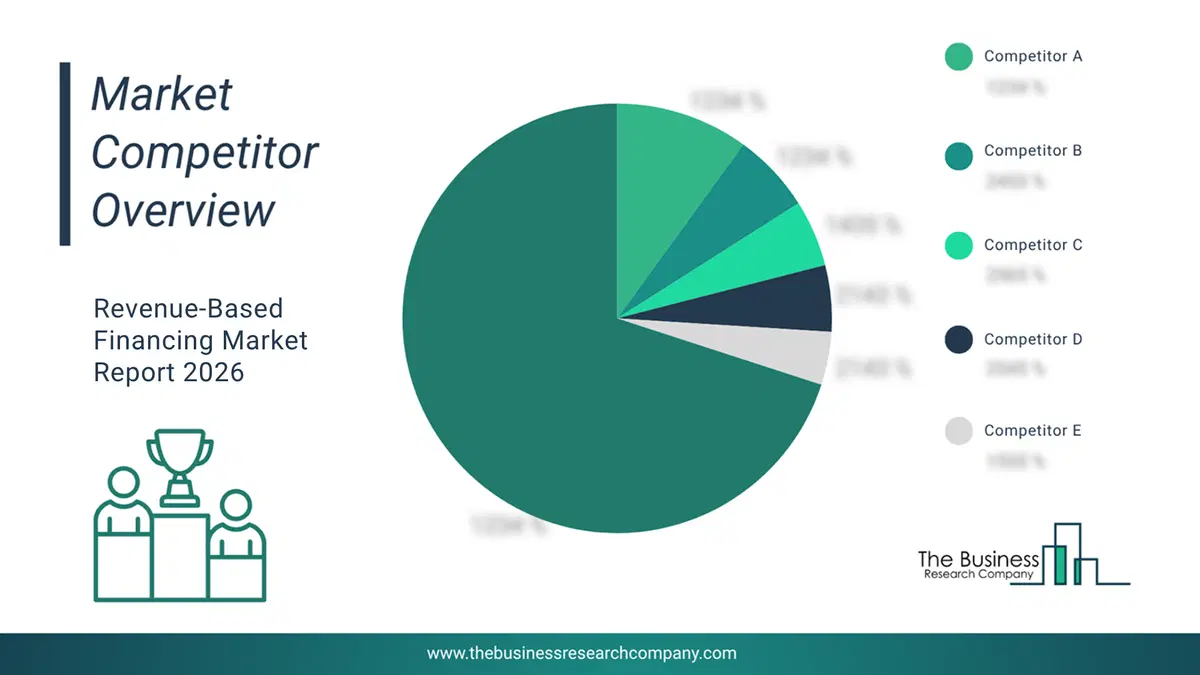
This chart is for illustrative purposes; the full report includes a detailed competitor analysis and comprehensive overview of the top 10 companies in the market.
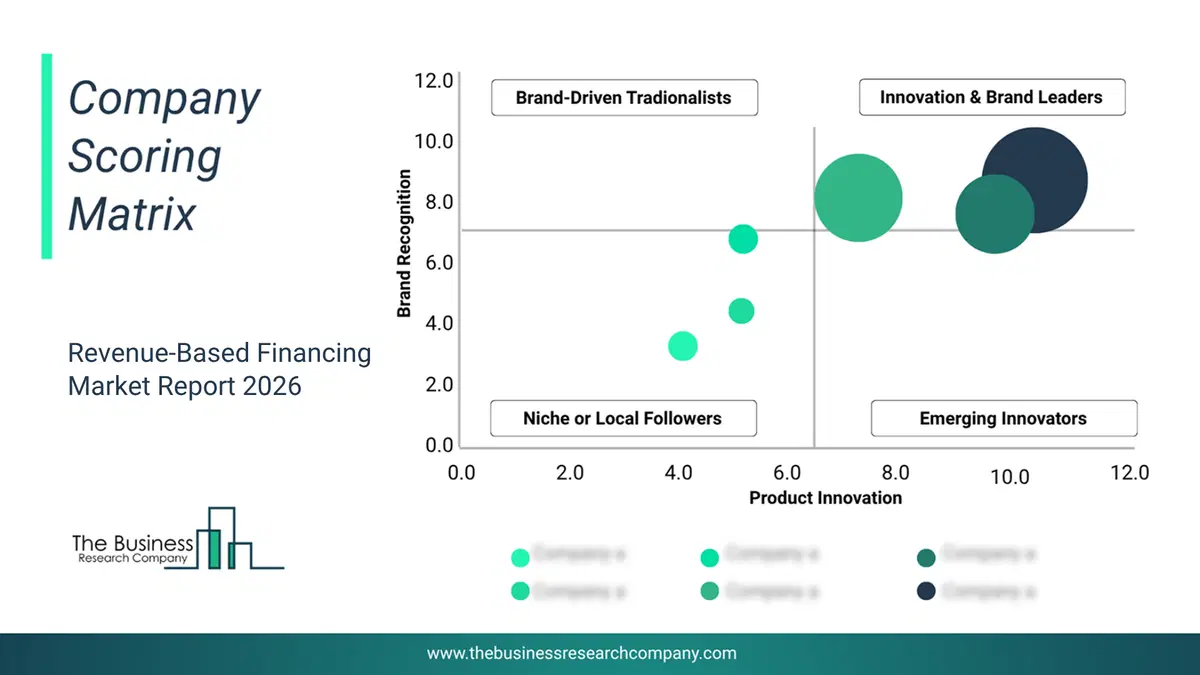
This chart maps companies by product innovation and brand strength, with bubble size indicating relative revenue, helping identify market leaders, challengers, and niche players. This is an illustrative chart; the full report provides a complete and accurate competitive analysis.
Global Revenue-Based Financing Market Trends and Insights
Major companies operating in the revenue-based financing market are focusing on innovations such as to better meet the needs of their existing consumers. Hybrid financing is a broad term encompassing various financial strategies that combine elements of both debt and equity financing. For instance, in January 2023, ARC Technologies Inc., a US-based company that offers financing to startup companies, launched Advance Plus. Advance Plus is a new type of hybrid financing offered to Arc Treasury customers that closes the distinction between traditional venture loans and revenue-based financing. Arc Advance Plus, like a regular venture loan, has a six-month grace period during which no principal payments are required. Arc Advance Plus allows entrepreneurs to turn future income into upfront money within 48 hours. Arc Advance Plus gives businesses the freedom to invest in long-term growth strategies.What Are Latest Mergers And Acquisitions In The Revenue-Based Financing Market?
In October 2025, Allica Bank Limited, a UK‑based bank, acquired Kriya for an undisclosed amount. With this acquisition, Allica Bank aims to strengthen and expand its SME lending and embedded finance capabilities and drive its strategic objective of delivering $1.33 billion of SME working capital finance by 2028. Kriya Finance Limited is a UK‑based financial technology company that specializes in providing working capital solutions, invoice finance, SME loans, and embedded PayLater and payments products to small and medium‑sized enterprises.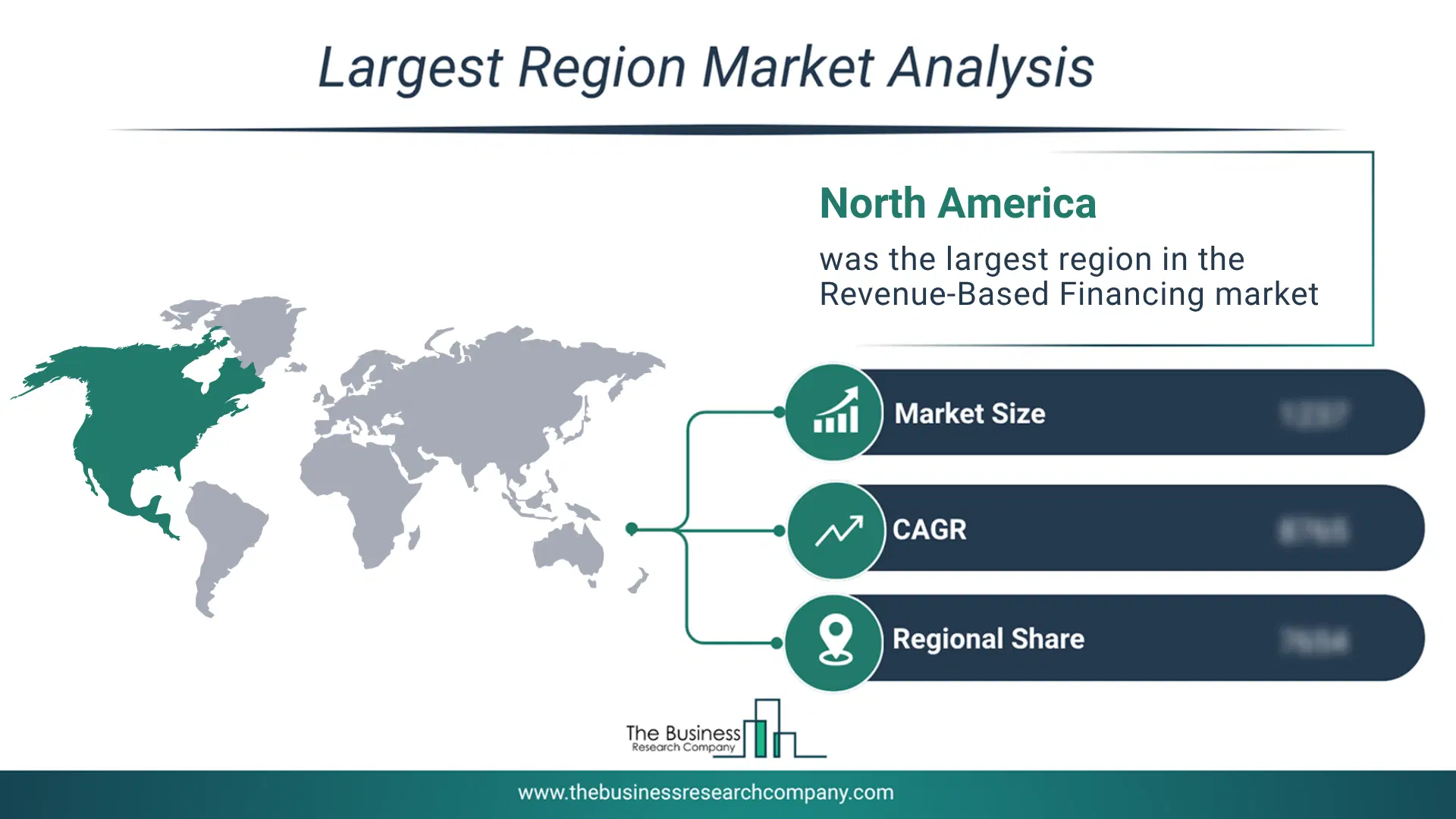
Regional Outlook
North America was the largest region in the revenue-based financing market in 2025. Asia-Pacific is expected to be the fastest-growing region in the forecast period. The regions covered in this market report are Asia-Pacific, South East Asia, Western Europe, Eastern Europe, North America, South America, Middle East, Africa. The countries covered in this market report are Australia, Brazil, China, France, Germany, India, Indonesia, Japan, Taiwan, Russia, South Korea, UK, USA, Canada, Italy, Spain.What Defines the Revenue-Based Financing Market?
The revenue-based financing market includes revenues earned by entities through funding agreements, revenue reporting, and repayment periods. The market value includes the value of related goods sold by the service provider or included within the service offering. Only goods and services traded between entities or sold to end consumers are included.How is Market Value Defined and Measured?
The market value is defined as the revenues that enterprises gain from the sale of goods and/or services within the specified market and geography through sales, grants, or donations in terms of the currency (in USD unless otherwise specified). The revenues for a specified geography are consumption values that are revenues generated by organizations in the specified geography within the market, irrespective of where they are produced. It does not include revenues from resales along the supply chain, either further along the supply chain or as part of other products.
This chart presents market attractiveness based on a quantitative evaluation of growth, competition, strategic alignment, and risk, offering a clear view of opportunity areas for decision-making. This chart is for illustrative purposes; the full report contains the complete analysis.

This chart highlights the Total Addressable Market (TAM) by estimating the maximum revenue opportunity using an assumption-driven approach, supporting strategic planning and opportunity sizing across markets. The chart is illustrative; the full report provides a more comprehensive analysis.
What Key Data and Analysis Are Included in the Revenue-Based Financing Market Report 2026?
The revenue-based financing market research report is one of a series of new reports from The Business Research Company that provides market statistics, including Market Report 2026?global market size, regional shares, competitors with the market share, detailed market segments, market trends and opportunities, and any further data you may need to thrive in the revenue-based financing Market Report 2026? The market research report delivers a complete perspective of everything you need, with an in-depth analysis of the current and future state of the Market Report 2026?Revenue-Based Financing Market Report Forecast Analysis
| Report Attribute | Details |
|---|---|
| Market Size Value In 2026 | $15.86 billion |
| Revenue Forecast In 2030 | $109.75 billion |
| Growth Rate | CAGR of 62.2% from 2026 to 2030 |
| Base Year For Estimation | 2025 |
| Actual Estimates/Historical Data | 2020-2025 |
| Forecast Period | 2026 - 2030 |
| Market Representation | Revenue in USD Billion and CAGR from 2026 to 2030 |
| Segments Covered | Enterprise Size, Revenue Source, Industry Vertical |
| Regional Scope | Asia-Pacific, Western Europe, Eastern Europe, North America, South America, Middle East, Africa |
| Country Scope | The countries covered in the report are Australia, Brazil, China, France, Germany, India, Indonesia, Japan, Taiwan, Russia, South Korea, UK, USA, Canada, Italy, Spain. |
| Key Companies Profiled | Wayflyer, Capchase, Lighter Capital, Decathlon Capital, Timia Capital, Earnest Capital, Novel Capital, Liberis, Silvr, GetVantage, Flow Capital, Ritmo, Arc Capital, Feenix Venture Partners, Pipe, Clearco, Uncapped, Founderpath, Settle, Outfund, Parafin, Levenue |
| Customization Scope | Request for Customization |
| Pricing And Purchase Options | Explore Purchase Options |