
Reverse Factoring Market Report 2026
Global Outlook – By Category (Domestic, International), By Financial Institution (Banks, Non-Banking Financial Institutions), By End-Users (Manufacturing, Transport And Logistics, Information Technology, Healthcare, Construction, Other End-Users) – Market Size, Trends, Strategies, and Forecast to 2030
Reverse Factoring Market Overview
• Reverse Factoring market size has reached to $588.53 billion in 2025 • Expected to grow to $925.36 billion in 2030 at a compound annual growth rate (CAGR) of 9.4% • Growth Driver: Growing Reverse Factoring Adoption Boosts Market Growth • Market Trend: Digital Financing Innovations Strengthen SME Cash Flow and Supply Chain Efficiency • Europe was the largest region in 2025.What Is Covered Under Reverse Factoring Market?
Reverse factoring is a financial arrangement where a buyer facilitates early payment to its suppliers through a financial institution, which pays the suppliers at a discount in exchange for the buyer’s guarantee of full payment on the invoice’s original due date. Reverse factoring optimizes working capital for both buyers and suppliers within the supply chain by allowing suppliers to receive early payments and enabling buyers to support their suppliers’ cash flow needs. The main categories of reverse factoring are domestic and international. Domestic transactions or operations are conducted within a single country’s borders. The different financial institutions involved are banks and non-banking financial institutions and are used by various end-users in manufacturing, transport and logistics, information technology, healthcare, construction, and others.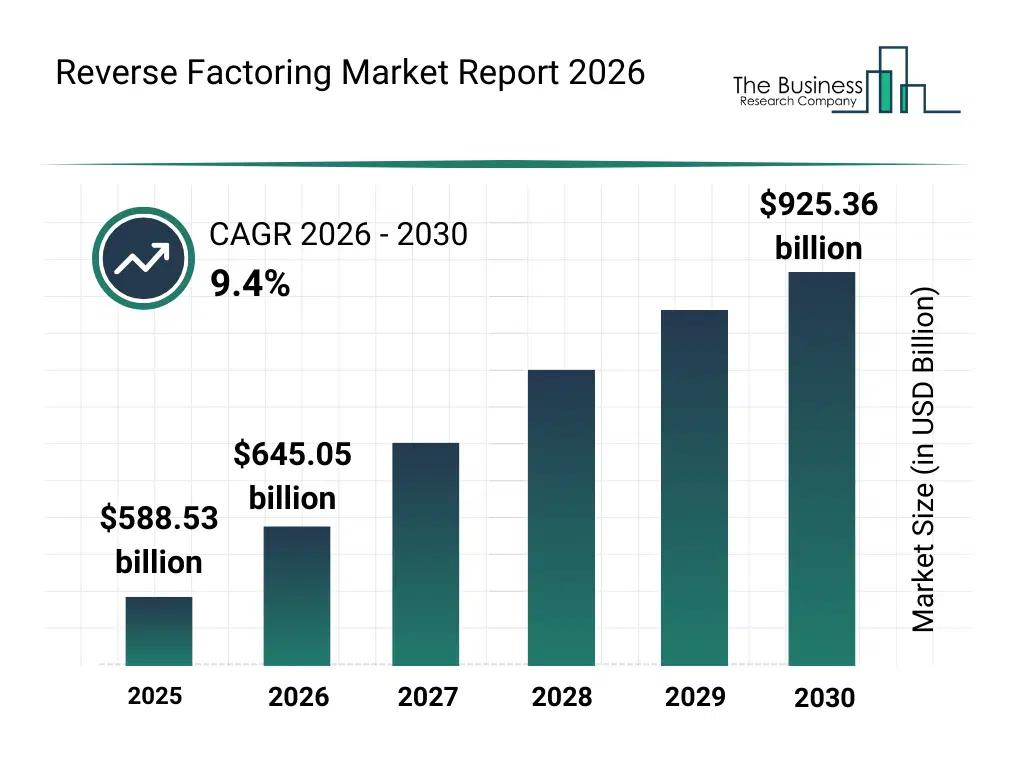
What Is The Reverse Factoring Market Size and Share 2026?
The reverse factoring market size has grown strongly in recent years. It will grow from $588.53 billion in 2025 to $645.05 billion in 2026 at a compound annual growth rate (CAGR) of 9.6%. The growth in the historic period can be attributed to increasing complexity of global supply chains, rising demand for working capital optimization, expansion of multinational procurement networks, growing reliance on trade finance solutions, increased participation of financial institutions.What Is The Reverse Factoring Market Growth Forecast?
The reverse factoring market size is expected to see strong growth in the next few years. It will grow to $925.36 billion in 2030 at a compound annual growth rate (CAGR) of 9.4%. The growth in the forecast period can be attributed to increasing adoption of digital supply chain finance platforms, rising focus on real-time invoice financing, expansion of global supplier networks, growing integration with enterprise resource planning systems, increasing demand for liquidity risk mitigation. Major trends in the forecast period include increasing adoption of supply chain finance platforms, rising use of digital invoice management systems, growing integration of buyer-led financing models, expansion of cross-border reverse factoring solutions, enhanced focus on supplier liquidity optimization.
Global Reverse Factoring Market Segmentation
1) By Category: Domestic, International 2) By Financial Institution: Banks, Non-Banking Financial Institutions 3) By End-Users: Manufacturing, Transport And Logistics, Information Technology, Healthcare, Construction, Other End-Users Subsegments: 1) By Domestic: Local Supplier Financing, Intra-Country Supply Chain Financing 2) By International: Cross-Border Supplier Financing, Global Supply Chain FinancingWhat Is The Driver Of The Reverse Factoring Market?
The increasing adoption of reverse factoring by manufacturers is expected to propel the growth of the reverse factoring market going forward. Manufacturers are companies that produce goods using labor, machinery, and raw materials, transforming them into finished products for sale. The increasing adoption of reverse factoring by manufacturers is driven by enhancing supplier cash flow and ensuring consistent supply chain operations amid financial challenges. Reverse factoring in manufacturing enhances liquidity for suppliers, reduces payment disputes, and stabilizes production schedules. For instance, in November 2024, according to the Office for National Statistics, a UK-based government department, the net rate of return for manufacturing companies in Quarter 2 of 2024 was 7.3%, reflecting a modest increase of 0.1 percentage points from the 7.2% recorded in Quarter 1 of 2024. Therefore, the increasing adoption of reverse factoring by manufacturers is driving the growth of the reverse factoring industry.Key Players In The Global Reverse Factoring Market
Major companies operating in the reverse factoring market are ICBC China Limited, JPMorgan Chase & Co., Bank of America Corporation, Banco Santander S.A., HSBC Holdings plc, Citigroup Inc., Wells Fargo & Company, Banco do Brasil S.A., ING Groep N.V., Barclays plc, Societe Generale SA, Banco Bilbao Vizcaya Argentaria S.A., Deutsche Bank AG, Sumitomo Mitsui Banking Corporation, UniCredit S.p.A., Mizuho Financial Group Inc., Standard Chartered PLC, KBC Group NV, CaixaBank S.A., Accion International, PrimeRevenue Inc., Drip Capital Inc., Viva Capital Funding LLC, eFactor Network S.A.P.I. de C.V., Tradewind GmbH
This chart is for illustrative purposes; the full report includes a detailed competitor analysis and comprehensive overview of the top 10 companies in the market.
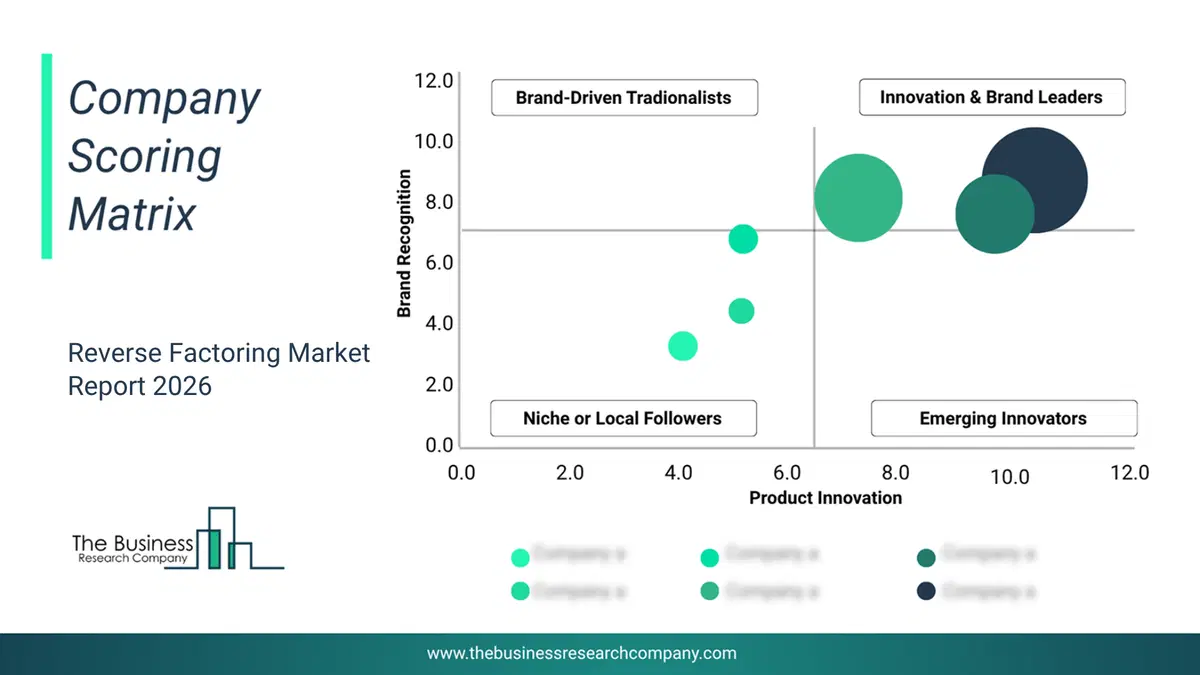
This chart maps companies by product innovation and brand strength, with bubble size indicating relative revenue, helping identify market leaders, challengers, and niche players. This is an illustrative chart; the full report provides a complete and accurate competitive analysis.
Global Reverse Factoring Market Trends and Insights
Major companies operating in the reverse factoring market are focusing on developing advanced solutions such as digital supply chain finance platforms to enhance liquidity and reduce financing costs for small and medium-sized enterprises. A digital supply chain finance platform integrates trade finance systems with specialized fintech technology to streamline financing processes enable earlier invoice payment improve operational efficiency and support seamless stakeholder integration. For instance, in July 2025, The Housing Bank for Trade and Finance,a US-based financial institution Company launched Jordan’s first supply chain finance program for reverse factoring featuring an integration of its trade finance system with CreditPlus which is the country’s first digital platform dedicated to supply chain finance. The program offers a range of digital trade finance solutions including invoice financing and reverse factoring that help SMEs improve liquidity accelerate growth and enhance competitiveness by enabling suppliers to collect payments earlier at lower cost based on confirmed transactions and buyer credit standing without traditional guarantees or credit limits. The platform also supports digitization of financial and commercial operations for SME suppliers enhances operational efficiency improves invoice management and reduces operational risks.What Are Latest Mergers And Acquisitions In The Reverse Factoring Market?
In February 2025, Fidelity National Information Services Inc. a US-based Technology company acquired Demica for an undisclosed amount. Through this acquisition, FIS aims to strengthen its reverse factoring and receivables finance offerings by integrating Demica’s cloud-based supply chain finance platform, enabling banks and corporates to optimize working capital and streamline payables finance programs. Demica Limited is a UK-based provider of supply chain finance and reverse factoring technology platforms, offering solutions for payables finance, receivables finance, and securitization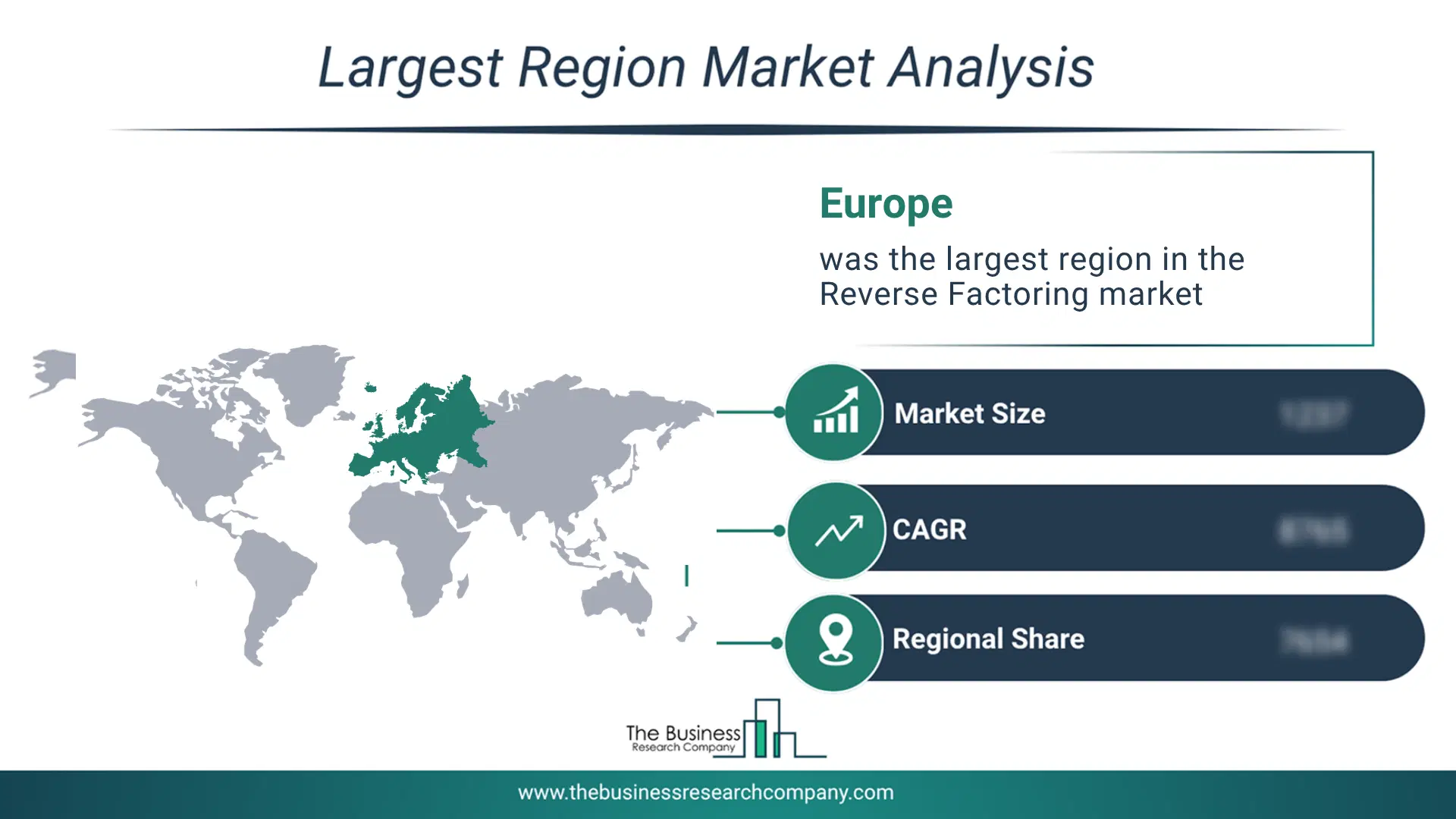
Regional Outlook
Europe was the largest region in the reverse factoring market in 2025. The regions covered in this market report are Asia-Pacific, South East Asia, Western Europe, Eastern Europe, North America, South America, Middle East, Africa. The countries covered in this market report are Australia, Brazil, China, France, Germany, India, Indonesia, Japan, Taiwan, Russia, South Korea, UK, USA, Canada, Italy, Spain.What Defines the Reverse Factoring Market?
The reverse factoring market includes revenues earned by entities by providing services such as discount fees, additional service fees, and volume-based fees. The market value includes the value of related goods sold by the service provider or included within the service offering. Only goods and services traded between entities or sold to end consumers are included.How is Market Value Defined and Measured?
The market value is defined as the revenues that enterprises gain from the sale of goods and/or services within the specified market and geography through sales, grants, or donations in terms of the currency (in USD unless otherwise specified). The revenues for a specified geography are consumption values that are revenues generated by organizations in the specified geography within the market, irrespective of where they are produced. It does not include revenues from resales along the supply chain, either further along the supply chain or as part of other products.
This chart presents market attractiveness based on a quantitative evaluation of growth, competition, strategic alignment, and risk, offering a clear view of opportunity areas for decision-making. This chart is for illustrative purposes; the full report contains the complete analysis.

This chart highlights the Total Addressable Market (TAM) by estimating the maximum revenue opportunity using an assumption-driven approach, supporting strategic planning and opportunity sizing across markets. The chart is illustrative; the full report provides a more comprehensive analysis.
What Key Data and Analysis Are Included in the Reverse Factoring Market Report 2026?
The reverse factoring market research report is one of a series of new reports from The Business Research Company that provides market statistics, including Market Report 2026?global market size, regional shares, competitors with the market share, detailed market segments, market trends and opportunities, and any further data you may need to thrive in the reverse factoring Market Report 2026? The market research report delivers a complete perspective of everything you need, with an in-depth analysis of the current and future state of the Market Report 2026?Reverse Factoring Market Report Forecast Analysis
| Report Attribute | Details |
|---|---|
| Market Size Value In 2026 | $645.05 billion |
| Revenue Forecast In 2030 | $925.36 billion |
| Growth Rate | CAGR of 9.6% from 2026 to 2030 |
| Base Year For Estimation | 2025 |
| Actual Estimates/Historical Data | 2020-2025 |
| Forecast Period | 2026 - 2030 |
| Market Representation | Revenue in USD Billion and CAGR from 2026 to 2030 |
| Segments Covered | Category, Financial Institution, End-Users |
| Regional Scope | Asia-Pacific, Western Europe, Eastern Europe, North America, South America, Middle East, Africa |
| Country Scope | The countries covered in the report are Australia, Brazil, China, France, Germany, India, Indonesia, Japan, Taiwan, Russia, South Korea, UK, USA, Canada, Italy, Spain. |
| Key Companies Profiled | ICBC China Limited, JPMorgan Chase & Co., Bank of America Corporation, Banco Santander S.A., HSBC Holdings plc, Citigroup Inc., Wells Fargo & Company, Banco do Brasil S.A., ING Groep N.V., Barclays plc, Societe Generale SA, Banco Bilbao Vizcaya Argentaria S.A., Deutsche Bank AG, Sumitomo Mitsui Banking Corporation, UniCredit S.p.A., Mizuho Financial Group Inc., Standard Chartered PLC, KBC Group NV, CaixaBank S.A., Accion International, PrimeRevenue Inc., Drip Capital Inc., Viva Capital Funding LLC, eFactor Network S.A.P.I. de C.V., Tradewind GmbH |
| Customization Scope | Request for Customization |
| Pricing And Purchase Options | Explore Purchase Options |