
Reverse-Logistics Sorting-Display Market Report 2026
Global Outlook – By Component (Services; Hardware; Software), By Sorting Technology (Semi-Automated Sorting; Automated Sorting; Manual Sorting), By Application (Pharmaceuticals; E-commerce; Retail; Automotive; Electronics), By End-User (Retailers; Third-Party Logistics Providers; Manufacturers) – Market Size, Trends, Strategies, and Forecast to 2030
Reverse-Logistics Sorting-Display Market Overview
• Reverse-Logistics Sorting-Display market size has reached to $2.86 billion in 2025 • Expected to grow to $5.15 billion in 2030 at a compound annual growth rate (CAGR) of 12.4% • Growth Driver: Exponential Rise In E-Commerce Returns Driving The Market Growth Due To Increasing Demand For Sorting And Display Solutions • North America was the largest region in 2025 and Asia-Pacific is the fastest growing region.What Is Covered Under Reverse-Logistics Sorting-Display Market?
Reverse-logistics sorting-display is a structured method for arranging returned goods in a clear and organized way so they can be quickly identified, classified, and directed according to their condition, intended destination, or required handling step. It enables smoother processing that facilitates reuse, resale, recycling, refurbishment, or responsible disposal while reducing errors and saving time. The clear and systematic organization of categories supports faster decisions, increases operational efficiency, and enhances the overall flow of reverse logistics activities. The main components of reverse-logistics sorting-display are services, hardware, and software. Services in reverse logistics ensure that returned hardware and software operate efficiently, remain reliable, and optimize cost and throughput. They use sorting technologies such as semi-automated sorting, automated sorting, and manual sorting. They are used for applications including pharmaceuticals, e-commerce, retail, automotive, and electronics, and are utilized by end-users such as retailers, third-party logistics (3PL) providers, and manufacturers.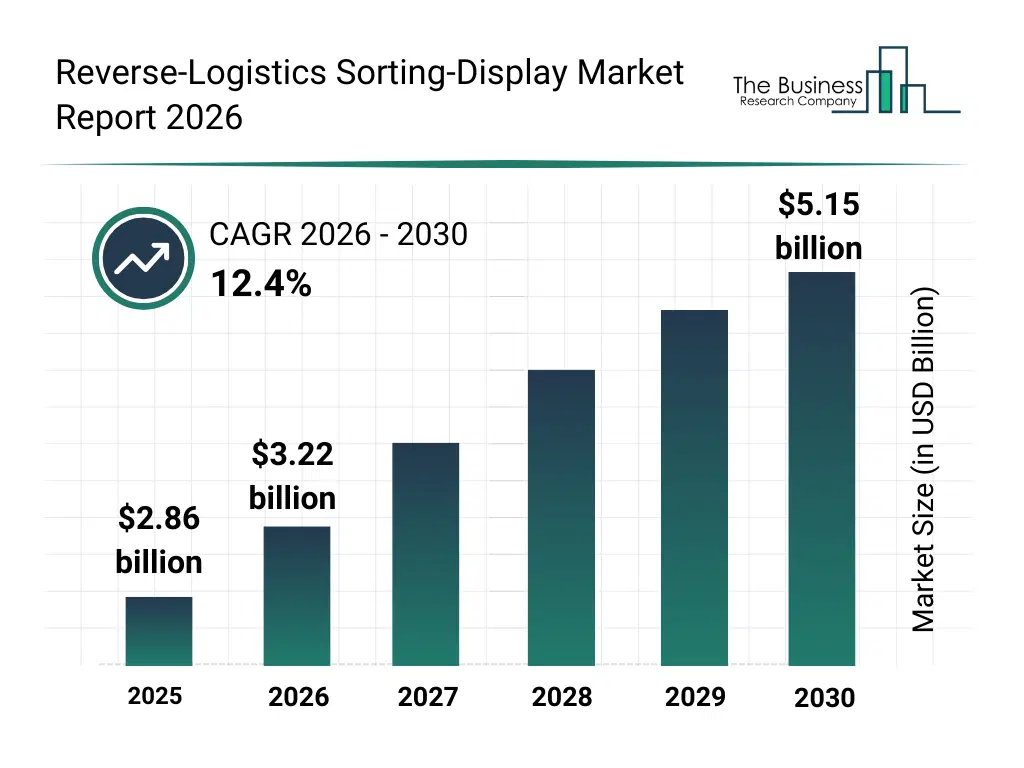
What Is The Reverse-Logistics Sorting-Display Market Size and Share 2026?
The reverse-logistics sorting-display market size has grown rapidly in recent years. It will grow from $2.86 billion in 2025 to $3.22 billion in 2026 at a compound annual growth rate (CAGR) of 12.7%. The growth in the historic period can be attributed to expansion of e-commerce return volumes, growth in omnichannel retail operations, increasing emphasis on resale and refurbishment, adoption of barcode and tracking systems, rising complexity of return workflows.What Is The Reverse-Logistics Sorting-Display Market Growth Forecast?
The reverse-logistics sorting-display market size is expected to see rapid growth in the next few years. It will grow to $5.15 billion in 2030 at a compound annual growth rate (CAGR) of 12.4%. The growth in the forecast period can be attributed to growing investments in circular economy logistics, rising adoption of ai-assisted returns processing, expansion of automated reverse logistics facilities, increasing focus on cost recovery from returned goods, higher demand for real-time return visibility. Major trends in the forecast period include increasing adoption of structured return classification systems, rising use of automated sorting and display interfaces, growing integration of condition-based routing logic, expansion of centralized reverse logistics hubs, enhanced focus on error reduction in returns processing.
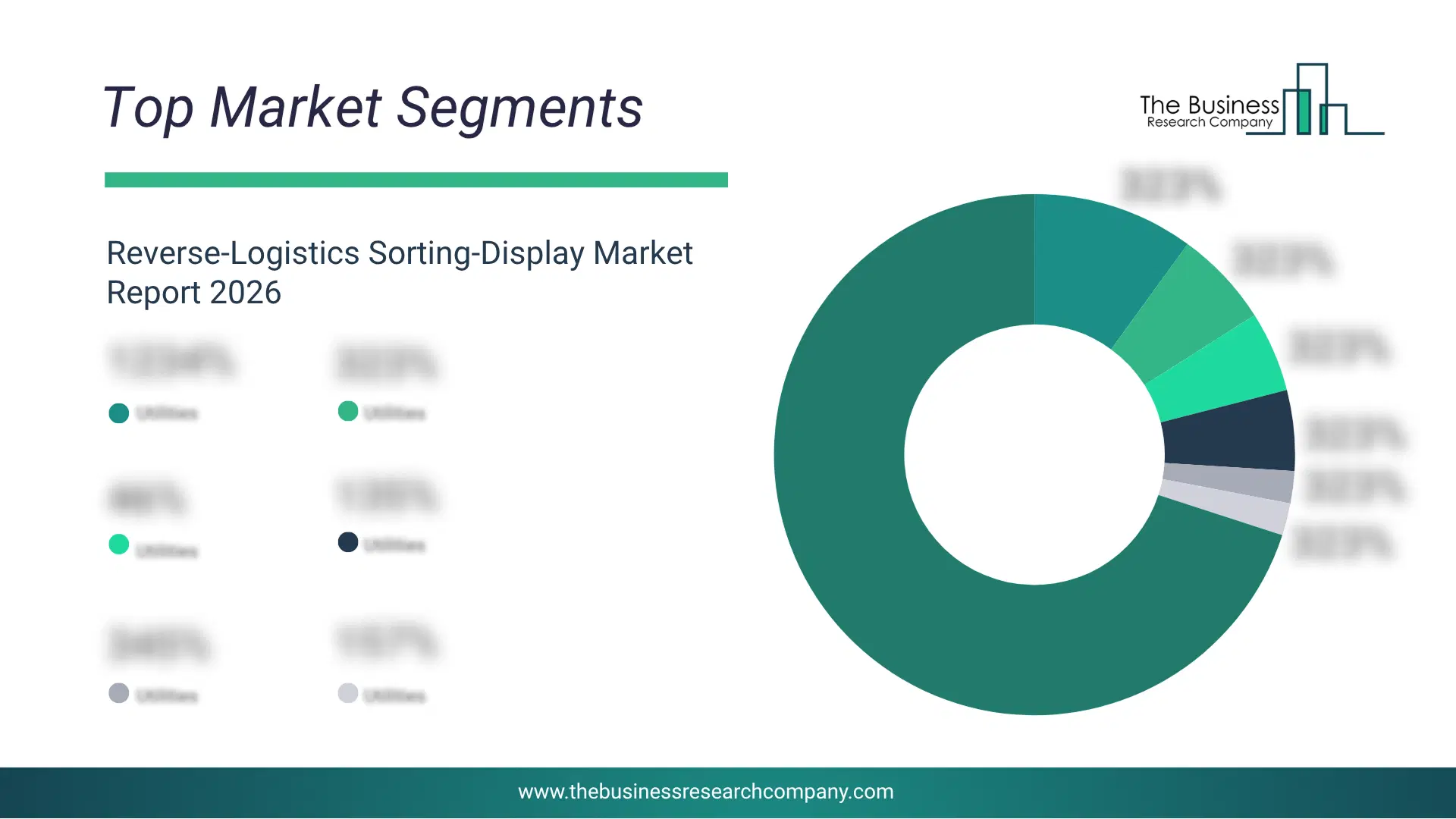
Global Reverse-Logistics Sorting-Display Market Segmentation
1) By Component: Services, Hardware, Software 2) By Sorting Technology: Semi-Automated Sorting, Automated Sorting, Manual Sorting 3) By Application: Pharmaceuticals, E-commerce, Retail, Automotive, Electronics 4) By End-User: Retailers, Third-Party Logistics Providers, Manufacturers Subsegments: 1) By Services: Transportation Services, Warehousing Services, Inventory Management Services, Packaging Services, Other Service Types 2) By Hardware: Sorting Equipment, Conveyor Systems, Barcode Scanners, Storage Racks 3) By Software: Inventory Management Software, Tracking And Monitoring Software, Route Optimization Software, Logistics Management SoftwareWhat Are The Drivers Of The Reverse-Logistics Sorting-Display Market?
The exponential rise in e-commerce returns is expected to propel the growth of the reverse-logistics sorting-display market going forward. E-commerce returns refer to products purchased online that customers send back to retailers due to reasons such as wrong size, defects, or dissatisfaction. E-commerce returns are rising due to the growth of online shopping, as increased digital transactions lead to higher volumes of merchandise being returned and requiring processing. Reverse-logistics sorting-display helps e-commerce returns by streamlining the classification and organization of returned items, enabling faster processing, reducing operational costs, improving inventory management, and ultimately enhancing customer satisfaction through quicker refunds or exchanges. For instance, in December 2024, according to the National Retail Federation, a US-based retail industry trade association, total retail returns increased from $816 billion in 2022 to $890 billion projected in 2024, reflecting a substantial rise in returned merchandise. Therefore, the exponential rise in e-commerce returns is driving the growth of the reverse-logistics sorting-display industry. The increasing emphasis on sustainability and circular economy practices is expected to propel the growth of the reverse-logistics sorting-display market going forward. Sustainability and circular economy practices refer to systematic approaches that prioritize resource efficiency, waste reduction, and the reuse of materials to minimize environmental impact. The growing emphasis on sustainability is due to stricter environmental regulations, as governments implement binding targets and policies to transition from linear 'take-make-dispose' models to circular economic systems. Rising emphasis on sustainability and circular economy practices drives the adoption of reverse-logistics sorting-display systems by incentivizing businesses to efficiently recover, sort, and repurpose returned or end-of-life products, thereby minimizing waste, reducing resource consumption, and creating closed-loop supply chains that align environmental responsibility with operational efficiency. For instance, in November 2024, according to the London Borough of Hounslow, a UK-based local government authority responsible for environmental and waste management services, recycling levels increased by 5% between October 2022 and September 2023. Therefore, the increasing emphasis on sustainability and circular economy practices is driving the growth of the reverse-logistics sorting-display industry.Key Players In The Global Reverse-Logistics Sorting-Display Market
Major companies operating in the reverse-logistics sorting-display market are FedEx Corporation, United Parcel Service Inc., Deutsche Post AG (DHL Supply Chain), XPO Logistics Inc., C.H. Robinson Worldwide Inc., Ryder System Inc., GEODIS SA, ALOM Technologies Inc., Kuehne + Nagel International AG, CEVA Logistics AG, Reverse Logistics Group Inc. (RLG), Hollingsworth & Vose Company, Iron Mountain Incorporated, B-Stock Solutions Inc., Optoro Inc., Inmar Intelligence Inc., ReturnLogic Inc., GXO Logistics Inc., LiquiDonate Inc., Productiv Inc.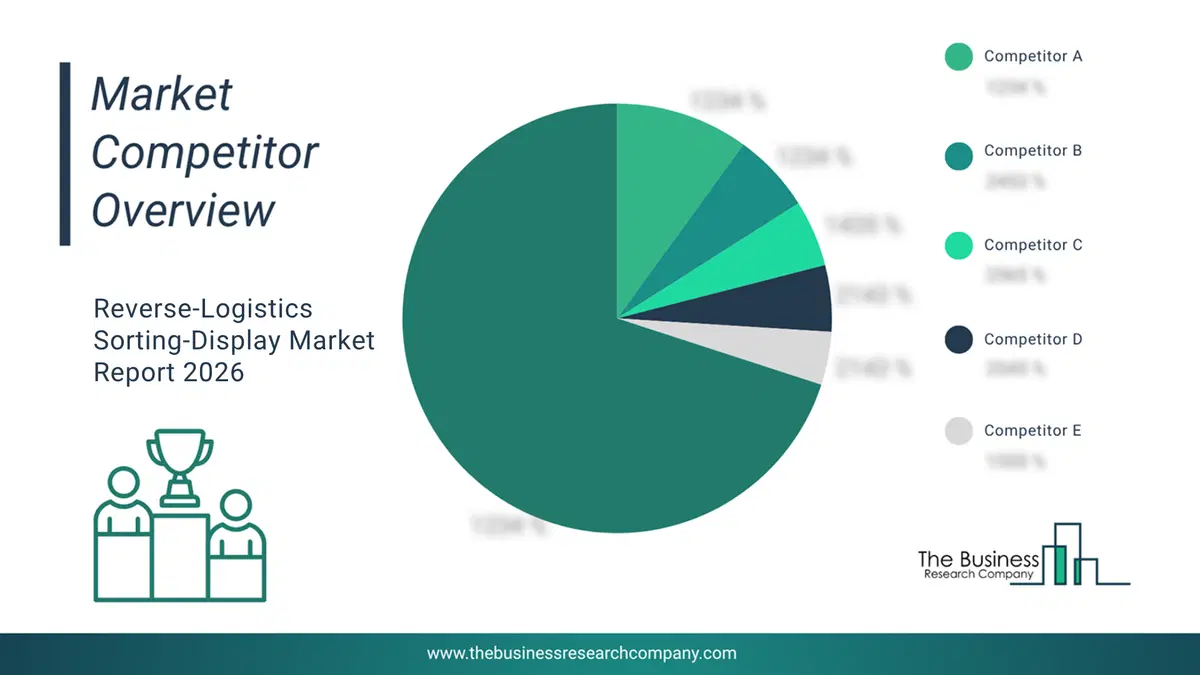
This chart is for illustrative purposes; the full report includes a detailed competitor analysis and comprehensive overview of the top 10 companies in the market.
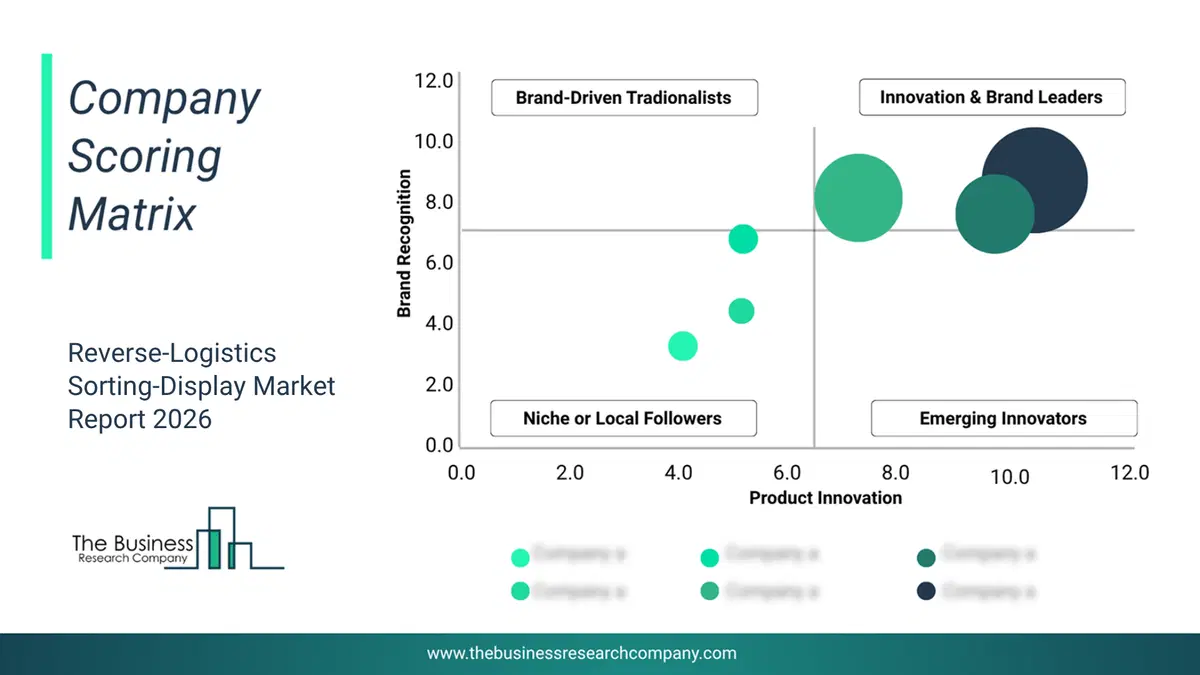
This chart maps companies by product innovation and brand strength, with bubble size indicating relative revenue, helping identify market leaders, challengers, and niche players. This is an illustrative chart; the full report provides a complete and accurate competitive analysis.
What Are Latest Mergers And Acquisitions In The Reverse-Logistics Sorting-Display Market?
In October 2023, United Parcel Service Inc. (UPS), a US-based logistics company, acquired Happy Returns Inc. from PayPal Holdings Inc. for an undisclosed amount. With this acquisition, UPS aims to expand its returns footprint and enhance digital solutions for shippers and consumers by providing more convenient, box-free, and label-free return options, leveraging Happy Returns’ software and reverse logistics capabilities along with UPS’s extensive network of store locations to create a faster, more efficient, and sustainable returns process. Happy Returns, Inc. is a US-based software and reverse logistics company that specializes in providing reverse-logistics sorting-display.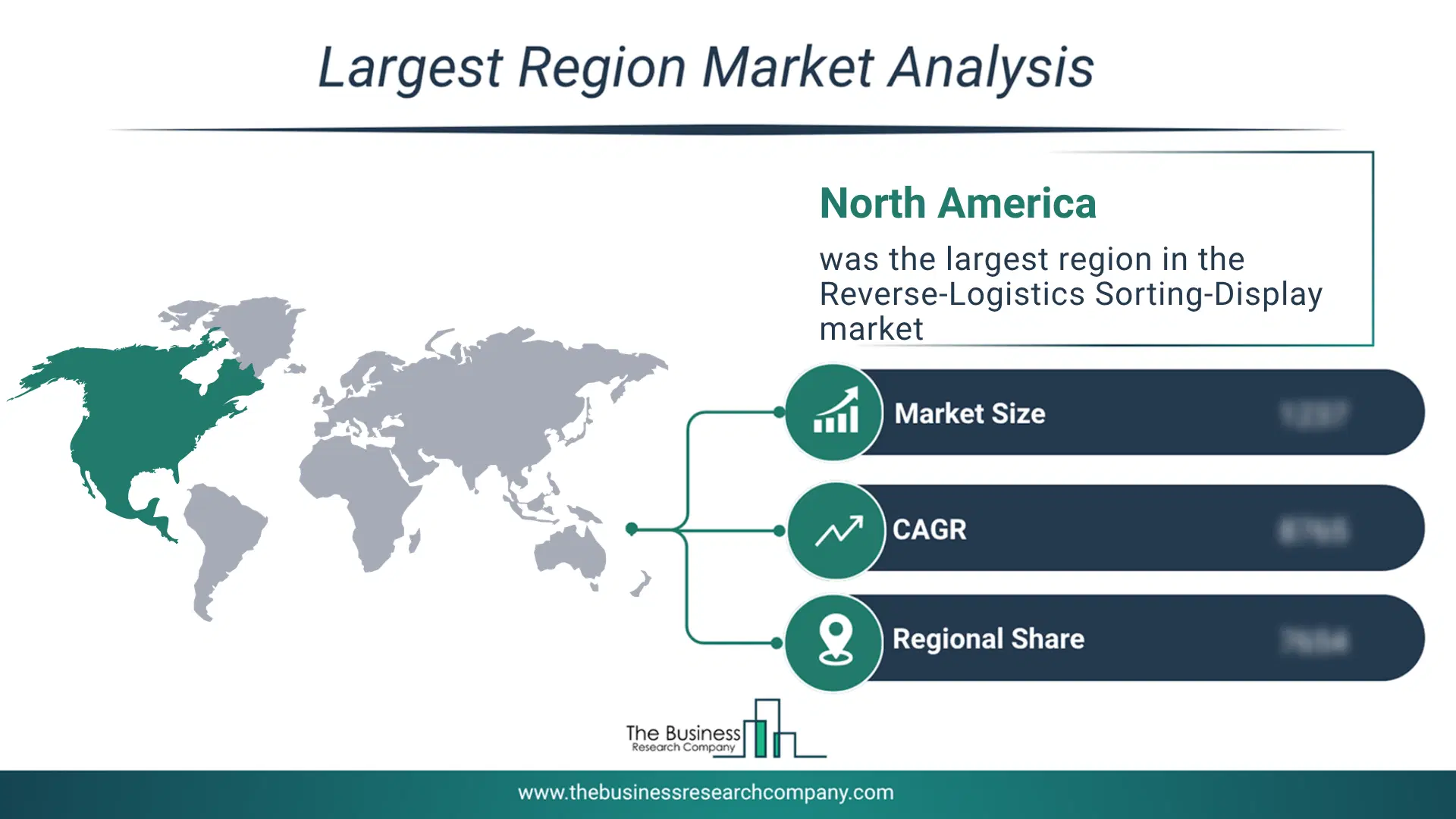
Regional Outlook
North America was the largest region in the reverse-logistics sorting-display market in 2025. Asia-Pacific is expected to be the fastest-growing region in the forecast period. The regions covered in this market report are Asia-Pacific, South East Asia, Western Europe, Eastern Europe, North America, South America, Middle East, Africa. The countries covered in this market report are Australia; Brazil; China; France; Germany; India; Indonesia; Japan; Taiwan; Russia; South Korea; UK; USA; Canada; Italy; Spain.What Defines the Reverse-Logistics Sorting-Display Market?
The reverse-logistics sorting-display market includes revenues earned by entities by providing services such as return management systems, sorting automation, inventory visibility solutions, waste reduction services, and sustainability-driven reverse supply chain operations. The reverse-logistics sorting-display market also includes sales of touchscreen displays, barcode scanners, industrial PCs, and networked sensors. Values in this market are ‘factory gate’ values, that is the value of goods sold by the manufacturers or creators of the goods, whether to other entities (including downstream manufacturers, wholesalers, distributors and retailers) or directly to end customers. The value of goods in this market includes related services sold by the creators of the goods.How is Market Value Defined and Measured?
The market value is defined as the revenues that enterprises gain from the sale of goods and/or services within the specified market and geography through sales, grants, or donations in terms of the currency (in USD unless otherwise specified). The revenues for a specified geography are consumption values that are revenues generated by organizations in the specified geography within the market, irrespective of where they are produced. It does not include revenues from resales along the supply chain, either further along the supply chain or as part of other products.
This chart presents market attractiveness based on a quantitative evaluation of growth, competition, strategic alignment, and risk, offering a clear view of opportunity areas for decision-making. This chart is for illustrative purposes; the full report contains the complete analysis.

This chart highlights the Total Addressable Market (TAM) by estimating the maximum revenue opportunity using an assumption-driven approach, supporting strategic planning and opportunity sizing across markets. The chart is illustrative; the full report provides a more comprehensive analysis.
What Key Data and Analysis Are Included in the Reverse-Logistics Sorting-Display Market Report 2026?
The reverse-logistics sorting-display market research report is one of a series of new reports from The Business Research Company that provides market statistics, including Market Report 2026?global market size, regional shares, competitors with the market share, detailed market segments, market trends and opportunities, and any further data you may need to thrive in the reverse-logistics sorting-display Market Report 2026? The market research report delivers a complete perspective of everything you need, with an in-depth analysis of the current and future state of the Market Report 2026?Reverse-Logistics Sorting-Display Market Report Forecast Analysis
| Report Attribute | Details |
|---|---|
| Market Size Value In 2026 | $3.22 billion |
| Revenue Forecast In 2030 | $5.15 billion |
| Growth Rate | CAGR of 12.7% from 2026 to 2030 |
| Base Year For Estimation | 2025 |
| Actual Estimates/Historical Data | 2020-2025 |
| Forecast Period | 2026 - 2030 - 2030 |
| Market Representation | Revenue in USD Billion and CAGR from 2026 to 2030 |
| Segments Covered | Component, Sorting Technology, Application, End-User |
| Regional Scope | Asia-Pacific, Western Europe, Eastern Europe, North America, South America, Middle East, Africa |
| Country Scope | The countries covered in the report are Australia, Brazil, China, France, Germany, India, Indonesia, Japan, Taiwan, Russia, South Korea, UK, USA, Canada, Italy, Spain. |
| Key Companies Profiled | FedEx Corporation, United Parcel Service Inc., Deutsche Post AG (DHL Supply Chain), XPO Logistics Inc., C.H. Robinson Worldwide Inc., Ryder System Inc., GEODIS SA, ALOM Technologies Inc., Kuehne + Nagel International AG, CEVA Logistics AG, Reverse Logistics Group Inc. (RLG), Hollingsworth & Vose Company, Iron Mountain Incorporated, B-Stock Solutions Inc., Optoro Inc., Inmar Intelligence Inc., ReturnLogic Inc., GXO Logistics Inc., LiquiDonate Inc., Productiv Inc. |
| Customization Scope | Request for Customization |
| Pricing And Purchase Options | Explore Purchase Options |