

Reversible Airway Diseases Treatment Market Report 2026
Global Outlook – By Treatment (Chest X Ray, Computed Tomography (CT) Scan, Lung Therapies, Surgery Transplant, Medications), By Diseases (Asthma, Chronic Bronchitis, Allergic Rhinitis, Bronchiolitis, Other Diseases), By End-Users (Hospitals, Specialty Clinics, Other End-Users) - Market Size, Trends, Strategies, and Forecast to 2030
Reversible Airway Diseases Treatment Market Overview
• Reversible Airway Diseases Treatment market size has reached to $90.91 billion in 2025 • Expected to grow to $128.39 billion in 2030 at a compound annual growth rate (CAGR) of 7.3% • Growth Driver: Growing Chronic Respiratory Diseases Fuel Reversible Airway Disease Treatment Market • Market Trend: Launch Of Hailie® Digital Sensor With Proair® HFA • North America was the largest region in 2025 and Asia-Pacific is the fastest growing region.What Is Covered Under Reversible Airway Diseases Treatment Market?
Reversible airway diseases are conditions characterized by temporary narrowing of the airways, often due to inflammation and constriction of the smooth muscles surrounding them. The goal of treatment for these conditions is to relieve symptoms such as cough and rash to improve lung function. The main types of treatment for reversible airway disease treatment are chest X-rays, computed tomography (CT) scans, lung therapies, surgery transplants and medications. A chest X-ray is a diagnostic imaging technique that uses a small amount of ionizing radiation to create images of the structures inside the chest, including the heart, lungs and bones. The various diseases include asthma, chronic bronchitis, emphysema, cystic fibrosis, bronchiolitis and others. These are used by various end-users such as hospitals, specialty clinics and others.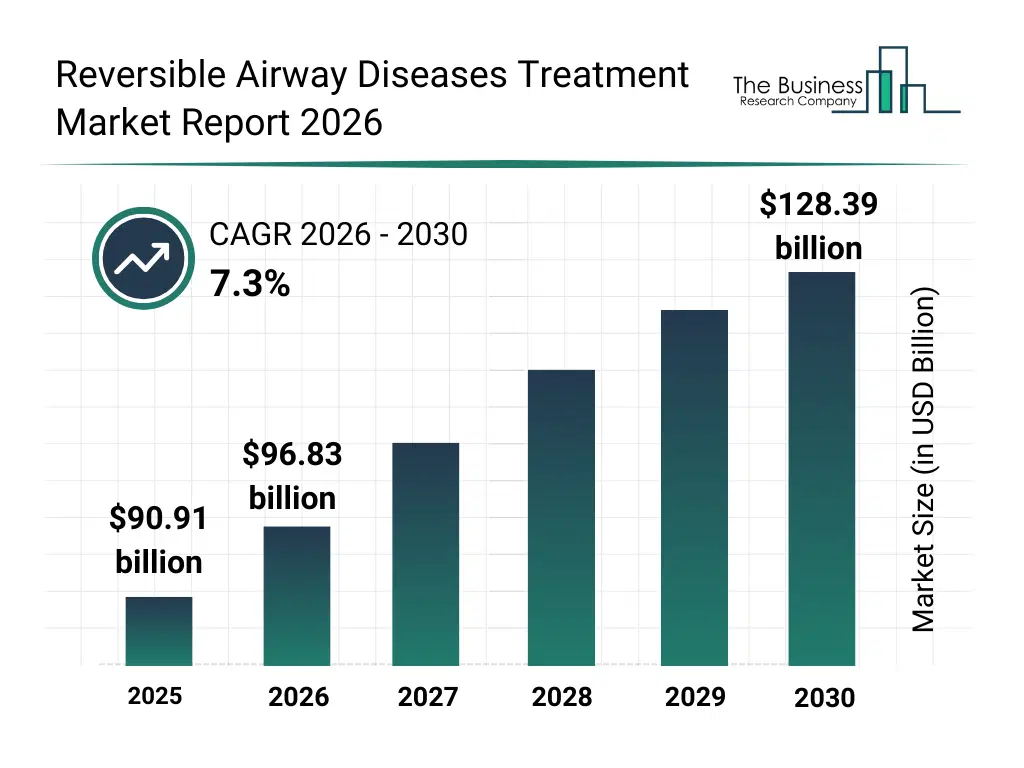
What Is The Reversible Airway Diseases Treatment Market Size and Share 2026?
The reversible airway diseases treatment market size has grown strongly in recent years. It will grow from $90.91 billion in 2025 to $96.83 billion in 2026 at a compound annual growth rate (CAGR) of 6.5%. The growth in the historic period can be attributed to increasing prevalence of asthma and bronchitis, expansion of pulmonary care infrastructure, availability of inhalation therapies, rising environmental pollution levels, improved access to diagnostic imaging.What Is The Reversible Airway Diseases Treatment Market Growth Forecast?
The reversible airway diseases treatment market size is expected to see strong growth in the next few years. It will grow to $128.39 billion in 2030 at a compound annual growth rate (CAGR) of 7.3%. The growth in the forecast period can be attributed to increasing focus on biologic respiratory drugs, rising adoption of remote patient monitoring, expansion of minimally invasive pulmonary procedures, growing emphasis on preventive respiratory care, increasing investment in respiratory disease research. Major trends in the forecast period include increasing adoption of personalized respiratory therapies, rising use of advanced diagnostic imaging, growing focus on early disease detection, expansion of combination drug therapies, enhanced integration of digital pulmonary monitoring.
Global Reversible Airway Diseases Treatment Market Segmentation
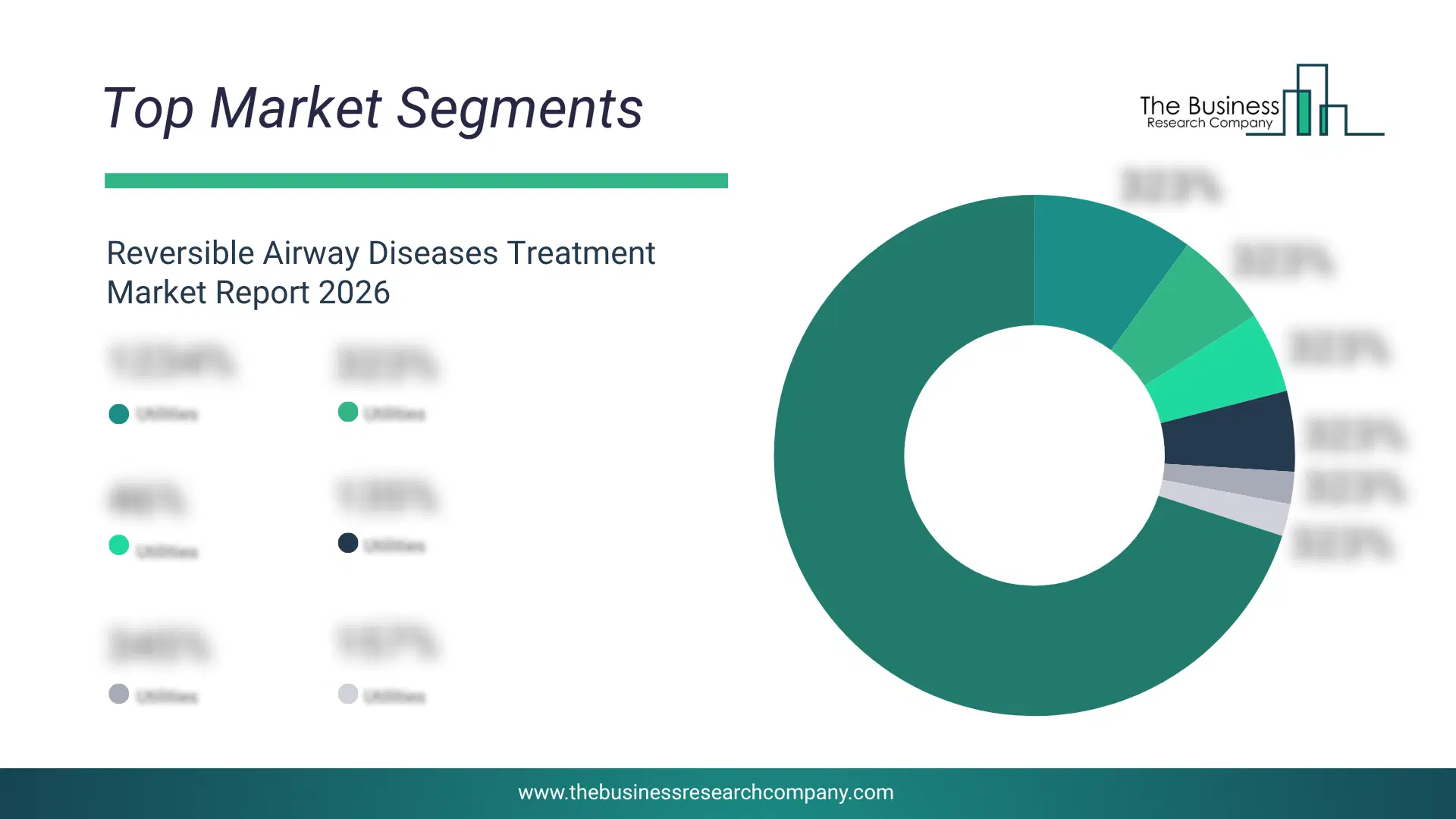
1) By Treatment: Chest X Ray, Computed Tomography (CT) Scan, Lung Therapies, Surgery Transplant, Medications 2) By Diseases: Asthma, Chronic Bronchitis, Allergic Rhinitis, Bronchiolitis, Other Diseases 3) By End-Users: Hospitals, Specialty Clinics, Other End-Users Subsegments: 1) By Chest X-Ray: Standard Chest X-Ray, Digital Chest X-Ray 2) By Computed Tomography (CT) Scan: High-Resolution CT Scan, Spiral CT Scan 3) By Lung Therapies: Inhalation Therapy, Pulmonary Rehabilitation, Oxygen Therapy 4) By Surgery Transplant: Lung Transplant, Bronchoscopic Procedures, Other Surgical Interventions 5) By Medications: Bronchodilators, Corticosteroids, Anticholinergics, Other MedicationsWhat Is The Driver Of The Reversible Airway Diseases Treatment Market?
The growing number of chronic respiratory diseases is expected to propel the growth of the reversible airway disease treatment market going forward. Respiratory diseases are medical conditions that affect the respiratory system, which includes the lungs, bronchi, trachea, larynx, pharynx and nasal passages. Chronic respiratory disease testing and treatment allow for the early detection and diagnosis of respiratory conditions such as acute respiratory distress syndrome and help to prevent the progression by reducing the risk of complications. For instance, in February 2024, according to the UK Health Security Agency, a UK-based government agency, tuberculosis (TB) cases in England increased by 10.7% in 2023, rising from 4,380 in 2022 to 4,850. This represents a notable uptick in TB incidence over the course of the year. Therefore, the growing number of chronic respiratory diseases is expected to propel the growth of the reversible airway disease treatment market.Key Players In The Global Reversible Airway Diseases Treatment Market
Major companies operating in the reversible airway diseases treatment market are Pfizer Inc., F Hoffmann La Roche AG, Merck And Co Inc., AbbVie Inc., Novartis AG, Sanofi SA, GlaxoSmithKline Plc, Medtronic plc, Eli Lilly And Company, Boehringer Ingelheim International GmbH, Viatris Inc., Teva Pharmaceutical Industries Ltd, Sumitomo Dainippon Pharma Co Ltd, Sun Pharmaceutical Industries Ltd, Drägerwerk AG And Co KGaA, Dr Reddys Laboratories Ltd, Cipla Limited, Getinge AB, Hikma Pharmaceuticals plc, Amneal Pharmaceuticals LLC, Lupin Limited, Fisher And Paykel Healthcare Corporation Limited, AstraZeneca Plc, Chiesi Farmaceutici SpA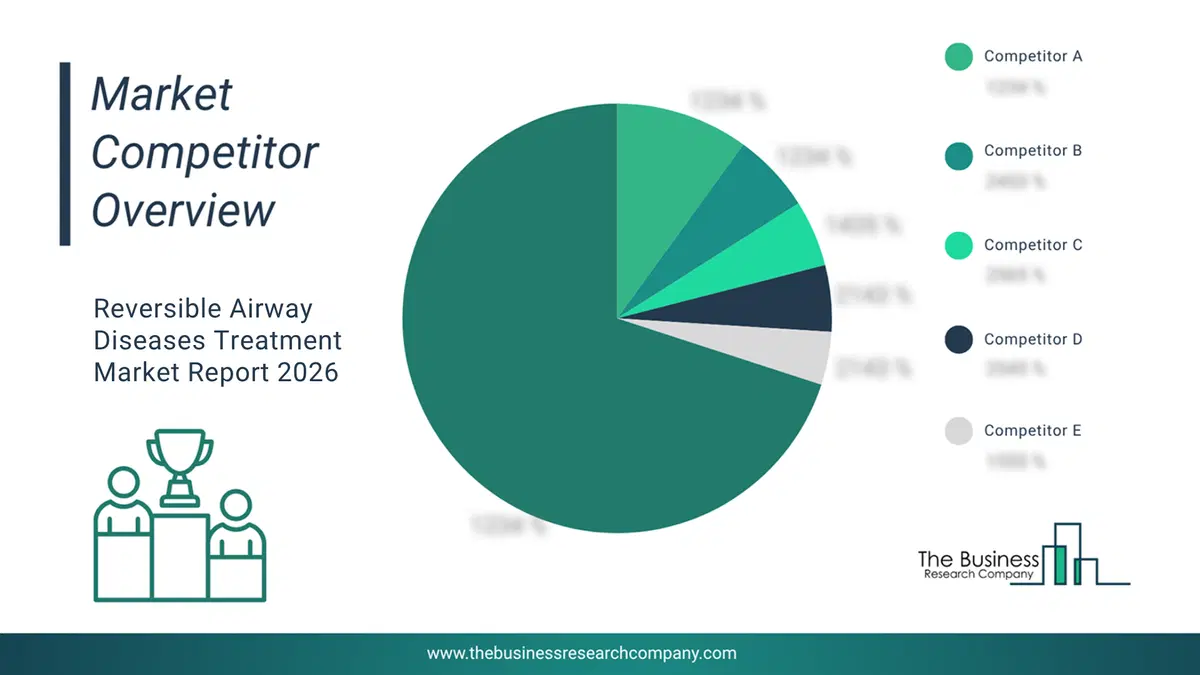
This chart is for illustrative purposes; the full report includes a detailed competitor analysis and comprehensive overview of the top 10 companies in the market.
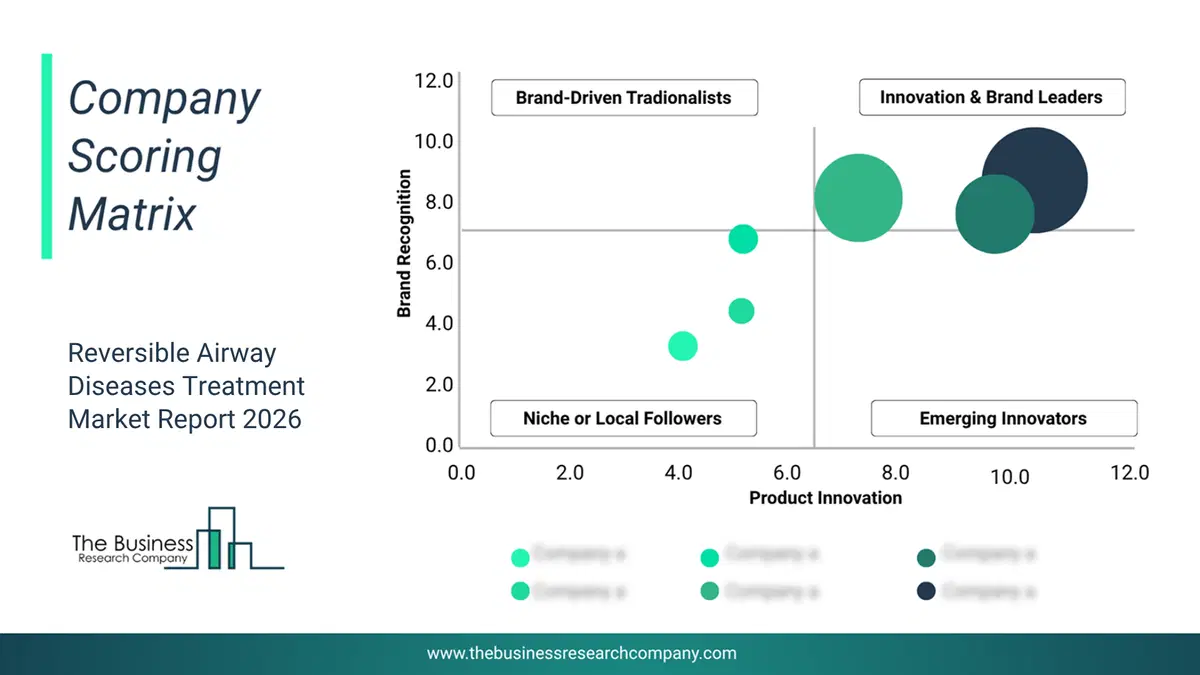
This chart maps companies by product innovation and brand strength, with bubble size indicating relative revenue, helping identify market leaders, challengers, and niche players. This is an illustrative chart; the full report provides a complete and accurate competitive analysis.
Global Reversible Airway Diseases Treatment Market Trends and Insights
Major companies operating in the reversible airway disease treatment market are focusing on developing advanced digital sensor solutions to enhance patient monitoring and care. Digital sensor technology captures real-time physiological parameters and medication usage data, allowing healthcare providers to remotely track patient inhaler adherence and technique. For instance, in March 2023, Adherium Limited, an Australia-based digital health company, received U.S. FDA 510(k) clearance for its next-generation Hailie sensor integrated with Teva’s ProAir HFA and Albuterol Sulphate inhalers. The Hailie sensor provides comprehensive insights into inhaler use and physiological parameters, enabling physicians to monitor both maintenance and rescue medications. It delivers real-time feedback on inhaler technique, supports clinical decision-making, and facilitates remote patient monitoring under U.S. CMS reimbursement codes. The device allows doctors to maintain control over medication decisions while accessing actionable data to improve patient outcomes. Adherium’s solution is compatible with multiple inhalers, covering a significant portion of top U.S. branded medications, and integrates seamlessly with mobile and desktop applications, offering a drug-agnostic platform for enhanced respiratory disease management.What Are Latest Mergers And Acquisitions In The Reversible Airway Diseases Treatment Market?
In February 2024, GSK PLC, a UK-based pharmaceuticals and vaccine company, acquired Aiolos Bio Inc. for $1.4 billion. With this acquisition, GSK aims to enhance its respiratory portfolio and gain access to innovative asthma therapies, strengthening its position in the reversible airway disease treatment market. Aiolos Bio Inc. is a US-based company focused on developing novel asthma treatments.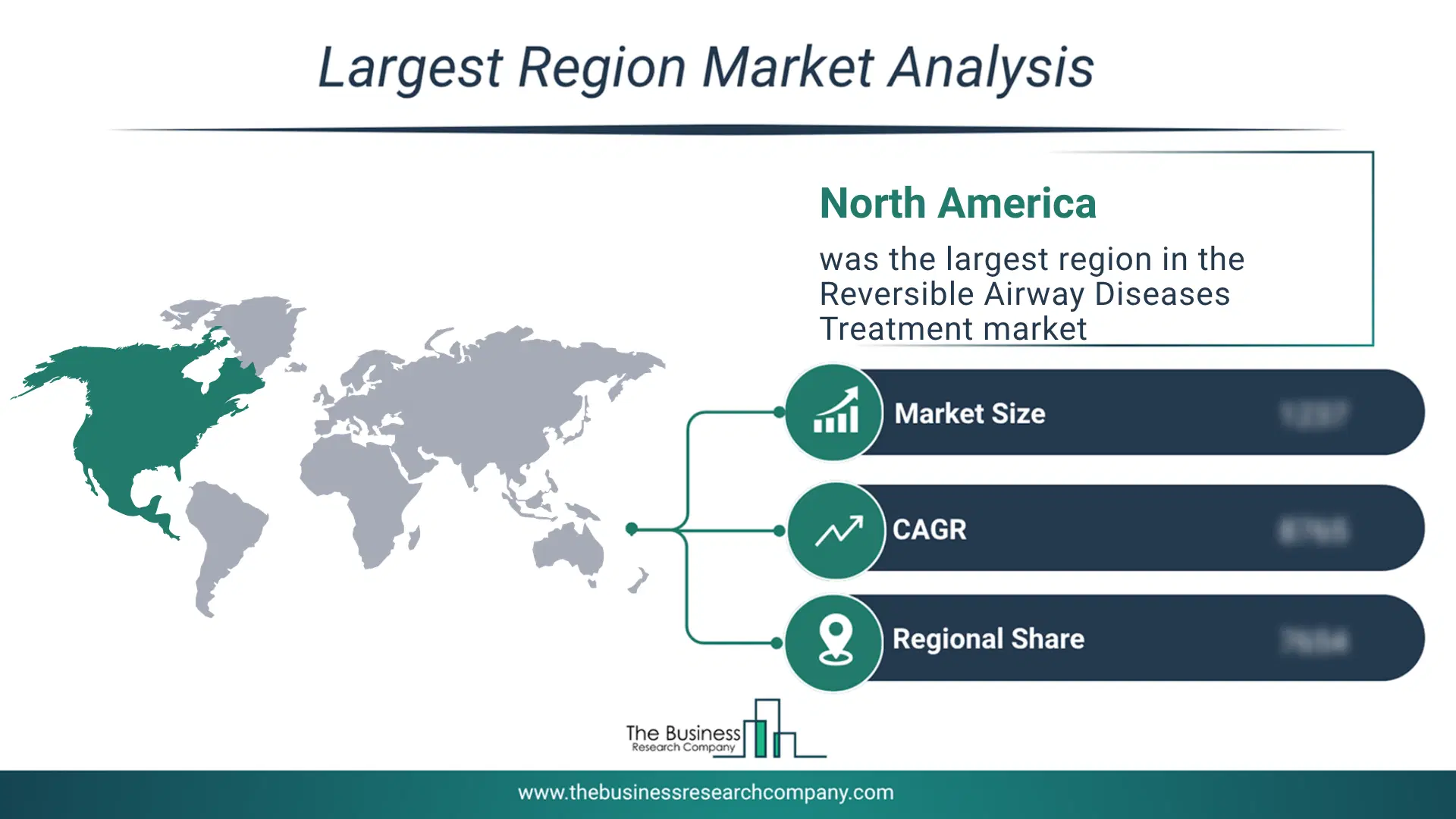
Regional Outlook
North America was the largest region in the reversible airway diseases treatment market in 2025. Asia-Pacific is expected to be the fastest-growing region in the forecast period. The regions covered in this market report are Asia-Pacific, South East Asia, Western Europe, Eastern Europe, North America, South America, Middle East, Africa. The countries covered in this market report are Australia, Brazil, China, France, Germany, India, Indonesia, Japan, Taiwan, Russia, South Korea, UK, USA, Canada, Italy, Spain.What Defines the Reversible Airway Diseases Treatment Market?
The reversible airway disease treatment market consists of sales of biological therapies and oxygen therapies. The market value includes the value of related goods sold by the service provider or included within the service offering. The reversible airway disease treatment market also includes sales of anti-inflammatory drugs, monoclonal antibody drugs and medical devices such as inhaler devices. Values in this market are ‘factory gate’ values, that is the value of goods sold by the manufacturers or creators of the goods, whether to other entities (including downstream manufacturers, wholesalers, distributors and retailers) or directly to end customers. The value of goods in this market includes related services sold by the creators of the goods.How is Market Value Defined and Measured?
The market value is defined as the revenues that enterprises gain from the sale of goods and/or services within the specified market and geography through sales, grants, or donations in terms of the currency (in USD unless otherwise specified). The revenues for a specified geography are consumption values that are revenues generated by organizations in the specified geography within the market, irrespective of where they are produced. It does not include revenues from resales along the supply chain, either further along the supply chain or as part of other products.
This chart presents market attractiveness based on a quantitative evaluation of growth, competition, strategic alignment, and risk, offering a clear view of opportunity areas for decision-making. This chart is for illustrative purposes; the full report contains the complete analysis.

This chart highlights the Total Addressable Market (TAM) by estimating the maximum revenue opportunity using an assumption-driven approach, supporting strategic planning and opportunity sizing across markets. The chart is illustrative; the full report provides a more comprehensive analysis.
What Key Data and Analysis Are Included in the Reversible Airway Diseases Treatment Market Report 2026?
The reversible airway diseases treatment market research report is one of a series of new reports from The Business Research Company that provides market statistics, including industry global market size, regional shares, competitors with the market share, detailed market segments, market trends and opportunities, and any further data you may need to thrive in the reversible airway diseases treatment industry. The market research report delivers a complete perspective of everything you need, with an in-depth analysis of the current and future state of the industry.Reversible Airway Diseases Treatment Market Report Forecast Analysis
| Report Attribute | Details |
|---|---|
| Market Size Value In 2026 | $96.83 billion |
| Revenue Forecast In 2030 | $128.39 billion |
| Growth Rate | CAGR of 7.3% from 2026 to 2030 |
| Base Year For Estimation | 2025 |
| Actual Estimates/Historical Data | 2020-2025 |
| Forecast Period | 2026 - 2030 |
| Market Representation | Revenue in USD Billion and CAGR from 2026 to 2030 |
| Segments Covered | Treatment, Diseases, End-Users |
| Regional Scope | Asia-Pacific, Western Europe, Eastern Europe, North America, South America, Middle East, Africa |
| Country Scope | The countries covered in the report are Australia, Brazil, China, France, Germany, India, Indonesia, Japan, Taiwan, Russia, South Korea, UK, USA, Canada, Italy, Spain |
| Key Companies Profiled | Pfizer Inc., F Hoffmann La Roche AG, Merck And Co Inc., AbbVie Inc., Novartis AG, Sanofi SA, GlaxoSmithKline Plc, Medtronic plc, Eli Lilly And Company, Boehringer Ingelheim International GmbH, Viatris Inc., Teva Pharmaceutical Industries Ltd, Sumitomo Dainippon Pharma Co Ltd, Sun Pharmaceutical Industries Ltd, Drägerwerk AG And Co KGaA, Dr Reddys Laboratories Ltd, Cipla Limited, Getinge AB, Hikma Pharmaceuticals plc, Amneal Pharmaceuticals LLC, Lupin Limited, Fisher And Paykel Healthcare Corporation Limited, AstraZeneca Plc, Chiesi Farmaceutici SpA |
| Customization Scope | Request for Customization |
| Pricing And Purchase Options | Explore Purchase Options |