

Rhamnolipids Market Report 2026
Global Outlook – By Type (Mono-Rhamnolipids, Di-Rhamnolipids), By Form (Liquid, Powder), By Application (Surfactants, Cosmetics, Agriculture, Other Applications) – Market Size, Trends, Strategies, and Forecast to 2030
Rhamnolipids Market Overview
• Rhamnolipids market size has reached to $2.87 billion in 2025 • Expected to grow to $4.37 billion in 2030 at a compound annual growth rate (CAGR) of 8.6% • Growth Driver: The Role Of Personal Care Products In Expanding The Rhamnolipids Market • Market Trend: Next-Generation Cleaning Solutions Enhanced Efficacy and Sustainability • Asia-Pacific was the largest region and fastest growing region.What Is Covered Under Rhamnolipids Market?
Rhamnolipids are a type of biosurfactant produced by certain bacteria, particularly Pseudomonas aeruginosa. They contain a rhamnose sugar head group linked to one or two fatty acid chains. Rhamnolipids have diverse applications, including as emulsifiers, detergents, and in environmental remediation, due to their ability to lower surface tension and enhance the solubility of hydrophobic compounds. The main types of rhamnolipids are mono-rhamnolipids and di-rhamnolipids. Mono-rhamnolipids refer to a specific type of rhamnolipid molecule that consists of one rhamnose sugar molecule attached to one fatty acid chain. Various product types include rhamnolipids R1, rhamnolipids R2, rhamnolipids R3, and rhamnolipids R4 for different applications such as surfactants, cosmetics, agriculture, food, pharmaceuticals, and others.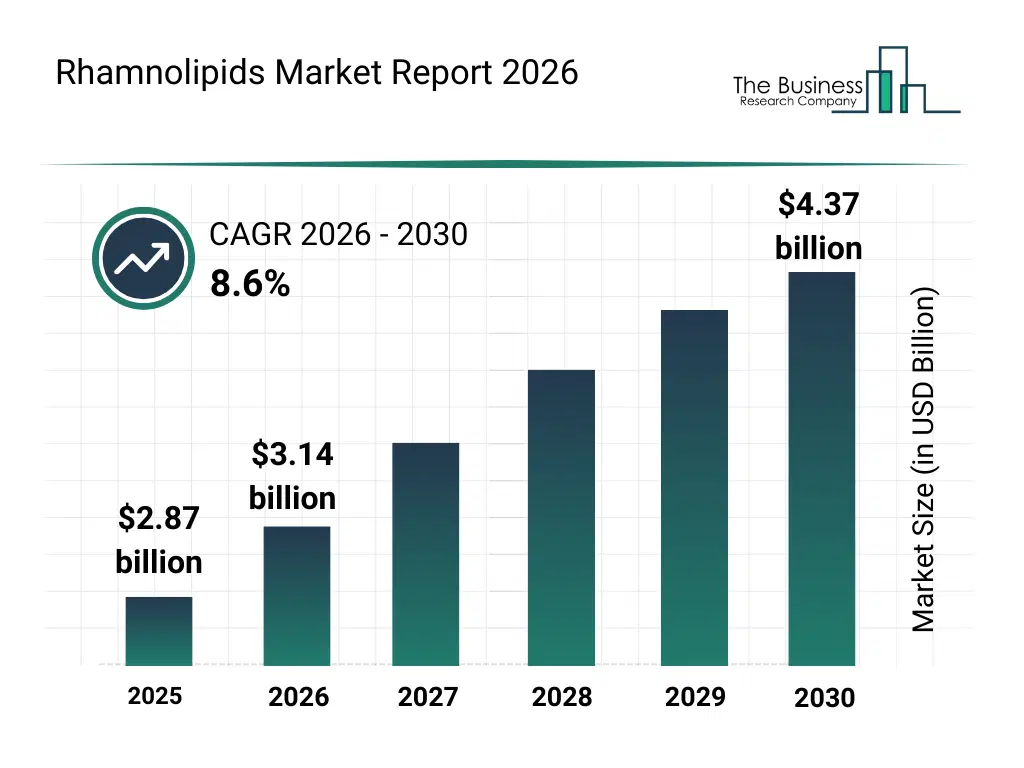
What Is The Rhamnolipids Market Size and Share 2026?
The rhamnolipids market size has grown strongly in recent years. It will grow from $2.87 billion in 2025 to $3.14 billion in 2026 at a compound annual growth rate (CAGR) of 9.7%. The growth in the historic period can be attributed to research in microbial surfactants, demand for eco friendly detergents, use in oil spill remediation, biotechnology advancements, growth of bio-based chemicals.What Is The Rhamnolipids Market Growth Forecast?
The rhamnolipids market size is expected to see strong growth in the next few years. It will grow to $4.37 billion in 2030 at a compound annual growth rate (CAGR) of 8.6%. The growth in the forecast period can be attributed to stricter environmental regulations, expansion of sustainable agriculture, growth of green cosmetics, advances in fermentation technology, rising demand for biodegradable ingredients. Major trends in the forecast period include rising adoption of biosurfactants, growing use in green cleaning products, expansion of agricultural applications, increasing demand for biodegradable surfactants, focus on microbial fermentation scaling.
Global Rhamnolipids Market Segmentation
1) By Type: Mono-Rhamnolipids, Di-Rhamnolipids 2) By Form: Liquid, Powder 3) By Application: Surfactants, Cosmetics, Agriculture, Other Applications Subsegments: 1) By Mono-Rhamnolipids: Rhamnolipid C10 (Mono-Rhamnolipid With 10-Carbon Chain), Rhamnolipid C12 (Mono-Rhamnolipid With 12-Carbon Chain), Rhamnolipid C14 (Mono-Rhamnolipid With 14-Carbon Chain), Other Mono-Rhamnolipids (Based On Different Fatty Acid Chains) 2) By Di-Rhamnolipids: Di-Rhamnolipid C10 (Di-Rhamnolipid With 10-Carbon Chain), Di-Rhamnolipid C12 (Di-Rhamnolipid With 12-Carbon Chain), Di-Rhamnolipid C14 (Di-Rhamnolipid With 14-Carbon Chain), Other Di-Rhamnolipids (Based On Different Fatty Acid Chains)What Is The Driver Of The Rhamnolipids Market?
Increasing demand for personal care products is expected to propel the growth of the rhamnolipids market going forward. Personal care products refer to items such as skincare, haircare, oral care, and hygiene products used for grooming and maintaining personal hygiene and appearance. Personal care products are increasing due to rising disposable income, awareness of personal health and hygiene, changing demographics, social media and influencer culture, and self-care trends. Rhamnolipids can add value to personal care products by providing effective cleansing, moisturizing, and gentle properties while also offering eco-friendly and performance-enhancing benefits. For instance, in September 2024, according to the Bureau of Labor Statistics (BLS), a U.S.-based federal government agency, in 2023, U.S. household spending on personal care products and services grew by 9.7% over 2022. Therefore, the increasing demand for personal care products is driving the growth of the rhamnolipids industry.Key Players In The Global Rhamnolipids Market
Major companies operating in the rhamnolipids market are Jeneil Biotech Inc, AGAE Technologies LLC, Evonik Industries AG, Biotensidon GmbH, Shaanxi Deguan Biotechnology Co. Ltd, Zhejiang Silver‑Elephant Bio‑engineering Co. Ltd, Zhejiang Shengda Zijin Biotech Co. Ltd, TeeGene Biotech, Rhamnolipid Companies, Inc, Paradigm Biomedical Inc, Locus Bio‑Energy Solutions, Teego Technologies, Altinbio Scientific Private Limited, NatSurFact Laboratories, Aumgene Biosciences Pvt. Ltd, Jiangsu WanQi Biotechnology Co. Ltd, Rhamnolipid, Inc, Shandong Aikang Biotechnology, Xi’an Rege Biotechnology, Zilorium Biologics, Locus Performance Ingredients
This chart is for illustrative purposes; the full report includes a detailed competitor analysis and comprehensive overview of the top 10 companies in the market.
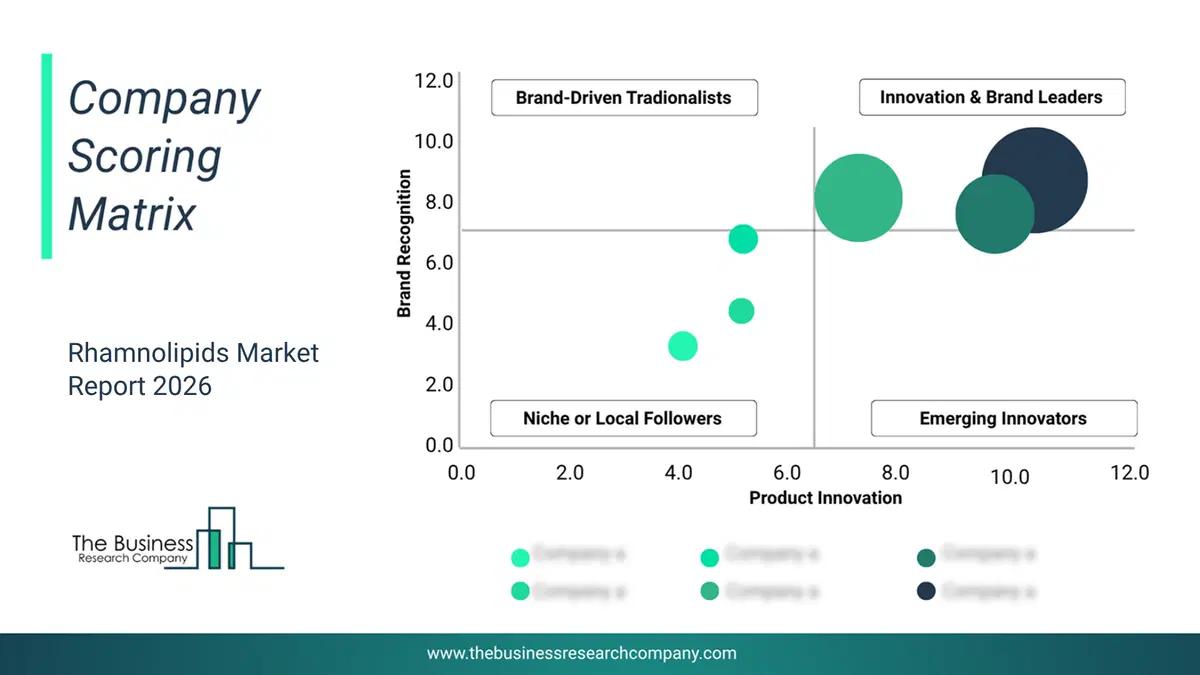
This chart maps companies by product innovation and brand strength, with bubble size indicating relative revenue, helping identify market leaders, challengers, and niche players. This is an illustrative chart; the full report provides a complete and accurate competitive analysis.
Global Rhamnolipids Market Trends and Insights
Major companies operating in the rhamnolipids market are focusing on developing advanced innovations, such as industrial-scale fermentation production capacity, to gain a competitive advantage. Industrial-scale rhamnolipid production refers to the ability to manufacture biosurfactants in large volumes using fermentation processes from renewable feedstocks, enabling wide application in cleaning, personal care, agriculture, and industrial sectors. For instance, in March 2025, AGAE Technologies, a US-based biosurfactant company, launched a full-scale manufacturing plant in Asia capable of producing over 1,000 metric tons of rhamnolipids annually. The facility features retrofitted fermentation and foam-control technologies, offers granular (solid) and liquid-solution rhamnolipid grades, and supports scale expansion as demand grows. These developments significantly lower the cost per unit and improve supply reliability, accelerating the adoption of rhamnolipids as sustainable alternatives. The increased capacity strengthens global supply chain resilience, though companies must ensure consistent product purity and regulatory compliance for large-volume distribution.What Are Latest Mergers And Acquisitions In The Rhamnolipids Market?
In January 2023, Sasol Limited, a South Africa-based provider of chemicals, surfactants, and specialty solutions, expanded its strategic collaboration with Holiferm Limited to develop and commercialize rhamnolipid-based sustainable surfactants. With this agreement, Sasol aimed to enhance its green surfactant portfolio, accelerate market adoption of biodegradable biosurfactants, and integrate Holiferm’s rhamnolipid fermentation technology into its global product offerings. Holiferm Limited is a US-based provider of microbial rhamnolipids and other biosurfactants for personal care, home care, and industrial cleaning applications.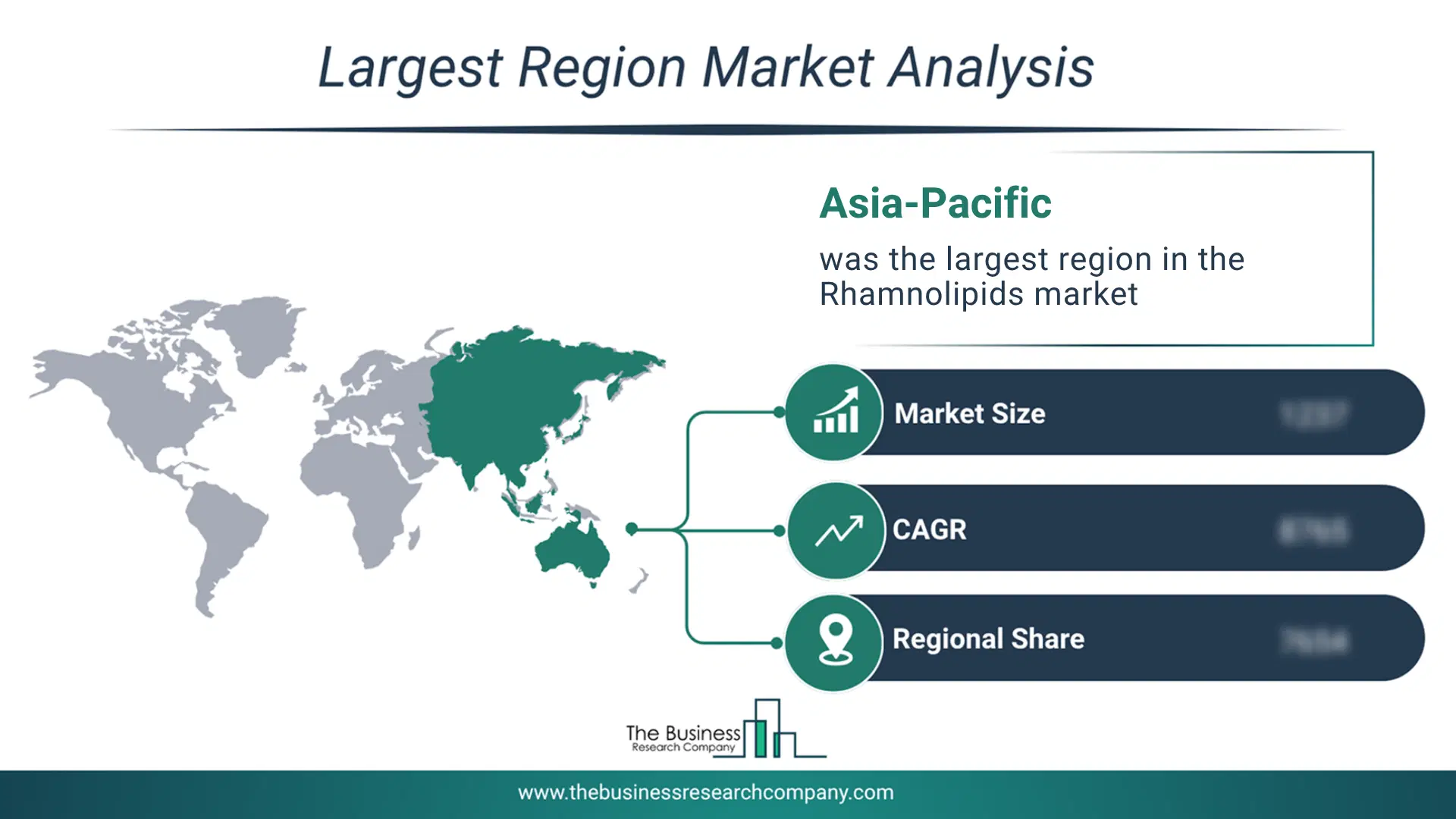
Regional Insights
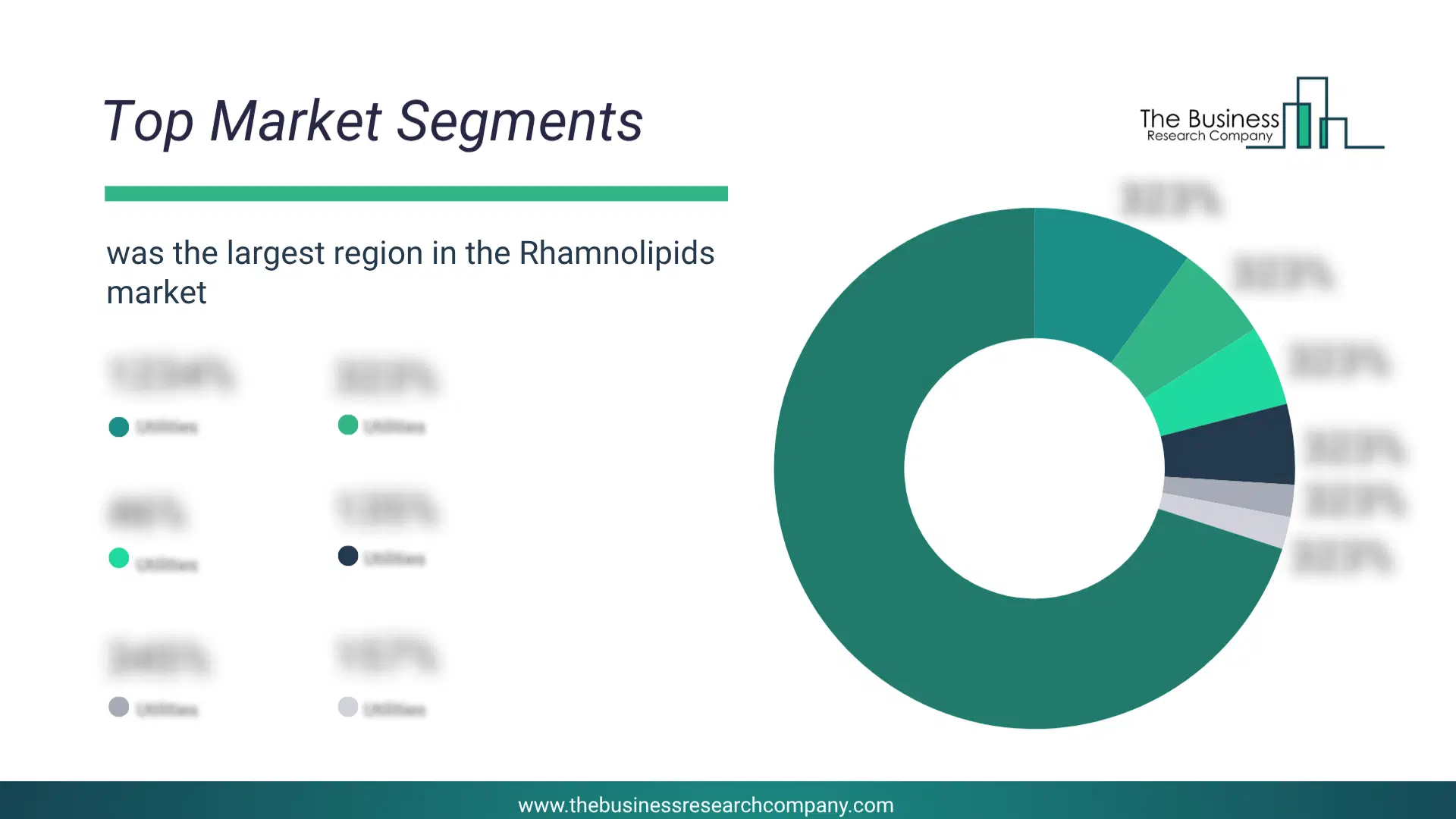
Asia-Pacific was the largest region in the rhamnolipids market in 2025. Europe is expected to be the fastest-growing region in the forecast period. The regions covered in this market report are Asia-Pacific, South East Asia, Western Europe, Eastern Europe, North America, South America, Middle East, Africa The countries covered in this market report are Australia, Brazil, China, France, Germany, India, Indonesia, Japan, Taiwan, Russia, South Korea, UK, USA, Canada, Italy, SpainWhat Defines the Rhamnolipids Market?
The rhamnolipids market consists of sales of complex rhamnolipids, uncommon rhamnolipids, household cleaners, and personal care products. Values in this market are ‘factory gate’ values, that is, the value of goods sold by the manufacturers or creators of the goods, whether to other entities (including downstream manufacturers, wholesalers, distributors, and retailers) or directly to end customers. The value of goods in this market includes related services sold by the creators of the goods.How is Market Value Defined and Measured?
The market value is defined as the revenues that enterprises gain from the sale of goods and/or services within the specified market and geography through sales, grants, or donations in terms of the currency (in USD unless otherwise specified). The revenues for a specified geography are consumption values that are revenues generated by organizations in the specified geography within the market, irrespective of where they are produced. It does not include revenues from resales along the supply chain, either further along the supply chain or as part of other products.
This chart presents market attractiveness based on a quantitative evaluation of growth, competition, strategic alignment, and risk, offering a clear view of opportunity areas for decision-making. This chart is for illustrative purposes; the full report contains the complete analysis.

This chart highlights the Total Addressable Market (TAM) by estimating the maximum revenue opportunity using an assumption-driven approach, supporting strategic planning and opportunity sizing across markets. The chart is illustrative; the full report provides a more comprehensive analysis.
What Key Data and Analysis Are Included in the Rhamnolipids Market Report 2026?
The rhamnolipids market research report is one of a series of new reports from The Business Research Company that provides market statistics, including industry global market size, regional shares, competitors with the market share, detailed market segments, market trends and opportunities, and any further data you may need to thrive in the rhamnolipids industry. The market research report delivers a complete perspective of everything you need, with an in-depth analysis of the current and future state of the industry.Rhamnolipids Market Report Forecast Analysis
| Report Attribute | Details |
|---|---|
| Market Size Value In 2026 | $3.14 billion |
| Revenue Forecast In 2030 | $4.37 billion |
| Growth Rate | CAGR of 9.7% from 2026 to 2030 |
| Base Year For Estimation | 2025 |
| Actual Estimates/Historical Data | 2020-2025 |
| Forecast Period | 2026 - 2030 |
| Market Representation | Revenue in USD Billion and CAGR from 2026 to 2030 |
| Segments Covered | Type, Form, Application |
| Regional Scope | Asia-Pacific, Western Europe, Eastern Europe, North America, South America, Middle East, Africa |
| Country Scope | The countries covered in this market report are Australia, Brazil, China, France, Germany, India, Indonesia, Japan, Taiwan, Russia, South Korea, UK, USA, Canada, Italy, Spain |
| Key Companies Profiled | Jeneil Biotech Inc, AGAE Technologies LLC, Evonik Industries AG, Biotensidon GmbH, Shaanxi Deguan Biotechnology Co. Ltd, Zhejiang Silver‑Elephant Bio‑engineering Co. Ltd, Zhejiang Shengda Zijin Biotech Co. Ltd, TeeGene Biotech, Rhamnolipid Companies, Inc, Paradigm Biomedical Inc, Locus Bio‑Energy Solutions, Teego Technologies, Altinbio Scientific Private Limited, NatSurFact Laboratories, Aumgene Biosciences Pvt. Ltd, Jiangsu WanQi Biotechnology Co. Ltd, Rhamnolipid, Inc, Shandong Aikang Biotechnology, Xi’an Rege Biotechnology, Zilorium Biologics, Locus Performance Ingredients |
| Customization Scope | Request for Customization |
| Pricing And Purchase Options | Explore Purchase Options |