

Ribonucleic Acid (RNA) Microarray Market Report 2026
Global Outlook – By Product Type (Consumables, Instruments, Software, Accessories), By Technology (Hybridization Based Microarrays, Sequencing Based Microarrays, Other Technologies), By Application (Genomic Research, Clinical Diagnostics, Pharmaceuticals And Biotechnology, Agricultural Biotechnology), By End User (Biotechnology Companies, Pharmaceutical Companies, Academic And Research Institutes, Diagnostic Laboratories, Contract Research Organizations) – Market Size, Trends, Strategies, and Forecast to 2030
Ribonucleic Acid (RNA) Microarray Market Report 2026 Market Overview
• Ribonucleic Acid (RNA) Microarray Market Report 2026 market size has reached to $1.61 billion in 2025 • Expected to grow to $2.52 billion in 2030 at a compound annual growth rate (CAGR) of 9.3% • Growth Driver: Growing Emphasis On Personalized Medicine Driving The Market Growth Due To Increasing Focus On Patient-Centric Treatment Approaches • North America was the largest region in 2025 and Asia-Pacific is the fastest growing region.What Is Covered Under Ribonucleic Acid (RNA) Microarray Market?
Ribonucleic acid (RNA) microarray is a high-throughput molecular biology technology used to measure the expression levels of thousands of RNA transcripts simultaneously within a biological sample. It enables the detection, quantification, and comparative analysis of gene expression patterns by hybridizing labeled RNA or complementary DNA (cDNA) to predefined probes immobilized on a solid surface. The main product types of ribonucleic acid (RNA) microarray include consumables, instruments, software, and accessories. Consumables refer to materials and supplies used during RNA microarray experiments for detecting and analyzing gene expression patterns. These products use technologies such as hybridization based microarrays, sequencing based microarrays, and other technologies. The various applications involved are genomic research, clinical diagnostics, pharmaceuticals and biotechnology, and agricultural biotechnology, and they are used by several end users such as biotechnology companies, pharmaceutical companies, academic and research institutes, diagnostic laboratories, and contract research organizations.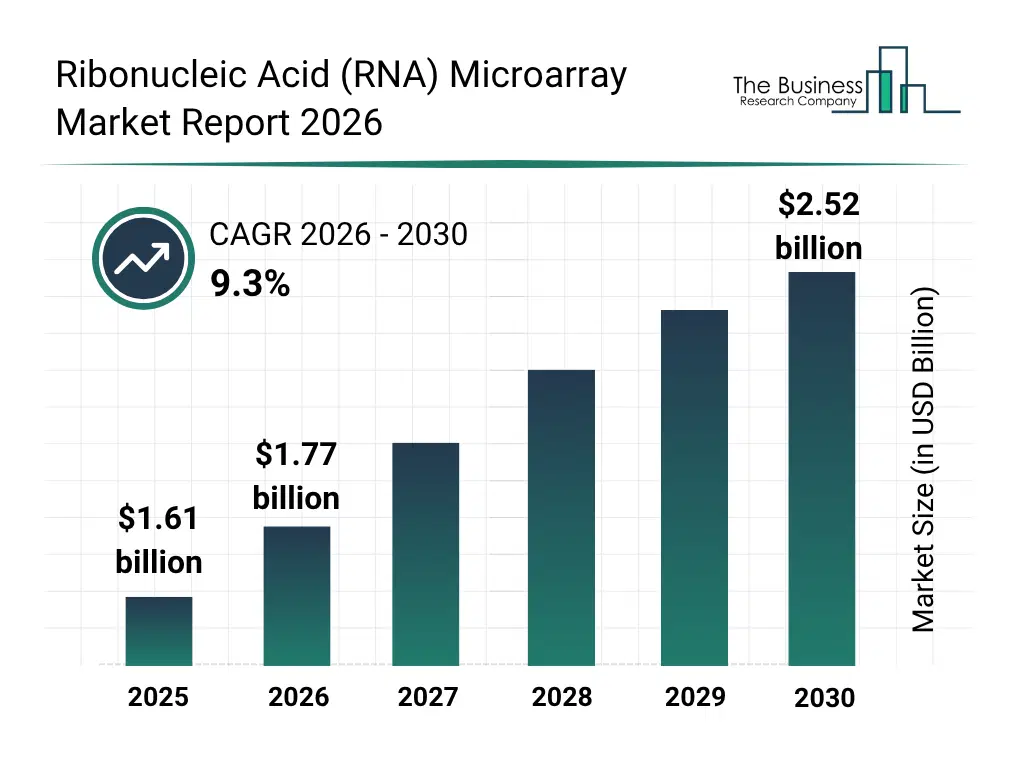
What Is The Ribonucleic Acid (RNA) Microarray Market Size and Share 2026?
The ribonucleic acid (RNA) microarray market size has grown strongly in recent years. It will grow from $1.61 billion in 2025 to $1.77 billion in 2026 at a compound annual growth rate (CAGR) of 9.7%. The growth in the historic period can be attributed to growth in genomic research and gene expression studies, development of dna and rna hybridization based microarray platforms, increasing adoption of clinical diagnostics using gene expression profiling, expansion of pharmaceutical research using transcriptomic data, rising demand for high throughput molecular biology techniques.What Is The Ribonucleic Acid (RNA) Microarray Market Growth Forecast?
The ribonucleic acid (RNA) microarray market size is expected to see strong growth in the next few years. It will grow to $2.52 billion in 2030 at a compound annual growth rate (CAGR) of 9.3%. The growth in the forecast period can be attributed to integration of AI driven gene expression interpretation tools, increasing demand for personalized medicine and biomarker discovery, expansion of multi omics and systems biology research, rising adoption of automated and high throughput microarray platforms, growth in cloud enabled genomic data analytics and storage solutions. Major trends in the forecast period include integration of AI powered gene expression analysis platforms for large scale rna microarray data interpretation, increasing adoption of cloud based microarray data storage and bioinformatics pipelines, expansion of high density microarray chips for multi transcriptome profiling, growing use of automated microarray scanning and hybridization systems, rising demand for precision medicine driven gene expression profiling using rna microarrays.
Global Ribonucleic Acid (RNA) Microarray Market Segmentation
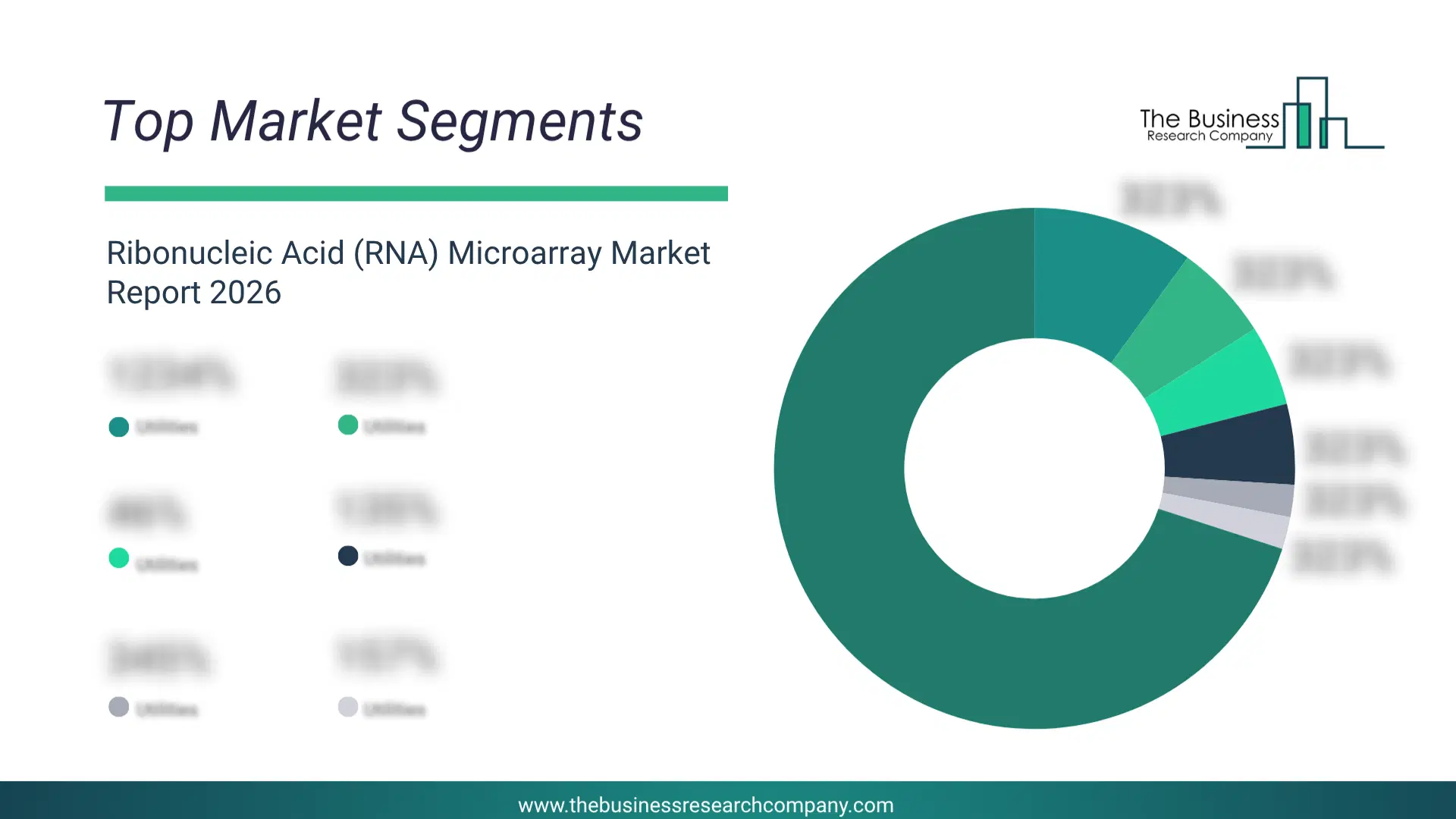
1) By Product Type: Consumables, Instruments, Software, Accessories 2) By Technology: Hybridization Based Microarrays, Sequencing Based Microarrays, Other Technologies 3) By Application: Genomic Research, Clinical Diagnostics, Pharmaceuticals And Biotechnology, Agricultural Biotechnology 4) By End User: Biotechnology Companies, Pharmaceutical Companies, Academic And Research Institutes, Diagnostic Laboratories, Contract Research Organizations Subsegments: 1) By Consumables: Hybridization Probes And Oligonucleotide Arrays, Microarray Slides And Chips, Labeling And Hybridization Reagents, Wash Buffers And Detection Kits, Sample Preparation Consumables 2) By Instruments: Ribonucleic Acid Microarray Scanners, Hybridization Stations, Microarray Imaging Systems, Automated Sample Processing Instruments, Microarray Spotting Systems 3) By Software: Gene Expression Analysis Software, Data Normalization And Processing Software, Bioinformatics Interpretation Software, Visualization And Reporting Software, Statistical Analysis Software 4) By Accessories: Microarray Storage Boxes, Hybridization Chambers, Pipette Tips And Consumable Tools, Calibration And Maintenance Accessories, Slide Carriers And Handling ToolsWhat Are The Drivers Of The Ribonucleic Acid (RNA) Microarray Market?
The rising adoption of personalized medicine is expected to propel the growth of the ribonucleic acid (RNA) microarray market going forward. Precision medicine is a medical approach that tailor’s treatment and healthcare decisions to individual patients based on their genetic makeup, lifestyle, and environmental factors. The adoption of personalized medicine is growing due to advances in genomics and biotechnology, which enable more precise diagnosis and targeted treatments based on an individual’s genetic profile. Ribonucleic acid (RNA) microarray enables personalized medicine by simultaneously measuring the expression levels of thousands of genes, allowing clinicians to identify disease-specific molecular patterns and tailor treatments to an individual’s unique biological profile for more accurate and effective therapy selection. For instance, in February 2024, according to the Personalized Medicine Coalition, a US-based non-profit organization, the FDA approved 16 new personalized treatments for rare disease patients in 2023, up from 6 in 2022, reflecting an increase of 10 new personalized treatment approvals. Therefore, the growing emphasis on personalized medicine is driving the growth of the ribonucleic acid (RNA) microarray industry. The rising prevalence of cancer is expected to propel the growth of the ribonucleic acid (RNA) microarray market going forward. Prevalence of cancer refers to the total number of existing cancer cases within a defined population at a specific point in time or over a defined period. The rising prevalence of cancer is primarily driven by an aging global population, as older individuals face a higher likelihood of accumulating genetic mutations and developing malignancies over time. Ribonucleic acid (RNA) microarray supports cancer research and clinical oncology by enabling high-throughput gene expression profiling, which helps identify tumor-specific biomarkers, understand disease mechanisms, and evaluate treatment responses at the transcriptomic level. For instance, in January 2023, according to the American Cancer Society, a US-based cancer surveillance and epidemiology organization headquartered in Atlanta, 1,958,310 new cancer cases were recorded in 2023 compared to 1,918,030 cases in 2022, marking an increase of approximately 40,280 additional cases year-on-year. Therefore, the rising prevalence of cancer is driving the growth of the ribonucleic acid (RNA) microarray industry. The rising government funding for biotechnology research initiatives is expected to propel the growth of the ribonucleic acid (RNA) microarray market going forward. Biotechnology research initiatives refer to organized programs and projects funded by governments, institutions, or companies to develop and apply biological and molecular technologies for advancing healthcare, agriculture, and industrial applications. Government funding for biotechnology research initiatives is growing due to the increasing need to address complex health challenges such as cancer and genetic disorders, which require advanced research and innovative technologies for improved diagnosis, treatment, and prevention. Government funding for ribonucleic acid (RNA) microarray provides financial resources for advanced genomic research, enables the development of high-throughput gene expression technologies, improves cancer diagnostics and biomarker discovery, and accelerates the translation of molecular findings into clinical applications. For instance, in May 2023, according to the Earlham Institute (EI), a UK-based research institute, it was awarded $39.7 million (£31.4 million) by the Biotechnology and Biological Sciences Research Council (BBSRC), part of UK Research and Innovation (UKRI), to support a five-year programme focused on advancing research, developing new technologies, and driving innovation and impact. Therefore, the rising government funding for biotechnology research initiatives is driving the growth of the ribonucleic acid (RNA) microarray industry.Key Players In The Global Ribonucleic Acid (RNA) Microarray Market
Major companies operating in the ribonucleic acid (RNA) microarray market report are Thermo Fisher Scientific Inc., LGC Limited, Merck KGaA, Danaher Corporation, Eurofins Scientific SE, Agilent Technologies Inc., Illumina Inc., Revvity Inc., Bio-Rad Laboratories Inc., QIAGEN N.V., Arraystar Inc., Takara Bio Inc., Macrogen Inc., CapitalBio Technology, Genotypic Technology Pvt Ltd., CD Genomics, Phalanx Biotech Group, LC Sciences, Enzo Biochem Inc., Oxford Gene Technology, Bioneer Corporation, Savyon Diagnostics
This chart is for illustrative purposes; the full report includes a detailed competitor analysis and comprehensive overview of the top 10 companies in the market.
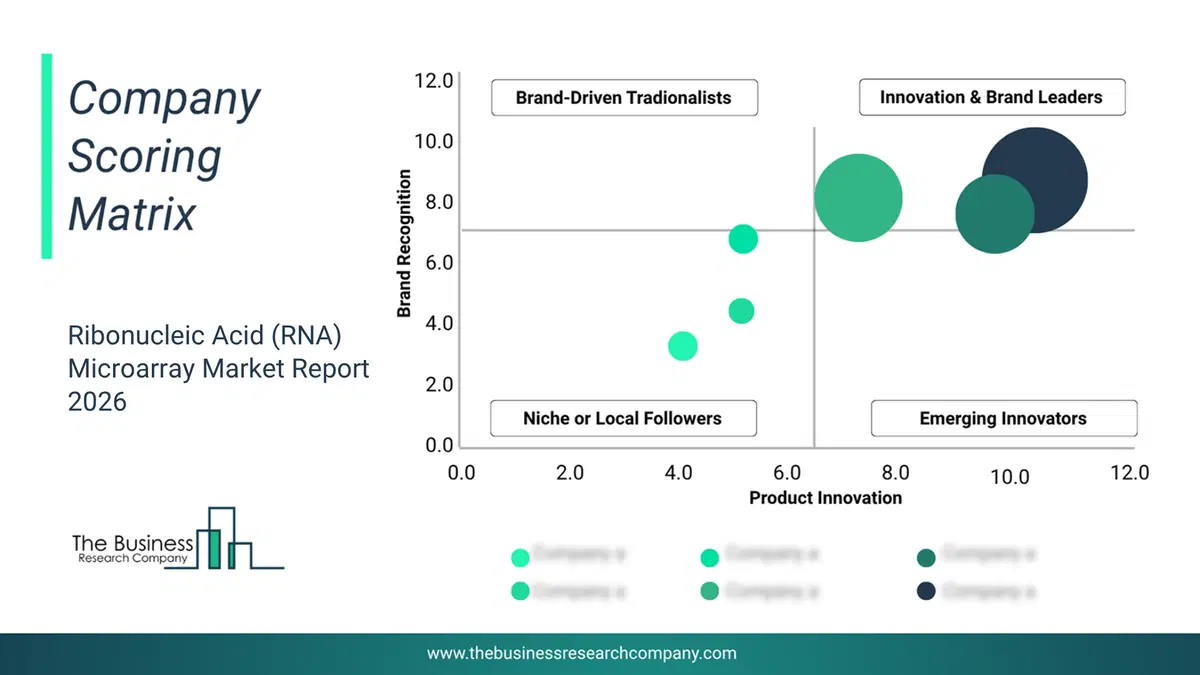
This chart maps companies by product innovation and brand strength, with bubble size indicating relative revenue, helping identify market leaders, challengers, and niche players. This is an illustrative chart; the full report provides a complete and accurate competitive analysis.
Regional Outlook
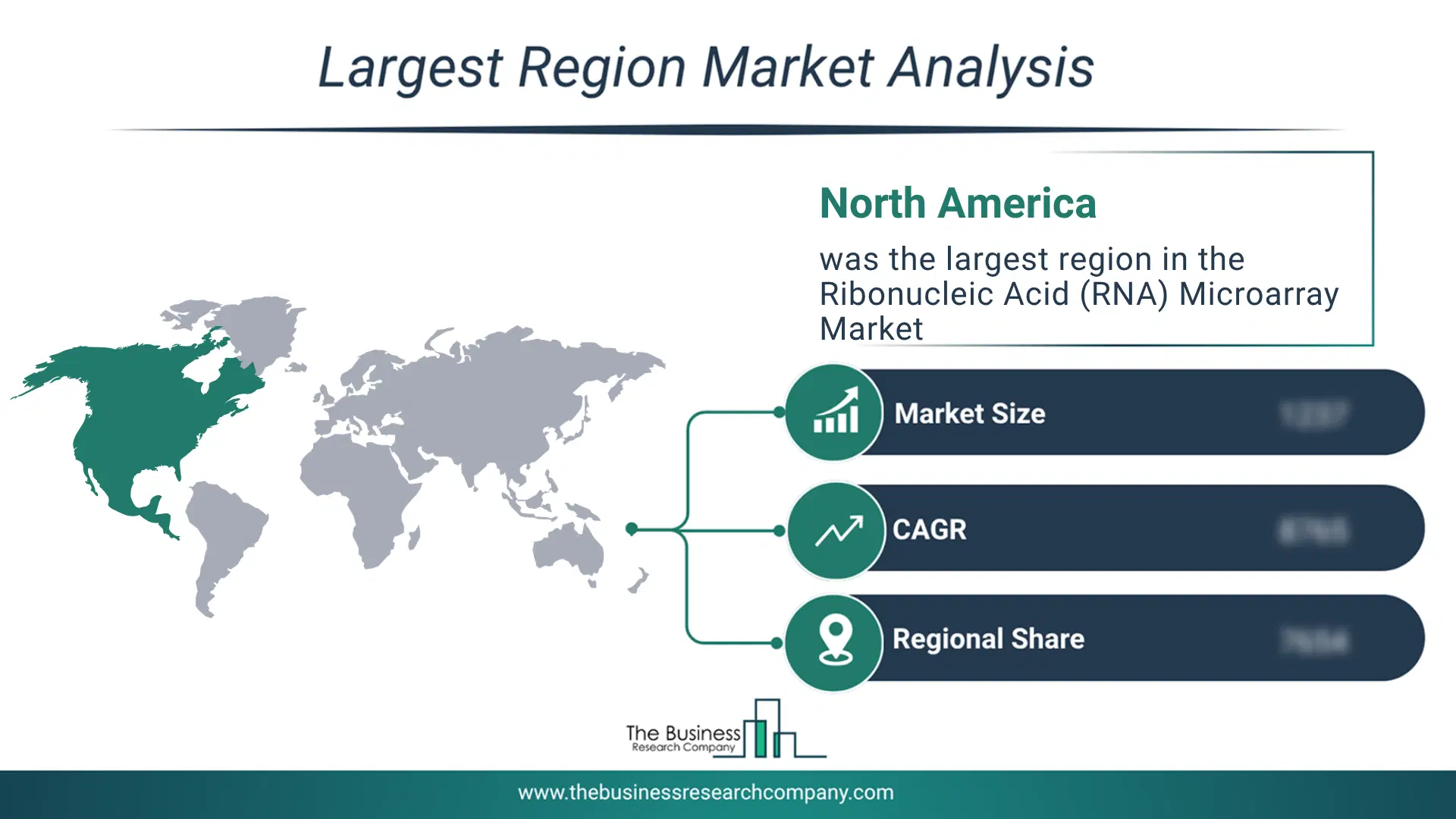
North America was the largest region in the ribonucleic acid (RNA) microarray market in 2025. Asia-Pacific is expected to be the fastest-growing region in the forecast period. The regions covered in this market report are Asia-Pacific, South East Asia, Western Europe, Eastern Europe, North America, South America, Middle East, Africa. The countries covered in this market report are Australia, Brazil, China, France, Germany, India, Indonesia, Japan, Taiwan, Russia, South Korea, UK, USA, Canada, Italy, Spain.What Defines the Ribonucleic Acid (RNA) Microarray Market?
The ribonucleic acid (RNA) microarray market consists of revenues earned by entities by providing services such as microarray assay design, sample preparation, gene expression profiling, data analysis and interpretation, bioinformatics support, and laboratory testing services. The market value includes the value of related goods sold by the service provider or included within the service offering. The ribonucleic acid (RNA) microarray market also includes sales of microarray chips or plates, microarray scanners, hybridization stations, labeling kits, reagents, and probes. Values in this market are ‘factory gate’ values, that is the value of goods sold by the manufacturers or creators of the goods, whether to other entities (including downstream manufacturers, wholesalers, distributors and retailers) or directly to end customers. The value of goods in this market includes related services sold by the creators of the goods.How is Market Value Defined and Measured?
The market value is defined as the revenues that enterprises gain from the sale of goods and/or services within the specified market and geography through sales, grants, or donations in terms of the currency (in USD unless otherwise specified). The revenues for a specified geography are consumption values that are revenues generated by organizations in the specified geography within the market, irrespective of where they are produced. It does not include revenues from resales along the supply chain, either further along the supply chain or as part of other products.
This chart presents market attractiveness based on a quantitative evaluation of growth, competition, strategic alignment, and risk, offering a clear view of opportunity areas for decision-making. This chart is for illustrative purposes; the full report contains the complete analysis.

This chart highlights the Total Addressable Market (TAM) by estimating the maximum revenue opportunity using an assumption-driven approach, supporting strategic planning and opportunity sizing across markets. The chart is illustrative; the full report provides a more comprehensive analysis.
What Key Data and Analysis Are Included in the Ribonucleic Acid (RNA) Microarray Market Report 2026?
The ribonucleic acid (rna) microarray market research report is one of a series of new reports from The Business Research Company that provides market statistics, including industry global market size, regional shares, competitors with the market share, detailed market segments, market trends and opportunities, and any further data you may need to thrive in the ribonucleic acid (rna) microarray industry. The market research report delivers a complete perspective of everything you need, with an in-depth analysis of the current and future state of the industry.Ribonucleic Acid (RNA) Microarray Market Report Forecast Analysis
| Report Attribute | Details |
|---|---|
| Market Size Value In 2026 | $1.77 billion |
| Revenue Forecast In 2030 | $2.52 billion |
| Growth Rate | CAGR of 9.3% from 2026 to 2030 |
| Base Year For Estimation | 2025 |
| Actual Estimates/Historical Data | 2020-2025 |
| Forecast Period | 2026 - 2030 |
| Market Representation | Revenue in USD Billion and CAGR from 2026 to 2030 |
| Segments Covered | Product Type, Technology, Application, End User |
| Regional Scope | Asia-Pacific, Western Europe, Eastern Europe, North America, South America, Middle East, Africa |
| Country Scope | The countries covered in the report are Australia, Brazil, China, France, Germany, India, Indonesia, Japan, Taiwan, Russia, South Korea, UK, USA, Canada, Italy, Spain. |
| Key Companies Profiled | Thermo Fisher Scientific Inc., LGC Limited, Merck KGaA, Danaher Corporation, Eurofins Scientific SE, Agilent Technologies Inc., Illumina Inc., Revvity Inc., Bio-Rad Laboratories Inc., QIAGEN N.V., Arraystar Inc., Takara Bio Inc., Macrogen Inc., CapitalBio Technology, Genotypic Technology Pvt Ltd., CD Genomics, Phalanx Biotech Group, LC Sciences, Enzo Biochem Inc., Oxford Gene Technology, Bioneer Corporation, Savyon Diagnostics |
| Customization Scope | Request for Customization |
| Pricing And Purchase Options | Explore Purchase Options |