

Ribonucleic Acid (RNA) Splicing Modulators Market Report 2026
Global Outlook – By Product Type (Small Molecule Modulators, Antisense Oligonucleotides, Small Interfering Ribonucleic Acid, Other Product Types), By Route Of Administration (Subcutaneous, Intravenous, Intrathecal Central Nervous System Adjacent), By Application (Cancer, Genetic Disorders, Neurological Disorders, Other Applications), By End-User (Pharmaceutical Companies, Research Institutes, Hospitals And Clinics, Other End Users) – Market Size, Trends, Strategies, and Forecast to 2030
Ribonucleic Acid (RNA) Splicing Modulators Market Overview
• Ribonucleic Acid (RNA) Splicing Modulators market size has reached to $2.69 billion in 2025 • Expected to grow to $5.69 billion in 2030 at a compound annual growth rate (CAGR) of 16.2% • Growth Driver: Rising Prevalence Of Genetic Disorders And Advanced Diagnostic Awareness • Market Trend: RNA-Directed Small Molecule Splicing Modulators Show Promise In Neurodegenerative Diseases • North America was the largest region in 2025 and Asia-Pacific is the fastest growing region.What Is Covered Under Ribonucleic Acid (RNA) Splicing Modulators Market?
Ribonucleic acid (RNA) splicing modulators are therapeutic compounds that alter the splicing of pre-mRNA, the process by which non-coding regions are removed and coding regions are joined to form mature RNA. They are used to correct or modify aberrant RNA splicing patterns associated with genetic diseases or cancers, thereby restoring normal protein function and addressing underlying disease mechanisms. The main product types of ribonucleic acid (RNA) splicing modulators include small molecule modulators, antisense oligonucleotides, small interfering ribonucleic acid, and other product types. Small molecule modulators are compounds designed to influence ribonucleic acid (RNA) splicing processes, helping to correct gene expression and treat various diseases. They are administered via subcutaneous, intravenous, and intrathecal central nervous system adjacent routes. The key applications of cancer, genetic disorders, and neurological disorders, while the end-use includes pharmaceutical companies, research institutes, hospitals and clinics, and other end users.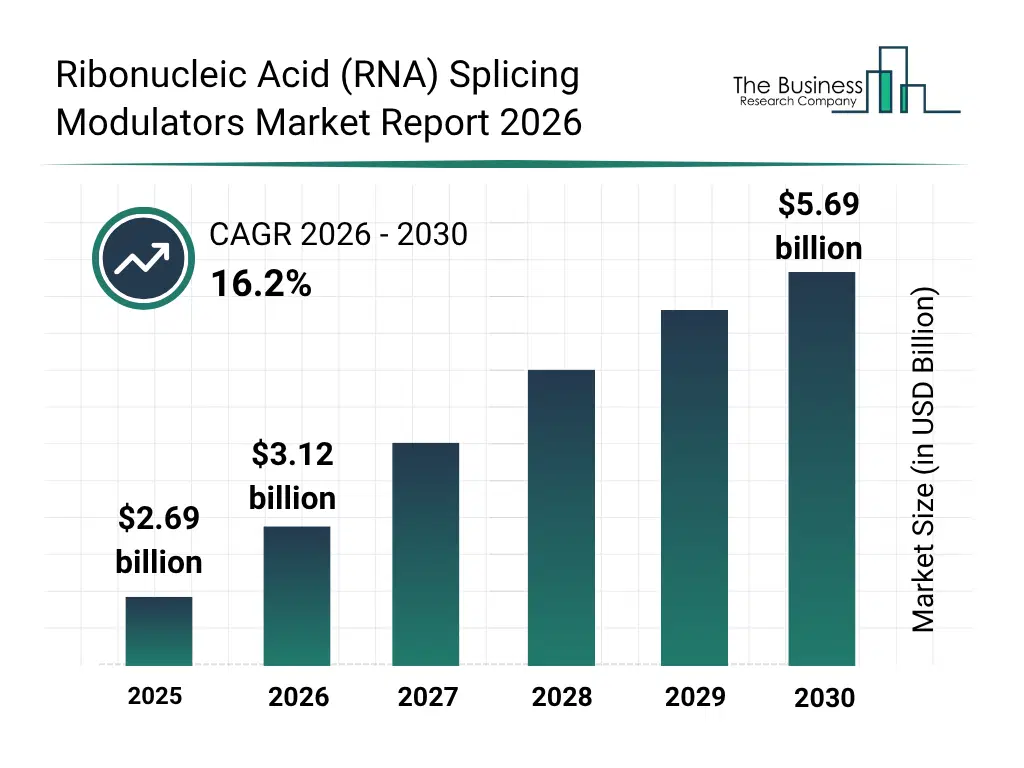
What Is The Ribonucleic Acid (RNA) Splicing Modulators Market Size and Share 2026?
The ribonucleic acid (RNA) splicing modulators market size has grown rapidly in recent years. It will grow from $2.69 billion in 2025 to $3.12 billion in 2026 at a compound annual growth rate (CAGR) of 16.0%. The growth in the historic period can be attributed to increasing prevalence of genetic disorders, advancements in molecular biology techniques, growth of oncology therapeutics, rising r&d investments, adoption of antisense oligonucleotides.What Is The Ribonucleic Acid (RNA) Splicing Modulators Market Growth Forecast?
The ribonucleic acid (RNA) splicing modulators market size is expected to see rapid growth in the next few years. It will grow to $5.69 billion in 2030 at a compound annual growth rate (CAGR) of 16.2%. The growth in the forecast period can be attributed to development of ai-driven splicing modulators, expansion of personalized medicine approaches, increasing collaborations between pharma and biotech, advancements in delivery mechanisms, regulatory approvals for novel therapies. Major trends in the forecast period include targeted rna splicing therapies, personalized genetic medicine, high-throughput screening platforms, integration with bioinformatics tools, advanced molecular modelling.
Global Ribonucleic Acid (RNA) Splicing Modulators Market Segmentation
1) By Product Type: Small Molecule Modulators, Antisense Oligonucleotides, Small Interfering Ribonucleic Acid, Other Product Types 2) By Route Of Administration: Subcutaneous, Intravenous, Intrathecal Central Nervous System Adjacent 3) By Application: Cancer, Genetic Disorders, Neurological Disorders, Other Applications 4) By End-User: Pharmaceutical Companies, Research Institutes, Hospitals And Clinics, Other End Users Subsegments: 1) By Small Molecule Modulators: Splicing Factor Inhibitors, Ribonucleic Acid Binding Modulators, Kinase Modulators Affecting Splicing, Pre- Messenger Ribonucleic Acid Processing Modulators, Exon Skipping Enhancers 2) By Antisense Oligonucleotides: Exon Skipping Antisense Oligonucleotides, Splice Site Modifying Antisense Oligonucleotides, Intronic Targeting Antisense Oligonucleotides, Messenger Ribonucleic Acid Degradation Inducing Antisense Oligonucleotides, Gene Expression Modulating Antisense Oligonucleotides 3) By Small Interfering Ribonucleic Acid: Exon Skipping Small Interfering Ribonucleic Acid, Splice Site Small Interfering Ribonucleic Acid, Intronic Targeting Small Interfering Ribonucleic Acid, Pre- Messenger Ribonucleic Acid Processing Small Interfering Ribonucleic Acid, Gene Silencing Small Interfering Ribonucleic Acid 4) By Other Product Types: Ribonucleoprotein Complex Modulators, Spliceosome Assembly Modulators, Ribonucleic Acid Editing Enzyme Modulators, Long Non-Coding Ribonucleic Acid Modulators, Messenger Ribonucleic Acid ModulatorsWhat Is The Driver Of The Ribonucleic Acid (RNA) Splicing Modulators Market?
The increasing prevalence of genetic disorders is expected to propel the growth of the ribonucleic acid (RNA) splicing modulators market going forward. Genetic disorders refer to diseases or conditions caused by abnormalities in an individual’s DNA, including mutations, deletions, or chromosomal changes that affect normal biological functions. The rise in genetic disorders due to increasing awareness and advanced diagnostic capabilities is leading to more cases being identified, enabling earlier detection and management of inherited conditions. RNA splicing modulators support the management of genetic disorders by targeting and correcting aberrant RNA splicing events, offering therapeutic potential to treat or manage genetic mutations responsible for these disorders. For instance, in May 2024, according to the National Health Service, a UK-based government department, there are 17,000 people living with sickle cell disease, an inherited genetic blood disorder, with around 250 new cases diagnosed each year. Therefore, the increasing prevalence of genetic disorders is driving the growth of the ribonucleic acid (RNA) splicing modulators industry.Key Players In The Global Ribonucleic Acid (RNA) Splicing Modulators Market
Major companies operating in the ribonucleic acid (RNA) splicing modulators market are F. Hoffmann-La Roche Ltd, Pfizer Inc., Novartis AG, Biogen Inc., PTC Therapeutics Inc., Ionis Pharmaceuticals Inc., Abivax SA, Twist Bioscience Corporation, Wave Life Sciences Ltd, Arrakis Therapeutics Inc., Remix Therapeutics Inc., Anima Biotech Inc., Rgenta Therapeutics Inc., Avidity Biosciences Inc., Skyhawk Therapeutics Inc., Stoke Therapeutics Inc., Accent Therapeutics Inc., Chordia Therapeutics Inc., Panorama Medicine Inc., Serna Therapeutics Inc., Ribometrix Inc., Envisagenics Inc., Dyne Therapeutics Inc.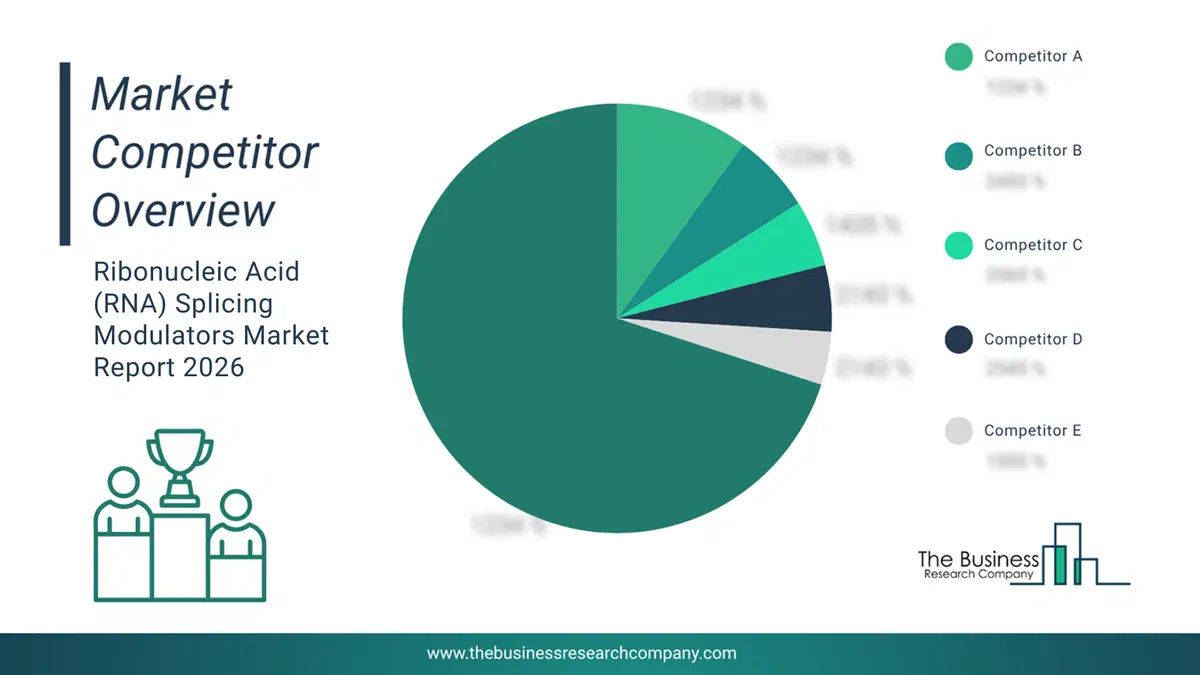
This chart is for illustrative purposes; the full report includes a detailed competitor analysis and comprehensive overview of the top 10 companies in the market.
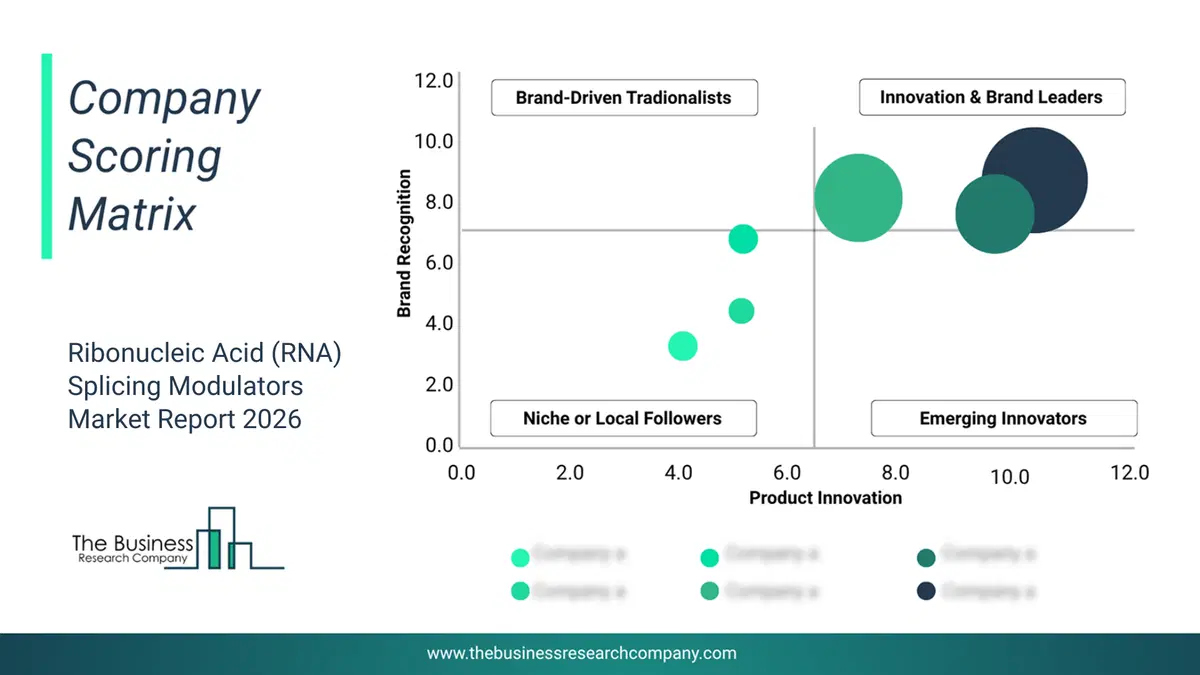
This chart maps companies by product innovation and brand strength, with bubble size indicating relative revenue, helping identify market leaders, challengers, and niche players. This is an illustrative chart; the full report provides a complete and accurate competitive analysis.
Global Ribonucleic Acid (RNA) Splicing Modulators Market Trends and Insights
Major companies operating in the ribonucleic acid (RNA) splicing modulators market are focusing on advancement in RNA-targeted drug discovery platforms, such as RNA‑directed small molecule splicing modulators, to improve efficacy, enhance safety, and address unmet needs in neurodegenerative diseases. RNA-directed small molecule splicing modulators are small compounds that bind RNA to alter pre-mRNA splicing, correcting or modifying splicing patterns to treat genetic diseases or cancers. For instance, in September 2025, Skyhawk Therapeutics, a US‑based biotechnology company, announced positive interim data from its Phase 1 clinical trial of SKY-0515 for Huntington's disease. It is an orally administered, investigational small molecule RNA splicing modifier developed through the company's SKYSTAR platform. It demonstrated dose-dependent reductions of mutant huntingtin protein (up to 62%) and PMS1 mRNA in patients, with excellent brain penetration and a favorable safety profile, showcasing a potential dual-mechanism approach to target core pathogenic processes without operator intervention.What Are Latest Mergers And Acquisitions In The Ribonucleic Acid (RNA) Splicing Modulators Market?
In October 2025, Novartis AG, a Switzerland-based healthcare company, acquired Avidity Biosciences Inc. for approximately $12 billion. Through this acquisition, Novartis aims to strengthen its late-stage neuroscience pipeline and advance RNA therapeutics by integrating Avidity’s antibody oligonucleotide conjugates (AOCs) platform. Avidity Biosciences Inc. is a US-based company specializing in developing RNA-based therapies for rare neuromuscular diseases, focused on delivering targeted genetic medicines to muscle tissue for both government and commercial applications.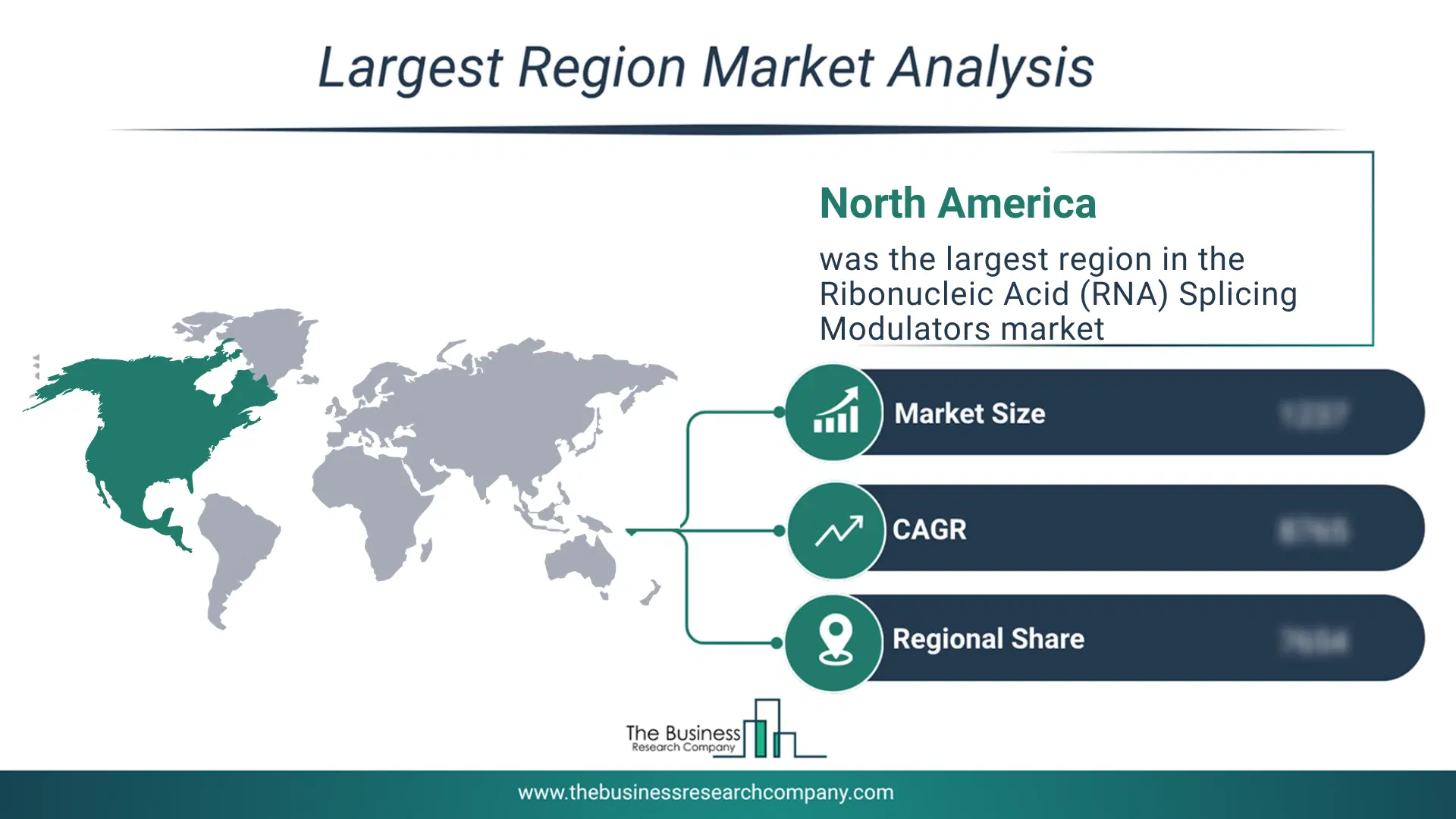
Regional Insights
North America was the largest region in the ribonucleic acid (RNA) splicing modulators market in 2025. Asia-Pacific is expected to be the fastest-growing region in the forecast period. The regions covered in this market report are Asia-Pacific, South East Asia, Western Europe, Eastern Europe, North America, South America, Middle East, Africa. The countries covered in this market report are Australia, Brazil, China, France, Germany, India, Indonesia, Japan, Taiwan, Russia, South Korea, UK, USA, Canada, Italy, Spain.What Defines the Ribonucleic Acid (RNA) Splicing Modulators Market?
The ribonucleic acid (RNA) splicing modulators market consists of sales of splice-switching oligonucleotides (SSOs), exon-skipping therapies, and RNA-binding small molecules. Values in this market are ‘factory gate’ values, that is, the value of goods sold by the manufacturers or creators of the goods, whether to other entities (including downstream manufacturers, wholesalers, distributors, and retailers) or directly to end customers. The value of goods in this market includes related services sold by the creators of the goods.How is Market Value Defined and Measured?
The market value is defined as the revenues that enterprises gain from the sale of goods and/or services within the specified market and geography through sales, grants, or donations in terms of the currency (in USD unless otherwise specified). The revenues for a specified geography are consumption values that are revenues generated by organizations in the specified geography within the market, irrespective of where they are produced. It does not include revenues from resales along the supply chain, either further along the supply chain or as part of other products.
This chart presents market attractiveness based on a quantitative evaluation of growth, competition, strategic alignment, and risk, offering a clear view of opportunity areas for decision-making. This chart is for illustrative purposes; the full report contains the complete analysis.

This chart highlights the Total Addressable Market (TAM) by estimating the maximum revenue opportunity using an assumption-driven approach, supporting strategic planning and opportunity sizing across markets. The chart is illustrative; the full report provides a more comprehensive analysis.
What Key Data And Analysis Are Included In The Ribonucleic Acid (RNA) Splicing Modulators Market Report 2026?
The ribonucleic acid (rna) splicing modulators market research report is one of a series of new reports from The Business Research Company that provides market statistics, including industry global market size, regional shares, competitors with the market share, detailed market segments, market trends and opportunities, and any further data you may need to thrive in the ribonucleic acid (rna) splicing modulators industry. The market research report delivers a complete perspective of everything you need, with an in-depth analysis of the current and future state of the industry.Ribonucleic Acid (RNA) Splicing Modulators Market Report Forecast Analysis
| Report Attribute | Details |
|---|---|
| Market Size Value In 2026 | $3.12 billion |
| Revenue Forecast In 2030 | $5.69 billion |
| Growth Rate | CAGR of 16.0% from 2026 to 2030 |
| Base Year For Estimation | 2025 |
| Actual Estimates/Historical Data | 2020-2025 |
| Forecast Period | 2026 - 2030 |
| Market Representation | Revenue in USD Billion and CAGR from 2026 to 2030 |
| Segments Covered | Product Type, Route Of Administration, Application, End-User |
| Regional Scope | Asia-Pacific, Western Europe, Eastern Europe, North America, South America, Middle East, Africa |
| Country Scope | The countries covered in the report are Australia, Brazil, China, France, Germany, India, Indonesia, Japan, Taiwan, Russia, South Korea, UK, USA, Canada, Italy, Spain. |
| Key Companies Profiled | F. Hoffmann-La Roche Ltd, Pfizer Inc., Novartis AG, Biogen Inc., PTC Therapeutics Inc., Ionis Pharmaceuticals Inc., Abivax SA, Twist Bioscience Corporation, Wave Life Sciences Ltd, Arrakis Therapeutics Inc., Remix Therapeutics Inc., Anima Biotech Inc., Rgenta Therapeutics Inc., Avidity Biosciences Inc., Skyhawk Therapeutics Inc., Stoke Therapeutics Inc., Accent Therapeutics Inc., Chordia Therapeutics Inc., Panorama Medicine Inc., Serna Therapeutics Inc., Ribometrix Inc., Envisagenics Inc., Dyne Therapeutics Inc. |
| Customization Scope | Request for Customization |
| Pricing And Purchase Options | Explore Purchase Options |