
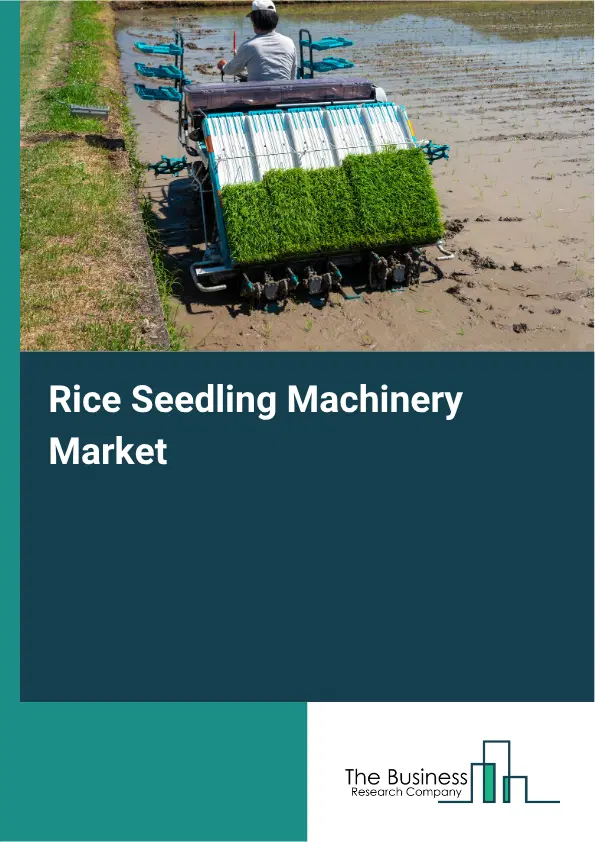
Rice Seedling Machinery Market Report 2026
Global Outlook – By Equipment Type (Transplanters, Seedling Trays, Seeders, Fertilizer Applicators, Irrigation Systems), By Technology (Manual, Mechanical, Automated, Electric, Hybrid), By Farm Size (Small Scale Farms, Medium Scale Farms, Large Scale Farms, Commercial Agriculture), By End-User (Farmers, Agricultural Cooperatives, Commercial Plantations, Research Institutions, Government Agricultural Programs) – Market Size, Trends, Strategies, and Forecast to 2030
Rice Seedling Machinery Market Overview
• Rice Seedling Machinery market size has reached to $1.68 billion in 2025 • Expected to grow to $2.69 billion in 2030 at a compound annual growth rate (CAGR) of 9.9% • Growth Driver: Rising Agricultural Labor Costs Fueling Market Growth Due To Increasing Demand For Labor-Saving Farming Solutions • Market Trend: Advancing Precision Planting Through Innovative Mechanization • Asia-Pacific was the largest region and fastest growing region.What Is Covered Under Rice Seedling Machinery Market?
Rice seedling machinery is specialized agricultural equipment designed to automate the preparation, sowing, and handling of rice seedlings before transplanting into fields. It ensures uniform seed placement, proper soil coverage, and consistent seedling growth while reducing manual labor and improving operational efficiency. These machines enhance the quality of seedlings, save time during nursery preparation, and contribute to higher productivity and better crop establishment. The main equipment types of rice seedling machinery include transplanters, seedling trays, seeders, fertilizer applicators, and irrigation systems. Transplanters refer to agricultural machines designed to place rice seedlings into prepared paddy fields at controlled spacing and depth, improving planting efficiency and uniformity while reducing manual labor requirements. These machines and equipment use technologies such as manual, mechanical, automated, electric, and hybrid, across farm sizes such as small scale farms, medium scale farms, large scale farms, and commercial agriculture. They are used by end users such as farmers, agricultural cooperatives, commercial plantations, research institutions, and government agricultural programs.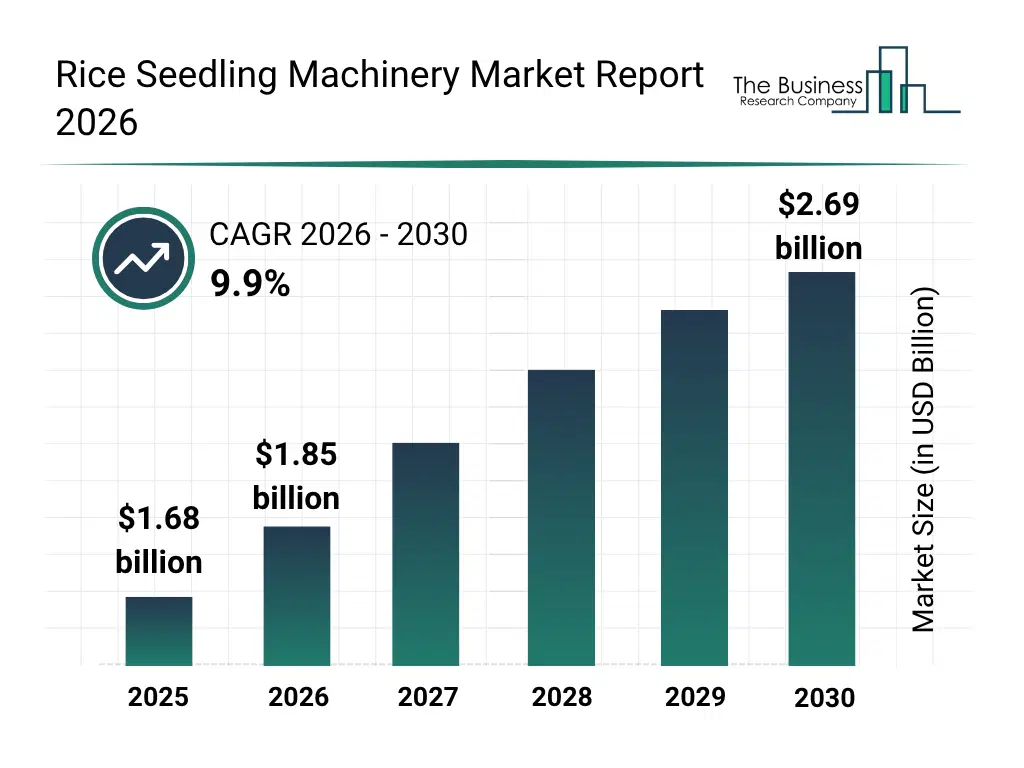
What Is The Rice Seedling Machinery Market Size and Share 2026?
The rice seedling machinery market size has grown rapidly in recent years. It will grow from $1.68 billion in 2025 to $1.85 billion in 2026 at a compound annual growth rate (CAGR) of 10.3%. The growth in the historic period can be attributed to increasing labor shortages in rice farming, rising agricultural mechanization, growing rice cultivation activities, need for faster nursery preparation, increasing demand for uniform seedling growth.What Is The Rice Seedling Machinery Market Growth Forecast?
The rice seedling machinery market size is expected to see strong growth in the next few years. It will grow to $2.69 billion in 2030 at a compound annual growth rate (CAGR) of 9.9%. The growth in the forecast period can be attributed to growing adoption of automated rice transplanting equipment, increasing demand for efficient farm operations, rising government support for agricultural mechanization, expanding commercial rice farming, increasing demand for electric and hybrid agricultural machinery. Major trends in the forecast period include rising adoption of automated rice seedling transplantation, increasing demand for labor-saving rice farming equipment, growing use of precision seed placement systems, expanding availability of multi-functional rice seedling machinery, increasing demand for uniform seedling establishment.Tariff Impact On Rice Seedling Machinery Market
Tariffs are impacting the rice seedling machinery market by increasing the cost of imported agricultural machinery, mechanical components, electric motors, sensors, and precision equipment required for rice seedling preparation and transplanting. This is raising equipment costs and affecting adoption across transplanters, seeders, fertilizer applicators, and irrigation systems, particularly in import-dependent rice-producing regions across Asia-Pacific and other emerging agricultural economies. Automated, electric, and hybrid machinery can face greater cost pressures because of their reliance on imported electronic and mechanical components. However, tariffs are also encouraging domestic machinery production, local component sourcing, supplier diversification, and investment in regional agricultural equipment manufacturing, supporting greater supply-chain resilience.
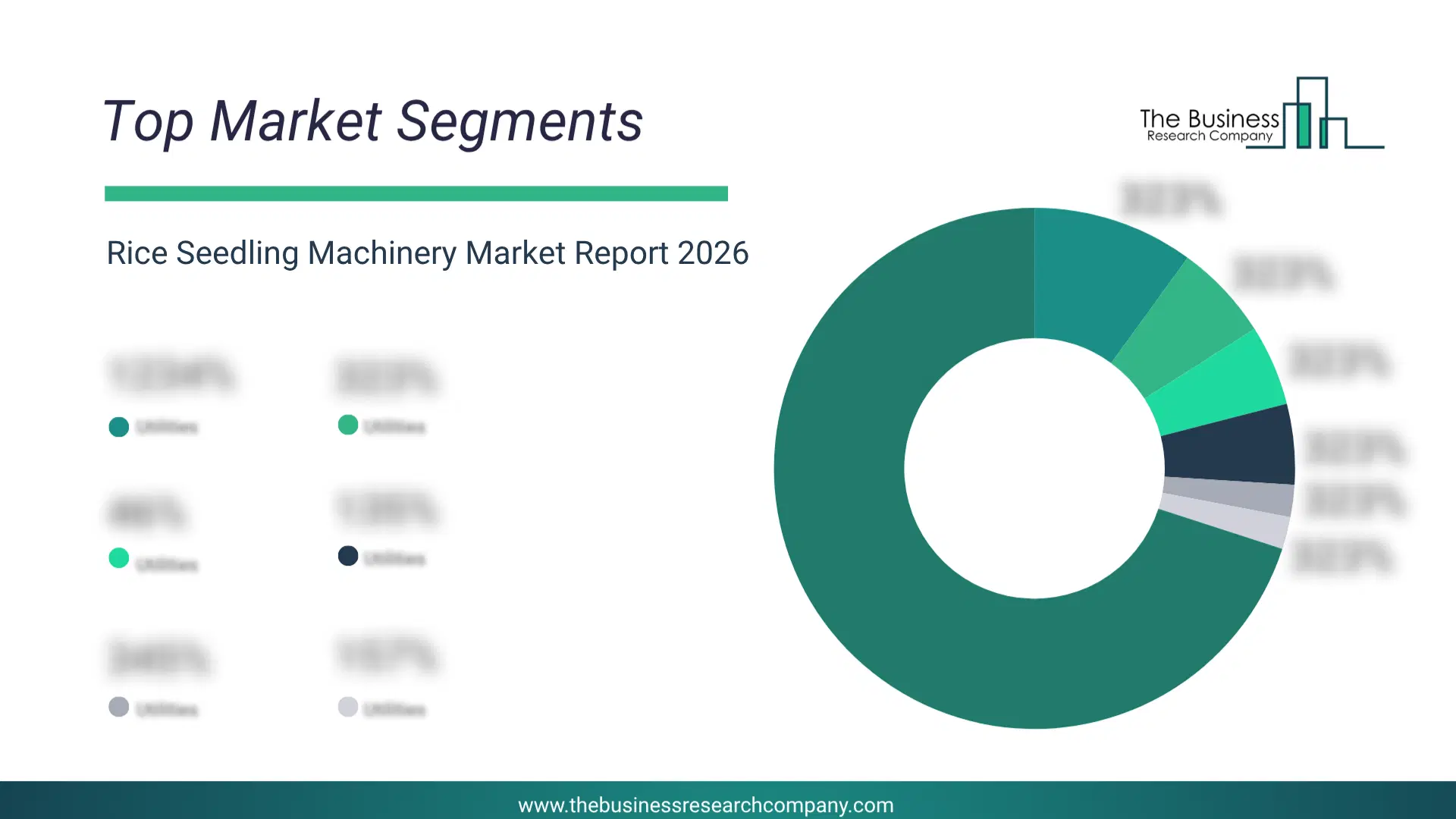
Global Rice Seedling Machinery Market Segmentation
1) By Equipment Type: Transplanters, Seedling Trays, Seeders, Fertilizer Applicators, Irrigation Systems 2) By Technology: Manual, Mechanical, Automated, Electric, Hybrid 3) By Farm Size: Small Scale Farms, Medium Scale Farms, Large Scale Farms, Commercial Agriculture 4) By End-User: Farmers, Agricultural Cooperatives, Commercial Plantations, Research Institutions, Government Agricultural Programs Subsegments: 1) By Transplanters: Walk-Behind Rice Transplanters, Ride-On Rice Transplanters, Manual Rice Transplanters, Autonomous Rice Transplanters 2) By Seedling Trays: Plastic Seedling Trays, Biodegradable Seedling Trays, Paper Pulp Seedling Trays, Foam Seedling Trays 3) By Seeders: Drum Seeders, Mat Nursery Seeders, Tray Seeders, Vacuum Seeders 4) By Fertilizer Applicators: Granular Fertilizer Applicators, Liquid Fertilizer Applicators, Controlled Release Fertilizer Applicators, Organic Fertilizer Applicators 5) By Irrigation Systems: Sprinkler Irrigation Systems, Drip Irrigation Systems, Mist Irrigation Systems, Flood Irrigation SystemsWhat Is The Driver Of The Rice Seedling Machinery Market?
The rising agricultural labor costs are expected to propel the growth of the rice seedling machinery market going forward. Agricultural labor costs refer to the wages and related expenses incurred for hiring workers to perform farming activities such as planting, transplanting, cultivating, and harvesting crops. Rising agricultural labor costs are driven by rural labor shortages, which increase competition for farm workers and push agricultural wages higher. Rising agricultural labor costs encourage farmers to adopt rice seedling machinery to reduce dependence on manual labor, improve transplanting efficiency, lower operating costs, and enhance productivity during peak planting seasons. For instance, in May 2025, according to the American Farm Bureau Federation (AFBF), a US-based national agricultural advocacy and membership organization, wage expenses for small farms increase by approximately 30% annually, while large farms experience annual wage cost increases of more than 10%. Therefore, the rising agricultural labor costs are driving the growth of the rice seedling machinery industry.Key Players In The Global Rice Seedling Machinery Market
Major companies operating in the rice seedling machinery market are Deere & Company, China National Machinery Industry Corporation, Kubota Corporation, CNH Industrial N.V., Yanmar Holdings Co. Ltd., Zoomlion Heavy Industry Science and Technology Co. Ltd., Dongfeng Agricultural Machinery Group Co. Ltd., ISEKI & Co. Ltd., Daedong Corporation, Tractors and Farm Equipment Limited, Tirth Agro Technology Private Limited, Shandong Huasheng Zhongtian Machinery Group Co. Ltd., VST Tillers Tractors Limited, Shrachi Agrimech Private Limited, AGCO Corporation, Changfa Agricultural Equipment Co. Ltd., Hunan Nongyou Machinery Group Co. Ltd., Zhengzhou Taizy Machinery Co. Ltd., Mahindra & Mahindra Ltd., TYM Corporation, Jiangsu World Agriculture Machinery Co. Ltd.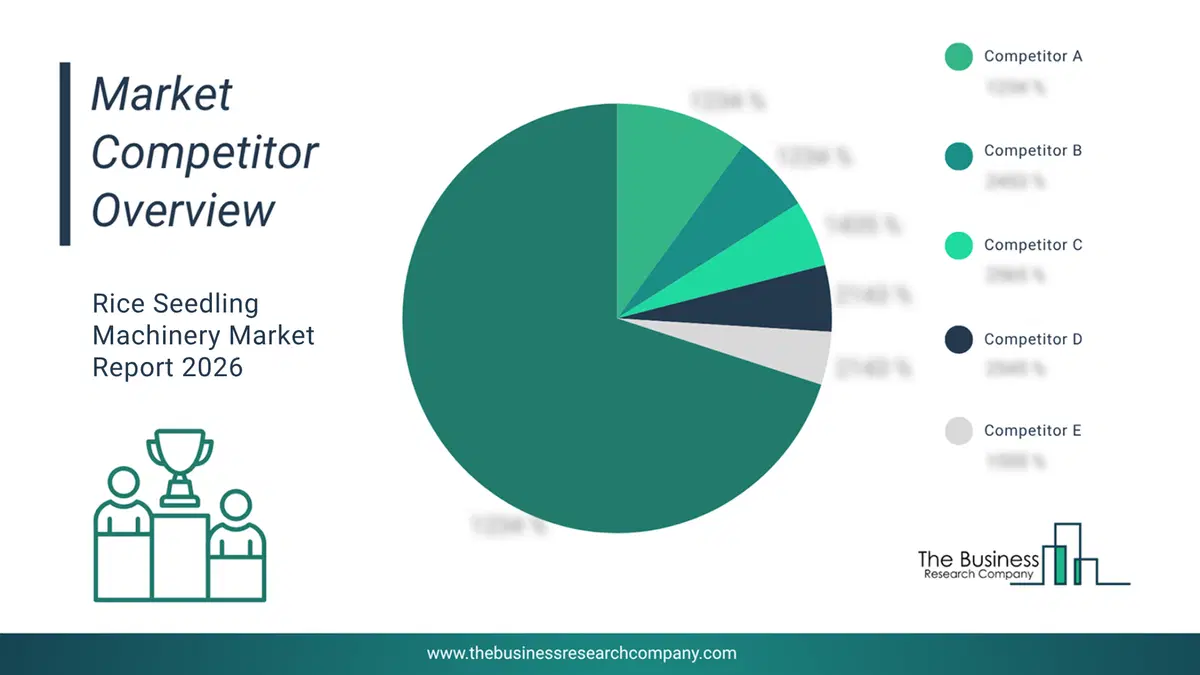
This chart is for illustrative purposes; the full report includes a detailed competitor analysis and comprehensive overview of the top 10 companies in the market.
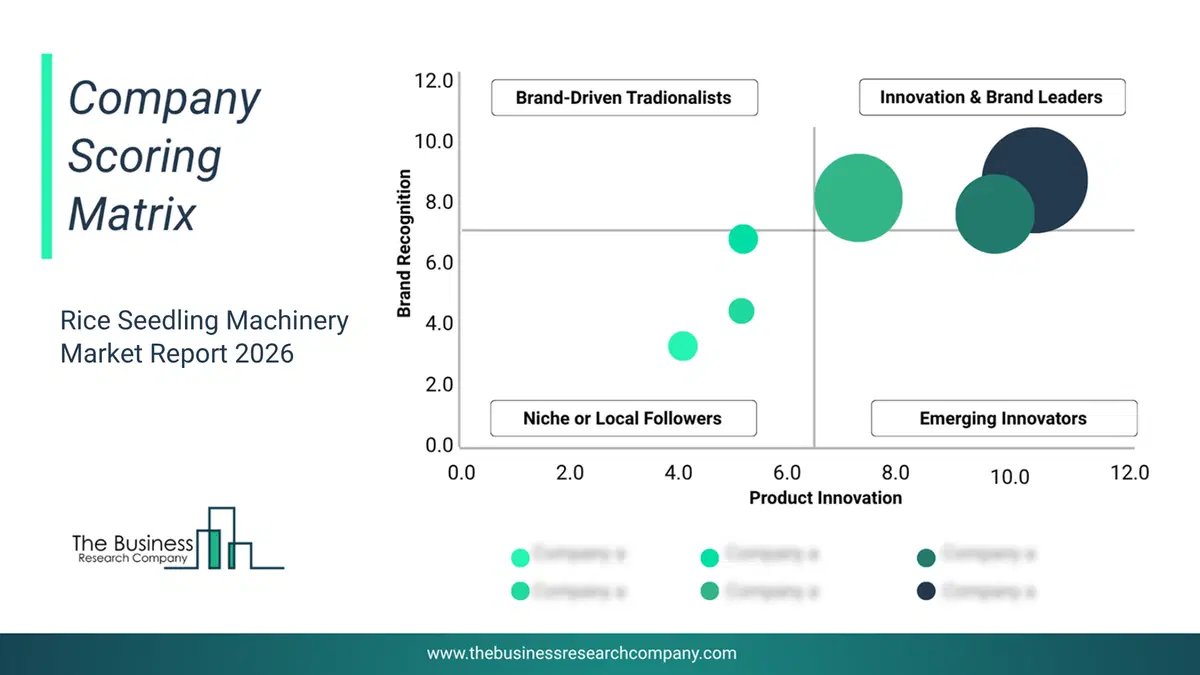
This chart maps companies by product innovation and brand strength, with bubble size indicating relative revenue, helping identify market leaders, challengers, and niche players. This is an illustrative chart; the full report provides a complete and accurate competitive analysis.
Global Rice Seedling Machinery Market Trends and Insights
Major companies operating in the rice seedling machinery market are focusing on developing advanced solutions, such as ride-on rice transplanters, to improve planting precision, reduce labor requirements, enhance operator comfort, and increase productivity in mechanized paddy cultivation. Ride-on rice transplanters refer to specialized agricultural machines designed to automatically transplant nursery-grown rice seedlings into paddy fields with uniform spacing and depth, enabling efficient planting operations, improved crop establishment, and higher operational efficiency. For instance, in November 2025, Escorts Kubota Limited, an India-based agricultural and construction equipment manufacturer, launched its third-generation Kubota KA6 and Kubota KA8 Ride-On Rice Transplanters. The new models feature fuel-efficient 21 HP and 24 HP engines, smart turning systems for smoother maneuverability, automatic lift functionality for easier cornering, redesigned planting claws and improved seedling picking guides for enhanced planting accuracy, and ergonomic platforms with LED lighting to improve operator comfort, supporting faster, more uniform, and more efficient mechanized rice transplanting.What Are Latest Mergers And Acquisitions In The Rice Seedling Machinery Market?
In February 2026, DOST-MIRDC, a Philippines-based government research and development organization focused on metals and engineering technologies, partnered with PhilMech to develop and promote a rice transplanter attachment for hand tractors. Through this partnership, DOST-MIRDC aims to improve rice planting efficiency by enabling existing hand tractors to perform transplanting operations, reducing labor requirements, improving seedling spacing, and increasing farm productivity. PhilMech is a Philippines-based government agency focused on developing and promoting agricultural mechanization technologies and equipment.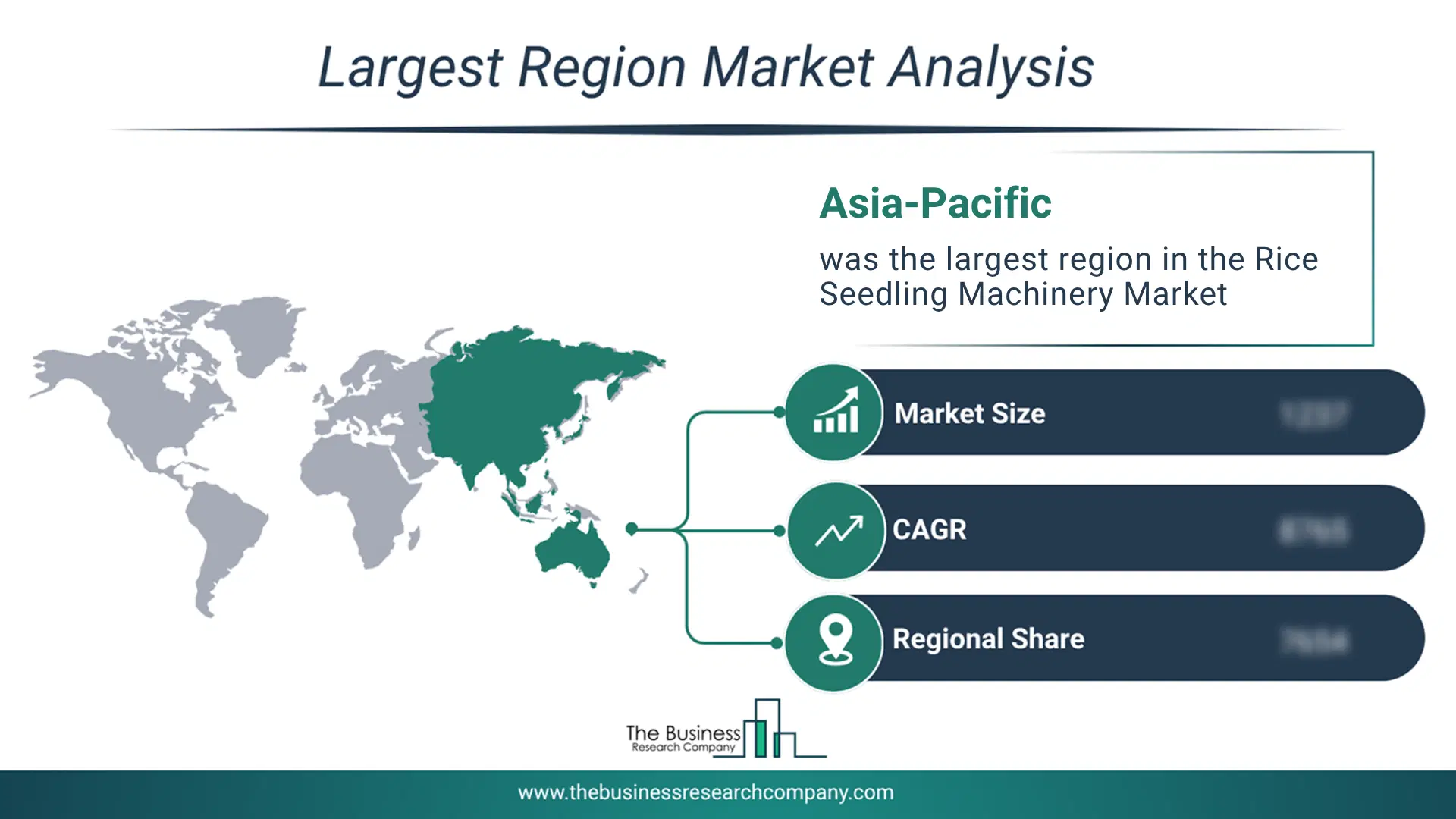
Regional Outlook
Asia-Pacific was the largest region in the rice seedling machinery market in 2025. Asia-Pacific is expected to be the fastest-growing region in the forecast period. The regions covered in this market report are Asia-Pacific, South East Asia, Western Europe, Eastern Europe, North America, South America, Middle East, Africa. The countries covered in this market report are Australia, Brazil, China, France, Germany, India, Indonesia, Japan, Taiwan, Russia, South Korea, UK, USA, Canada, Italy, Spain.What Defines the Rice Seedling Machinery Market?
The rice seedling machinery market consists of sales of nursery soil preparation machines, seed treatment machines, seed soaking and germination equipment, seedling lifting machines, nursery bed preparation machines, seedling transport systems, automated nursery management equipment, root washing machines, seedling grading machines, and seedling handling equipmen. Values in this market are ‘factory gate’ values, that is the value of goods sold by the manufacturers or creators of the goods, whether to other entities (including downstream manufacturers, wholesalers, distributors and retailers) or directly to end customers. The value of goods in this market includes related services sold by the creators of the goods.How is Market Value Defined and Measured?
The market value is defined as the revenues that enterprises gain from the sale of goods and/or services within the specified market and geography through sales, grants, or donations in terms of the currency (in USD unless otherwise specified). The revenues for a specified geography are consumption values that are revenues generated by organizations in the specified geography within the market, irrespective of where they are produced. It does not include revenues from resales along the supply chain, either further along the supply chain or as part of other products.
This chart presents market attractiveness based on a quantitative evaluation of growth, competition, strategic alignment, and risk, offering a clear view of opportunity areas for decision-making. This chart is for illustrative purposes; the full report contains the complete analysis.

This chart highlights the Total Addressable Market (TAM) by estimating the maximum revenue opportunity using an assumption-driven approach, supporting strategic planning and opportunity sizing across markets. The chart is illustrative; the full report provides a more comprehensive analysis.
What Key Data and Analysis Are Included in the Rice Seedling Machinery Market Report 2026?
The rice seedling machinery market research report is one of a series of new reports from The Business Research Company that provides market statistics, including industry global market size, regional shares, competitors with the market share, detailed market segments, market trends and opportunities, and any further data you may need to thrive in the rice seedling machinery industry. The market research report delivers a complete perspective of everything you need, with an in-depth analysis of the current and future state of the industry.Rice Seedling Machinery Market Report Forecast Analysis
| Report Attribute | Details |
|---|---|
| Market Size Value In 2026 | $1.85 billion |
| Revenue Forecast In 2030 | $2.69 billion |
| Growth Rate | CAGR of 9.9% from 2026 to 2030 |
| Base Year For Estimation | 2025 |
| Actual Estimates/Historical Data | 2020-2025 |
| Forecast Period | 2026 - 2030 |
| Market Representation | Revenue in USD Billion and CAGR from 2026 to 2030 |
| Segments Covered | Equipment Type, Technology, Farm Size, End-User |
| Regional Scope | Asia-Pacific, Western Europe, Eastern Europe, North America, South America, Middle East, Africa |
| Country Scope | The countries covered in the report are Australia, Brazil, China, France, Germany, India, Indonesia, Japan, Taiwan, Russia, South Korea, UK, USA, Canada, Italy, Spain. |
| Key Companies Profiled | Deere & Company, China National Machinery Industry Corporation, Kubota Corporation, CNH Industrial N.V., Yanmar Holdings Co. Ltd., Zoomlion Heavy Industry Science and Technology Co. Ltd., Dongfeng Agricultural Machinery Group Co. Ltd., ISEKI & Co. Ltd., Daedong Corporation, Tractors and Farm Equipment Limited, Tirth Agro Technology Private Limited, Shandong Huasheng Zhongtian Machinery Group Co. Ltd., VST Tillers Tractors Limited, Shrachi Agrimech Private Limited, AGCO Corporation, Changfa Agricultural Equipment Co. Ltd., Hunan Nongyou Machinery Group Co. Ltd., Zhengzhou Taizy Machinery Co. Ltd., Mahindra & Mahindra Ltd., TYM Corporation, Jiangsu World Agriculture Machinery Co. Ltd. |
| Customization Scope | Request for Customization |
| Pricing And Purchase Options | Explore Purchase Options |