
Rich Communication Services (RCS) Market Report 2026
Global Outlook – By Type (Application-to-Person (A2P), Person-To-Application (P2A), Person-to-Person (P2P)), By Development Model (On-Premise, Cloud), By Enterprise Size (Small And Medium Enterprises, Large Enterprises), By Application (Rich Calls And Messaging, Content Delivery, Value Added Services, Marketing And Advertising Campaign), By Industrial Vertical (Healthcare, Retail And E-commerce, Banking, Financial Services And Insurance (BFSI), IT And Telecom, Travel And Tourism, Other Industrial Verticals) – Market Size, Trends, Strategies, and Forecast to 2030
Rich Communication Services (RCS) Market Overview
• Rich Communication Services (RCS) market size has reached to $10.09 billion in 2025 • Expected to grow to $46.75 billion in 2030 at a compound annual growth rate (CAGR) of 36% • Growth Driver: Government Initiatives For Telecommuncation Market Boost • Market Trend: Partnerships Driving Competitive Advantage In Rcs Market • North America was the largest region in 2025.Market Gains By 2030 – Top Opportunities By Segment
Market Gain identifies the most promising market opportunities by highlighting the segments or products expected to generate the highest incremental revenue growth over the next five years.
What Is Covered Under Rich Communication Services (RCS) Market?
Rich Communication Services (RCS) is a messaging protocol that allows for more advanced communication between mobile devices compared to traditional SMS messaging. It allows users to organize group conversations with their peers, transmit images and videos, receive read receipts, and use end-to-end encryption. The main types of rich communication services (RCS) are A2P, P2A, and P2P. A2P (Application-to-Person messaging) is a sort of corporate messaging in which marketers send text messages to mobile customers via a software application. A2P (Application-to-Person messaging) is used for sending alerts, notifications, and other types of automated messages. It is deployed on-premises and cloud, in small and medium enterprises and large enterprises. It is used in rich calls and messaging, content delivery, value added services, marketing and advertising campaign, and cloud storage, by healthcare, retail and e-commerce, BFSI, IT and telecom, travel and tourism, and others.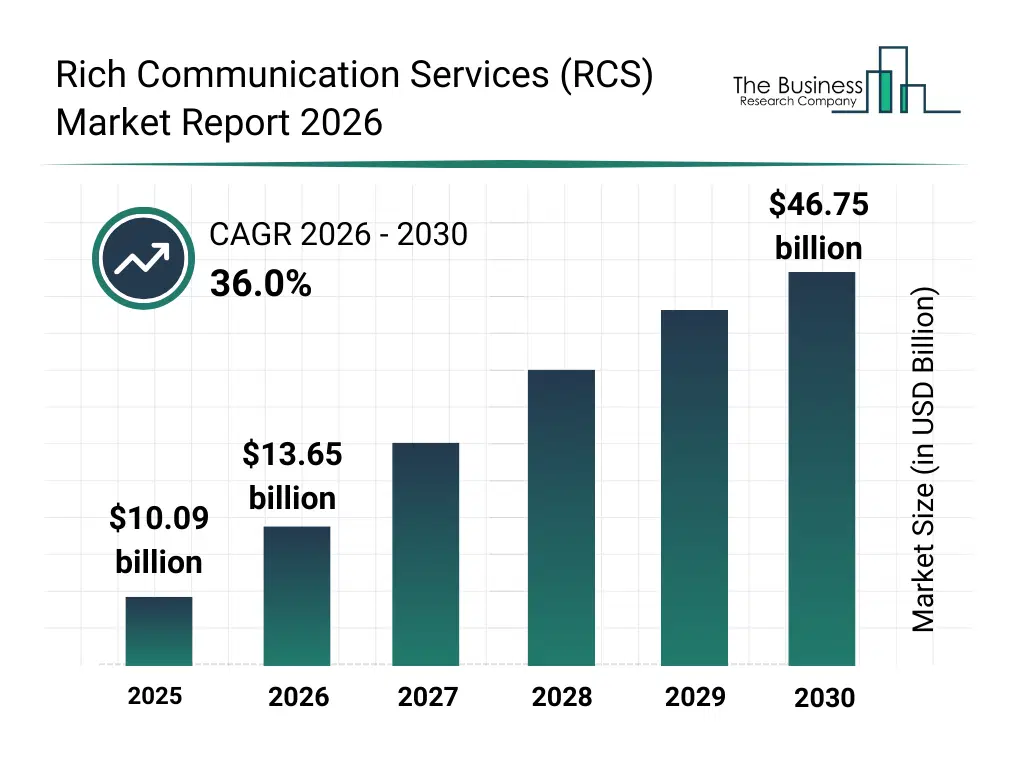
What Is The Rich Communication Services (RCS) Market Size and Share 2026?
The rich communication services (rcs) market size has grown exponentially in recent years. It will grow from $10.09 billion in 2025 to $13.65 billion in 2026 at a compound annual growth rate (CAGR) of 35.2%. The growth in the historic period can be attributed to increasing adoption of mobile messaging, growth of smartphones and mobile networks, early adoption of sms and mms services, rising demand for business messaging solutions, expansion of enterprise communication tools.What Is The Rich Communication Services (RCS) Market Growth Forecast?
The rich communication services (rcs) market size is expected to see exponential growth in the next few years. It will grow to $46.75 billion in 2030 at a compound annual growth rate (CAGR) of 36.0%. The growth in the forecast period can be attributed to growth in rcs adoption for marketing and customer engagement, increasing integration with AI-powered chatbots, expansion of cloud-based messaging platforms, rising demand for secure and encrypted communications, adoption by healthcare, retail, and bfs sectors. Major trends in the forecast period include advanced multimedia messaging, end-to-end encrypted messaging, cloud-based messaging platforms, marketing and customer engagement via rcs, real-time notifications and alerts.
Global Rich Communication Services (RCS) Market Segmentation
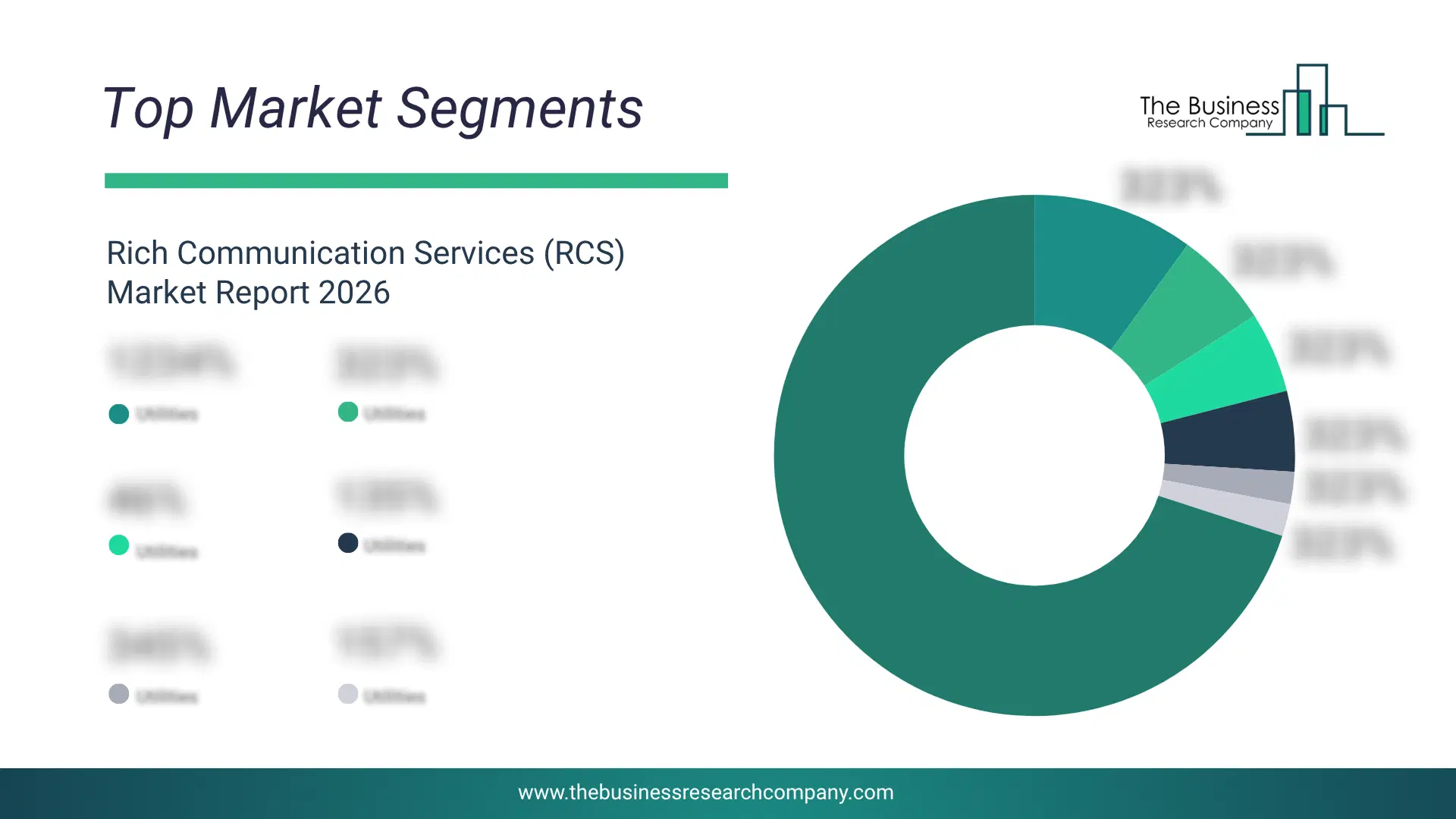
1) By Type: Application-to-Person (A2P), Person-To-Application (P2A), Person-to-Person (P2P) 2) By Development Model: On-Premise, Cloud 3) By Enterprise Size: Small And Medium Enterprises, Large Enterprises 4) By Application: Rich Calls And Messaging, Content Delivery, Value Added Services, Marketing And Advertising Campaign 5) By Industrial Vertical: Healthcare, Retail And E-commerce, Banking, Financial Services And Insurance (BFSI), IT And Telecom, Travel And Tourism, Other Industrial Verticals Subsegments: 1) By Application-To-Person (A2P): Marketing Messages, Transactional Messages, Notifications And Alerts 2) By Person-To-Application (P2A): Customer Support Interactions, Service Requests, Feedback And Surveys 3) By Person-To-Person (P2P): One-On-One Messaging, Group Chats, Multimedia Messaging The top segments in the rich communication services (rcs) market will be: • Application-to-Person (A2P) will reach $29.24 Billion by 2030. • Person-To-Application (P2A) will reach $10.9 Billion by 2030. • Person-to-Person (P2P) will reach $6.34 Billion by 2030.What Is The Driver Of The Rich Communication Services (RCS) Market?
Government initiatives for telecommunications are expected to propel the growth of the rich communication services (RCS) market going forward. Government initiatives refer to actions or programs introduced by a government to address specific issues, promote certain goals, or implement policies aimed at improving society, the economy, public services, or the overall well-being of its citizens. Government support can provide the necessary framework, resources, and incentives to propel the growth of RCS, making it more accessible, secure, and appealing to users across different segments of society. For instance, in October 2023, according to the data from the Department for Science, Innovation, and Technology, conducted by UK Research and Innovation, a UK-based government agency, in 2023, the UK government allocated £70 million to the Future Telecoms UKRI Technology Missions Fund (TMF) program, supporting the development of next-generation telecommunications technology in the UK. Therefore, increasing government initiatives for telecommunication drive the rich communication services (RCS) industry.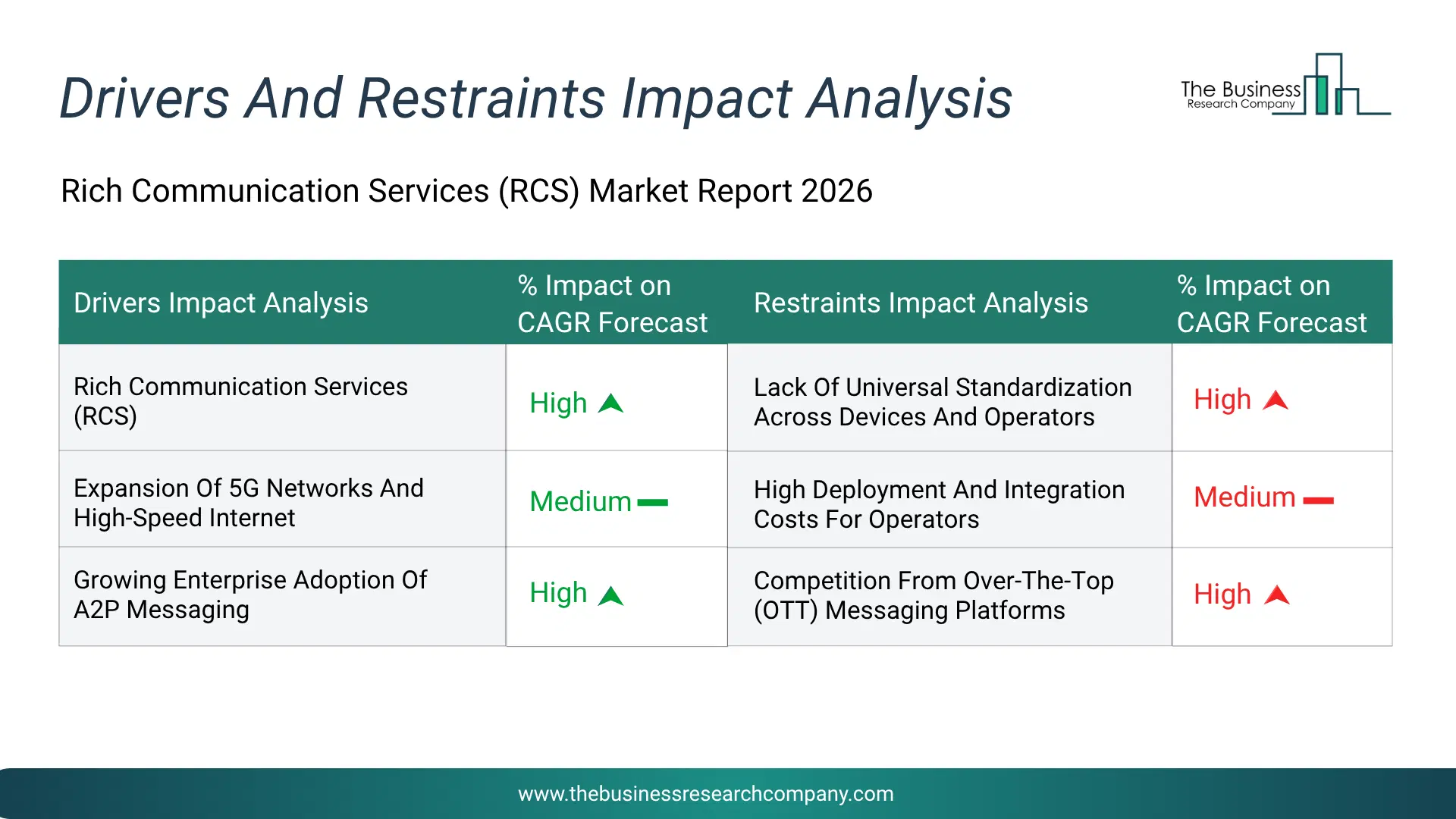
Infographic Chart Showing Key Market Drivers Analysis And Restraints For Rich Communication Services (Rcs) Market
The chart presents an impact analysis of key drivers and restraints, quantifying their relative influence on the market's growth rate and helping assess the balance between growth enablers and limiting factors. This chart offers a high-level perspective; the full report contains more detailed insights.
How Will The Drivers Impact Growth In The Global Rich Communication Services (RCS) Market?
• Rich Communication Services (RCS) (High) – During the forecast period, the rising demand for interactive customer engagement solutions is expected to become a key growth driver for the rich communication services (RCS) market by 2030. Businesses are increasingly seeking advanced messaging capabilities that enable rich media sharing, branded interactions, and real-time customer support within native mobile messaging environments. RCS allows organizations to deliver more engaging and personalized communication experiences compared to conventional messaging channels. As customer expectations continue to shift toward seamless digital interactions, enterprises are expanding investments in next-generation messaging platforms. • Expansion Of 5G Networks And High-Speed Internet (Medium) – During the forecast period, the expansion of 5G networks and high-speed internet is expected to emerge as a major factor driving the expansion of the rich communication services (RCS) market by 2030. Improved network infrastructure enables faster transmission of rich media content, enhanced messaging reliability, and superior user experiences across mobile devices. The growing availability of high-bandwidth connectivity supports advanced communication features such as high-resolution image sharing, interactive content, and business messaging applications. • Growing Enterprise Adoption Of A2P Messaging (High) – During the forecast period, the growing enterprise adoption of A2P messaging is expected to act as a key growth catalyst for the rich communication services (RCS) market by 2030. Organizations across multiple sectors are utilizing application-to-person messaging for customer notifications, authentication services, appointment reminders, and promotional campaigns. The ability to deliver verified, secure, and highly interactive communications is encouraging broader adoption among enterprises seeking higher customer response rates. Furthermore, increasing digitalization initiatives are strengthening the role of business messaging within customer communication strategies.How Will The Restraints Impact Growth In The Global Rich Communication Services (RCS) Market?
• Lack Of Universal Standardization Across Devices And Operators (High) – During the forecast period, the absence of a fully unified global standard for RCS across mobile devices, operating systems, and telecom operators significantly limits its seamless adoption. While RCS is promoted as a successor to SMS, inconsistencies in implementation—such as varying feature availability, compatibility gaps between Android and iOS ecosystems, and operator-specific configurations—create a fragmented user experience. This fragmentation discourages both consumers and enterprises from fully relying on RCS as a primary communication channel. For example, a feature like read receipts or rich media sharing may function differently depending on the carrier or device, reducing reliability. Businesses seeking to deploy RCS-based customer engagement solutions often face uncertainty regarding reach and performance consistency. As a result, enterprises may hesitate to invest heavily in RCS campaigns when compared to more standardized alternatives. The lack of interoperability also slows innovation, as developers must account for multiple variations rather than building for a single, cohesive ecosystem. Furthermore, cross-border messaging can face additional inconsistencies, limiting RCS’s effectiveness in global communications. This lack of standardization ultimately restricts network effects, which are crucial for the widespread success of any communication platform. Consequently, the market experiences slower adoption rates and reduced scalability. • High Deployment And Integration Costs For Operators (Medium) – During the forecast period, the implementing RCS infrastructure requires substantial investment from telecom operators, making it a significant barrier to market expansion. Unlike traditional SMS systems, RCS demands upgrades to existing network architecture, including IP-based messaging systems, servers, and enhanced security frameworks. Operators must also invest in integrating RCS platforms with legacy systems, billing infrastructure, and customer management tools, which increases complexity and cost. These high upfront capital expenditures can deter smaller or financially constrained operators from adopting the technology. Additionally, ongoing operational costs such as maintenance, updates, and cybersecurity enhancements further add to the financial burden. The need for partnerships with technology providers and platform vendors also introduces additional expenses and dependencies. In regions with lower average revenue per user (ARPU), operators may struggle to justify these investments due to uncertain returns. This leads to uneven adoption across geographies, limiting the global scalability of RCS services. As a result, the overall ecosystem grows at a slower pace, reducing its attractiveness to enterprises and developers. High costs also translate into delayed rollouts, which can hinder competitive positioning against faster-moving alternatives. Therefore, financial and technical barriers significantly restrain market growth. • Competition From Over-The-Top (OTT) Messaging Platforms (High) – During the forecast period, the RCS faces intense competition from well-established over-the-top messaging platforms such as WhatsApp, Telegram, and Facebook Messenger, which already dominate global communication. These platforms offer similar or more advanced features, including multimedia sharing, end-to-end encryption, voice and video calling, and chatbot integrations, often with a more consistent and user-friendly experience. Unlike RCS, OTT apps operate independently of telecom operators, allowing them to innovate rapidly and deploy updates without network constraints. They also benefit from massive existing user bases, strong brand recognition, and cross-platform compatibility, making them more appealing to consumers. Additionally, OTT platforms typically rely on internet connectivity rather than carrier infrastructure, which reduces costs for users and increases accessibility. Enterprises also prefer OTT channels for customer engagement due to their global reach, analytics capabilities, and established ecosystems. The network effect further strengthens OTT dominance, as users are more likely to adopt platforms where their contacts are already active. This creates a challenging environment for RCS to gain traction, particularly in markets where OTT usage is deeply entrenched. As a result, RCS struggles to differentiate itself and achieve widespread adoption, limiting its market growth potential.Key Players In The Global Rich Communication Services (RCS) Market
Major companies operating in the rich communication services (rcs) market are AT&T Inc., Vodafone Idea Limited, Deutsche Telekom AG, Google LLC, Verizon Communications Inc., SK Telecom Co. Ltd., ZTE Corporation, Global Message Services, HRMavenir Systems Inc., Infobip Ltd., Huawei Technologies Co. Ltd., T-Mobile Inc., Ericssion, Reliance Jio Infocomm Limited, Swisscom AG, Telefónica S.A., Bell Canada Enterprises Inc., TELUS Communications Inc., Rogers Communications Inc., China Mobile Communications Corporation, NTT Docomo Inc., SoftBank Group Corporation, KDDI Corporation, KT Corporation, LG Uplus Corp., Singapore Telecommunications Limited, StarHub Limited, M1 Limited, True Corporation Public Company Limited, TOT Public Company Limited, Total Access Communication PCL (DTAC), Advanced Info Service Public Company Limited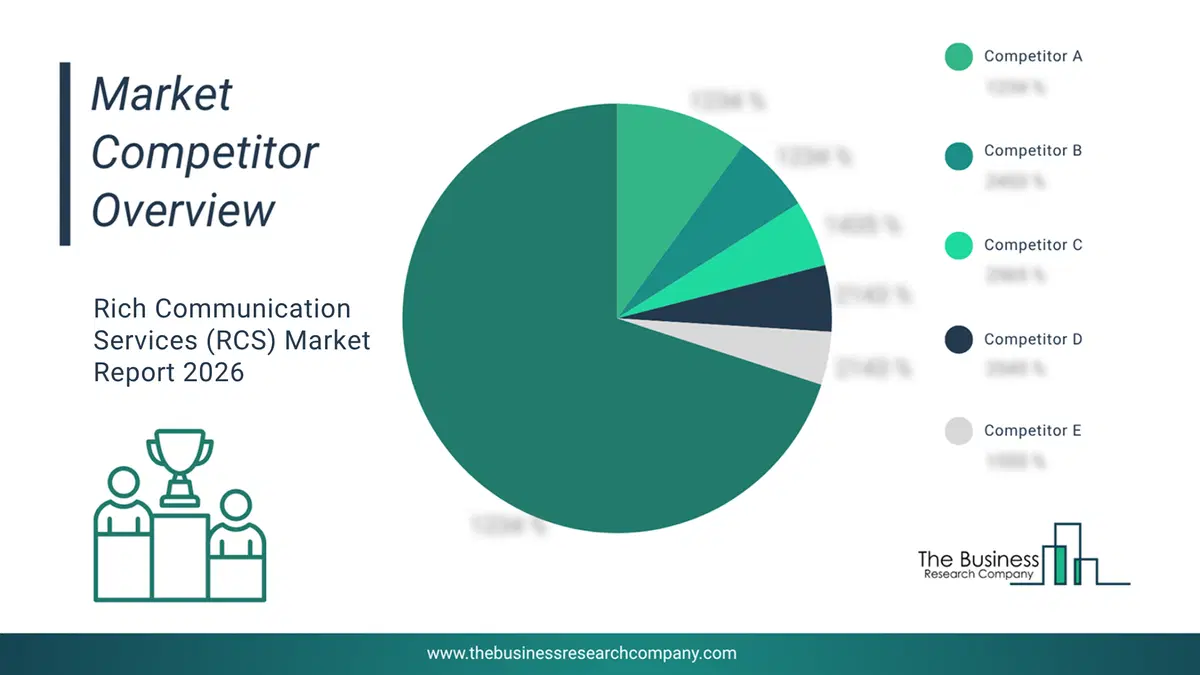
This chart is for illustrative purposes; the full report includes a detailed competitor analysis and comprehensive overview of the top 10 companies in the market.
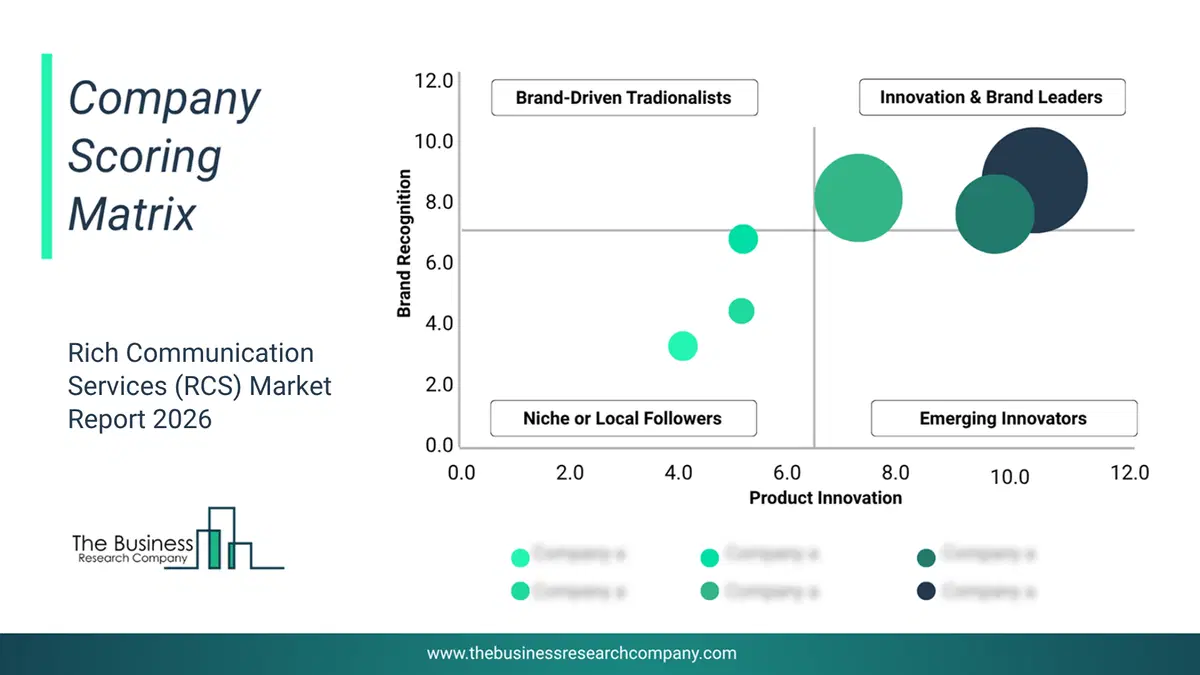
This chart maps companies by product innovation and brand strength, with bubble size indicating relative revenue, helping identify market leaders, challengers, and niche players. This is an illustrative chart; the full report provides a complete and accurate competitive analysis.
Global Rich Communication Services (RCS) Market Trends and Insights
Major companies operating in the rich communication services market are undergoing partnerships to gain a competitive edge in the market. Partnerships in the rich communication services market foster synergy, allowing companies to combine strengths and resources to create more comprehensive, user-friendly, and competitive offerings in the rich communication services sector. For instance, In February 2023, Vodafone, a UK‑based telecommunications company, partnered with Google, a US‑based technology company, to power Vodafone’s existing and future Rich Communication Services (RCS) messaging with Google’s Jibe Cloud, expand Pixel device availability, and standardize Android TV on Vodafone’s TV platform. With this collaboration, Vodafone aims to provide richer, interactive messaging experiences and modern Android devices to its users while leveraging Google’s scalable, cloud-native infrastructure. Google is a US‑based provider of internet services, cloud computing, mobile devices, and messaging platforms.What Are Latest Mergers And Acquisitions In The Rich Communication Services (RCS) Market?
In April 2023, Quebecor Inc., a Canada-based wired telecommunications carrier company that operates in the media, telecommunications, and sports and entertainment industries, acquired Freedom Mobile for an undisclosed amount. Through this acquisition, Quebecor Inc. aims to create a strong fourth wireless provider in Canada, enhancing competition and lowering prices for consumers. The company plans to leverage Freedom's infrastructure and skilled workforce to improve service offerings, invest in advanced technology such as 5G, and ultimately drive affordability and innovation in the telecommunications market. Freedom Mobile is a Canada-based wireless carrier company specializing in affordable wireless communication services, including voice, text, and data plans, and it provides rich communication services (RCS).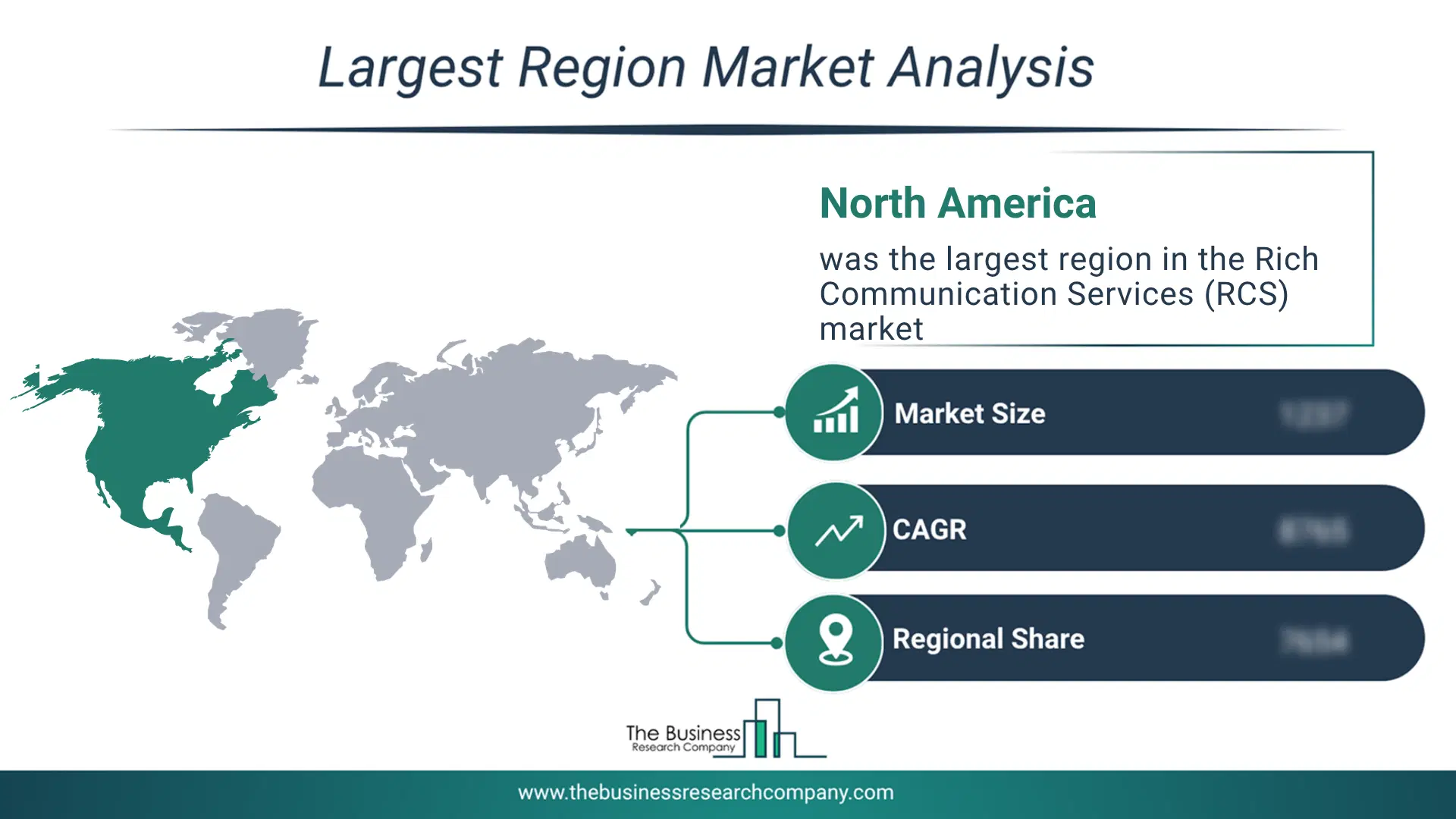
Regional Insights
North America was the largest region in the rich communication services (RCS) market in 2025. The regions covered in this market report are Asia-Pacific, South East Asia, Western Europe, Eastern Europe, North America, South America, Middle East, Africa. The countries covered in this market report are Australia, Brazil, China, France, Germany, India, Indonesia, Japan, Taiwan, Russia, South Korea, UK, USA, Canada, Italy, Spain.What Defines the Rich Communication Services (RCS) Market?
The rich communication services (RCS) market includes revenues earned by entities by group messaging, rich media sharing, read receipts, typing indicators, chatbot and enhanced calling. The market value includes the value of related goods sold by the service provider or included within the service offering. Only goods and services traded between entities or sold to end consumers are included.How is Market Value Defined and Measured?
The market value is defined as the revenues that enterprises gain from the sale of goods and/or services within the specified market and geography through sales, grants, or donations in terms of the currency (in USD unless otherwise specified). The revenues for a specified geography are consumption values that are revenues generated by organizations in the specified geography within the market, irrespective of where they are produced. It does not include revenues from resales along the supply chain, either further along the supply chain or as part of other products.
This chart presents market attractiveness based on a quantitative evaluation of growth, competition, strategic alignment, and risk, offering a clear view of opportunity areas for decision-making. This chart is for illustrative purposes; the full report contains the complete analysis.

This chart highlights the Total Addressable Market (TAM) by estimating the maximum revenue opportunity using an assumption-driven approach, supporting strategic planning and opportunity sizing across markets. The chart is illustrative; the full report provides a more comprehensive analysis.
What Key Data and Analysis Are Included in the Rich Communication Services (RCS) Market Report 2026?
The rich communication services (rcs) market research report is one of a series of new reports from The Business Research Company that provides market statistics, including industry global market size, regional shares, competitors with the market share, detailed market segments, market trends and opportunities, and any further data you may need to thrive in the rich communication services (rcs) industry. The market research report delivers a complete perspective of everything you need, with an in-depth analysis of the current and future state of the industry.Rich Communication Services (RCS) Market Report Forecast Analysis
| Report Attribute | Details |
|---|---|
| Market Size Value In 2026 | $13.65 billion |
| Revenue Forecast In 2030 | $46.75 billion |
| Growth Rate | CAGR of 35.2% from 2026 to 2030 |
| Base Year For Estimation | 2025 |
| Actual Estimates/Historical Data | 2020-2025 |
| Forecast Period | 2026 - 2030 |
| Market Representation | Revenue in USD Billion and CAGR from 2026 to 2030 |
| Segments Covered | Type, Development Model, Enterprise Size, Application, Industrial Vertical |
| Regional Scope | Asia-Pacific, Western Europe, Eastern Europe, North America, South America, Middle East, Africa |
| Country Scope | The countries covered in the report are Australia, Brazil, China, France, Germany, India, Indonesia, Japan, Taiwan, Russia, South Korea, UK, USA, Canada, Italy, Spain. |
| Key Companies Profiled | AT&T Inc., Vodafone Idea Limited, Deutsche Telekom AG, Google LLC, Verizon Communications Inc., SK Telecom Co. Ltd., ZTE Corporation, Global Message Services, HRMavenir Systems Inc., Infobip Ltd., Huawei Technologies Co. Ltd., T-Mobile Inc., Ericssion, Reliance Jio Infocomm Limited, Swisscom AG, Telefónica S.A., Bell Canada Enterprises Inc., TELUS Communications Inc., Rogers Communications Inc., China Mobile Communications Corporation, NTT Docomo Inc., SoftBank Group Corporation, KDDI Corporation, KT Corporation, LG Uplus Corp., Singapore Telecommunications Limited, StarHub Limited, M1 Limited, True Corporation Public Company Limited, TOT Public Company Limited, Total Access Communication PCL (DTAC), Advanced Info Service Public Company Limited |
| Customization Scope | Request for Customization |
| Pricing And Purchase Options | Explore Purchase Options |