

Robo Taxis Market Report 2026
Global Outlook – By Component Type (Camera, Radar, LiDAR, Ultrasonic Sensors, Other Component Types), By Service Type (Car Rental, Station Based), By Propulsion (Electric, Hybrid), By Application (Goods Transportation, Passenger Transportation) – Market Size, Trends, Strategies, and Forecast to 2030
Robo Taxis Market Overview
• Robo Taxis market size has reached to $2 billion in 2025 • Expected to grow to $27.29 billion in 2030 at a compound annual growth rate (CAGR) of 69.8% • Growth Driver: Rising Electric Vehicle Adoption Drives Growth in the Robo-Taxis Market • Market Trend: Strategic Partnerships Fuel Innovation and Expansion in the Robo-Taxis Market • Europe was the largest region in 2025 and Asia-Pacific is the fastest growing region.Market Gains By 2030 – Top Opportunities By Segment
Market Gain identifies the most promising market opportunities by highlighting the segments or products expected to generate the highest incremental revenue growth over the next five years.
What Is Covered Under Robo Taxis Market?
Robo-taxis are technologically advanced cars that use various advanced driver assistance technology such as front crash prevention system and rare crash prevention system, spotting different objects around them for smooth function of driving, lane departure prevention, and others that can drive safely. Robo-taxis are autonomous vehicles that are used for pickup and dropping off passengers or goods without the need for drivers, which can reduce the cost of transportation and make transport more affordable for day-to-day operations. The main types of components in robo-taxis are a camera, radar, Lidar, ultrasonic sensors, and others. The cameras are used to click images of their surrounding while driving to interpret the environmental details such as signboards, traffic lights, animals, and others for smooth driving and to avoid any type of road crash. The various services include car rental, and stations based which have different propulsion types such as electric, battery, and hybrid. The numerous applications are goods transportation, and passenger transportation.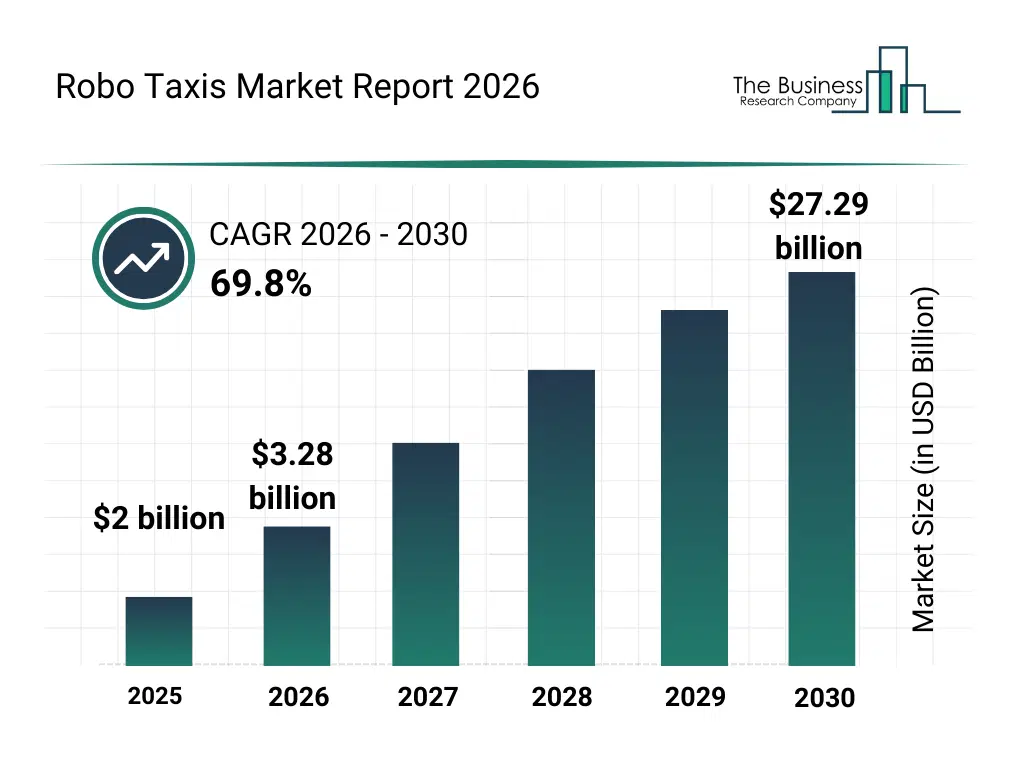
What Is The Robo Taxis Market Size and Share 2026?
The robo taxis market size has grown exponentially in recent years. It will grow from $2 billion in 2025 to $3.28 billion in 2026 at a compound annual growth rate (CAGR) of 64.4%. The growth in the historic period can be attributed to advancements in autonomous driving technologies, growth of shared mobility platforms, increasing urban congestion challenges, availability of adas-enabled vehicles, expansion of electric vehicle infrastructure.What Is The Robo Taxis Market Growth Forecast?
The robo taxis market size is expected to see exponential growth in the next few years. It will grow to $27.29 billion in 2030 at a compound annual growth rate (CAGR) of 69.8%. The growth in the forecast period can be attributed to increasing regulatory approvals for autonomous transport, rising investments in autonomous fleet operations, expansion of smart city mobility programs, growing demand for cost-efficient urban transport, increasing integration of v2x communication systems. Major trends in the forecast period include increasing pilot deployments of autonomous ride-hailing services, rising integration of advanced sensor fusion systems, growing adoption of electric robo-taxi fleets, expansion of urban mobility-as-a-service models, enhanced focus on passenger safety and redundancy.
Global Robo Taxis Market Segmentation
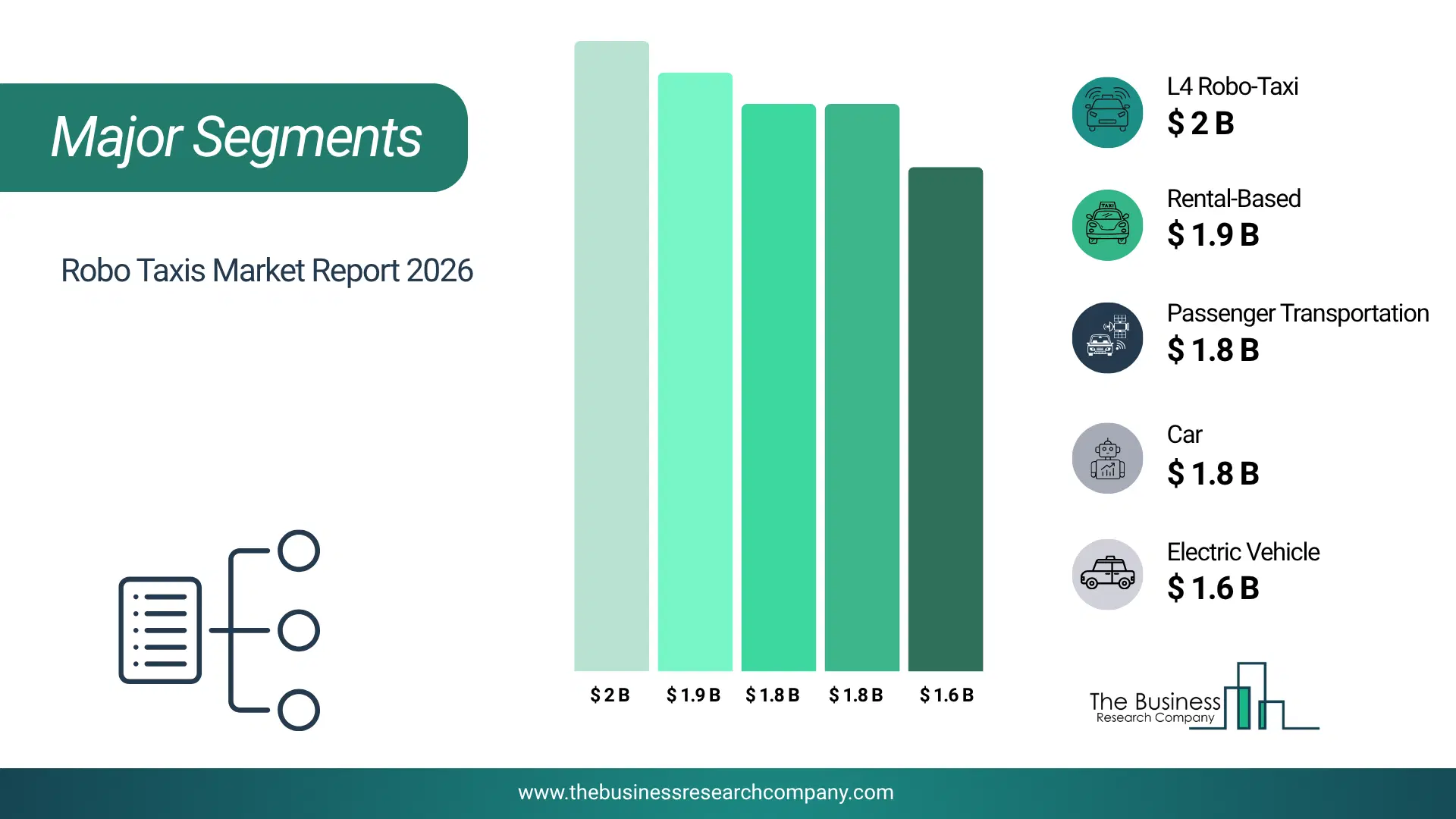
1) By Component Type: Camera, Radar, LiDAR, Ultrasonic Sensors, Other Component Types 2) By Service Type: Car Rental, Station Based 3) By Propulsion: Electric, Hybrid 4) By Application: Goods Transportation, Passenger Transportation Subsegments: 1) By Camera: Monocular Cameras, Stereo Cameras, Thermal Cameras 2) By Radar: Short-Range Radar, Long-Range Radar 3) By LiDAR: 2D LiDAR, 3D LiDAR 4) By Ultrasonic Sensors: Proximity Sensors, Parking Assist Sensors 5) By Other Component Types: GPS And Navigation Systems, Inertial Measurement Units (IMUs), Communication Modules (V2X), Processing Units (ECUs) The top segments in the robo taxis market will be: • L4 Robo-Taxi will reach $2009.12 Million by 2025. • Rental-Based will reach $1959.9 Million by 2025. • Passenger Transportation will reach $1883.6 Million by 2025. • Car will reach $1876.42 Million by 2025. • Electric Vehicle will reach $1674.86 Million by 2025.What Is The Driver Of The Robo Taxis Market?
An increase in production and sales of electric vehicles is expected to propel the growth of the robo-taxis market going forward. Electric vehicles refer to a vehicle that can be powered by an electric motor that draws electricity from a battery and is capable of being charged from an external source. The adoption of EVs in the robo-taxi market contributes to environmental sustainability, reduce air pollution and increase the adoption of connected-car features. For instance, in January 2024, according to a report published by Kelley Blue Book, a US-based Cox Automotive company, in 2023, a record 1.2 million car buyers in the United States chose electric vehicles, which accounted for 7.6% of the entire U.S. vehicle market, up from 5.9% in 2022. Therefore, increase in production and sales of electric vehicles is driving the growth of the robo-taxis market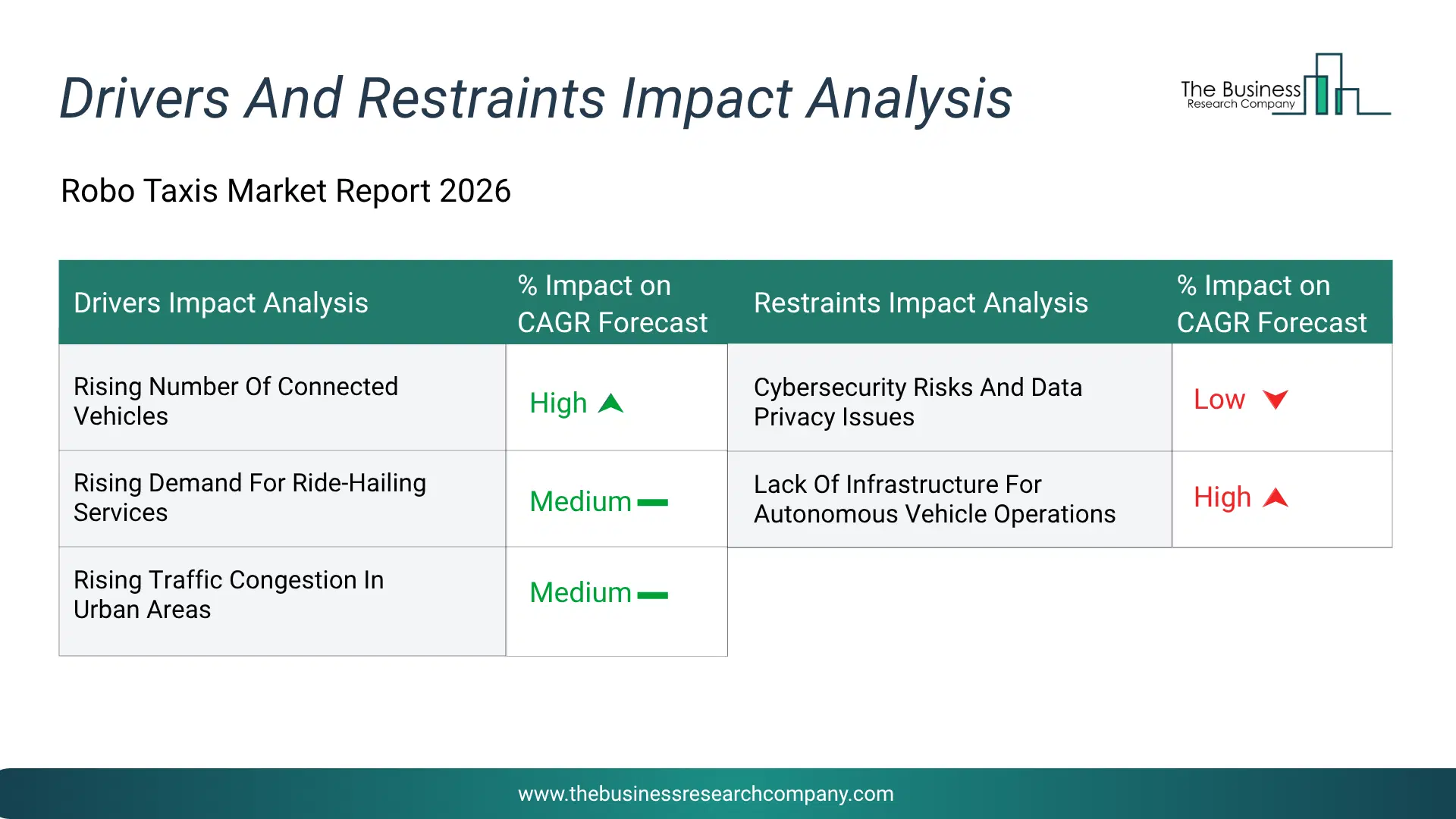
Infographic Chart Showing Key Market Drivers Analysis And Restraints For Robo Taxis Market
The chart presents an impact analysis of key drivers and restraints, quantifying their relative influence on the market's growth rate and helping assess the balance between growth enablers and limiting factors. This chart offers a high-level perspective; the full report contains more detailed insights.
How Will The Drivers Impact Growth In The Global Robo Taxis Market?
• Rising Number Of Connected Vehicles (High) – The rising number of connected vehicles will become a key driver of growth in the robo taxis market by 2030. Advances in IoT, rising demand for smart transportation, and regulatory support for vehicle-to-everything (V2X) communication fuel this growth. Robo-taxis enhance connectivity by integrating autonomous technology, accelerating the adoption of connected vehicle networks. As a result, the growing number of connected vehicles growth is anticipated to contributing to a 2.0% annual growth in the market. • Rising Demand For Ride-Hailing Services (Medium) – The rising demand for ride-hailing services will emerge as a major factor driving the expansion of the market by 2030. As app-based transportation offers convenience, affordability, and flexibility. Urbanization, smartphone penetration, and the need for cost-effective mobility fuel this trend. Robo-taxis enhance ride-hailing by providing autonomous, cost-efficient, and driverless solutions, improving accessibility and user experience. Consequently, the growing demand for ride-hailing services growth is projected to contributing to a 1.8% annual growth in the market. • Rising Traffic Congestion In Urban Areas (Medium) – The rising traffic congestion in urban areas will serve as a key growth catalyst for the market by 2030. As overcrowded road networks lead to slower travel, higher fuel consumption, and inefficiencies. Factors like population growth, increased vehicle ownership, and inadequate public transport worsen congestion. While robo-taxis offer autonomous and convenient mobility, their impact on traffic depends on proper urban planning to prevent empty vehicle movements and curb space challenges. Therefore, this rising urban traffic congestion growth is projected to supporting to a 1.5% annual growth in the market. • Rising Adoption Of Automation In Fleet Management (Medium) – The rising adoption of automation in fleet management will become a significant driver contributing to the growth of the market by 2030. As AI, IoT, and telematics optimize operations, routes, and vehicle monitoring with minimal human intervention. Factors like cost reduction, efficiency, and regulatory compliance fuel this trend. Robo-taxis enhance automation by integrating autonomous driving and smart fleet systems, paving the way for self-sustaining transportation networks. Consequently, the growing adoption of automation in fleet management growth is projected to contributing to a 1.0% annual growth in the market.How Will The Restraints Impact Growth In The Global Robo Taxis Market?
• Cybersecurity Risks And Data Privacy Issues (Medium) – Cybersecurity Risks And Data Privacy Issues will restrict the growth of the Robo Taxis market during the forecast period. Robo taxi systems rely on software and data connectivity, creating vulnerabilities to cyberattacks and data breaches. Security concerns about hacking and data privacy can affect passenger confidence and regulatory acceptance. Cybersecurity risks can limit the deployment and adoption of robo taxi services. • Lack Of Infrastructure For Autonomous Vehicle Operations (Medium) – Lack Of Infrastructure For Autonomous Vehicle Operations will restrict the growth of the Robo Taxis market during the forecast period. Robo taxi deployment requires specialized infrastructure including V2X communication, charging stations, and dedicated lanes. Infrastructure gaps in many cities limit the feasibility of robo taxi services. Infrastructure requirements can delay deployment and affect market growth.Key Players In The Global Robo Taxis Market
Major companies operating in the robo taxis market report include Waymo LLC, AutoX Inc., Tesla Inc., Baidu Inc., General Motors Company, Lyft Inc., Nissan Motor Corporation, NAVYA Group, Ford Motor Company, Mercedes-Benz Group AG, Bayerische Motoren Werke AG, Volkswagen AG, EasyMile SAS, Ridecell Inc., Nvidia Corporation, AB Volvo, Uber Technologies Inc., Aptiv plc, Beijing Xiaoju Technology Co. Ltd., MOIA GmbH, Zoox Inc., Aurora Innovation Inc., May Mobility Inc., Optimus Ride Inc., Voyage Auto Inc., Pony ai Inc., Nuro Inc., FiveAI Inc., Oxbotica Ltd.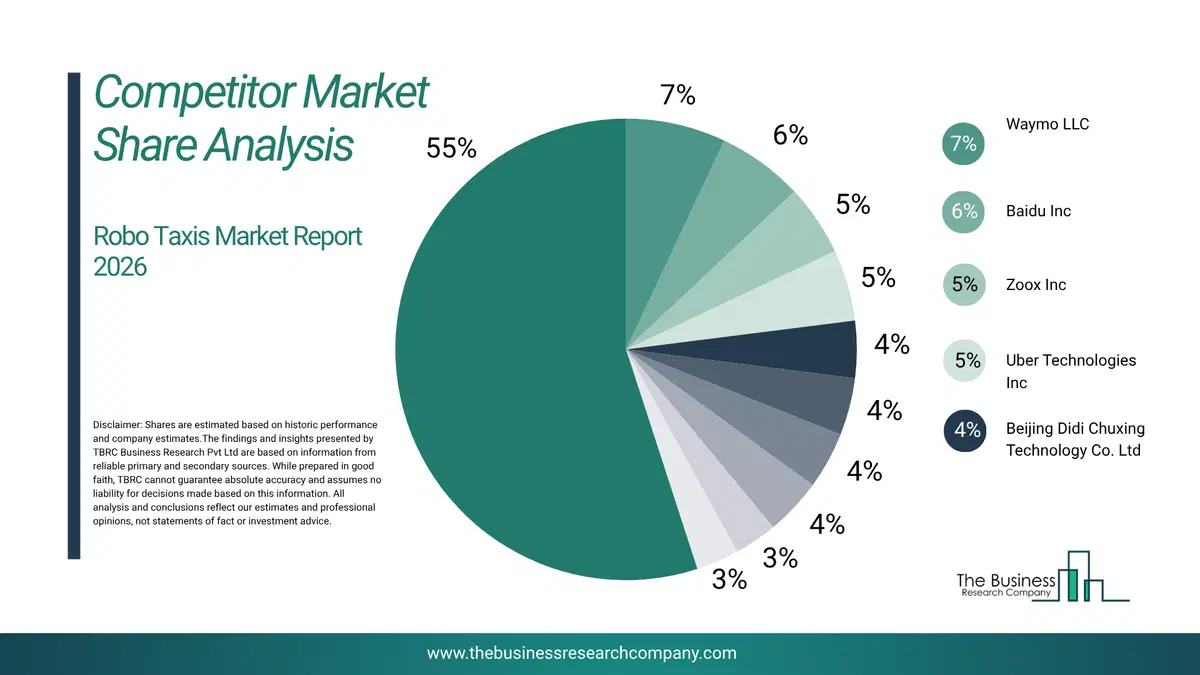
This chart is for illustrative purposes; the full report includes a detailed competitor analysis and comprehensive overview of the top 10 companies in the market.
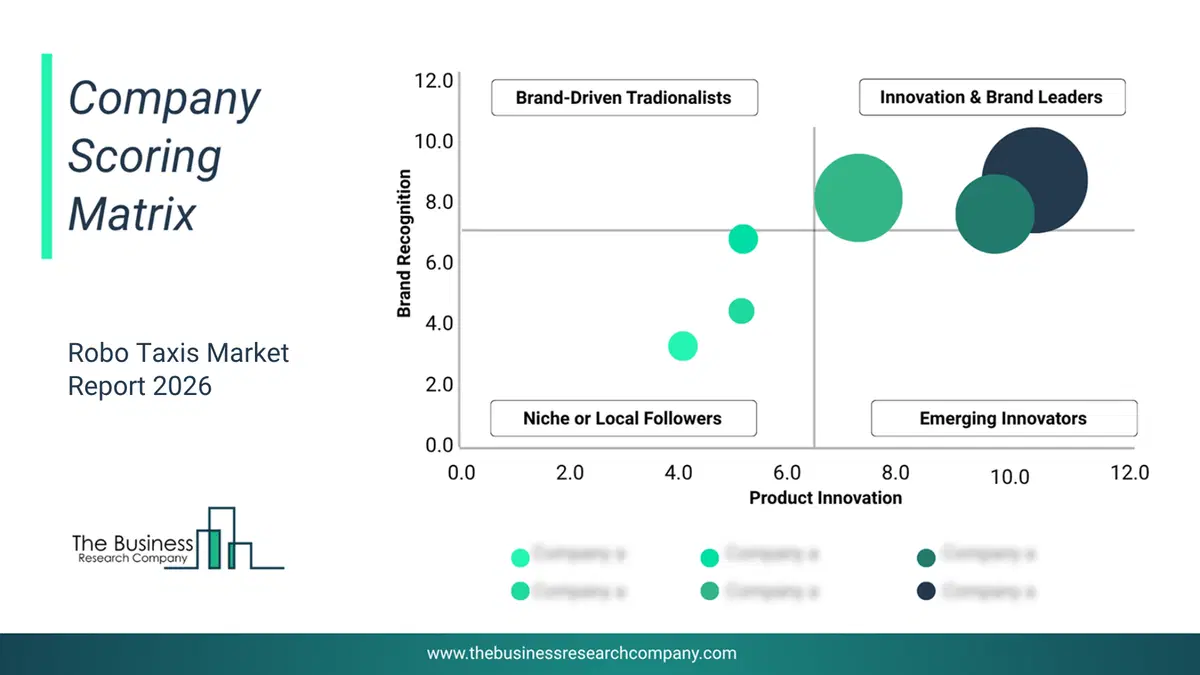
This chart maps companies by product innovation and brand strength, with bubble size indicating relative revenue, helping identify market leaders, challengers, and niche players. This is an illustrative chart; the full report provides a complete and accurate competitive analysis.
Global Robo Taxis Market Trends and Insights
Major companies operating in the robo-taxis market are entering into strategic partnerships to strengthen their market position and expand their geographical presence. Strategic partnerships are collaborative relationships formed between two or more organizations to achieve specific business objectives or goals. Strategic partnerships between key industry players are driving innovation and expanding the use of robo-taxis. For instance, in August 2023, Pony. ai, a Leading global autonomous driving technology company, has entered into a joint venture with Toyota Motor Investment Co Ltd (TMCI), a Japan-based automotive manufacturer and GAC Toyota Motor Co Ltd. (GTMC), a China-based automobile manufacturing company to accelerate the mass production and deployment of driverless robotaxis. Under this agreement, GTMC will provide Pony. ai with Toyota-branded battery electric vehicles suited for Level 4 autonomous driving. The vehicles will be equipped with Pony. ai’s autonomous driving technology and will run on its robotaxi network platform, PonyPilot+.What Are Latest Mergers And Acquisitions In The Robo Taxis Market?
In March 2025, Hyundai Motor Company, a South Korea-based automotive manufacturer specializing in electric and conventional vehicles, partnered with Avride to develop autonomous robotaxis. Through this partnership, Hyundai aims to accelerate the development of autonomous ride-hailing services by integrating its IONIQ 5 electric vehicle platform with Avride's self-driving technology, which enables fully autonomous operation of passenger vehicles, thereby simplifying and accelerating the deployment of robotaxis. Avride is a U.S.-based autonomous vehicle technology company specializing in self-driving systems for passenger transport and delivery services.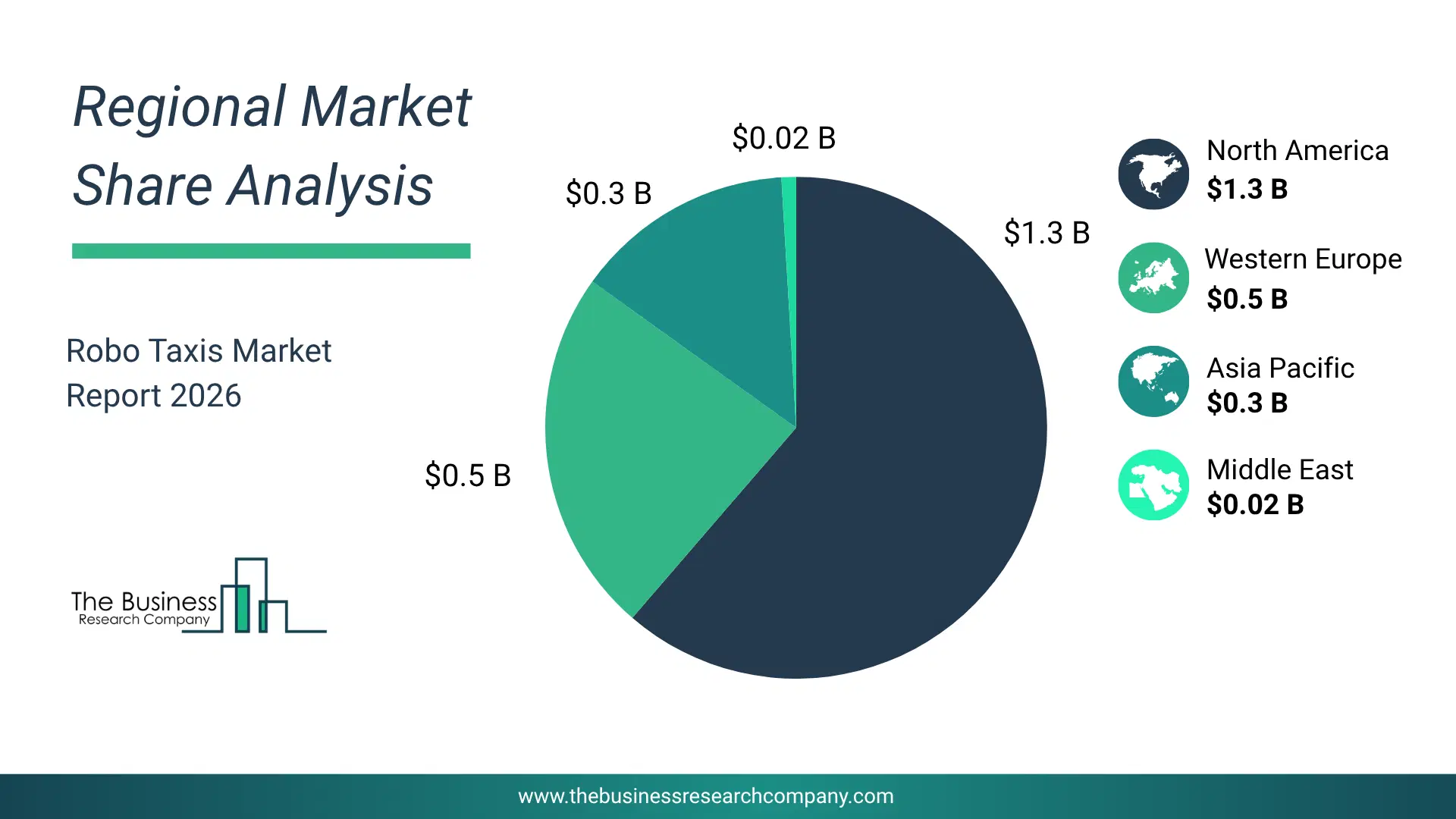
Regional Outlook
Europe was the largest region in the robo taxis market in 2025. Asia-Pacific is expected to be the fastest-growing region in the robo taxis market during the forecast period. The regions covered in this market report include Asia-Pacific, South East Asia, Western Europe, Eastern Europe, North America, South America, Middle East, Africa. The countries covered in this market report include Australia, Brazil, China, France, Germany, India, Indonesia, Japan, Taiwan, Russia, South Korea, UK, USA, Canada, Italy, SpainWhat Defines the Robo Taxis Market?
The robo taxis market consists of sales of self-driven or driverless cars. Values in this market are ‘factory gate’ values, that is the value of goods sold by the manufacturers or creators of the goods, whether to other entities (including downstream manufacturers, wholesalers, distributors and retailers) or directly to end customers. The value of goods in this market includes related services sold by the creators of the goods.How is Market Value Defined and Measured?
The market value is defined as the revenues that enterprises gain from the sale of goods and/or services within the specified market and geography through sales, grants, or donations in terms of the currency (in USD unless otherwise specified). The revenues for a specified geography are consumption values that are revenues generated by organizations in the specified geography within the market, irrespective of where they are produced. It does not include revenues from resales along the supply chain, either further along the supply chain or as part of other products.
This chart presents market attractiveness based on a quantitative evaluation of growth, competition, strategic alignment, and risk, offering a clear view of opportunity areas for decision-making. This chart is for illustrative purposes; the full report contains the complete analysis.

This chart highlights the Total Addressable Market (TAM) by estimating the maximum revenue opportunity using an assumption-driven approach, supporting strategic planning and opportunity sizing across markets. The chart is illustrative; the full report provides a more comprehensive analysis.
What Key Data and Analysis Are Included in the Robo Taxis Market Report 2026?
The robo taxis market research report is one of a series of new reports from The Business Research Company that provides market statistics, including industry global market size, regional shares, competitors with the market share, detailed market segments, market trends and opportunities, and any further data you may need to thrive in the robo taxis industry. The market research report delivers a complete perspective of everything you need, with an in-depth analysis of the current and future state of the industry.Robo Taxis Market Report Forecast Analysis
| Report Attribute | Details |
|---|---|
| Market Size Value In 2026 | $3.28 billion |
| Revenue Forecast In 2030 | $27.29 billion |
| Growth Rate | CAGR of 64.4% from 2026 to 2030 |
| Base Year For Estimation | 2025 |
| Actual Estimates/Historical Data | 2020-2025 |
| Forecast Period | 2026 - 2030 |
| Market Representation | Revenue in USD Billion and CAGR from 2026 to 2030 |
| Segments Covered | Component Type, Service Type, Propulsion, Application |
| Regional Scope | Asia-Pacific, Western Europe, Eastern Europe, North America, South America, Middle East, Africa |
| Country Scope | The countries covered in the report are Australia, Brazil, China, France, Germany, India, Indonesia, Japan, Taiwan, Russia, South Korea, UK, USA, Canada, Italy, Spain. |
| Key Companies Profiled | Waymo LLC, AutoX Inc., Tesla Inc., Baidu Inc., General Motors Company, Lyft Inc., Nissan Motor Corporation, NAVYA Group, Ford Motor Company, Mercedes-Benz Group AG, Bayerische Motoren Werke AG, Volkswagen AG, EasyMile SAS, Ridecell Inc., Nvidia Corporation, AB Volvo, Uber Technologies Inc., Aptiv plc, Beijing Xiaoju Technology Co. Ltd., MOIA GmbH, Zoox Inc., Aurora Innovation Inc., May Mobility Inc., Optimus Ride Inc., Voyage Auto Inc., Pony ai Inc., Nuro Inc., FiveAI Inc., Oxbotica Ltd. |
| Customization Scope | Request for Customization |
| Pricing And Purchase Options | Explore Purchase Options |