
Robot-Assisted Percutaneous Coronary Intervention (PCI) Market Report 2026
Global Outlook – By Component (Robotic Systems, Catheters And Guidewires, Control Consoles), By Application (Coronary Angioplasty, Stent Placement, Thrombectomy), By End-User (Hospitals, Cardiac Catheterization Laboratories, Ambulatory Surgical Centers, Other End-Users) – Market Size, Trends, Strategies, and Forecast to 2030
Robot-Assisted Percutaneous Coronary Intervention (PCI) Market Overview
• Robot-Assisted Percutaneous Coronary Intervention (PCI) market size has reached to $0.03 billion in 2025 • Expected to grow to $0.11 billion in 2030 at a compound annual growth rate (CAGR) of 26% • Growth Driver: The Increase In Cardiovascular Disease Prevalence Is Fueling The Growth Of The Market Due To The Rising Need For Advanced Coronary Interventions • Market Trend: Advancing Precision And Safety In Robot-Assisted Coronary Interventions Through Robotic Platforms • North America was the largest region in 2025 and Asia-Pacific is the fastest growing region.What Is Covered Under Robot-Assisted Percutaneous Coronary Intervention (PCI) Market?
Robot-assisted percutaneous coronary intervention (R-PCI) is a minimally invasive technique where robotic systems assist in navigating catheters, balloons, and stents to open narrowed or blocked coronary arteries. It provides greater precision, stability, and control, minimizing human error. The approach also reduces radiation exposure for patients and medical staff, aiming to enhance procedural safety, efficiency, and overall clinical outcomes. The main component types of robot-assisted percutaneous coronary intervention (PCI) are robotic systems, catheters and guidewires, and control consoles. Robotic systems are sophisticated machines designed to assist physicians in performing PCI by remotely controlling guidewires, balloons, and stents from a protected workstation. It is applied in various applications such as coronary angioplasty, stent placement, and thrombectomy, and is used by several end users, including hospitals, cardiac catheterization laboratories, ambulatory surgical centers, and others.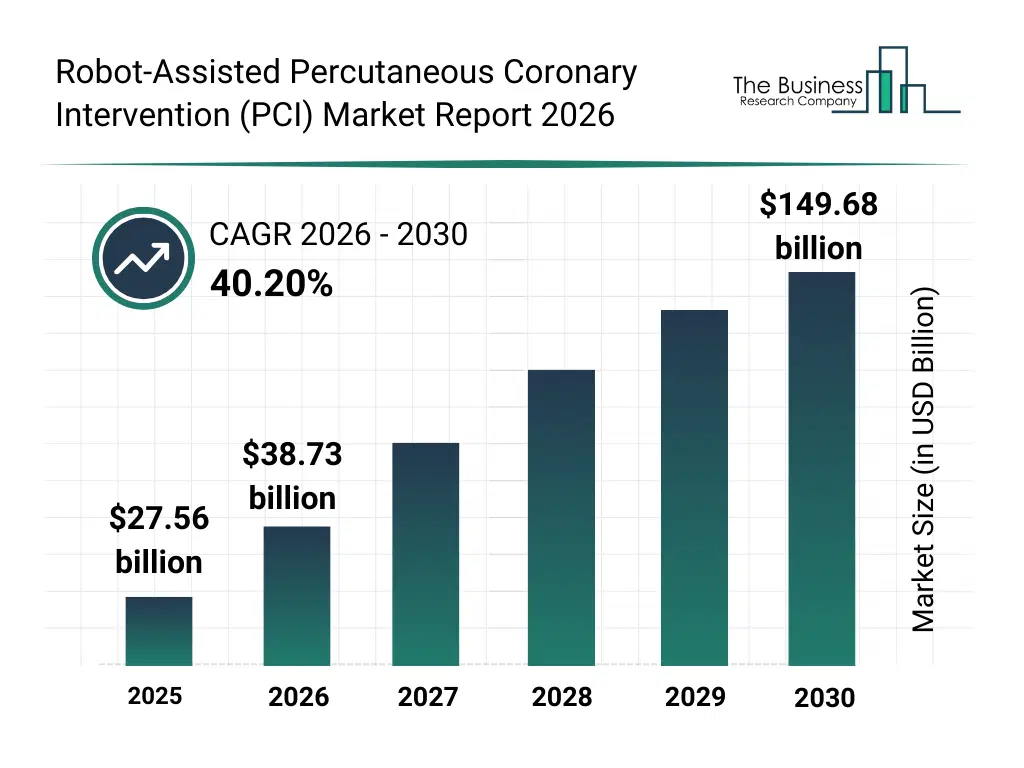
What Is The Robot-Assisted Percutaneous Coronary Intervention (PCI) Market Size and Share 2026?
The robot-assisted percutaneous coronary intervention (pci) market size has grown exponentially in recent years. It will grow from $0.03 billion in 2025 to $0.04 billion in 2026 at a compound annual growth rate (CAGR) of 26.4%. The growth in the historic period can be attributed to growth in coronary artery disease prevalence, limitations of manual pci precision, increasing use of catheter-based interventions, rising awareness of radiation risks, expansion of cardiac catheterization labs.What Is The Robot-Assisted Percutaneous Coronary Intervention (PCI) Market Growth Forecast?
The robot-assisted percutaneous coronary intervention (pci) market size is expected to see exponential growth in the next few years. It will grow to $0.11 billion in 2030 at a compound annual growth rate (CAGR) of 26.0%. The growth in the forecast period can be attributed to advancements in robotic-assisted intervention technologies, increasing adoption of automation in cardiology, rising investment in digital healthcare infrastructure, growing demand for complex and high-risk pci procedures, supportive regulatory approvals for robotic systems. Major trends in the forecast period include rising adoption of minimally invasive cardiac procedures, growing focus on reducing radiation exposure for clinicians, increasing demand for precision and procedural accuracy, expansion of complex coronary intervention capabilities, improved patient safety and clinical outcomes.
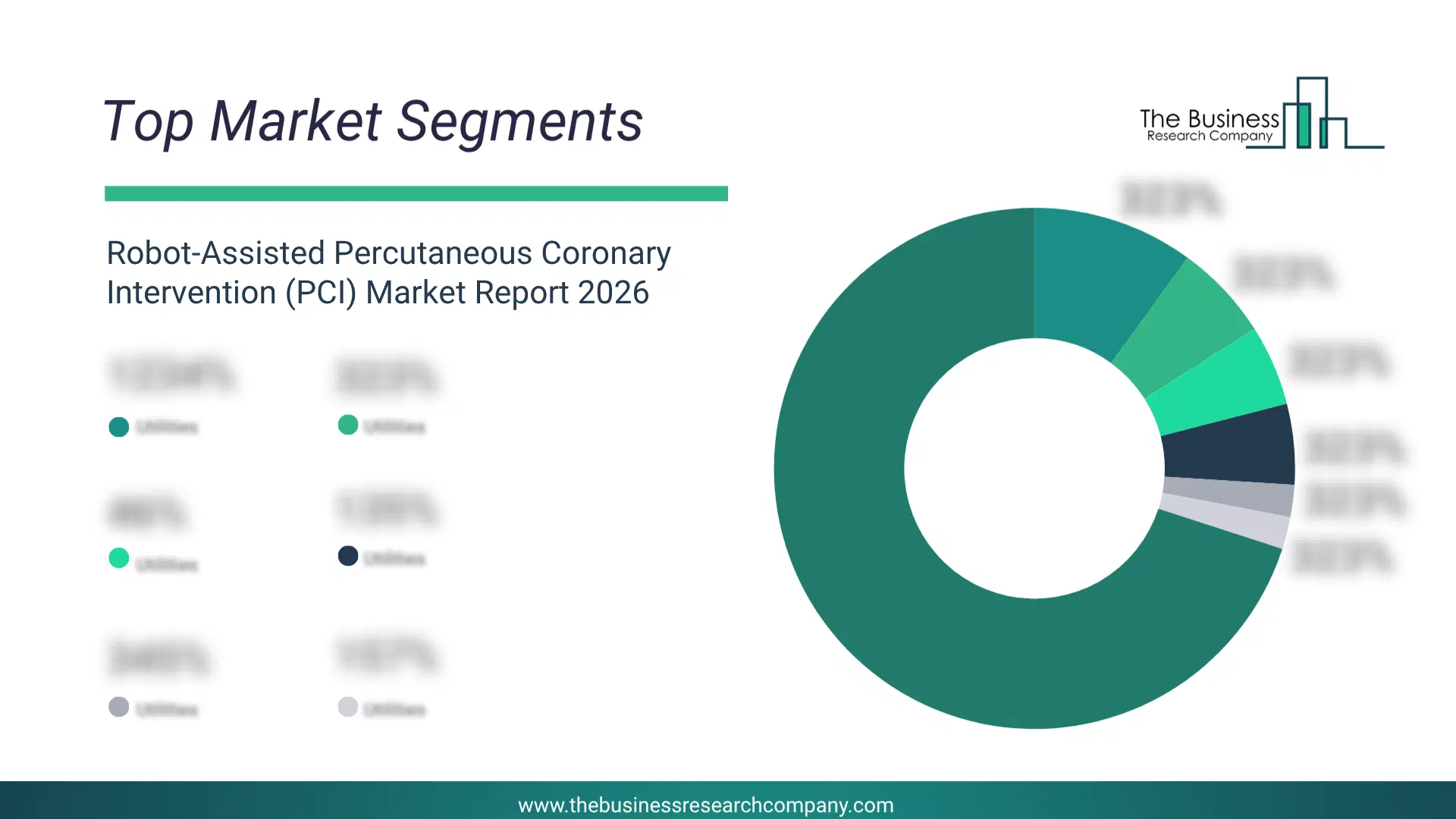
Global Robot-Assisted Percutaneous Coronary Intervention (PCI) Market Segmentation
2) By Application: Coronary Angioplasty, Stent Placement, Thrombectomy 3) By End-User: Hospitals, Cardiac Catheterization Laboratories, Ambulatory Surgical Centers, Other End-Users Subsegments: 1) By Robotic Systems: Electromechanical Robotic Arms, Imaging Integration Units, Robotic Drive Systems 2) By Catheters And Guidewires: Coronary Guidewires, Balloon Catheters, Drug-Eluting Catheters 3) By Control Consoles: Touchscreen Interfaces, Joystick Controllers, Imaging Display PanelsWhat Is The Driver Of The Robot-Assisted Percutaneous Coronary Intervention (PCI) Market?
The increasing prevalence of cardiovascular diseases is expected to propel the growth of the robot-assisted percutaneous coronary intervention (PCI) market going forward. Cardiovascular diseases refer to a class of disorders involving the heart and blood vessels, including conditions such as coronary artery disease, heart attacks, and stroke. The rise in cardiovascular diseases is largely due to sedentary lifestyles, leading to obesity, hypertension, and poor heart health. Robot-assisted percutaneous coronary intervention (PCI) treats cardiovascular diseases by accurately reopening blocked or narrowed coronary arteries to restore blood flow to the heart while reducing procedural risks and radiation exposure, enhancing patient outcomes. For instance, in December 2024, GOV.UK, a UK-based government agency, reported that in March 2024, nearly 2.24 million adults in England—about 4.4% of those aged 18 and over—had a GP-recorded diagnosis of CKD. This reflects an increase from 2.09 million cases the previous year. Therefore, the increasing prevalence of cardiovascular diseases is driving the growth of the robot-assisted percutaneous coronary intervention (PCI) industry.Key Players In The Global Robot-Assisted Percutaneous Coronary Intervention (PCI) Market
Major companies operating in the robot-assisted percutaneous coronary intervention (pci) market are Medtronic plc, Siemens Healthineers AG, Boston Scientific Corporation, Intuitive Surgical, BIOTRONIK SE & Co. KG, MicroPort Scientific Corporation, Biosensors International Group Ltd., OrbusNeich Medical Group Holdings Limited, Stereotaxis Inc., Perfint Healthcare, Robocath Inc., Meril Life Sciences Pvt. Ltd., Abbott Laboratories, Philips Healthcare, Terumo Corporation, Asahi Intecc, Catheter Precision, Cardiobot, Remedics, meerecompany Inc., AngioDynamics, Clear Surgical Inc., GE Healthcare, Canon Medical Systems, Asensus Surgical, Endovascular Robotics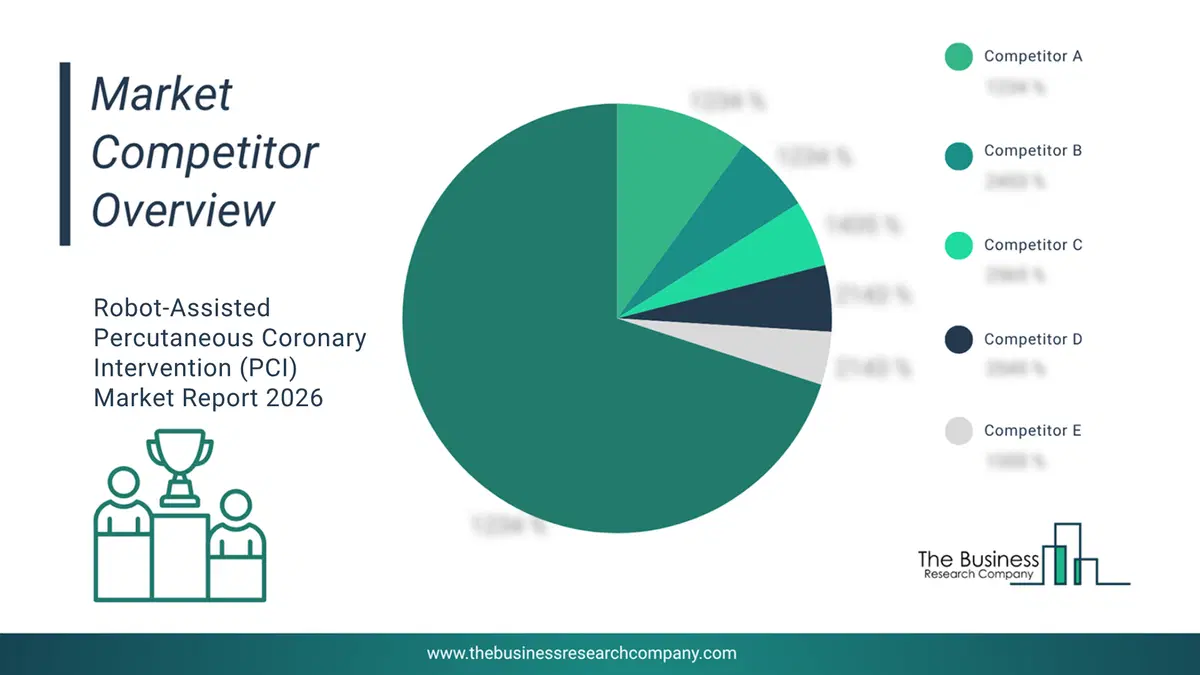
This chart is for illustrative purposes; the full report includes a detailed competitor analysis and comprehensive overview of the top 10 companies in the market.
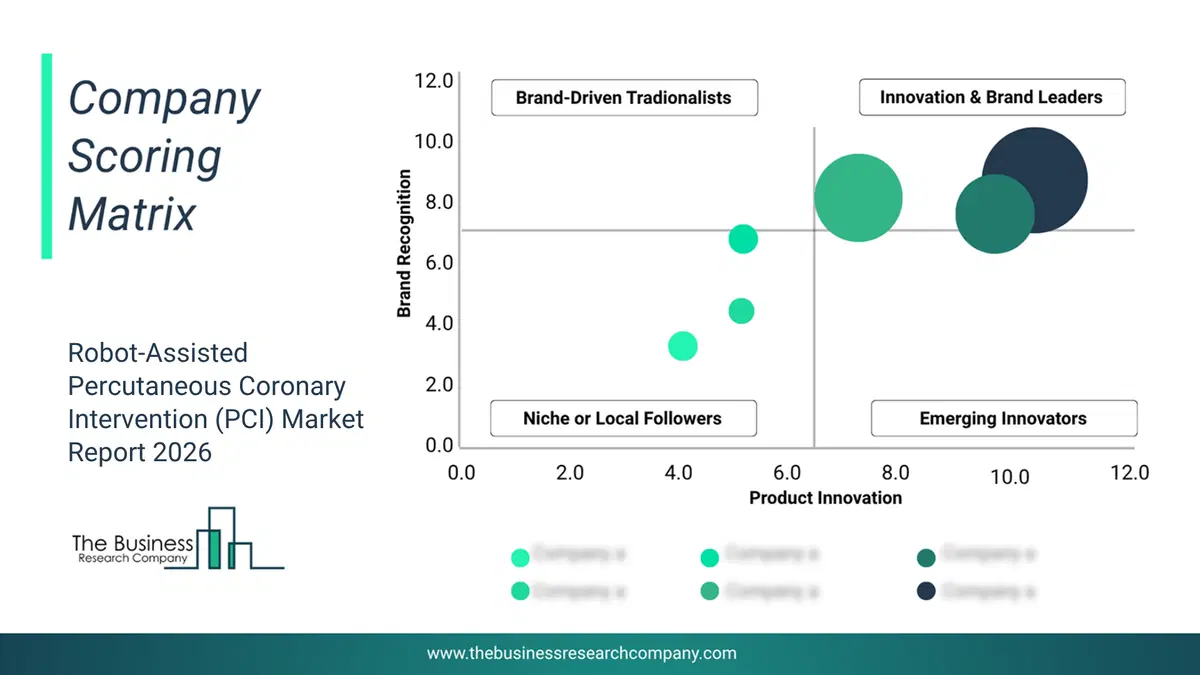
This chart maps companies by product innovation and brand strength, with bubble size indicating relative revenue, helping identify market leaders, challengers, and niche players. This is an illustrative chart; the full report provides a complete and accurate competitive analysis.
Global Robot-Assisted Percutaneous Coronary Intervention (PCI) Market Trends and Insights
Major companies operating in the robot-assisted percutaneous coronary intervention (PCI) market are focusing on developing advanced robotic cardiologist platforms to improve patient safety and streamline complex coronary interventions. A robotic cardiology platform is a high-tech system that aids cardiologists in performing accurate and controlled coronary procedures while enhancing precision, minimizing human error, and reducing radiation exposure for patients and medical staff. For instance, in May 2023, Robocath SAS, a France-based company specializing in robotic solutions for vascular interventions, launched the R-One+. This advanced robotic solution enables interventional cardiologists to perform coronary angioplasties (percutaneous coronary intervention, or PCI) by controlling devices through an integrated command unit located in the catheterization lab or control room. The R-One+ enhances precision in device manipulation, improves safety for both patients and medical staff by reducing radiation exposure, and allows more comfortable working conditions for operators. The launch was marked at the EuroPCR conference in Paris, with the platform showcasing new capabilities that make PCI procedures easier and safer while protecting the cardiology team from radiation-induced injuries. This innovation reflects Robocath's commitment to improving cardiovascular disease treatments with smart robotic assistance.What Are Latest Mergers And Acquisitions In The Robot-Assisted Percutaneous Coronary Intervention (PCI) Market?
In April 2024, Microbot Medical, a US-based developer of robotic endovascular systems and minimally invasive vascular solutions, partnered with Corewell Health. The aim of the partnership between Microbot Medical Inc. and Corewell Health is to enable and advance remote telesurgery by utilizing Microbot's LIBERTY Endovascular Robotic Surgical System. Corewell Health is a US-based healthcare company that provides robotic-assisted procedures and improves patient care in cardiovascular interventions.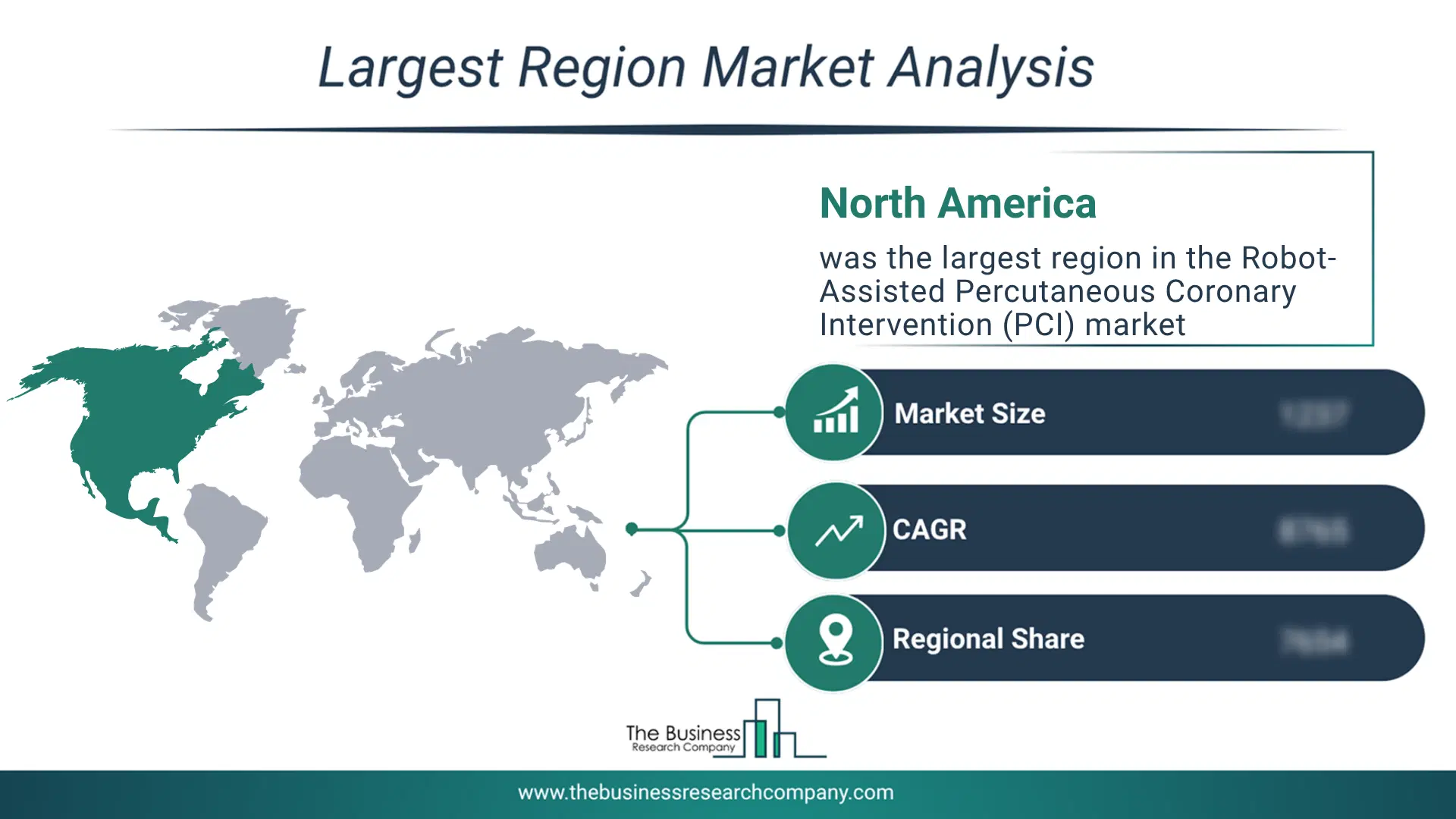
Regional Outlook
North America was the largest region in the robot-assisted percutaneous coronary intervention (PCI) market in 2025. Asia-Pacific is expected to be the fastest-growing region in the forecast period. The regions covered in this market report are Asia-Pacific, South East Asia, Western Europe, Eastern Europe, North America, South America, Middle East, Africa. The countries covered in this market report are Australia, Brazil, China, France, Germany, India, Indonesia, Japan, Taiwan, Russia, South Korea, UK, USA, Canada, Italy, Spain.What Defines the Robot-Assisted Percutaneous Coronary Intervention (PCI) Market?
The robot-assisted percutaneous coronary intervention (PCI) market consists of revenues earned by entities by providing services such as robotic catheter navigation, remote-controlled stent placement, real-time imaging integration, and procedural planning support. The market value includes the value of related goods sold by the service provider or included within the service offering. The robot-assisted percutaneous coronary intervention (PCI) market also includes sales of radiation shielding accessories, robotic arm components, monitoring and display units, integration interfaces, and sterile disposable kits. Values in this market are ‘factory gate’ values, that is, the value of goods sold by the manufacturers or creators of the goods, whether to other entities (including downstream manufacturers, wholesalers, distributors, and retailers) or directly to end customers. The value of goods in this market includes related services sold by the creators of the goods.How is Market Value Defined and Measured?
The market value is defined as the revenues that enterprises gain from the sale of goods and/or services within the specified market and geography through sales, grants, or donations in terms of the currency (in USD unless otherwise specified). The revenues for a specified geography are consumption values that are revenues generated by organizations in the specified geography within the market, irrespective of where they are produced. It does not include revenues from resales along the supply chain, either further along the supply chain or as part of other products.
This chart presents market attractiveness based on a quantitative evaluation of growth, competition, strategic alignment, and risk, offering a clear view of opportunity areas for decision-making. This chart is for illustrative purposes; the full report contains the complete analysis.

This chart highlights the Total Addressable Market (TAM) by estimating the maximum revenue opportunity using an assumption-driven approach, supporting strategic planning and opportunity sizing across markets. The chart is illustrative; the full report provides a more comprehensive analysis.
What Key Data and Analysis Are Included in the Robot-Assisted Percutaneous Coronary Intervention (PCI) Market Report 2026?
The robot-assisted percutaneous coronary intervention (pci) market research report is one of a series of new reports from The Business Research Company that provides market statistics, including industry global market size, regional shares, competitors with the market share, detailed market segments, market trends and opportunities, and any further data you may need to thrive in the robot-assisted percutaneous coronary intervention (pci) industry. The market research report delivers a complete perspective of everything you need, with an in-depth analysis of the current and future state of the industry.Robot-Assisted Percutaneous Coronary Intervention (PCI) Market Report Forecast Analysis
| Report Attribute | Details |
|---|---|
| Market Size Value In 2026 | $0.04 billion |
| Revenue Forecast In 2030 | $0.11 billion |
| Growth Rate | CAGR of 26% from 2026 to 2030 |
| Base Year For Estimation | 2025 |
| Actual Estimates/Historical Data | 2020-2025 |
| Forecast Period | 2026 - 2030 |
| Market Representation | Revenue in USD Billion and CAGR from 2026 to 2030 |
| Segments Covered | Component, Application, End-User |
| Regional Scope | Asia-Pacific, Western Europe, Eastern Europe, North America, South America, Middle East, Africa |
| Country Scope | The countries covered in the report are Australia, Brazil, China, France, Germany, India, Indonesia, Japan, Taiwan, Russia, South Korea, UK, USA, Canada, Italy, Spain. |
| Key Companies Profiled | Medtronic plc, Siemens Healthineers AG, Boston Scientific Corporation, Intuitive Surgical, BIOTRONIK SE & Co. KG, MicroPort Scientific Corporation, Biosensors International Group Ltd., OrbusNeich Medical Group Holdings Limited, Stereotaxis Inc., Perfint Healthcare, Robocath Inc., Meril Life Sciences Pvt. Ltd., Abbott Laboratories, Philips Healthcare, Terumo Corporation, Asahi Intecc, Catheter Precision, Cardiobot, Remedics, meerecompany Inc., AngioDynamics, Clear Surgical Inc., GE Healthcare, Canon Medical Systems, Asensus Surgical, Endovascular Robotics |
| Customization Scope | Request for Customization |
| Pricing And Purchase Options | Explore Purchase Options |