
Robot Operating System Market Report 2026
Global Outlook – By Robot Operating System Type (Robot Operating System 1, Robot Operating System 2), By Robot Type (Articulated Robots, SCARA Robots, Parallel Robots, Cartesian Robotics, Collaborative Robots), By Application (Pick And Place, Plastic Injection And Blow Molding, Printed Circuit Board Handling And Information Communication And Technology, Testing And Quality Inspection, Metal Sampling And Press Trending, Computer Numerical Control Machine Trending And Co-Packing, End Of Line Packaging, Mapping And Navigation, Inventory Management, Other Applications), By Industry Vertical (Healthcare, Automotive, Electrical And Electronics, Metal And Machinery, Food And Beverages, Rubber And Plastic, Other Industry Verticals) – Market Size, Trends, Strategies, and Forecast to 2030
Robot Operating System Market Overview
• Robot Operating System market size has reached to $0.81 billion in 2025 • Expected to grow to $1.5 billion in 2030 at a compound annual growth rate (CAGR) of 12.6% • Growth Driver: The Automation Surge In Industrial Sector Fueling The Growth Of The Market Due To Rising Labor Costs And Competitive Pressures • Market Trend: Integration Of Advanced Robotic Systems Accelerates Automated Inspection Capabilities • North America was the largest region in 2025 and Asia-Pacific is the fastest growing region.Market Gains By 2030 – Top Opportunities By Segment
Market Gain identifies the most promising market opportunities by highlighting the segments or products expected to generate the highest incremental revenue growth over the next five years.
What Is Covered Under Robot Operating System Market?
The robot operating system refers to an open-source framework for developing robotic software. It provides libraries and tools to help with tasks such as hardware abstraction, device drivers, communication between processes, and more, making it easier to build complex robotic systems. ROS is used to streamline the development process of robotic applications by providing a standardized framework for communication, data sharing, and computation. The main types of robot operating systems are robot operating system 1 and robot operating system 2. Robot Operating System (ROS) 1 is a flexible framework for building robot software, widely used in robotics research, development, and industrial automation for seamless integration of various hardware and software components. These systems are used to operate several types of robots such as articulated robots, SCARA robots, parallel robots, cartesian robotics, and collaborative robots, for various applications, including pick and place, plastic injection and blow molding, printed circuit board handling and information communication and technology, testing and quality inspection, metal sampling and press trending, computer numerical control machine trending and co-packing, end-of-line packaging, mapping and navigation, inventory management, and others. It is utilized by various industries such as healthcare, automotive, electrical and electronics, metal and machinery, food and beverages, rubber and plastic, and others.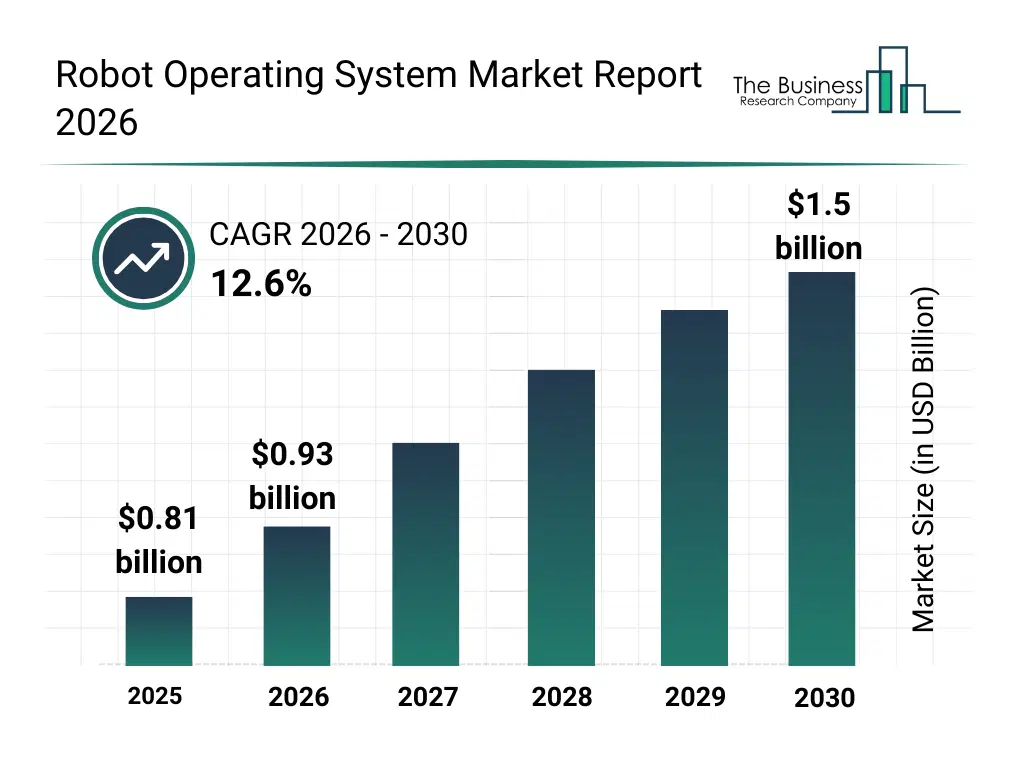
What Is The Robot Operating System Market Size and Share 2026?
The robot operating system market size has grown rapidly in recent years. It will grow from $0.81 billion in 2025 to $0.93 billion in 2026 at a compound annual growth rate (CAGR) of 14.8%. The growth in the historic period can be attributed to increasing use of robotics in manufacturing, growth of open-source robotics communities, rising adoption of industrial automation, availability of modular robotic hardware, expansion of academic and research robotics programs.What Is The Robot Operating System Market Growth Forecast?
The robot operating system market size is expected to see rapid growth in the next few years. It will grow to $1.5 billion in 2030 at a compound annual growth rate (CAGR) of 12.6%. The growth in the forecast period can be attributed to increasing deployment of collaborative robots, rising demand for real-time robotic communication frameworks, expansion of autonomous navigation applications, growing integration of AI with robotic operating systems, increasing adoption of ros in commercial robotics. Major trends in the forecast period include increasing adoption of standardized robotic software frameworks, rising use of ros 2 for industrial applications, growing integration of robotics middleware across industries, expansion of simulation and testing environments, enhanced focus on interoperability and scalability.
Global Robot Operating System Market Segmentation
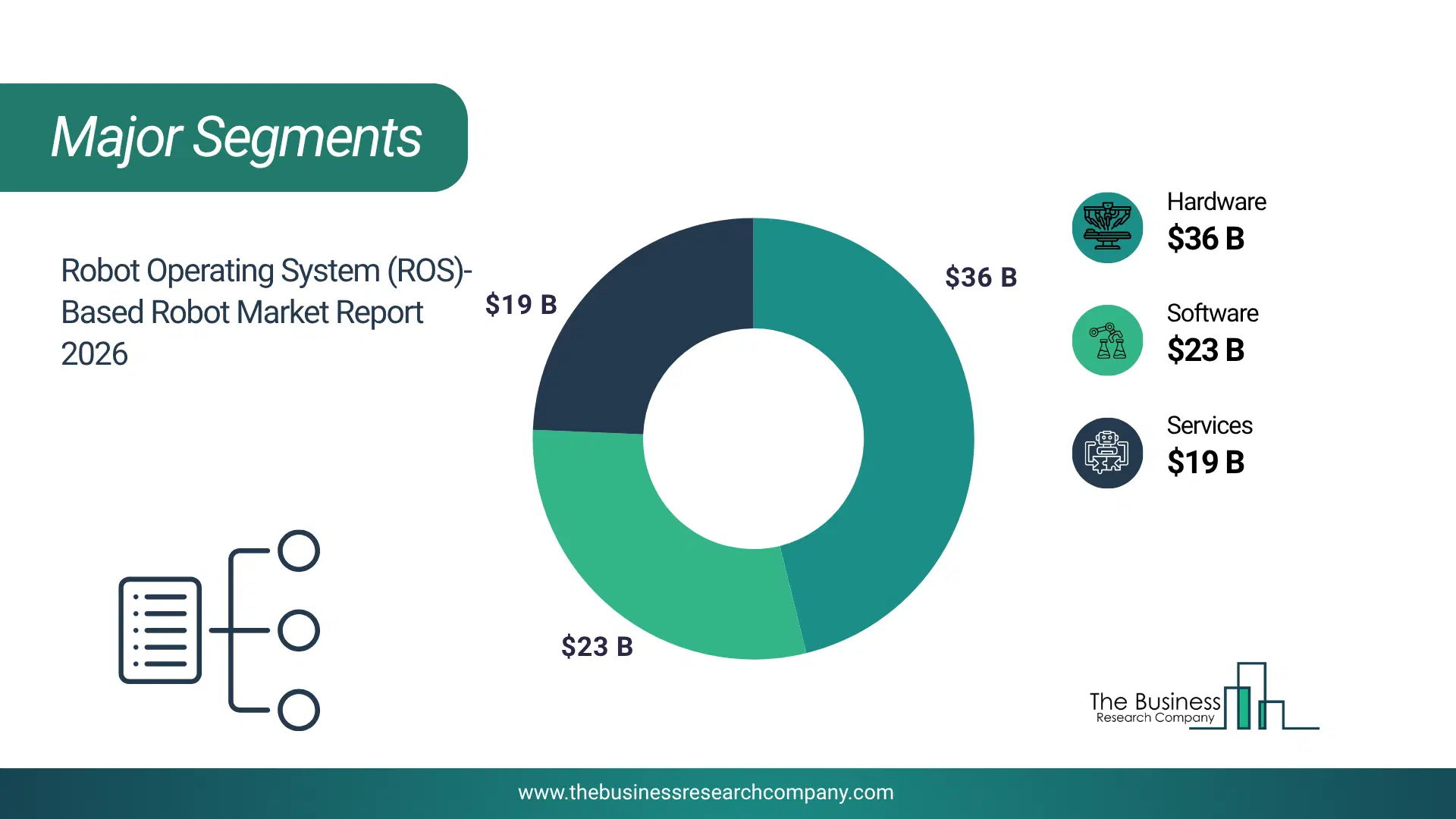
1) By Robot Operating System Type: Robot Operating System 1, Robot Operating System 2 2) By Robot Type: Articulated Robots, SCARA Robots, Parallel Robots, Cartesian Robotics, Collaborative Robots 3) By Application: Pick And Place, Plastic Injection And Blow Molding, Printed Circuit Board Handling And Information Communication And Technology, Testing And Quality Inspection, Metal Sampling And Press Trending, Computer Numerical Control Machine Trending And Co-Packing, End Of Line Packaging, Mapping And Navigation, Inventory Management, Other Applications 4) By Industry Vertical: Healthcare, Automotive, Electrical And Electronics, Metal And Machinery, Food And Beverages, Rubber And Plastic, Other Industry Verticals Subsegments: 1) By Robot Operating System 1: ROS 1.x, ROS 1.0 (LTS version) 2) By Robot Operating System 2: ROS 2 Foxy, ROS 2 Galactic, ROS 2 Humble, ROS 2 Iron, ROS 2 Rolling (Development Version) The top segments in the connected lighting market will be: • Hardware will reach $13.13 Billion by 2030. • Software will reach $4.86 Billion by 2030. • Services will reach $3.42 Billion by 2030. The top segments in the robot operating system (ros)-based robot market will be: • Hardware will reach $36.1 Billion by 2030. • Software will reach $23.44 Billion by 2030. • Services will reach $18.77 Billion by 2030.What Is The Driver Of The Robot Operating System Market?
The automation surge in the industrial sector is expected to propel the growth of the robot operating system market going forward. The automation surge in the industrial sector refers to the rapid and large-scale adoption of automation technologies across manufacturing, logistics, and industrial operations to improve efficiency, accuracy, and productivity. The rise in automation adoption is due to increasing labor costs and persistent supply-chain challenges, which are prompting manufacturers to accelerate the deployment of automated systems to maintain competitiveness. The robot operating system supports industrial automation by providing a standardized and modular software framework that enables efficient integration of robots, devices, and control systems across production environments. For instance, in September 2024, according to the International Federation of Robotics (IFR), a Frankfurt-based non-profit organization, global industrial robot installations reached 541,000 units, representing a 10% year-on-year increase in operational stock to approximately 4.28 million units. Therefore, the automation surge in the industrial sector is driving the growth of the robot operating system industry.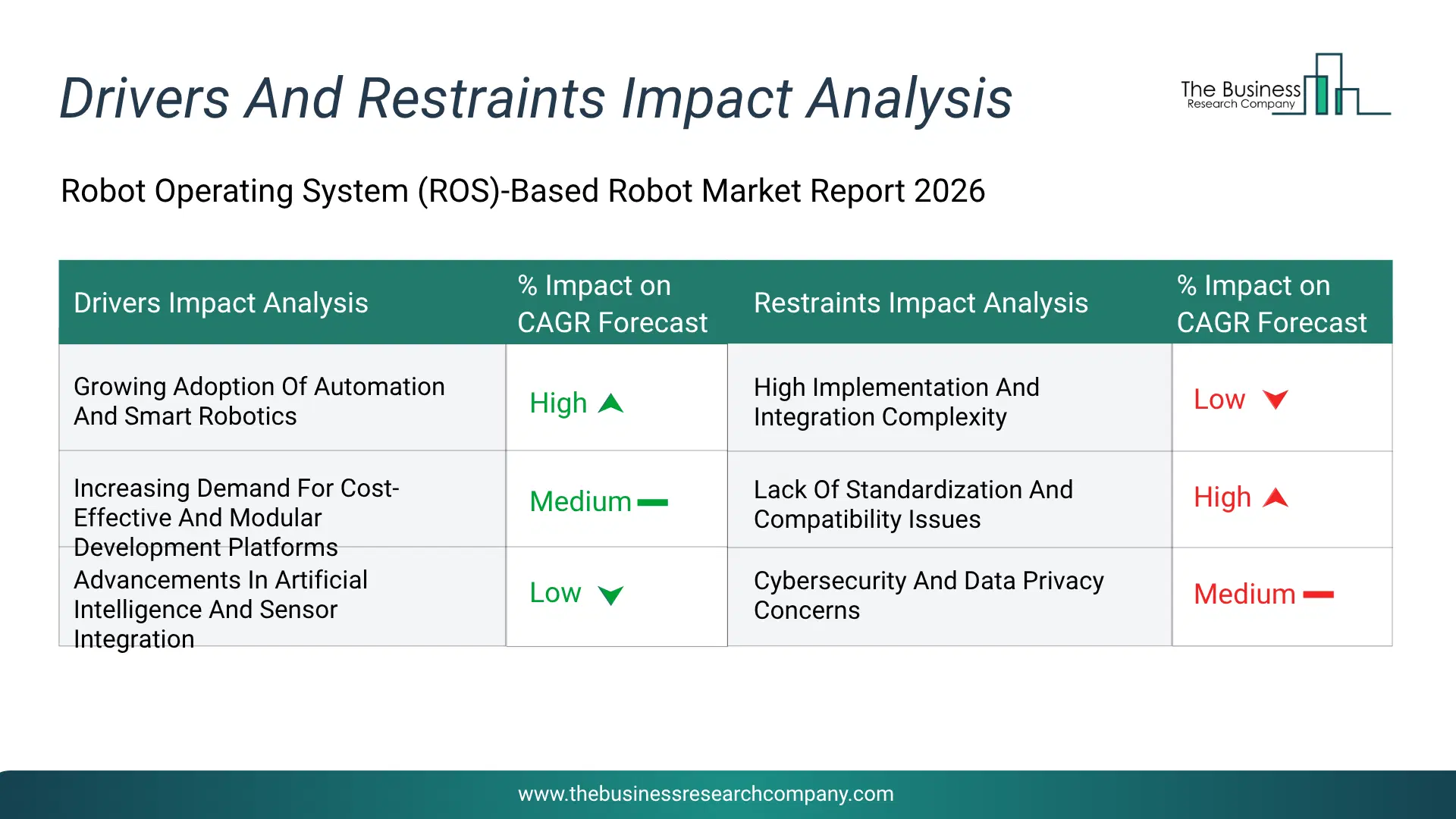
Infographic Chart Showing Key Market Drivers Analysis And Restraints For Robot Operating System Market
The chart presents an impact analysis of key drivers and restraints, quantifying their relative influence on the market's growth rate and helping assess the balance between growth enablers and limiting factors. This chart offers a high-level perspective; the full report contains more detailed insights.
How Will The Drivers Impact Growth In The Global Robot Operating System (ROS)-Based Robot Market?
• Growing Adoption Of Automation And Smart Robotics (High) – During the forecast period, the growing adoption of automation and smart robotics is expected to become a key growth driver for the robot operating system (ROS)-based robot market by 2030. Growing adoption of automation and smart robotics acts as a major driver for the ROS-based robot market because industries such as manufacturing, logistics, healthcare, and agriculture increasingly rely on robots to improve efficiency, accuracy, and productivity. ROS provides a flexible and scalable framework that simplifies the development and deployment of such robotic systems. Businesses benefit from reduced operational costs and enhanced process optimization through automation. This rising dependence on intelligent robotic systems encourages continuous integration of ROS platforms. • Increasing Demand For Cost-Effective And Modular Development Platforms (Medium) – During the forecast period, the increasing demand for cost-effective and modular development platforms is expected to emerge as a major factor driving the expansion of the robot operating system (ROS)-based robot market by 2030. ROS enables developers to reuse existing code, tools, and software components, reducing overall development time and expenses. Its open-source nature allows organizations to build customized robotic solutions without investing heavily in proprietary systems. This modularity accelerates innovation and lowers barriers to entry for startups and research institutions. Companies can quickly prototype and scale robotic applications using ROS ecosystems. This affordability and flexibility drive widespread adoption of ROS-based robots. • Advancements In Artificial Intelligence And Sensor Integration (Low) – During the forecast period, the advancements in artificial intelligence and sensor integration are expected to act as a key growth catalyst for the robot operating system (ROS)-based robot market by 2030. Advancements in artificial intelligence and sensor integration act as a major driver for the ROS-based robot market because ROS supports seamless integration of AI algorithms, machine learning models, and advanced sensors for perception and decision-making. These capabilities enhance robot autonomy, enabling them to perform complex tasks such as navigation, object recognition, and real-time data analysis. Industries leverage these intelligent systems to improve operational efficiency and safety. Continuous technological improvements in sensors and AI further expand the capabilities of ROS-based robots. This technological synergy fuels market growth and accelerates innovation in robotics applications.How Will The Restraints Impact Growth In The Global Robot Operating System (ROS)-Based Robot Market?
• High Implementation And Integration Complexity (High) – During the forecast period, the high implementation and integration complexity acts as a key restraint in the ROS-based robot market by making deployment challenging for end users and enterprises. ROS requires expertise in software development, middleware configuration, and hardware synchronization, which increases dependency on skilled professionals. Integrating multiple sensors, controllers, and algorithms into a unified ROS framework often leads to longer development cycles and higher costs. Small and medium-sized businesses may struggle to adopt such systems due to limited technical capabilities. As a result, the complexity slows down widespread adoption and limits scalability across industries. • Lack Of Standardization And Compatibility Issues (Medium) – During the forecast period, the lack of standardization and compatibility issues hinder the growth of the ROS-based robot market by creating inconsistencies across different platforms and devices. Various ROS versions, packages, and hardware components may not seamlessly work together, leading to integration challenges. This fragmentation forces developers to spend additional time customizing and troubleshooting systems. It also increases the risk of system failures and reduces overall reliability in real-world applications. Consequently, businesses may hesitate to invest in ROS-based solutions due to uncertainty and operational inefficiencies. • Cybersecurity And Data Privacy Concerns (Low) – During the forecast period, the cybersecurity and data privacy concerns act as a significant restraint by exposing ROS-based robots to potential vulnerabilities and cyber threats. Since ROS operates on open-source frameworks and networked communication, it can be susceptible to hacking, unauthorized access, and data breaches. Robots used in sensitive environments such as healthcare, defense, or industrial automation require robust security measures, which are often complex to implement. Addressing these risks increases operational costs and adds additional layers of system design. As a result, concerns over data protection and system security can limit adoption, especially in critical applications.Key Players In The Global Robot Operating System Market
Major companies operating in the robot operating system market are Microsoft Corporation, ABB Ltd., Omron Corporation, FANUC Corporation, Yaskawa America Inc., Staubli International AG, KEBA AG, Wind River Systems Inc., KUKA AG, Intrinsic Innovation LLC, Clearpath Robotics Inc., Fetch Robotics Inc., Robotiq Inc., Husarion Sp. zo. o., Cyberbotics Ltd., Robotis Co. Ltd., Denso Wave Incorporated, Willow Garage Inc., Robotican Ltd., Acutronic Link Robotics AG, Stanley Innovation Inc.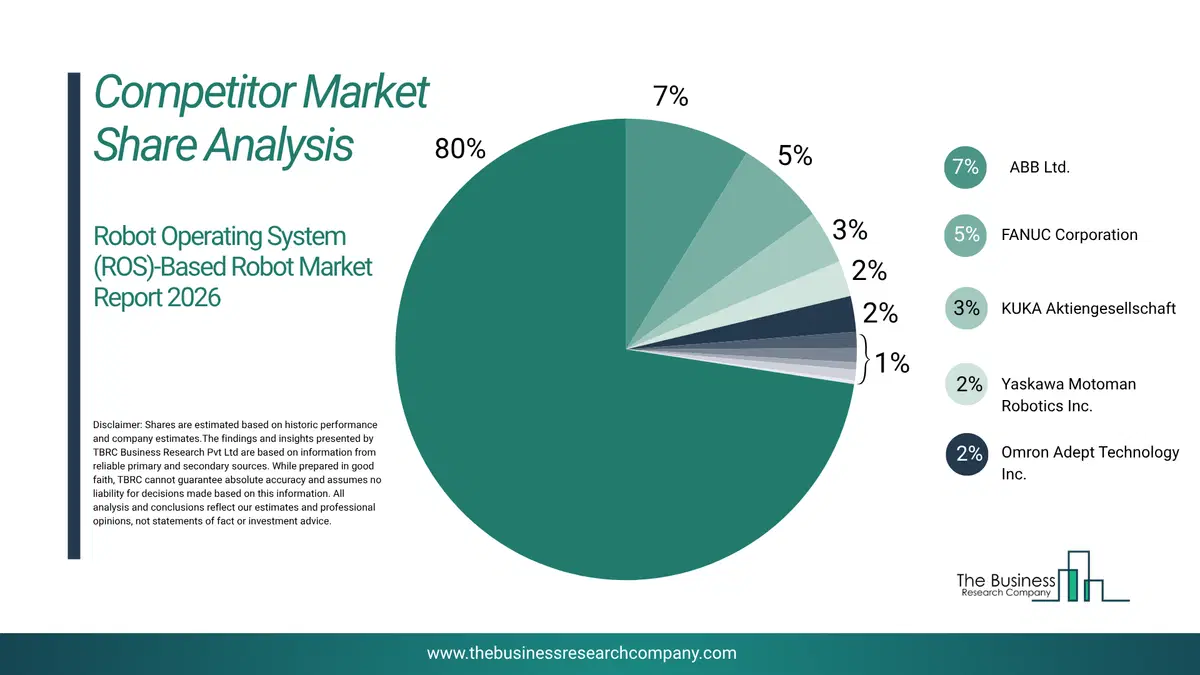
This chart is for illustrative purposes; the full report includes a detailed competitor analysis and comprehensive overview of the top 10 companies in the market.
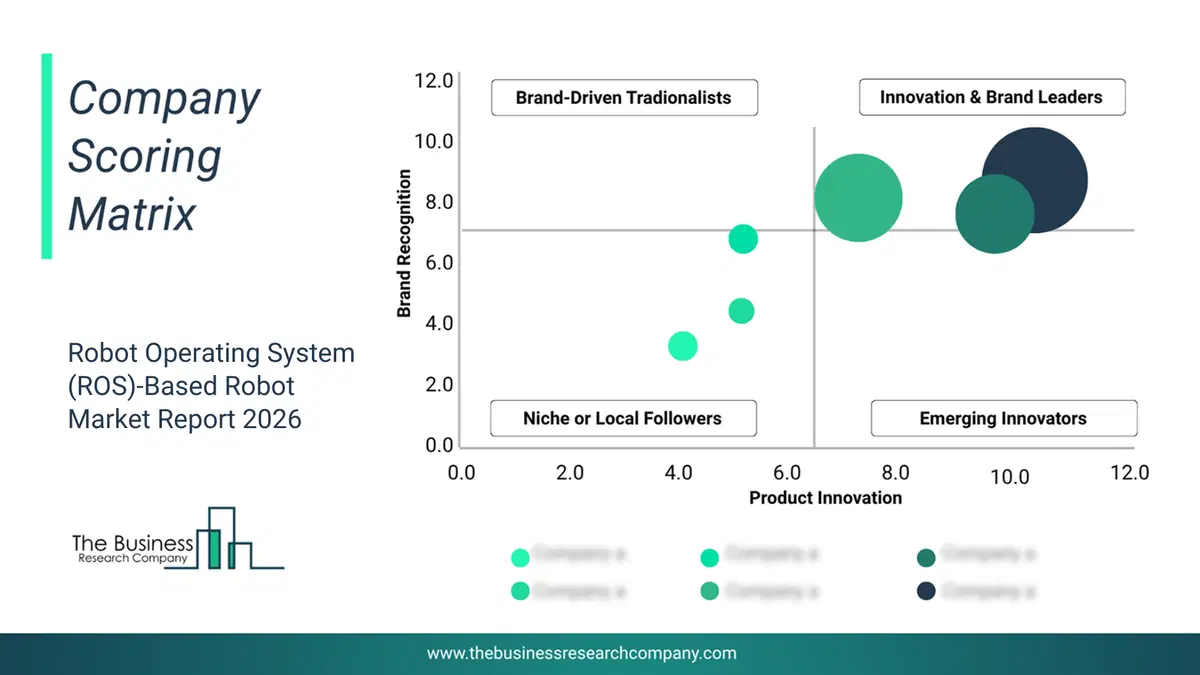
This chart maps companies by product innovation and brand strength, with bubble size indicating relative revenue, helping identify market leaders, challengers, and niche players. This is an illustrative chart; the full report provides a complete and accurate competitive analysis.
Global Robot Operating System Market Trends and Insights
Major companies operating in the robot operating system (ROS) market are focusing on developing advanced integrated systems to accelerate inspection solutions. Integrated systems in robot operating systems refer to the seamless combination of multiple hardware and software components within the ROS ecosystem to create fully autonomous and efficient robotic solutions. For instance, in November 2023, Mitsubishi Heavy Industries, Ltd. (MHI), a Japan-based industrial technology company, completed field tests of its second-generation EX ROVR ASCENT plant inspection robot at ENEOS Corporation’s Oita refinery. The system demonstrated advanced autonomous capabilities, performing visual imaging, thermal scans, and acoustic mapping in hazardous industrial environments while navigating uneven floors, pooled water, narrow spaces, and low-light conditions. Equipped with a 6-axis manipulator, an integrated camera and lighting system, and supporting remote mission planning and data review, the robot enables efficient, continuous, and safe inspection operations without human intervention.What Are Latest Mergers And Acquisitions In The Robot Operating System Market?
In October 2023, Rockwell Automation, Inc., a US-based industrial automation and digital transformation company, acquired Clearpath Robotics (including its OTTO Motors division) for an undisclosed amount. With this acquisition, Rockwell aims to expand its portfolio of autonomous mobile robot (AMR) and mobile-robot enablement solutions by integrating Clearpath’s ROS-friendly research and industrial platforms, software toolchains, and OTTO’s enterprise AMR offerings to accelerate enterprise adoption of ROS-compatible mobile automation across manufacturing and logistics environments. Clearpath Robotics, Inc. is a Canada-based developer of research and industrial mobile robots and AMR platforms that are widely used in the Robot Operating System (ROS) ecosystem.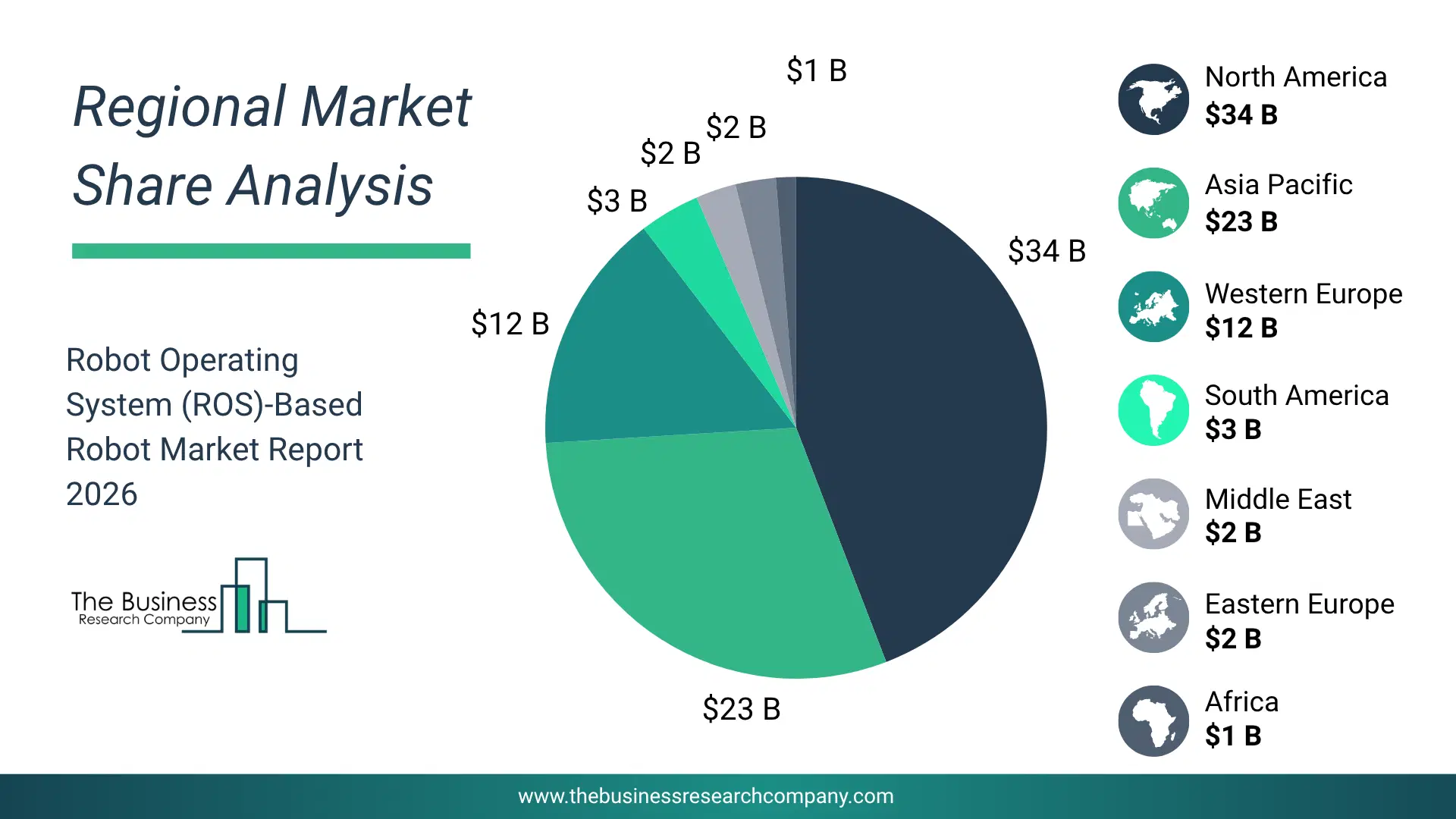
Regional Insights
North America was the largest region in the robot operating system market in 2025. Asia-Pacific is expected to be the fastest-growing region in the forecast period. The regions covered in this market report are Asia-Pacific, South East Asia, Western Europe, Eastern Europe, North America, South America, Middle East, Africa. The countries covered in this market report are Australia, Brazil, China, France, Germany, India, Indonesia, Japan, Taiwan, Russia, South Korea, UK, USA, Canada, Italy, Spain.What Defines the Robot Operating System Market?
The robot operating system market consists of revenues earned by entities by providing services such as integration services, support, training, value-added services, and custom development for specific robotics applications. The market value includes the value of related goods sold by the service provider or included within the service offering. The robot operating system market also includes sales of ROS-based robotics platforms, development tools, and deployment and management tools. Values in this market are ‘factory gate’ values, that is the value of goods sold by the manufacturers or creators of the goods, whether to other entities (including downstream manufacturers, wholesalers, distributors and retailers) or directly to end customersHow is Market Value Defined and Measured?
The market value is defined as the revenues that enterprises gain from the sale of goods and/or services within the specified market and geography through sales, grants, or donations in terms of the currency (in USD unless otherwise specified). The revenues for a specified geography are consumption values that are revenues generated by organizations in the specified geography within the market, irrespective of where they are produced. It does not include revenues from resales along the supply chain, either further along the supply chain or as part of other products.
This chart presents market attractiveness based on a quantitative evaluation of growth, competition, strategic alignment, and risk, offering a clear view of opportunity areas for decision-making. This chart is for illustrative purposes; the full report contains the complete analysis.

This chart highlights the Total Addressable Market (TAM) by estimating the maximum revenue opportunity using an assumption-driven approach, supporting strategic planning and opportunity sizing across markets. The chart is illustrative; the full report provides a more comprehensive analysis.
What Key Data and Analysis Are Included in the Robot Operating System Market Report 2026?
The robot operating system market research report is one of a series of new reports from The Business Research Company that provides market statistics, including industry global market size, regional shares, competitors with the market share, detailed market segments, market trends and opportunities, and any further data you may need to thrive in the robot operating system industry. The market research report delivers a complete perspective of everything you need, with an in-depth analysis of the current and future state of the industry.Robot Operating System Market Report Forecast Analysis
| Report Attribute | Details |
|---|---|
| Market Size Value In 2026 | $0.93 billion |
| Revenue Forecast In 2030 | $1.5 billion |
| Growth Rate | CAGR of 14.8% from 2026 to 2030 |
| Base Year For Estimation | 2025 |
| Actual Estimates/Historical Data | 2020-2025 |
| Forecast Period | 2026 - 2030 |
| Market Representation | Revenue in USD Billion and CAGR from 2026 to 2030 |
| Segments Covered | Robot Operating System Type, Robot Type, Application, Industry Vertical |
| Regional Scope | Asia-Pacific, Western Europe, Eastern Europe, North America, South America, Middle East, Africa |
| Country Scope | The countries covered in the report are Australia, Brazil, China, France, Germany, India, Indonesia, Japan, Taiwan, Russia, South Korea, UK, USA, Canada, Italy, Spain. |
| Key Companies Profiled | Microsoft Corporation, ABB Ltd., Omron Corporation, FANUC Corporation, Yaskawa America Inc., Staubli International AG, KEBA AG, Wind River Systems Inc., KUKA AG, Intrinsic Innovation LLC, Clearpath Robotics Inc., Fetch Robotics Inc., Robotiq Inc., Husarion Sp. zo. o., Cyberbotics Ltd., Robotis Co. Ltd., Denso Wave Incorporated, Willow Garage Inc., Robotican Ltd., Acutronic Link Robotics AG, Stanley Innovation Inc. |
| Customization Scope | Request for Customization |
| Pricing And Purchase Options | Explore Purchase Options |