
Robotic Cardiology Surgery Market Report 2026
Global Outlook – By Product And Service (Robotic Systems, Instruments and Accessories, Maintenance Services, System Services), By Equipment Type (Robot Machines, Navigation Systems, Planners And Simulators, Other Equipment Types), By End-User (Hospitals, Research Centers) - Market Size, Trends, Strategies, and Forecast to 2030
Robotic Cardiology Surgery Market Overview
• Robotic Cardiology Surgery market size has reached to $0.84 billion in 2025 • Expected to grow to $1.79 billion in 2030 at a compound annual growth rate (CAGR) of 16.4% • Growth Driver: Impact Of Rising Cardiovascular Diseases On The Growth Of The Robotic Cardiology Surgery • Market Trend: Innovations In Robotic Cardiology Surgery Enhancing Precision And Minimizing Invasiveness Through Groundbreaking Proof-Of-Concept Procedures • North America was the largest region in 2025.What Is Covered Under Robotic Cardiology Surgery Market?
Robotic cardiology surgery is a minimally invasive surgical technique where surgeons use robotic systems to perform procedures on the heart. These robotic systems provide enhanced precision, flexibility, and control through small incisions, often resulting in less pain, reduced risk of infection, shorter hospital stays, and quicker recovery times for patients compared to traditional open-heart surgery. The main product types and services of robotic cardiology surgery are robotic systems, instruments and accessories, maintenance services, and system services. Robotic systems are advanced, computer-assisted platforms that surgeons use to perform minimally invasive surgeries. The various equipment types include robot machines, navigation systems, planners, and simulators, among others. These are used by various end-users such as hospitals, and research centers.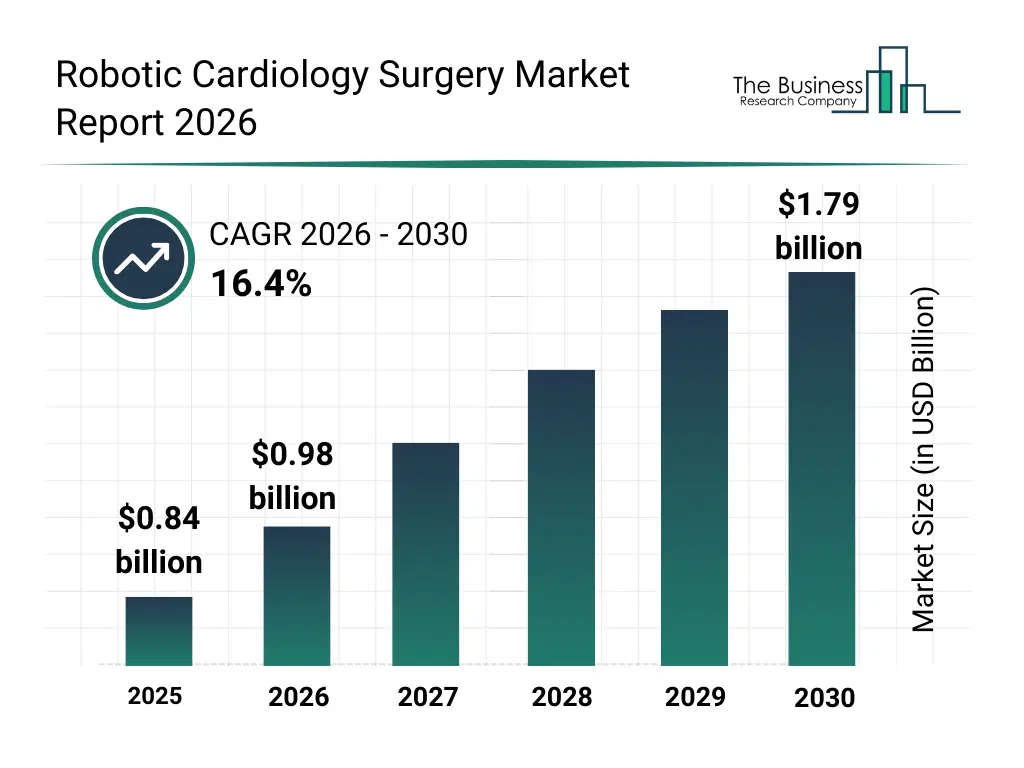
What Is The Robotic Cardiology Surgery Market Size and Share 2026?
The robotic cardiology surgery market size has grown rapidly in recent years. It will grow from $0.84 billion in 2025 to $0.98 billion in 2026 at a compound annual growth rate (CAGR) of 16.7%. The growth in the historic period can be attributed to increasing prevalence of cardiovascular diseases, rising adoption of minimally invasive surgery techniques, expansion of robotic surgical installations in hospitals, growing surgeon familiarity with robotic platforms, improved clinical outcomes from robotic procedures.What Is The Robotic Cardiology Surgery Market Growth Forecast?
The robotic cardiology surgery market size is expected to see rapid growth in the next few years. It will grow to $1.79 billion in 2030 at a compound annual growth rate (CAGR) of 16.4%. The growth in the forecast period can be attributed to growing demand for advanced cardiac surgery solutions, rising investments in next-generation robotic platforms, expansion of robotic surgery training programs, increasing adoption of precision-guided cardiac interventions, ongoing innovation in robotic cardiology technologies. Major trends in the forecast period include increasing adoption of minimally invasive robotic procedures, growing integration of advanced imaging and navigation systems, expansion of surgeon training and simulation platforms, rising use of robotic-assisted cardiac interventions, enhanced focus on surgical precision and patient outcomes.
Global Robotic Cardiology Surgery Market Segmentation
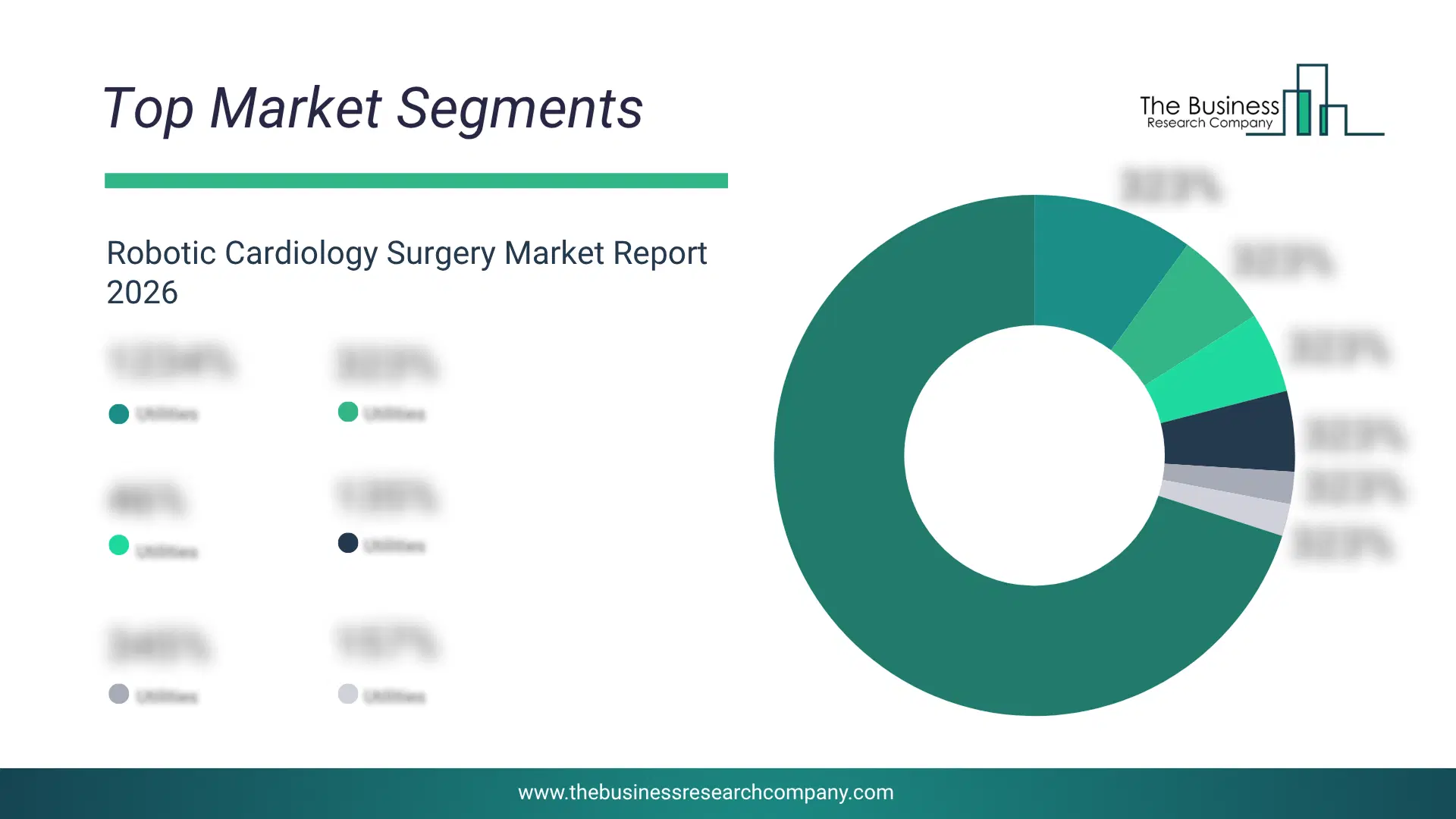
1) By Product And Service: Robotic Systems, Instruments and Accessories, Maintenance Services, System Services 2) By Equipment Type: Robot Machines, Navigation Systems, Planners And Simulators, Other Equipment Types 3) By End-User: Hospitals, Research Centers Subsegments: 1) By Robotic Systems: Robotic Surgical Platforms, Minimally Invasive Robotic Systems, Integrated Robotic Systems 2) By Instruments And Accessories: Surgical Instruments, Endoscopic Cameras And Imaging Systems, Accessory Kits For Robotic Systems 3) By Maintenance Services: Preventive Maintenance Services, Repair And Replacement Services, Calibration Services 4) By System Services: Installation and Setup Services, Training And Support Services, Upgrades And Software MaintenanceWhat Is The Driver Of The Robotic Cardiology Surgery Market?
The increasing prevalence of cardiovascular diseases is expected to propel the growth of the robotic cardiology surgery market going forward. Cardiovascular disease (CVD) refers to a class of diseases that involve the heart or blood vessels. The increasing prevalence of cardiovascular diseases is due to a combination of lifestyle choices, medical conditions, genetic predisposition, and environmental factors. Robotic cardiology surgery plays a crucial role in advancing the treatment of cardiovascular diseases by providing safer, more precise, and less invasive surgical options, ultimately leading to better patient outcomes and enhanced quality of care. For instance, in January 2024, according to the American Heart Association, a US-based nonprofit organization, the age-adjusted death rate from cardiovascular disease rose to 233.3 per 100,000, reflecting a 4.0% increase from last year's rate of 224.4 per 100,000, following a 4.6% rise in 2023, marking the first increase in these rates observed in many years. Therefore, an increase in cardiovascular diseases drives the robotic cardiology surgery industry.Key Players In The Global Robotic Cardiology Surgery Market
Major companies operating in the robotic cardiology surgery market are Abbott Laboratories, Medtronic PLC, Siemens Healthineers AG, Boston Scientific Corporation, Edwards Lifesciences Corporation, KARL STORZ SE & Co. KG, Renishaw PLC, CMR Surgical Limited, Corindus Vascular Robotics Inc., XACT Robotics Ltd., Titan Medical Inc., Asensus Surgical Inc., Intuitive Surgical Inc., Aurora Surgical Robotics Inc., Hansen Medical Inc., Stereotaxis Inc., SS Innovations International Inc., MicroPort Scientific Corporation, GE HealthCare Technologies Inc., Stryker Corporation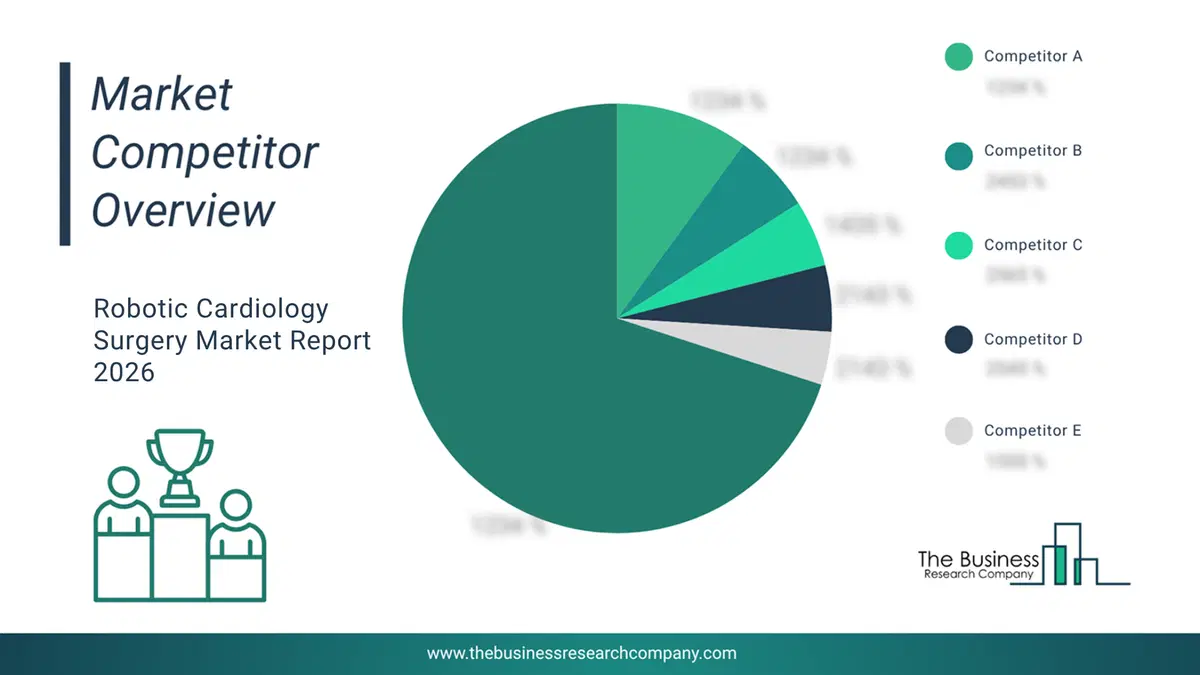
This chart is for illustrative purposes; the full report includes a detailed competitor analysis and comprehensive overview of the top 10 companies in the market.
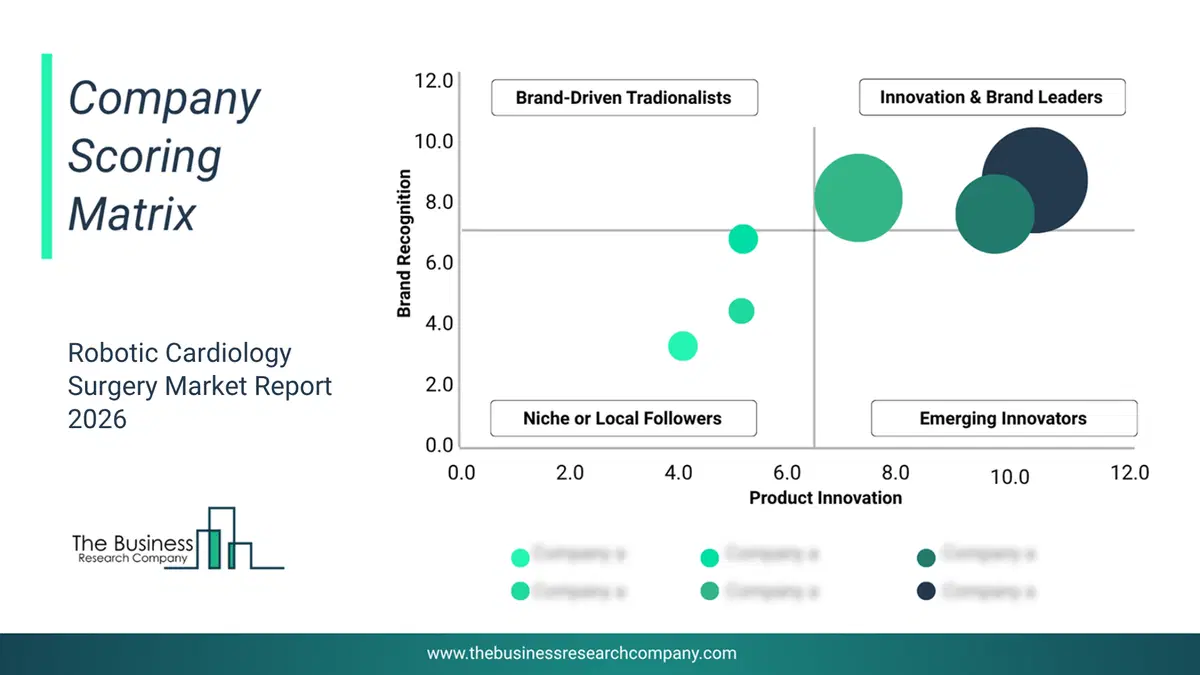
This chart maps companies by product innovation and brand strength, with bubble size indicating relative revenue, helping identify market leaders, challengers, and niche players. This is an illustrative chart; the full report provides a complete and accurate competitive analysis.
Global Robotic Cardiology Surgery Market Trends and Insights
Major companies operating in the robotic cardiology surgery market are focused on developing innovative surgical solutions, such as assistive robotic devices (ARD), to enhance precision in cardiac interventions, minimize invasiveness, and improve patient outcomes through advanced technology integration and real-time analytics. Assistive robotic devices (ARD) refer to robotic systems designed to support individuals with disabilities or limited mobility by aiding in tasks such as movement, communication, or daily living activities. These devices enhance independence and improve the quality of life for users. For instance, in March 2024, CardioPrecision Ltd., a UK-based company that offers robotic surgeries, launched proof-of-concept robotic procedures aimed at implanting an aortic valve replacement through a minimally invasive approach, following successful trials on cadaver models. The robotic system enhances precision and control during the surgery, allowing surgeons to operate with greater accuracy and potentially improving the overall success rate of the procedure. This minimally invasive approach is significant because it can lead to less pain, reduced blood loss, and a lower risk of infection, ultimately facilitating quicker patient recovery.What Are Latest Mergers And Acquisitions In The Robotic Cardiology Surgery Market?
In June 2025, Medtronic, an Ireland-based provider of medical devices, surgical robotics, cardiac rhythm, and cardiovascular therapies, partnered with IRCAD North America. With this collaboration, Medtronic aims to integrate its robotic surgery technologies, AI-enabled systems, and cardiac mapping/ablation platforms into IRCAD’s new training and innovation center, thereby accelerating adoption and skill development in robotic cardiology and minimally invasive cardiovascular procedures. IRCAD North America is a U.S.-based organization dedicated to surgical education, research, and simulation for minimally invasive and robotic surgeries across cardiovascular, neuro, and other surgical specialties.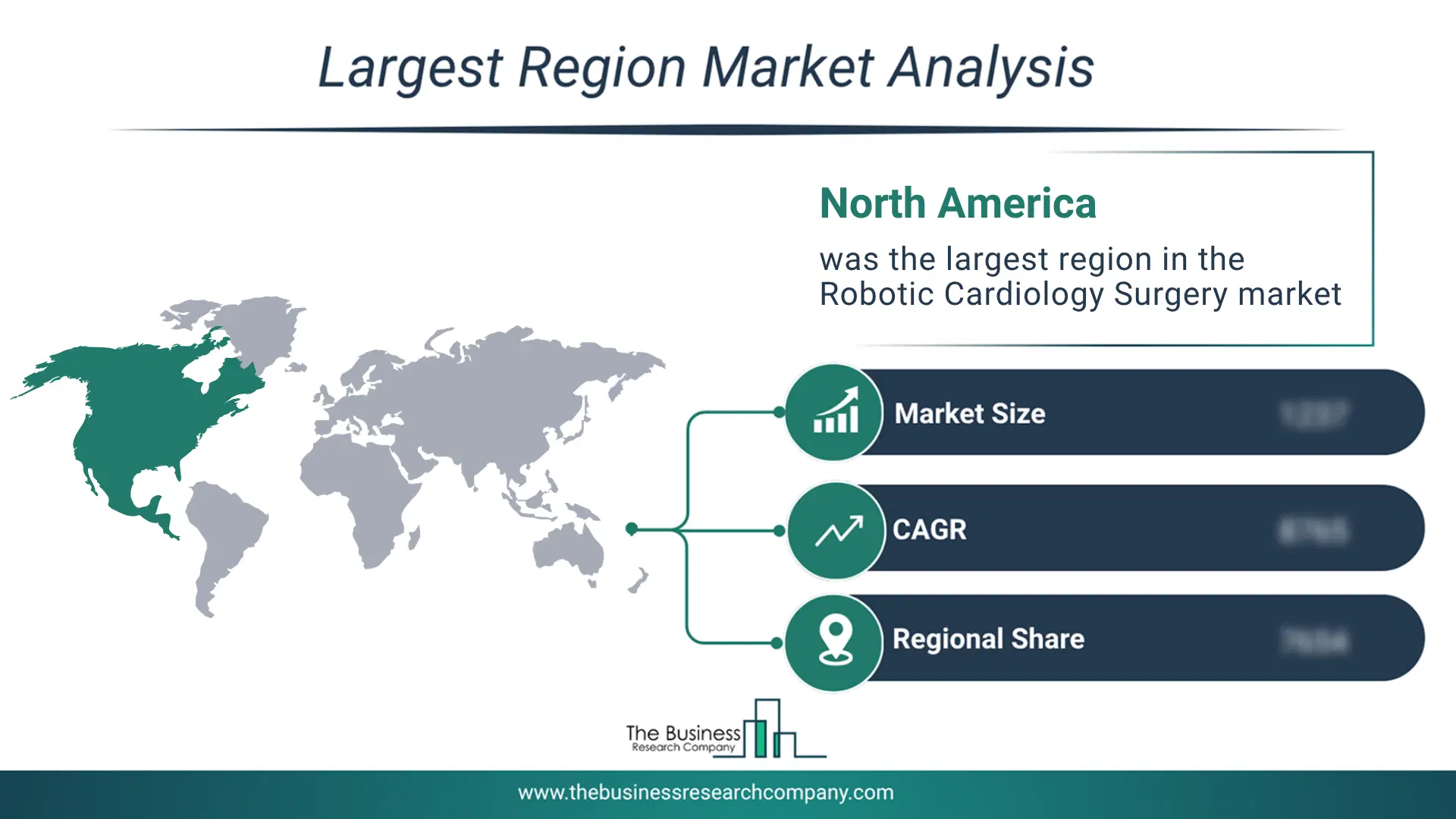
Regional Outlook
North America was the largest region in the robotic cardiology surgery market in 2025. The regions covered in this market report are Asia-Pacific, South East Asia, Western Europe, Eastern Europe, North America, South America, Middle East, Africa. The countries covered in this market report are Australia, Brazil, China, France, Germany, India, Indonesia, Japan, Taiwan, Russia, South Korea, UK, USA, Canada, Italy, Spain.What Defines the Robotic Cardiology Surgery Market?
The robotic cardiology surgery market consists of revenues earned by entities by providing services such as robotic hybrid procedures, robotic atrial septal defect (ASD) repair, and robotic tricuspid valve repair services. The market value includes the value of related goods sold by the service provider or included within the service offering. The robotic cardiology surgery market also includes sales of coronary artery bypass grafting systems, robotic surgical systems, and remote navigation systems. Values in this market are ‘factory gate’ values, that is the value of goods sold by the manufacturers or creators of the goods, whether to other entities (including downstream manufacturers, wholesalers, distributors, and retailers) or directly to end customers. The value of goods in this market includes related services sold by the creators of the goods.How is Market Value Defined and Measured?
The market value is defined as the revenues that enterprises gain from the sale of goods and/or services within the specified market and geography through sales, grants, or donations in terms of the currency (in USD unless otherwise specified). The revenues for a specified geography are consumption values that are revenues generated by organizations in the specified geography within the market, irrespective of where they are produced. It does not include revenues from resales along the supply chain, either further along the supply chain or as part of other products.
This chart presents market attractiveness based on a quantitative evaluation of growth, competition, strategic alignment, and risk, offering a clear view of opportunity areas for decision-making. This chart is for illustrative purposes; the full report contains the complete analysis.

This chart highlights the Total Addressable Market (TAM) by estimating the maximum revenue opportunity using an assumption-driven approach, supporting strategic planning and opportunity sizing across markets. The chart is illustrative; the full report provides a more comprehensive analysis.
What Key Data and Analysis Are Included in the Robotic Cardiology Surgery Market Report 2026?
The robotic cardiology surgery market research report is one of a series of new reports from The Business Research Company that provides market statistics, including industry global market size, regional shares, competitors with the market share, detailed market segments, market trends and opportunities, and any further data you may need to thrive in the robotic cardiology surgery industry. The market research report delivers a complete perspective of everything you need, with an in-depth analysis of the current and future state of the industry.Robotic Cardiology Surgery Market Report Forecast Analysis
| Report Attribute | Details |
|---|---|
| Market Size Value In 2026 | $0.98 billion |
| Revenue Forecast In 2030 | $1.79 billion |
| Growth Rate | CAGR of 16.4% from 2026 to 2030 |
| Base Year For Estimation | 2025 |
| Actual Estimates/Historical Data | 2020-2025 |
| Forecast Period | 2026 - 2030 |
| Market Representation | Revenue in USD Billion and CAGR from 2026 to 2030 |
| Segments Covered | Product And Service, Equipment Type, End-User |
| Regional Scope | Asia-Pacific, Western Europe, Eastern Europe, North America, South America, Middle East, Africa |
| Country Scope | The countries covered in the report are Australia, Brazil, China, France, Germany, India, Indonesia, Japan, Taiwan, Russia, South Korea, UK, USA, Canada, Italy, Spain |
| Key Companies Profiled | Abbott Laboratories, Medtronic PLC, Siemens Healthineers AG, Boston Scientific Corporation, Edwards Lifesciences Corporation, KARL STORZ SE & Co. KG, Renishaw PLC, CMR Surgical Limited, Corindus Vascular Robotics Inc., XACT Robotics Ltd., Titan Medical Inc., Asensus Surgical Inc., Intuitive Surgical Inc., Aurora Surgical Robotics Inc., Hansen Medical Inc., Stereotaxis Inc., SS Innovations International Inc., MicroPort Scientific Corporation, GE HealthCare Technologies Inc., Stryker Corporation |
| Customization Scope | Request for Customization |
| Pricing And Purchase Options | Explore Purchase Options |