
Robotic Hemming Systems Market Report 2026
Global Outlook – By Component (Hardware, Software, Services ), By Technology (Roller Hemming, Press Hemming, Tabletop Hemming, Other Technologies ), By Application (Doors, Hoods And Deck Lids, Wheel Arches, Sunroofs And Panoramic Roofs ), By End-User (Original Equipment Manufacturers (OEMs), Tier 1 Suppliers, Other End-Users ) – Market Size, Trends, Strategies, and Forecast to 2030
Robotic Hemming Systems Market Overview
• Robotic Hemming Systems market size has reached to $1.61 billion in 2025 • Expected to grow to $2.53 billion in 2030 at a compound annual growth rate (CAGR) of 9.5% • Growth Driver: Surge In Automation In Automotive Body Manufacturing Fueling The Growth Of The Market Due To Enhanced Efficiency And Precision In Production • Asia-Pacific was the largest region and fastest growing region.What Is Covered Under Robotic Hemming Systems Market?
Robotic hemming systems are automated manufacturing systems that utilize industrial robots to fold and join the edges of sheet metal panels. They enable the precise and consistent hemming of parts such as doors, hoods, and trunk lids, while enhancing production efficiency, minimizing manual effort, and maintaining uniform quality in high-volume manufacturing. The main components of robotic hemming systems include hardware, software, and services. Hardware refers to robotic arms, tooling systems, and control units that enable precise hemming operations in manufacturing processes. The various technologies include roller hemming, press hemming, tabletop hemming, and other technologies. The various applications involved are doors, hoods and deck lids, wheel arches, and sunroofs and panoramic roofs, and they are utilized by end users including original equipment manufacturers (OEMs), tier 1 suppliers, and other end-users.
What Is The Robotic Hemming Systems Market Size and Share 2026?
The robotic hemming systems market size has grown strongly in recent years. It will grow from $1.61 billion in 2025 to $1.76 billion in 2026 at a compound annual growth rate (CAGR) of 9.2%. The growth in the historic period can be attributed to increasing automotive production volumes, adoption of manual and semi-automated hemming methods, rising demand for consistent panel quality, growth of tier 1 supplier networks, expansion of automotive OEM manufacturing facilities.What Is The Robotic Hemming Systems Market Growth Forecast?
The robotic hemming systems market size is expected to see strong growth in the next few years. It will grow to $2.53 billion by 2030 at a compound annual growth rate (CAGR) of 9.5%. The growth in the forecast period can be attributed to growing deployment of fully robotic hemming lines, rising adoption of AI-enabled process simulation, increasing integration with Industry 4.0 systems, expansion of electric vehicle production, growing demand for predictive maintenance and real-time quality monitoring. Major trends in the forecast period include increasing adoption of roller and press hemming technologies, rising demand for robotic arms and advanced hemming tools, growing integration of process simulation and quality monitoring software, expansion of automated conveyor and control systems, rising focus on training, installation, and technical support services.
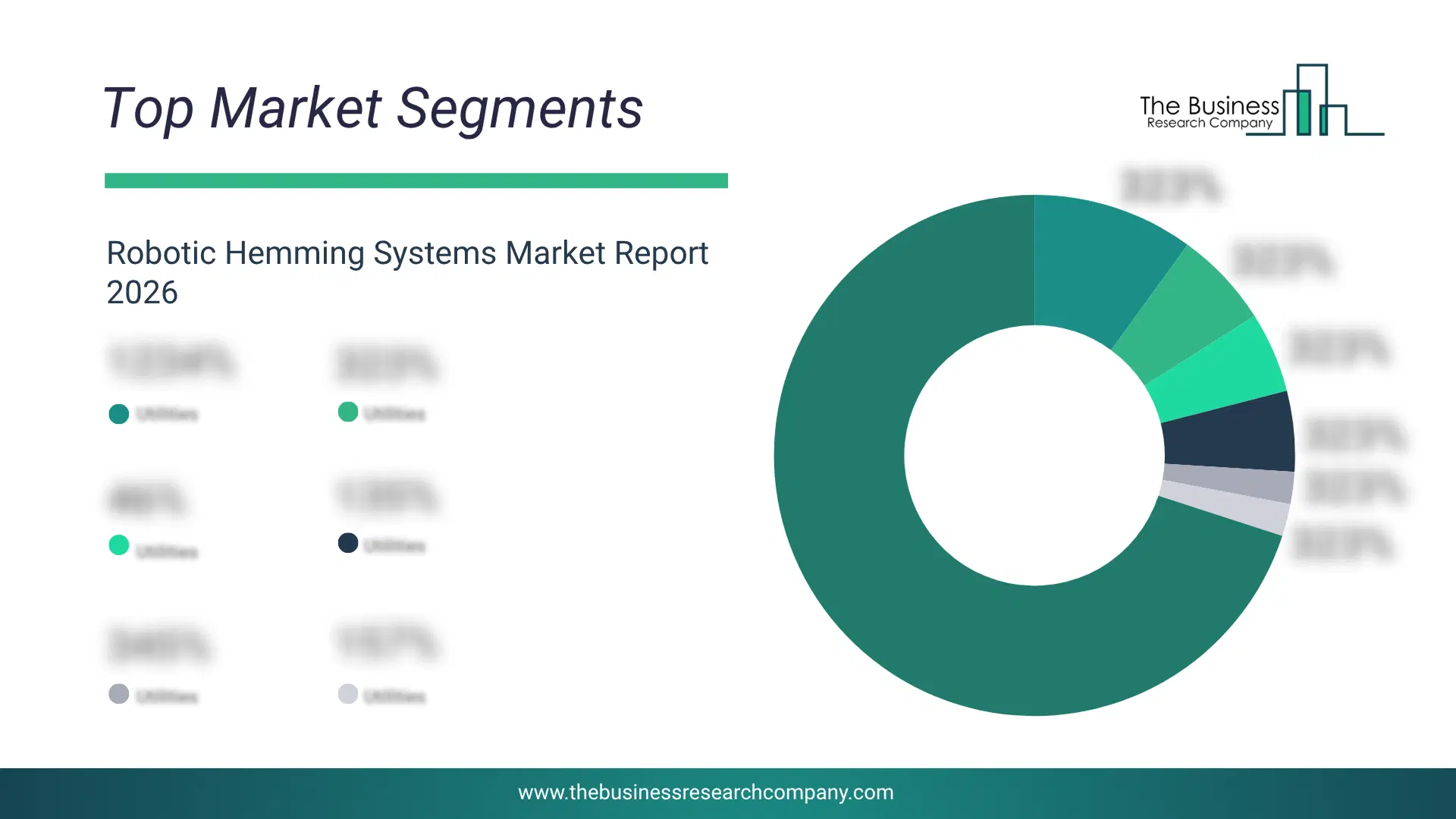
Global Robotic Hemming Systems Market Segmentation
1) By Component: Hardware, Software, Services 2) By Technology: Roller Hemming, Press Hemming, Tabletop Hemming, Other Technologies 3) By Application: Doors, Hoods And Deck Lids, Wheel Arches, Sunroofs And Panoramic Roofs 4) By End-User: Original Equipment Manufacturers (OEMs), Tier 1 Suppliers, Other End-Users Subsegments: 1) By Hardware: Robotic Arms, Hemming Tools, Conveyor Systems, Control Units 2) By Software: Process Simulation Software, Programming And Control Software, Quality Monitoring Software, Maintenance Management Software 3) By Services: Installation Services, Training Services, Technical Support Services, Consulting ServicesWhat Are The Drivers Of The Robotic Hemming Systems Market?
The increasing automation in automotive body manufacturing are expected to propel the growth of the robotic hemming systems forward. Automation in automotive body manufacturing refers to the use of machines and robotic systems to perform body assembly, welding, and material handling with minimal human intervention. The increase in automation in automotive body manufacturing is driven by higher efficiency, as it reduces production time and minimizes human error in assembly processes. Robotic hemming systems help automation in automotive body manufacturing by precisely folding and joining metal panels, enhancing production speed, consistency, and overall assembly quality while reducing reliance on manual labor. For instance, in November 2024, according to the International Federation of Robotics (IFR), a Germany-based non-profit organization representing the global robotics industry, the robot density in the United States increased from 285 units per 10,000 employees in 2022 to 295 units per 10,000 employees in 2023, reflecting a consistent rise in industrial automation adoption across manufacturing sectors. Therefore, increasing automation in automotive body manufacturing is driving the growth of the robotic hemming systems industry. The growing vehicle production volumes are expected to propel the growth of the robotic hemming systems forward. Vehicle production volumes refer to the total number of vehicles manufactured within a specific period, typically measured annually or quarterly. The growth in vehicle production volumes is driven by rising consumer demand, as increasing preference for personal and commercial vehicles boosts manufacturing output. Robotic hemming systems help increase vehicle production volumes by automating the precise folding and joining of metal panels, enabling faster assembly, consistent quality, and higher throughput on production lines. For instance, in August 2025, according to the Government of Canada, a Canada-based federal administration, in 2023, revenues from automobile and light-duty motor vehicle manufacturing rose to $60.0 billion, up from $45.0 billion in 2022, marking a 33.2% increase. Similarly, total industry revenues grew to $60.1 billion in 2023 from $45.1 billion in 2022. Therefore, growing vehicle production volumes are driving the growth of the robotic hemming systems industry. The growing electric vehicle adoption is expected to propel the growth of the robotic hemming systems market going forward. Electric vehicle adoption refers to the increasing rate at which consumers and manufacturers transition from traditional internal combustion engine vehicles to battery-powered or hybrid electric vehicles. The rise in electric vehicle adoption is primarily driven by declining battery costs and supportive government policies that provide purchase incentives and mandate minimum sales requirements, encouraging both manufacturers and consumers to embrace electrification. The electric vehicle adoption shift creates substantial demand for advanced manufacturing technologies such as robotic hemming systems, which are capable of handling the unique structural requirements and tight tolerances essential for electric vehicle body assembly. For instance, in January 2024, according to a report published by Kelley Blue Book, a US-based Cox Automotive company, in 2023, a record 1.2 million car buyers in the United States chose electric vehicles, which accounted for 7.6% of the entire U.S. vehicle market, up from 5.9% in 2022. Therefore, growing electric vehicle adoption is driving the growth of the robotic hemming systems industry.Key Players In The Global Robotic Hemming Systems Market
Major companies operating in the robotic hemming systems market are Thyssenkrupp AG, ABB Ltd., Gestamp Automoción S.A., Kawasaki Heavy Industries, Ltd., Bosch Rexroth AG, Dürr AG, Yaskawa Electric Corporation, Stäubli International AG, ESTUN Automation, Tooling Systems Group, Affordable Robotic & Automation Limited (ARAPL), Nachi Robotics Systems, Fox Controls Pvt. Ltd., EBZ Gruppe, Doosan Robotics, Hyundai Robotics, Tünkers Maschinenbau GmbH, Encon Systems International, Modern Body Engineering, HIROTEC Group, EngRoTec-Solutions, Aevitas Automation And Robotics Technologies Pvt. Ltd.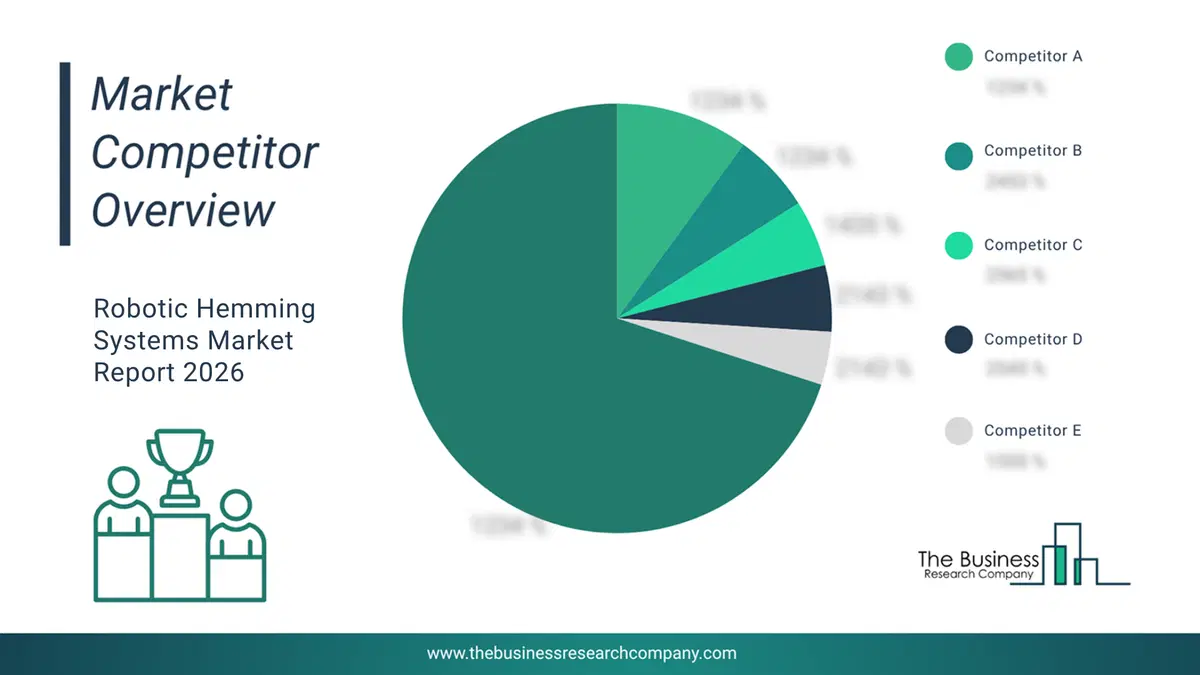
This chart is for illustrative purposes; the full report includes a detailed competitor analysis and comprehensive overview of the top 10 companies in the market.
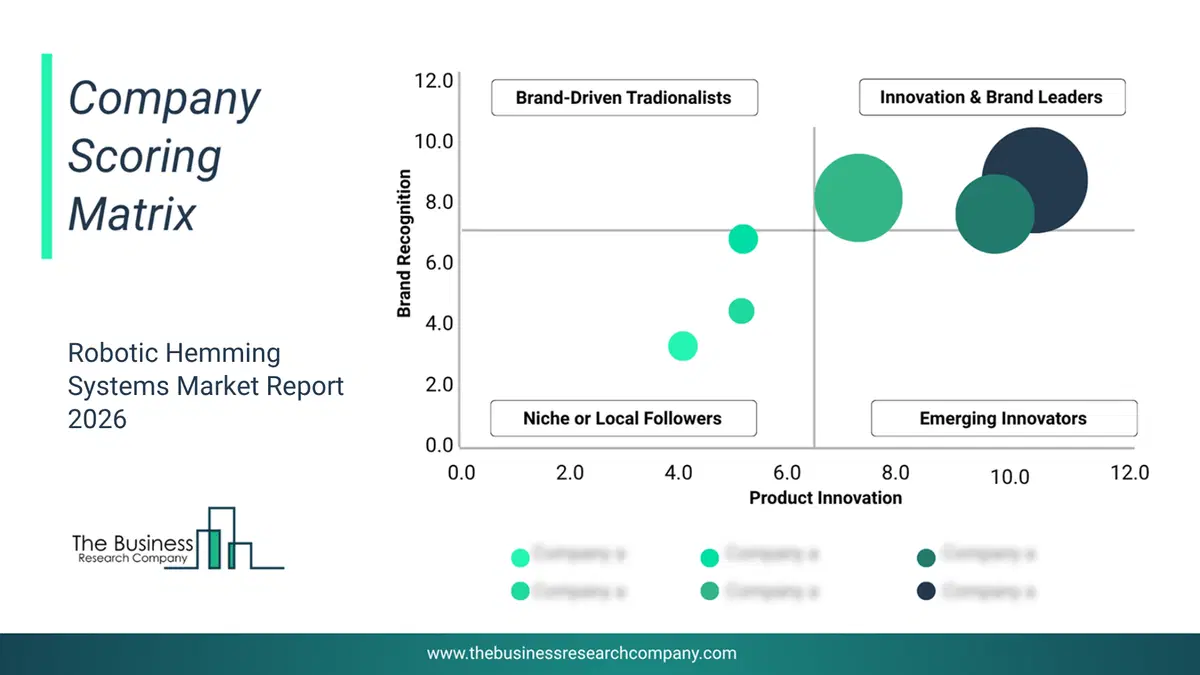
This chart maps companies by product innovation and brand strength, with bubble size indicating relative revenue, helping identify market leaders, challengers, and niche players. This is an illustrative chart; the full report provides a complete and accurate competitive analysis.
Regional Insights
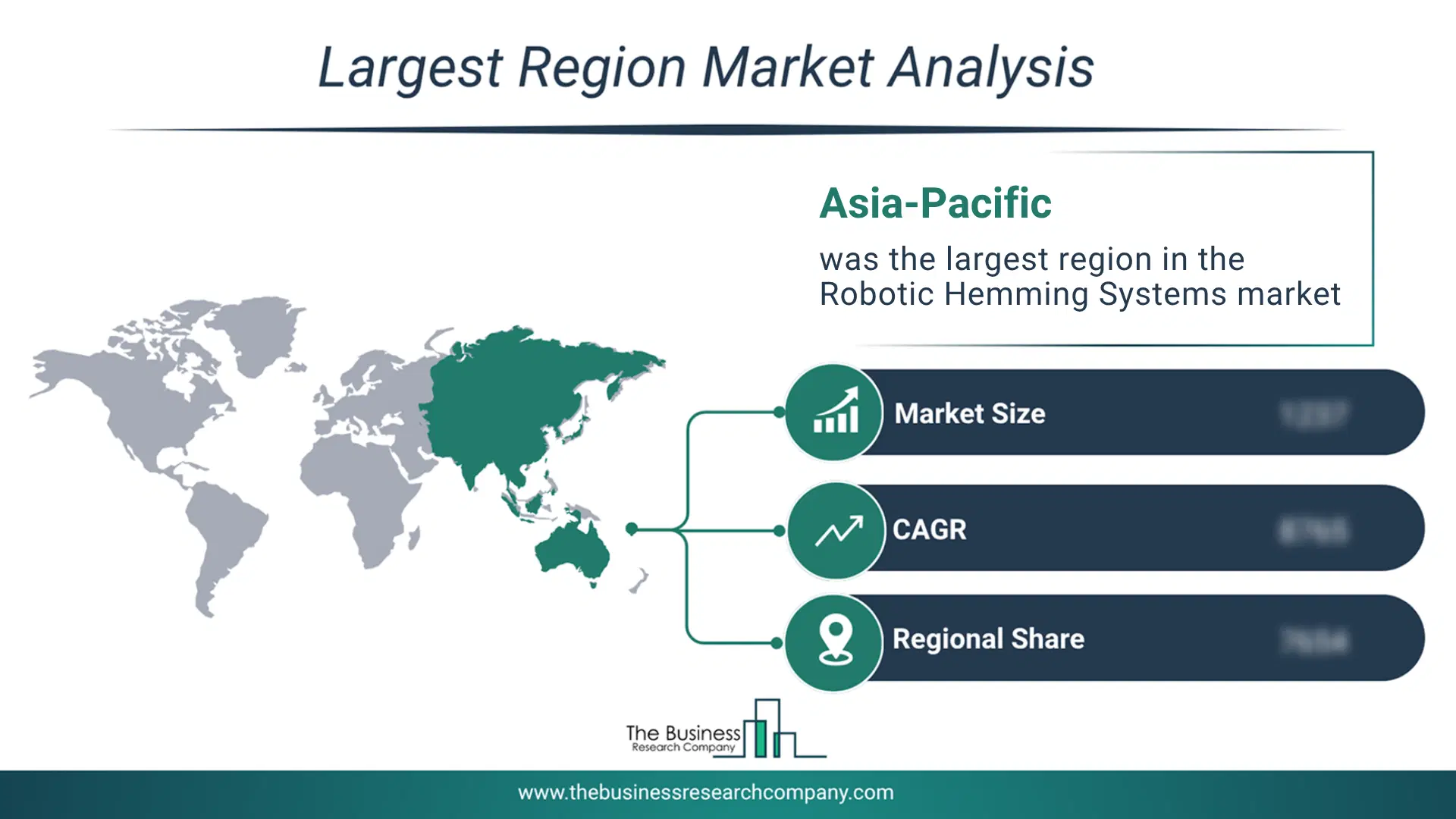
Asia-Pacific was the largest region in the robotic hemming systems market in 2025. Asia-Pacific is expected to be the fastest-growing region in the forecast period. The regions covered in this market report are Asia-Pacific, South East Asia, Western Europe, Eastern Europe, North America, South America, Middle East, Africa. The countries covered in this market report are Australia, Brazil, China, France, Germany, India, Indonesia, Japan, Taiwan, Russia, South Korea, UK, USA, Canada, Italy, Spain.What Defines the Robotic Hemming Systems Market?
The robotic hemming systems market consists of revenues earned by entities by providing services such as edge folding and forming automation, vision-guided seam alignment, programmable hemming path control, real-time quality inspection, and defect detection. The market value includes the value of related goods sold by the service provider or included within the service offering. The robotic hemming systems market also includes sales of safety enclosures, conveyor systems, vision systems, control panels, servo motors, and pneumatic actuators. Values in this market are ‘factory gate’ values, that is, the value of goods sold by the manufacturers or creators of the goods, whether to other entities (including downstream manufacturers, wholesalers, distributors, and retailers) or directly to end customers. The value of goods in this market includes related services sold by the creators of the goods.How is Market Value Defined and Measured?
The market value is defined as the revenues that enterprises gain from the sale of goods and/or services within the specified market and geography through sales, grants, or donations in terms of the currency (in USD unless otherwise specified). The revenues for a specified geography are consumption values that are revenues generated by organizations in the specified geography within the market, irrespective of where they are produced. It does not include revenues from resales along the supply chain, either further along the supply chain or as part of other products.
This chart presents market attractiveness based on a quantitative evaluation of growth, competition, strategic alignment, and risk, offering a clear view of opportunity areas for decision-making. This chart is for illustrative purposes; the full report contains the complete analysis.

This chart highlights the Total Addressable Market (TAM) by estimating the maximum revenue opportunity using an assumption-driven approach, supporting strategic planning and opportunity sizing across markets. The chart is illustrative; the full report provides a more comprehensive analysis.
What Key Data and Analysis Are Included in the Robotic Hemming Systems Market Report 2026?
The robotic hemming systems market research report is one of a series of new reports from The Business Research Company that provides market statistics, including industry global market size, regional shares, competitors with the market share, detailed market segments, market trends and opportunities, and any further data you may need to thrive in the robotic hemming systems industry. The market research report delivers a complete perspective of everything you need, with an in-depth analysis of the current and future state of the industry.Robotic Hemming Systems Market Report Forecast Analysis
| Report Attribute | Details |
|---|---|
| Market Size Value In 2026 | $1.76 billion |
| Revenue Forecast In 2030 | $2.53 billion |
| Growth Rate | CAGR of 9.5% from 2026 to 2030 |
| Base Year For Estimation | 2025 |
| Actual Estimates/Historical Data | 2020-2025 |
| Forecast Period | 2026 - 2030 |
| Market Representation | Revenue in USD Billion and CAGR from 2026 to 2030 |
| Segments Covered | Component, Technology, Application, End-User |
| Regional Scope | Asia-Pacific, Western Europe, Eastern Europe, North America, South America, Middle East, Africa |
| Key Companies Profiled | Thyssenkrupp AG, ABB Ltd., Gestamp Automoción S.A., Kawasaki Heavy Industries, Ltd., Bosch Rexroth AG, Dürr AG, Yaskawa Electric Corporation, Stäubli International AG, ESTUN Automation, Tooling Systems Group, Affordable Robotic & Automation Limited (ARAPL), Nachi Robotics Systems, Fox Controls Pvt. Ltd., EBZ Gruppe, Doosan Robotics, Hyundai Robotics, Tünkers Maschinenbau GmbH, Encon Systems International, Modern Body Engineering, HIROTEC Group, EngRoTec-Solutions, Aevitas Automation And Robotics Technologies Pvt. Ltd. |
| Customization Scope | Request for Customization |
| Pricing And Purchase Options | Explore Purchase Options |