
Robotic Refueling System Market Report 2026
Global Outlook – By Component (Hardware, Software ), By Fuel Pumped (Gasoline, Natural Gas, Petrochemicals, Other Fuels Pumped), By Payload-Carrying Capacity (Up To 50 Kg, 50.01-100.00 Kg, 100.01-150.00 Kg), By End User (Automotive, Aerospace, Construction, Marine And Shipping, Mining, Military And Defense, Oil And Gas, Warehouse And Logistics, Other End Users) – Market Size, Trends, Strategies, and Forecast to 2030
Robotic Refueling System Market Overview
• Robotic Refueling System market size has reached to $0.62 billion in 2025 • Expected to grow to $3.92 billion in 2030 at a compound annual growth rate (CAGR) of 42.9% • Growth Driver: Impact Of Oil And Gas Production Growth On The Robotic Refueling System Market • Market Trend: Stratom And Imenco Partner To Advance Autonomous Robotic Refueling Systems • North America was the largest region in 2025.What Is Covered Under Robotic Refueling System Market?
Robotic refueling systems refer to automated systems that refuel vehicles or machinery without human interaction, primarily used in industries where efficiency, safety, and precision are critical. This system comprises robotic arms equipped with specialized tools, sensors, and software algorithms to precisely locate and connect fuel nozzles to vehicles or machinery for proper fueling procedures. The main components of robotic refueling system components are hardware and software. Hardware pertains to the tangible components of a computer system or any electronic device. It is focused on enhancing satellite servicing capabilities and facilitating extended deep space exploration missions. It can pump various fuels, including gasoline, natural gas, petrochemicals, and others, and includes several payload-carrying capacities, such as up to 50 kg, 50.01-100.00 kg, and 100.01-150.00 kg. It is used by different end-user industries such as automotive, aerospace, construction, marine and shipping, mining, military and defense, oil and gas, warehouse and logistics, and others.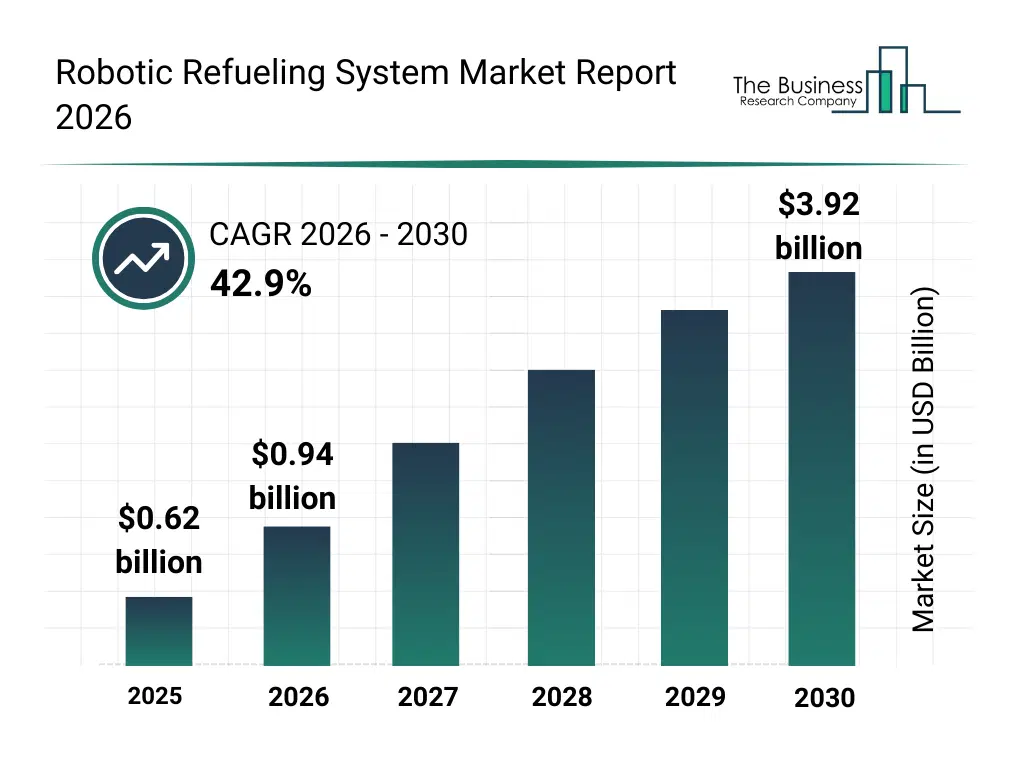
What Is The Robotic Refueling System Market Size and Share 2026?
The robotic refueling system market size has grown exponentially in recent years. It will grow from $0.62 billion in 2025 to $0.94 billion in 2026 at a compound annual growth rate (CAGR) of 51.6%. The growth in the historic period can be attributed to need for improved fueling safety, labor cost reduction initiatives, automation in industrial operations, demand for operational efficiency, adoption of robotics in manufacturing.What Is The Robotic Refueling System Market Growth Forecast?
The robotic refueling system market size is expected to see exponential growth in the next few years. It will grow to $3.92 billion in 2030 at a compound annual growth rate (CAGR) of 42.9%. The growth in the forecast period can be attributed to growth of autonomous vehicle fleets, increasing defense and military automation, expansion of unmanned mining operations, rising demand for contactless fueling systems, advancements in robotic vision and control software. Major trends in the forecast period include rising deployment of automated refueling in autonomous fleets, growing adoption of robotic refueling in hazardous environments, increasing integration of vision and sensor guided refueling systems, expansion of robotic refueling for high throughput operations, rising focus on precision and spill free fueling automation.Tariff Impact On Robotic Refueling System Market
Tariffs have affected the robotic refueling system market by increasing costs of imported robotic arms, sensors, control systems, and precision mechanical components. These impacts are most visible in automotive, defense, and oil and gas applications, particularly in regions dependent on cross border robotics and electronics supply chains such as Asia Pacific and Europe. Higher tariffs have raised system integration and deployment costs. At the same time, tariffs have encouraged domestic robotics manufacturing, regional sourcing of components, and development of cost optimized robotic refueling solutions, supporting long term market resilience.
Global Robotic Refueling System Market Segmentation
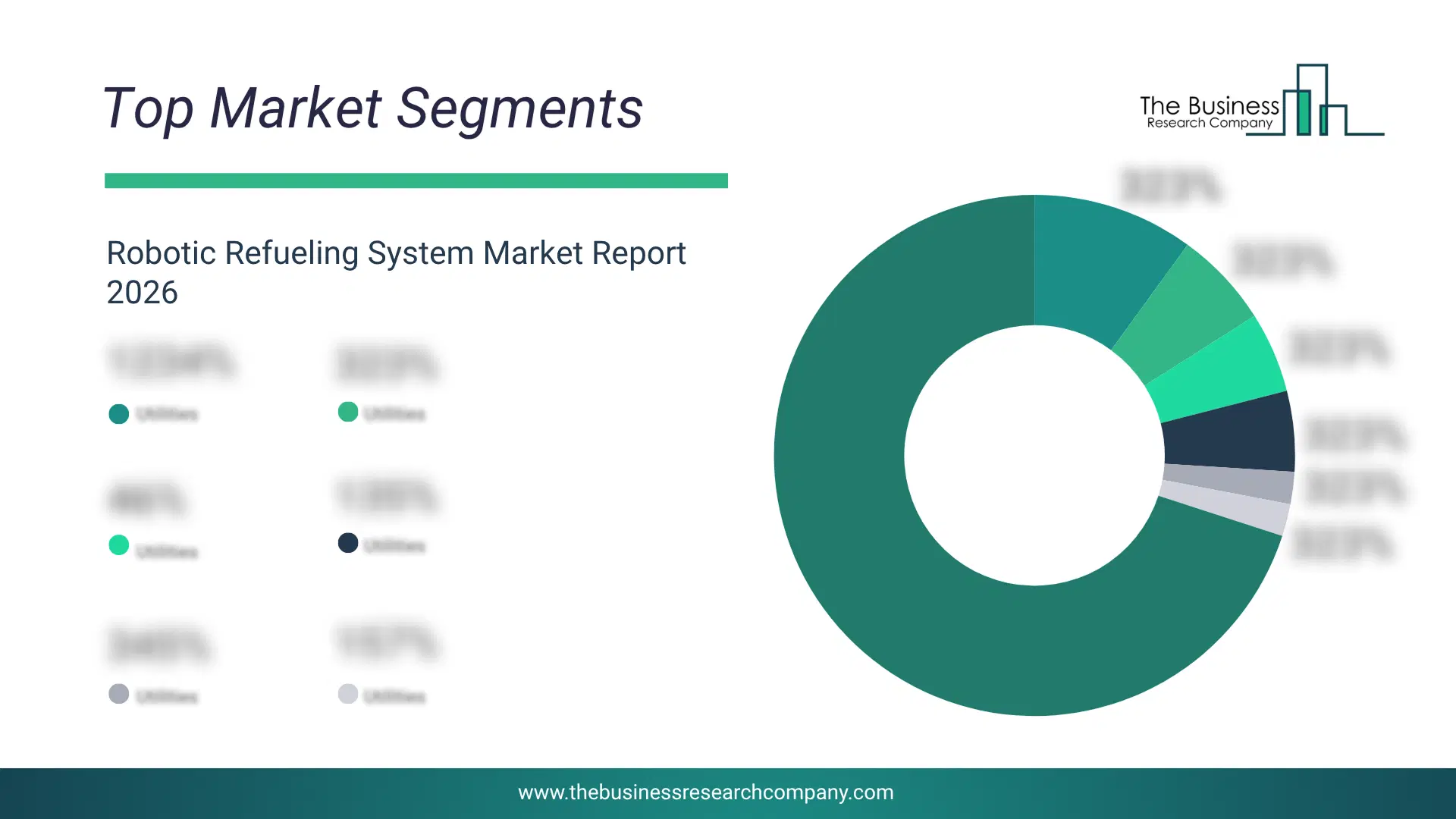
1) By Component: Hardware, Software 2) By Fuel Pumped: Gasoline, Natural Gas, Petrochemicals, Other Fuels Pumped 3) By Payload-Carrying Capacity: Up To 50 Kg, 50.01-100.00 Kg, 100.01-150.00 Kg 4) By End User: Automotive, Aerospace, Construction, Marine And Shipping, Mining, Military And Defense, Oil And Gas, Warehouse And Logistics, Other End Users Subsegments: 1) By Hardware: Robotic Arms, Fuel Dispensing Units, Sensors And Cameras, Control Systems, Connectors And Valves, Power Supply Units, Structural Components 2) By Software: Control Software, Navigation And Mapping Software, Safety And Monitoring Software, Data Analytics And Reporting Software, Integration SoftwareWhat Is The Driver Of The Robotic Refueling System Market?
The increase in oil and gas production is expected to propel the growth of the robotic refueling system market going forward. Oil and gas refer to hydrocarbons, naturally occurring substances in rocks in the earth's crust. The increase in oil and gas production is driven by technological innovation, market forces, geopolitical dynamics, and regulatory frameworks that shape the global energy landscape. Robotic refueling systems help minimize downtime by streamlining the refueling process, ultimately enhancing overall productivity in oil and gas production. For instance, in March 2024, according to the Energy Information Administration (EIA), a US-based Federal Statistical System, U.S. crude oil production averaged 12.9 million barrels per day (b/d) in 2023, reaching a record of over 13.3 million b/d in December, with the U.S., Russia, and Saudi Arabia together contributing 40% of global oil output at 32.8 million b/d. Therefore, the rise in oil and gas production is driving the growth of the robotic refueling system industry.Key Players In The Global Robotic Refueling System Market
Major companies operating in the robotic refueling system market are ABB Limited, FANUC Corporation, KUKA Aktiengesellschaft, Stäubli International AG, Scott Technology Limited, Shaw Development, Orbit Fab, Aerobotix, Tatsuno Corporation, Rotec Engineering, Mine Energy Solutions, Fuelmatics, Autofuel, Green Fueling, Wilder Systems, Simon Group Holding, The Boeing Company, Airbus, Stratom, Imenco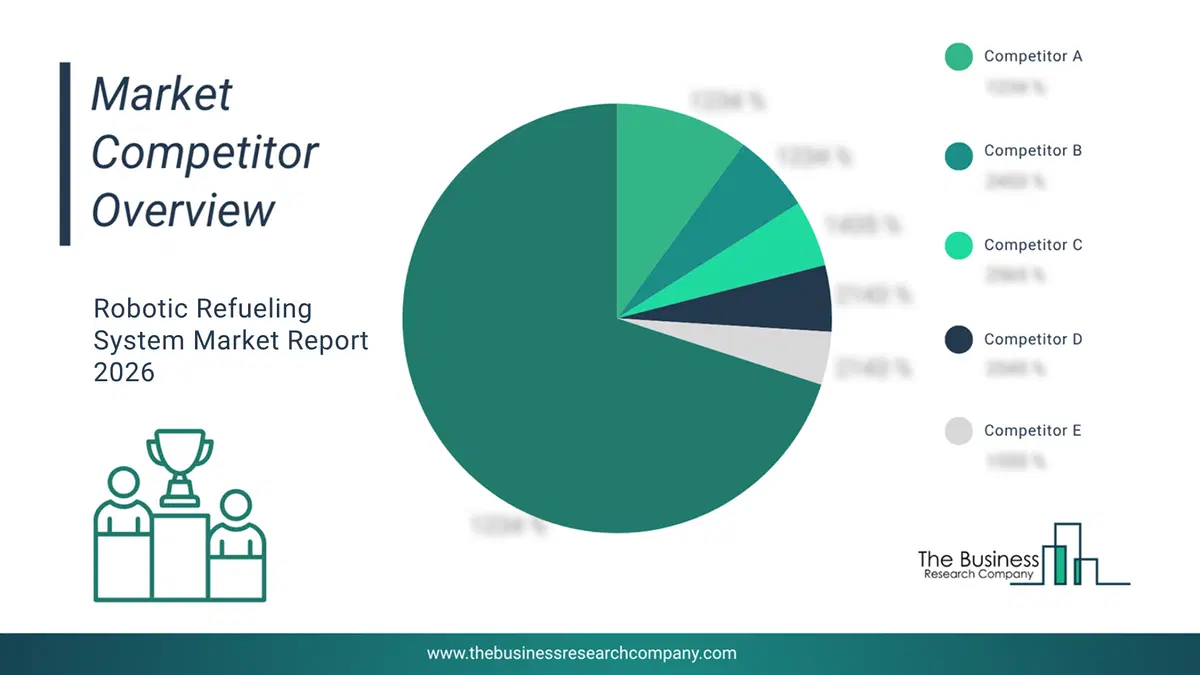
This chart is for illustrative purposes; the full report includes a detailed competitor analysis and comprehensive overview of the top 10 companies in the market.
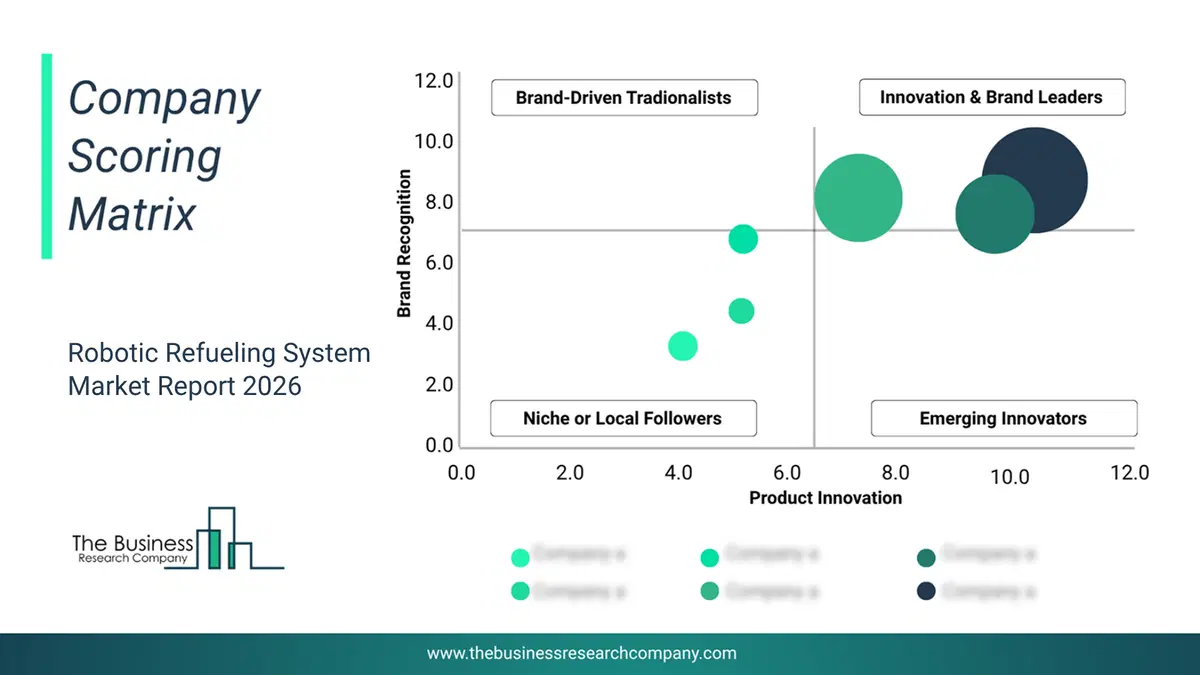
This chart maps companies by product innovation and brand strength, with bubble size indicating relative revenue, helping identify market leaders, challengers, and niche players. This is an illustrative chart; the full report provides a complete and accurate competitive analysis.
Global Robotic Refueling System Market Trends and Insights
Major companies operating in the robotic refueling system market are focusing on developing advanced solutions such as autonomous fuel‑port engagement systems to enhance efficiency, safety, and resource optimization. Autonomous fuel‑port engagement is a system in which a robotic arm, guided by sensors and software, automatically locates a vehicle or aircraft’s fuel port, aligns the nozzle, and carries out fueling without human intervention. For instance, in March 2023, Stratom, a U.S.-based autonomous robotic systems company, partnered with Imenco, a Norway-based integrated solutions company, to deliver fully autonomous robotic refueling systems for aviation and offshore use covering industrial, defense, commercial, and offshore sectors. Their offering leverages Stratom’s autonomous fuel‑port engagement capabilities within its RAPIDsystem and Imenco’s FuelSCAN series, combining autonomous refueling, 24/7 automated fuel monitoring, self-sampling, and remote‑accessible activity logs. The joint solution removes the need for human interaction in refueling operations and delivers safe and sustainable autonomous refueling that boosts operating efficiency, optimizes resource use, and enhances decision-making.What Are Latest Mergers And Acquisitions In The Robotic Refueling System Market?
In October 2023, Madison Dearborn Partners LLC, a US-based private equity firm, acquired Shaw Development for an undisclosed amount. With this acquisition, Madison Dearborn will enhance its presence in the fluid management solutions sector, particularly by focusing on advanced technologies such as robotic refueling systems and expanding its capabilities in robotic refueling systems. Shaw Development LLC is a US-based fluid management systems company providing robotic refueling systems in various industries.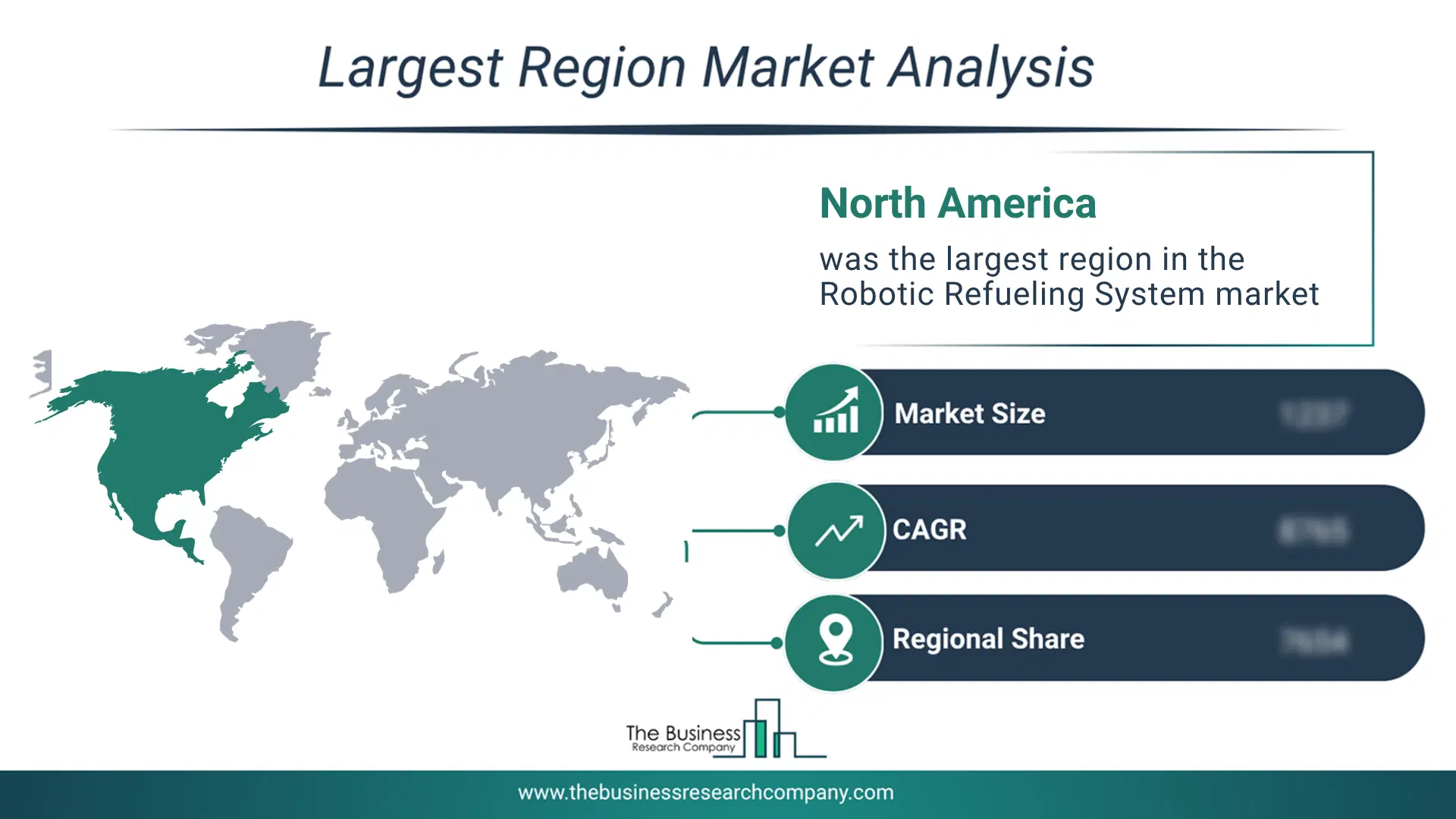
Regional Outlook
North America was the largest region in the robotic refueling system market in 2025. The regions covered in this market report are Asia-Pacific, South East Asia, Western Europe, Eastern Europe, North America, South America, Middle East, Africa The countries covered in this market report are Australia, Brazil, China, France, Germany, India, Indonesia, Japan, Taiwan, Russia, South Korea, UK, USA, Canada, Italy, Spain.What Defines the Robotic Refueling System Market?
The robotic refueling systems market consists of revenues earned by entities by providing services such installation and integration services, customization and configuration, maintenance and support contracts, remote monitoring and diagnostics, and consulting and advisory services. The market value includes the value of related goods sold by the service provider or included within the service offering. The robotic refueling systems market includes sales of fuel pumps, fuel handling equipment and robotic arms. Values in this market are ‘factory gate’ values, that is the value of goods sold by the manufacturers or creators of the goods, whether to other entities (including downstream manufacturers, wholesalers, distributors and retailers) or directly to end customers. The value of goods in this market includes related services sold by the creators of the goods.How is Market Value Defined and Measured?
The market value is defined as the revenues that enterprises gain from the sale of goods and/or services within the specified market and geography through sales, grants, or donations in terms of the currency (in USD unless otherwise specified). The revenues for a specified geography are consumption values that are revenues generated by organizations in the specified geography within the market, irrespective of where they are produced. It does not include revenues from resales along the supply chain, either further along the supply chain or as part of other products.
This chart presents market attractiveness based on a quantitative evaluation of growth, competition, strategic alignment, and risk, offering a clear view of opportunity areas for decision-making. This chart is for illustrative purposes; the full report contains the complete analysis.

This chart highlights the Total Addressable Market (TAM) by estimating the maximum revenue opportunity using an assumption-driven approach, supporting strategic planning and opportunity sizing across markets. The chart is illustrative; the full report provides a more comprehensive analysis.
What Key Data and Analysis Are Included in the Robotic Refueling System Market Report 2026?
The robotic refueling system market research report is one of a series of new reports from The Business Research Company that provides market statistics, including industry global market size, regional shares, competitors with the market share, detailed market segments, market trends and opportunities, and any further data you may need to thrive in the robotic refueling system industry. The market research report delivers a complete perspective of everything you need, with an in-depth analysis of the current and future state of the industry.Robotic Refueling System Market Report Forecast Analysis
| Report Attribute | Details |
|---|---|
| Market Size Value In 2026 | $0.94 billion |
| Revenue Forecast In 2030 | $3.92 billion |
| Growth Rate | CAGR of 42.9% from 2026 to 2030 |
| Base Year For Estimation | 2025 |
| Actual Estimates/Historical Data | 2020-2025 |
| Forecast Period | 2026 - 2030 |
| Market Representation | Revenue in USD Billion and CAGR from 2026 to 2030 |
| Segments Covered | Component, Fuel Pumped, Payload-Carrying Capacity, End User |
| Regional Scope | Asia-Pacific, Western Europe, Eastern Europe, North America, South America, Middle East, Africa |
| Key Companies Profiled | ABB Limited, FANUC Corporation, KUKA Aktiengesellschaft, Stäubli International AG, Scott Technology Limited, Shaw Development, Orbit Fab, Aerobotix, Tatsuno Corporation, Rotec Engineering, Mine Energy Solutions, Fuelmatics, Autofuel, Green Fueling, Wilder Systems, Simon Group Holding, The Boeing Company, Airbus, Stratom, Imenco |
| Customization Scope | Request for Customization |
| Pricing And Purchase Options | Explore Purchase Options |