
Rocket Engine Cooling Systems Market Report 2026
Global Outlook – By Type (Regenerative Cooling, Film Cooling, Ablative Cooling, Radiation Cooling, Other Types), By Material (Metals, Ceramics, Composites, Other Materials), By Application (Spacecraft, Missiles, Launch Vehicles, Other Applications), By End User (Commercial, Military, Government) – Market Size, Trends, Strategies, and Forecast to 2030
Rocket Engine Cooling Systems Market Overview
• Rocket Engine Cooling Systems market size has reached to $1.29 billion in 2025 • Expected to grow to $1.93 billion in 2030 at a compound annual growth rate (CAGR) of 8.4% • Growth Driver: Growth Of Commercial Space Enterprises Driving Expansion Of The Market Due To Technological Advancements And Increasing Investment In Space Commercialization • Market Trend: Advancements in 3D-Printed Rocket Engine Cooling Systems For Enhanced Performance • North America was the largest region in 2025.What Is Covered Under Rocket Engine Cooling Systems Market?
Rocket engine cooling systems refer to the methods used to prevent rocket engines from overheating during operation. These systems are crucial for maintaining the structural integrity and efficiency of the engine, as high temperatures generated during combustion can cause damage or failure. The main types of rocket engine cooling systems are regenerative cooling, film cooling, ablative cooling, radiation cooling, and other types. Regenerative cooling involves circulating a fluid through heat exchangers to absorb heat from the system before being recirculated, commonly used in rocket engines and power systems to enhance cooling efficiency. Materials used in these systems range from metals to ceramics, composites, and others. Applications span across spacecraft, missiles, launch vehicles, and others, with end users including commercial, military, and government sectors.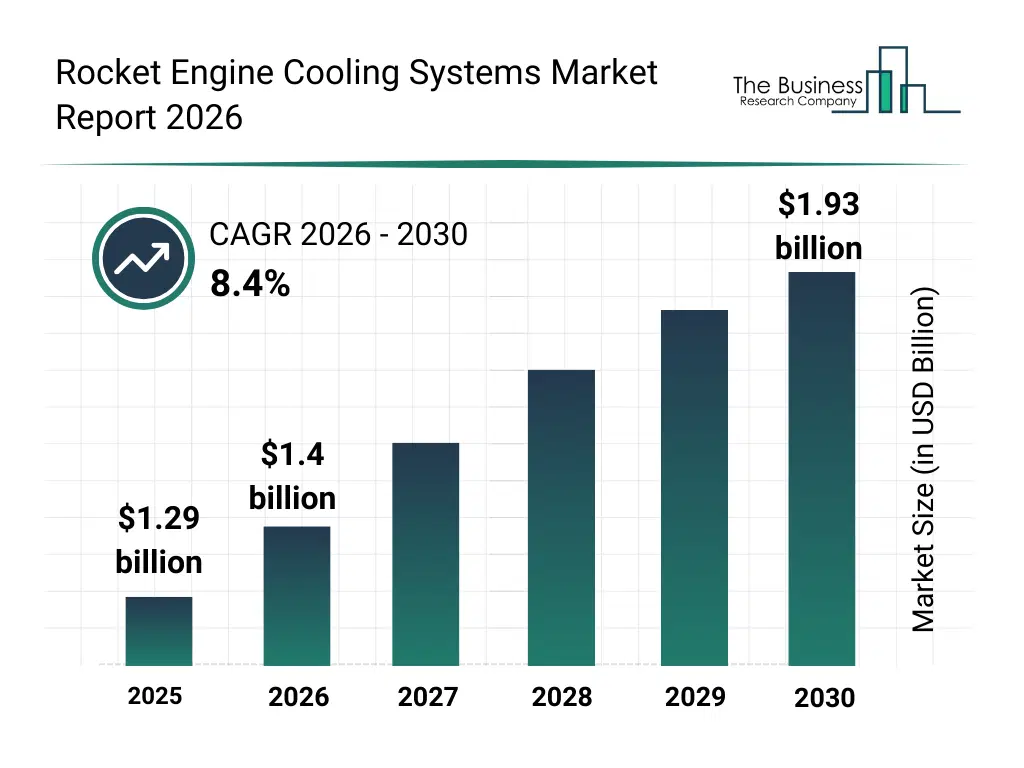
What Is The Rocket Engine Cooling Systems Market Size and Share 2026?
The rocket engine cooling systems market size has grown strongly in recent years. It will grow from $1.29 billion in 2025 to $1.4 billion in 2026 at a compound annual growth rate (CAGR) of 8.5%. The growth in the historic period can be attributed to increasing thermal loads from higher-thrust engines driving early adoption of advanced cooling systems, development of regenerative and film cooling methods improving engine durability, rising demand for cryogenic propulsion boosting use of specialized coolants, introduction of high-performance heat shields and insulation materials for extreme environments, growth in government-led launch programs requiring reliable cooling pumps and valves.What Is The Rocket Engine Cooling Systems Market Growth Forecast?
The rocket engine cooling systems market size is expected to see strong growth in the next few years. It will grow to $1.93 billion in 2030 at a compound annual growth rate (CAGR) of 8.4%. The growth in the forecast period can be attributed to expansion of reusable rocket programs increasing need for long-life cooling components, advancements in thermal management materials enhancing insulation performance, rising commercial launch frequency driving demand for efficient cooling subsystem manufacturing, innovation in cryogenic fluid handling improving pump and valve reliability, increasing mission complexity requiring more sophisticated multi-mode engine cooling architectures. Major trends in the forecast period include advanced heat-exchange and precooler technologies, novel cryogenic coolant formulations and handling, additive manufacturing for cooling channels and jackets, integrated thermal management for reusable engines, high-fidelity thermal testing and qualification services.
Global Rocket Engine Cooling Systems Market Segmentation
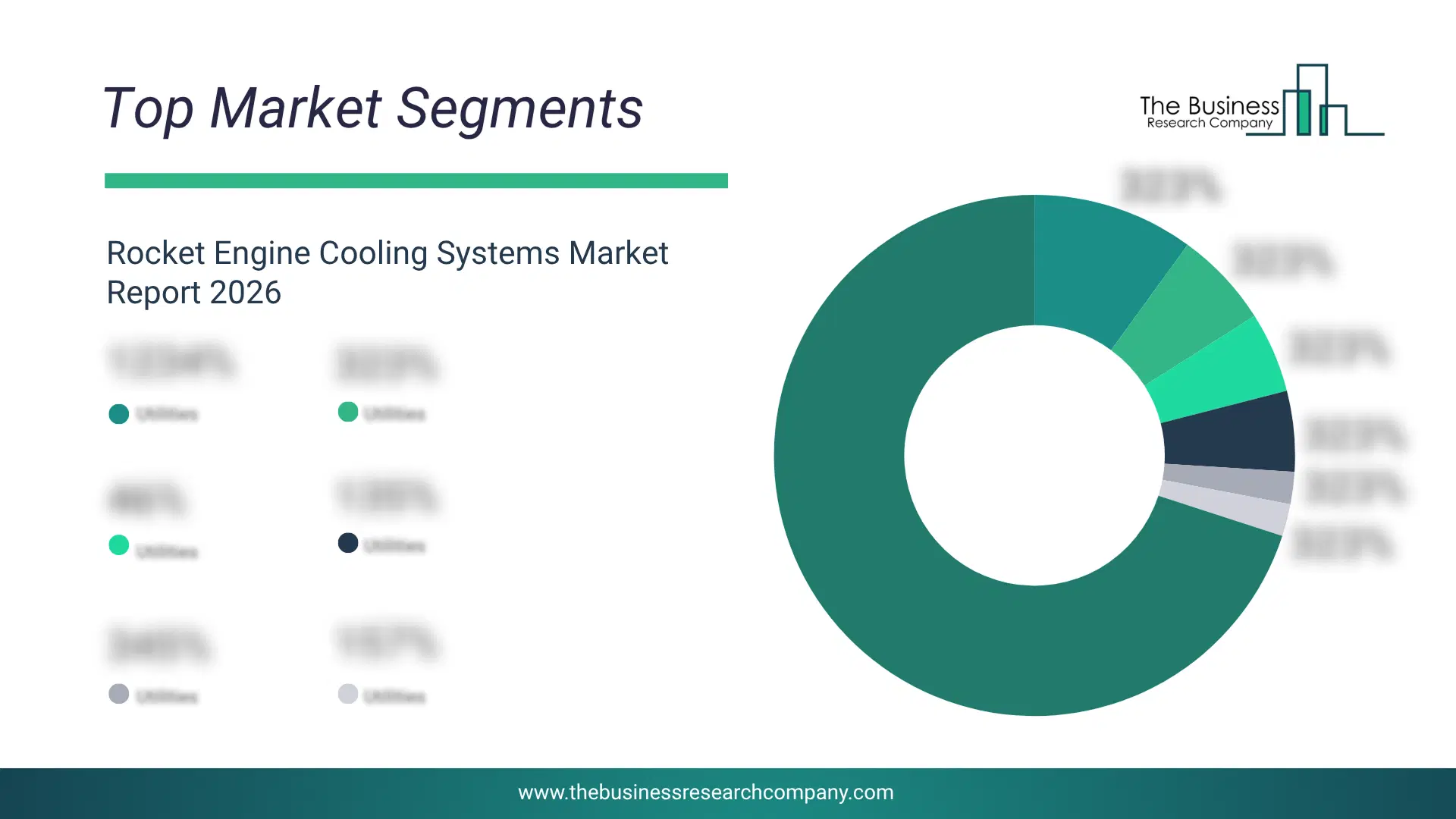
1) By Type: Regenerative Cooling, Film Cooling, Ablative Cooling, Radiation Cooling, Other Types 2) By Material: Metals, Ceramics, Composites, Other Materials 3) By Application: Spacecraft, Missiles, Launch Vehicles, Other Applications 4) By End User: Commercial, Military, Government Subsegments: 1) By Regenerative Cooling: Liquid Propellant Regenerative Cooling, Gas Propellant Regenerative Cooling 2) By Film Cooling: Injection Film Cooling, Advanced Film Cooling, Bladed Film Cooling 3) By Ablative Cooling: Solid Ablative Cooling, Ablative Composite Materials 4) By Radiation Cooling: Thermal Radiation Cooling, Radiant Heat Dissipation Cooling 5) By Other Types: Magnetic Cooling, Active Cooling SystemsWhat Is Driver Of The Rocket Engine Cooling Systems Market?
The increasing number of commercial space enterprises is expected to propel the growth of the rocket engine cooling systems market going forward. Commercial space enterprises are private companies involved in space-related activities such as satellite launches, space tourism, and exploration, aiming to capitalize on space commercialization. The increase in commercial space enterprises is driven by advancements in technology that lower the costs of space-related activities, making space more accessible to private companies. Rocket engine cooling systems help commercial space enterprises by preventing engines from overheating during launch, ensuring optimal performance and safety, which is crucial for the reliability and cost-efficiency of space missions. For instance, in May 2024, according to Primo Ventures, an Italy-based Venture Capital and Private Equity Principals company, Revolv Space, a space tech startup operating in Italy and the Netherlands, secured €2.6 million in funding to enhance small satellite capabilities with advanced mechanisms and power systems. Therefore, the increasing number of commercial space enterprises is driving the growth of the rocket engine cooling systems industry.Key Players In The Global Rocket Engine Cooling Systems Market
Major companies operating in the rocket engine cooling systems market are Volvo Aero Corporation, Northrop Grumman Corporation, Space Exploration Technologies Corp, Blue Origin LLC, Ariane Group, Curtiss-Wright Corporation, Aerojet Rocketdyne Holdings Inc, Sierra Space Corporation, Japan Aerospace Exploration Agency, Rocket Lab company, Ursa Major Technologies Inc., Reaction Engines Ltd., PLD Space, Skyroot Aerospace Private Limited, Gilmour Space Technologies Pty Ltd, Firefly Aerospace Inc., Barber-Nichols LLC, ABL Space Systems Company Inc., Skyrora Ltd., Ad Astra Rocket Company, NPO Energomash, Masten Space Systems Inc.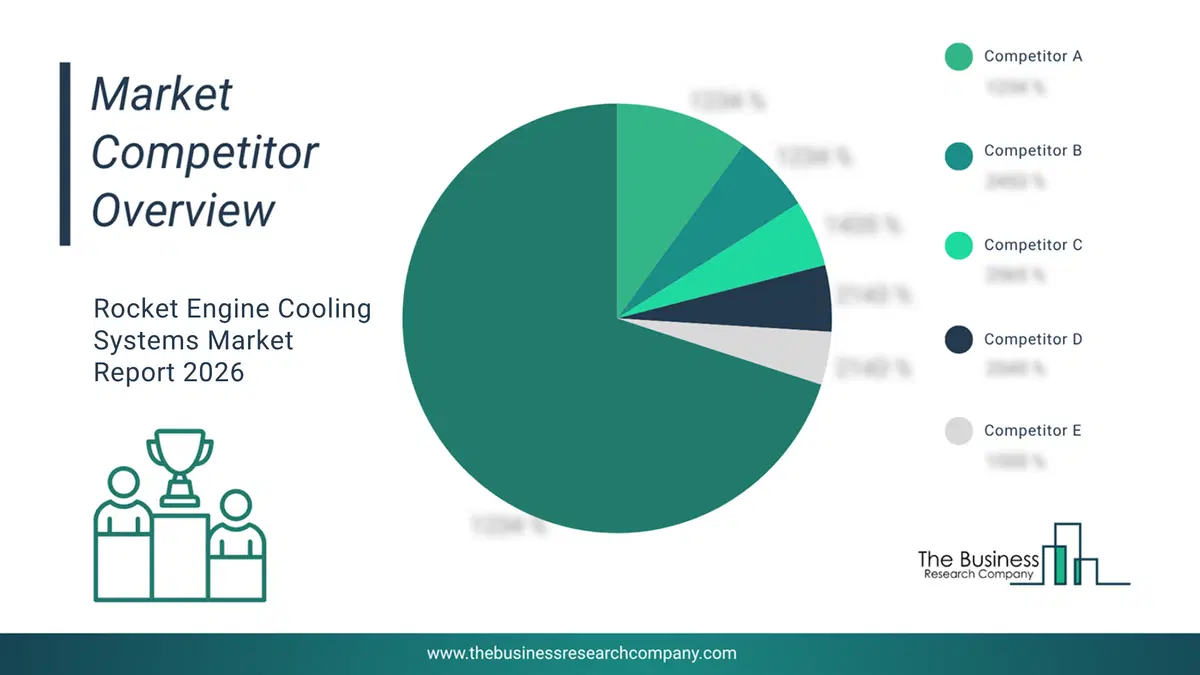
This chart is for illustrative purposes; the full report includes a detailed competitor analysis and comprehensive overview of the top 10 companies in the market.
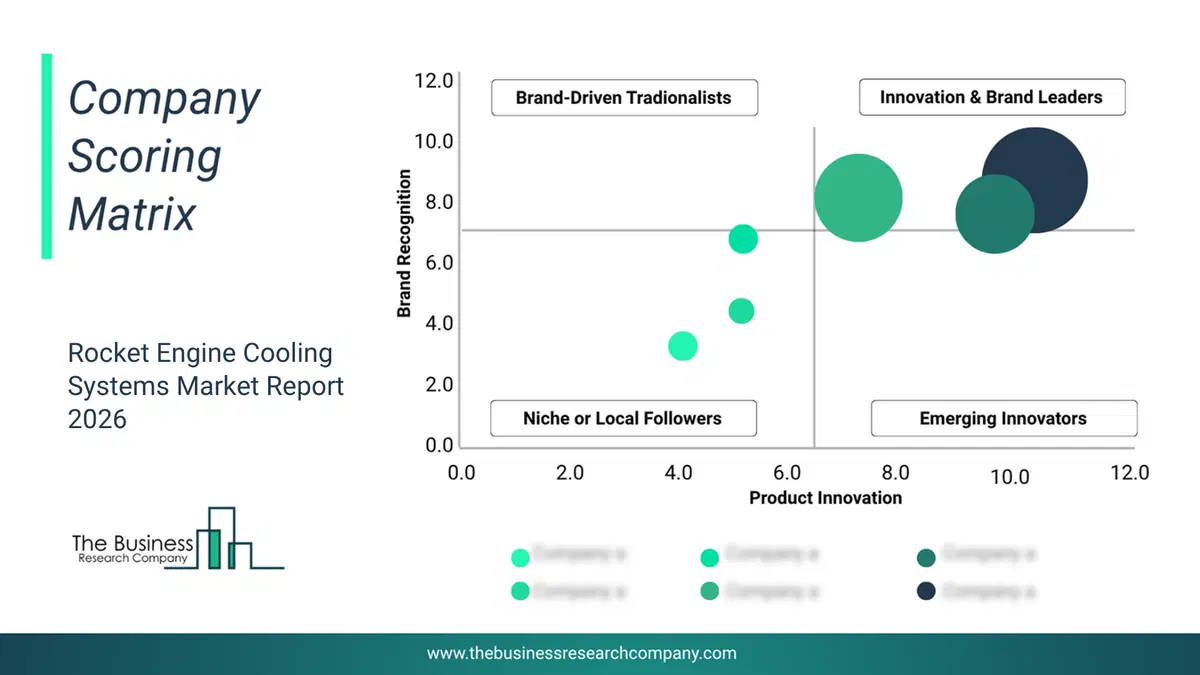
This chart maps companies by product innovation and brand strength, with bubble size indicating relative revenue, helping identify market leaders, challengers, and niche players. This is an illustrative chart; the full report provides a complete and accurate competitive analysis.
Global Rocket Engine Cooling Systems Market Trends and Insights
Major companies operating in the rocket engine cooling systems market are focusing on developing advanced innovations such as additive manufacturing of high-performance alloys to enhance thermal efficiency, reduce weight, improve durability, and optimize engine performance under extreme conditions. Additive manufacturing of high-performance alloys refers to the 3D printing process of fabricating complex metal parts using advanced alloys that offer exceptional strength, heat resistance, and durability for high-demand applications.For instance, in March 2023, Relativity Space, a U.S.-based aerospace manufacturer, successfully launched its Terran 1 rocket, which featured nine engines with combustion chambers made entirely from 3D-printed NASA-developed copper alloys known as Glenn Research Copper (GRCop). These alloys, optimized for high thermal conductivity, strength, and creep resistance, enable rocket engines to tolerate temperatures up to 40% higher than traditional materials, improving cooling efficiency, extending engine life, and reducing maintenance requirements, representing a modern approach to boosting propulsion performance while lowering manufacturing costs.What Are Latest Mergers And Acquisitions In The Rocket Engine Cooling Systems Market? Aspire Space Partners with LEAP 71 to Accelerate AI-Driven Rocket Propulsion Design
In June 2025, Aspire Space, a Luxembourg-based space transportation company, formed a strategic partnership with LEAP 71 to accelerate the development of advanced rocket propulsion systems using AI-driven engineering technologies. With this collaboration, aims to leverage LEAP 71’s proprietary Noyron Large Computational Engineering Model to design the complete propulsion stack for its rockets, including the high-performance XRB-2E6 Methalox engines, enhancing rapid reusability and enabling faster, more efficient spacecraft development. LEAP 71 is a Dubai-based AI-driven aerospace engineering company, will provide automated, physics-based designs that integrate manufacturing constraints and real-world testing data, accelerating development cycles from months to days.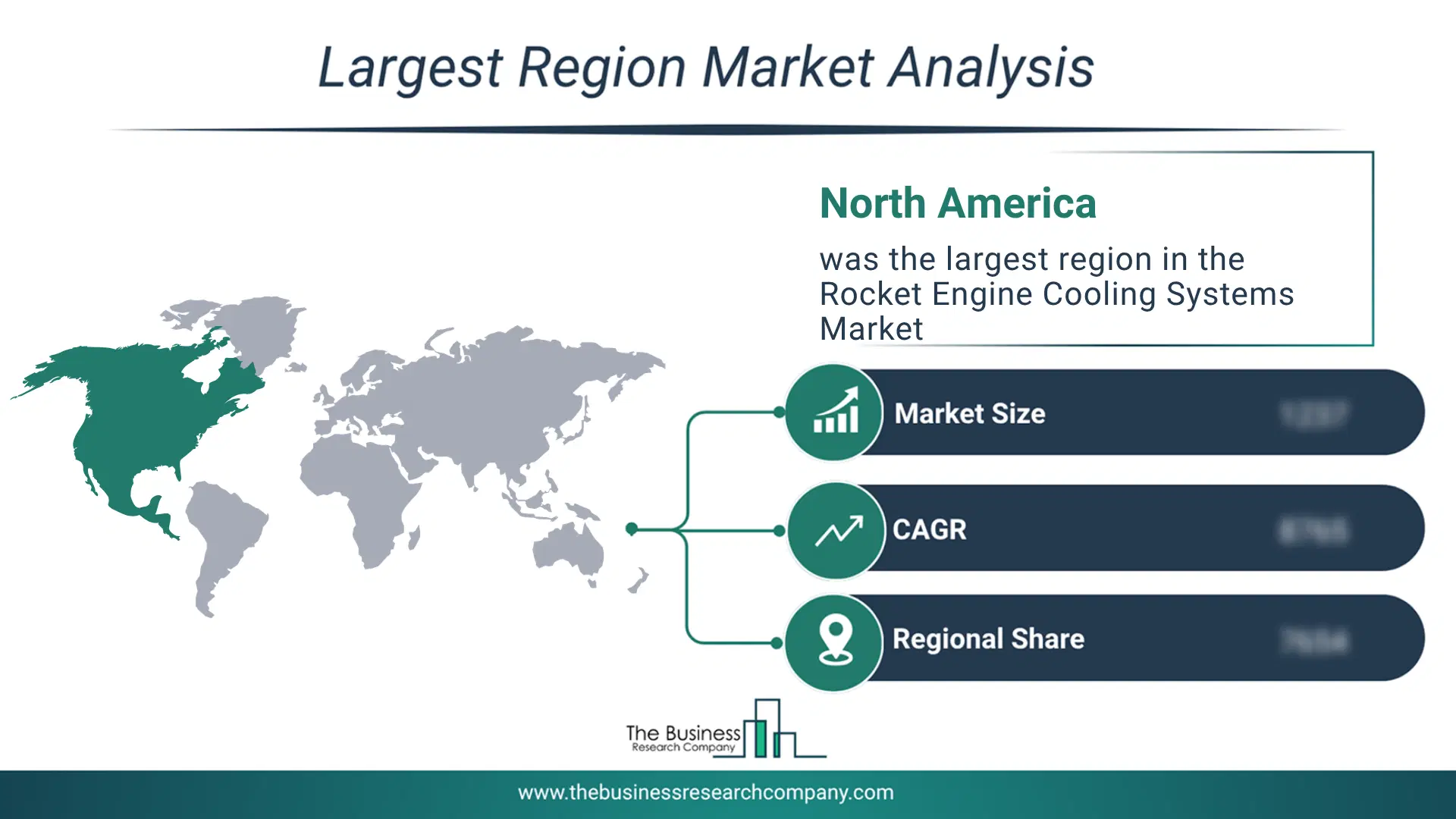
Regional Insights
North America was the largest region in the rocket engine cooling systems market in 2025. The regions covered in this market report are Asia-Pacific, South East Asia, Western Europe, Eastern Europe, North America, South America, Middle East, Africa. The countries covered in this market report are Australia, Brazil, China, France, Germany, India, Indonesia, Japan, Taiwan, Russia, South Korea, UK, USA, Canada, Italy, SpainWhat Defines the Rocket Engine Cooling Systems Market?
The rocket engine cooling systems market consists of sales of heat shields and insulation, cryogenic coolants, and cooling pumps and valves. Values in this market are ‘factory gate’ values, that is, the value of goods sold by the manufacturers or creators of the goods, whether to other entities (including downstream manufacturers, wholesalers, distributors, and retailers) or directly to end customers. The value of goods in this market includes related services sold by the creators of the goods.How is Market Value Defined and Measured?
The market value is defined as the revenues that enterprises gain from the sale of goods and/or services within the specified market and geography through sales, grants, or donations in terms of the currency (in USD unless otherwise specified). The revenues for a specified geography are consumption values that are revenues generated by organizations in the specified geography within the market, irrespective of where they are produced. It does not include revenues from resales along the supply chain, either further along the supply chain or as part of other products.
This chart presents market attractiveness based on a quantitative evaluation of growth, competition, strategic alignment, and risk, offering a clear view of opportunity areas for decision-making. This chart is for illustrative purposes; the full report contains the complete analysis.

This chart highlights the Total Addressable Market (TAM) by estimating the maximum revenue opportunity using an assumption-driven approach, supporting strategic planning and opportunity sizing across markets. The chart is illustrative; the full report provides a more comprehensive analysis.
What Key Data and Analysis Are Included in the Rocket Engine Cooling Systems Market Report 2026?
The rocket engine cooling systems market research report is one of a series of new reports from The Business Research Company that provides market statistics, including industry global market size, regional shares, competitors with the market share, detailed market segments, market trends and opportunities, and any further data you may need to thrive in the rocket engine cooling systems industry. The market research report delivers a complete perspective of everything you need, with an in-depth analysis of the current and future state of the industry.Rocket Engine Cooling Systems Market Report Forecast Analysis
| Report Attribute | Details |
|---|---|
| Market Size Value In 2026 | $1.4 billion |
| Revenue Forecast In 2030 | $1.93 billion |
| Growth Rate | CAGR of 8.4% from 2026 to 2030 |
| Base Year For Estimation | 2025 |
| Actual Estimates/Historical Data | 2020-2025 |
| Forecast Period | 2026 - 2030 |
| Market Representation | Revenue in USD Billion and CAGR from 2026 to 2030 |
| Segments Covered | Type, Material, Application, End User |
| Regional Scope | Asia-Pacific, Western Europe, Eastern Europe, North America, South America, Middle East, Africa |
| Country Scope | The countries covered in the rocket engine cooling systems market report are Australia, Brazil, China, France, Germany, India, Indonesia, Japan, Taiwan, Russia, South Korea, UK, USA, Canada, Italy, Spain |
| Key Companies Profiled | Volvo Aero Corporation, Northrop Grumman Corporation, Space Exploration Technologies Corp, Blue Origin LLC, Ariane Group, Curtiss-Wright Corporation, Aerojet Rocketdyne Holdings Inc, Sierra Space Corporation, Japan Aerospace Exploration Agency, Rocket Lab company, Ursa Major Technologies Inc., Reaction Engines Ltd., PLD Space, Skyroot Aerospace Private Limited, Gilmour Space Technologies Pty Ltd, Firefly Aerospace Inc., Barber-Nichols LLC, ABL Space Systems Company Inc., Skyrora Ltd., Ad Astra Rocket Company, NPO Energomash, Masten Space Systems Inc. |
| Customization Scope | Request for Customization |
| Pricing And Purchase Options | Explore Purchase Options |