
Rocket Hydraulics Market Report 2026
Global Outlook – By Component (Actuators, Pumps, Valves, Accumulators, Other Components), By Application (Launch Vehicles, Satellites, Space Probes, Other Applications), By End-User (Commercial, Military, Government) – Market Size, Trends, Strategies, and Forecast to 2030
Rocket Hydraulics Market Overview
• Rocket Hydraulics market size has reached to $2.57 billion in 2025 • Expected to grow to $3.72 billion in 2030 at a compound annual growth rate (CAGR) of 7.7% • Growth Driver: Rising Satellite Launches Fueling The Growth Of The Market Due To Growing Demand For Precision Launch Control Systems • Market Trend: Development Of Advanced Actuators Enhancing Thrust Vector Control Performance Under Extreme Conditions • North America was the largest region in 2025 and Asia-Pacific is the fastest growing region.What Is Covered Under Rocket Hydraulics Market?
Rocket hydraulics refers to the fluid-based mechanical systems within a rocket that enable precise control and movement by transmitting force through pressurized fluids. These systems play a crucial role in providing the necessary power and responsiveness for critical operations, particularly during dynamic phases such as launch, flight, and recovery. The main components of rocket hydraulics include actuators, pumps, valves, accumulators, and others. Actuators are mechanical parts that use pressurized fluid to produce movement, helping machines push, pull, or rotate parts with force and control. It is applied to launch vehicles, satellites, space probes, and others by several end-users, including commercial, military, and government.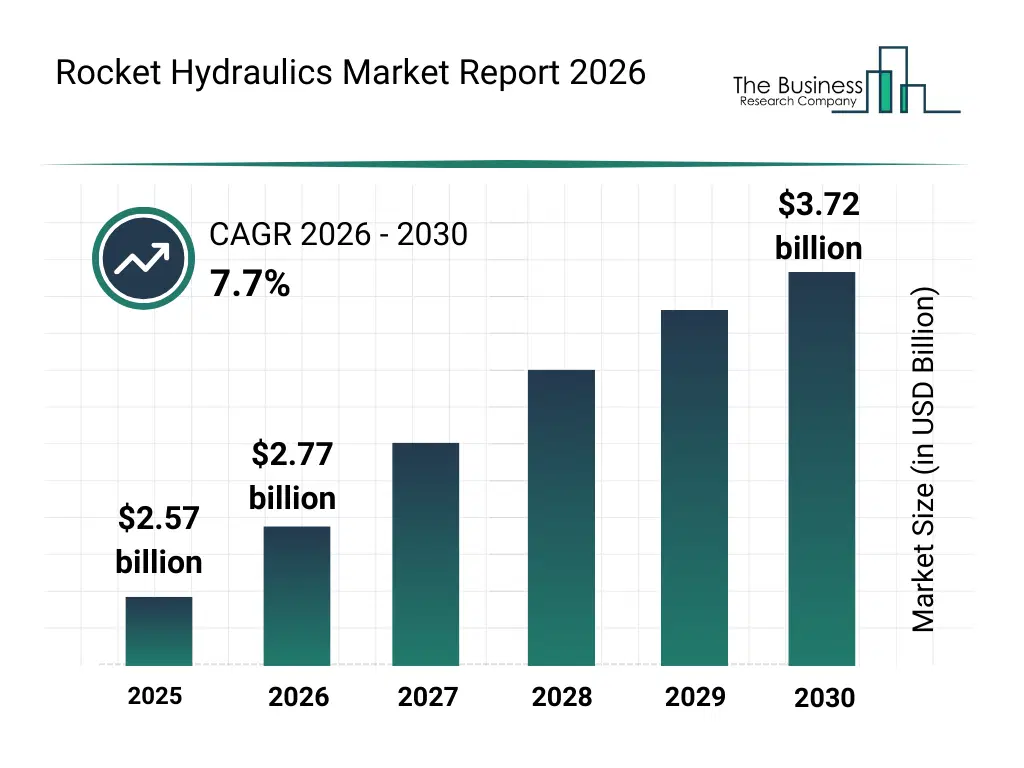
What Is The Rocket Hydraulics Market Size and Share 2026?
The rocket hydraulics market size has grown strongly in recent years. It will grow from $2.57 billion in 2025 to $2.77 billion in 2026 at a compound annual growth rate (CAGR) of 7.8%. The growth in the historic period can be attributed to increased reliance on hydraulic actuators for thrust vector control in early launch vehicles, development of high-pressure hydraulic cylinders to support precise flight control, adoption of hydraulic dampers to stabilize rocket structures during dynamic maneuvers, expansion of government launch programs driving demand for reliable pressure regulation hardware, introduction of advanced flow control devices enabling more responsive hydraulic system performance.What Is The Rocket Hydraulics Market Growth Forecast?
The rocket hydraulics market size is expected to see strong growth in the next few years. It will grow to $3.72 billion in 2030 at a compound annual growth rate (CAGR) of 7.7%. The growth in the forecast period can be attributed to growth of reusable launch vehicles increasing need for durable and maintainable hydraulic components, advancements in lightweight hydraulic reservoirs reducing overall vehicle mass, rising commercial launch frequency driving demand for scalable hydraulic system manufacturing, innovation in high-efficiency pressure regulators improving control accuracy under varying loads, expanding autonomous and precision landing technologies requiring more responsive hydraulic actuation systems. Major trends in the forecast period include increased use of high-pressure hydraulic control systems, adoption of lightweight hydraulic reservoirs and components, development of high-temperature-tolerant hydraulic devices, rise in electrohydraulic hybrid actuation technologies, precision hydraulic flow control for reusable launch systems.
Global Rocket Hydraulics Market Segmentation
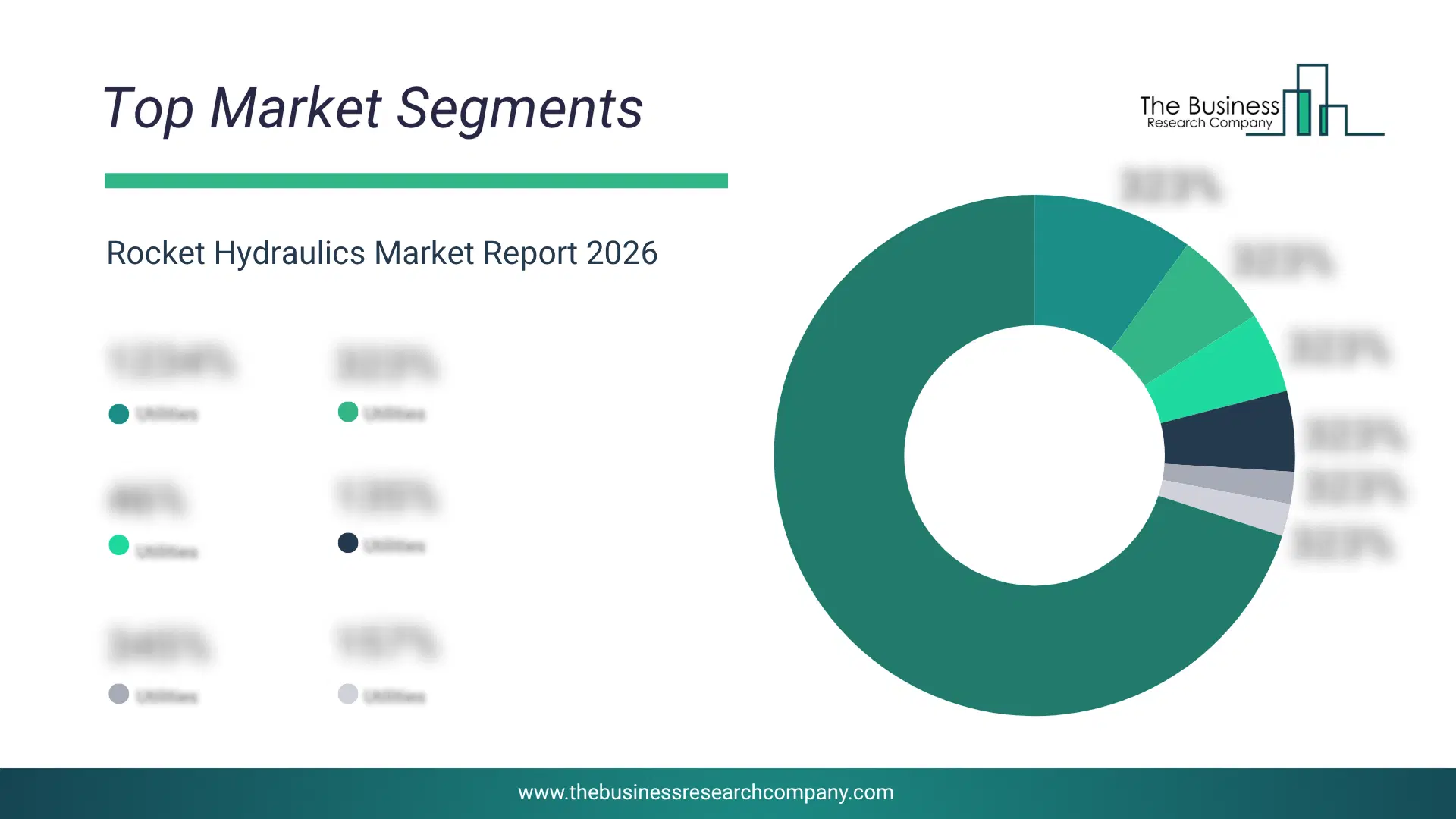
1) By Component: Actuators, Pumps, Valves, Accumulators, Other Components 2) By Application: Launch Vehicles, Satellites, Space Probes, Other Applications 3) By End-User: Commercial, Military, Government Subsegments: 1) By Actuators: Linear Actuators, Rotary Actuators, Electrohydraulic Actuators, Servo Actuators 2) By Pumps: Gear Pumps, Vane Pumps, Piston Pumps, Screw Pumps 3) By Valves: Directional Control Valves, Pressure Control Valves, Flow Control Valves, Proportional Valves 4) By Accumulators: Bladder Accumulators, Piston Accumulators, Diaphragm Accumulators, Spring-type Accumulators 5) By Other Components: Hydraulic Motors, Hydraulic Cylinders, Filters, ReservoirsWhat Is Driver Of The Rocket Hydraulics Market?
The increasing defense spending is expected to propel the growth of the rocket hydraulics market going forward. Defense spending refers to the government’s expenditure on maintaining, equipping, and advancing its military and national security capabilities. Defense spending is increasing to enhance national security by modernizing military capabilities and addressing emerging threats such as cyber warfare and advanced weapon systems. Increasing defense spending supports rocket hydraulics development by funding the creation and improvement of hydraulic systems used in missile launch, control, and stabilization mechanisms. For instance, in April 2024, according to the Stockholm International Peace Research Institute (SIPRI), a Sweden-based independent resource on global security, total global military expenditure reached $2,443 billion in 2023, reflecting a 6.8% increase in real terms compared to 2022. Therefore, increasing defense spending is driving the growth of the rocket hydraulics industry.Key Players In The Global Rocket Hydraulics Market
Major companies operating in the rocket hydraulics market are Raytheon Technologies Corporation, Honeywell International Inc., Safran S.A., Eaton Corporation plc, Parker Hannifin Corporation, Liebherr International AG, KYB Corporation, Moog Inc., Curtiss-Wright Corporation, Woodward Inc., Triumph Group Inc., Sargent Aerospace And Defense LLC, HYDAC International GmbH, Dynamatic Technologies Limited, Marotta Controls Inc., Arkwin Industries Inc., Crissair Inc., Quiri Hydromechanics, JASC Incorporated, JSC Hydromash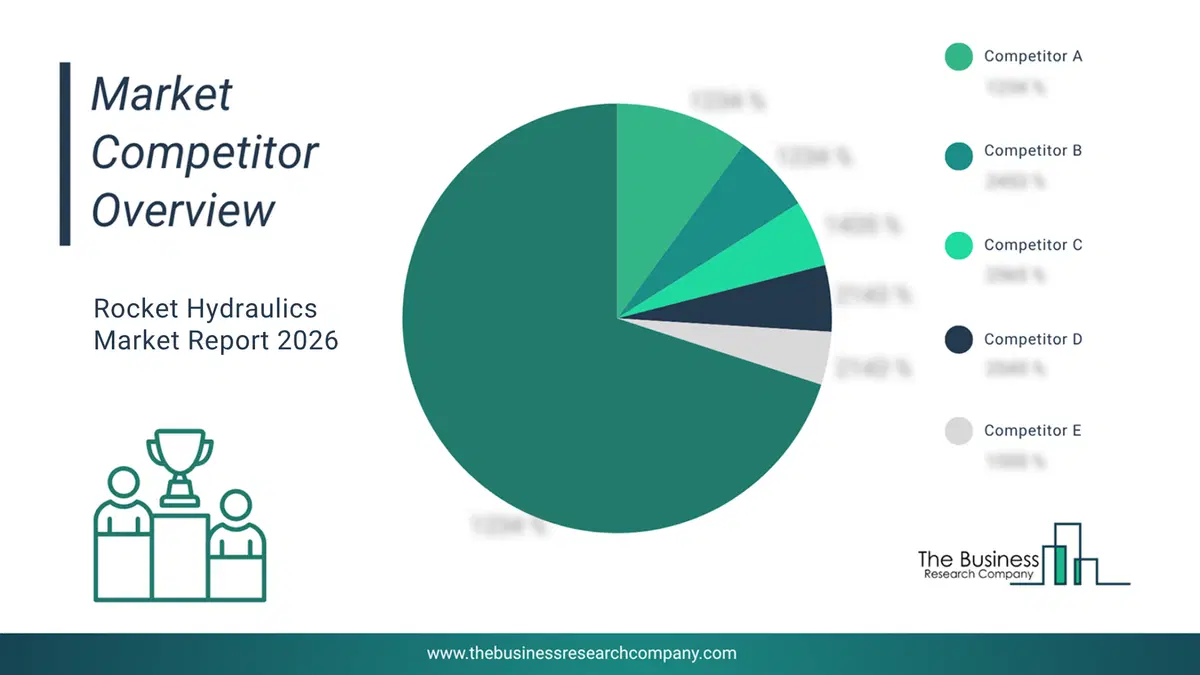
This chart is for illustrative purposes; the full report includes a detailed competitor analysis and comprehensive overview of the top 10 companies in the market.
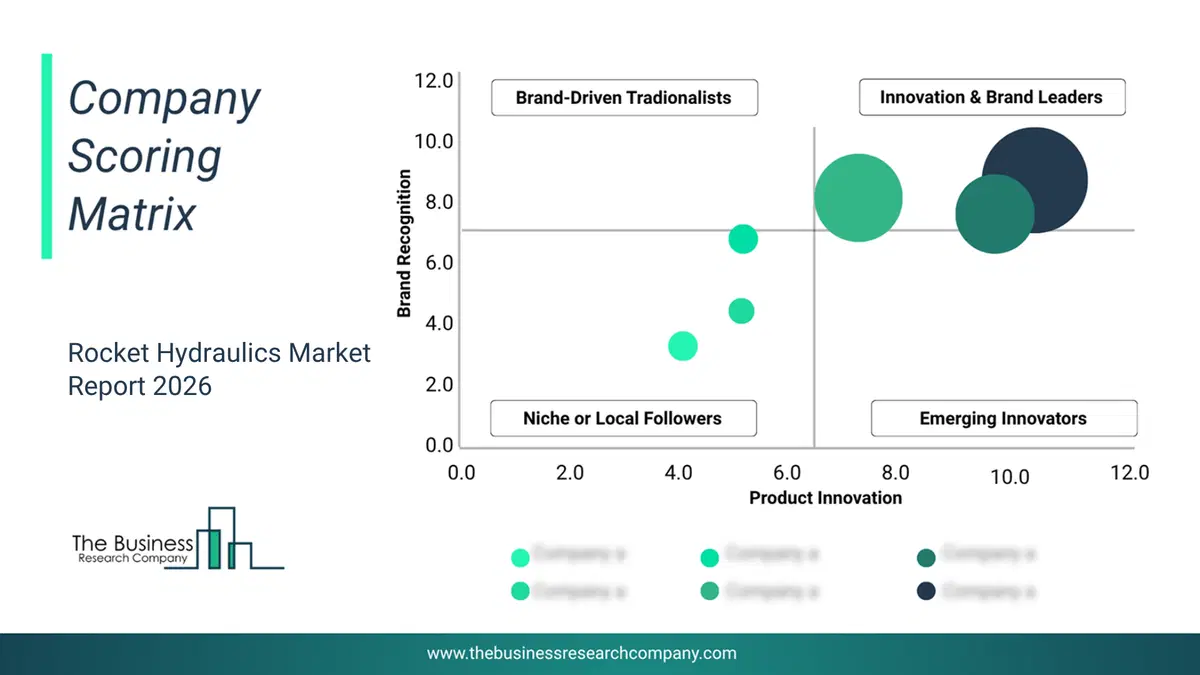
This chart maps companies by product innovation and brand strength, with bubble size indicating relative revenue, helping identify market leaders, challengers, and niche players. This is an illustrative chart; the full report provides a complete and accurate competitive analysis.
Global Rocket Hydraulics Market Trends and Insights
Major companies operating in the rocket hydraulics market are focusing on developing advanced products, such as actuators for the thrust vector control system, to operate effectively under extreme pressure conditions. Actuators in a thrust vector control system are devices that move engine components or control surfaces to change the thrust direction, allowing the rocket to steer during flight. For instance, in January 2024, Moog Inc., a US-based aerospace and defense company, launched its new electromechanical actuators that steer United Launch Alliance's (ULA) Vulcan Rocket. Hydraulic actuators were developed for the first stage of the main engine's thrust vector control system, delivering flawless performance during flight. The actuators feature high power density, fault-tolerant architecture, and lightweight construction. Advanced electromechanical actuators provided exceptional precision, enhanced safety, and reduced maintenance during the inaugural launch of ULA's Vulcan rocket. Additionally, Moog supplies the Vulcan rocket with upper-stage thrust vector control systems and cryogenic valve actuation solutions.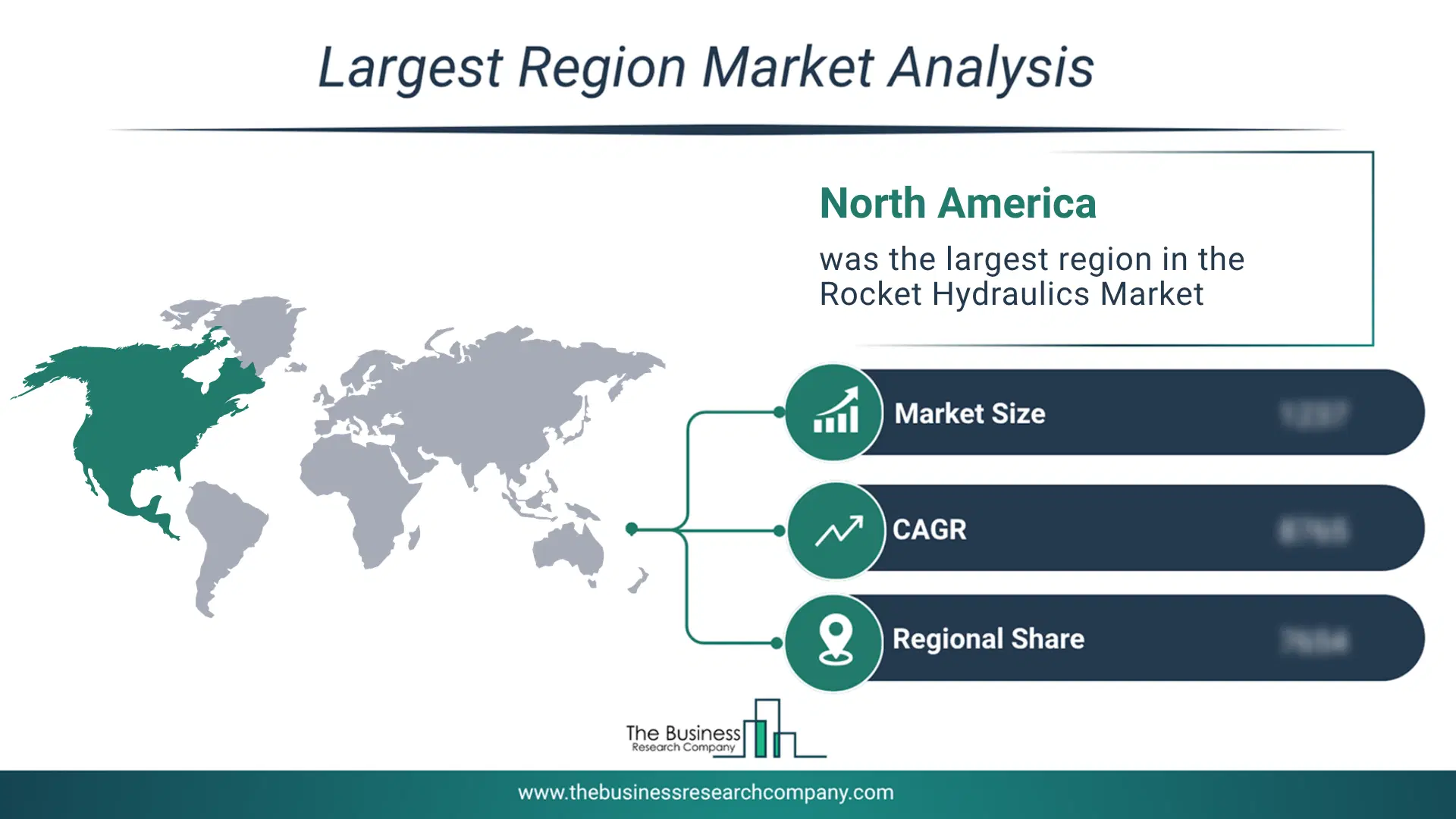
Regional Insights
North America was the largest region in the rocket hydraulics market in 2025. Asia-Pacific is expected to be the fastest-growing region in the forecast period. The regions covered in this market report are Asia-Pacific, South East Asia, Western Europe, Eastern Europe, North America, South America, Middle East, Africa. The countries covered in this market report are Australia, Brazil, China, France, Germany, India, Indonesia, Japan, Taiwan, Russia, South Korea, UK, USA, Canada, Italy, SpainWhat Defines the Rocket Hydraulics Market?
The rocket hydraulics market consists of sales of hydraulic cylinders, hydraulic reservoirs, pressure regulators, dampers, and flow control devices. Values in this market are ‘factory gate’ values, that is the value of goods sold by the manufacturers or creators of the goods, whether to other entities (including downstream manufacturers, wholesalers, distributors and retailers) or directly to end customers. The value of goods in this market includes related services sold by the creators of the goods.How is Market Value Defined and Measured?
The market value is defined as the revenues that enterprises gain from the sale of goods and/or services within the specified market and geography through sales, grants, or donations in terms of the currency (in USD unless otherwise specified). The revenues for a specified geography are consumption values that are revenues generated by organizations in the specified geography within the market, irrespective of where they are produced. It does not include revenues from resales along the supply chain, either further along the supply chain or as part of other products.
This chart presents market attractiveness based on a quantitative evaluation of growth, competition, strategic alignment, and risk, offering a clear view of opportunity areas for decision-making. This chart is for illustrative purposes; the full report contains the complete analysis.

This chart highlights the Total Addressable Market (TAM) by estimating the maximum revenue opportunity using an assumption-driven approach, supporting strategic planning and opportunity sizing across markets. The chart is illustrative; the full report provides a more comprehensive analysis.
What Key Data and Analysis Are Included in the Rocket Hydraulics Market Report 2026?
The rocket hydraulics market research report is one of a series of new reports from The Business Research Company that provides market statistics, including industry global market size, regional shares, competitors with the market share, detailed market segments, market trends and opportunities, and any further data you may need to thrive in the rocket hydraulics industry. The market research report delivers a complete perspective of everything you need, with an in-depth analysis of the current and future state of the industry.Rocket Hydraulics Market Report Forecast Analysis
| Report Attribute | Details |
|---|---|
| Market Size Value In 2026 | $2.77 billion |
| Revenue Forecast In 2030 | $3.72 billion |
| Growth Rate | CAGR of 7.7% from 2026 to 2030 |
| Base Year For Estimation | 2025 |
| Actual Estimates/Historical Data | 2020-2025 |
| Forecast Period | 2026 - 2030 |
| Market Representation | Revenue in USD Billion and CAGR from 2026 to 2030 |
| Segments Covered | Component, Application, End-User |
| Regional Scope | Asia-Pacific, Western Europe, Eastern Europe, North America, South America, Middle East, Africa |
| Country Scope | The countries covered in the rocket hydraulics market report are Australia, Brazil, China, France, Germany, India, Indonesia, Japan, Taiwan, Russia, South Korea, UK, USA, Canada, Italy, Spain |
| Key Companies Profiled | Raytheon Technologies Corporation, Honeywell International Inc., Safran S.A., Eaton Corporation plc, Parker Hannifin Corporation, Liebherr International AG, KYB Corporation, Moog Inc., Curtiss-Wright Corporation, Woodward Inc., Triumph Group Inc., Sargent Aerospace And Defense LLC, HYDAC International GmbH, Dynamatic Technologies Limited, Marotta Controls Inc., Arkwin Industries Inc., Crissair Inc., Quiri Hydromechanics, JASC Incorporated, JSC Hydromash |
| Customization Scope | Request for Customization |
| Pricing And Purchase Options | Explore Purchase Options |