
Rocket Vibration Damping Systems Market Report 2026
Global Outlook – By Type (Passive Damping Systems, Active Damping Systems, Hybrid Damping Systems), By Technology (Electromagnetic, Hydraulic, Mechanical, Pneumatic), By Material (Metallic, Non-Metallic), By Application (Commercial Spacecraft, Military Spacecraft, Research And Development), By End-User (Aerospace, Defense, Research Institutions) – Market Size, Trends, Strategies, and Forecast to 2030
Rocket Vibration Damping Systems Market Overview
• Rocket Vibration Damping Systems market size has reached to $1.25 billion in 2025 • Expected to grow to $1.98 billion in 2030 at a compound annual growth rate (CAGR) of 9.5% • Growth Driver: Increasing Satellite Deployment Activities Fueling The Growth Of The Market Due To Rising Demand For Payload Protection And Mission Reliability • North America was the largest region in 2025.What Is Covered Under Rocket Vibration Damping Systems Market?
Rocket vibration damping systems are specialized technologies designed to reduce or eliminate harmful vibrations experienced during rocket launches and flight. These systems protect sensitive payloads, instruments, and structural components to ensure the rocket's and its on board systems' structural integrity and operational reliability by minimizing vibrational stresses. The main types of rocket vibration damping systems are passive damping systems, active damping systems, and hybrid damping systems. Passive damping systems refer to vibration control mechanisms that absorb and dissipate energy without requiring external power, helping reduce rocket-induced vibrations to protect sensitive components during launch. These systems incorporate various technologies such as electromagnetic, hydraulic, mechanical, and pneumatic mechanisms. They are built using both metallic and non-metallic materials and are applied across a range of platforms, including commercial spacecraft, military spacecraft, and research and development vehicles, serving diverse end users, including the aerospace industry, the defence sector, and research institutions.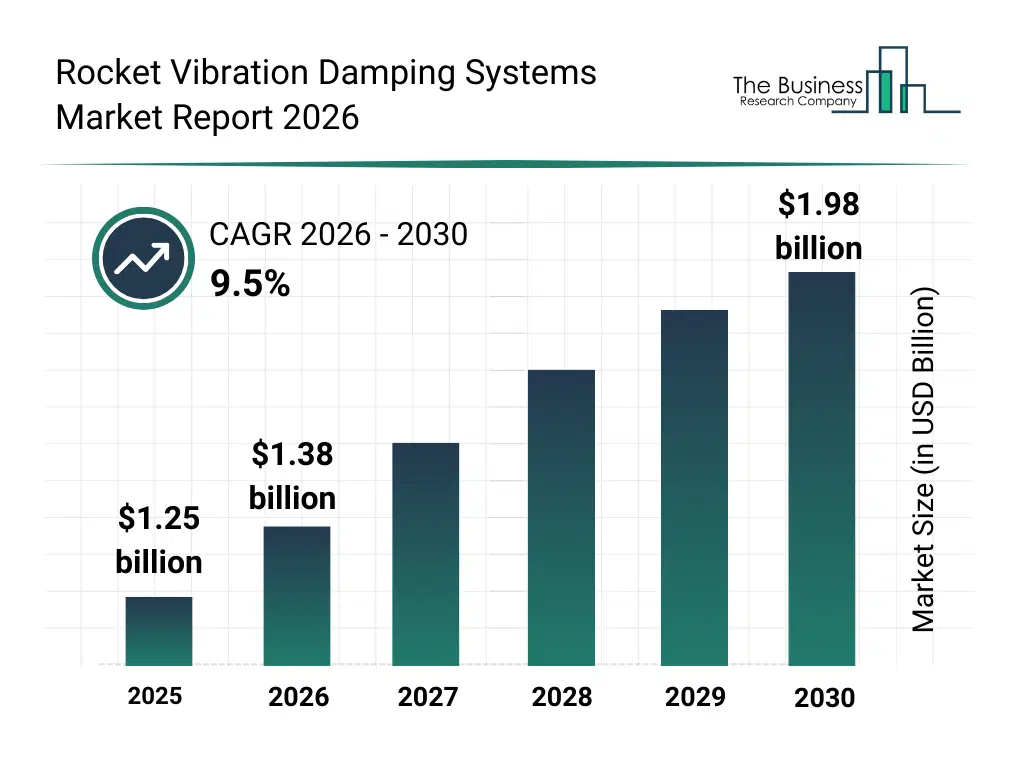
What Is The Rocket Vibration Damping Systems Market Size and Share 2026?
The rocket vibration damping systems market size has grown strongly in recent years. It will grow from $1.25 billion in 2025 to $1.38 billion in 2026 at a compound annual growth rate (CAGR) of 9.8%. The growth in the historic period can be attributed to increasing sensitivity of payloads and onboard instruments driving early adoption of vibration damping technologies, development of tuned mass dampers and elastomeric isolators to reduce launch-induced vibration levels, expansion of government and commercial launch programs requiring dedicated vibration testing and simulation services, introduction of shock mounts and wire rope isolators to protect structural components, growing need for vibration diagnostics to improve vehicle reliability during ascent.What Is The Rocket Vibration Damping Systems Market Growth Forecast?
The rocket vibration damping systems market size is expected to see strong growth in the next few years. It will grow to $1.98 billion in 2030 at a compound annual growth rate (CAGR) of 9.5%. The growth in the forecast period can be attributed to rising commercial launch cadence increasing demand for scalable vibration mitigation solutions, innovation in advanced damping materials enhancing performance across broader frequency ranges, expansion of reusable rockets necessitating durable and maintainable vibration damping systems, advancements in real-time vibration monitoring improving predictive maintenance capabilities, growing adoption of retrofit and upgrade services to enhance vibration control in existing launch vehicles. Major trends in the forecast period include increasing use of high-damping composite structures, growth of modular vibration isolation platforms for launchers, rising demand for retrofitting of legacy rocket systems, expansion of real-time vibration health monitoring services, development of advanced shock mounts for high-g acceleration events.
Global Rocket Vibration Damping Systems Market Segmentation
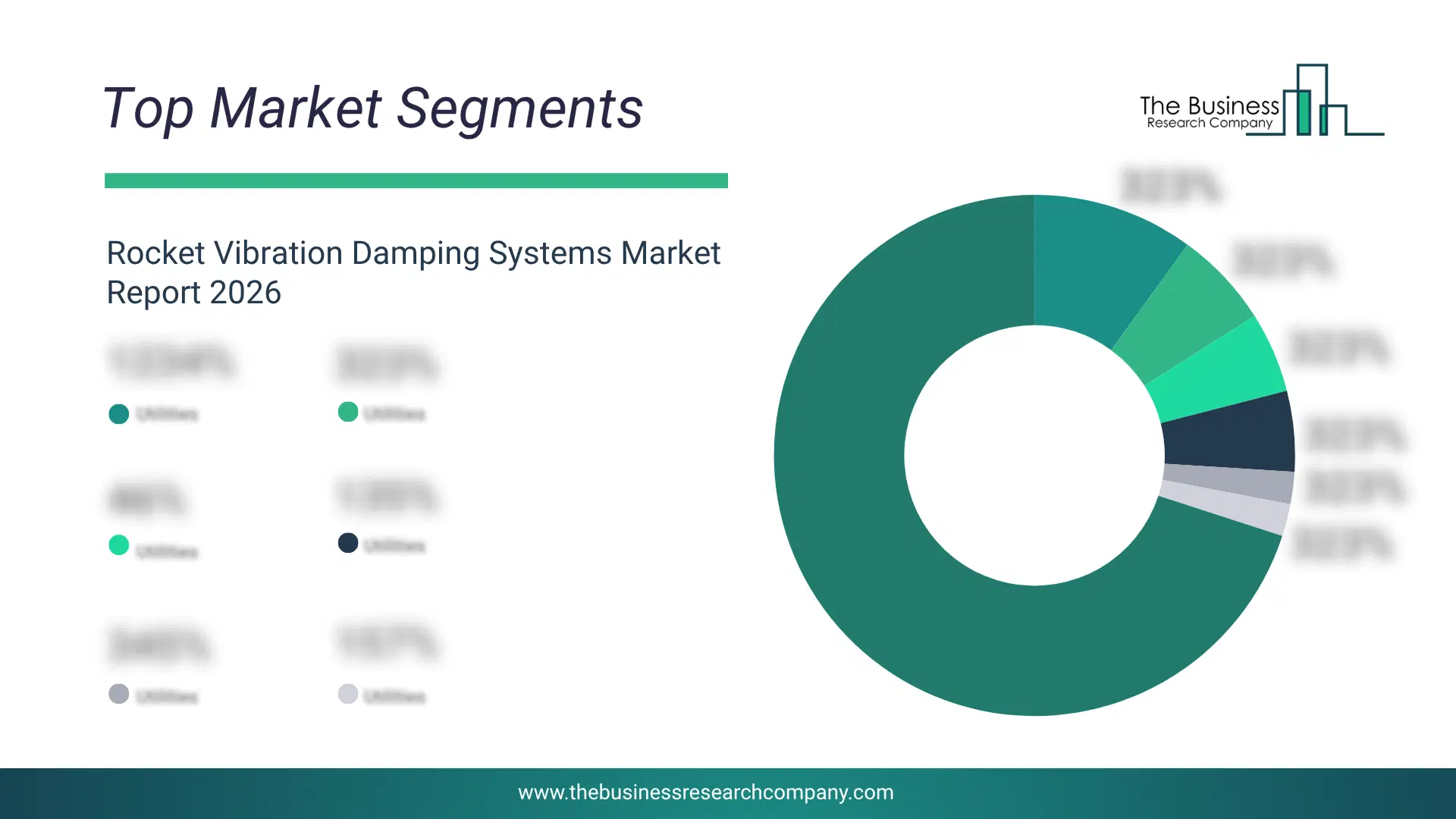
1) By Type: Passive Damping Systems, Active Damping Systems, Hybrid Damping Systems 2) By Technology: Electromagnetic, Hydraulic, Mechanical, Pneumatic 3) By Material: Metallic, Non-Metallic 4) By Application: Commercial Spacecraft, Military Spacecraft, Research And Development 5) By End-User: Aerospace, Defense, Research Institutions Subsegments: 1) By Passive Damping Systems: Viscoelastic Dampers, Tuned Mass Dampers, Elastomeric Mounts, Metal Mesh Isolators, Shock Absorbing Pads, Honeycomb Sandwich Structures 2) By Active Damping Systems: Piezoelectric Actuator-Based Systems, Electromagnetic Dampers, Servo-Hydraulic Systems, Smart Material-Based Dampers, Real-Time Feedback Control Systems 3) By Hybrid Damping Systems: Passive Piezoelectric Active Integration, Magnetorheological (MR) Fluid Systems, Semi-Active Damping With Adaptive Control, Integrated Sensor-Damper Modules, Combined Tuned Mass Damper And Actuator ArrayysWhat Is Driver Of The Rocket Vibration Damping Systems Market?
The increasing frequency of rocket launches is expected to propel the growth of the rocket vibration-damping systems market going forward. Rocket launches refer to the process of propelling a rocket into space using thrust generated by engines to overcome Earth's gravity. The increasing frequency of rocket launches is primarily due to rising demand for satellite-based services such as communication, navigation, Earth observation, and internet connectivity. Rocket vibration damping systems help rocket launches by minimizing harmful vibrations during liftoff, ensuring smoother and safer ascents. They protect delicate onboard instruments and payloads, enhancing mission reliability and structural integrity. For instance, in January 2025, according to the Space Foundation, a US-based non-profit organization, orbital launch attempts increased 16% in 2024, with 259 launches occurring at an average of one every 34 hours, five hours more frequent than in 2023. Therefore, the increasing frequency of rocket launches is driving the growth of the rocket vibration-damping systems market.Key Players In The Global Rocket Vibration Damping Systems Market
Major companies operating in the rocket vibration damping systems market are Honeywell Aerospace, Parker Hannifin Corporation, Nitto Denko Corporation, Hutchinson S.A., Vibracoustic SE, Moog Inc., Trelleborg AB, Meggitt PLC, Hexcel Corporation, Pyrotek Inc., Taylor Devices Inc., Rocket Lab USA Inc., Sorbothane Inc., ITT Enidine Inc., Experior Laboratories, Damping Technologies Inc., VibraSystems Inc., ETS Solutions, Vibrostop S.r.l., Vibration Mountings And Controls Inc.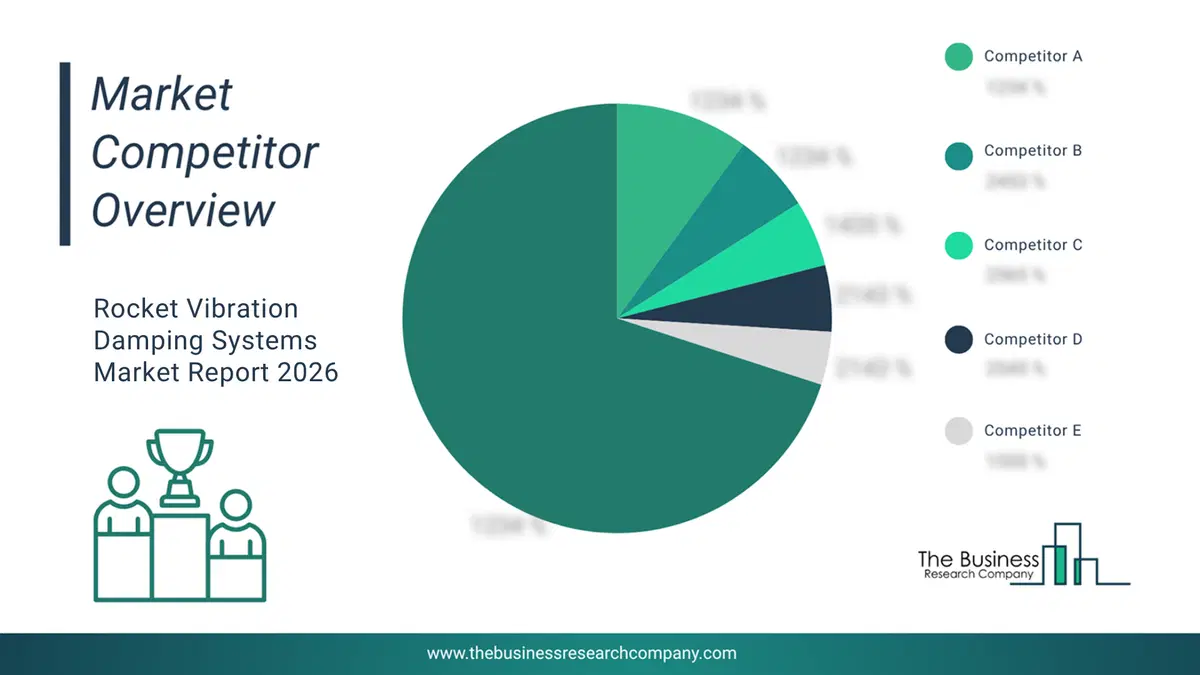
This chart is for illustrative purposes; the full report includes a detailed competitor analysis and comprehensive overview of the top 10 companies in the market.
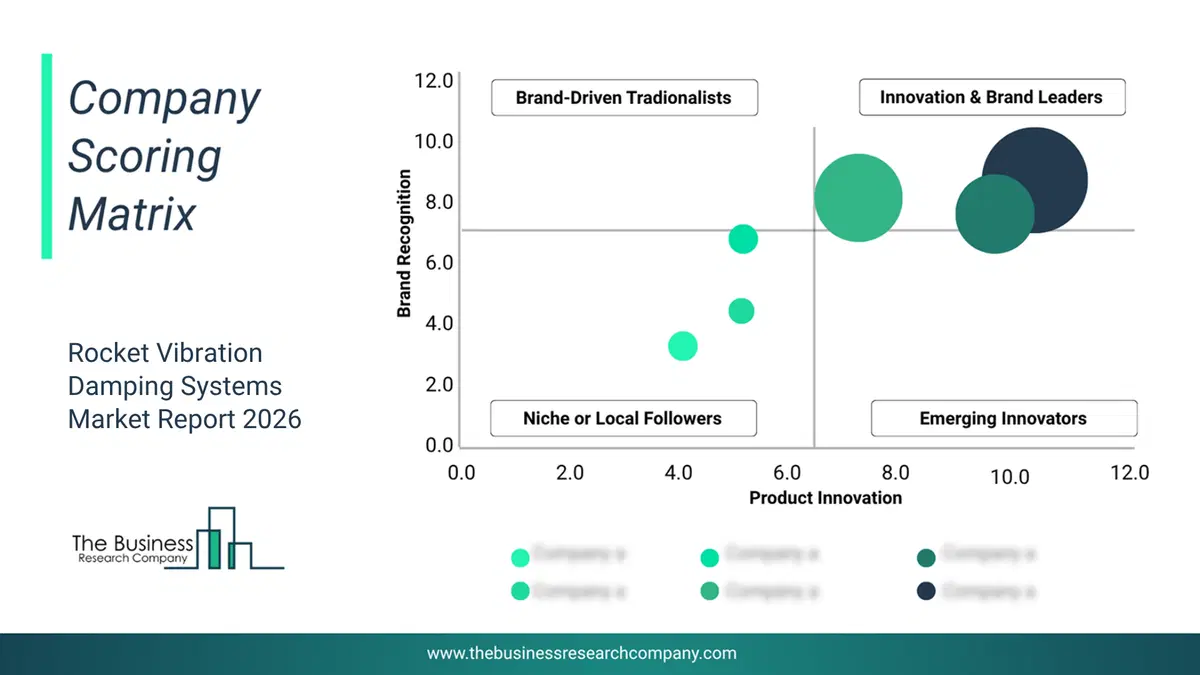
This chart maps companies by product innovation and brand strength, with bubble size indicating relative revenue, helping identify market leaders, challengers, and niche players. This is an illustrative chart; the full report provides a complete and accurate competitive analysis.
What Are Latest Mergers And Acquisitions In The Rocket Vibration Damping Systems Market? L3Harris Strengthens Defense And Space Capabilities With Aerojet Rocketdyne Acquisition
In July 2023, L3Harris Technologies Inc., a U.S.-based aerospace and defense company, acquired Aerojet Rocketdyne Holdings Inc. for an undisclosed amount. With this acquisition, L3Harris aims to strengthen its position in the defense and space propulsion sector by integrating Aerojet Rocketdyne’s advanced rocket engine and missile propulsion capabilities into its existing portfolio. Aerojet Rocketdyne is a U.S.-based aerospace and defense company that offers rocket vibration damping systems.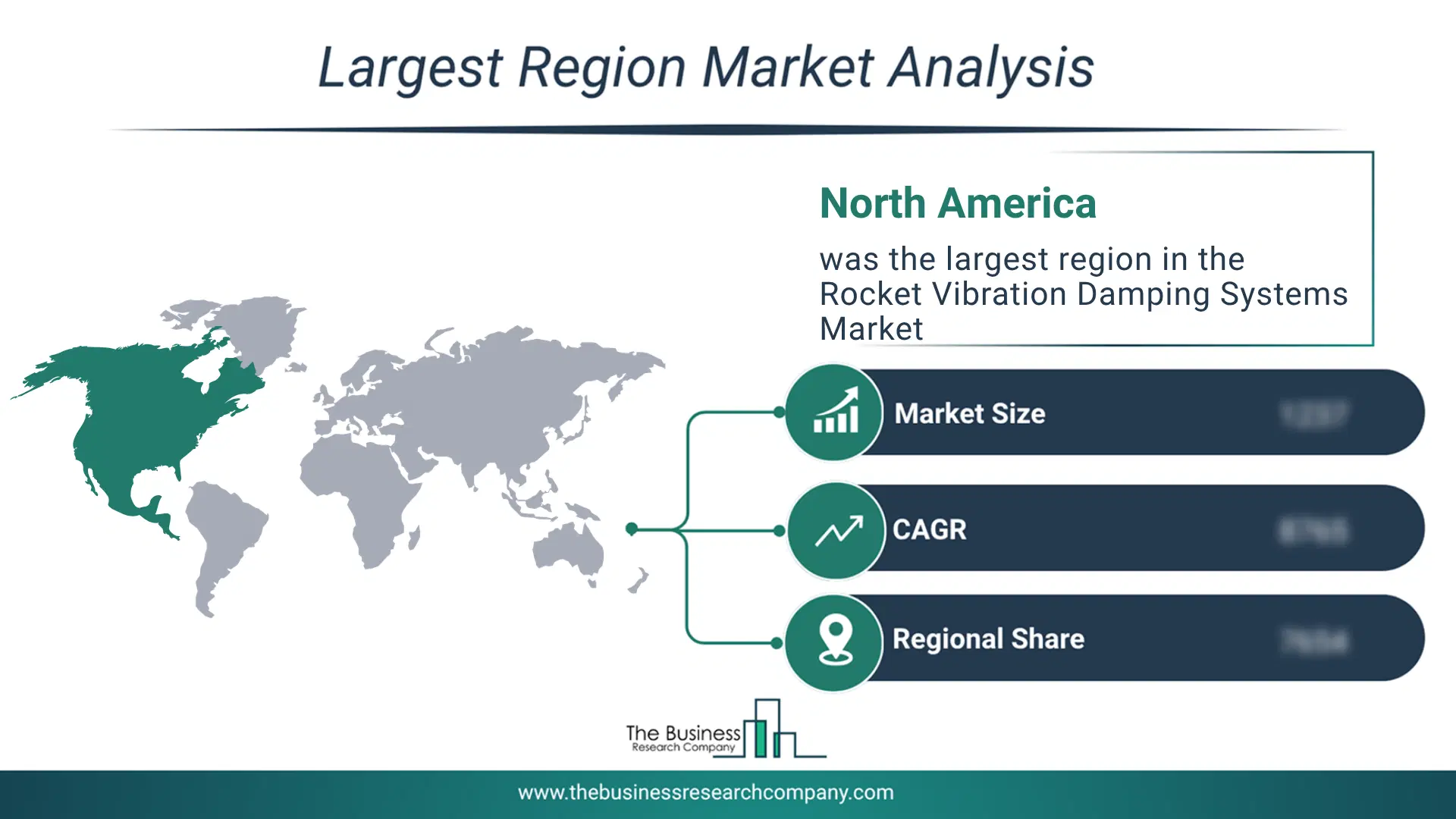
Regional Insights
North America was the largest region in the rocket vibration damping systems market in 2025. The regions covered in this market report are Asia-Pacific, South East Asia, Western Europe, Eastern Europe, North America, South America, Middle East, Africa. The countries covered in this market report are Australia, Brazil, China, France, Germany, India, Indonesia, Japan, Taiwan, Russia, South Korea, UK, USA, Canada, Italy, SpainWhat Defines the Rocket Vibration Damping Systems Market?
The rocket vibration damping systems market consists of revenues earned by entities by providing services such as testing and simulation services, maintenance and retrofitting solutions, retrofit and upgrade solutions, vibration monitoring and diagnostics, and integration services. The market value includes the value of related goods sold by the service provider or included within the service offering. The rocket vibration damping systems market also includes sales of tuned mass dampers, elastomeric isolators, vibration absorber pads, shock mounts, and wire rope isolators. Values in this market are ‘factory gate’ values, that is, the value of goods sold by the manufacturers or creators of the goods, whether to other entities (including downstream manufacturers, wholesalers, distributors, and retailers) or directly to end customers. The value of goods in this market includes related services sold by the creators of the goods.How is Market Value Defined and Measured?
The market value is defined as the revenues that enterprises gain from the sale of goods and/or services within the specified market and geography through sales, grants, or donations in terms of the currency (in USD unless otherwise specified). The revenues for a specified geography are consumption values that are revenues generated by organizations in the specified geography within the market, irrespective of where they are produced. It does not include revenues from resales along the supply chain, either further along the supply chain or as part of other products.
This chart presents market attractiveness based on a quantitative evaluation of growth, competition, strategic alignment, and risk, offering a clear view of opportunity areas for decision-making. This chart is for illustrative purposes; the full report contains the complete analysis.

This chart highlights the Total Addressable Market (TAM) by estimating the maximum revenue opportunity using an assumption-driven approach, supporting strategic planning and opportunity sizing across markets. The chart is illustrative; the full report provides a more comprehensive analysis.
What Key Data and Analysis Are Included in the Rocket Vibration Damping Systems Market Report 2026?
The rocket vibration damping systems market research report is one of a series of new reports from The Business Research Company that provides market statistics, including industry global market size, regional shares, competitors with the market share, detailed market segments, market trends and opportunities, and any further data you may need to thrive in the rocket vibration damping systems industry. The market research report delivers a complete perspective of everything you need, with an in-depth analysis of the current and future state of the industry.Rocket Vibration Damping Systems Market Report Forecast Analysis
| Report Attribute | Details |
|---|---|
| Market Size Value In 2026 | $1.38 billion |
| Revenue Forecast In 2030 | $1.98 billion |
| Growth Rate | CAGR of 9.5% from 2026 to 2030 |
| Base Year For Estimation | 2025 |
| Actual Estimates/Historical Data | 2020-2025 |
| Forecast Period | 2026 - 2030 |
| Market Representation | Revenue in USD Billion and CAGR from 2026 to 2030 |
| Segments Covered | Type, Technology, Material, Application, End-User |
| Regional Scope | Asia-Pacific, Western Europe, Eastern Europe, North America, South America, Middle East, Africa |
| Country Scope | The countries covered in the rocket vibration damping systems market report are Australia, Brazil, China, France, Germany, India, Indonesia, Japan, Taiwan, Russia, South Korea, UK, USA, Canada, Italy, Spain |
| Key Companies Profiled | Honeywell Aerospace, Parker Hannifin Corporation, Nitto Denko Corporation, Hutchinson S.A., Vibracoustic SE, Moog Inc., Trelleborg AB, Meggitt PLC, Hexcel Corporation, Pyrotek Inc., Taylor Devices Inc., Rocket Lab USA Inc., Sorbothane Inc., ITT Enidine Inc., Experior Laboratories, Damping Technologies Inc., VibraSystems Inc., ETS Solutions, Vibrostop S.r.l., Vibration Mountings And Controls Inc. |
| Customization Scope | Request for Customization |
| Pricing And Purchase Options | Explore Purchase Options |