
Rosacea Market Report 2026
Global Outlook – By Type (Erythematotelangiectatic Rosacea, Papulopustular Rosacea, Ocular Rosacea, Phymatous Rosacea), By Drug Class (Antibiotics, Alpha Agonists, Retinoid, Corticosteroids, Immunosuppressants, Other Drug Classes), By Mode of Administration (Topical, Oral), By End-User (Hospitals, Clinics, Retail pharmacies, Online pharmacies) - Market Size, Trends, Strategies, and Forecast to 2030
Rosacea Market Overview
• Rosacea market size has reached to $2.14 billion in 2025 • Expected to grow to $3.34 billion in 2030 at a compound annual growth rate (CAGR) of 9.5% • Growth Driver: Rising Skin Disease Prevalence Fuels Growth In The Rosacea Market • Market Trend: Advanced Light-Based Dermatology Innovations Enhancing Precision And Outcomes In Skin Condition Treatments • North America was the largest region in 2025 and Asia-Pacific is the fastest growing region.What Is Covered Under Rosacea Market?
Rosacea is a chronic skin disorder that primarily affects the face and causes reddened skin, flushing and bumps, usually on the cheeks and nose. It typically develops in adulthood and is more common in fair-skinned individuals. Rosacea symptoms include swollen red bumps, visible blood vessels and pus-filled pimples. The main types of rosacea are erythematotelangiectatic rosacea, papulopustular rosacea, ocular rosacea and phymatous rosacea. Erythematotelangiectatic rosacea is referred to as a chronic and inflammatory skin condition that primarily affects the face and its treatment typically involves a combination of topical medications. Various classes of drugs are included, such as antibiotics, alpha-agonists, retinoids, corticosteroids, immunosuppressants and others, which can be administered through several modes, including topical and oral and are used by several end-users, including hospitals, clinics, retail pharmacies and online pharmacies.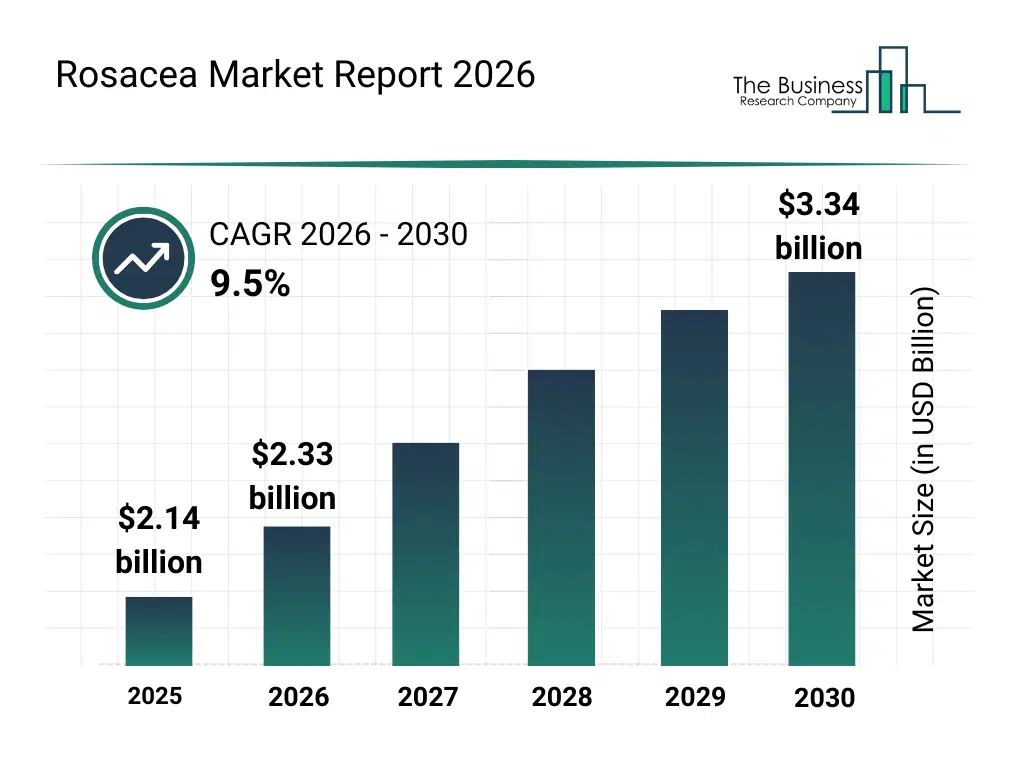
What Is The Rosacea Market Size and Share 2026?
The rosacea market size has grown strongly in recent years. It will grow from $2.14 billion in 2025 to $2.33 billion in 2026 at a compound annual growth rate (CAGR) of 8.7%. The growth in the historic period can be attributed to increasing prevalence of chronic inflammatory skin conditions, rising dermatology consultations, wider availability of topical antibiotics and alpha agonists, growing awareness of rosacea symptoms, improved access to dermatology care.What Is The Rosacea Market Growth Forecast?
The rosacea market size is expected to see strong growth in the next few years. It will grow to $3.34 billion in 2030 at a compound annual growth rate (CAGR) of 9.5%. The growth in the forecast period can be attributed to increasing demand for personalized treatment regimens, rising research into inflammatory skin disorders, growing adoption of novel drug classes, expansion of teledermatology services, increasing focus on quality-of-life improvement. Major trends in the forecast period include increasing adoption of targeted topical therapies, growing focus on long-term disease management solutions, rising demand for combination drug therapies, expansion of personalized dermatology treatments, enhanced emphasis on early diagnosis and symptom control.
Global Rosacea Market Segmentation
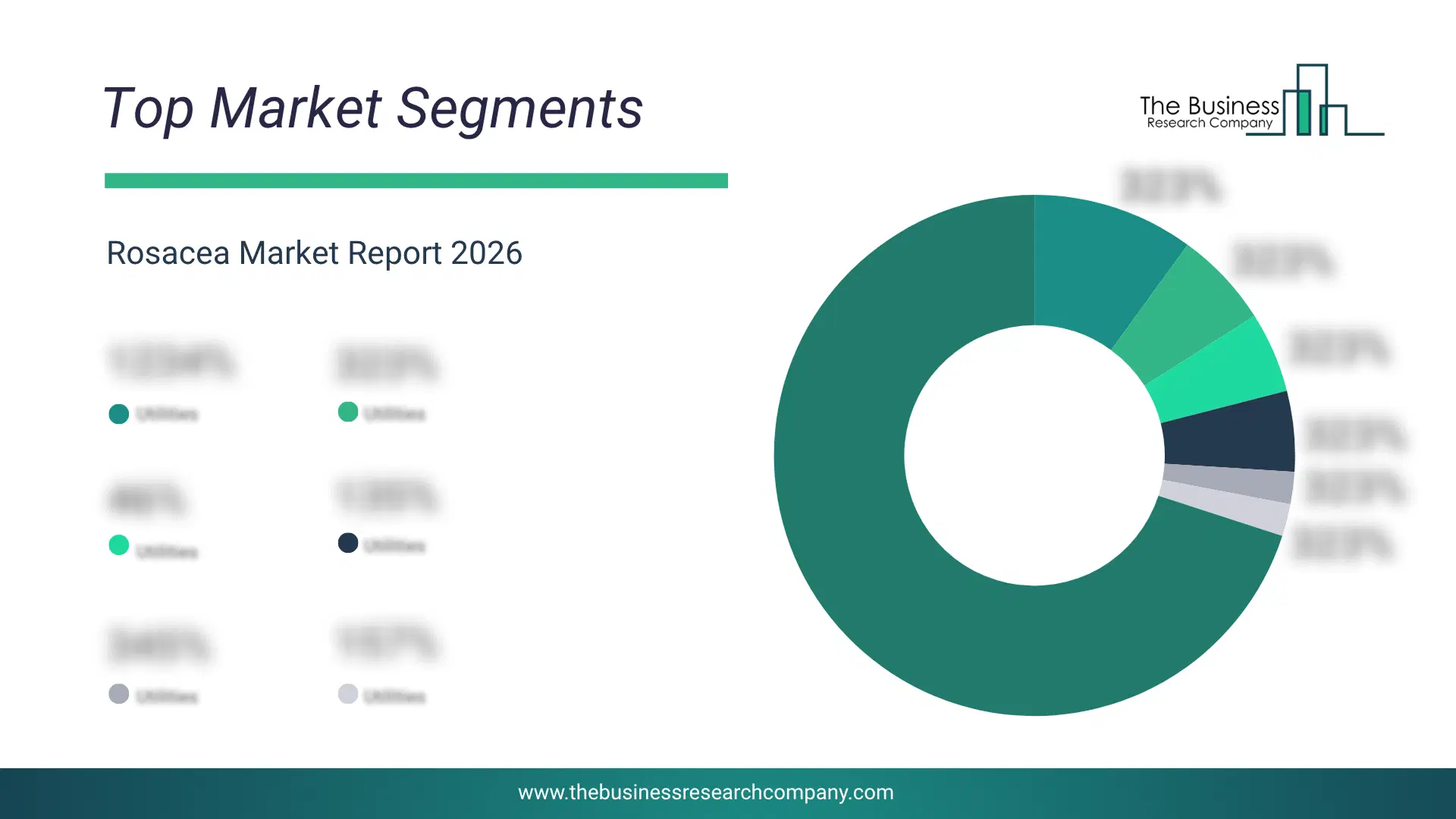
1) By Type: Erythematotelangiectatic Rosacea, Papulopustular Rosacea, Ocular Rosacea, Phymatous Rosacea 2) By Drug Class: Antibiotics, Alpha Agonists, Retinoid, Corticosteroids, Immunosuppressants, Other Drug Classes 3) By Mode of Administration: Topical, Oral 4) By End-User: Hospitals, Clinics, Retail pharmacies, Online pharmacies Subsegments: 1) By Erythematotelangiectatic Rosacea: Persistent Facial Redness, Visible Blood Vessels 2) By Papulopustular Rosacea: Red Bumps, Pus-Filled Pimples 3) By Ocular Rosacea: Eye Irritation, Inflammation Of Eyelids, Dry Eyes 4) By Phymatous Rosacea: Rhinophyma, Thickened Skin On The FaceWhat Is The Driver Of The Rosacea Market?
The increasing prevalence of skin diseases is expected to propel the growth of the rosacea market going forward. Skin diseases are medical conditions that affect the skin's appearance, structure and function. These conditions can involve the skin, hair, nails and related tissues. Rosacea, a type of inflammation and skin problem, can be caused by various fungal infections, including overgrowth of Candida. Moreover, rosacea has a statistically significant increased risk of skin cancers such as hepatic cancer, non-melanoma skin cancer and breast cancer. For instance, in February 2023, according to Cancer Research UK, a UK-based cancer research organization, the average number of new melanoma skin cancer cases each year in the UK is expected to increase from approximately 20,800 cases in 2023-2025 to around 26,500 cases in 2038-2040. This represents a projected 9% rise in melanoma incidence rates, reaching 33 cases per 100,000 people annually by 2038-2040. Therefore, the increasing prevalence of skin diseases is driving the growth of the rosacea industry.Key Players In The Global Rosacea Market
Major companies operating in the rosacea market are Pfizer Inc., Johnson & Johnson, Merck & Co. Inc., AbbVie Inc., Bayer AG, Sanofi S.A., GlaxoSmithKline plc, Eli Lilly and Company, Viatris Inc., Teva Pharmaceutical Industries Ltd., Bausch Health Companies Inc., Sun Pharmaceutical Industries Ltd., Perrigo Company PLC, Galderma S.A., Dr. Reddy's Laboratories Ltd., Lupin Limited, LEO Pharma A/S, Almirall S.A., Taro Pharmaceuticals, Mayne Pharma, Aclaris Therapeutics Inc., Sol-Gel Technologies Ltd., Nestle Skin Health S.A., Foamix Pharmaceuticals.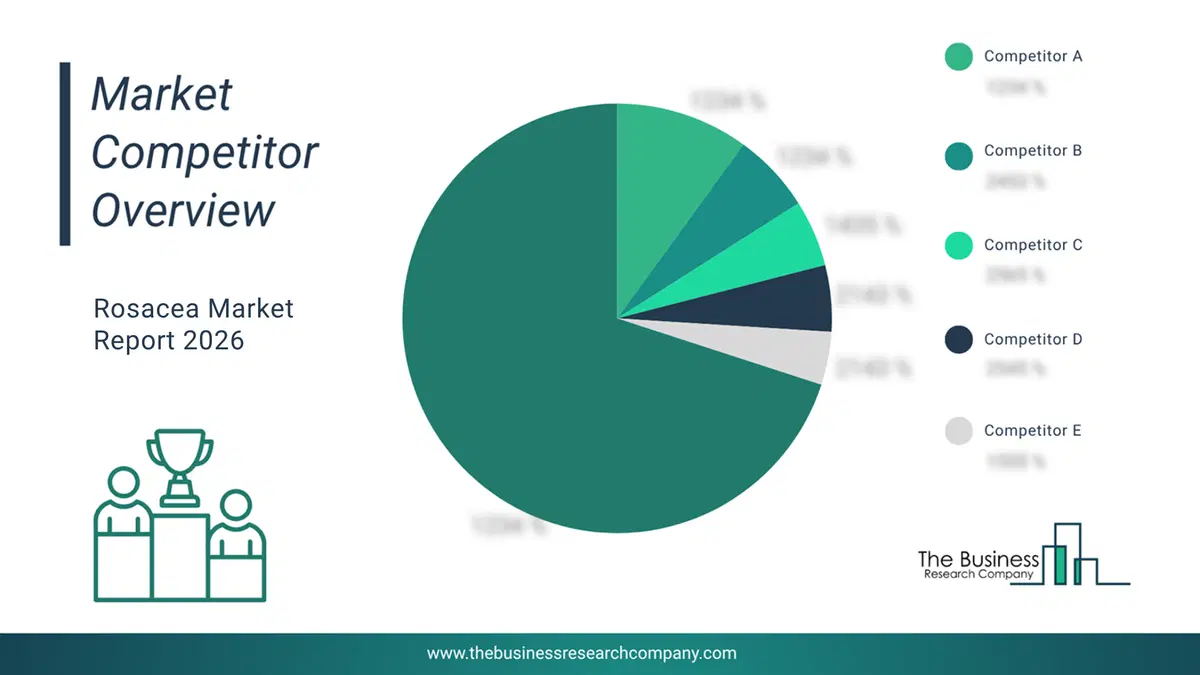
This chart is for illustrative purposes; the full report includes a detailed competitor analysis and comprehensive overview of the top 10 companies in the market.
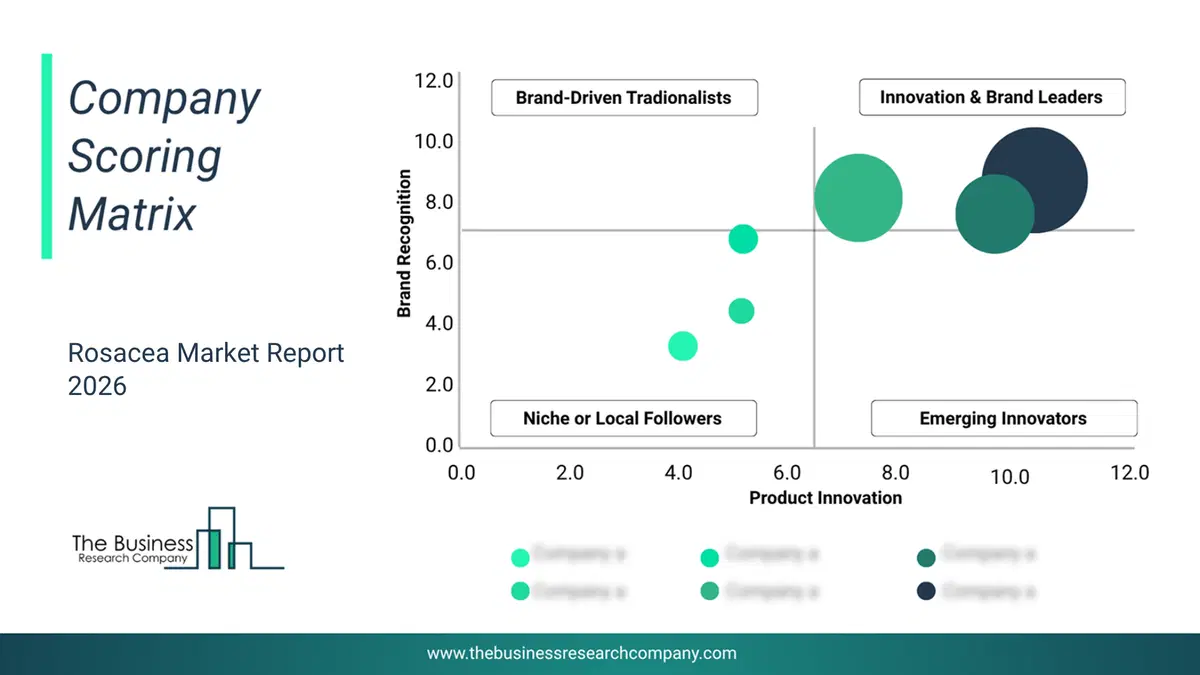
This chart maps companies by product innovation and brand strength, with bubble size indicating relative revenue, helping identify market leaders, challengers, and niche players. This is an illustrative chart; the full report provides a complete and accurate competitive analysis.
Global Rosacea Market Trends and Insights
Major companies operating in the rosacea market are focusing on technological advancements, such as Expert Pulsed Light (XPL) systems, to meet the rising demand for non-invasive, highly effective, and versatile therapies driven by increased patient preference for minimal downtime and broader skin-type compatibility. XPL technology represents the latest evolution in pulsed light treatments, featuring advanced pulse design, multiple expert filters, and sub-pulsing techniques, enabling precise control of energy delivery and treatment protocols compared to traditional intense pulsed light (IPL) devices that often provide less customizable outcomes. For instance, in November 2025, Lumenis Be. Ltd., an Israel-based energy-based medical device company, launched the Stellar M22 platform equipped with XPL technology, an innovative multi-application aesthetic system designed to treat over 30 skin conditions, including rosacea. Stellar M22 integrates four cutting-edge technologies, offers the new XPL Glide Mode for faster, in-motion treatments, and features 850+ built-in protocols for repeatable and consistent clinical results across diverse patient populations. Its hybrid modalities, such as PhotoFABULOUS and SmoothGlo, allow for tailored skin rejuvenation regimens, targeting vascular and pigment lesions common in rosacea, with proven efficacy for rapid lesion clearance and improved comfort compared to conventional devices.What Are Latest Mergers And Acquisitions In The Rosacea Market?
In September 2023, Mayne Pharma, an Australia-based specialty pharmaceutical company, acquired the global rights to RHOFADE (oxymetazoline hydrochloride) cream 1% from Novan, Inc. and EPI Health LLC for an undisclosed amount. With this acquisition, Mayne Pharma strengthened its dermatology / rosacea product portfolio by adding an established topical therapy for persistent facial erythema in rosacea. Novan, Inc. is a US-based specialty dermatology company, and EPI Health LLC is a US-based specialty dermatology company focused on products for rosacea and acne.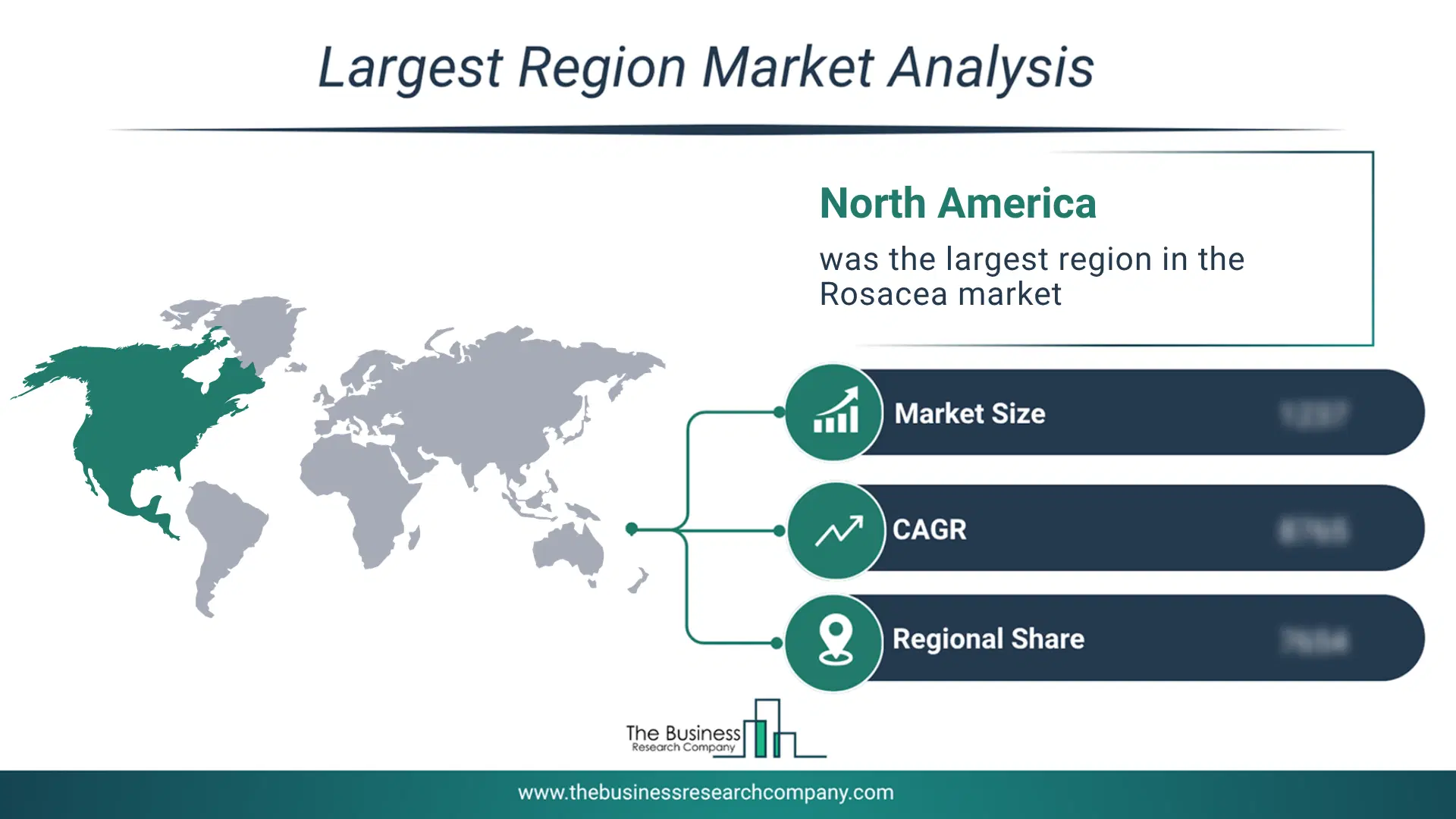
Regional Outlook
North America was the largest region in the rosacea market in 2025. Asia-Pacific is expected to the fastest-growing region in the forecast period. The regions covered in this market report are Asia-Pacific, South East Asia, Western Europe, Eastern Europe, North America, South America, Middle East, Africa. The countries covered in this market report are Australia, Brazil, China, France, Germany, India, Indonesia, Japan, Taiwan, Russia, South Korea, UK, USA, Canada, Italy, Spain.What Defines the Rosacea Market?
The rosacea market consists of sales of metronidazole, azelaic acid, brimonidine, oxymetazoline and tretinoin. Values in this market are ‘factory gate’ values, that is, the value of goods sold by the manufacturers or creators of the goods, whether to other entities (including downstream manufacturers, wholesalers, distributors and retailers) or directly to end customers. The value of goods in this market includes related services sold by the creators of the goods.How is Market Value Defined and Measured?
The market value is defined as the revenues that enterprises gain from the sale of goods and/or services within the specified market and geography through sales, grants, or donations in terms of the currency (in USD unless otherwise specified). The revenues for a specified geography are consumption values that are revenues generated by organizations in the specified geography within the market, irrespective of where they are produced. It does not include revenues from resales along the supply chain, either further along the supply chain or as part of other products.
This chart presents market attractiveness based on a quantitative evaluation of growth, competition, strategic alignment, and risk, offering a clear view of opportunity areas for decision-making. This chart is for illustrative purposes; the full report contains the complete analysis.

This chart highlights the Total Addressable Market (TAM) by estimating the maximum revenue opportunity using an assumption-driven approach, supporting strategic planning and opportunity sizing across markets. The chart is illustrative; the full report provides a more comprehensive analysis.
What Key Data and Analysis Are Included in the Rosacea Market Report 2026?
The rosacea market research report is one of a series of new reports from The Business Research Company that provides market statistics, including industry global market size, regional shares, competitors with the market share, detailed market segments, market trends and opportunities, and any further data you may need to thrive in the rosacea industry. The market research report delivers a complete perspective of everything you need, with an in-depth analysis of the current and future state of the industry.Rosacea Market Report Forecast Analysis
| Report Attribute | Details |
|---|---|
| Market Size Value In 2026 | $2.33 billion |
| Revenue Forecast In 2030 | $3.34 billion |
| Growth Rate | CAGR of 9.5% from 2026 to 2030 |
| Base Year For Estimation | 2025 |
| Actual Estimates/Historical Data | 2020-2025 |
| Forecast Period | 2026 - 2030 |
| Market Representation | Revenue in USD Billion and CAGR from 2026 to 2030 |
| Segments Covered | Type, Drug Class, Mode of Administration, End-User |
| Regional Scope | Asia-Pacific, Western Europe, Eastern Europe, North America, South America, Middle East, Africa |
| Country Scope | The countries covered in the report are Australia, Brazil, China, France, Germany, India, Indonesia, Japan, Taiwan, Russia, South Korea, UK, USA, Canada, Italy, Spain |
| Key Companies Profiled | Pfizer Inc., Johnson & Johnson, Merck & Co. Inc., AbbVie Inc., Bayer AG, Sanofi S.A., GlaxoSmithKline plc, Eli Lilly and Company, Viatris Inc., Teva Pharmaceutical Industries Ltd., Bausch Health Companies Inc., Sun Pharmaceutical Industries Ltd., Perrigo Company PLC, Galderma S.A., Dr. Reddy's Laboratories Ltd., Lupin Limited, LEO Pharma A/S, Almirall S.A., Taro Pharmaceuticals, Mayne Pharma, Aclaris Therapeutics Inc., Sol-Gel Technologies Ltd., Nestle Skin Health S.A., Foamix Pharmaceuticals. |
| Customization Scope | Request for Customization |
| Pricing And Purchase Options | Explore Purchase Options |