
Rose Wine Market Report 2026
Global Outlook – By Type (Fortified Wine And Vermouth, Sparkling Wine, Still Wine), By Grape Variety (Grenache, Merlot, Pinot Noir, Malbec), By Body Type (Full-Bodied, Medium-Bodied, Light-Bodied), By Color (Red Wine, Rose Wine, White Wine), By Distribution Channel (Hypermarket, Supermarket, Specialty Stores, Online Retail) – Market Size, Trends, Strategies, and Forecast to 2030
Rose Wine Market Overview
• Rose Wine market size has reached to $4.21 billion in 2025 • Expected to grow to $6.24 billion in 2030 at a compound annual growth rate (CAGR) of 8.1% • Growth Driver: Rising Preference For Low-Alcohol Drinks Fueling The Growth Of The Market Due To Increasing Health Consciousness And Demand For Moderate Alcohol Options • Market Trend: New Sparkling Rosé Combines Portability, Freshness, And Clean-Label Promise • Europe was the largest region in 2025 and Asia-Pacific is the fastest growing region.What Is Covered Under Rose Wine Market?
Rose wine is a type of wine with a pink hue, created by briefly allowing grape skins to contact the juice during fermentation. It is typically light, crisp, and refreshing, with flavor profiles ranging from fruity to floral. Rose wines are made from various red grapes using maceration or saignée to serve as a versatile and enjoyable drink, often chilled, ideal for casual and warm-weather occasions. The main types of the rose wine include fortified wine and vermouth, sparkling wine, and still wine. Fortified wine and vermouth refer to wine products in which distilled spirits are added to increase alcohol content and enhance flavor complexity, offering longer shelf life and distinctive taste profiles that appeal to consumers seeking premium and specialty rose wine variants. The primary grape varieties include grenache, merlot, pinot noir, and malbec. The major body types include full-bodied, medium-bodied, and light-bodied. The key color categories include red wine, rose wine, and white wine, and they are used by several distribution channels such as hypermarkets, supermarkets, specialty stores, and online retail platforms.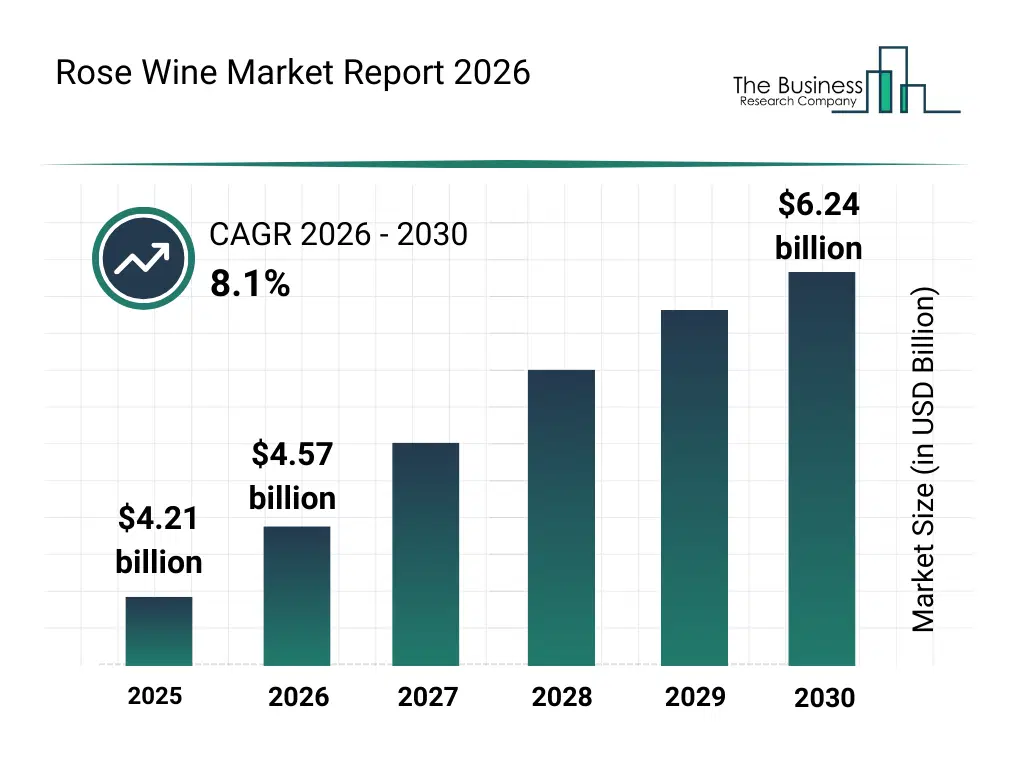
What Is The Rose Wine Market Size and Share 2026?
The rose wine market size has grown strongly in recent years. It will grow from $4.21 billion in 2025 to $4.57 billion in 2026 at a compound annual growth rate (CAGR) of 8.6%. The growth in the historic period can be attributed to growing consumer preference for lighter and refreshing wine styles boosting rosé adoption, expansion of wine tourism increasing global awareness of regional rosé varieties, introduction of canned blush wine improving portability and attracting younger consumers, rising production of organic and biodynamic rosé aligning with health and sustainability trends, increasing popularity of rosé champagne in premium and celebratory occasions.What Is The Rose Wine Market Growth Forecast?
The rose wine market size is expected to see strong growth in the next few years. It will grow to $6.24 billion in 2030 at a compound annual growth rate (CAGR) of 8.1%. The growth in the forecast period can be attributed to continued growth in demand for convenient packaging formats driving canned rosé wine expansion, innovation in sustainable viticulture supporting broader availability of organic and biodynamic rosé wines, rising interest in low-alcohol and semi-sparkling rosé options appealing to health-conscious consumers, expanding e-commerce channels increasing market reach for niche rosé varieties, growing premiumization trends boosting demand for high-quality maceration rosé and cabernet sauvignon rosé products. Major trends in the forecast period include premiumization of rosé wines, growth of canned and portable rosé formats, seasonal and occasion-led consumption patterns, expansion of rosé from non-traditional regions, innovation in low-alcohol and alcohol-free rosé.
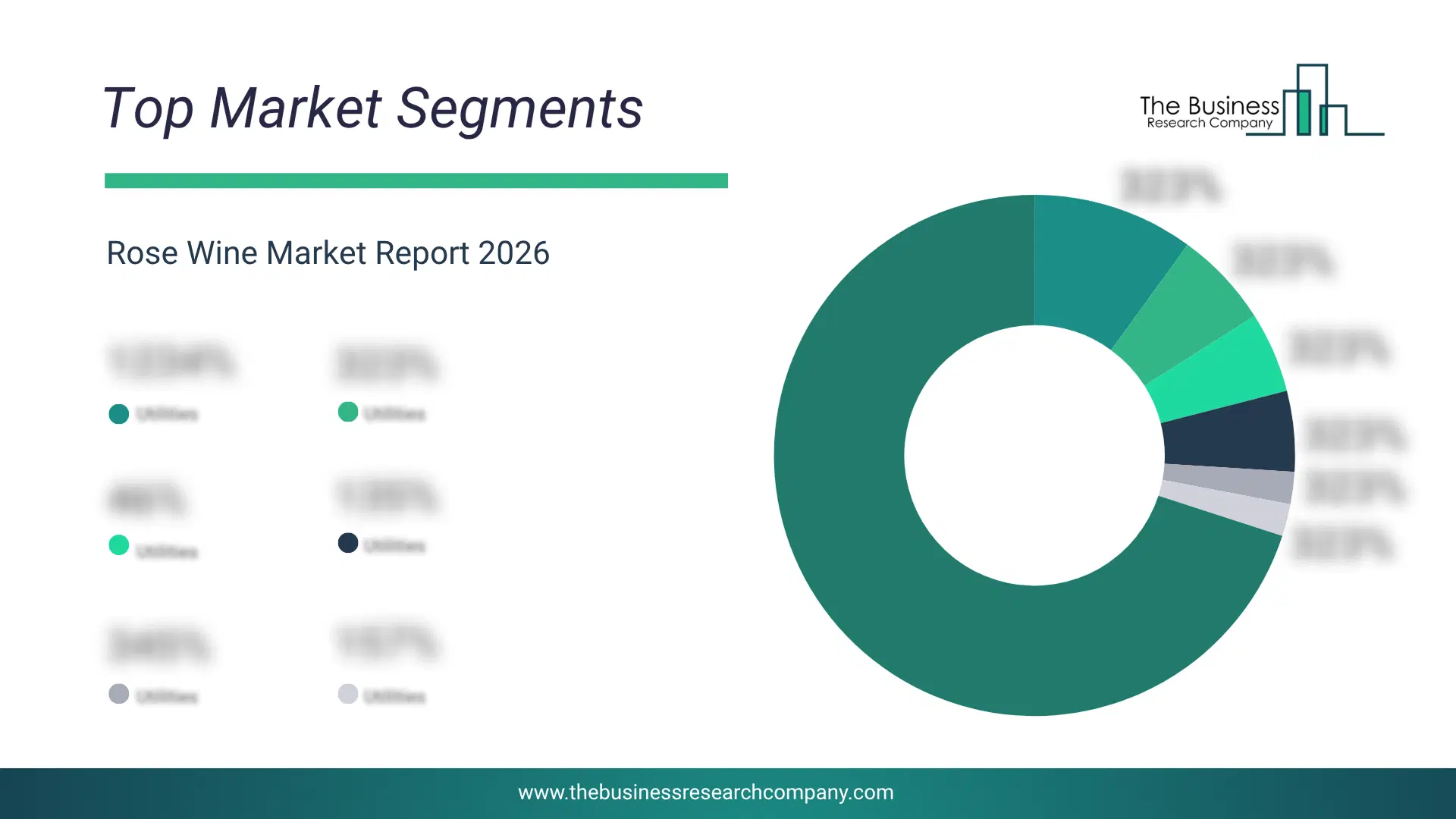
Global Rose Wine Market Segmentation
1) By Type: Fortified Wine And Vermouth, Sparkling Wine, Still Wine 2) By Grape Variety: Grenache, Merlot, Pinot Noir, Malbec 3) By Body Type: Full-Bodied, Medium-Bodied, Light-Bodied 4) By Color: Red Wine, Rose Wine, White Wine 5) By Distribution Channel: Hypermarket, Supermarket, Specialty Stores, Online Retail Subsegments: 1) By Fortified Wine And Vermouth: Aromatized Rose Vermouth, Sweet Fortified Rose Wine, Dry Fortified Rose Wine, Herbal-Infused Rose Aperitifs 2) By Sparkling Wine: Traditional Method Sparkling Rose, Charmat Method Sparkling Rose, Rose Prosecco, Sparkling Muscat Rosé 3) By Still Wine: Dry Still Rosé, Off-Dry Still Rosé, Sweet Still Rosé, Organic Still Rosé, Biodynamic Still RoséWhat Is Driver Of The Rose Wine Market?
The rising preference for low-alcohol drinks is expected to propel the growth of the rosé wine market going forward. Low-alcohol drinks are beverages that contain a reduced amount of alcohol by volume (typically below 3.5%), offering a lighter alternative to regular alcoholic drinks. The preference for low-alcohol drinks is increasing due to growing health consciousness and changing social attitudes toward moderation and wellness. Rosé wine enhances low-alcohol drinks by providing flavorful, refreshing options that appeal to a wide range of consumers. It offers a versatile choice for social occasions, combining taste and moderate alcohol content to suit health-conscious and casual drinkers. For instance, in January 2024, according to Fentimans, a UK-based botanical drinks company, 50% of the consumers bought mocktails or virgin alternatives (non-alcoholic versions of traditional cocktails) in 2024, up from 35% in 2023. Therefore, the rising preference for low-alcohol drinks is driving the growth of the rosé wine market.Key Players In The Global Rose Wine Market
Major companies operating in the rose wine market are Pernod Ricard, Constellation Brands, E. & J. Gallo Winery, Treasury Wine Estates, Château Miraval, Sula Vineyards Private Limited, Gérard Bertrand Wines, Wölffer Estate Vineyard Inc., Bodegas Muga, Moët Hennessy, Domaines Ott, Lynfred Winery Inc., Château la Tour de l'Évêque, Domaine de la Sanglière, Domaine Tempier, Arianna Occhipinti Azienda Agricola, Château de Pibarnon, Château Sainte Roseline, Domaine de la Mordorée, Fattoria Sardi Giustiniani, Jean-Luc Colombo Wines, La Vieille Ferme, Lasseter Family Winery LLC, Maison Saint Aix (AIX Rosé), Mas de Cadenet, Sacha Lichine Wines, Vini Sassara di Bertaiola Stefano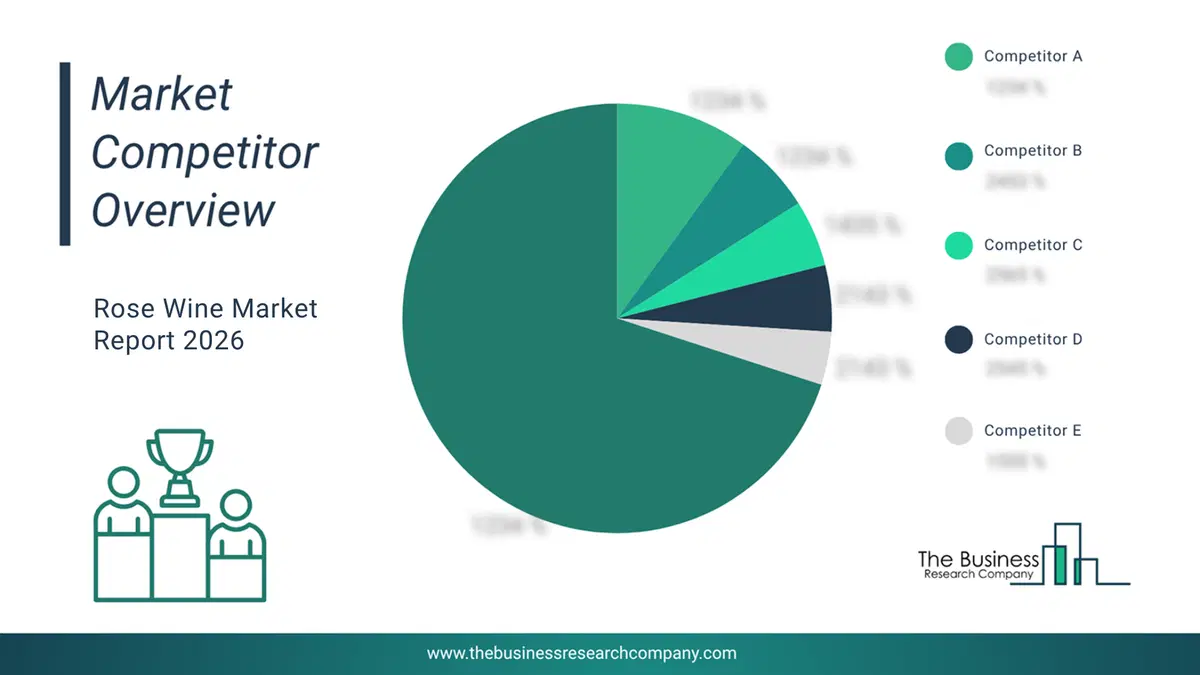
This chart is for illustrative purposes; the full report includes a detailed competitor analysis and comprehensive overview of the top 10 companies in the market.
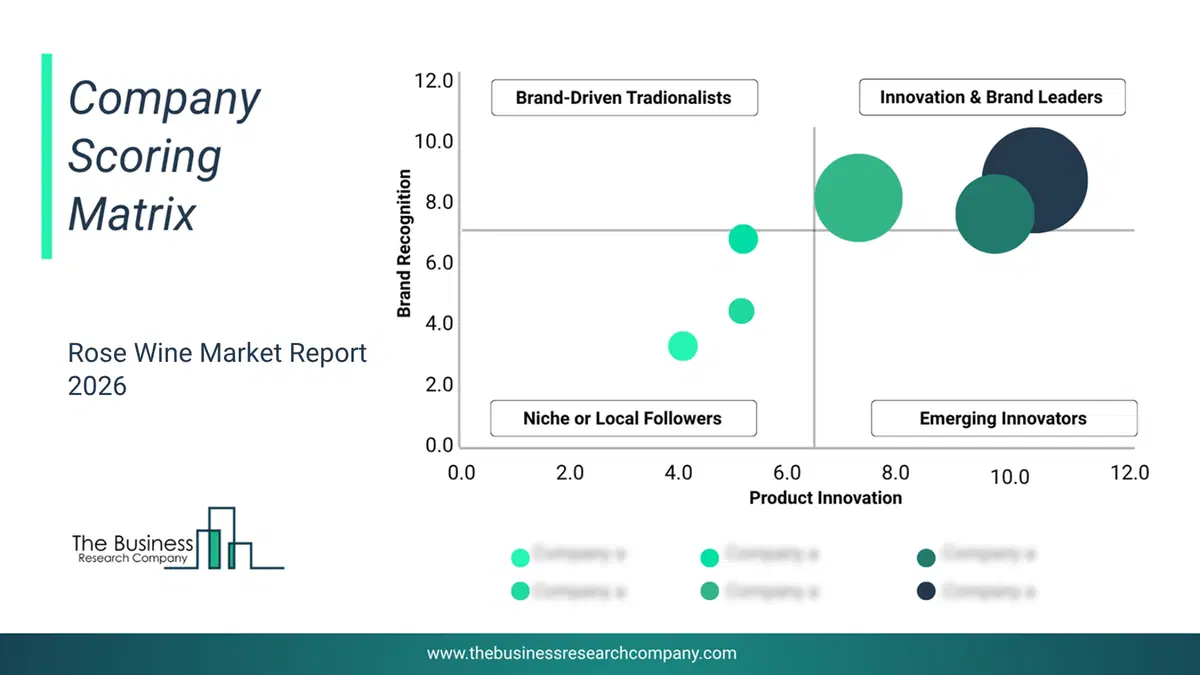
This chart maps companies by product innovation and brand strength, with bubble size indicating relative revenue, helping identify market leaders, challengers, and niche players. This is an illustrative chart; the full report provides a complete and accurate competitive analysis.
Global Rose Wine Market Trends and Insights
Major companies operating in the rose wine market are focusing on developing innovative products, such as health-conscious wine, to cater to the growing consumer demand for healthier lifestyle choices without compromising on taste or quality. Health-conscious wine refers to specially crafted or marketed wines to appeal to consumers who prioritize health and wellness. These wines typically have lower alcohol content, reduced sugar levels, fewer additives, organic or sustainably grown grapes, and are sometimes enhanced with antioxidants or natural ingredients. For instance, in May 2025, FitVine Wine, a US-based craft wine company, launched a new sparkling rose in a resealable 750-milliliter aluminum bottle, expanding its health-conscious, low-sugar wines aimed at active and wellness-focused consumers. This launch blends portability and freshness with the brand’s clean-label promise with sustainable packaging, offering a convenient, on-the-go option for wine lovers who value fitness and flavor.What Are Latest Mergers And Acquisitions In The Rose Wine Market? Moët Hennessy Strengthens Premium Rosé Portfolio With Château Minuty Acquisition
In February 2023, Moët Hennessy, a France-based luxury wines and spirits company, acquired a majority stake in Château Minuty for an undisclosed amount. With this acquisition, Moët Hennessy strengthens its premium rosé market position by expanding its portfolio with Château Minuty’s renowned wines and leveraging its heritage to capitalize on rising global demand for high-quality rosé wines. Château Minuty is a France-based luxury rosé wine producer.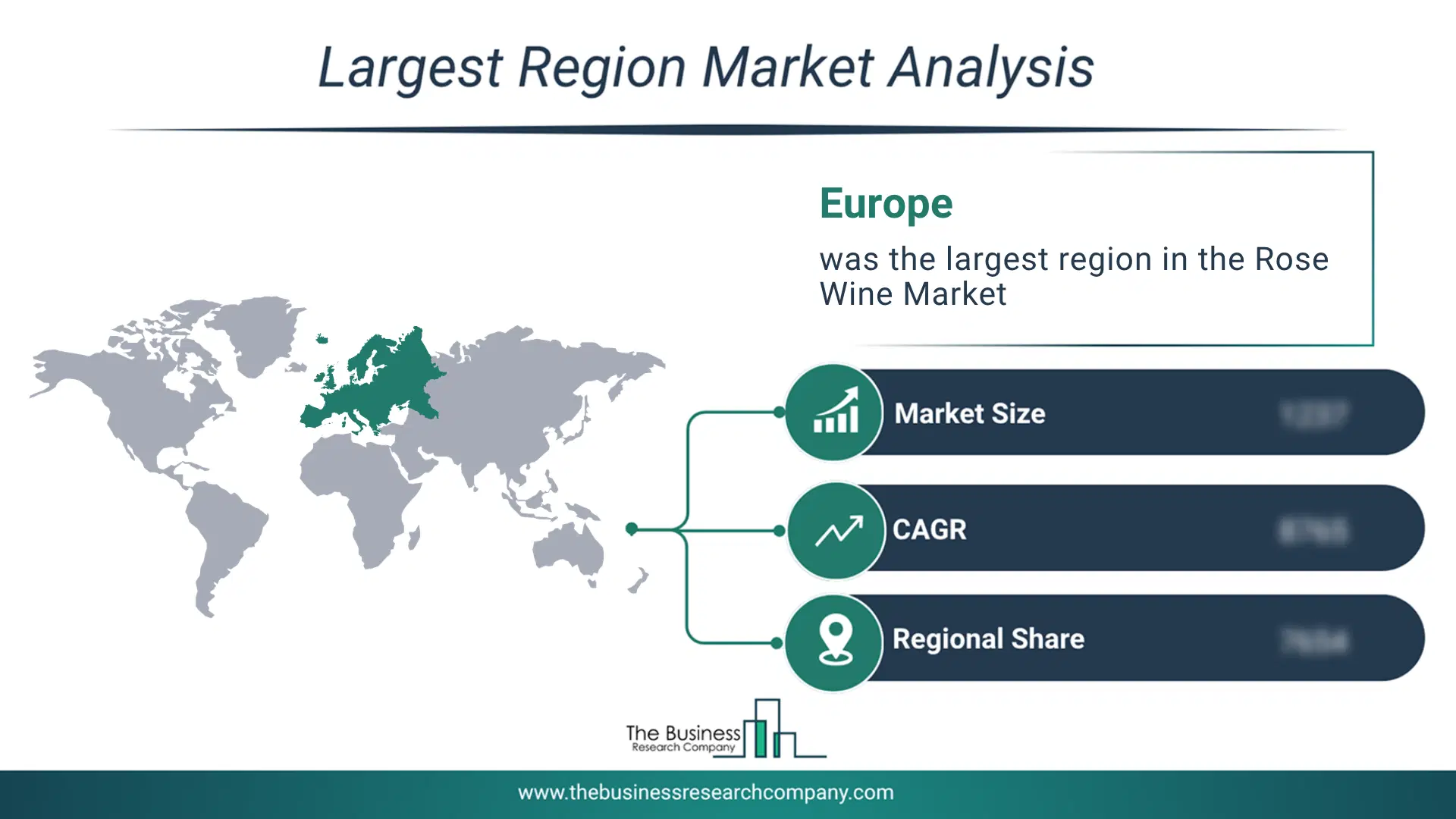
Regional Insights
Europe was the largest region in the rose wine market in 2025. Asia-Pacific is expected to be the fastest-growing region in the forecast period. The regions covered in this market report are Asia-Pacific, South East Asia, Western Europe, Eastern Europe, North America, South America, Middle East, Africa. The countries covered in this market report are Australia, Brazil, China, France, Germany, India, Indonesia, Japan, Taiwan, Russia, South Korea, UK, USA, Canada, Italy, SpainWhat Defines the Rose Wine Market?
The rose wine market consists of sales of semi-sparkling rosé wine, organic and biodynamic rosé wines, canned blush wine, rose champagne, maceration rose, and cabernet sauvignon rose. Values in this market are ‘factory gate’ values, that is, the value of goods sold by the manufacturers or creators of the goods, whether to other entities (including downstream manufacturers, wholesalers, distributors, and retailers) or directly to end customers. The value of goods in this market includes related services sold by the creators of the goods.How is Market Value Defined and Measured?
The market value is defined as the revenues that enterprises gain from the sale of goods and/or services within the specified market and geography through sales, grants, or donations in terms of the currency (in USD unless otherwise specified). The revenues for a specified geography are consumption values that are revenues generated by organizations in the specified geography within the market, irrespective of where they are produced. It does not include revenues from resales along the supply chain, either further along the supply chain or as part of other products.
This chart presents market attractiveness based on a quantitative evaluation of growth, competition, strategic alignment, and risk, offering a clear view of opportunity areas for decision-making. This chart is for illustrative purposes; the full report contains the complete analysis.

This chart highlights the Total Addressable Market (TAM) by estimating the maximum revenue opportunity using an assumption-driven approach, supporting strategic planning and opportunity sizing across markets. The chart is illustrative; the full report provides a more comprehensive analysis.
What Key Data and Analysis Are Included in the Rose Wine Market Report 2026?
The rose wine market research report is one of a series of new reports from The Business Research Company that provides market statistics, including industry global market size, regional shares, competitors with the market share, detailed market segments, market trends and opportunities, and any further data you may need to thrive in the rose wine industry. The market research report delivers a complete perspective of everything you need, with an in-depth analysis of the current and future state of the industry.Rose Wine Market Report Forecast Analysis
| Report Attribute | Details |
|---|---|
| Market Size Value In 2026 | $4.57 billion |
| Revenue Forecast In 2030 | $6.24 billion |
| Growth Rate | CAGR of 8.1% from 2026 to 2030 |
| Base Year For Estimation | 2025 |
| Actual Estimates/Historical Data | 2020-2025 |
| Forecast Period | 2026 - 2030 |
| Market Representation | Revenue in USD Billion and CAGR from 2026 to 2030 |
| Segments Covered | Type, Grape Variety, Body Type, Color, Distribution Channel |
| Regional Scope | Asia-Pacific, Western Europe, Eastern Europe, North America, South America, Middle East, Africa |
| Country Scope | The countries covered in the rose wine market report are Australia, Brazil, China, France, Germany, India, Indonesia, Japan, Taiwan, Russia, South Korea, UK, USA, Canada, Italy, Spain |
| Key Companies Profiled | Pernod Ricard, Constellation Brands, E. & J. Gallo Winery, Treasury Wine Estates, Château Miraval, Sula Vineyards Private Limited, Gérard Bertrand Wines, Wölffer Estate Vineyard Inc., Bodegas Muga, Moët Hennessy, Domaines Ott, Lynfred Winery Inc., Château la Tour de l'Évêque, Domaine de la Sanglière, Domaine Tempier, Arianna Occhipinti Azienda Agricola, Château de Pibarnon, Château Sainte Roseline, Domaine de la Mordorée, Fattoria Sardi Giustiniani, Jean-Luc Colombo Wines, La Vieille Ferme, Lasseter Family Winery LLC, Maison Saint Aix (AIX Rosé), Mas de Cadenet, Sacha Lichine Wines, Vini Sassara di Bertaiola Stefano |
| Customization Scope | Request for Customization |
| Pricing And Purchase Options | Explore Purchase Options |