
Rubber Process Oil Market Report 2026
Global Outlook – By Type (Aromatic, Paraffinic, Naphthenic, Mild Extracted Solvent (MES), Residual Aromatic Extracted Solvent (RAE), Treated Distillate Aromatic Extracted Solvent (TDAE)), By Application (Rubber Processing, Adhesives And Sealants, Consumer Products), By End User (Automotive, Construction, Gas And Oil) – Market Size, Trends, Strategies, and Forecast to 2030
Rubber Process Oil Market Overview
• Rubber Process Oil market size has reached to $2.18 billion in 2025 • Expected to grow to $2.8 billion in 2030 at a compound annual growth rate (CAGR) of 5% • Growth Driver: Rise In Construction Activities Fueling The Growth Of The Market Due To Increasing Use In Rubber-Based Building Materials • Asia-Pacific was the largest region and fastest growing region.What Is Covered Under Rubber Process Oil Market?
Rubber processing oils function as plasticizers, improving the processability and filter incorporation, or as extenders. These oils also help to improve the physical properties of vulcanization, lowering the cost of rubber compound end products. Rubber process oil is used in the production of toys, rubber bands, automotive tires, and aircraft parts. The main types of rubber process oil include aromatic, paraffinic, naphthenic, mild extracted solvent (MES), residual aromatic extracted solvent (RAE), and treated distillate aromatic extracted solvent (TDAE). Aromatic rubber process oils have a double-bonded mixed ring carbon structure. These oils have color stability, solubility, and thermal stability, which make them ideal for molded articles, slippers, LPG tubes, floor tiles, and others. The different applications of rubber process oil include rubber processing, adhesives and sealants, polymers, consumer products, and paints and coatings, used by end-users including automotive, construction, gas, and oil.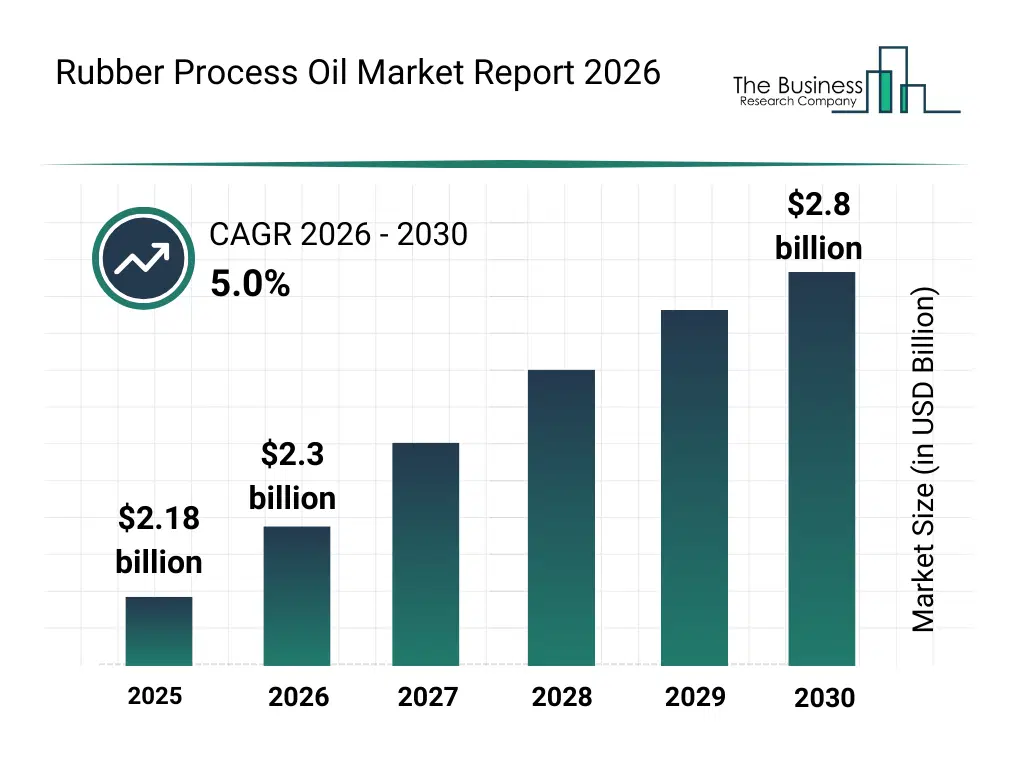
What Is The Rubber Process Oil Market Size and Share 2026?
The rubber process oil market size has grown strongly in recent years. It will grow from $2.18 billion in 2025 to $2.3 billion in 2026 at a compound annual growth rate (CAGR) of 5.6%. The growth in the historic period can be attributed to growth of automotive tire production, expansion of rubber goods manufacturing, demand for cost effective rubber compounds, availability of petroleum based oils, industrialization of emerging economies.What Is The Rubber Process Oil Market Growth Forecast?
The rubber process oil market size is expected to see strong growth in the next few years. It will grow to $2.8 billion in 2030 at a compound annual growth rate (CAGR) of 5.0%. The growth in the forecast period can be attributed to growth in electric vehicle tire demand, rising adoption of sustainable rubber additives, expansion of construction and infrastructure projects, advancements in rubber compounding technologies, increasing regulatory focus on aromatic content. Major trends in the forecast period include rising demand for low aromatic process oils, increasing use in automotive tire manufacturing, growing preference for eco friendly tdae oils, expansion of process oils in consumer rubber products, focus on enhanced rubber compound performance.
Global Rubber Process Oil Market Segmentation
1) By Type: Aromatic, Paraffinic, Naphthenic, Mild Extracted Solvent (MES), Residual Aromatic Extracted Solvent (RAE), Treated Distillate Aromatic Extracted Solvent (TDAE) 2) By Application: Rubber Processing, Adhesives And Sealants, Consumer Products 3) By End User: Automotive, Construction, Gas And Oil Subsegments: 1) By Aromatic: Heavy Aromatic Oil, Light Aromatic Oil 2) By Paraffinic: Low Aromatic Paraffinic Oil, High Viscosity Paraffinic Oil 3) By Naphthenic: Medium Naphthenic Oil, High Naphthenic Oil 4) By Mild Extracted Solvent (MES): Low Aromatic MES, High Performance MES 5) By Residual Aromatic Extracted Solvent (RAE): RAE With High Stability, RAE For Specific Applications 6) By Treated Distillate Aromatic Extracted Solvent (TDAE): TDAE With Low Aromatic Content, TDAE For Eco-Friendly ApplicationsWhat Are The Drivers Of The Rubber Process Oil Market?
The increasing construction activities are expected to drive the growth of the rubber process oil market going forward. Construction activities refer to the processes involved in the planning, design, execution, and completion of building structures, infrastructure, or engineering projects. Construction activities are rising due to increased urbanization, which drives demand for housing, infrastructure, and commercial spaces. Rubber process oils are used in construction to enhance the flexibility, durability, and workability of rubber-based materials such as sealants, waterproofing membranes, and insulation products. For instance, in July 2023, according to the Australian Bureau of Statistics, an Australian-based government administration, reported that in the March quarter of 2023, the number of dwellings under construction increased to 240,813, up from 240,065 in 2022. Among these, new houses made up 103,778, compared to 101,240 in the previous year. Therefore, the increasing construction activities are driving the growth of the rubber process oil industry. The growing automotive industry significantly contributes to the expansion of the rubber process oil market. The automotive industry is a vast ecosystem encompassing all the activities and companies involved in the design, development, manufacturing, marketing, selling, servicing, and repair of motor vehicles. Rubber process oil is used in automotive sector for providing essential lubrication and performance-enhancing properties to rubber compounds, ensuring the production of high-quality tires and crucial rubber components for vehicle manufacturing. For instance, in May 2024, according to the data published by the International Energy Agency (IEA), a France-based intergovernmental organization, accounting for 48% of global car sales, SUVs reached a new record in 2023, further solidifying their popularity in the automotive market. Sales of SUVs in advanced economies surpassed 20 million in 2022, achieving a 50% market share for the first time, while over 360 million SUVs were on the roads worldwide. Therefore, the growing automotive industry is expected to propel the growth of the rubber process oils industry going forward.Key Players In The Global Rubber Process Oil Market
Major companies operating in the rubber process oil market are Exxon Mobil Corporation, Royal Dutch Shell plc, TotalEnergies SE, Chevron Corporation, Eni S.p.A., Repsol S.A., BP plc, Sasol Limited, Reliance Industries Limited, Indian Oil Corporation Limited, Gazprom Neft PJSC, Lukoil PJSC, Petróleo Brasileiro S.A. (Petrobras), CPC Corporation, Taiwan, Nynas AB, Ergon Inc., Calumet Specialty Products Partners, L.P., H&R Group GmbH, ORGKHIM Biochemical Holding, Apar Industries Ltd., Gandhar Oil Refinery (India) Limited, Panama Petrochem Ltd., Behran Oil Company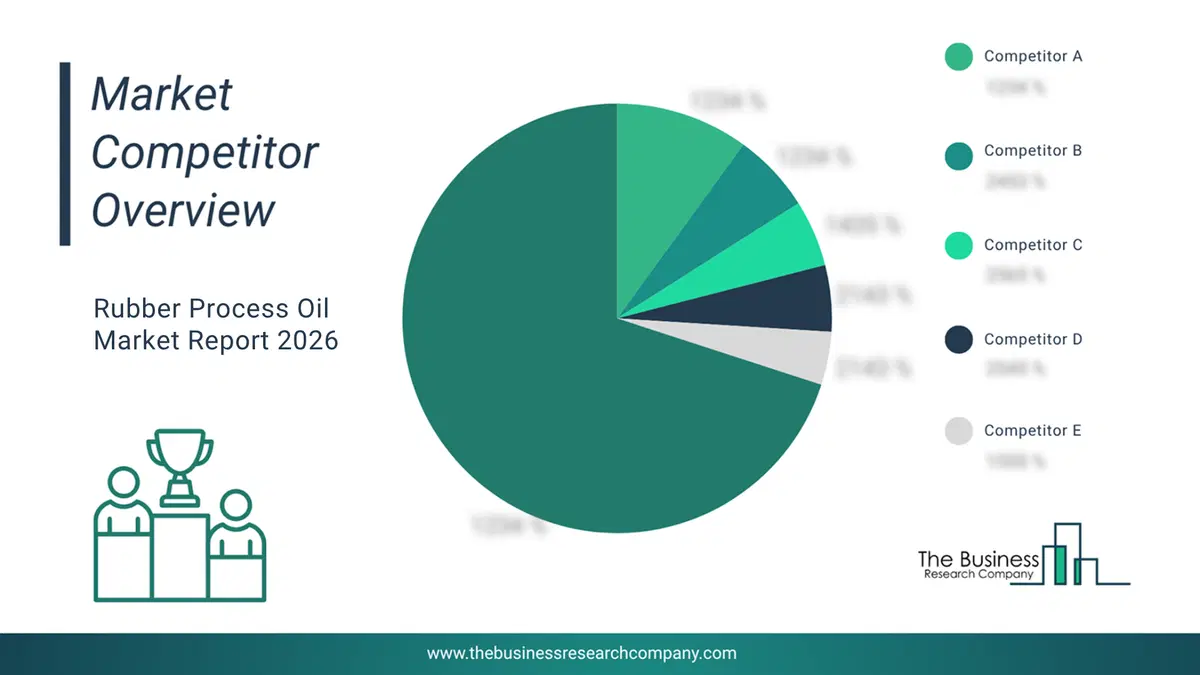
This chart is for illustrative purposes; the full report includes a detailed competitor analysis and comprehensive overview of the top 10 companies in the market.
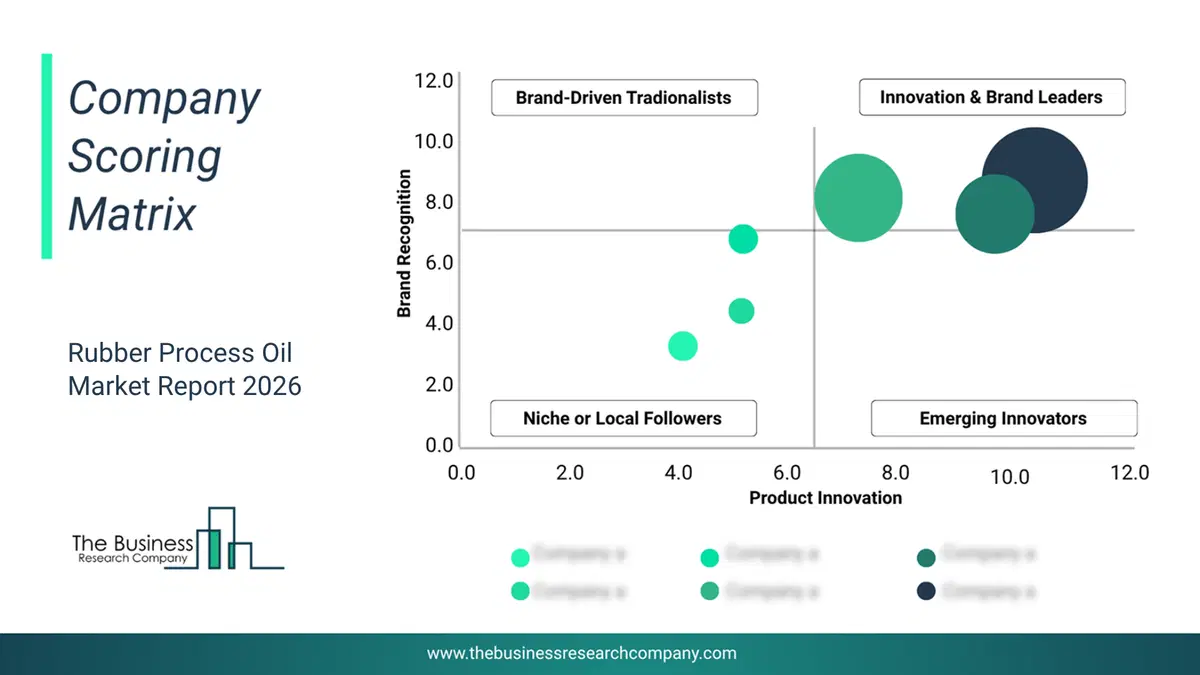
This chart maps companies by product innovation and brand strength, with bubble size indicating relative revenue, helping identify market leaders, challengers, and niche players. This is an illustrative chart; the full report provides a complete and accurate competitive analysis.
What Are Latest Mergers And Acquisitions In The Rubber Process Oil Market?
In March 2023, Saudi Arabian Oil Company (Aramco), a Saudi Arabia–based oil and gas company, acquired Valvoline Global Operations for $2.65 billion. With this acquisition, Aramco aims to expand and vertically integrate its base-oils and lubricants business strengthening its position in the global rubber process oil and lubricants market by combining base-oil production with branded product distribution. Valvoline Global Operations is a US-based company that specializes in providing process oils specifically formulated as polymer softeners for manufacturing tires, technical rubber products, and other polymer-based items.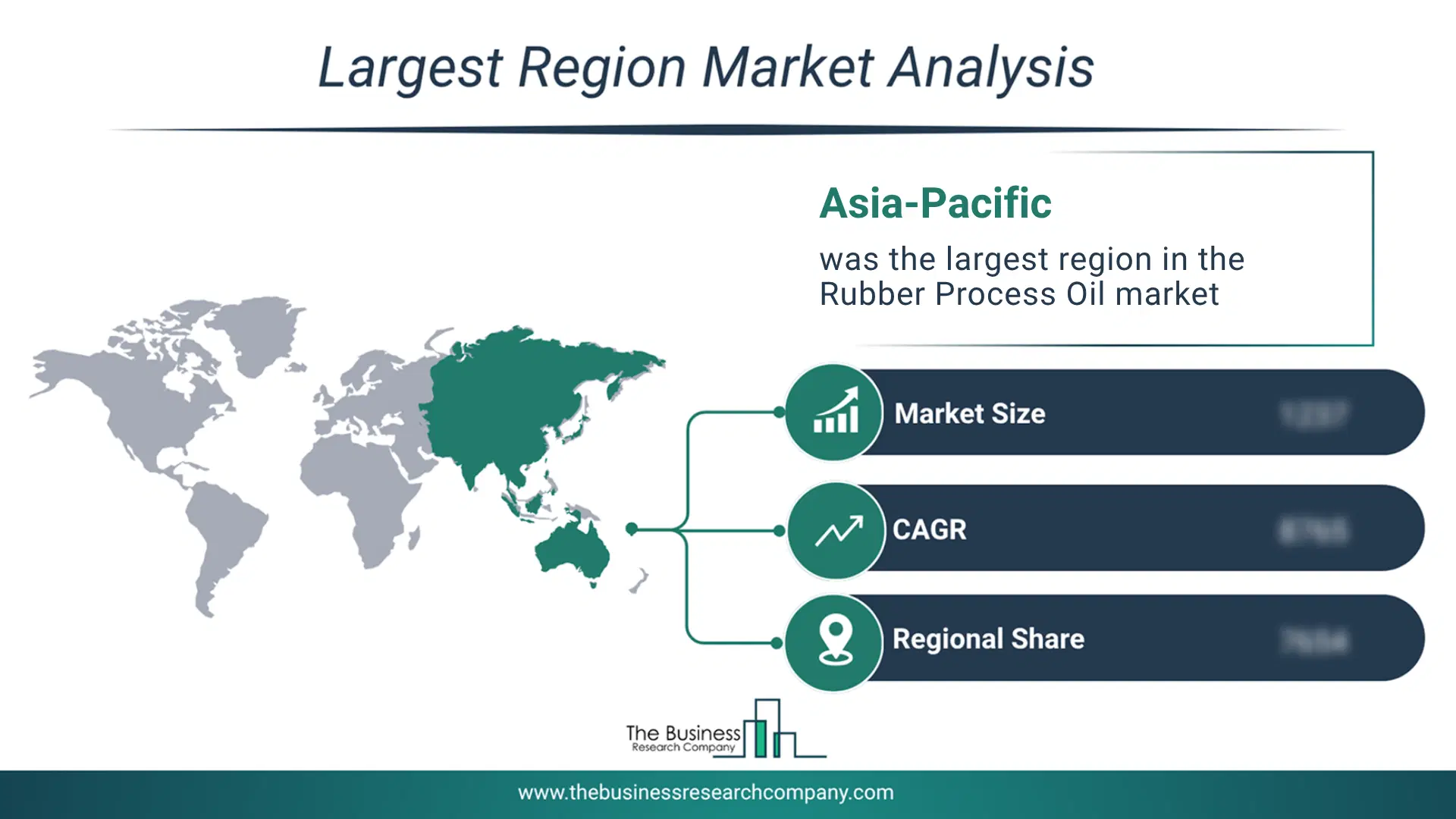
Regional Insights
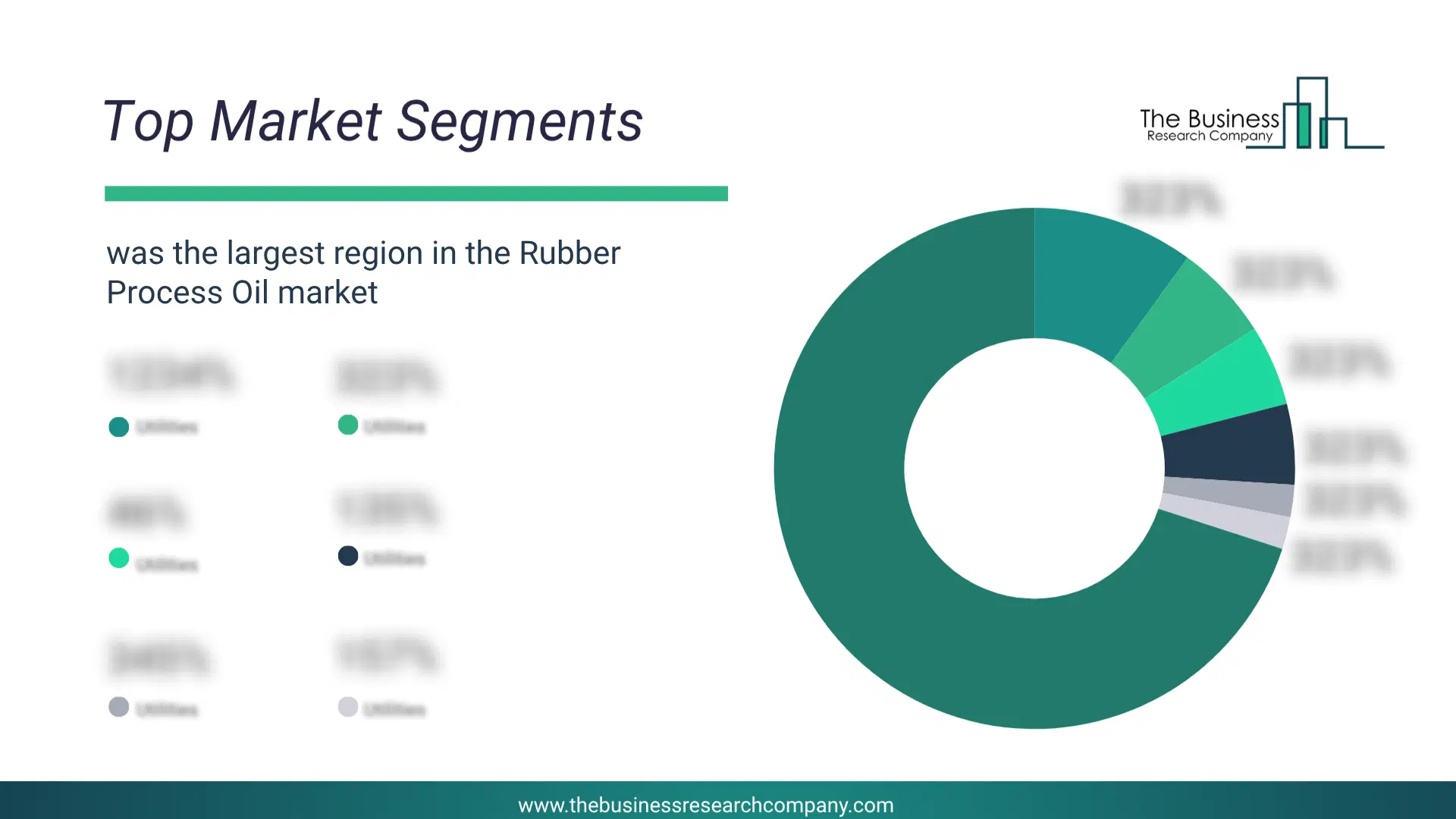
Asia-Pacific was the largest region in the rubber process oil market in 2025 and is expected to be the fastest-growing region in the forecast period. The regions covered in this market report are Asia-Pacific, South East Asia, Western Europe, Eastern Europe, North America, South America, Middle East, Africa The countries covered in this market report are Australia, Brazil, China, France, Germany, India, Indonesia, Japan, Taiwan, Russia, South Korea, UK, USA, Canada, Italy, SpainWhat Defines the Rubber Process Oil Market?
The rubber processing oil market consists of sales of distillate aromatic extract and paraffin oil. Values in this market are ‘factory gate’ values, that is the value of goods sold by the manufacturers or creators of the goods, whether to other entities (including downstream manufacturers, wholesalers, distributors and retailers) or directly to end customers. The value of goods in this market includes related services sold by the creators of the goods.How is Market Value Defined and Measured?
The market value is defined as the revenues that enterprises gain from the sale of goods and/or services within the specified market and geography through sales, grants, or donations in terms of the currency (in USD unless otherwise specified). The revenues for a specified geography are consumption values that are revenues generated by organizations in the specified geography within the market, irrespective of where they are produced. It does not include revenues from resales along the supply chain, either further along the supply chain or as part of other products.
This chart presents market attractiveness based on a quantitative evaluation of growth, competition, strategic alignment, and risk, offering a clear view of opportunity areas for decision-making. This chart is for illustrative purposes; the full report contains the complete analysis.

This chart highlights the Total Addressable Market (TAM) by estimating the maximum revenue opportunity using an assumption-driven approach, supporting strategic planning and opportunity sizing across markets. The chart is illustrative; the full report provides a more comprehensive analysis.
What Key Data and Analysis Are Included in the Rubber Process Oil Market Report 2026?
The rubber process oil market research report is one of a series of new reports from The Business Research Company that provides market statistics, including industry global market size, regional shares, competitors with the market share, detailed market segments, market trends and opportunities, and any further data you may need to thrive in the rubber process oil industry. The market research report delivers a complete perspective of everything you need, with an in-depth analysis of the current and future state of the industry.Rubber Process Oil Market Report Forecast Analysis
| Report Attribute | Details |
|---|---|
| Market Size Value In 2026 | $2.3 billion |
| Revenue Forecast In 2030 | $2.8 billion |
| Growth Rate | CAGR of 5.6% from 2026 to 2030 |
| Base Year For Estimation | 2025 |
| Actual Estimates/Historical Data | 2020-2025 |
| Forecast Period | 2026 - 2030 |
| Market Representation | Revenue in USD Billion and CAGR from 2026 to 2030 |
| Segments Covered | Type, Application, End User |
| Regional Scope | Asia-Pacific, Western Europe, Eastern Europe, North America, South America, Middle East, Africa |
| Country Scope | The countries covered in this market report are Australia, Brazil, China, France, Germany, India, Indonesia, Japan, Taiwan, Russia, South Korea, UK, USA, Canada, Italy, Spain |
| Key Companies Profiled | Exxon Mobil Corporation, Royal Dutch Shell plc, TotalEnergies SE, Chevron Corporation, Eni S.p.A., Repsol S.A., BP plc, Sasol Limited, Reliance Industries Limited, Indian Oil Corporation Limited, Gazprom Neft PJSC, Lukoil PJSC, Petróleo Brasileiro S.A. (Petrobras), CPC Corporation, Taiwan, Nynas AB, Ergon Inc., Calumet Specialty Products Partners, L.P., H&R Group GmbH, ORGKHIM Biochemical Holding, Apar Industries Ltd., Gandhar Oil Refinery (India) Limited, Panama Petrochem Ltd., Behran Oil Company |
| Customization Scope | Request for Customization |
| Pricing And Purchase Options | Explore Purchase Options |