

Ruminant Methane Reduction Market Report 2026
Global Outlook – By Product Type (Feed Additives Or Supplements, Dietary Supplements, Methane Inhibitors, Other Product Types), By Animal Type (Cattle, Sheep, Goats), By Distribution Channel (Direct Sales, Veterinary Clinics, Agricultural Cooperatives, Online Retailers, Specialty Stores) – Market Size, Trends, Strategies, and Forecast to 2030
Ruminant Methane Reduction Market Overview
• Ruminant Methane Reduction market size has reached to $2.84 billion in 2025 • Expected to grow to $4.31 billion in 2030 at a compound annual growth rate (CAGR) of 8.6% • Growth Driver: Rising Environmental Concerns Fuel Growth In Ruminant Methane Reduction Market • Market Trend: Innovative Methane-Reducing Feed Ingredients For Ruminants To Address Environmental Concerns • North America was the largest region in 2025.What Is Covered Under Ruminant Methane Reduction Market?
Ruminant methane reduction refers to strategies and practices aimed at reducing the emission of methane gas produced by ruminant animals, such as cattle, sheep, and goats. These efforts are part of a broader attempt to reduce agriculture's environmental impact, particularly in response to climate change concerns. The main types of products in ruminant methane reduction are feed additives or supplements, dietary supplements, methane inhibitors, and others. Feed additives or supplements are substances added to animal feed to enhance its nutritional value and reduce methane emissions. These products are designed for various animals, including cattle, sheep, and goats, and are distributed through a range of channels such as direct sales, veterinary clinics, agricultural cooperatives, online retailers, and specialty stores.
What Is The Ruminant Methane Reduction Market Size and Share 2026?
The ruminant methane reduction market size has grown strongly in recent years. It will grow from $2.84 billion in 2025 to $3.09 billion in 2026 at a compound annual growth rate (CAGR) of 8.9%. The growth in the historic period can be attributed to increased livestock population, traditional feed enhancement practices, early research on methane inhibition, rising awareness of greenhouse gas emissions, adoption of basic dietary supplements.What Is The Ruminant Methane Reduction Market Growth Forecast?
The ruminant methane reduction market size is expected to see strong growth in the next few years. It will grow to $4.31 billion in 2030 at a compound annual growth rate (CAGR) of 8.6%. The growth in the forecast period can be attributed to growing global climate commitments, rising demand for low-emission livestock products, increasing adoption of seaweed-based additives, expansion of precision feeding technologies, development of plant-derived methane inhibitors. Major trends in the forecast period include adoption of natural methane-reducing feed ingredients, growth in fermentation-targeted additive development, increased use of plant-based inhibitors in livestock diets, rising integration of methane reduction in routine farm management, expansion of specialty retail channels for methane reduction solutions.
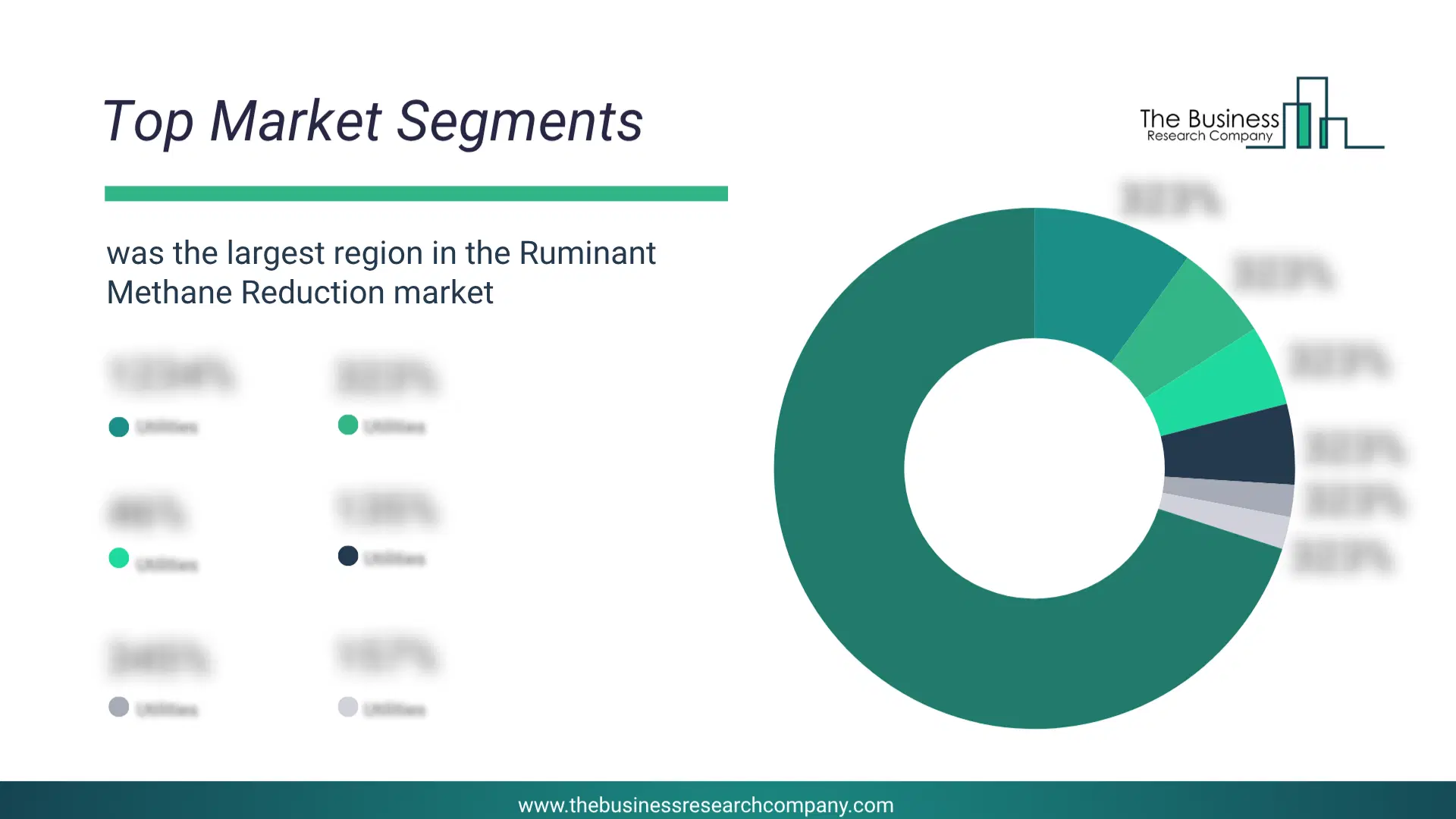
Global Ruminant Methane Reduction Market Segmentation
1) By Product Type: Feed Additives Or Supplements, Dietary Supplements, Methane Inhibitors, Other Product Types 2) By Animal Type: Cattle, Sheep, Goats 3) By Distribution Channel: Direct Sales, Veterinary Clinics, Agricultural Cooperatives, Online Retailers, Specialty Stores Subsegments: 1) By Feed Additives or Supplements: Probiotics, Yeast Culture, Tannins 2) By Dietary Supplements: Essential Oils, Seaweed Extracts, Fiber Supplements 3) By Methane Inhibitors: Chemical Methane Inhibitors, Plant-Based Methane Inhibitors, Enzyme-Based Methane Inhibitors 4) By Other Product Types: Fermentation Inhibitors, Nutritional Enhancers, Innovative Feed FormulationsWhat Is Driver Of The Ruminant Methane Reduction Market?
The increasing environmental concerns are expected to propel the growth of the ruminant methane reduction market going forward. Environmental concerns refer to issues related to the negative impact of human activities and industrial processes on the natural environment. The increasing awareness of climate change and the economic impacts of environmental damage are driving heightened environmental concerns, prompting both public advocacy and regulatory action to address these issues. Ruminant methane reduction addresses environmental concerns by targeting a significant source of greenhouse gas emissions, thereby mitigating climate change impacts and promoting more sustainable agricultural practices. For instance, in March 2024, according to the International Energy Agency (IEA), a France-based autonomous intergovernmental organization, in 2023, global energy-related carbon dioxide (CO2) emissions increased by 1.1%, equivalent to 410 million metric tons (Mt CO2) compared to 321 million metric tons in 2022. reaching a record high of over 37.4 metric tons in 2023, compared to 36.8 billion metric tons in 2022. Therefore, the increasing environmental concerns are driving the growth of the ruminant methane reduction industry.Key Players In The Global Ruminant Methane Reduction Market
Major companies operating in the ruminant methane reduction market are Cargill Incorporated, Yara International, Evonik Industries AG, Land O'Lakes Inc., Koninklijke DSM N.V., Nutreco N.V., Trouw Nutrition International B.V., Elanco Animal Health Incorporated, ForFarmers N.V., Lallemand Animal Nutrition, Phibro Animal Health Corporation, Volac International, Zinpro Corporation, Novus International Inc., AB Vista Limited, Calysta Inc., Agolin SA, Blue Ocean Barns Inc., CH4 Global Inc., FutureFeed Pty Ltd, Mootral SA, Rumin8 Ltd, Symbrosia Inc.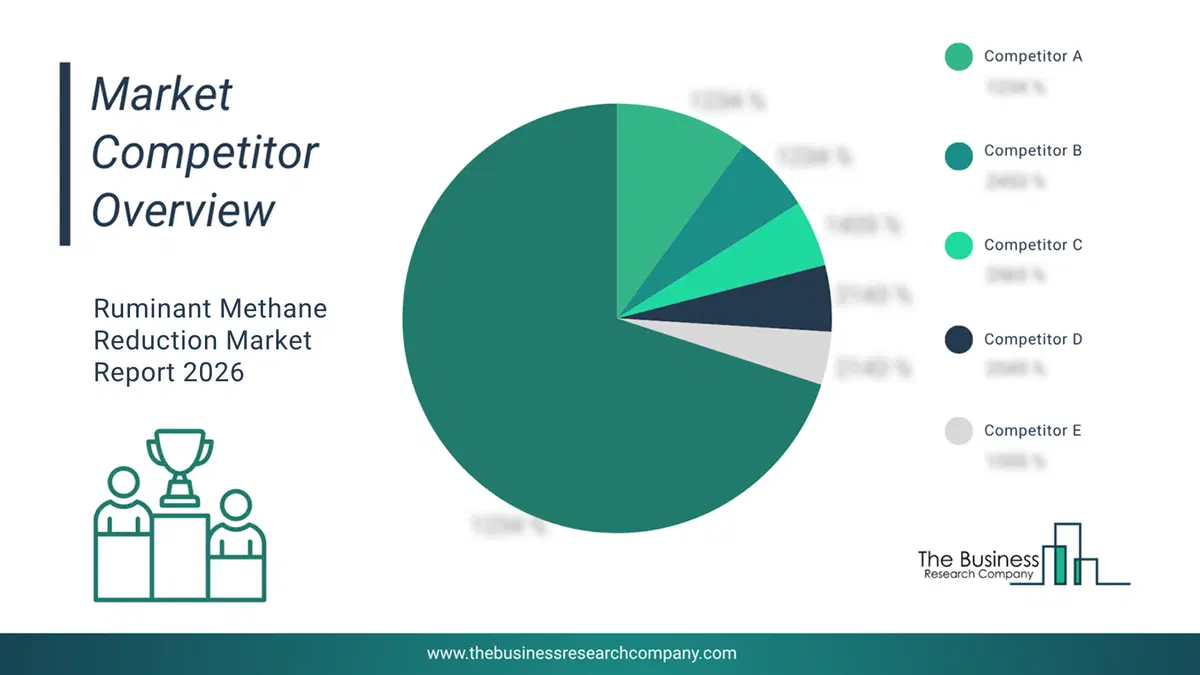
This chart is for illustrative purposes; the full report includes a detailed competitor analysis and comprehensive overview of the top 10 companies in the market.
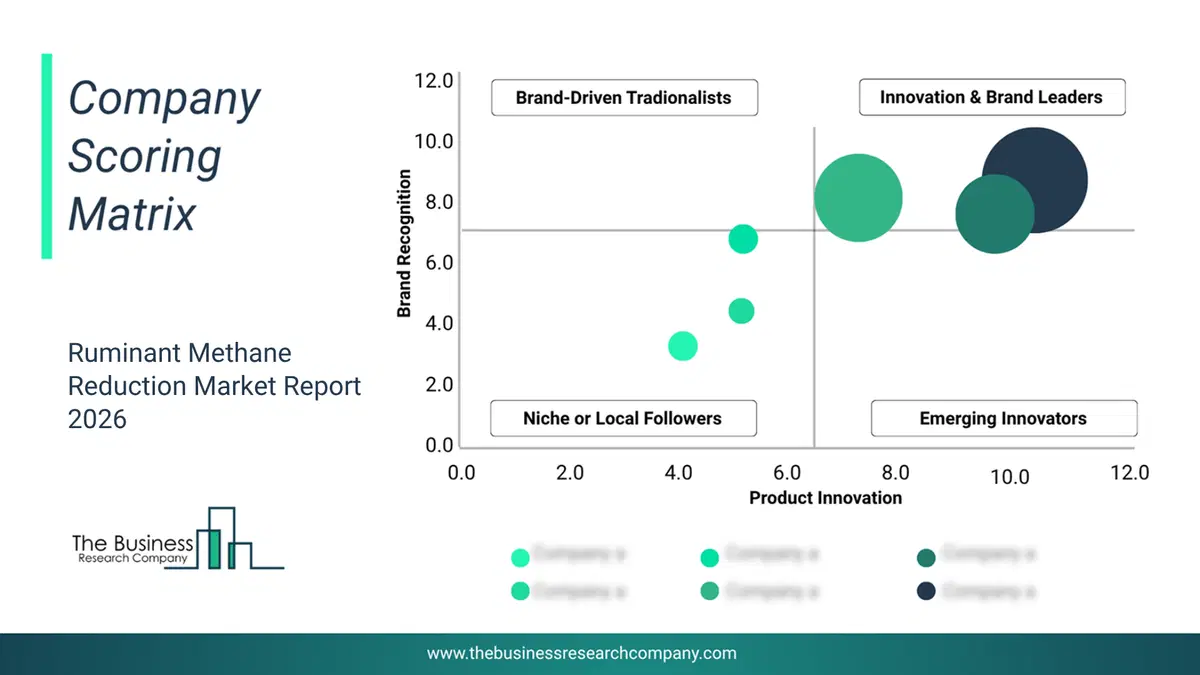
This chart maps companies by product innovation and brand strength, with bubble size indicating relative revenue, helping identify market leaders, challengers, and niche players. This is an illustrative chart; the full report provides a complete and accurate competitive analysis.
Global Ruminant Methane Reduction Market Trends and Insights
Major companies operating in the ruminant methane reduction market are focusing on developing innovative solutions, such as methane-reducing feed ingredients, to enhance the efficiency of their products and address environmental concerns. Methane-reducing feed ingredients refer to specialized additives or supplements incorporated into animal feed to reduce methane emissions from the digestive processes of ruminant animals such as cattle, sheep, and goats. For instance, in May 2024, Elanco Animal Health Incorporated, a US-based pharmaceutical company that produces medicines and vaccinations for pets and livestock, received approval from the U.S. Food and Drug Administration (FDA) for Bovaer, a first-in-class methane-reducing feed ingredient that can lower dairy cattle emissions by an average of 30% per cow per day. This groundbreaking approval marks the first time the FDA has authorized a product specifically designed to reduce enteric methane emissions from dairy cows. Containing the active ingredient 3-NOP, Bovaer works by inhibiting methane production during digestion, potentially reducing emissions by about 1.2 metric tons of CO2e annually per cow.What Are Latest Mergers And Acquisitions In The Ruminant Methane Reduction Market? Alltech Strengthens Methane Reduction Portfolio With Full Acquisition Of Agolin SA
In May 2023, Alltech, a US-based provider of animal nutrition, feed additives, and sustainable agritech solutions, acquired Agolin SA for an undisclosed amount. With this acquisition, Alltech aimed to expand its capabilities in ruminant methane reduction and sustainable livestock nutrition, leveraging Agolin’s scientifically validated essential-oil feed additives that lower enteric methane emissions and improve feed efficiency. Agolin SA is a Switzerland-based developer of plant-based feed additives, including Agolin Ruminant, the first product certified by the Carbon Trust for methane reduction in ruminants.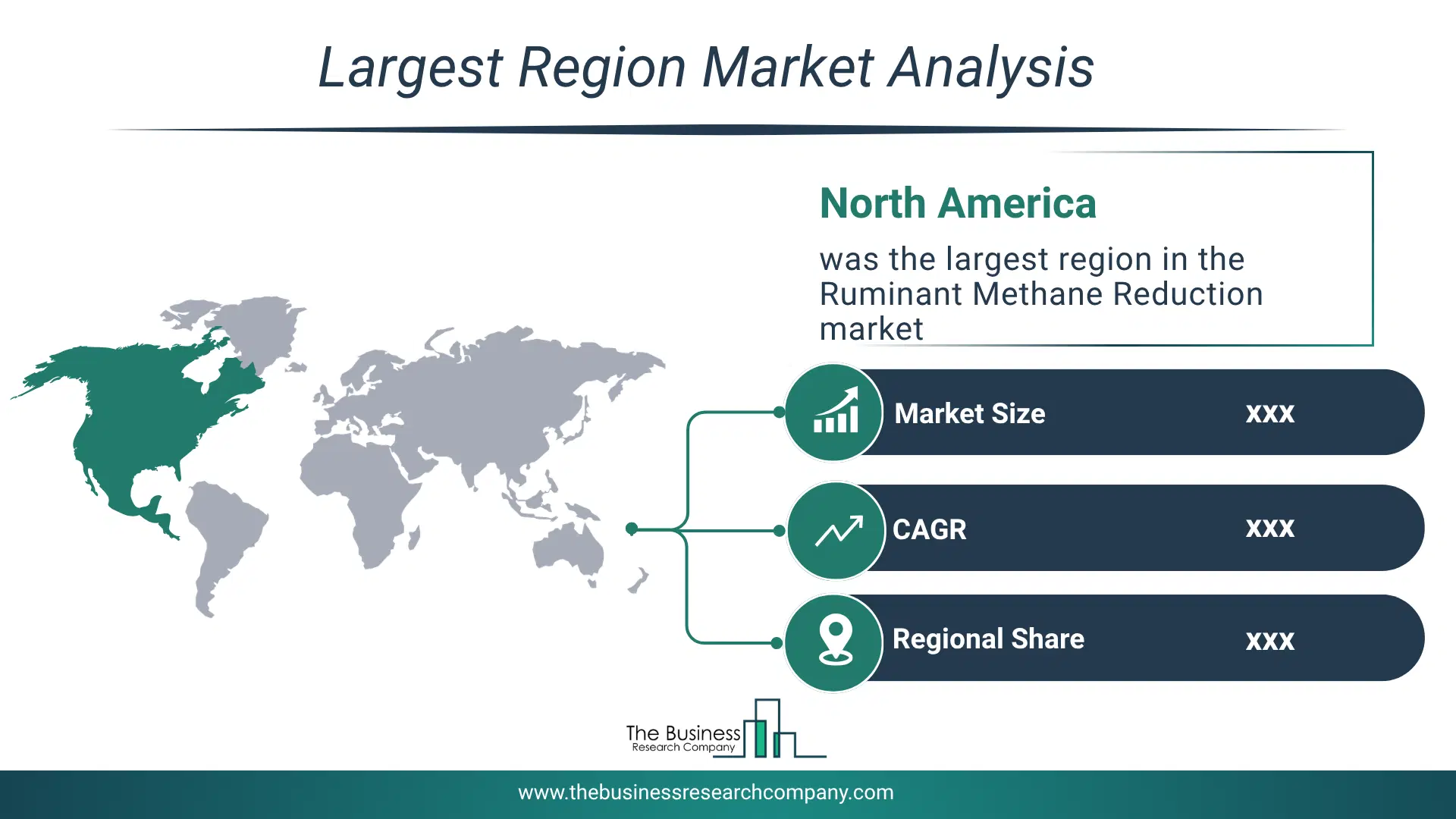
Regional Outlook
North America was the largest region in the ruminant methane reduction market in 2025. The regions covered in this market report are Asia-Pacific, South East Asia, Western Europe, Eastern Europe, North America, South America, Middle East, Africa. The countries covered in this market report are Australia, Brazil, China, France, Germany, India, Indonesia, Japan, Taiwan, Russia, South Korea, UK, USA, Canada, Italy, SpainWhat Defines the Ruminant Methane Reduction Market?
The ruminant methane reduction market consists of sales of feed additives, seaweed supplements, methane inhibitors, high-fat diets and oils, and probiotics and enzymes. Values in this market are ‘factory gate’ values, that is the value of goods sold by the manufacturers or creators of the goods, whether to other entities (including downstream manufacturers, wholesalers, distributors and retailers) or directly to end customers. The value of goods in this market includes related services sold by the creators of the goods.How is Market Value Defined and Measured?
The market value is defined as the revenues that enterprises gain from the sale of goods and/or services within the specified market and geography through sales, grants, or donations in terms of the currency (in USD unless otherwise specified). The revenues for a specified geography are consumption values that are revenues generated by organizations in the specified geography within the market, irrespective of where they are produced. It does not include revenues from resales along the supply chain, either further along the supply chain or as part of other products.
This chart presents market attractiveness based on a quantitative evaluation of growth, competition, strategic alignment, and risk, offering a clear view of opportunity areas for decision-making. This chart is for illustrative purposes; the full report contains the complete analysis.

This chart highlights the Total Addressable Market (TAM) by estimating the maximum revenue opportunity using an assumption-driven approach, supporting strategic planning and opportunity sizing across markets. The chart is illustrative; the full report provides a more comprehensive analysis.
What Key Data and Analysis Are Included in the Ruminant Methane Reduction Market Report 2026?
The ruminant methane reduction market research report is one of a series of new reports from The Business Research Company that provides market statistics, including industry global market size, regional shares, competitors with the market share, detailed market segments, market trends and opportunities, and any further data you may need to thrive in the ruminant methane reduction industry. The market research report delivers a complete perspective of everything you need, with an in-depth analysis of the current and future state of the industry.Ruminant Methane Reduction Market Report Forecast Analysis
| Report Attribute | Details |
|---|---|
| Market Size Value In 2026 | $3.09 billion |
| Revenue Forecast In 2030 | $4.31 billion |
| Growth Rate | CAGR of 8.6% from 2026 to 2030 |
| Base Year For Estimation | 2025 |
| Actual Estimates/Historical Data | 2020-2025 |
| Forecast Period | 2026 - 2030 |
| Market Representation | Revenue in USD Billion and CAGR from 2026 to 2030 |
| Segments Covered | Product Type, Animal Type, Distribution Channel |
| Regional Scope | Asia-Pacific, Western Europe, Eastern Europe, North America, South America, Middle East, Africa |
| Country Scope | The countries covered in the report are Australia, Brazil, China, France, Germany, India, Indonesia, Japan, Taiwan, Russia, South Korea, UK, USA, Canada, Italy, Spain |
| Key Companies Profiled | Cargill Incorporated, Yara International, Evonik Industries AG, Land O'Lakes Inc., Koninklijke DSM N.V., Nutreco N.V., Trouw Nutrition International B.V., Elanco Animal Health Incorporated, ForFarmers N.V., Lallemand Animal Nutrition, Phibro Animal Health Corporation, Volac International, Zinpro Corporation, Novus International Inc., AB Vista Limited, Calysta Inc., Agolin SA, Blue Ocean Barns Inc., CH4 Global Inc., FutureFeed Pty Ltd, Mootral SA, Rumin8 Ltd, Symbrosia Inc. |
| Customization Scope | Request for Customization |
| Pricing And Purchase Options | Explore Purchase Options |