
Saccharin Market Report 2026
Global Outlook – By Product Type (Sodium Saccharin, Insoluble Saccharin, Calcium Saccharin), By Form (Dry, Liquid), By Application (Food And Beverages, Table Top Sweeteners, Personal Care Products, Pharmaceuticals, Other Applications) – Market Size, Trends, Strategies, and Forecast to 2030
Saccharin Market Overview
• Saccharin market size has reached to $1.44 billion in 2025 • Expected to grow to $1.77 billion in 2030 at a compound annual growth rate (CAGR) of 4.2% • Growth Driver: The Surge In Saccharin Market Fueled By Growing Popularity Of Dieting Trends` • Market Trend: Expansion Of Saccharin Production Through Increased Reagent Manufacturing Capacity • Asia-Pacific was the largest region and fastest growing region.What Is Covered Under Saccharin Market?
Saccharin is a white, crystalline molecule with a formula that is not connected to carbohydrates and is hundreds of times sweeter than sucrose. It is employed as a calorie-free sweetener of no nutritional value. The main saccharin products are sodium saccharin, insoluble saccharin, and calcium saccharin. The various forms are dry and liquid. Dry refers to being free of fluid or moisture, devoid of natural or usual wetness or moisture, or otherwise no longer wet. These are used in food and beverages, tabletop sweeteners, personal care products, pharmaceuticals, and others.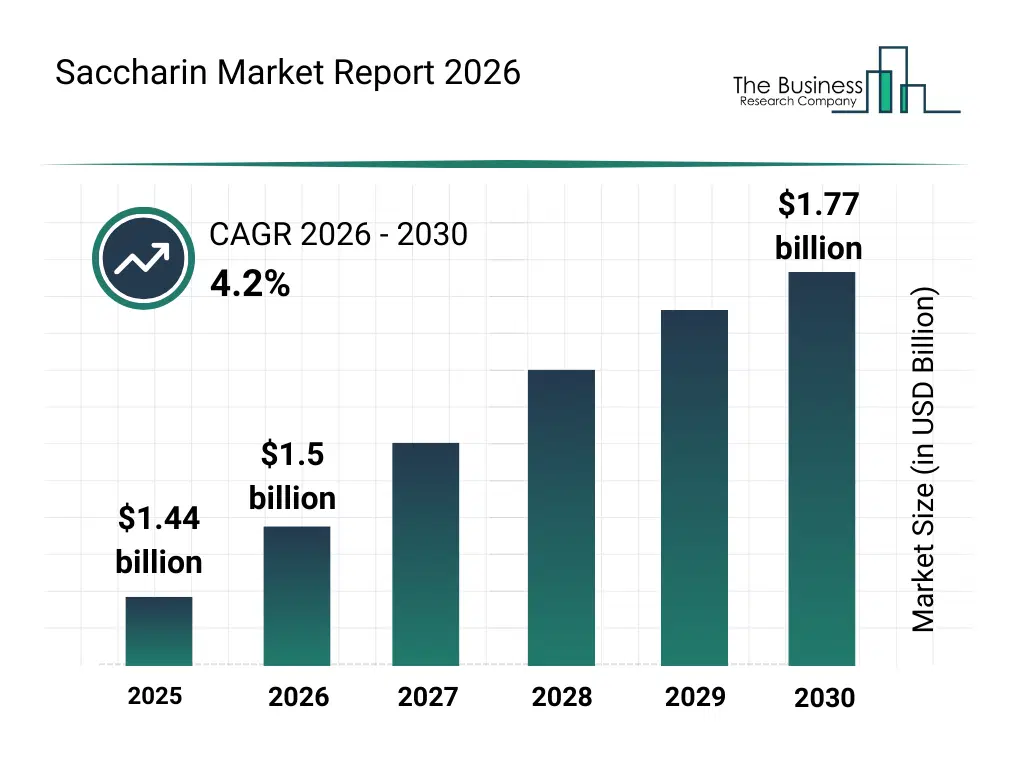
What Is The Saccharin Market Size and Share 2026?
The saccharin market size has grown steadily in recent years. It will grow from $1.44 billion in 2025 to $1.5 billion in 2026 at a compound annual growth rate (CAGR) of 4.0%. The growth in the historic period can be attributed to expansion of processed food manufacturing, rising diabetic population, growth of pharmaceutical excipient usage, increasing demand for sugar substitutes, established synthetic sweetener production capacity.What Is The Saccharin Market Growth Forecast?
The saccharin market size is expected to see steady growth in the next few years. It will grow to $1.77 billion in 2030 at a compound annual growth rate (CAGR) of 4.2%. The growth in the forecast period can be attributed to increasing demand for calorie-free food ingredients, rising consumption of functional beverages, expansion of pharmaceutical manufacturing, growing focus on shelf-stable sweeteners, increasing use in personal care formulations. Major trends in the forecast period include rising demand for low-calorie sweeteners, increasing use in pharmaceutical formulations, growing adoption in processed food products, expansion of high-purity saccharin grades, enhanced focus on cost-effective sweetening solutions.
Global Saccharin Market Segmentation
1) By Product Type: Sodium Saccharin, Insoluble Saccharin, Calcium Saccharin 2) By Form: Dry, Liquid 3) By Application: Food And Beverages, Table Top Sweeteners, Personal Care Products, Pharmaceuticals, Other Applications Subsegments: 1) By Sodium Saccharin: Granulated Sodium Saccharin, Liquid Sodium Saccharin 2) By Insoluble Saccharin: Powdered Insoluble Saccharin, Granular Insoluble Saccharin 3) By Calcium Saccharin: Calcium Saccharin Powder, Calcium Saccharin GranulesWhat Are The Drivers Of The Saccharin Market?
The increasing shift of people towards dieting is expected to propel the growth of the saccharin market in the coming years. Dieting is the process of controlling one's food intake, usually to achieve certain health-related goals, such as weight reduction, weight maintenance, or enhanced general well-being. Saccharin is a common sugar replacement used in several food and beverage items, particularly those marketed to dieters and people wanting to cut back on their sugar intake. For instance, in September 2025, according to the Australian Bureau of Statistics, an Australia-based government agency, in 2023, approximately one in three individuals (33.6%) reported using a dietary supplement. Usage was notably higher among adult females (43.7%) compared to adult males (30.8%). Therefore, the increasing shift of people towards dieting is driving the saccharin industry. The high prevalence of diabetes and hyperglycemia are expected to propel the growth of the saccharin market in the coming future. Diabetes is a progressive metabolic disorder characterized by high levels of blood sugar, or glucose, which causes catastrophic impairment of the cardiovascular system, and arteries, veins, kidneys, and nerves over time. Hyperglycemia is a medical disorder marked by elevated blood glucose levels. The disease is caused mostly by reduced blood insulin levels or impaired insulin activity. Growing rates of diabetes and hyperglycemia will boost the expansion of the saccharin market, as it is frequently advised as a sugar alternative for diabetics. For instance, in June 2023, the Institute for Health Metrics and Evaluation, a US-based public health research institute, reported that over half a billion people globally were living with diabetes. This number is expected to more than double, reaching 1.3 billion people by 2050.Therefore, the high prevalence of diabetes and hyperglycemia are driving the saccharine market.Key Players In The Global Saccharin Market
Major companies operating in the saccharin market are Kaifeng Xinghua Fine Chemical Co., Ltd., Shanghai Fortune Chemical Co., Ltd., Tianjin Changjie Chemical Co., Ltd., Suzhou Fine Chemical Co., Ltd., Blue Jet Healthcare Limited, Vishnu Chemicals Limited, JMC Corporation (Japan), PMC Specialties Group, Inc., Shree Vardhman Chemicals, Nanjing Tongda Chemical Co., Ltd., Avid Organics Private Limited, Wuhan Youji Industries Co., Ltd., Hubei Yixin Chemical Co., Ltd., Anhui Jinhe Industrial Co., Ltd., Foodchem International Corporation, Jinan Xinghua Chemical Co., Ltd., Shandong Yitai Chemical Co., Ltd., Shree Chalthan Chemicals, Kangbao Biochemical Co., Ltd., Tianjin North Food Co., Ltd.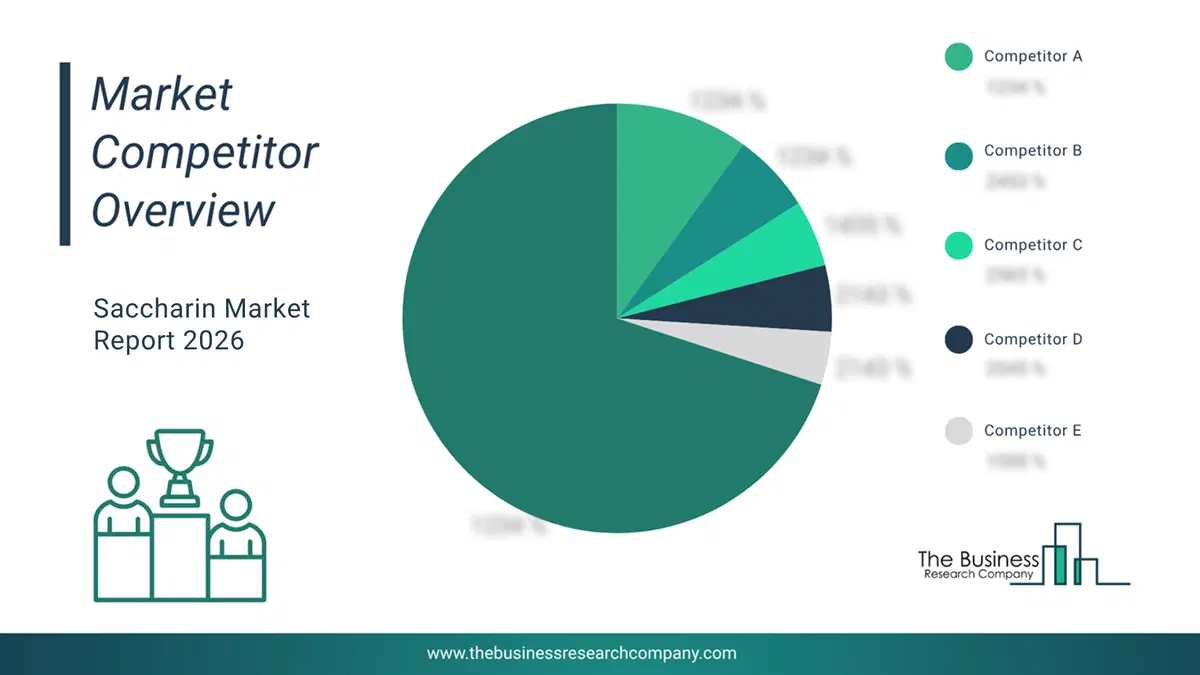
This chart is for illustrative purposes; the full report includes a detailed competitor analysis and comprehensive overview of the top 10 companies in the market.
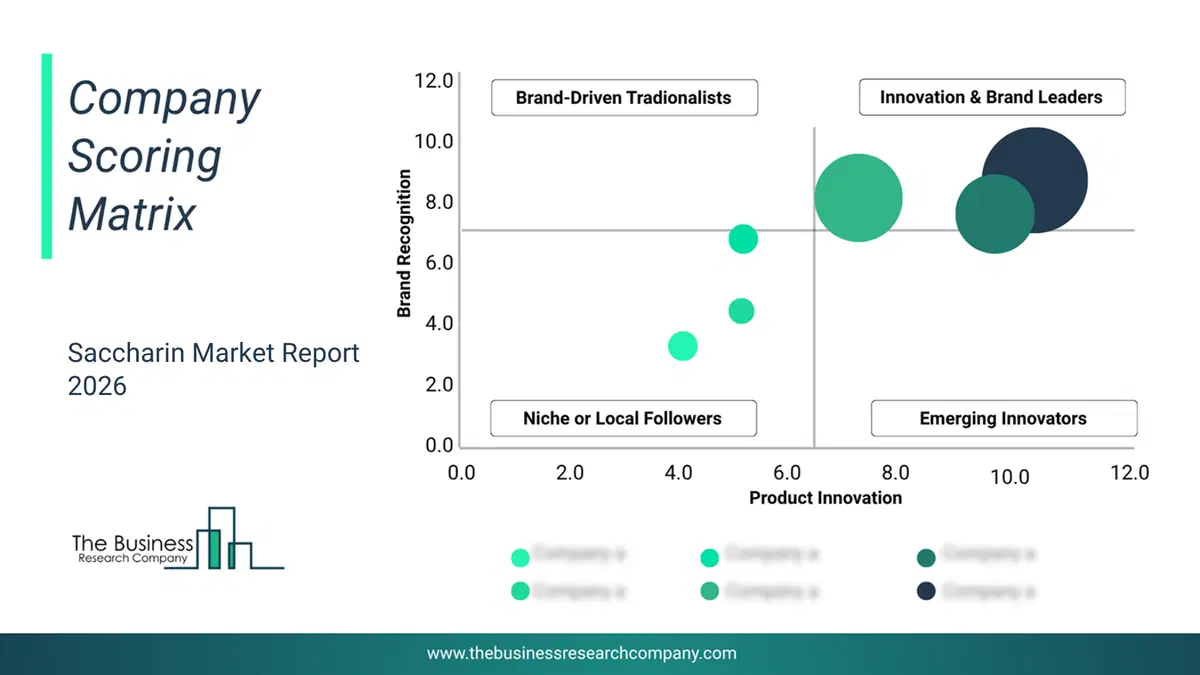
This chart maps companies by product innovation and brand strength, with bubble size indicating relative revenue, helping identify market leaders, challengers, and niche players. This is an illustrative chart; the full report provides a complete and accurate competitive analysis.
Global Saccharin Market Trends and Insights
Major companies operating in the saccharin market are expanding their production capabilities by investing on new facilities, such as reagent manufacturing plant, to meet growing demand and enhance their market presence. Reagent manufacturing refers to the production of chemical substances, or reagents, that cause reactions or detect the presence of other substances in scientific and industrial processes. Reagents are crucial in the synthesis process where saccharin is chemically produced. For instance, in June 2023, Merck KGaA, a Germany-based science and technology company is launched reagent manufacturing capacity at its Nantong facility in China with a $ 76.06 million investment. The expansion will significantly increase annual output by several thousand tons of high-purity reagents, catering to both pharmaceutical and industrial sectors, including food and beverage industries.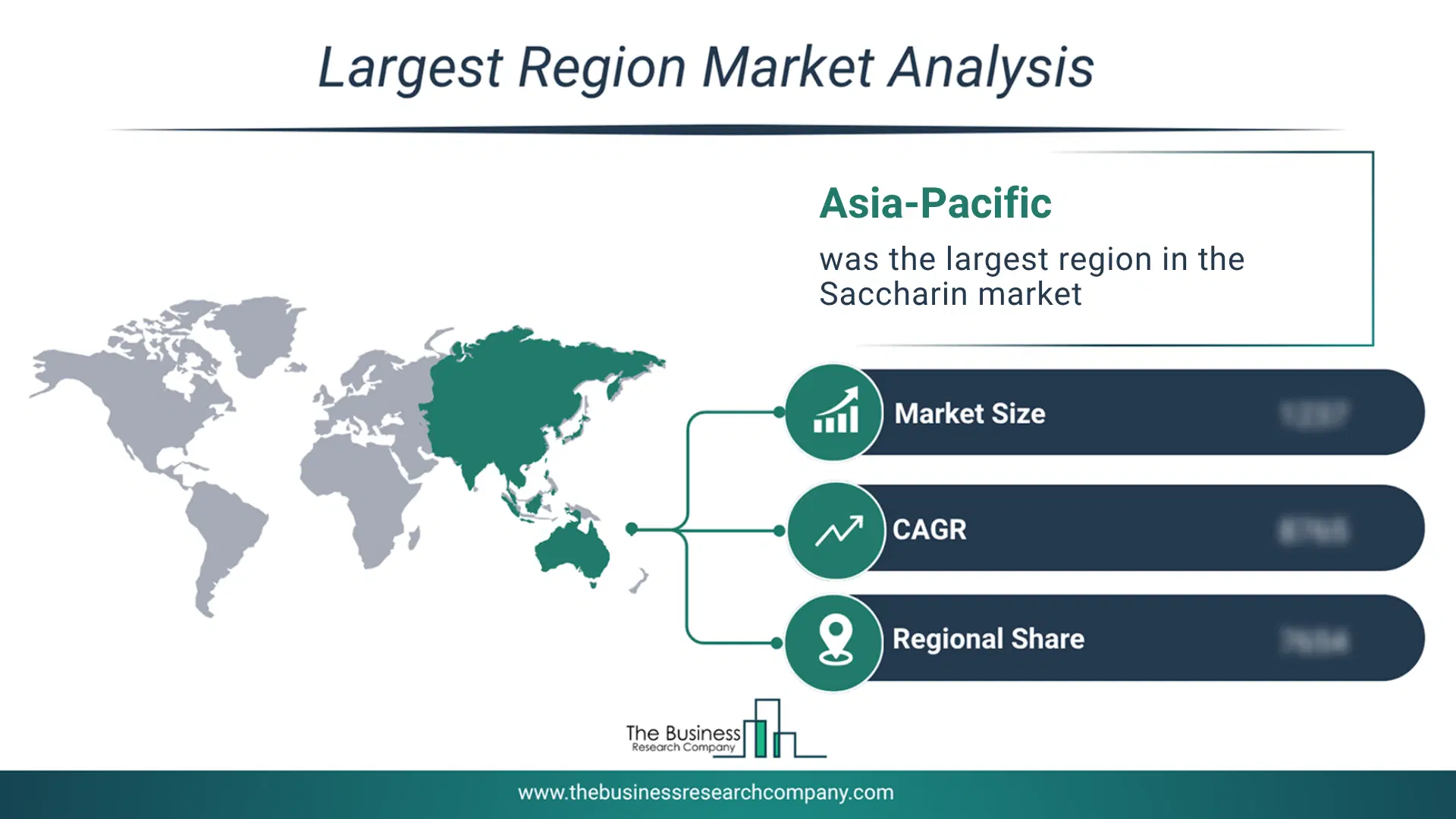
Regional Insights
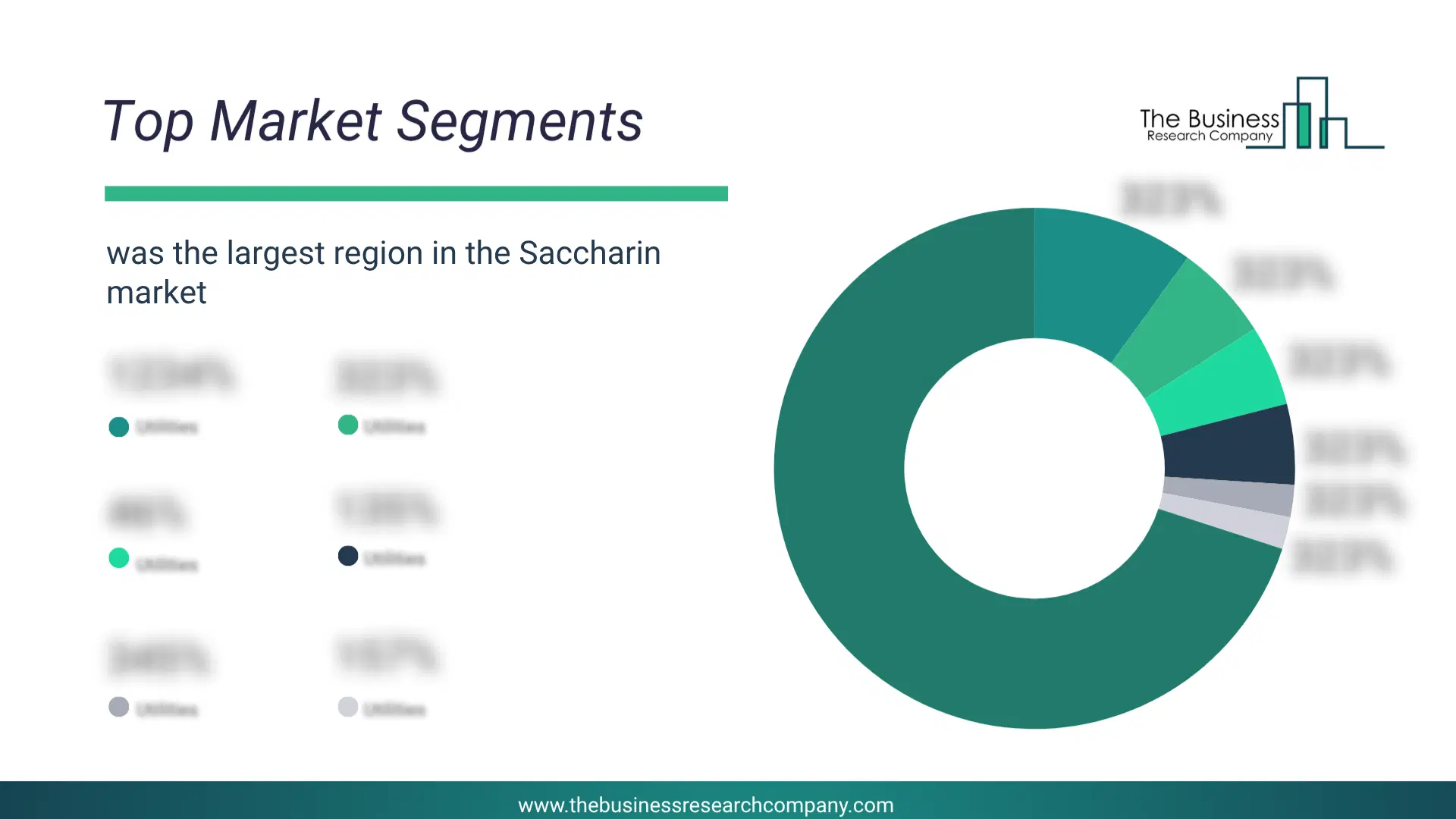
Asia-Pacific was the largest region in the saccharin market in 2025. Europe is expected to be the fastest-growing region in the forecast period. The regions covered in this market report are Asia-Pacific, South East Asia, Western Europe, Eastern Europe, North America, South America, Middle East, Africa The countries covered in this market report are Australia, Brazil, China, France, Germany, India, Indonesia, Japan, Taiwan, Russia, South Korea, UK, USA, Canada, Italy, SpainWhat Defines the Saccharin Market?
The saccharin market consists of sales of acid saccharin and potassium saccharin. Values in this market are ‘factory gate’ values, that is the value of goods sold by the manufacturers or creators of the goods, whether to other entities (including downstream manufacturers, wholesalers, distributors, and retailers) or directly to end customers. The value of goods in this market includes related services sold by the creators of the goods.How is Market Value Defined and Measured?
The market value is defined as the revenues that enterprises gain from the sale of goods and/or services within the specified market and geography through sales, grants, or donations in terms of the currency (in USD unless otherwise specified). The revenues for a specified geography are consumption values that are revenues generated by organizations in the specified geography within the market, irrespective of where they are produced. It does not include revenues from resales along the supply chain, either further along the supply chain or as part of other products.
This chart presents market attractiveness based on a quantitative evaluation of growth, competition, strategic alignment, and risk, offering a clear view of opportunity areas for decision-making. This chart is for illustrative purposes; the full report contains the complete analysis.

This chart highlights the Total Addressable Market (TAM) by estimating the maximum revenue opportunity using an assumption-driven approach, supporting strategic planning and opportunity sizing across markets. The chart is illustrative; the full report provides a more comprehensive analysis.
What Key Data and Analysis Are Included in the Saccharin Market Report 2026?
The saccharin market research report is one of a series of new reports from The Business Research Company that provides market statistics, including industry global market size, regional shares, competitors with the market share, detailed market segments, market trends and opportunities, and any further data you may need to thrive in the saccharin industry. The market research report delivers a complete perspective of everything you need, with an in-depth analysis of the current and future state of the industry.Saccharin Market Report Forecast Analysis
| Report Attribute | Details |
|---|---|
| Market Size Value In 2026 | $1.5 billion |
| Revenue Forecast In 2030 | $1.77 billion |
| Growth Rate | CAGR of 4.0% from 2026 to 2030 |
| Base Year For Estimation | 2025 |
| Actual Estimates/Historical Data | 2020-2025 |
| Forecast Period | 2026 - 2030 |
| Market Representation | Revenue in USD Billion and CAGR from 2026 to 2030 |
| Segments Covered | Product Type, Form, Application |
| Regional Scope | Asia-Pacific, Western Europe, Eastern Europe, North America, South America, Middle East, Africa |
| Country Scope | The countries covered in this market report are Australia, Brazil, China, France, Germany, India, Indonesia, Japan, Taiwan, Russia, South Korea, UK, USA, Canada, Italy, Spain |
| Key Companies Profiled | Kaifeng Xinghua Fine Chemical Co., Ltd., Shanghai Fortune Chemical Co., Ltd., Tianjin Changjie Chemical Co., Ltd., Suzhou Fine Chemical Co., Ltd., Blue Jet Healthcare Limited, Vishnu Chemicals Limited, JMC Corporation (Japan), PMC Specialties Group, Inc., Shree Vardhman Chemicals, Nanjing Tongda Chemical Co., Ltd., Avid Organics Private Limited, Wuhan Youji Industries Co., Ltd., Hubei Yixin Chemical Co., Ltd., Anhui Jinhe Industrial Co., Ltd., Foodchem International Corporation, Jinan Xinghua Chemical Co., Ltd., Shandong Yitai Chemical Co., Ltd., Shree Chalthan Chemicals, Kangbao Biochemical Co., Ltd., Tianjin North Food Co., Ltd. |
| Customization Scope | Request for Customization |
| Pricing And Purchase Options | Explore Purchase Options |