
Software As A Medical Device (SaMD) Market Report 2026
Global Outlook – By Device Type (Wearable Device, PCs And Laptop, Smartphone And Tablets), By Deployment Method (Cloud-Based, On-Premise), By Application (Diagnostic, Clinical Management) – Market Size, Trends, Strategies, and Forecast to 2030
Software As A Medical Device (SaMD) Market Overview
• Software As A Medical Device (SaMD) market size has reached to $38.02 billion in 2025 • Expected to grow to $120.54 billion in 2030 at a compound annual growth rate (CAGR) of 26.4% • Growth Driver: Rising Chronic Disease Burden Fuels The Software As A Medical Device (SAMD) Market • Market Trend: Revolutionizing Sleep Disorder Diagnosis With Cutting-Edge Sleep Disease Analysis Software • North America was the largest region in 2025 and Asia-Pacific is the fastest growing region.What Is Covered Under Software As A Medical Device (SaMD) Market?
Software as a medical device (SaMD) refers to software-designed devices intended to be used for medical purposes without needing a physical medical device. It is a term used to classify software applications or programs that have a medical function and are used in diagnosing, treating, or monitoring medical conditions. The main types of devices in (SaMD) software as medical devices are wearable devices, PCs and laptops, and smartphones and tablets. Wearable devices refer to a piece of electronic equipment used within the human body that communicates with other equipment to send or gather data. It includes cloud-based and on-premise deployments. These are used for several applications, including diagnostic and clinical management.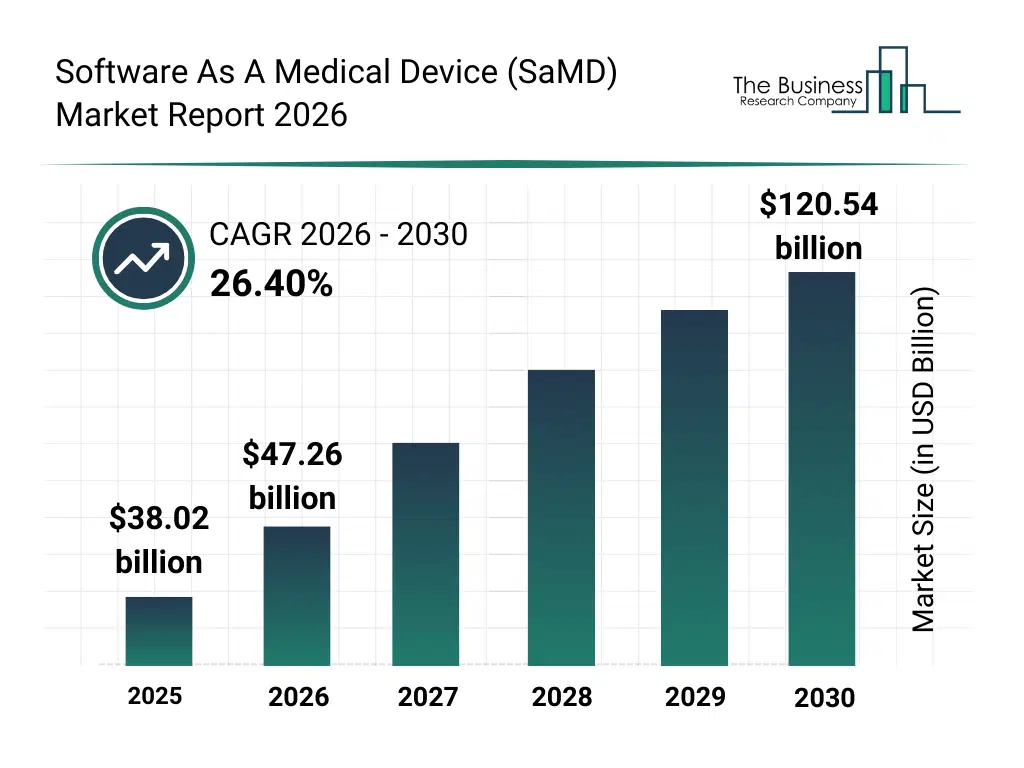
What Is The Software As A Medical Device (SaMD) Market Size and Share 2026?
The software as a medical device (samd) market size has grown exponentially in recent years. It will grow from $38.02 billion in 2025 to $47.26 billion in 2026 at a compound annual growth rate (CAGR) of 24.3%. The growth in the historic period can be attributed to telemedicine adoption, smartphone penetration, digital health funding, regulatory clarity, demand for remote care.What Is The Software As A Medical Device (SaMD) Market Growth Forecast?
The software as a medical device (samd) market size is expected to see exponential growth in the next few years. It will grow to $120.54 billion in 2030 at a compound annual growth rate (CAGR) of 26.4%. The growth in the forecast period can be attributed to virtual care expansion, software driven diagnostics, cloud healthcare platforms, outcome based reimbursement, hospital software modernization. Major trends in the forecast period include expansion of clinical decision support software, growth of remote diagnostic applications, increased regulatory validation of medical software, subscription based samd business models, integration with electronic health records.
Global Software As A Medical Device (SaMD) Market Segmentation
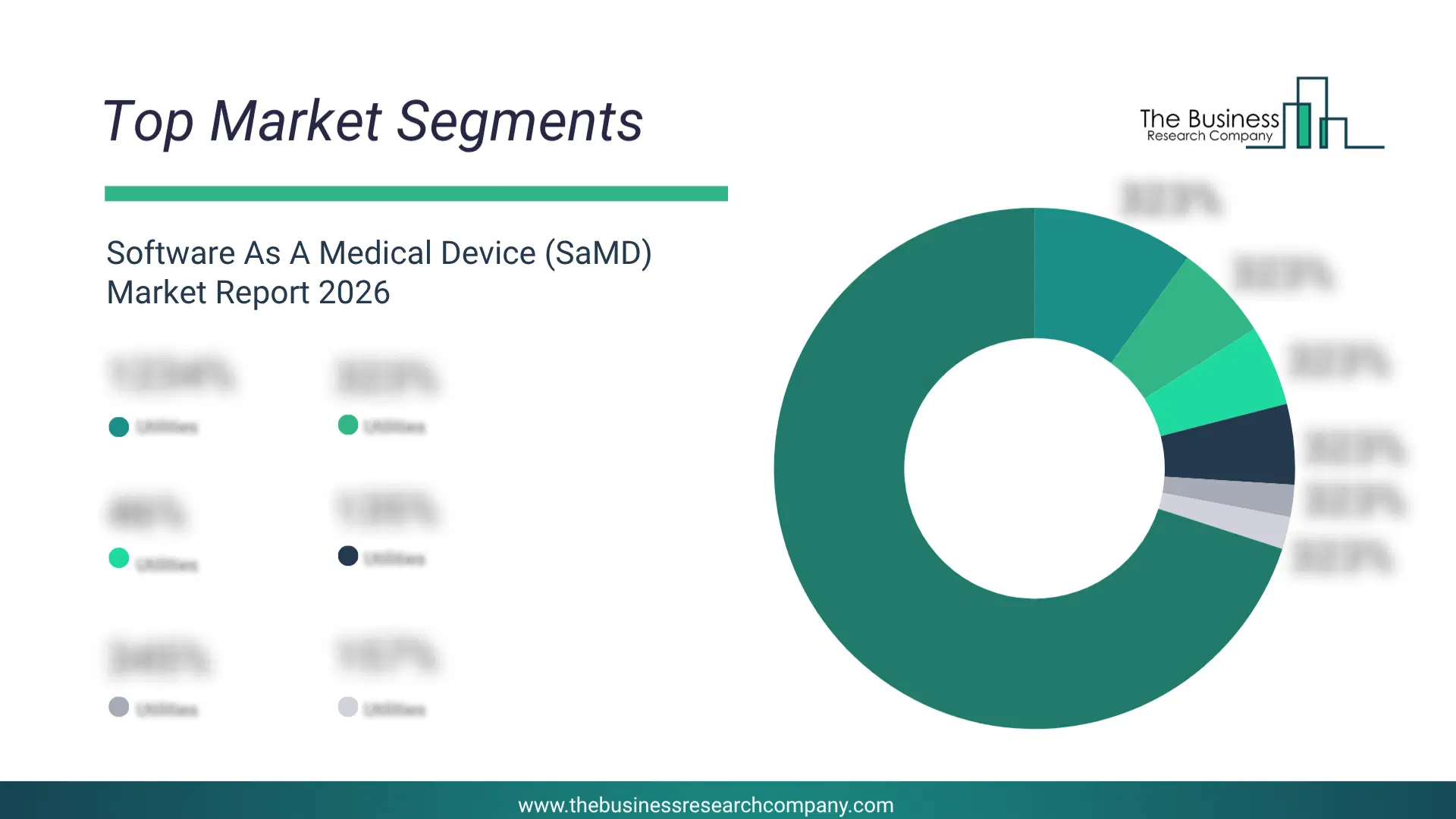
1) By Device Type: Wearable Device, PCs And Laptop, Smartphone And Tablets 2) By Deployment Method: Cloud-Based, On-Premise 3) By Application: Diagnostic, Clinical Management Subsegments: 1) By Wearable Devices: Smartwatches With Health Monitoring Functions, Fitness Trackers, Wearable ECG And Blood Pressure Monitors 2) By PCs And Laptops: Medical Diagnostic Software, Clinical Decision Support Software, Telemedicine Platforms 3) By Smartphone And Tablets: Mobile Health (mHealth) Apps, Remote Patient Monitoring Software, Diagnostic Imaging AppsWhat Is The Driver Of The Software As A Medical Device (SaMD) Market?
The increasing prevalence of chronic diseases is expected to propel the growth of the software as a medical device (SaMD) market going forward. Chronic diseases are long-lasting health conditions that usually progress slowly over time, such as diabetes, heart disease, and arthritis, and often require ongoing medical attention and lifestyle management to control symptoms and prevent complications. Chronic diseases are increasing largely due to unhealthy lifestyles, including poor diet, physical inactivity, and smoking, which raise the risk of conditions such as diabetes, heart disease, and obesity. Software as a medical device (SaMD) aids in chronic disease management by enabling continuous monitoring of patient health metrics, allowing for early detection of complications. It improves treatment outcomes by providing personalized insights and supporting remote care, reducing the need for frequent hospital visits. For instance, in June 2024, according to the National Health Service, a UK-based government department, 3,615,330 individuals registered with a general practitioner (GP) were diagnosed with non-diabetic hyperglycemia or pre-diabetes (a condition with elevated blood sugar levels, not high enough to be classified as diabetes) in 2023, marking an 18% increase from 3,065,825 cases in 2022. Therefore, the increasing prevalence of chronic diseases is driving the growth of the software as a medical device (SaMD) industry.Key Players In The Global Software As A Medical Device (SaMD) Market
Major companies operating in the software as a medical device (samd) market are Apple Inc., Abbott Laboratories, Siemens Healthcare GmbH, GE HealthCare Technologies Inc., Roche Diagnostics, Cerner Corporation, Philips Medical Systems Ltd., Dexcom Inc., Carl Zeiss Meditec AG, Nihon Kohden Corporation, Viz.ai Inc., S3 Connected Health, Arterys Inc., BrightInsight Inc., Agfa HealthCare Corp., iSchemaView Inc., VitalConnect Inc., Volpara Health Technologies, Greenfinch Technology Ltd., MaxQ AI Ltd., IDx Technologies Inc.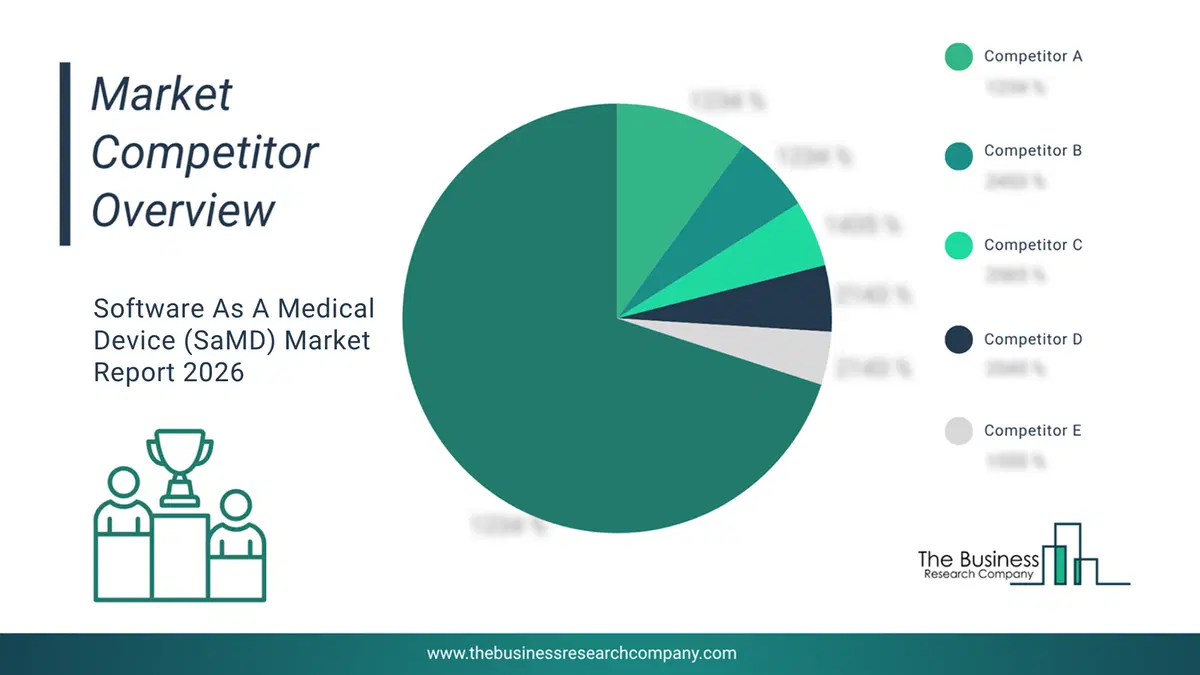
This chart is for illustrative purposes; the full report includes a detailed competitor analysis and comprehensive overview of the top 10 companies in the market.
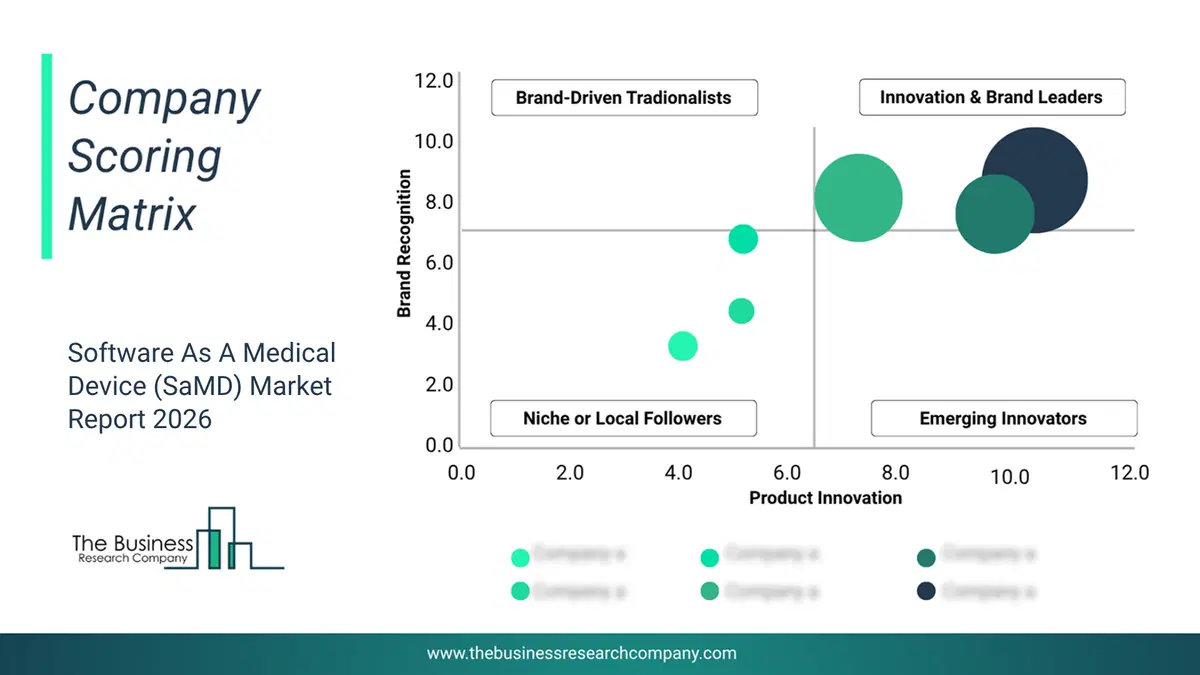
This chart maps companies by product innovation and brand strength, with bubble size indicating relative revenue, helping identify market leaders, challengers, and niche players. This is an illustrative chart; the full report provides a complete and accurate competitive analysis.
Global Software As A Medical Device (SaMD) Market Trends and Insights
Major companies operating in the software as a medical device (SaMD) market are increasing their focus on introducing advanced software, such as SOMNUM, to gain a competitive edge in the market. SOMNUM is a sleep disease analysis software that integrates the latest AI research trends with diagnostic algorithms based on multi-channel sleep biosignal data rather than video images. For instance, in September 2023, HoneyNaps Co. Ltd., a South Korea-based software company, received approval from the United States Food and Drug Administration (USFDA) for SOMNUM software. It uses deep learning-based AI to perform real-time analysis of various sleep biosignals, including electroencephalograms, electrooculograms, electromyograms, electrocardiograms, respiratory airflow and effort, and oxygen saturation. The software is designed to provide more accurate and sophisticated readings than conventional methods, and it can shorten the analysis of patient sleep data to under five minutes.What Are Latest Mergers And Acquisitions In The Software As A Medical Device (SaMD) Market?
In October 2024, GE HealthCare Technologies Inc., a US-based medical technology company, acquired the clinical AI business from Intelligent Ultrasound Group plc for $53 million. With this acquisition, GE HealthCare expanded its portfolio of AI-powered imaging solutions, enhancing its capabilities in real-time ultrasound analysis and supporting advanced clinical decision-making for improved patient outcomes. Intelligent Ultrasound Group plc, a UK-based medical technology company specializing in AI-powered ultrasound software-as-a-medical-device.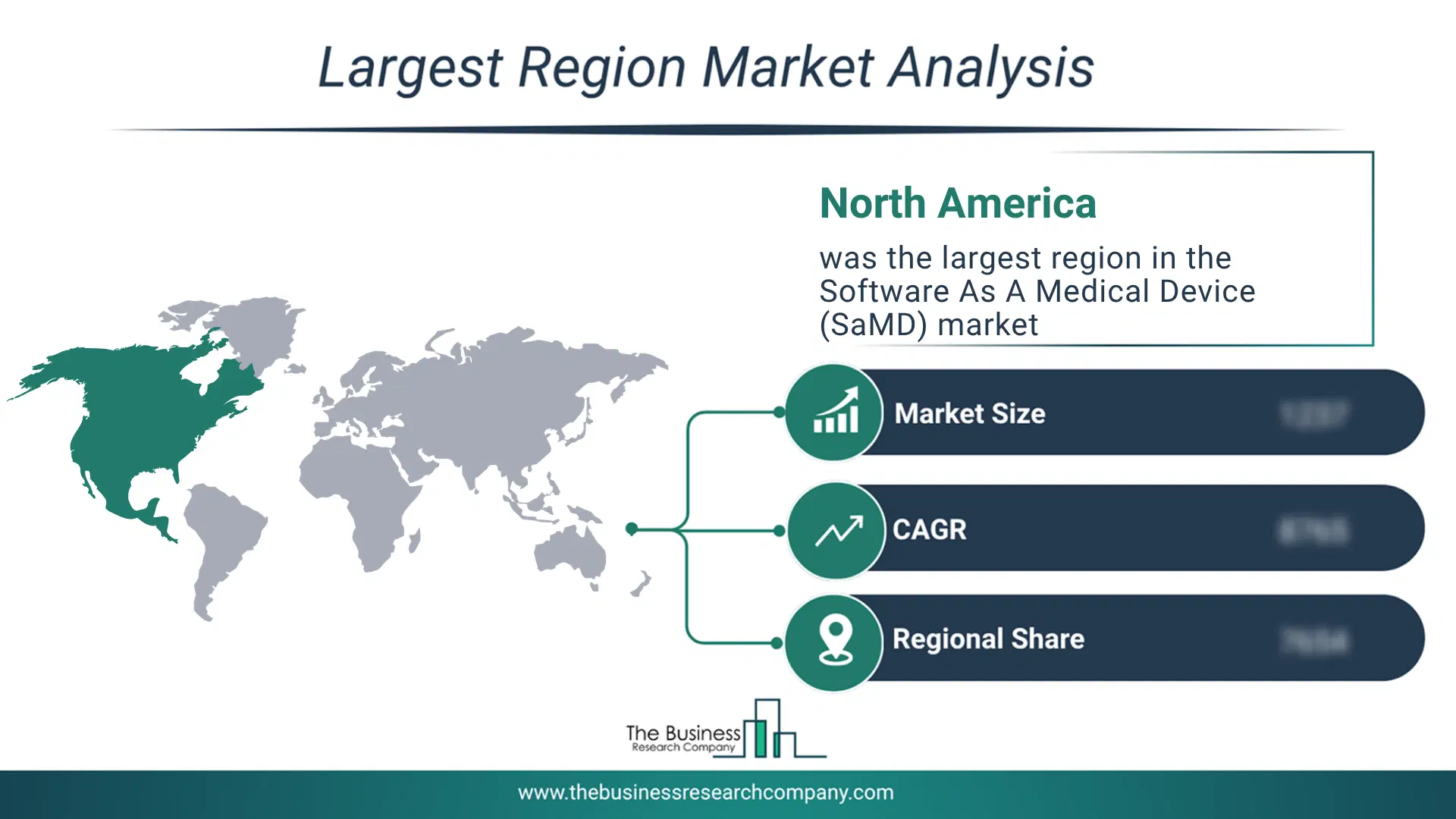
Regional Outlook
North America was the largest region in the software as a medical device (SaMD) market in 2025. Asia-Pacific is expected to be the fastest-growing region in the forecast period. The regions covered in this market report are Asia-Pacific, South East Asia, Western Europe, Eastern Europe, North America, South America, Middle East, Africa. The countries covered in this market report are Australia, Brazil, China, France, Germany, India, Indonesia, Japan, Taiwan, Russia, South Korea, UK, USA, Canada, Italy, SpainWhat Defines the Software As A Medical Device (SaMD) Market?
The software as a medical device (SaMD) market consists of revenues earned by entities by providing diagnostic assistance, treatment planning and guidance, monitoring and remote patient management services. The market value includes the value of related goods sold by the service provider or included within the service offering. The SaMD (software as a medical device) market also includes sales of clinical decision support systems, digital diagnostics and screening tools, personal health and wellness apps, radiology imaging software, and diabetic management apps, which are used in providing SaMD (software as a medical device) services. Values in this market are ‘factory gate’ values, that is, the value of goods sold by the manufacturers or creators of the goods, whether to other entities (including downstream manufacturers, wholesalers, distributors, and retailers) or directly to end customers. The value of goods in this market includes related services sold by the creators of the goods.How is Market Value Defined and Measured?
The market value is defined as the revenues that enterprises gain from the sale of goods and/or services within the specified market and geography through sales, grants, or donations in terms of the currency (in USD unless otherwise specified). The revenues for a specified geography are consumption values that are revenues generated by organizations in the specified geography within the market, irrespective of where they are produced. It does not include revenues from resales along the supply chain, either further along the supply chain or as part of other products.
This chart presents market attractiveness based on a quantitative evaluation of growth, competition, strategic alignment, and risk, offering a clear view of opportunity areas for decision-making. This chart is for illustrative purposes; the full report contains the complete analysis.

This chart highlights the Total Addressable Market (TAM) by estimating the maximum revenue opportunity using an assumption-driven approach, supporting strategic planning and opportunity sizing across markets. The chart is illustrative; the full report provides a more comprehensive analysis.
What Key Data and Analysis Are Included in the Software As A Medical Device (SaMD) Market Report 2026?
The software as a medical device (samd) market research report is one of a series of new reports from The Business Research Company that provides market statistics, including industry global market size, regional shares, competitors with the market share, detailed market segments, market trends and opportunities, and any further data you may need to thrive in the software as a medical device (samd) industry. The market research report delivers a complete perspective of everything you need, with an in-depth analysis of the current and future state of the industry.Software As A Medical Device (SaMD) Market Report Forecast Analysis
| Report Attribute | Details |
|---|---|
| Market Size Value In 2026 | $47.26 billion |
| Revenue Forecast In 2030 | $120.54 billion |
| Growth Rate | CAGR of 26.4% from 2026 to 2030 |
| Base Year For Estimation | 2025 |
| Actual Estimates/Historical Data | 2020-2025 |
| Forecast Period | 2026 - 2030 |
| Market Representation | Revenue in USD Billion and CAGR from 2026 to 2030 |
| Segments Covered | Device Type, Deployment Method, Application |
| Regional Scope | Asia-Pacific, Western Europe, Eastern Europe, North America, South America, Middle East, Africa |
| Country Scope | The countries covered in the report are Australia, Brazil, China, France, Germany, India, Indonesia, Japan, Taiwan, Russia, South Korea, UK, USA, Canada, Italy, Spain. |
| Key Companies Profiled | Apple Inc., Abbott Laboratories, Siemens Healthcare GmbH, GE HealthCare Technologies Inc., Roche Diagnostics, Cerner Corporation, Philips Medical Systems Ltd., Dexcom Inc., Carl Zeiss Meditec AG, Nihon Kohden Corporation, Viz.ai Inc., S3 Connected Health, Arterys Inc., BrightInsight Inc., Agfa HealthCare Corp., iSchemaView Inc., VitalConnect Inc., Volpara Health Technologies, Greenfinch Technology Ltd., MaxQ AI Ltd., IDx Technologies Inc. |
| Customization Scope | Request for Customization |
| Pricing And Purchase Options | Explore Purchase Options |