
Sample Processing System Market Report 2026
Global Outlook – By Product Type (Automated Sample Processing Systems, Semi-Automated Sample Processing Systems, Manual Sample Processing Systems), By Application (Genomics, Proteomics, Cell Culture, Diagnostics, Other Applications), By End-User (Pharmaceutical and Biotechnology Companies, Hospitals And Diagnostic Laboratories, Academic And Research Institutes, Contract Research Organizations (CROs), Food And Beverage Industry, Forensic Laboratories) - Market Size, Trends, And Global Forecast 2026-2030
Sample Processing System Market Overview
• Sample Processing System market size has reached to $8.49 billion in 2025 • Expected to grow to $12.55 billion in 2030 at a compound annual growth rate (CAGR) of 8.2% • Growth Driver: Surge In Rise In Pharmaceutical Research And Drug Development Activities Driving The Market Growth Due To Increasing Investment And Demand For Innovative Therapies • Market Trend: Qiagen Enhances Lab Automation With QIAsymphony Connect For High-Throughput Sample Preparation • North America was the largest region in 2025 and Asia-Pacific is the fastest growing region.Market Gains By 2030 – Top Opportunities By Segment
Market Gain identifies the most promising market opportunities by highlighting the segments or products expected to generate the highest incremental revenue growth over the next five years.
What Is Covered Under Sample Processing System Market?
A sample processing system is a setup designed to handle and analyze physical or digital samples efficiently. It automates the preparation, sorting, and measurement of samples to ensure accuracy and consistency in results. The system helps streamline workflows, reduce errors, and improve the speed of sample analysis. The main types of products in the sample processing system market are automated sample processing systems, semi-automated sample processing systems, and manual sample processing systems. Automated sample processing systems refer to laboratory equipment and technologies designed to handle, process, and analyze biological or chemical samples with minimal human intervention. The various applications include genomics, proteomics, cell culture, diagnostics, and others. The different end-users encompass pharmaceutical and biotechnology companies, hospitals and diagnostic laboratories, academic and research institutes, contract research organizations (CROs), food and beverage industry, and forensic laboratories.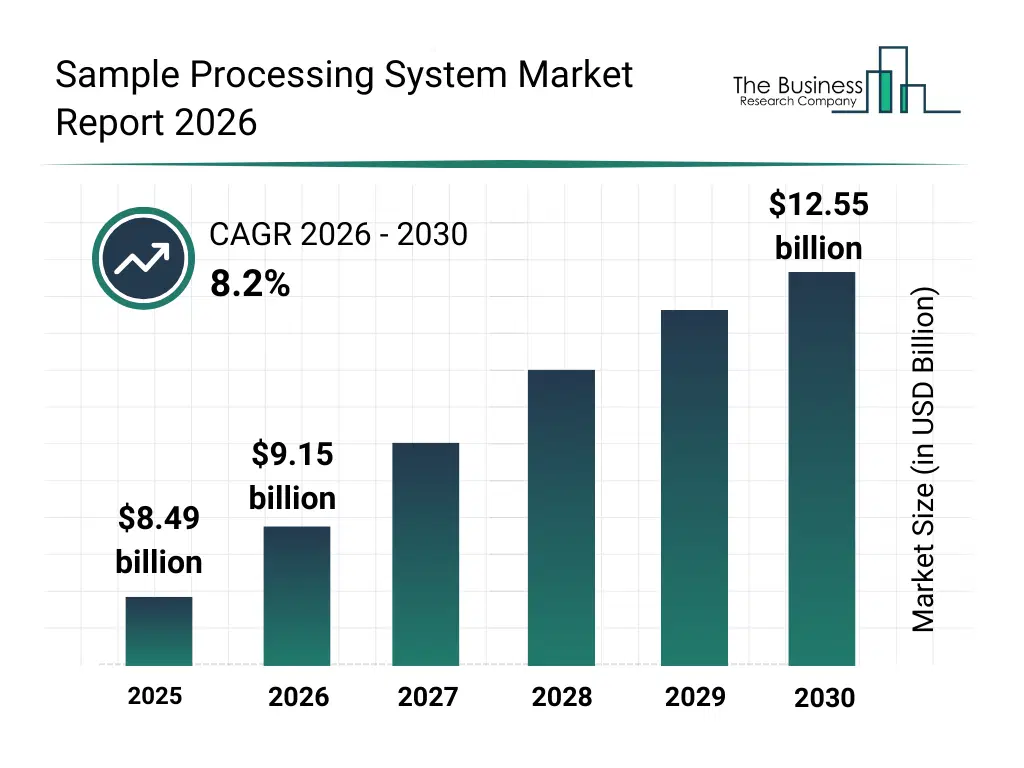
What Is The Sample Processing System Market Size and Share 2026?
The sample processing system market size has grown strongly in recent years. It will grow from $8.49 billion in 2025 to $9.15 billion in 2026 at a compound annual growth rate (CAGR) of 7.9%. The growth in the historic period can be attributed to expansion of pharmaceutical research activities, growth of clinical diagnostics testing, rising adoption of laboratory automation, increasing demand for consistent analytical results, availability of modular laboratory systems.What Is The Sample Processing System Market Growth Forecast?
The sample processing system market size is expected to see strong growth in the next few years. It will grow to $12.55 billion in 2030 at a compound annual growth rate (CAGR) of 8.2%. The growth in the forecast period can be attributed to increasing investments in precision medicine research, rising demand for scalable laboratory automation, expansion of genomics and proteomics studies, growing integration of ai-driven laboratory workflows, increasing focus on operational efficiency in labs. Major trends in the forecast period include increasing adoption of automated sample processing platforms, rising demand for high-throughput laboratory systems, growing integration of robotics in sample handling, expansion of data-integrated processing workflows, enhanced focus on accuracy and reproducibility.
Global Sample Processing System Market Segmentation
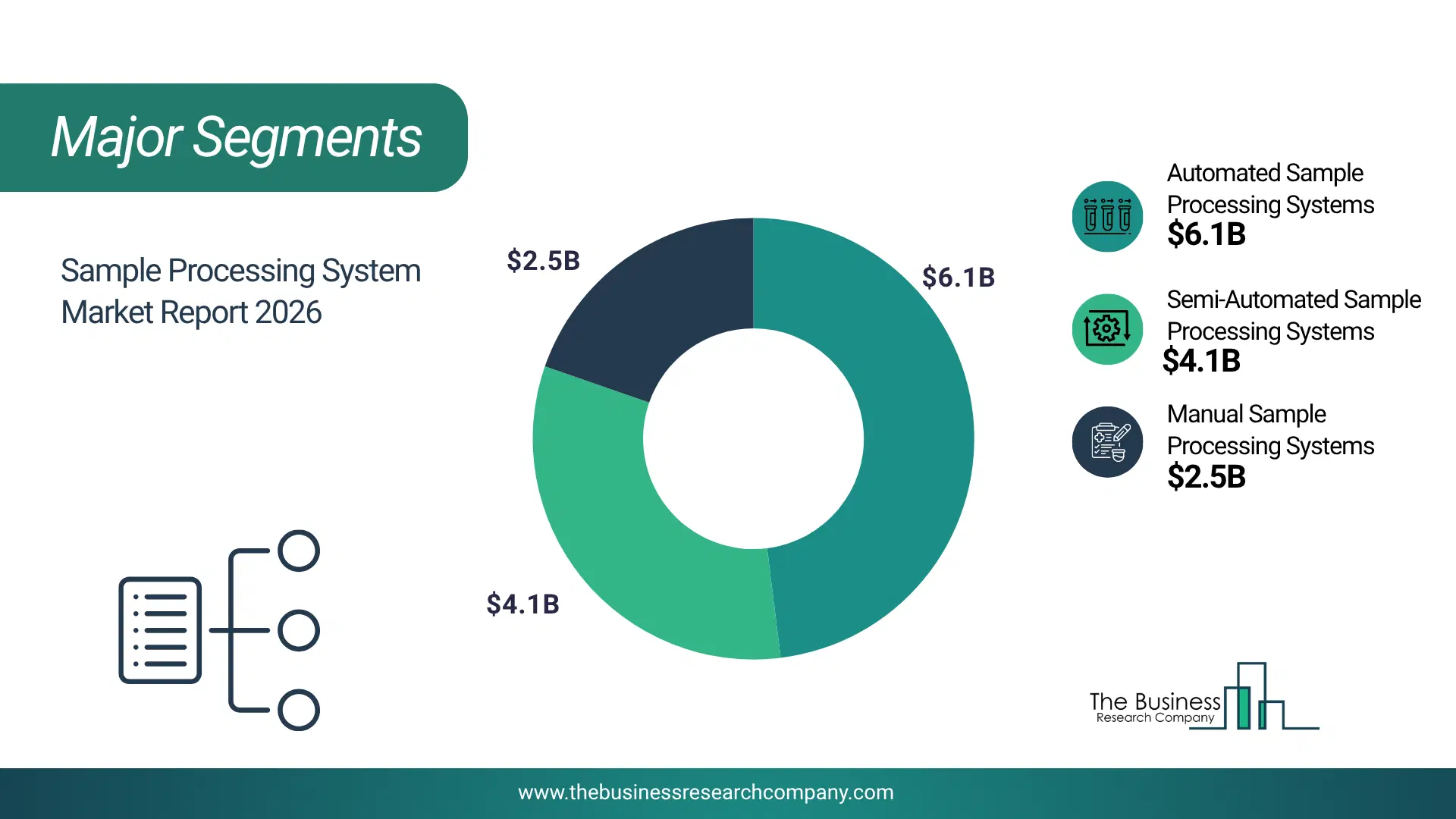
1) By Product Type: Automated Sample Processing Systems, Semi-Automated Sample Processing Systems, Manual Sample Processing Systems 2) By Application: Genomics, Proteomics, Cell Culture, Diagnostics, Other Applications 3) By End-User: Pharmaceutical and Biotechnology Companies, Hospitals And Diagnostic Laboratories, Academic And Research Institutes, Contract Research Organizations (CROs), Food And Beverage Industry, Forensic Laboratories Subsegments: 1) By Automated Sample Processing Systems: High Throughput Processing, Laboratory Information Integrated Processing, Continuous Flow Processing 2) By Semi-Automated Sample Processing Systems: Robotic Assisted Processing, Modular Bench Top Processing, Hybrid Manual Automated Processing 3) By Manual Sample Processing Systems: Standalone Bench Processing, Multi Step Manual Processing, Basic Laboratory Processing The top segments in the sample processing system market will be: • Automated Sample Processing Systems will reach $6.04 billion by 2030. • Semi-Automated Sample Processing Systems will reach $4.03 billion by 2030. • Manual Sample Processing Systems will reach $2.48 billion by 2030.What Is The Driver Of The Sample Processing System Market?
The rise in pharmaceutical research and drug development activities is expected to propel the growth of the sample processing system market going forward. Pharmaceutical research and drug development activities refer to the systematic processes of discovering, designing, testing, and bringing new drugs or therapies to market to prevent, treat, or cure diseases. Pharmaceutical research and drug development activities are increasing as the growing prevalence of chronic diseases drives demand for new, effective, and innovative treatments, leading companies to invest heavily in advanced technologies, clinical trials, and personalized medicine to improve patient outcomes and meet the rising global healthcare needs. The sample processing system supports pharmaceutical research and drug development by enabling accurate, efficient, and high-throughput handling of biological and chemical samples, thereby accelerating drug discovery and testing processes. For instance, in June 2025, according to the Department for Science, Innovation & Technology, a UK-based government department, a $114.38 billion (£86 billion) investment will be made over four years to advance science and technology research and development, including drug discovery, with annual funding of $29.93 billion (£22.5 billion). Therefore, the rise in pharmaceutical research and drug development activities is driving the growth of the sample processing system industry.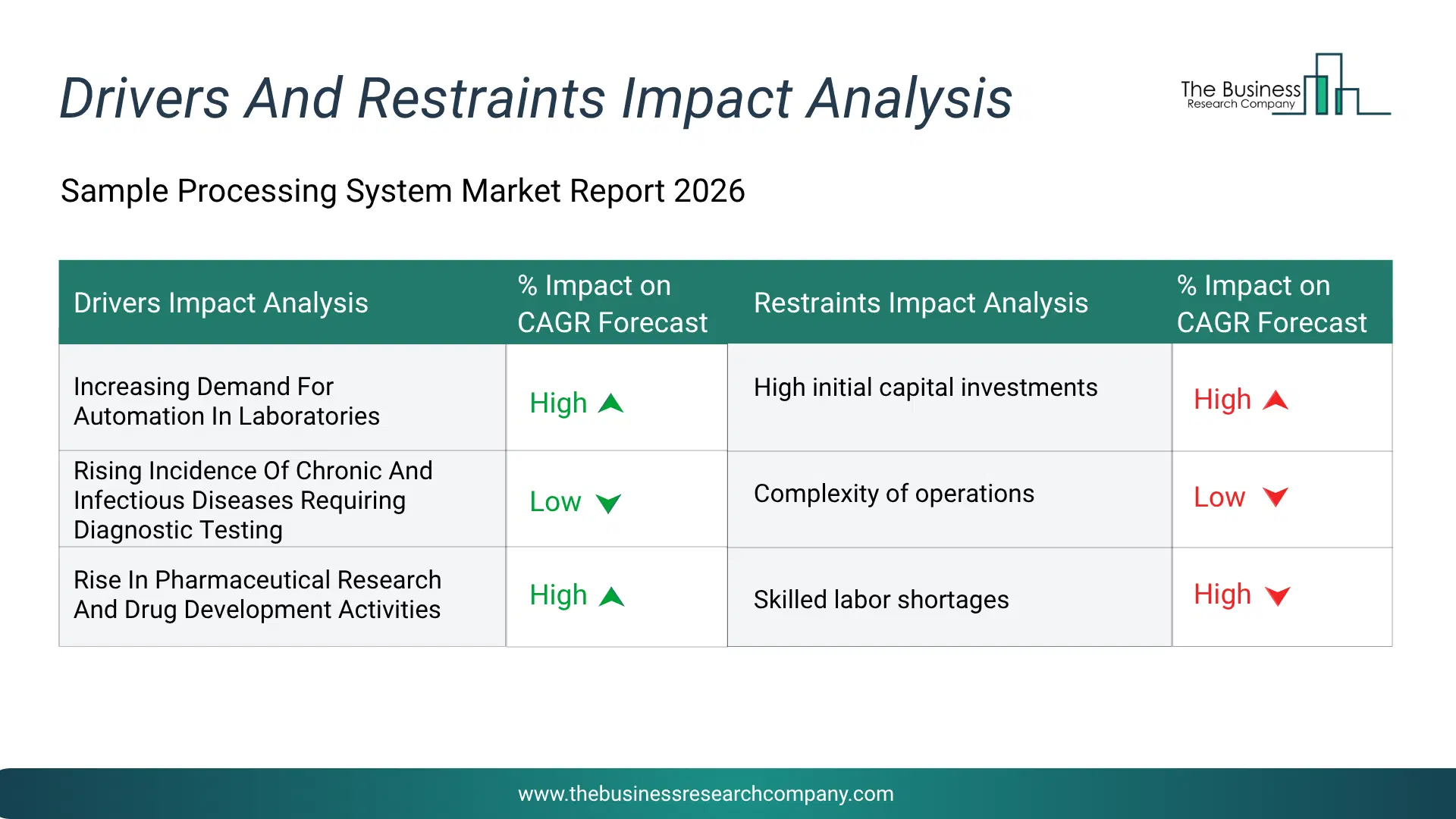
Infographic Chart Showing Key Market Drivers Analysis And Restraints For Sample Processing System Market
The chart presents an impact analysis of key drivers and restraints, quantifying their relative influence on the market's growth rate and helping assess the balance between growth enablers and limiting factors. This chart offers a high-level perspective; the full report contains more detailed insights.
How Will The Drivers Impact Growth In The Global Sample Processing System Market?
• Increasing Demand For Automation In Laboratories (High) – During the forecast period, the increasing demand for automation in laboratories is expected to become a key growth driver for the sample processing system market by 2030. The growing demand for automation in laboratories is driven by the need for faster, more accurate, and high-throughput sample processing, especially in clinical diagnostics and research. Manual methods are time-consuming, prone to human error, and struggle to keep up with rising testing volumes. Automation enhances efficiency, standardization, and reproducibility, making it essential for modern labs. • Rising Incidence Of Chronic And Infectious Diseases Requiring Diagnostic Testing (Low) – During the forecast period, the rising incidence of chronic and infectious diseases requiring diagnostic testing is expected to emerge as a major factor driving the expansion of the sample processing system market by 2030. The rising prevalence of chronic and infectious diseases like diabetes, cancer, and covid-19 has significantly increased the need for timely and accurate diagnostic testing. This surge in testing demand puts pressure on laboratories to process large volumes of samples quickly and efficiently. As a result, there is a growing reliance on advanced sample processing systems to support faster diagnosis and improve patient outcomes. • Rise In Pharmaceutical Research And Drug Development Activities (High) – During the forecast period, the rise in pharmaceutical research and drug development activities is expected to act as a key growth catalyst for the sample processing system market by 2030. The growth in pharmaceutical research and drug development activities has increased the demand for efficient and accurate sample processing to support clinical trials and biomarker discovery. High-throughput systems are essential for handling large volumes of biological samples with precision and speed. This drives the adoption of advanced sample processing systems in pharma and biotech labs to accelerate r&d timelines.How Will The Restraints Impact Growth In The Global Sample Processing System Market?
• High initial capital investments (High) – During the forecast period, the high initial capital required for purchasing and installing advanced sample processing systems can be a significant barrier, especially for small and mid-sized laboratories. These systems often involve substantial costs for equipment, infrastructure upgrades, and staff training. As a result, budget constraints may delay adoption despite the long-term efficiency benefits. • Complexity of operations (Low) – During the forecast period, the complexity of operating advanced sample processing systems can hinder their adoption, particularly in labs with limited technical expertise. These systems often require specialized training, ongoing maintenance, and integration with existing workflows. Without skilled personnel, labs may face operational inefficiencies or errors, reducing the overall effectiveness of the technology. • Skilled labor shortages (High) – During the forecast period, the effective operation and maintenance of sample processing systems require skilled laboratory personnel, which are in short supply in many regions. As automation and diagnostic workloads increase, the demand for trained technicians continues to outpace availability. This labor gap can limit system utilization and reduce overall lab efficiency, especially in high-demand settings.Key Players In The Global Sample Processing System Market
Major companies operating in the sample processing system market are Thermo Fisher Scientific Inc., Danaher Corporation, Agilent Technologies Inc., Illumina Inc., F. Hoffmann-La Roche AG, PerkinElmer Inc., QIAGEN N.V., Merck KGaA, Becton, Dickinson and Company (BD), Shimadzu Corporation, bioMérieux SA, HORIBA Ltd., Eppendorf AG, Bruker Corporation, Miltenyi Biotec, Abbott Laboratories, Tecan Group Ltd., Sartorius AG, Promega Corporation, Analytik Jena GmbH+Co. KG, Biotage, CEM Corporation, Markes International, AusDiagnostics, Hitachi High-Tech Corporation, PromoChrom Technologies Ltd., MGI Tech Co. Ltd., Copan Italia SpA, A & T Corporation, Hamilton Bonaduz AG, P S Analytical Ltd.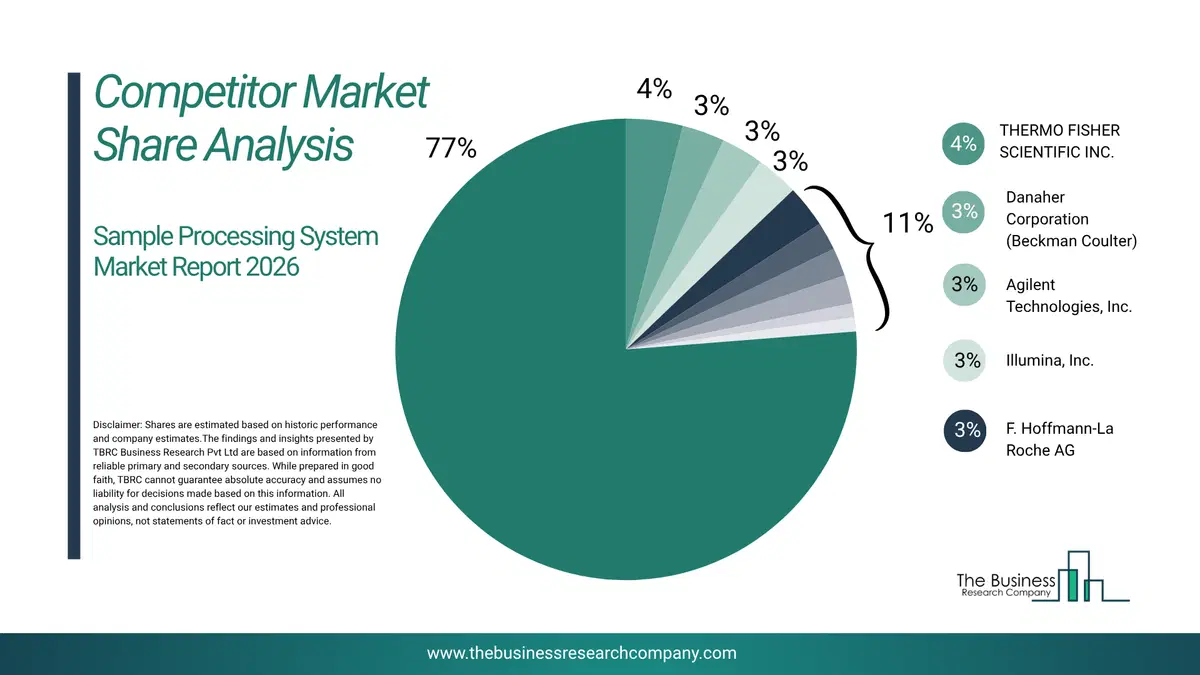
This chart is for illustrative purposes; the full report includes a detailed competitor analysis and comprehensive overview of the top 10 companies in the market.
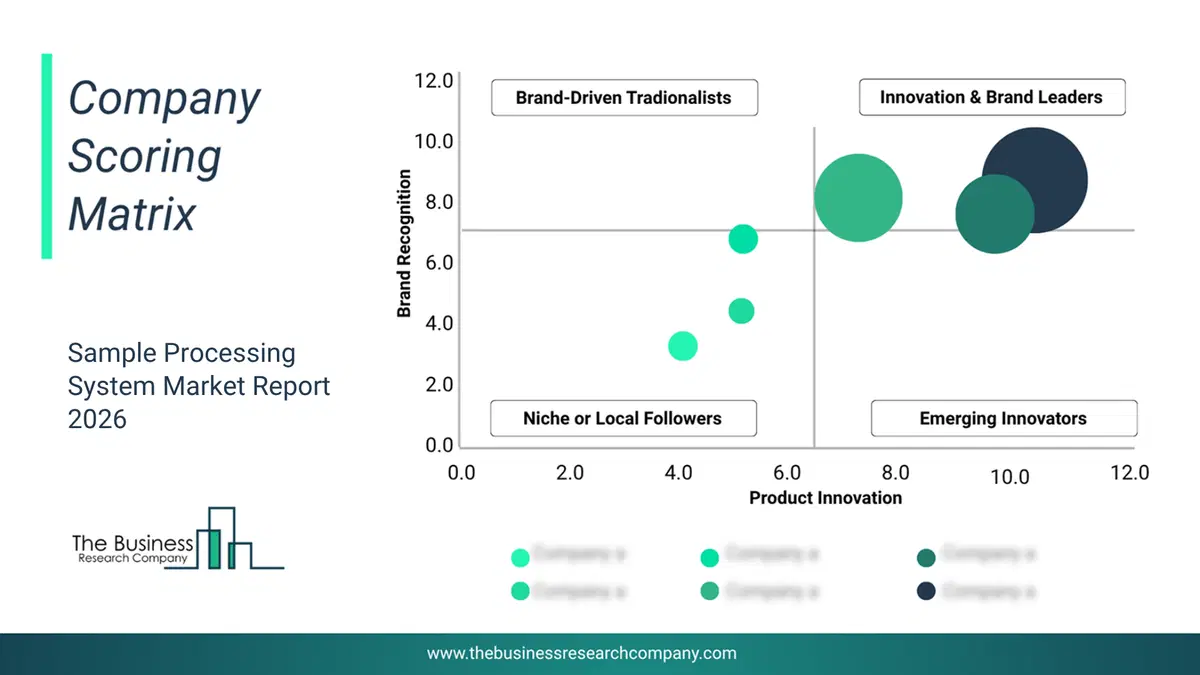
This chart maps companies by product innovation and brand strength, with bubble size indicating relative revenue, helping identify market leaders, challengers, and niche players. This is an illustrative chart; the full report provides a complete and accurate competitive analysis.
Global Sample Processing System Market Trends and Insights
Major companies operating in the sample processing system market are focusing on automation and throughput enhancement, such as Qiagen's next-generation sample preparation instruments. Qiagen's next-generation sample preparation instruments refer to fully automated systems that perform high-throughput purification of DNA, RNA, and proteins from diverse sample types using integrated robotic workflows and ready-to-use reagent cartridges, enabling efficient, standardized, and traceable molecular biology processing. For instance, in July 2025, QIAGEN, a Netherlands-based biotechnology company, introduced QIAsymphony Connect, an automated system for in vitro diagnostic sample preparation. The system supports processing of up to 96 samples per run, improves assay sensitivity with higher nucleic acid yield, enhances sample tracking through digital connectivity, and reduces hands-on time. This launch exemplifies the trend of integrating high-throughput, automated sample processing technologies to meet increasing laboratory demand. The adoption of such platforms accelerates workflow efficiency and accuracy, strengthening competitive positioning in the sample processing system market.What Are Latest Mergers And Acquisitions In The Sample Processing System Market?
In January 2023, Thermo Fisher Scientific, a US-based provider of laboratory instruments, reagents, and services, acquired The Binding Site Group for £2.3 ($3.09) billion. With this acquisition, Thermo Fisher Scientific aims to enhance its capabilities in automated sample processing and immunodiagnostics, strengthening its position in clinical laboratory instrumentation. The Binding Site Group is a UK-based provider of diagnostic solutions, including automated sample preparation instruments.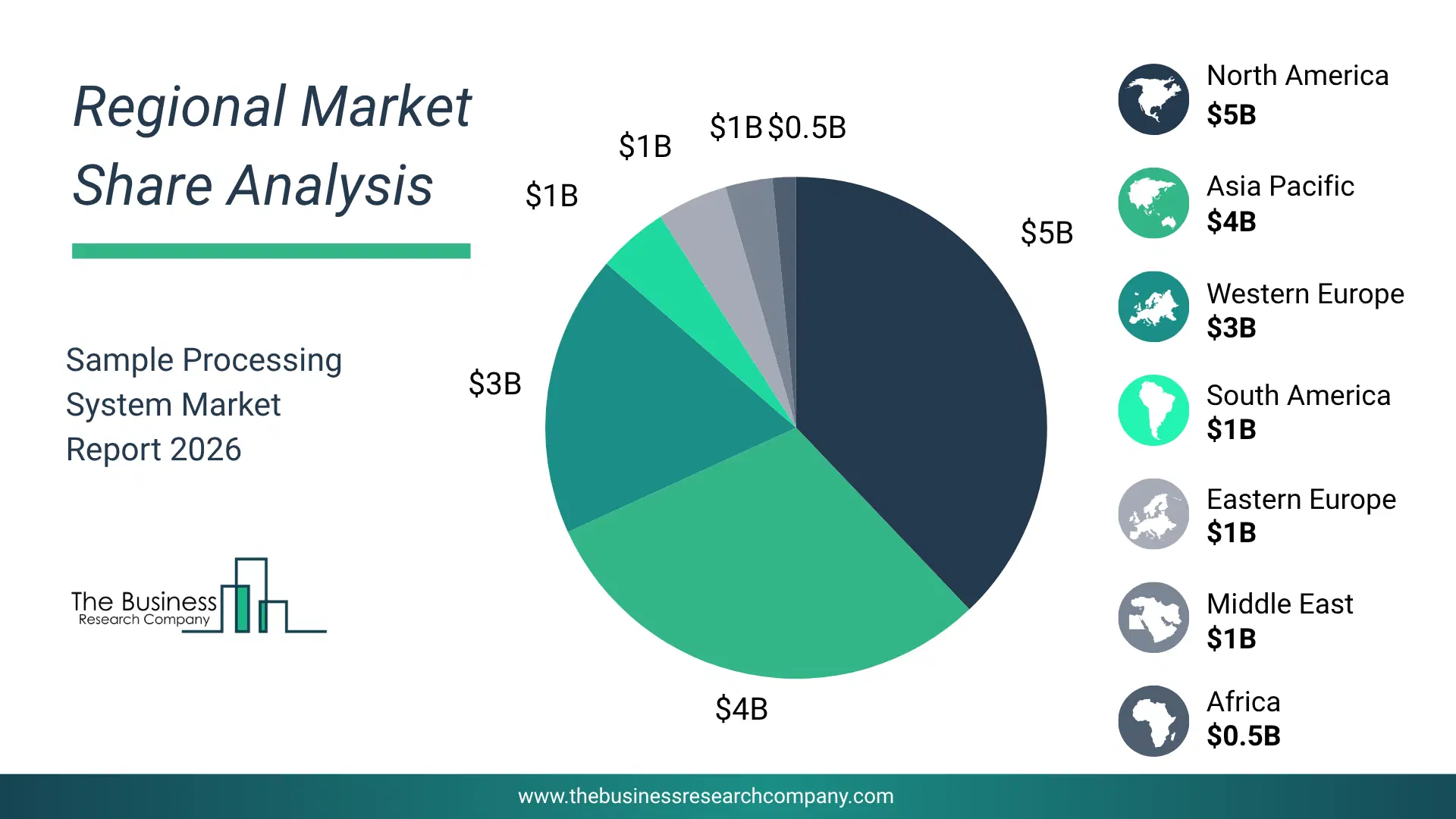
Regional Outlook
North America was the largest region in the sample processing system market in 2025. Asia-Pacific is expected to be the fastest-growing region in the forecast period. The regions covered in this market report are Asia-Pacific, South East Asia, Western Europe, Eastern Europe, North America, South America, Middle East, Africa. The countries covered in this market report are Australia, Brazil, China, France, Germany, India, Indonesia, Japan, Taiwan, Russia, South Korea, UK, USA, Canada, Italy, Spain.What Defines the Sample Processing System Market?
The sample processing system market consists of revenues earned by entities by providing services such as calibration and validation services, consumables supply, sample storage solutions, integration with laboratory information management systems (LIMS), and training and technical support. The market value includes the value of related goods sold by the service provider or included within the service offering. The sample processing system market consists of sales of processing instruments, laboratory equipment, sample handling robots, associated software for workflow management, centrifuges, pipetting systems, filtration units, homogenizers, and microplate readers. Values in this market are ‘factory gate’ values, that is, the value of goods sold by the manufacturers or creators of the goods, whether to other entities (including downstream manufacturers, wholesalers, distributors, and retailers) or directly to end customers. The value of goods in this market includes related services sold by the creators of the goods.How is Market Value Defined and Measured?
The market value is defined as the revenues that enterprises gain from the sale of goods and/or services within the specified market and geography through sales, grants, or donations in terms of the currency (in USD unless otherwise specified). The revenues for a specified geography are consumption values that are revenues generated by organizations in the specified geography within the market, irrespective of where they are produced. It does not include revenues from resales along the supply chain, either further along the supply chain or as part of other products.
This chart presents market attractiveness based on a quantitative evaluation of growth, competition, strategic alignment, and risk, offering a clear view of opportunity areas for decision-making. This chart is for illustrative purposes; the full report contains the complete analysis.

This chart highlights the Total Addressable Market (TAM) by estimating the maximum revenue opportunity using an assumption-driven approach, supporting strategic planning and opportunity sizing across markets. The chart is illustrative; the full report provides a more comprehensive analysis.
What Key Data and Analysis Are Included in the Sample Processing System Market Report 2026?
The sample processing system market research report is one of a series of new reports from The Business Research Company that provides market statistics, including industry global market size, regional shares, competitors with the market share, detailed market segments, market trends and opportunities, and any further data you may need to thrive in the sample processing system industry. The market research report delivers a complete perspective of everything you need, with an in-depth analysis of the current and future state of the industry.Sample Processing System Market Report Forecast Analysis
| Report Attribute | Details |
|---|---|
| Market Size Value In 2026 | $9.15 billion |
| Revenue Forecast In 2030 | $12.55 billion |
| Growth Rate | CAGR of 8.2% from 2026 to 2030 |
| Base Year For Estimation | 2025 |
| Actual Estimates/Historical Data | 2020-2025 |
| Forecast Period | 2026 - 2030 |
| Market Representation | Revenue in USD Billion and CAGR from 2026 to 2030 |
| Segments Covered | Product Type, Application, End-User |
| Regional Scope | Asia-Pacific, Western Europe, Eastern Europe, North America, South America, Middle East, Africa |
| Country Scope | The countries covered in the report are Australia, Brazil, China, France, Germany, India, ... |
| Key Companies Profiled | Thermo Fisher Scientific Inc., Danaher Corporation, Agilent Technologies Inc., Illumina Inc., F. Hoffmann-La Roche AG, PerkinElmer Inc., QIAGEN N.V., Merck KGaA, Becton, Dickinson and Company (BD), Shimadzu Corporation, bioMérieux SA, HORIBA Ltd., Eppendorf AG, Bruker Corporation, Miltenyi Biotec, Abbott Laboratories, Tecan Group Ltd., Sartorius AG, Promega Corporation, Analytik Jena GmbH+Co. KG, Biotage, CEM Corporation, Markes International, AusDiagnostics, Hitachi High-Tech Corporation, PromoChrom Technologies Ltd., MGI Tech Co. Ltd., Copan Italia SpA, A & T Corporation, Hamilton Bonaduz AG, P S Analytical Ltd. |
| Customization Scope | Request for Customization |
| Pricing And Purchase Options | Explore Purchase Options |