
Sanitary Ware Market Report 2026
Global Outlook – By Type (Toilets, Washbasins, Urinals, Cisterns), By Technologies (Slip Casting, Pressure Casting), By Sales Channels (Retail, Wholesale), By End-Users (Commercial, Residential ) – Market Size, Trends, Strategies, and Forecast to 2030
Sanitary Ware Market Overview
• Sanitary Ware market size has reached to $41.85 billion in 2025 • Expected to grow to $55.6 billion in 2030 at a compound annual growth rate (CAGR) of 5.8% • Growth Driver: Construction Industry Surge Propels Growth In The Sanitary Ware Market • Market Trend: Technological Innovations In The Sanitaryware Market: Johnson Bathrooms Launches Elite Range With Personalized Services • North America was the largest region in 2025 and Asia-Pacific is the fastest growing region.Market Gains By 2030 – Top Opportunities By Segment
Market Gain identifies the most promising market opportunities by highlighting the segments or products expected to generate the highest incremental revenue growth over the next five years.
What Is Covered Under Sanitary Ware Market?
Sanitary ware refers to all the general sanitary installations found in bathrooms and toilets. Sanitary goods are resistant to chemicals and can sustain loads of up to 400 kg. These wares are heated to temperatures above 1200 degrees Celsius to obtain the required level of hygienic performance for usage in both residential and commercial settings. The main types of sanitary ware are toilets, washbasins, urinals, cisterns, and others. Toilets refer to sanitary hardware that is commonly a bowl-shaped device. The various materials include ceramics, pressed metal, acrylic plastics, and perspex, as well as others that involve technologies such as slip casting, pressure casting, tape casting, and isostatic casting. It is distributed through various sales channels, such as retail and wholesale, and used for commercial and residential purposes.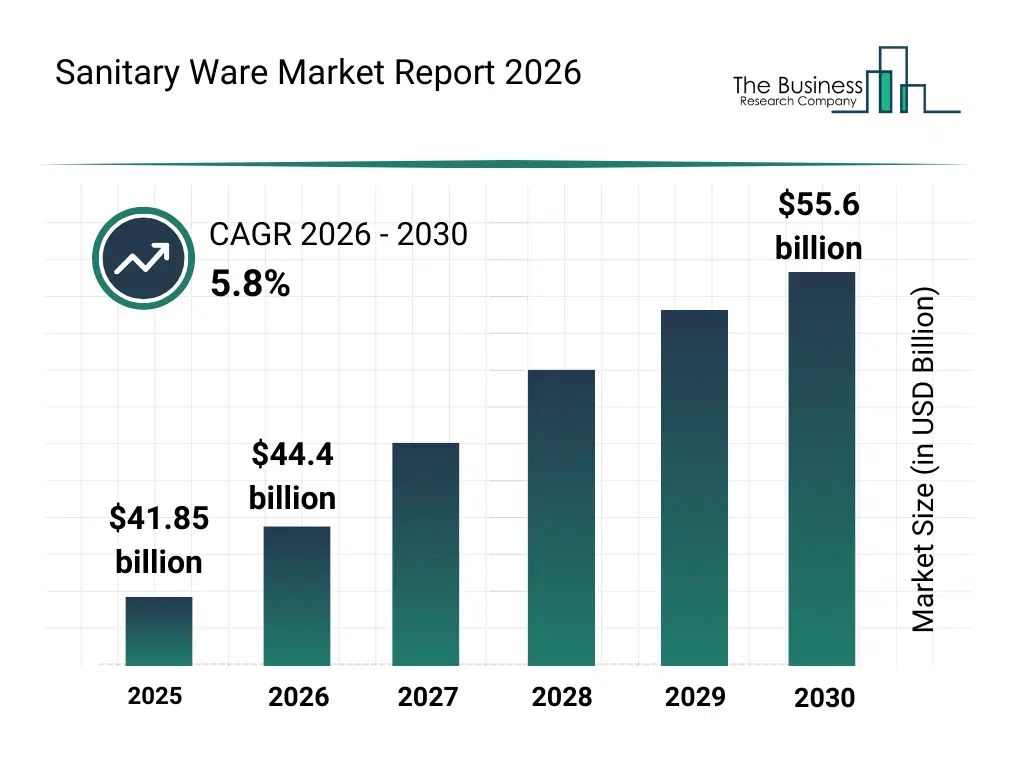
What Is The Sanitary Ware Market Size and Share 2026?
The sanitary ware market size has grown strongly in recent years. It will grow from $41.85 billion in 2025 to $44.4 billion in 2026 at a compound annual growth rate (CAGR) of 6.1%. The growth in the historic period can be attributed to rapid growth in residential construction, increasing urbanization globally, expansion of hospitality and commercial sectors, rising consumer awareness toward hygiene, steady improvement in sanitation infrastructure.What Is The Sanitary Ware Market Growth Forecast?
The sanitary ware market size is expected to see strong growth in the next few years. It will grow to $55.6 billion in 2030 at a compound annual growth rate (CAGR) of 5.8%. The growth in the forecast period can be attributed to growing smart bathroom adoption, rising demand for eco friendly sanitary products, expansion of modern housing projects, increased investments in infrastructure development, rising focus on luxury bathroom solutions. Major trends in the forecast period include growing demand for hygienic bathroom solutions, rising adoption of water efficient sanitary products, increasing focus on aesthetic bathroom designs, growing penetration in commercial infrastructure projects, rising replacement and renovation activities.
Global Sanitary Ware Market Segmentation
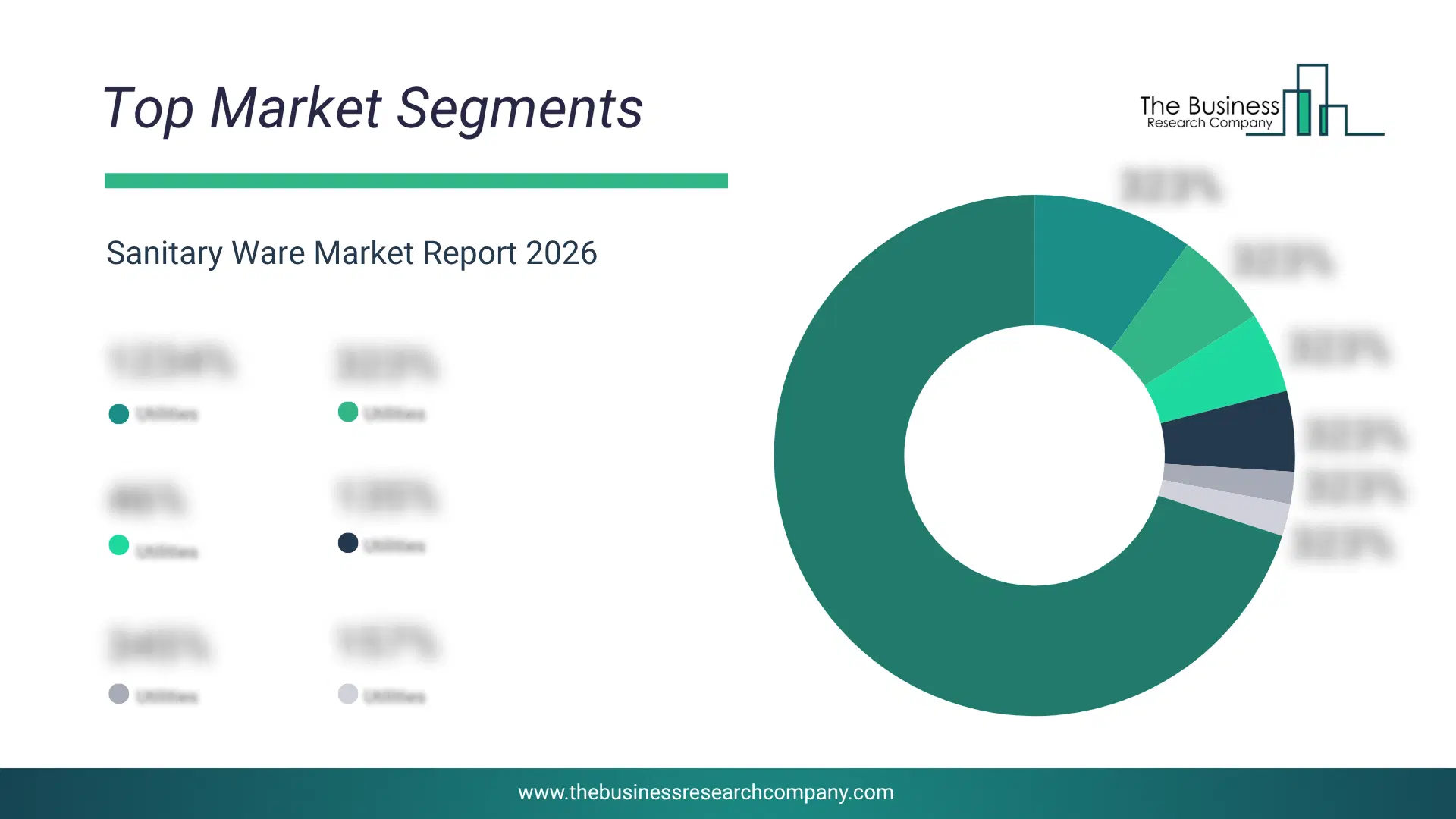
1) By Type: Toilets, Washbasins, Urinals, Cisterns 2) By Technologies: Slip Casting, Pressure Casting 4) By Sales Channels: Retail, Wholesale 5) By End-Users: Commercial, Residential Subsegments: 1) By Toilets: Floor-Mounted Toilets, Wall-Mounted Toilets 2) By Washbasins: Pedestal Washbasins, Countertop Washbasins, Wall-mounted Washbasins, Under-Mount Washbasins 3) By Urinals: Wall-mounted Urinals, Floor-Mounted Urinals, Waterless Urinals 4) By Cisterns: Concealed Cisterns, Exposed Cisterns The top segments in the sanitary ware market will be: • Wholesale will reach $32990.37 Million by 2025. • Ceramic will reach $31093.8 Million by 2025. • Residential will reach $27003.16 Million by 2025. • Slip Casting will reach $24567.08 Million by 2025. • Commercial will reach $16202.75 Million by 2025.What Is The Driver Of The Sanitary Ware Market?
The growth of the construction industry is expected to propel the growth of the sanitary ware market going forward. The construction industry refers to the industrial branch of manufacturing and trade-related activities, including building, repairing, renovating, and maintaining infrastructure. The construction industry requires sanitary ware in larger quantities to be installed in all the bathrooms' infrastructure, as a result, the rising construction activities increase the demand for sanitary ware. For instance, in July 2024, according to the US Census Bureau, a US-based government agency, the value of construction operations rose from $2.01 trillion in May 2023 to $2.14 trillion in May 2024. Therefore, the growth of the construction industry is expected to propel the growth of the sanitary ware industry.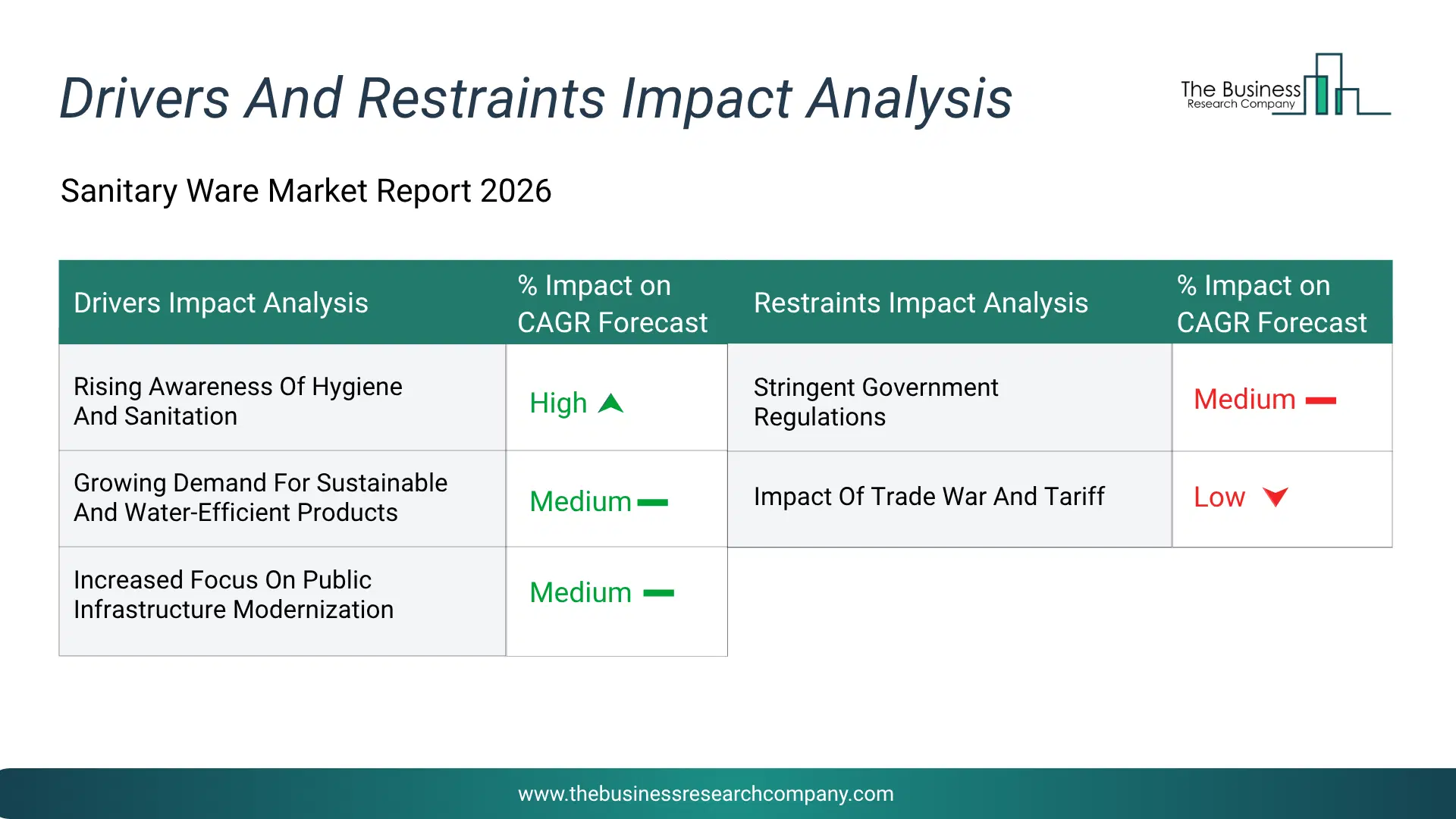
Infographic Chart Showing Key Market Drivers Analysis And Restraints For Sanitary Ware Market
The chart presents an impact analysis of key drivers and restraints, quantifying their relative influence on the market's growth rate and helping assess the balance between growth enablers and limiting factors. This chart offers a high-level perspective; the full report contains more detailed insights.
How Will The Drivers Impact Growth In The Global Sanitary Ware Market?
• Rising Awareness Of Hygiene And Sanitation (High) – The rising awareness of hygiene and sanitation will become a key driver of growth in the sanitary ware market by 2030. Consumers are prioritizing modern solutions like touchless faucets, smart washbasins and efficient toilets, prompting widespread upgrades of outdated infrastructure. Government initiatives and global sanitation drives are accelerating adoption through improved access and infrastructure development. Rapid urbanization and evolving lifestyles are also reshaping bathroom design preferences, with a growing shift toward sleek, low-maintenance and technologically enhanced fixtures. Features such as water-saving systems, anti-bacterial coatings and sensor-based operations are gaining strong traction, particularly in urban markets. As a result, the rising awareness of hygiene and sanitation is anticipated to contributing to a 2.0% annual growth in the market. • Growing Demand For Sustainable And Water-Efficient Products (Medium) – The growing demand for sustainable and water-efficient products will emerge as a major factor driving the expansion of the market by 2030. Environmentally conscious consumers are increasingly choosing sanitary ware that conserves water and energy, driving demand for green-certified products such as low-consumption basins and efficient flushing systems. At the same time, sustainability trends are boosting the adoption of smart technologies like touchless faucets and intelligent toilets that enhance user convenience while reducing water waste. Corporate sustainability goals and green building certifications are encouraging large-scale adoption of water-efficient products by commercial developers and hospitality sectors. Meanwhile, advances in materials and design—such as hydrophobic coatings and improved flushing mechanisms—are enhancing performance and efficiency, making sustainable sanitary solutions more attractive and widely adopted across both residential and institutional markets. Consequently, the growing demand for sustainable and water-efficient products is projected to contributing to a 1.5% annual growth in the market. • Increased Focus On Public Infrastructure Modernization (Medium) – The increased focus on public infrastructure modernization will serve as a key growth catalyst for the market by 2030. Governments are modernizing public restrooms across transit hubs, parks and cities to meet evolving hygiene and accessibility norms, driving demand for durable, low-maintenance sanitary ware such as sensor-operated faucets and wall-mounted Water Closet (WC). Smart city initiatives are further integrating advanced sanitation systems that align with aesthetic and sustainability goals, boosting the adoption of smart toilets, automated flush systems and water-saving basins. In line with green building codes and leadership in energy and environmental design (LEED) standards, public infrastructure projects increasingly favour eco-friendly materials, dual-flush technology and low-flow taps to conserve water. Additionally, heightened post-pandemic hygiene awareness is accelerating the shift toward touchless fixtures and antimicrobial surfaces in public buildings to reduce contamination risks and support public health objectives. Therefore, this increased focus on public infrastructure modernization is projected to supporting to a 1.0% annual growth in the market. • Growth In Hospitality Sector (Low) – The growth in hospitality sector will become a significant driver contributing to the growth of the market by 2030. The global rise in tourism and business travel is driving the construction of new hotels, resorts and boutique stays, each requiring a full range of sanitary ware products. Simultaneously, the focus on luxury and guest experience is increasing demand for premium, aesthetically advanced solutions such as smart toilets, sensor-based faucets and designer vanities. Hospitality brands are also investing in stylish, technology-integrated washrooms to align with modern expectations. Additionally, frequent renovation cycles to maintain brand image and meet hygiene standards are creating recurring demand for upgraded sanitary fittings. Consequently, the growth in the hospitality sector is projected to contributing to a 0.5% annual growth in the market.How Will The Restraints Impact Growth In The Global Sanitary Ware Market?
• Fragility And Breakage During Handling And Transportation (Medium) – Fragility And Breakage During Handling And Transportation will restrict the growth of the Sanitary Ware market during the forecast period. Sanitary ware products are fragile and susceptible to damage during transportation and handling. Damage rates increase logistics costs and affect customer satisfaction. The fragility of products limits distribution efficiency and increases replacement costs, impacting market growth. • Stringent Government Regulations (Medium) – Stringent Government Regulations will restrict the growth of the Sanitary Ware market during the forecast period. Sanitary ware products are subject to government regulations on water efficiency, quality standards, and environmental compliance. Regulatory requirements add to product development and compliance costs. Stringent regulations can limit product availability and affect market growth in certain regions. • Impact Of Trade War And Tariff (Low) – Impact Of Trade War And Tariff will restrict the growth of the Sanitary Ware market during the forecast period. Sanitary ware production relies on imported materials, components, and equipment. Trade tariffs and restrictions can increase production costs and affect product pricing. Trade barriers may also impact construction and infrastructure investment, affecting sanitary ware demand.Key Players In The Global Sanitary Ware Market
Major companies operating in the sanitary ware market report are LIXIL Group Corporation, Kohler Co., TOTO Ltd., Roca Corporación Empresarial, Villeroy & Boch AG, Duravit AG, Jaquar Group, Ideal Standard International, Cera Sanitaryware Ltd., Hindware Home Innovation Ltd., Geberit AG, VitrA (Eczacıbaşı Group), Sanitec Corporation, Orans Co., Ltd., HSIL Limited, Lecico Group, Twyford Bathrooms, Rak Ceramics, Hatria S.p.A., Porcelanosa Grupo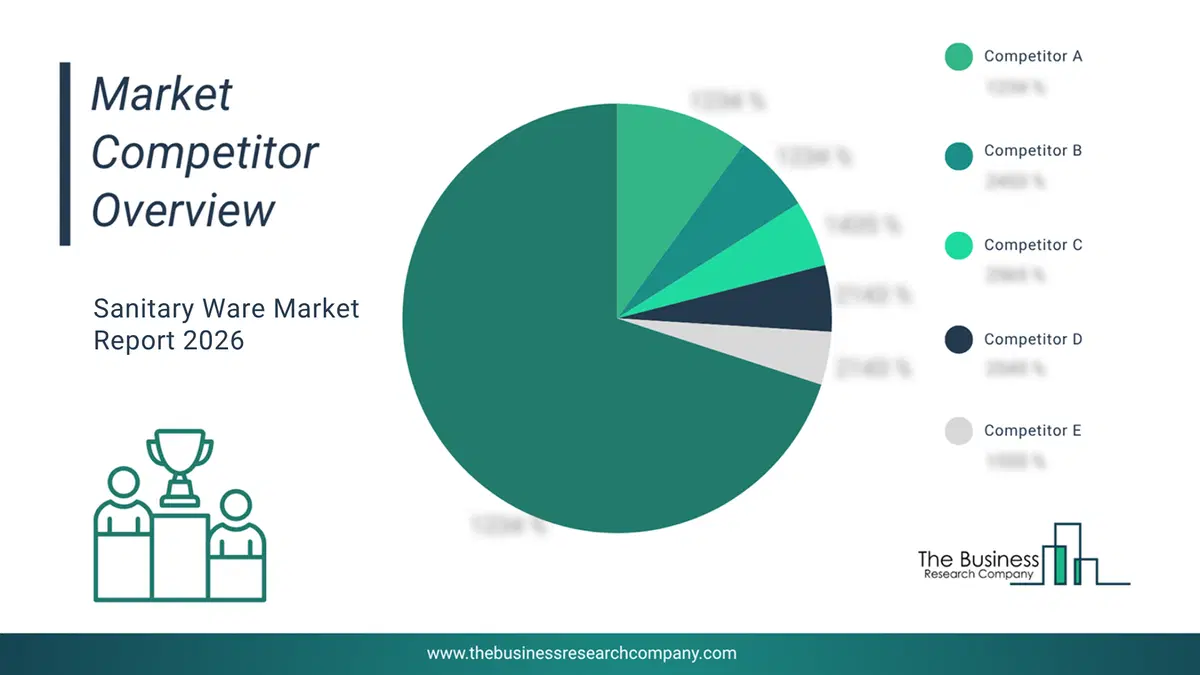
This chart is for illustrative purposes; the full report includes a detailed competitor analysis and comprehensive overview of the top 10 companies in the market.
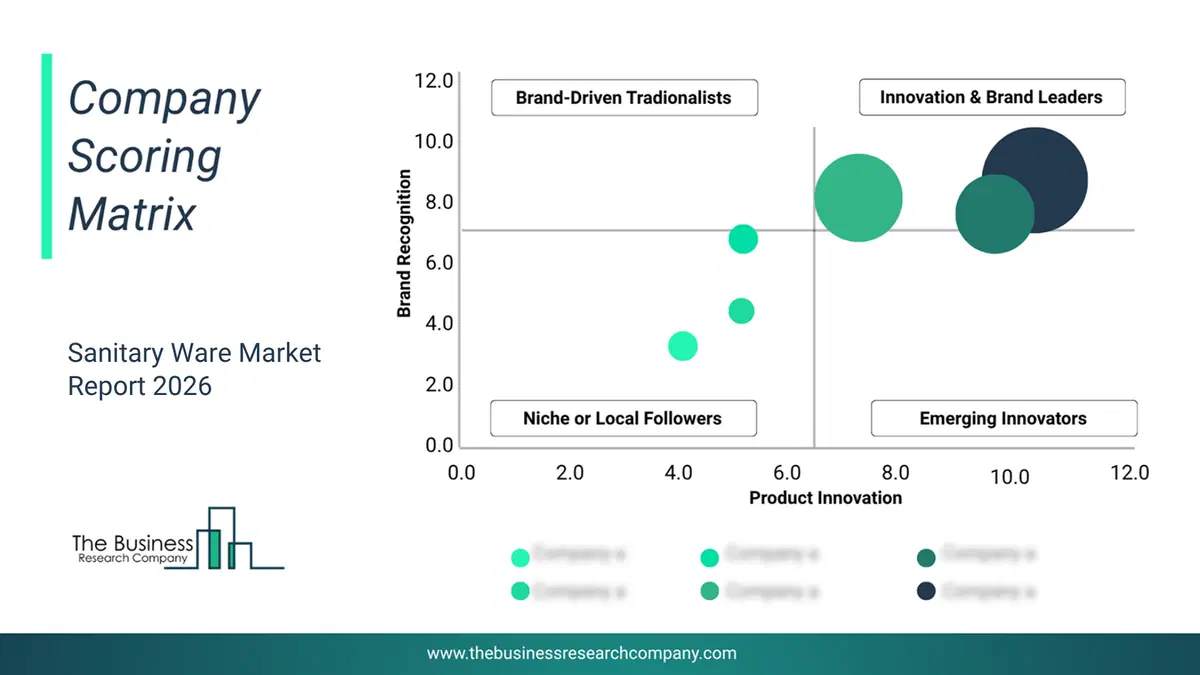
This chart maps companies by product innovation and brand strength, with bubble size indicating relative revenue, helping identify market leaders, challengers, and niche players. This is an illustrative chart; the full report provides a complete and accurate competitive analysis.
Global Sanitary Ware Market Trends and Insights
Major companies operating in the sanitaryware market are focused on developing technological advancements such as concealed cisterns to enhance efficiency and aesthetics. A concealed cistern is a hidden water storage system for flushing toilets, built into walls or furniture. It provides a cleaner aesthetic by keeping the cistern out of sight while allowing for easy access to flushing controls. For instance, in June 2023, Johnson Bathrooms, an India-based tile bathroom company, launched the Elite Range. It offers personalized services and exclusive benefits, enhancing customer experiences across banking, travel, insurance, and fitness. They provide financial advantages, comprehensive coverage, and lifestyle perks tailored to high-net-worth individuals.What Are Latest Mergers And Acquisitions In The Sanitary Ware Market?
In June 2023, Warburg Pincus, a US-based private equity firm, acquired a majority stake in Watertec India for an undisclosed amount. This acquisition aims to bolster Watertec's market leadership, expand its product offerings, and enhance its geographic reach within the growing bath fittings sector in India. Watertec India is an India-based manufacturing company that specializes in high-quality sanitaryware products for both residential and commercial use.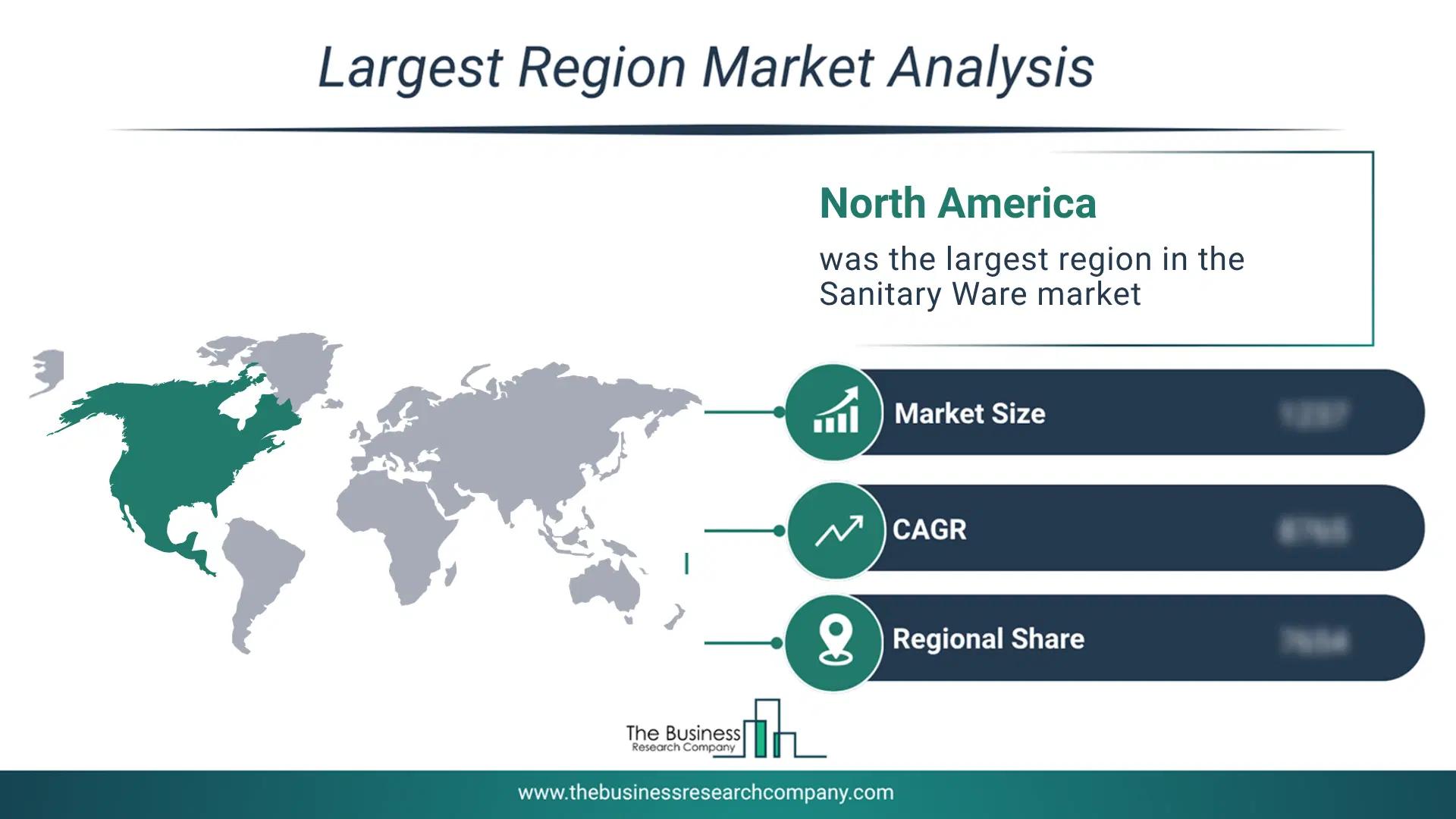
Regional Outlook
North America was the largest region in the sanitary ware market share in 2025. Asia-Pacific is expected to be the fastest-growing region in the forecast period. The regions covered in this market report are Asia-Pacific, South East Asia, Western Europe, Eastern Europe, North America, South America, Middle East, Africa. The countries covered in this market report are Australia, Brazil, China, France, Germany, India, Indonesia, Japan, Taiwan, Russia, South Korea, UK, USA, Canada, Italy, SpainWhat Defines the Sanitary Ware Market?
The sanitary ware market consists of sales of ball clay sanitary ware and China clay sanitary ware, bathtubs, and soap dishes. Values in this market are ‘factory gate’ values, that is, the value of goods sold by the manufacturers or creators of the goods, whether to other entities (including downstream manufacturers, wholesalers, distributors, and retailers) or directly to end customers. The value of goods in this market includes related services sold by the creators of the goods.How is Market Value Defined and Measured?
The market value is defined as the revenues that enterprises gain from the sale of goods and/or services within the specified market and geography through sales, grants, or donations in terms of the currency (in USD unless otherwise specified). The revenues for a specified geography are consumption values that are revenues generated by organizations in the specified geography within the market, irrespective of where they are produced. It does not include revenues from resales along the supply chain, either further along the supply chain or as part of other products.
This chart presents market attractiveness based on a quantitative evaluation of growth, competition, strategic alignment, and risk, offering a clear view of opportunity areas for decision-making. This chart is for illustrative purposes; the full report contains the complete analysis.

This chart highlights the Total Addressable Market (TAM) by estimating the maximum revenue opportunity using an assumption-driven approach, supporting strategic planning and opportunity sizing across markets. The chart is illustrative; the full report provides a more comprehensive analysis.
What Key Data and Analysis Are Included in the Sanitary Ware Market Report 2026?
The sanitary ware market research report is one of a series of new reports from The Business Research Company that provides market statistics, including industry global market size, regional shares, competitors with the market share, detailed market segments, market trends and opportunities, and any further data you may need to thrive in the sanitary ware industry. The market research report delivers a complete perspective of everything you need, with an in-depth analysis of the current and future state of the industry.Sanitary Ware Market Report Forecast Analysis
| Report Attribute | Details |
|---|---|
| Market Size Value In 2026 | $44.4 billion |
| Revenue Forecast In 2030 | $55.6 billion |
| Growth Rate | CAGR of 6.1% from 2026 to 2030 |
| Base Year For Estimation | 2025 |
| Actual Estimates/Historical Data | 2020-2025 |
| Forecast Period | 2026 - 2030 |
| Market Representation | Revenue in USD Billion and CAGR from 2026 to 2030 |
| Segments Covered | Type, Technologies, Sales Channels, End-Users |
| Regional Scope | Asia-Pacific, Western Europe, Eastern Europe, North America, South America, Middle East, Africa |
| Country Scope | The countries covered in the report are Australia, Brazil, China, France, Germany, India, Indonesia, Japan, Taiwan, Russia, South Korea, UK, USA, Canada, Italy, Spain. |
| Key Companies Profiled | LIXIL Group Corporation, Kohler Co., TOTO Ltd., Roca Corporación Empresarial, Villeroy & Boch AG, Duravit AG, Jaquar Group, Ideal Standard International, Cera Sanitaryware Ltd., Hindware Home Innovation Ltd., Geberit AG, VitrA (Eczacıbaşı Group), Sanitec Corporation, Orans Co., Ltd., HSIL Limited, Lecico Group, Twyford Bathrooms, Rak Ceramics, Hatria S.p.A., Porcelanosa Grupo |
| Customization Scope | Request for Customization |
| Pricing And Purchase Options | Explore Purchase Options |