
Satellite Data Versioning And Lineage Platform Market Report 2026
Global Outlook – By Component (Software, Services), By Deployment Mode (On-Premises, Cloud), By Application (Earth Observation, Climate Monitoring, Disaster Management, Agriculture, Defense And Intelligence, Other Applications), By End-User (Government, Commercial, Research Institutes, Other End-Users) – Market Size, Trends, Strategies, and Forecast to 2030
Satellite Data Versioning And Lineage Platform Market Overview
• Satellite Data Versioning And Lineage Platform market size has reached to $1.2 billion in 2025 • Expected to grow to $2.62 billion in 2030 at a compound annual growth rate (CAGR) of 17.1% • Growth Driver: Increasing Satellite Data Volumes Is Driving The Growth Of The Market Due To Rapid Expansion Of Satellite Constellations • Market Trend: Advancements In Row-level Lineage And Geospatial Data Support For Scalable Satellite Data Management • North America was the largest region in 2025 and Asia-Pacific is the fastest growing region.Market Gains By 2030 – Top Opportunities By Segment
Market Gain identifies the most promising market opportunities by highlighting the segments or products expected to generate the highest incremental revenue growth over the next five years.
What Is Covered Under Satellite Data Versioning And Lineage Platform Market?
Satellite data versioning and lineage platform refers to a specialized data management system that tracks the origin, versions, processing history, and transformations of satellite and remote sensing datasets across their lifecycle. It is used for ensuring data integrity, traceability, reproducibility, and regulatory compliance in applications such as earth observation, climate monitoring, defense intelligence, and geospatial analytics. The main components of satellite data versioning and lineage platforms include software and services. Software refers to solutions that track, manage, and maintain the history, flow, and transformations of satellite data to ensure accuracy, traceability, and usability across analytical and operational workflows. The systems are deployed through on-premises and cloud models. The various applications involved are earth observation, climate monitoring, disaster management, agriculture, defense and intelligence, and other applications and are used by end users such as government, commercial organizations, research institutes, and other end users.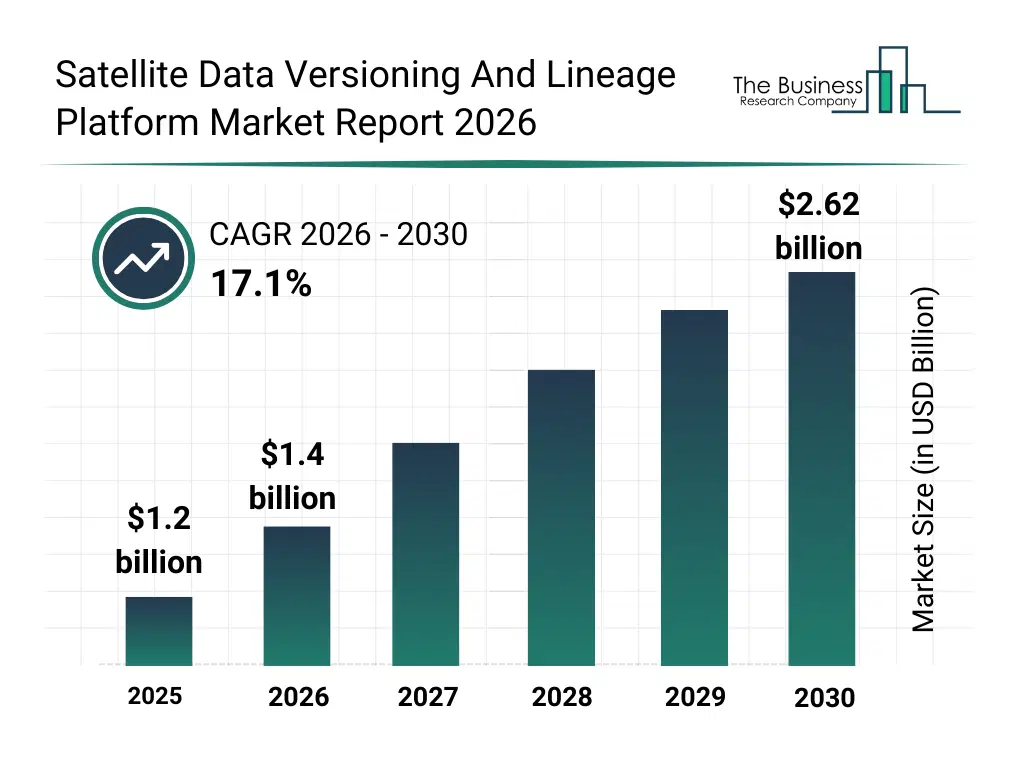
What Is The Satellite Data Versioning And Lineage Platform Market Size and Share 2026?
The satellite data versioning and lineage platform market size has grown rapidly in recent years. It will grow from $1.2 billion in 2025 to $1.4 billion in 2026 at a compound annual growth rate (CAGR) of 16.8%. The growth in the historic period can be attributed to growth in earth observation satellite launches, expansion of geospatial analytics adoption, increasing government space research funding, rise in climate monitoring initiatives, early adoption of satellite data archiving systems.What Is The Satellite Data Versioning And Lineage Platform Market Growth Forecast?
The satellite data versioning and lineage platform market size is expected to see rapid growth in the next few years. It will grow to $2.62 billion in 2030 at a compound annual growth rate (CAGR) of 17.1%. The growth in the forecast period can be attributed to growing commercial satellite constellations, rising demand for precision agriculture analytics, expansion of environmental compliance regulations, increasing integration of artificial intelligence based data processing, growth in global disaster management programs. Major trends in the forecast period include rising adoption of cloud based geospatial data management platforms, growing integration of automated workflow and metadata tracking tools, expansion of real time satellite data processing and visualization capabilities, increasing demand for regulatory compliance and audit ready data systems, enhancement of cross platform data version control and collaboration features.
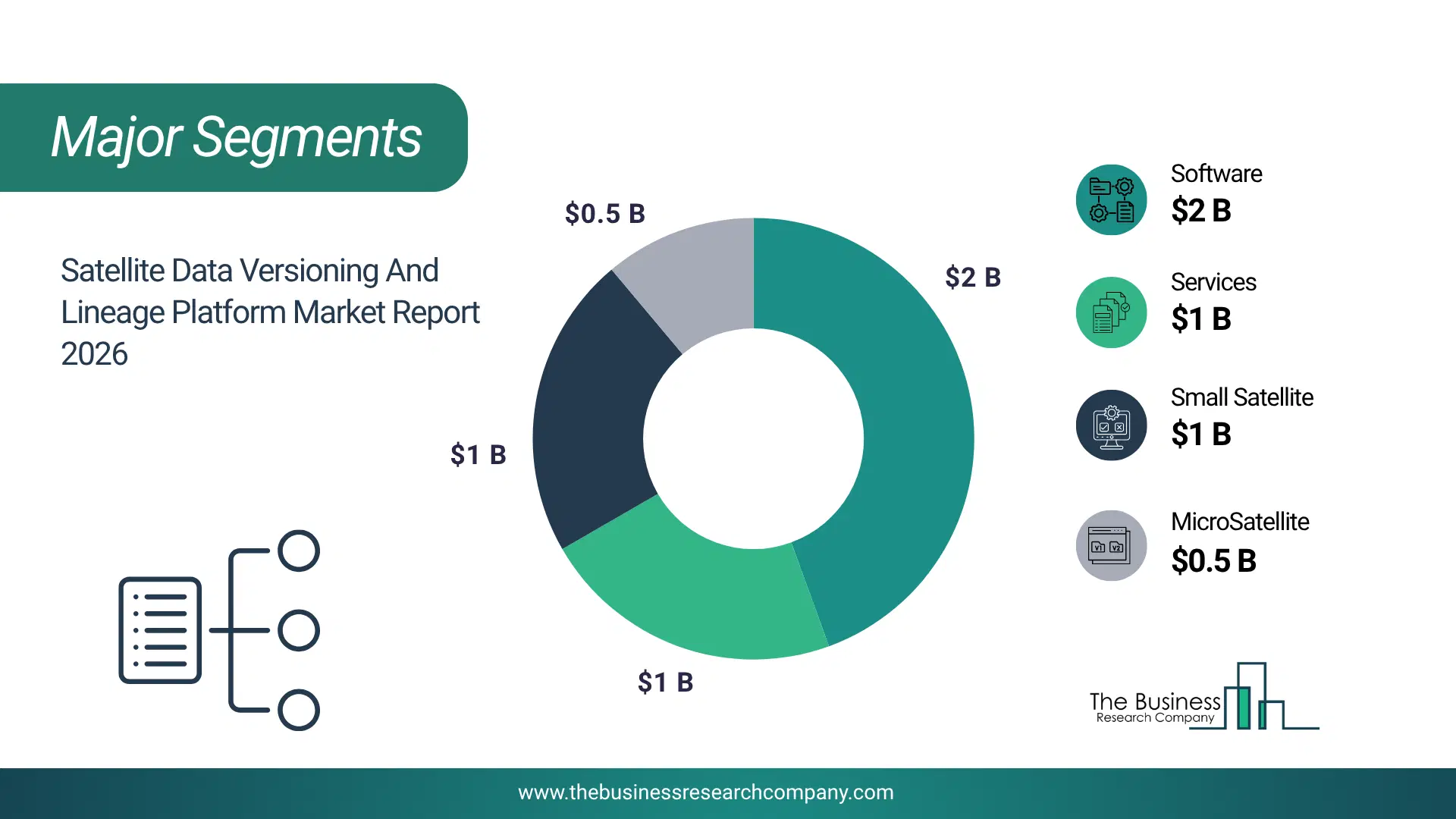
Global Satellite Data Versioning And Lineage Platform Market Segmentation
1) By Component: Software, Services 2) By Deployment Mode: On-Premises, Cloud 3) By Application: Earth Observation, Climate Monitoring, Disaster Management, Agriculture, Defense And Intelligence, Other Applications 4) By End-User: Government, Commercial, Research Institutes, Other End-Users Subsegments: 1) By Software: Data Version Control Software, Data Lineage Visualization Software, Metadata Management Software, Workflow Orchestration Software, Data Quality Management Software 2) By Services: Implementation And Integration Services, Consulting And Advisory Services, Customization And Configuration Services, Maintenance And Support Services, Training And Knowledge Transfer Services The top segments in the satellite data versioning and lineage platform market will be: • Software will reach $1.72 Billion by 2030. • Services will reach $0.91 Billion by 2030.What Is The Driver Of The Satellite Data Versioning And Lineage Platform Market?
The increasing satellite data volumes is expected to propel the growth of the satellite data versioning and lineage platform market going forward. Satellite data volumes refer to the total amount of geospatial and imagery data generated by satellites, often measured in terabytes or petabytes daily. The volume of satellite data is increasing rapidly due to the substantial rise in satellite deployments and Earth observation missions capturing and transmitting vast amounts of imagery and sensor data. Satellite data versioning and lineage platform supports satellite data volumes by providing solutions that manage, track, and ensure traceability and integrity across large, complex satellite datasets, enabling efficient version control and data governance. For instance, in March 2024, according to the United Nations For Outer Space Affairs, a US-based government agency, 2,895 objects were launched into orbit in 2023, compared to 2,477 in 2022. Therefore, the increasing satellite data volumes is driving the growth of the satellite data versioning and lineage platform industry.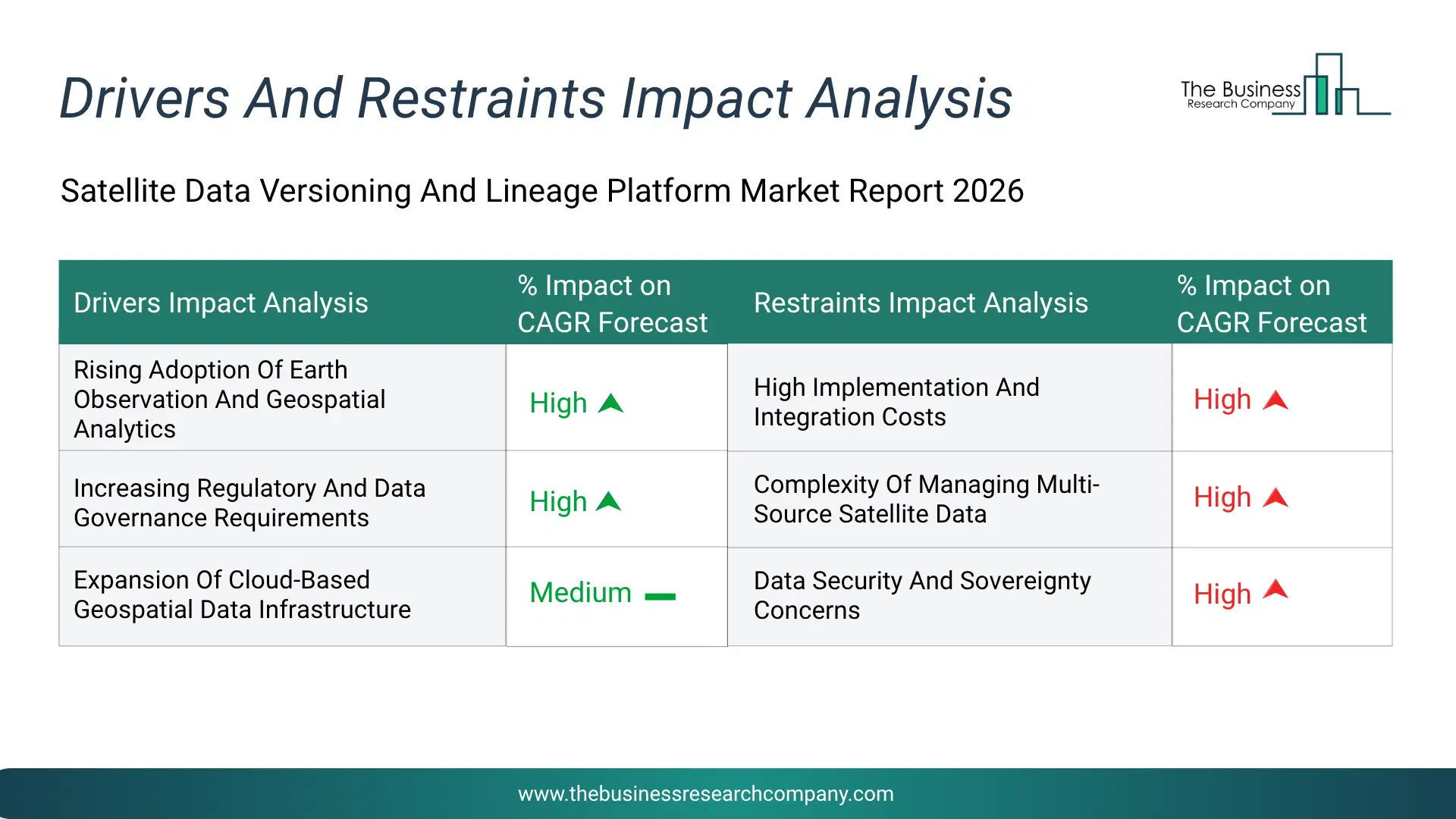
Infographic Chart Showing Key Market Drivers Analysis And Restraints For Satellite Data Versioning And Lineage Platform Market
The chart presents an impact analysis of key drivers and restraints, quantifying their relative influence on the market's growth rate and helping assess the balance between growth enablers and limiting factors. This chart offers a high-level perspective; the full report contains more detailed insights.
How Will The Drivers Impact Growth In The Global Satellite Data Versioning And Lineage Platform Market?
• Rising Adoption Of Earth Observation And Geospatial Analytics (High) – During the forecast period, the rising adoption of Earth observation and geospatial analytics is expected to become a key growth driver for the satellite data versioning and lineage platform market by 2030. Organizations across environmental monitoring, resource management, infrastructure planning, and security applications are increasingly relying on satellite-derived insights for operational decision-making. As data volumes and analytical complexity continue to expand, demand for platforms that ensure traceability, reproducibility, and accuracy of geospatial datasets is growing significantly. Enterprises are therefore investing in advanced version control and lineage capabilities to improve data reliability and collaboration across workflows. • Increasing Regulatory And Data Governance Requirements (High) – During the forecast period, the increasing regulatory and data governance requirements are expected to emerge as a major factor driving the expansion of the satellite data versioning and lineage platform market by 2030. Governments and organizations are strengthening compliance standards related to data transparency, auditability, security, and lifecycle management. Satellite data users are increasingly required to document data origins, processing histories, and modification records to support accountability and regulatory adherence. This trend is encouraging broader deployment of lineage and governance platforms capable of maintaining comprehensive records across complex data environments. • Expansion Of Cloud-Based Geospatial Data Infrastructure (Medium) – During the forecast period, the expansion of cloud-based geospatial data infrastructure is expected to act as a key growth catalyst for the satellite data versioning and lineage platform market by 2030. Cloud-native geospatial ecosystems are enabling faster access, storage, and processing of large-scale satellite datasets across distributed user networks. Organizations are increasingly adopting centralized platforms that support seamless data sharing, collaboration, and workflow automation while maintaining consistent version histories. The growing availability of scalable cloud resources is also reducing operational complexity and improving accessibility for commercial and research users.How Will The Restraints Impact Growth In The Global Satellite Data Versioning And Lineage Platform Market?
• High Implementation And Integration Costs (High) – During the forecast period, the high implementation and integration costs is limiting the adoption of satellite data versioning and lineage platforms, particularly among small and medium-sized organizations with constrained technology budgets. Deploying advanced geospatial data management systems often requires substantial investment in cloud infrastructure, storage capacity, cybersecurity frameworks, and specialized software integration. Organizations also face additional expenses associated with system customization, workflow redesign, and employee training. Integrating lineage tracking platforms with existing satellite processing environments and legacy databases can increase deployment complexity and operational disruptions. The high cost burden may discourage adoption in emerging markets and smaller research institutions. As a result, implementation challenges continue to restrain broader market penetration. • Complexity Of Managing Multi-Source Satellite Data (High) – During the forecast period, the complexity of managing multi-source satellite data is restraining market growth due to the challenges associated with integrating heterogeneous datasets from different satellite operators, sensors, and processing standards. Satellite data ecosystems often involve varying file formats, metadata structures, temporal resolutions, and analytical models, making consistent lineage tracking difficult. Organizations must maintain synchronization across multiple workflows while ensuring data accuracy and reproducibility throughout the lifecycle. The complexity increases further when combining real-time satellite feeds with historical geospatial archives and third-party analytics platforms. Inconsistent data standards can create interoperability issues and reduce operational efficiency in large-scale deployments. These technical challenges are slowing the seamless adoption of advanced versioning and lineage solutions. • Data Security And Sovereignty Concerns (Medium) – During the forecast period, the data security and sovereignty concerns is hindering the growth of satellite data versioning and lineage platforms as organizations handling sensitive geospatial intelligence remain cautious about storing and processing data across cloud and cross-border environments. Defense agencies, government bodies, and critical infrastructure operators require stringent control over satellite-derived information to prevent unauthorized access and cyber threats. Concerns regarding compliance with national data localization laws and geopolitical restrictions are limiting the adoption of globally distributed cloud-based platforms. Organizations are also wary of potential vulnerabilities in interconnected workflow automation systems and third-party integrations. Maintaining secure access controls, encryption standards, and audit mechanisms increases operational complexity for service providers. These concerns continue to create barriers to widespread platform deployment across sensitive sectors.Key Players In The Global Satellite Data Versioning And Lineage Platform Market
Major companies operating in the satellite data versioning and lineage platform market are Amazon Web Services Inc., Google Cloud Inc., Airbus Defence and Space Inc., IBM Corporation Inc., Hexagon AB Inc., Esri Inc., Planet Labs Inc., Earth Daily Analytics Inc., Spire Global Inc., BlackSky Inc., EOS Data Analytics Inc., Safe Software Inc., Synspective Inc., Satellogic Inc., Albedo Inc., SatSure Inc., Ursa Space Systems Inc., Cubewerx Inc., Open Data Cube Inc., SkyWatch Inc.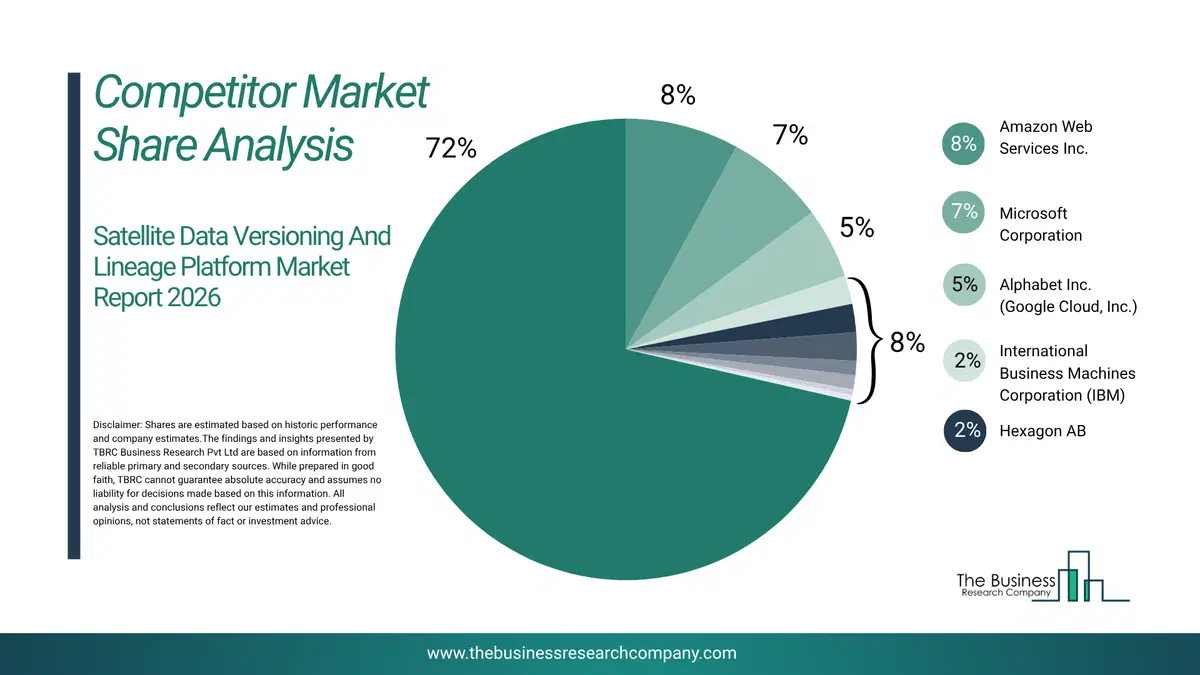
This chart is for illustrative purposes; the full report includes a detailed competitor analysis and comprehensive overview of the top 10 companies in the market.
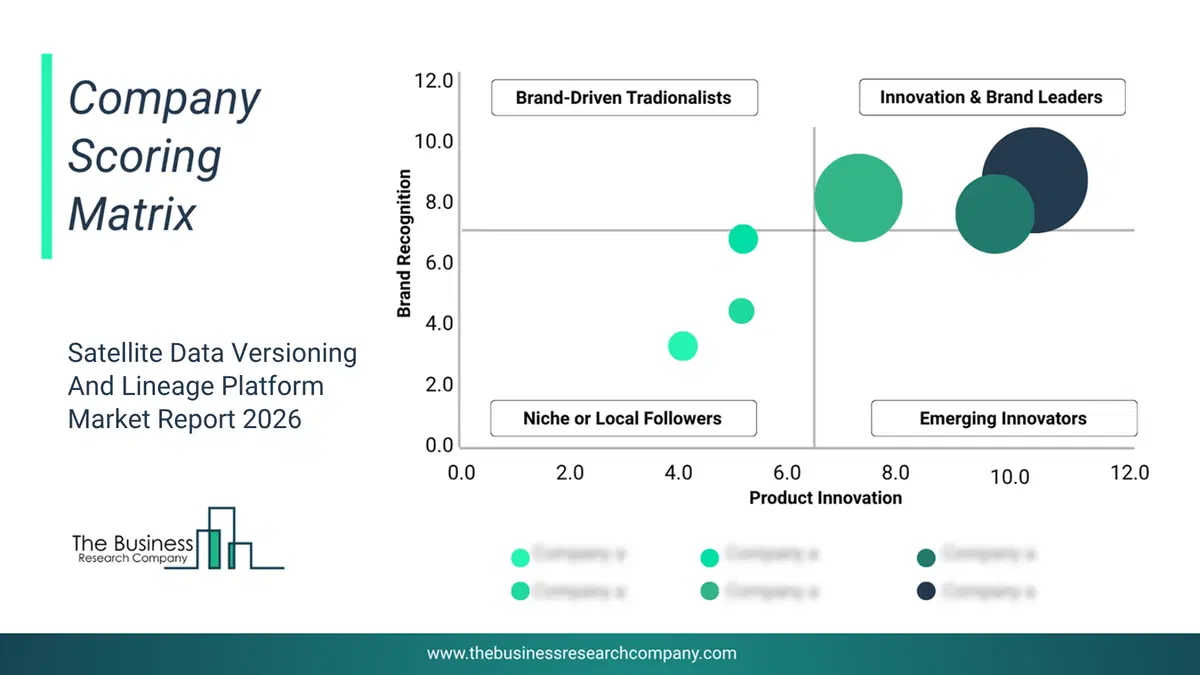
This chart maps companies by product innovation and brand strength, with bubble size indicating relative revenue, helping identify market leaders, challengers, and niche players. This is an illustrative chart; the full report provides a complete and accurate competitive analysis.
Global Satellite Data Versioning And Lineage Platform Market Trends and Insights
Major companies operating in the satellite data versioning and lineage platform market are focusing on developing advanced solutions, such as row-level lineage, to enhance dataset versioning, ensure data provenance, and improve auditing and compliance for large-scale satellite imagery. Row-level lineage refers to a technological feature that tracks changes to individual rows in a dataset, enabling detailed historical tracking, mutation operations, and reproducible data workflows. For instance, in April 2025, Apache Iceberg community, a US-based open-source data ecosystem, released Apache Iceberg 1.9.0, its next-generation open table format for lakehouse architectures, introducing native geospatial support and enhanced row lineage. This is designed to manage large-scale geospatial datasets, including global satellite imagery, and adds features such as geometry type support with Well-Known Binary (WKB) encoding, coordinate reference system (CRS84) defaults, multi-dimensional coordinate formats, optional spatial statistics for improved query pruning, and improved equality deletes to maintain row history without sacrificing performance, enabling organizations to track, version, and audit satellite data more effectively.What Are Latest Mergers And Acquisitions In The Satellite Data Versioning And Lineage Platform Market?
In October 2023, International Business Machines Corporation, a US-based technology and enterprise software company, acquired Manta Software Inc. for an undisclosed amount. Through this acquisition, IBM aimed to expand its data and AI governance capabilities by integrating Manta’s automated lineage mapping, impact analysis, and interactive visualization tools, enabling organizations to track, audit, and understand data flows across complex enterprise systems. Manta Software Inc. is a US-based company that specializes in delivering automated data lineage extraction, graph-based visualization, and dependency analysis for databases.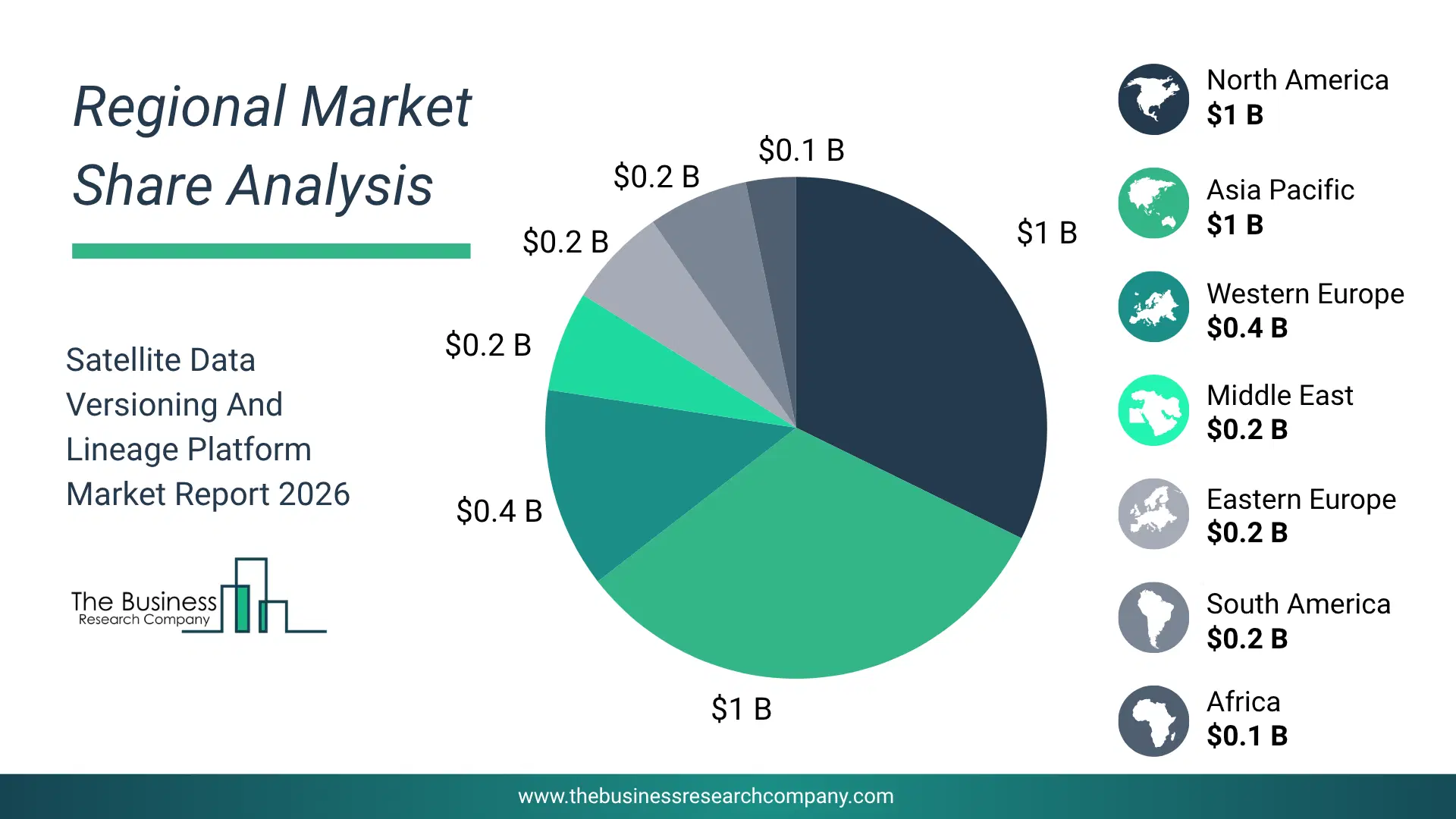
Regional Outlook
North America was the largest region in the satellite data versioning and lineage platform market in 2025. Asia-Pacific is expected to be the fastest-growing region in the forecast period. The regions covered in this market report are Asia-Pacific, South East Asia, Western Europe, Eastern Europe, North America, South America, Middle East, Africa. The countries covered in this market report are Australia, Brazil, China, France, Germany, India, Indonesia, Japan, Taiwan, Russia, South Korea, UK, USA, Canada, Italy, Spain.What Defines the Satellite Data Versioning And Lineage Platform Market?
The satellite data versioning and lineage platform market consists of revenues earned by entities by providing services such as data versioning, data lineage tracking, workflow automation, geospatial data processing, and reporting and visualization. The market value includes the value of related goods sold by the service provider or included within the service offering. The satellite data versioning and lineage platform market also includes sales of satellite data management platform, data version control software, data auditing platform, geospatial analytics platform, and cloud storage solutions. Values in this market are ‘factory gate’ values, that is the value of goods sold by the manufacturers or creators of the goods, whether to other entities (including downstream manufacturers, wholesalers, distributors and retailers) or directly to end customers. The value of goods in this market includes related services sold by the creators of the goods.How is Market Value Defined and Measured?
The market value is defined as the revenues that enterprises gain from the sale of goods and/or services within the specified market and geography through sales, grants, or donations in terms of the currency (in USD unless otherwise specified). The revenues for a specified geography are consumption values that are revenues generated by organizations in the specified geography within the market, irrespective of where they are produced. It does not include revenues from resales along the supply chain, either further along the supply chain or as part of other products.
This chart presents market attractiveness based on a quantitative evaluation of growth, competition, strategic alignment, and risk, offering a clear view of opportunity areas for decision-making. This chart is for illustrative purposes; the full report contains the complete analysis.

This chart highlights the Total Addressable Market (TAM) by estimating the maximum revenue opportunity using an assumption-driven approach, supporting strategic planning and opportunity sizing across markets. The chart is illustrative; the full report provides a more comprehensive analysis.
What Key Data and Analysis Are Included in the Satellite Data Versioning And Lineage Platform Market Report 2026?
The satellite data versioning and lineage platform market research report is one of a series of new reports from The Business Research Company that provides market statistics, including industry global market size, regional shares, competitors with the market share, detailed market segments, market trends and opportunities, and any further data you may need to thrive in the satellite data versioning and lineage platform industry. The market research report delivers a complete perspective of everything you need, with an in-depth analysis of the current and future state of the industry.Satellite Data Versioning And Lineage Platform Market Report Forecast Analysis
| Report Attribute | Details |
|---|---|
| Market Size Value In 2026 | $1.4 billion |
| Revenue Forecast In 2030 | $2.62 billion |
| Growth Rate | CAGR of 16.8% from 2026 to 2030 |
| Base Year For Estimation | 2025 |
| Actual Estimates/Historical Data | 2020-2025 |
| Forecast Period | 2026 - 2030 |
| Market Representation | Revenue in USD Billion and CAGR from 2026 to 2030 |
| Segments Covered | Component, Deployment Mode, Application, End-User |
| Regional Scope | Asia-Pacific, Western Europe, Eastern Europe, North America, South America, Middle East, Africa |
| Country Scope | The countries covered in the report are Australia, Brazil, China, France, Germany, India, Indonesia, Japan, Taiwan, Russia, South Korea, UK, USA, Canada, Italy, Spain. |
| Key Companies Profiled | Amazon Web Services Inc., Google Cloud Inc., Airbus Defence and Space Inc., IBM Corporation Inc., Hexagon AB Inc., Esri Inc., Planet Labs Inc., Earth Daily Analytics Inc., Spire Global Inc., BlackSky Inc., EOS Data Analytics Inc., Safe Software Inc., Synspective Inc., Satellogic Inc., Albedo Inc., SatSure Inc., Ursa Space Systems Inc., Cubewerx Inc., Open Data Cube Inc., SkyWatch Inc. |
| Customization Scope | Request for Customization |
| Pricing And Purchase Options | Explore Purchase Options |