
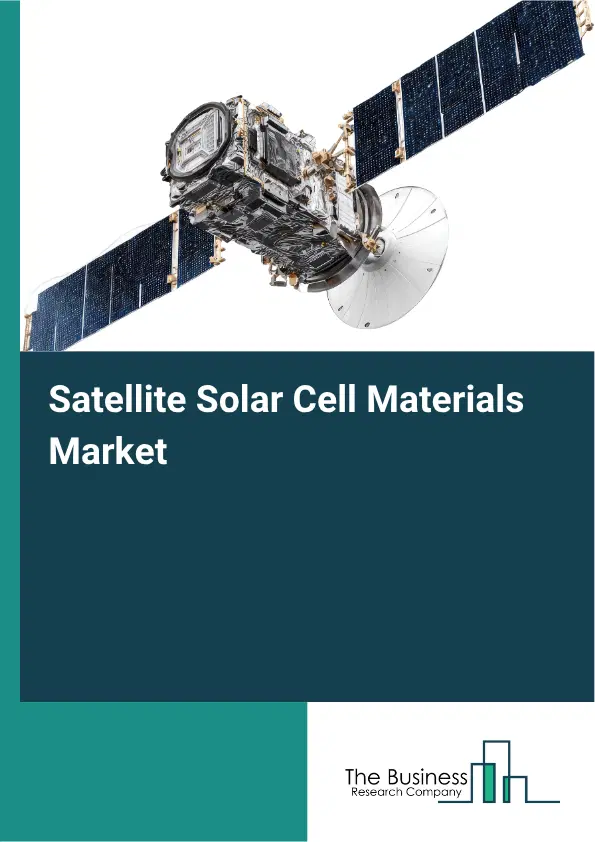
Satellite Solar Cell Materials Market Report 2026
Global Outlook – By Solar Cell Type (Single-Junction Solar Cells, Dual-Junction Solar Cells, Triple-Junction Solar Cells, Multi-Junction Solar Cells), By Satellite Type (Small Satellites, Medium Satellites, Large Satellites), By Application (Space Stations, Satellites, Rovers, Other Applications), By End User (Commercial, Government, Defense, Space Research Organizations) – Market Size, Trends, Strategies, and Forecast to 2035
Satellite Solar Cell Materials Market Overview
• Satellite Solar Cell Materials market size has reached to $0.04 billion in 2025 • Expected to grow to $0.08 billion in 2030 at a compound annual growth rate (CAGR) of 13.4% • Growth Driver: Increasing Space Exploration Missions Are Driving The Market Due To Rising Demand For Reliable, High-Efficiency Spacecraft Power Generation Materials • Market Trend: Advanced Silicon Solar Materials Enable Scalable Orbital Power Infrastructure Growth • North America was the largest region in 2025 and Asia-Pacific is the fastest growing region.What Is Covered Under Satellite Solar Cell Materials Market?
Satellite solar cell materials are semiconductor and photovoltaic materials used to manufacture solar cells and photovoltaic assemblies for satellites and other spacecraft. These materials are selected to provide the electrical, mechanical, thermal, and radiation performance required for operation in the space environment and to meet specific mission requirements. The main solar cell types of satellite solar cell materials include single-junction solar cells, dual-junction solar cells, triple-junction solar cells, and multi-junction solar cells. Single-junction solar cells use a single semiconductor junction to convert sunlight into electrical energy and are used in space power systems where reliable energy generation is required. These materials are used in small satellites, medium satellites, and large satellites. The various applications involved are space stations, satellites, rovers, and others, and they are used by several end users such as commercial, government, defense, and space research organizations.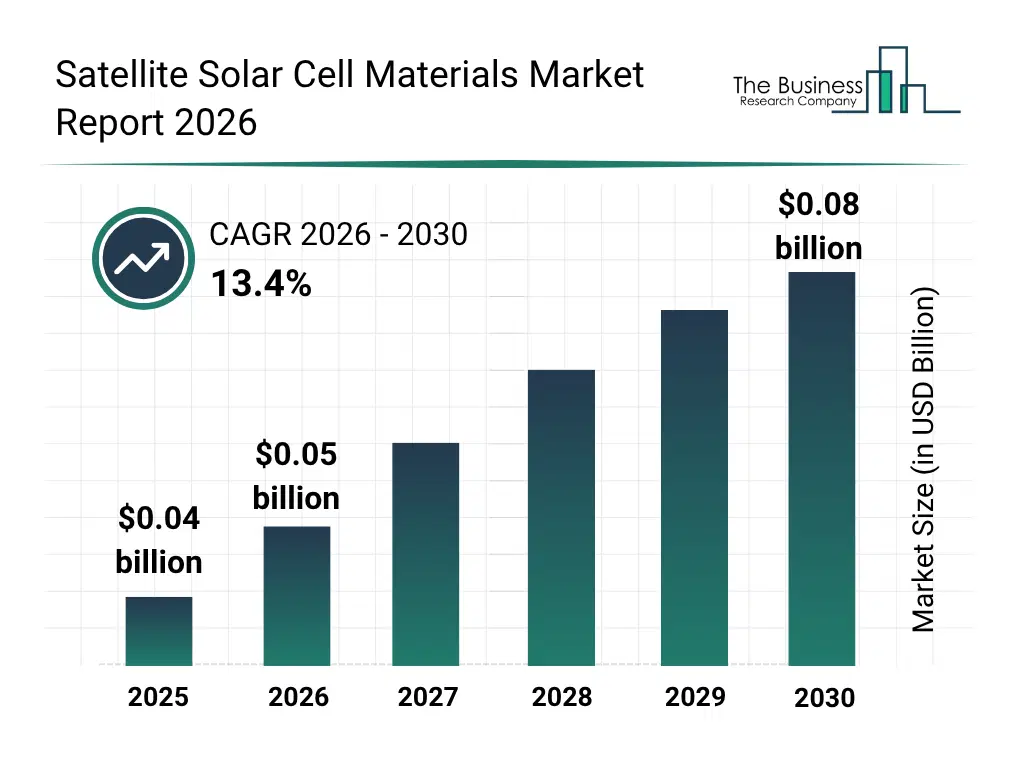
What Is The Satellite Solar Cell Materials Market Size and Share 2026?
The satellite solar cell materials market size has grown rapidly in recent years. It will grow from $0.04 billion in 2025 to $0.05 billion in 2026 at a compound annual growth rate (CAGR) of 13.9%. The growth in the historic period can be attributed to increasing satellite launches, growing demand for space-based power generation, adoption of high-efficiency photovoltaic technologies, expansion of commercial satellite programs, rising use of gallium arsenide solar cells in spacecraft.What Is The Satellite Solar Cell Materials Market Growth Forecast?
The satellite solar cell materials market size is expected to see rapid growth in the next few years. It will grow to $0.08 billion in 2030 at a compound annual growth rate (CAGR) of 13.4%. The growth in the forecast period can be attributed to increasing deployment of large satellite constellations, growing demand for higher power density in spacecraft, rising adoption of advanced multi-junction solar cells, expansion of deep-space exploration missions, increasing investment in next-generation space power technologiesincreasing deployment of large satellite constellations, growing demand for higher power density in spacecraft, rising adoption of advanced multi-junction solar cells, expansion of deep-space exploration missions, increasing investment in next-generation space power technologiesincreasing deployment of large satellite constellations, growing demand for higher power density in spacecraft, rising adoption of advanced multi-junction solar cells, expansion of deep-space exploration missions, increasing investment in next-generation space power technologies. Major trends in the forecast period include advanced multi-junction solar cell development, radiation-hardened photovoltaic materials, high-efficiency space solar cell materials, lightweight solar cell material innovation, high-temperature solar cell material development.Tariff Impact On Satellite Solar Cell Materials Market
Tariffs are impacting the satellite solar cell materials market by increasing the cost of imported semiconductor materials, photovoltaic components, specialized manufacturing equipment, and critical raw materials used in space-grade solar cells. Solar cell manufacturers and satellite developers in North America, Europe, and Asia-Pacific may face higher production costs and supply-chain disruptions due to dependence on international aerospace and semiconductor supply networks. However, tariffs can encourage domestic production of gallium arsenide, germanium, and other advanced photovoltaic materials, while promoting supplier diversification and strengthening regional space manufacturing capabilities.
Global Satellite Solar Cell Materials Market Segmentation
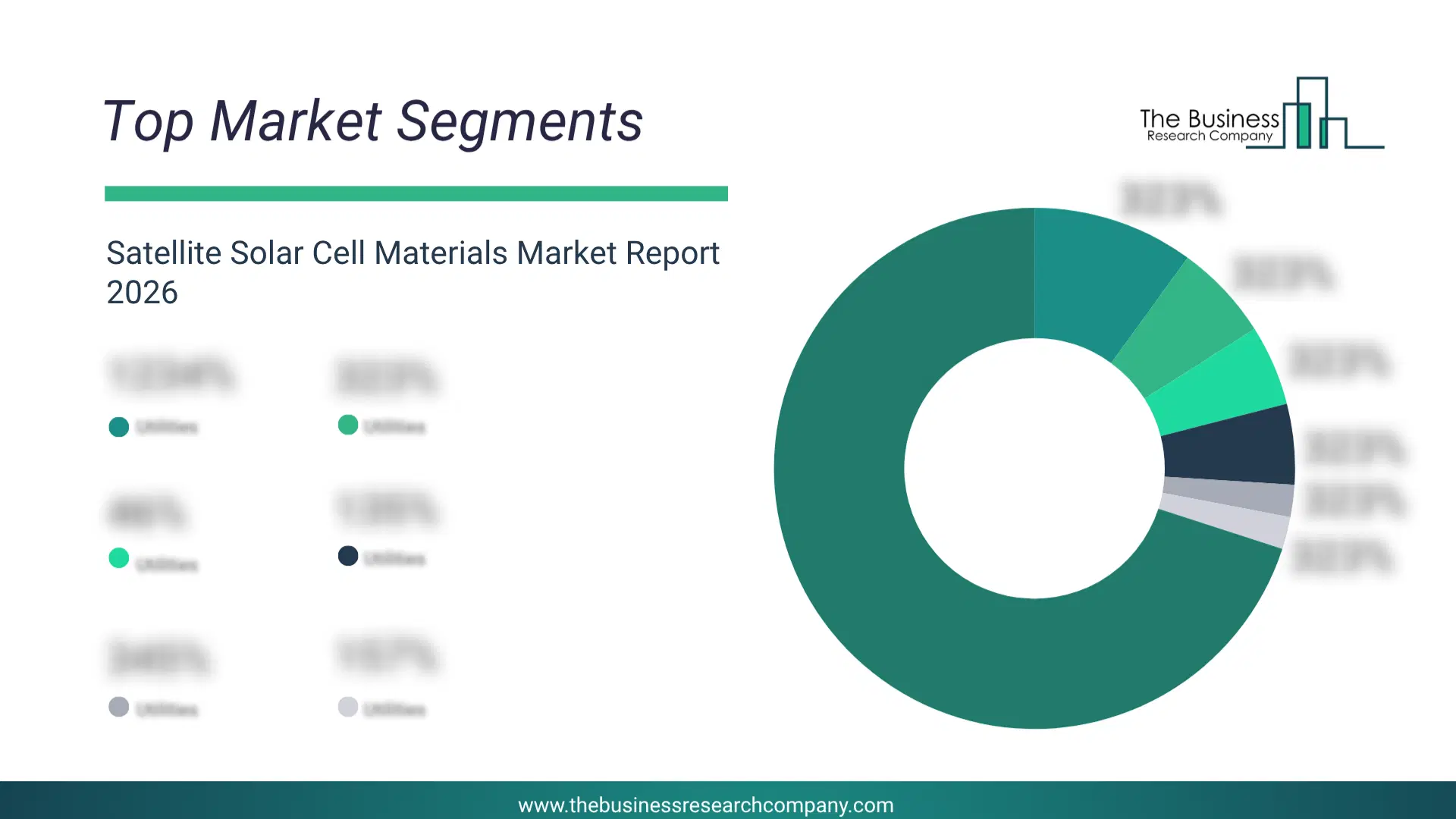
2) By Satellite Type: Small Satellites, Medium Satellites, Large Satellites 3) By Application: Space Stations, Satellites, Rovers, Other Applications 4) By End User: Commercial, Government, Defense, Space Research Organizations Subsegments: 1) By Single-Junction Solar Cells: Crystalline Silicon Single-Junction Solar Cells, Gallium Arsenide Single-Junction Solar Cells 2) By Dual-Junction Solar Cells: Gallium Arsenide And Germanium Dual-Junction Solar Cells, Indium Gallium Phosphide And Gallium Arsenide Dual-Junction Solar Cells, Silicon And Gallium Arsenide Dual-Junction Solar Cells 3) By Triple-Junction Solar Cells: Indium Gallium Phosphide Gallium Arsenide Germanium Triple-Junction Solar Cells, Gallium Indium Phosphide Gallium Arsenide Germanium Triple-Junction Solar Cells, Advanced Triple-Junction Solar Cells 4) By Multi-Junction Solar Cells: Four-Junction Solar Cells, Five-Junction Solar Cells, Six-Junction And Above Solar CellsWhat Is The Driver Of The Satellite Solar Cell Materials Market?
The increasing space exploration missions is expected to propel the growth of the satellite solar cell materials market going forward. Space exploration missions are scientific and technological activities conducted beyond Earth's atmosphere to explore celestial bodies, expand scientific knowledge, and develop capabilities for future space operations. The increasing space exploration missions are due to rising government and commercial investments supporting advanced research, satellite deployment, lunar exploration, and deep-space programs. The satellite solar cell materials support space exploration missions by providing high-efficiency, lightweight, and radiation-resistant photovoltaic materials that enable reliable power generation for satellites, spacecraft, rovers, and orbital platforms. For instance, in June 2026, according to NASA, a US-based space agency, NASA selected Astrobotic, Firefly Aerospace, and Intuitive Machines to deliver four new lunar missions in late 2028, with awards totaling nearly $600 million, as part of the agency’s Moon Base Program. Therefore, the increasing space exploration missions is driving the growth of the satellite solar cell materials industry.Key Players In The Global Satellite Solar Cell Materials Market
Major companies operating in the satellite solar cell materials market are Mitsubishi Electric Corporation, The Boeing Company, AXT Inc, Airbus SE, Lockheed Martin Corporation, Sumitomo Electric Industries Ltd, Northrop Grumman Corporation, Umicore NV, Furukawa Electric Co Ltd, Coherent Corp, Rocket Lab Corporation, 5N Plus Inc, IQE plc, Stanford Advanced Materials, American Elements, Freiberger Compound Materials GmbH, Wafer World Inc, Western Minmetals SC Corporation, Vital Materials Co Limited, China Crystal Technologies Co Ltd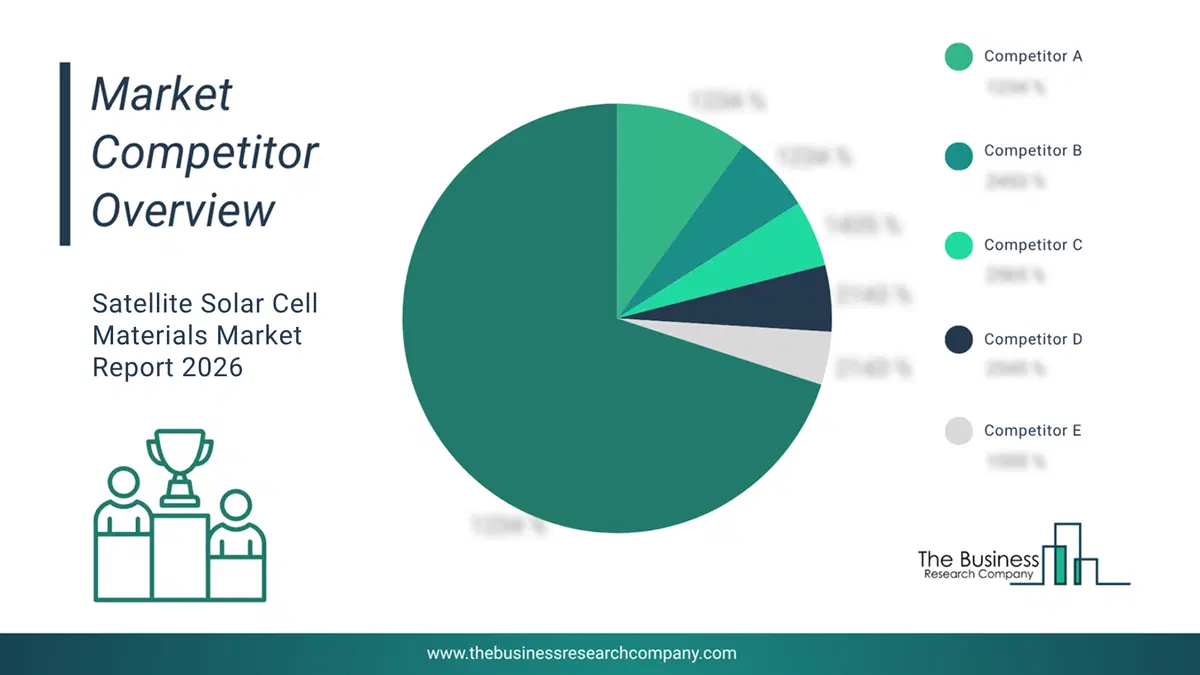
This chart is for illustrative purposes; the full report includes a detailed competitor analysis and comprehensive overview of the top 10 companies in the market.
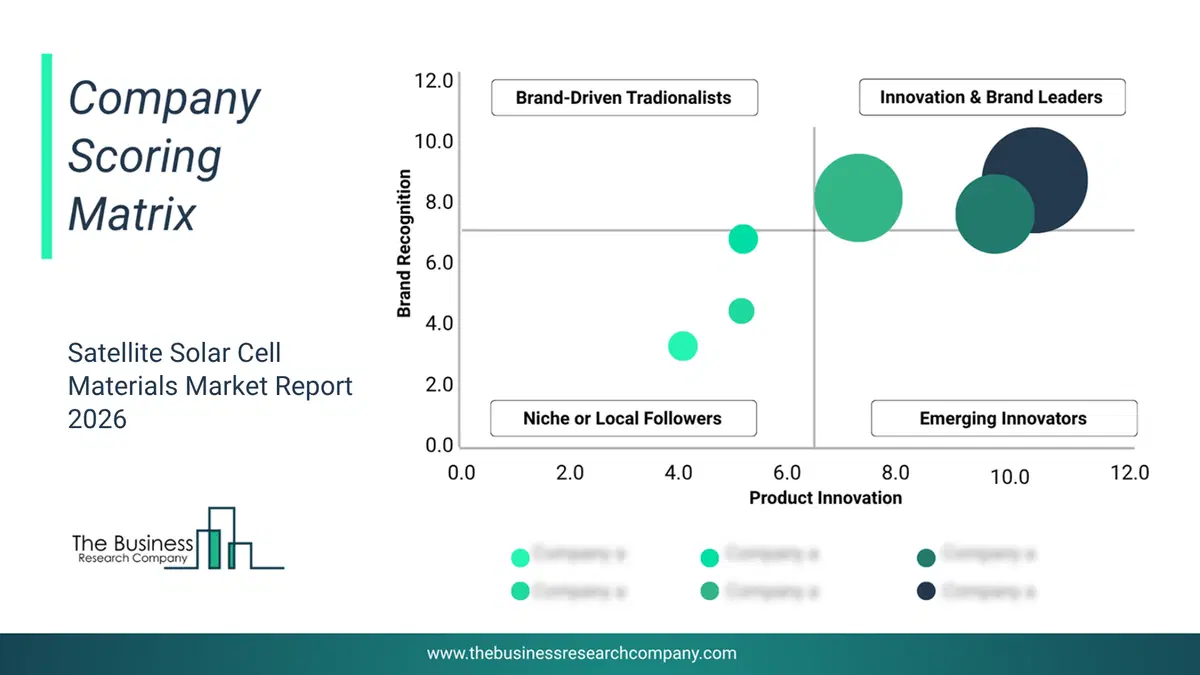
This chart maps companies by product innovation and brand strength, with bubble size indicating relative revenue, helping identify market leaders, challengers, and niche players. This is an illustrative chart; the full report provides a complete and accurate competitive analysis.
Global Satellite Solar Cell Materials Market Trends and Insights
Major companies operating in the satellite solar cell materials market are focusing on developing advanced solutions, such as space solar arrays to improve scalable, lightweight, and cost-efficient power generation for next-generation satellite constellations and orbital infrastructure. A space solar array is a photovoltaic power system that converts solar energy into electricity to power satellites and other spacecraft in orbit. For instance, in February 2026, Rocket Lab Corporation, a US-based space technology company, introduced Advanced Silicon Solar Arrays, an advanced space power system. The solution features radiation-hardened silicon solar cells and hybrid photovoltaic configurations that combine silicon with high-efficiency cells, offering flexible, lightweight, and modular designs suitable for large-scale deployment. The innovation strengthens supply chain resilience by reducing dependence on gallium arsenide and germanium while enabling economical power generation for future satellite constellations and space-based computing infrastructure.What Are Latest Mergers And Acquisitions In The Satellite Solar Cell Materials Market?
In June 2026, York Space Systems, a US-based spacecraft manufacturer and space mission solutions provider, acquired Solestial for $67 million. With this acquisition, York Space Systems aims to strengthen its vertically integrated spacecraft capabilities by securing a domestic supply of flight-proven space solar technology, reducing supply chain risks, and enhancing the scalability of satellite power systems for national security, civil, and commercial missions. Solestial is a US-based provider of space-grade silicon solar cells, flexible solar power modules, and radiation self-healing photovoltaic technology for satellites and other space applications.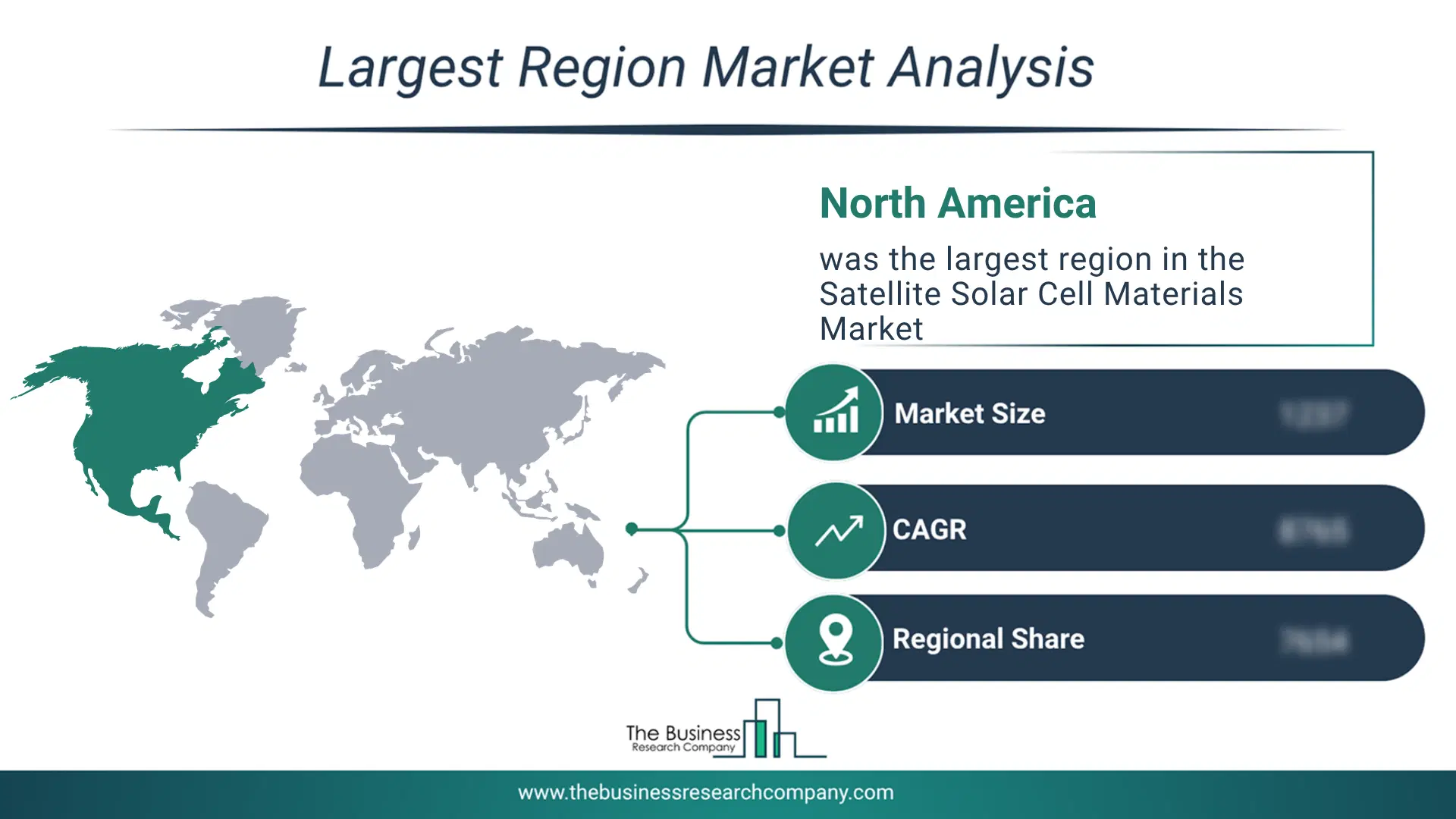
Regional Outlook/Insights
North America was the largest region in the satellite solar cell materials market in 2025. Asia-Pacific is expected to be the fastest-growing region in the forecast period. The regions covered in this market report are Asia-Pacific, South East Asia, Western Europe, Eastern Europe, North America, South America, Middle East, Africa. The countries covered in this market report are Australia, Brazil, China, France, Germany, India, Indonesia, Japan, Taiwan, Russia, South Korea, UK, USA, Canada, Italy, Spain.What Defines the Satellite Solar Cell Materials Market?
The satellite solar cell materials market consists of sales of transparent conductive coatings, anti-reflective coatings, germanium substrates, flexible polyimide substrates, ceramic substrates, conductive metal contacts, silver metallization pastes, gold metallization layers, aluminum back surface materials, and solder interconnection materials. Values in this market are ‘factory gate’ values, that is, the value of goods sold by the manufacturers or creators of the goods, whether to other entities (including downstream manufacturers, wholesalers, distributors, and retailers) or directly to end customers. The value of goods in this market includes related services sold by the creators of the goods.How is Market Value Defined and Measured?
The market value is defined as the revenues that enterprises gain from the sale of goods and/or services within the specified market and geography through sales, grants, or donations in terms of the currency (in USD unless otherwise specified). The revenues for a specified geography are consumption values that are revenues generated by organizations in the specified geography within the market, irrespective of where they are produced. It does not include revenues from resales along the supply chain, either further along the supply chain or as part of other products.
This chart presents market attractiveness based on a quantitative evaluation of growth, competition, strategic alignment, and risk, offering a clear view of opportunity areas for decision-making. This chart is for illustrative purposes; the full report contains the complete analysis.

This chart highlights the Total Addressable Market (TAM) by estimating the maximum revenue opportunity using an assumption-driven approach, supporting strategic planning and opportunity sizing across markets. The chart is illustrative; the full report provides a more comprehensive analysis.
What Key Data and Analysis Are Included in the Satellite Solar Cell Materials Market Report 2026?
The satellite solar cell materials market research report is one of a series of new reports from The Business Research Company that provides market statistics, including industry global market size, regional shares, competitors with the market share, detailed market segments, market trends and opportunities, and any further data you may need to thrive in the satellite solar cell materials industry. The market research report delivers a complete perspective of everything you need, with an in-depth analysis of the current and future state of the industry.Satellite Solar Cell Materials Market Report Forecast Analysis
| Report Attribute | Details |
|---|---|
| Market Size Value In 2026 | $0.05 billion |
| Revenue Forecast In 2030 | $0.08 billion |
| Growth Rate | CAGR of 13.4% from 2026 to 2035 |
| Base Year For Estimation | 2025 |
| Actual Estimates/Historical Data | 2020-2025 |
| Forecast Period | 2026 - 2030 |
| Market Representation | Revenue in USD Billion and CAGR from 2026 to 2030 |
| Segments Covered | Solar Cell Type, Satellite Type, Application, End User |
| Regional Scope | Asia-Pacific, Western Europe, Eastern Europe, North America, South America, Middle East, Africa |
| Country Scope | The countries covered in the report are Australia, Brazil, China, France, Germany, India, Indonesia, Japan, Taiwan, Russia, South Korea, UK, USA, Canada, Italy, Spain. |
| Customization Scope | Request for Customization |
| Pricing And Purchase Options | Explore Purchase Options |