
Second Generation Biofuels Market Report 2026
Global Outlook – By Type (Cellulosic Ethanol, Biodiesel, Bio Butanol, Bio Dimethylether (DME), Other Types), By Process (Biochemical Process, Thermochemical Process), By Feedstock (Simple Lignocellulose, Complex Lignocellulose, Syngas, Algae, Other Feedstocks), By Application (Transportation, Power Generation, Other Applications) – Market Size, Trends, Strategies, and Forecast to 2030
Second Generation Biofuels Market Overview
• Second Generation Biofuels market size has reached to $13.42 billion in 2025 • Expected to grow to $41.59 billion in 2030 at a compound annual growth rate (CAGR) of 25.5% • Growth Driver: Environmental Benefits Fueling Growth In The Second-Generation Biofuels Market • Market Trend: Strategic Partnerships And Collaborations Propel Growth In The Second-Generation Biofuels Market • North America was the largest region in 2025 and Asia-Pacific is the fastest growing region.Market Gains By 2030 – Top Opportunities By Segment
Market Gain identifies the most promising market opportunities by highlighting the segments or products expected to generate the highest incremental revenue growth over the next five years.
What Is Covered Under Second Generation Biofuels Market?
Second generation biofuels, also known as advanced biofuels, are a type of renewable fuel made from non-food feedstock that has significant advantages over first generation biofuels. Second generation biofuels are designed to address the limits and issues associated with first generation biofuels, such as the usage of food crops and the possibility of indirect land-use change. The main types of second-generation biofuels are cellulosic ethanol, biodiesel, biobutanol, biodimethyl ether (DME), and others. Cellulosic ethanol is a form of biofuel made from cellulose, a complex carbohydrate present in plant cell walls. They are prepared by biochemical process and thermochemical processes using simple lignocellulose, complex lignocellulose, syngas, algae, and other feedstocks for transportation, power generation, and other applications.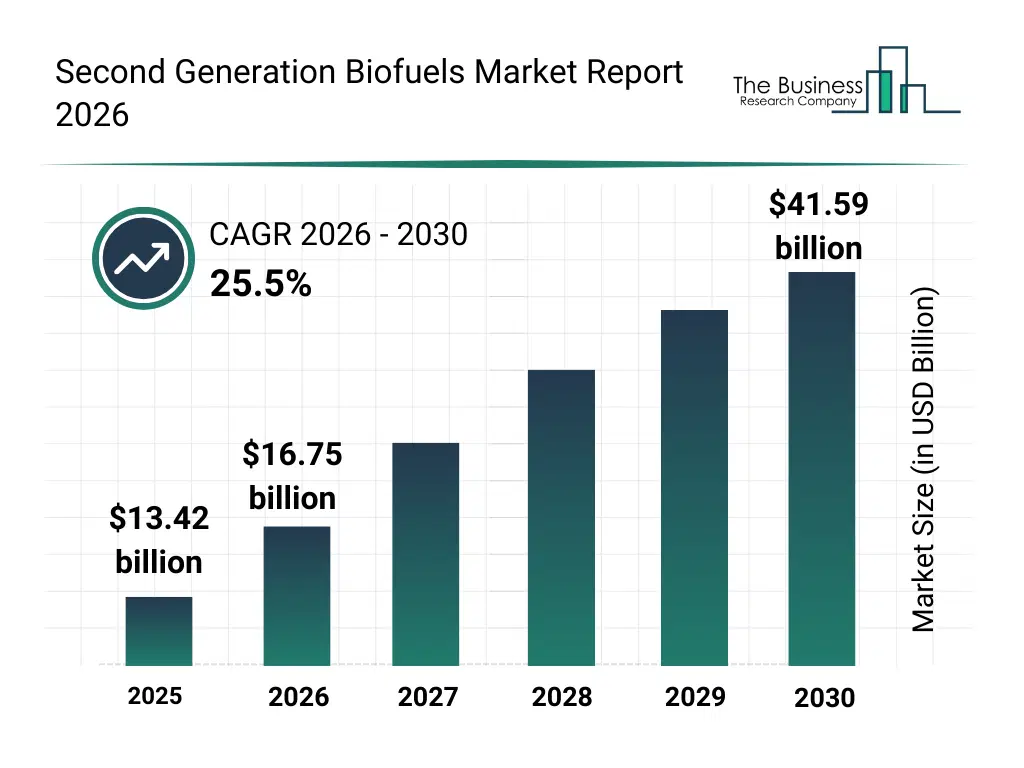
What Is The Second Generation Biofuels Market Size and Share 2026?
The second generation biofuels market size has grown exponentially in recent years. It will grow from $13.42 billion in 2025 to $16.75 billion in 2026 at a compound annual growth rate (CAGR) of 24.8%. The growth in the historic period can be attributed to concerns over food based biofuels, environmental regulations, government biofuel mandates, availability of agricultural residues, research in biofuel technologies.What Is The Second Generation Biofuels Market Growth Forecast?
The second generation biofuels market size is expected to see exponential growth in the next few years. It will grow to $41.59 billion in 2030 at a compound annual growth rate (CAGR) of 25.5%. The growth in the forecast period can be attributed to net zero emission targets, demand for sustainable fuels, advancements in conversion efficiency, expansion of renewable energy policies, investments in bio-refineries. Major trends in the forecast period include rising use of non food feedstocks, growth in cellulosic ethanol production, expansion of advanced biodiesel technologies, increasing focus on low carbon fuels, scaling of thermochemical conversion processes.
Global Second Generation Biofuels Market Segmentation
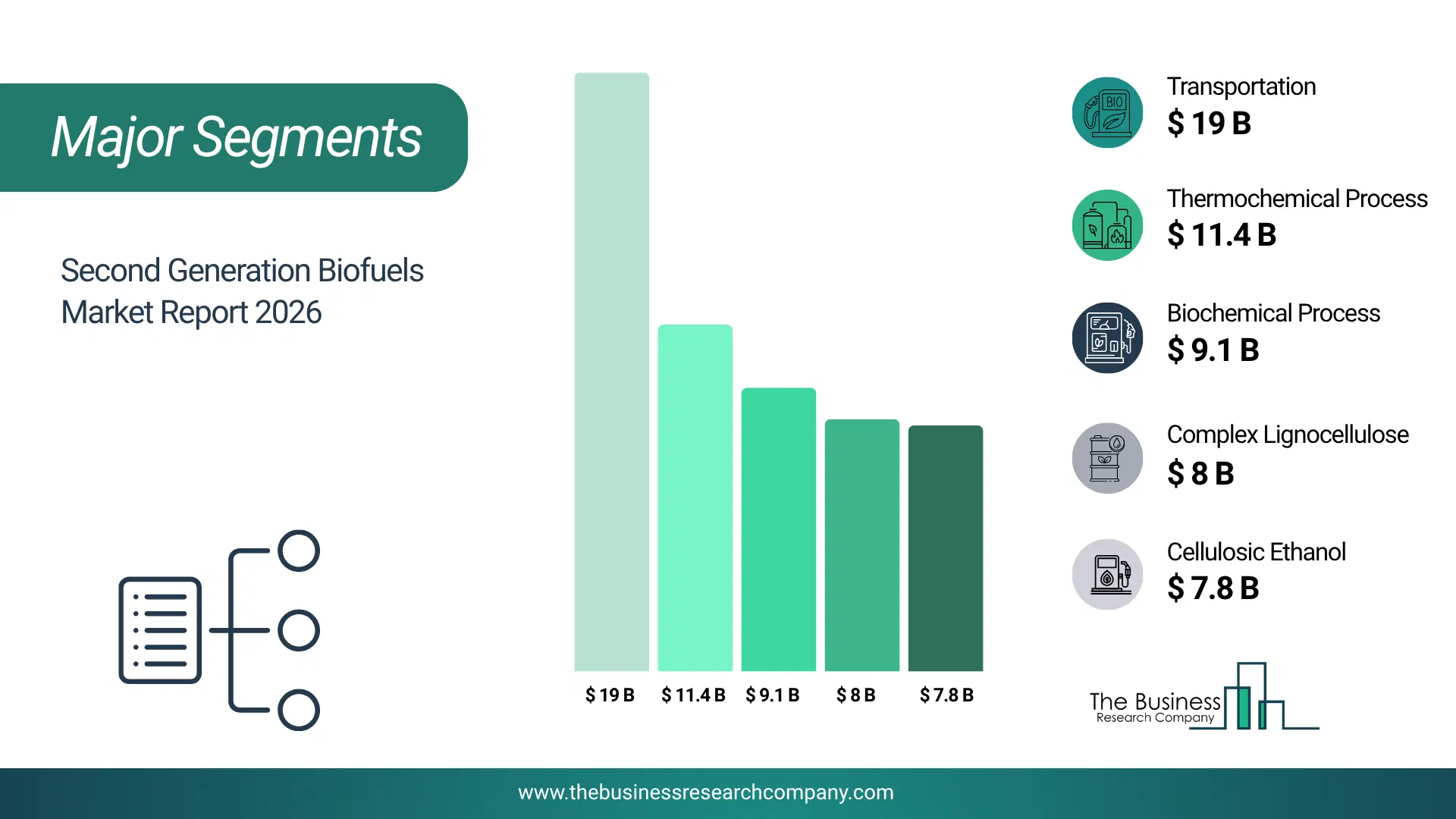
1) By Type: Cellulosic Ethanol, Biodiesel, Bio Butanol, Bio Dimethylether (DME), Other Types 2) By Process: Biochemical Process, Thermochemical Process 3) By Feedstock: Simple Lignocellulose, Complex Lignocellulose, Syngas, Algae, Other Feedstocks 4) By Application: Transportation, Power Generation, Other Applications Subsegments: 1) By Cellulosic Ethanol: Acid Hydrolysis Ethanol, Enzymatic Hydrolysis Ethanol 2) By Biodiesel: Transesterification Biodiesel, Non-Transesterified Biodiesel 3) By Bio Butanol: ABE (Acetone-Butanol-Ethanol) Fermentation, Other Production Methods 4) By Bio Dimethylether (DME): Methanol-Derived DME, Gasification-Derived DME 5) By Other Types: Renewable Jet Fuel, Biogas, Algal Biofuels The top segments in the second generation biofuels market will be: • Transportation will reach $19051.52 Million by 2025. • Thermochemical Process will reach $11420.94 Million by 2025. • Biochemical Process will reach $9196.28 Million by 2025. • Complex Lignocellulose will reach $8032.27 Million by 2025. • Cellulosic Ethanol will reach $7845.51 Million by 2025.What Is The Driver Of The Second Generation Biofuels Market?
The high usage of biofuels due to environmental benefits is expected to propel the growth of the second-generation biofuels market going forward. Biofuel is any liquid fuel created from biological material such as trees, agricultural waste, crops, or grass. The usage of biofuels is rising because they significantly reduce greenhouse gas emissions compared to fossil fuels, helping governments and industries meet climate change mitigation and carbon reduction targets more effectively. Second-generation biofuels, produced from non-food biomass such as agricultural residues, forestry waste, and dedicated energy crops, support the broader adoption of biofuels by minimizing competition with food resources, reducing greenhouse gas emissions, and providing a more sustainable and scalable alternative to first-generation biofuels. For instance, in October 2025, according to U.S. Energy Information Administration (EIA), US-based government agency, renewable diesel and other biofuels production capacity increased just 391 million gallons per year (gal/y) in 2024. Therefore, the high usage of biofuels due to environmental benefits is driving the growth of the second-generation biofuels market.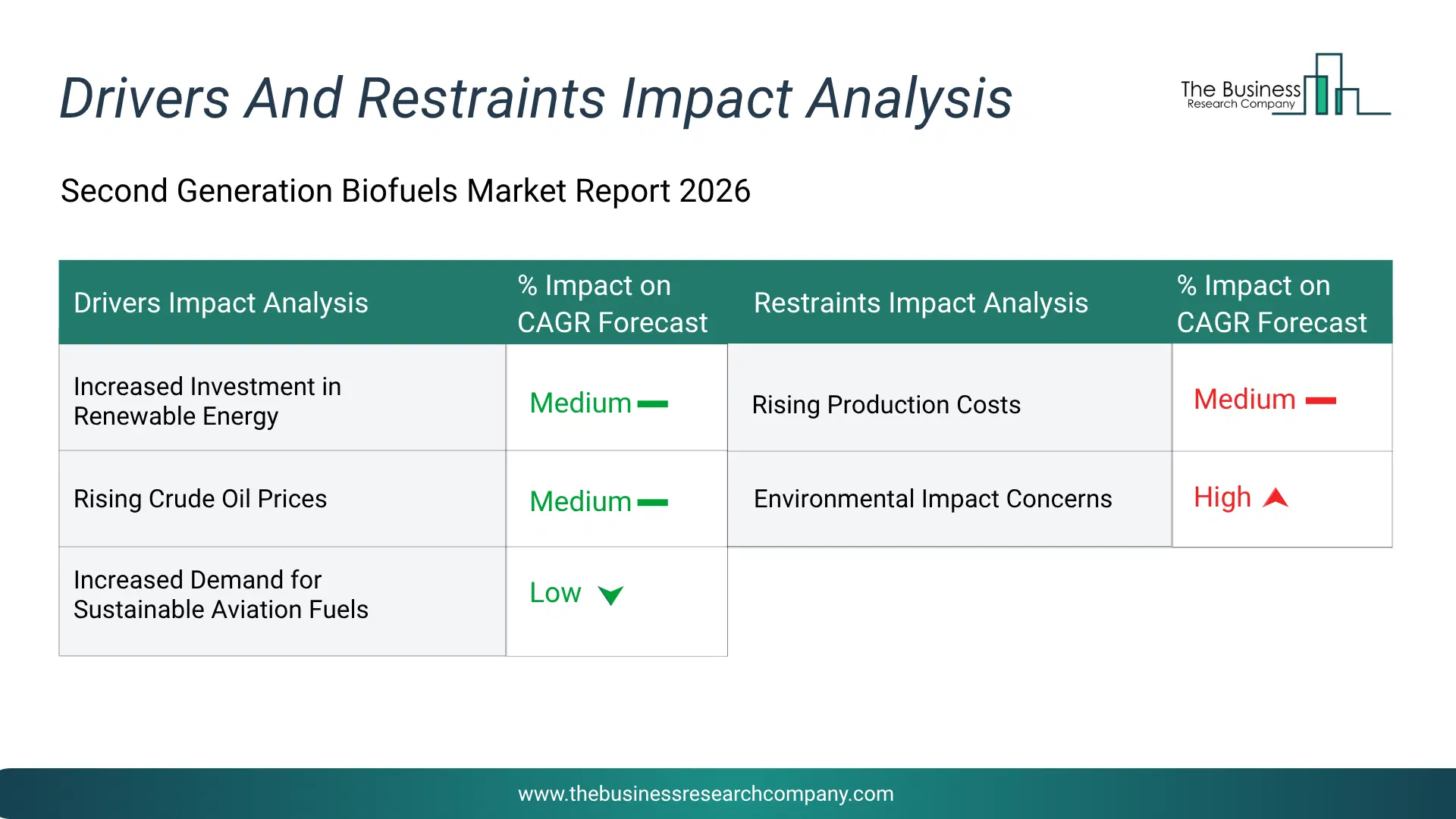
Infographic Chart Showing Key Market Drivers Analysis And Restraints For Second Generation Biofuels Market
The chart presents an impact analysis of key drivers and restraints, quantifying their relative influence on the market's growth rate and helping assess the balance between growth enablers and limiting factors. This chart offers a high-level perspective; the full report contains more detailed insights.
How Will The Drivers Impact Growth In The Global Second Generation Biofuels Market?
• Increased Investment in Renewable Energy (Medium) – The increased investment in renewable energy will become a key driver of growth in the second generation biofuels global market by 2030. Such investment accelerates the development of advanced technologies that convert non-food biomass into sustainable fuels, helping to reduce reliance on fossil fuels. It also enables the expansion of biorefineries and the infrastructure necessary for large-scale commercial production. As a result, the increased investment in renewable energy is anticipated to contributing to a 1.5% annual growth in the market. • Rising Crude Oil Prices (Medium) – The rising crude oil prices will emerge as a major factor driving the expansion of the market by 2030. As conventional fossil fuels become more expensive, alternative fuels like second-generation biofuels become more economically appealing. This shift in cost dynamics boosts investment in biofuel technologies and infrastructure, enhancing their competitiveness and accelerating their adoption in the global energy landscape. Consequently, the rising crude oil prices is projected to contributing to a 1.0% annual growth in the market. • Increased Demand for Sustainable Aviation Fuels (Low) – The increased demand for sustainable aviation fuels will serve as a key growth catalyst for the market by 2030. As a result, new market opportunities emerge, creating strong incentives for the production of second-generation biofuels, which play a vital role in helping the aviation sector move toward carbon neutrality. Therefore, this increased demand for sustainable aviation fuels is projected to supporting to a 0.8% annual growth in the market. • Government Support for Green Technologies (Low) – The government support for green technologies will become a significant driver contributing to the growth of the market by 2030. Initiatives such as subsidies, tax incentives, and research funding significantly reduce production costs and accelerate the advancement of biofuel technologies. These policy measures encourage innovation, support the scaling of production, and enhance the competitiveness of advanced biofuels compared to fossil fuels, ultimately contributing to a more sustainable and low-carbon energy future. Consequently, the government support for green technologies is projected to contributing to a 0.5% annual growth in the market.How Will The Restraints Impact Growth In The Global Second Generation Biofuels Market?
• Rising Production Costs (Medium) – Rising Production Costs will restrict the growth of the Second Generation Biofuels market during the forecast period. Second-generation biofuel production from lignocellulosic biomass involves complex and expensive conversion processes, resulting in higher production costs compared to conventional biofuels. Cost challenges include feedstock handling, pretreatment, enzymatic hydrolysis, and fermentation steps. The high production costs limit the commercial viability of second-generation biofuels, particularly without strong policy support and subsidies, hindering market growth. • Environmental Impact Concerns (Medium) – Environmental Impact Concerns will restrict the growth of the Second Generation Biofuels market during the forecast period. Concerns about the environmental impact of large-scale biofuel production, including land use change, water consumption, and biodiversity loss, affect public perception and policy support. Competition for agricultural land and potential negative effects on food security raise sustainability questions. These environmental concerns can lead to restrictive policies and reduce social acceptance, impacting market growth.Key Players In The Global Second Generation Biofuels Market
Major companies operating in the second generation biofuels market are TotalEnergies SE, Reliance Industries Limited, INEOS Group Limited, The Andersons Inc., International Flavors & Fragrances Inc., Darling Ingredients Inc, DuPont Nutrition Biosciences ApS, Green Plains Inc, Flint Hills Resources LLC, Gevo Inc., Abengoa S.A., POET LLC, ICM Inc., Enerkem Inc., Advanced Enzyme Technologies Limited, Fulcrum BioEnergy Inc., LanzaTech Inc, Virent Energy Systems Inc., GranBio LLC, Algenol Biofuels Inc., Novamont S.p.A., Edeniq Inc., Mascoma Corporation, BlueFire Renewables Inc, Fiberight LLC., Clariant AG, Raizen S.A., Copersucar SA, Beta Renewables S.p.A., EcoCeres Inc.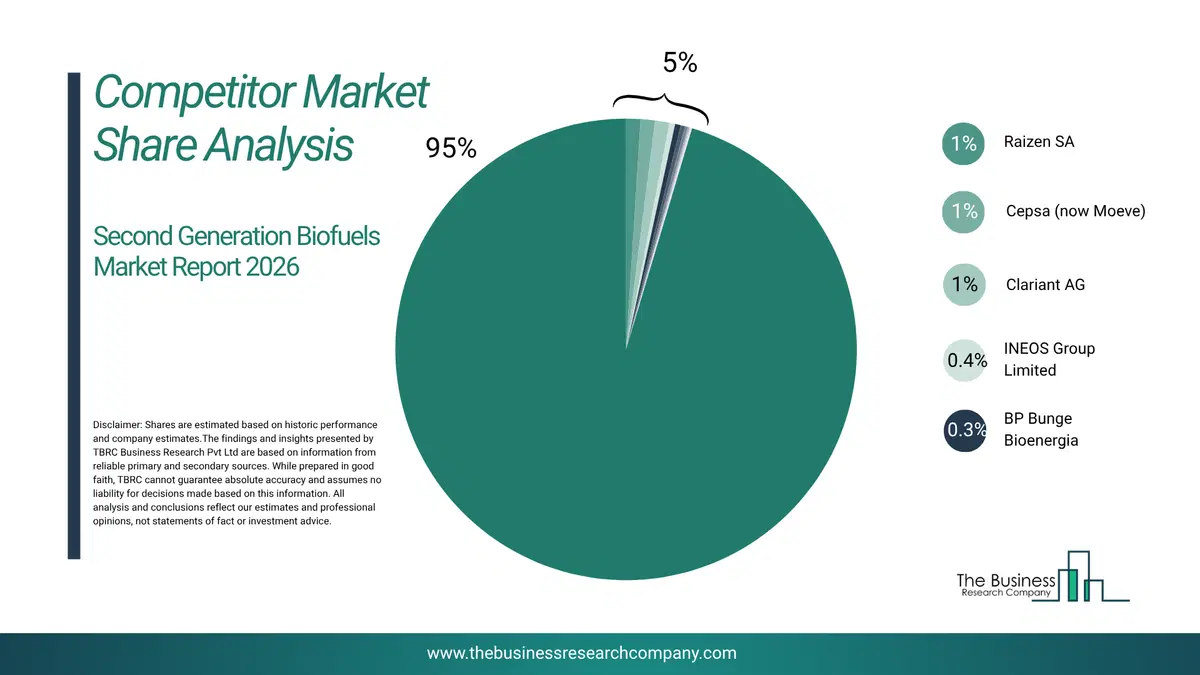
This chart is for illustrative purposes; the full report includes a detailed competitor analysis and comprehensive overview of the top 10 companies in the market.
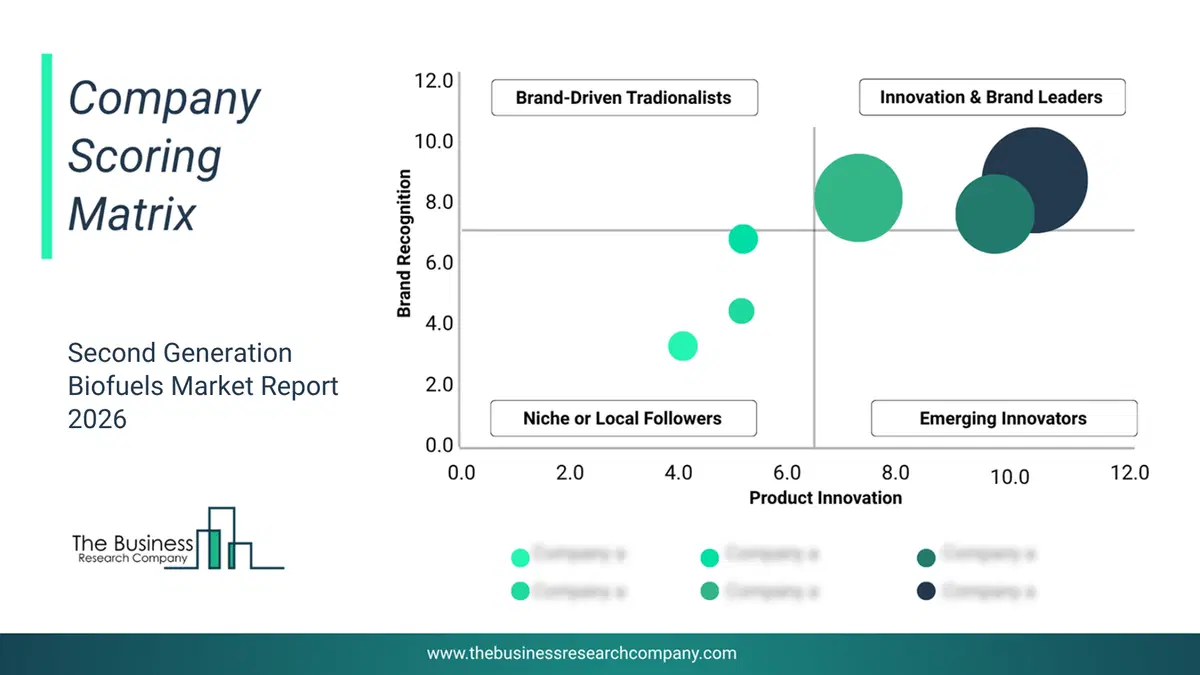
This chart maps companies by product innovation and brand strength, with bubble size indicating relative revenue, helping identify market leaders, challengers, and niche players. This is an illustrative chart; the full report provides a complete and accurate competitive analysis.
Global Second Generation Biofuels Market Trends and Insights
Major players operating in the second-generation biofuels market are focusing on strategic partnerships and collaborations to strengthen their market position and advance sustainable fuel production. Strategic partnerships and collaborations are agreements or joint ventures between companies to combine expertise, resources, and technology, enabling accelerated development and deployment of second-generation biofuels. For instance, in April 2023, Compañía Española de Petróleos S.A. (CEPSA), a Spain-based oil and gas company, partnered with Bio-Oils Huelva S.L.U., a Spain-based biodiesel manufacturer, to establish a joint venture aimed at developing advanced second-generation biofuels through the construction of the largest 2G biofuel production plant in southern Europe, featuring large-scale processing capacity, use of non-food feedstocks, and significantly reduced lifecycle carbon emissions.What Are Latest Mergers And Acquisitions In The Second Generation Biofuels Market?
In September 2025, BTG Bioliquids BV, a Netherlands based leader in fast pyrolysis technology, partnered with NanosTech Technology & Innovations Ltd. to deliver an integrated solution for producing advanced, drop in biofuels. With this partnership, BTG Bioliquids and NanosTech aim to combine BTG’s fast pyrolysis biomass conversion technology with NanosTech’s proprietary Aquaprocessing (AQP) platform to upgrade sustainable bio oils into refinery ready fuels such as sustainable aviation fuel (SAF), renewable diesel, and marine fuels, while collaboratively developing modular biorefinery systems to cut emissions and improve economic viability. NanosTech Technology & Innovations Ltd. is a Canada based catalyst development and manufacturing company focused on advanced processing technologies for renewable fuels.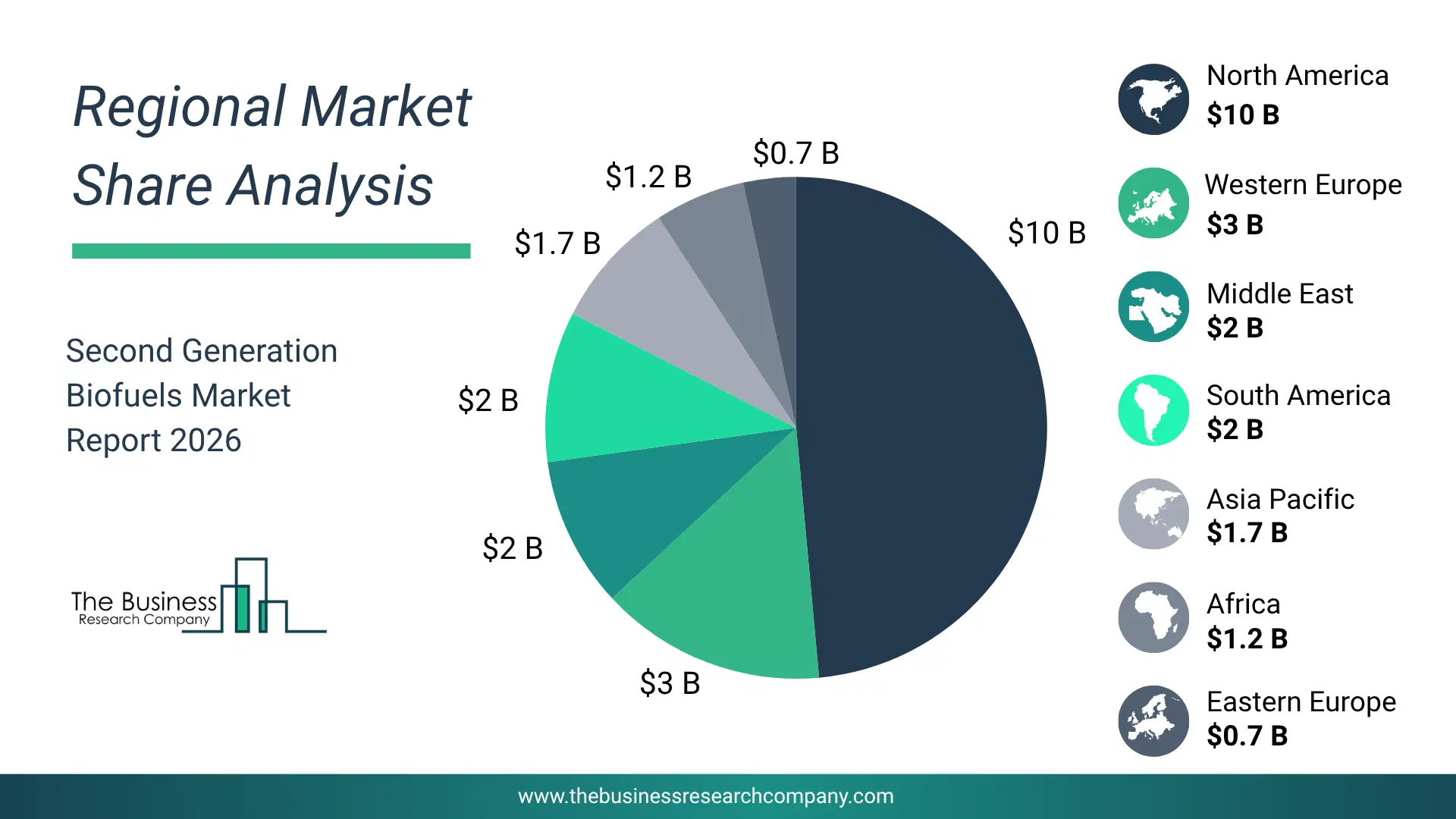
Regional Outlook
North America was the largest region in the second-generation biofuels market in 2025. Asia-Pacific is expected to be the fastest-growing region in the forecast period. The regions covered in this market report are Asia-Pacific, South East Asia, Western Europe, Eastern Europe, North America, South America, Middle East, Africa. The countries covered in this market report are Australia, Brazil, China, France, Germany, India, Indonesia, Japan, Taiwan, Russia, South Korea, UK, USA, Canada, Italy, SpainWhat Defines the Second Generation Biofuels Market?
The second-generation biofuels market consists of sales of bio-synthetic natural gas, bioethanol, and bio methanol. Values in this market are ‘factory gate’ values, that is the value of goods sold by the manufacturers or creators of the goods, whether to other entities (including downstream manufacturers, wholesalers, distributors, and retailers) or directly to end customers. The value of goods in this market includes related services sold by the creators of the goodsHow is Market Value Defined and Measured?
The market value is defined as the revenues that enterprises gain from the sale of goods and/or services within the specified market and geography through sales, grants, or donations in terms of the currency (in USD unless otherwise specified). The revenues for a specified geography are consumption values that are revenues generated by organizations in the specified geography within the market, irrespective of where they are produced. It does not include revenues from resales along the supply chain, either further along the supply chain or as part of other products.
This chart presents market attractiveness based on a quantitative evaluation of growth, competition, strategic alignment, and risk, offering a clear view of opportunity areas for decision-making. This chart is for illustrative purposes; the full report contains the complete analysis.

This chart highlights the Total Addressable Market (TAM) by estimating the maximum revenue opportunity using an assumption-driven approach, supporting strategic planning and opportunity sizing across markets. The chart is illustrative; the full report provides a more comprehensive analysis.
What Key Data and Analysis Are Included in the Second Generation Biofuels Market Report 2026?
The second generation biofuels market research report is one of a series of new reports from The Business Research Company that provides market statistics, including industry global market size, regional shares, competitors with the market share, detailed market segments, market trends and opportunities, and any further data you may need to thrive in the second generation biofuels industry. The market research report delivers a complete perspective of everything you need, with an in-depth analysis of the current and future state of the industry.Second Generation Biofuels Market Report Forecast Analysis
| Report Attribute | Details |
|---|---|
| Market Size Value In 2026 | $16.75 billion |
| Revenue Forecast In 2030 | $41.59 billion |
| Growth Rate | CAGR of 25.5% from 2026 to 2030 |
| Base Year For Estimation | 2025 |
| Actual Estimates/Historical Data | 2020-2025 |
| Forecast Period | 2026 - 2030 |
| Market Representation | Revenue in USD Billion and CAGR from 2026 to 2030 |
| Segments Covered | Type, Process, Feedstock, Application |
| Regional Scope | Asia-Pacific, Western Europe, Eastern Europe, North America, South America, Middle East, Africa |
| Country Scope | The countries covered in the report are Australia, Brazil, China, France, Germany, India, Indonesia, Japan, Taiwan, Russia, South Korea, UK, USA, Canada, Italy, Spain. |
| Key Companies Profiled | TotalEnergies SE, Reliance Industries Limited, INEOS Group Limited, The Andersons Inc., International Flavors & Fragrances Inc., Darling Ingredients Inc, DuPont Nutrition Biosciences ApS, Green Plains Inc, Flint Hills Resources LLC, Gevo Inc., Abengoa S.A., POET LLC, ICM Inc., Enerkem Inc., Advanced Enzyme Technologies Limited, Fulcrum BioEnergy Inc., LanzaTech Inc, Virent Energy Systems Inc., GranBio LLC, Algenol Biofuels Inc., Novamont S.p.A., Edeniq Inc., Mascoma Corporation, BlueFire Renewables Inc, Fiberight LLC., Clariant AG, Raizen S.A., Copersucar SA, Beta Renewables S.p.A., EcoCeres Inc. |
| Customization Scope | Request for Customization |
| Pricing And Purchase Options | Explore Purchase Options |