

Contact Us
  Search
The Business Research Company Logo
Second Generation Biofuels Market 2025
Published :May 2025
Pages :401
Format :PDF
Delivery Time :2-3 Business Days
Why 2-3 days? We update the report with the latest data and news before delivery. Let us know if you need us to expedite.
Report Price :$4,490.00

Second Generation Biofuels Market 2025

By Type (Cellulosic Ethanol, Biodiesel, Bio Butanol, Bio Dimethylether (DME), Other Types), By Process (Biochemical Process, Thermochemical Process), By Feedstock (Simple Lignocellulose, Complex Lignocellulose, Syngas, Algae, Other Feedstocks), By Application (Transportation, Power Generation, Other Applications), And By Region, Opportunities And Strategies – Global Forecast To 2035
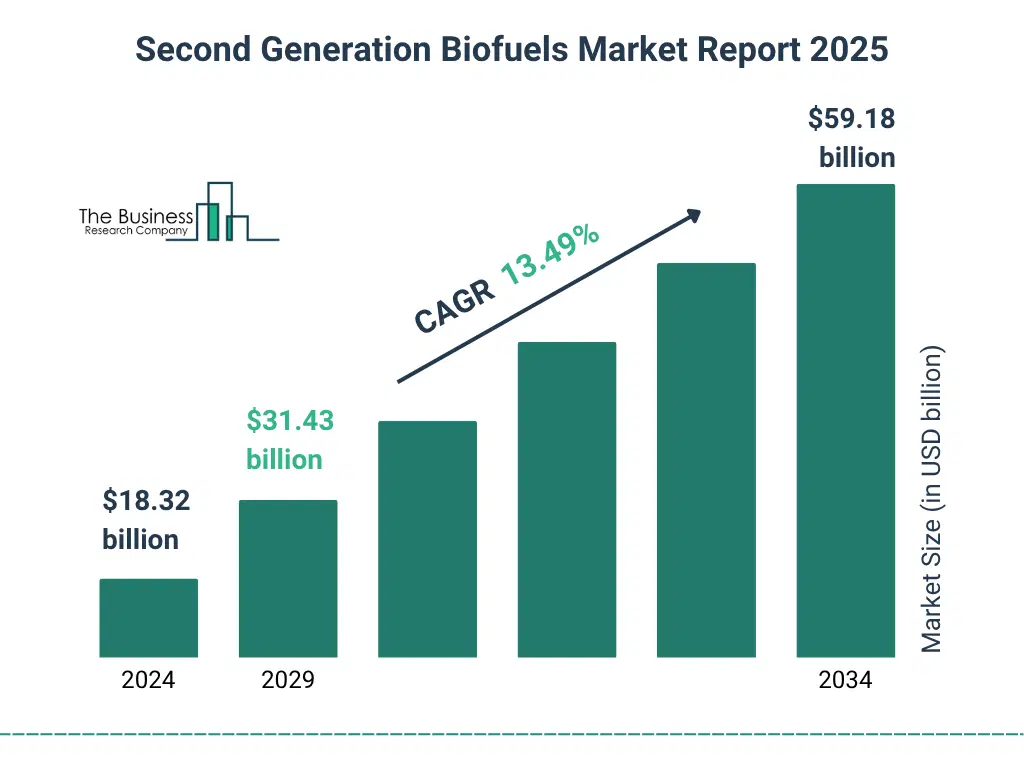
Second Generation Biofuels Market Size and growth rate 2025 to 2029: Graph

Second-Generation Biofuels Market Definition

Second-generation biofuels, also known as advanced biofuels, are derived from non-food biomass materials, such as agricultural residues, wood chips, and algae, rather than from food crops like corn or sugarcane, which are used in first-generation biofuels. The second generation biofuels market consists of revenues generated by entities (organizations, sole traders, and partnerships) that produce biofuels from non-food crops, such as grasses, wood, and agricultural waste. These biofuels offer a more environmentally friendly alternative to conventional fossil fuels, with the potential to significantly reduce greenhouse gas emissions.
Research Expert

Book your 30 minutes free consultation with our research experts

> Second-Generation Biofuels Market Size

The global second generation biofuels market reached a value of nearly $18,321.52 million in 2024, having grown at a compound annual growth rate (CAGR) of 18.06% since 2019. The market is expected to grow from $18,321.52 million in 2024 to $31,430.74 million in 2029 at a rate of 11.40%. The market is then expected to grow at a CAGR of 13.49% from 2029 and reach $59,184.73 million in 2034. Growth in the historic period resulted from the increasing trend of a circular economy, rising awareness of climate change, rising energy demand and expansion of bio-refining infrastructure. Factors that negatively affected growth in the historic period were limited feedstock availability and delayed regulatory approvals. Going forward, the increased investment in renewable energy, rising crude oil prices, increased demand for sustainable aviation fuels and government support for green technologies will drive the growth. Factor that could hinder the growth of the second generation biofuels market in the future include rising production costs and environmental impact concerns.

Second-Generation Biofuels Market Drivers

The key drivers of the second-generation biofuels market include: Increased Investment in Renewable Energy Greater investment in renewable energy is expected to drive the growth of the second-generation biofuels market. Such investment accelerates the development of advanced technologies that convert non-food biomass into sustainable fuels, helping to reduce reliance on fossil fuels. It also enables the expansion of biorefineries and the infrastructure necessary for large-scale commercial production.

Second-Generation Biofuels Market Restraints

The key restraints on the second-generation biofuels market include: Rising Production Costs Rising production costs are expected to hinder the growth of the second-generation biofuels market. The higher costs associated with complex, energy-intensive processing technologies, costly feedstock handling, and the need for advanced infrastructure make these biofuels less economically competitive than fossil fuels and first-generation alternatives. As a result, these challenges can discourage investment and slow the large-scale adoption of second-generation biofuels.

Need data on a specific region in this market?

Opportunities And Recommendations In The Second-Generation Biofuels Market

Opportunities –Recommendations-
Chat with us