
Sedative-Hypnotic Drugs Market Report 2026
Global Outlook – By Drug Class (Benzodiazepines, Barbiturates, Antihistamines, Nonbenzodiazepine, Other Drug Classes), By Route of Administration (Oral, Parenteral, Other Routes of Administration), By Disease Type (Sleep Disorders, Anesthesia, Pain, Other Disease Types), By Distribution Channel (Hospital Pharmacy, Retail Pharmacy, Online Pharmacy, Other Distribution Channels), By End-Users (Hospitals, Specialty Clinics, Homecare, Other End-Users) – Market Size, Trends, Strategies, and Forecast to 2030
Sedative-Hypnotic Drugs Market Overview
• Sedative-Hypnotic Drugs market size has reached to $3.86 billion in 2025 • Expected to grow to $5.51 billion in 2030 at a compound annual growth rate (CAGR) of 7.2% • Growth Driver: The Rise In Stress Levels Fueling The Growth Of The Market Due To Increasing Emotional And Societal Pressures • Market Trend: Next-Generation Insomnia Therapy Gains Approval, Offering Safe and Effective Sleep Solution • North America was the largest region in 2025.What Is Covered Under Sedative-Hypnotic Drugs Market?
A sedative-hypnotic drug refers to a chemical substance utilized to alleviate tension and anxiety, promote a sense of calm (sedative effect), or facilitate sleep induction (hypnotic effect). Sedatives or hypnotics act to suppress the limbic system of the brain, which governs emotional and behavioral reactions, as well as the reticular formation, responsible for regulating sleep patterns and overall consciousness. The main types of sedative-hypnotic drugs include benzodiazepines, barbiturates, antihistamines, nonbenzodiazepine, and others. Benzodiazepines refer to a class of medications that decrease activity in the brain and nervous system and are used to alleviate symptoms of anxiety and insomnia due to their tranquilizing effects on the central nervous system. It can be administered through various routes, including oral, parenteral, and others, to cure several diseases, such as sleep disorders, anesthesia, pain, and others. These are sold through various distribution channels, such as hospital pharmacies, retail pharmacies, online pharmacies, and others, to several end-users, including hospitals, specialty clinics, home care, and others.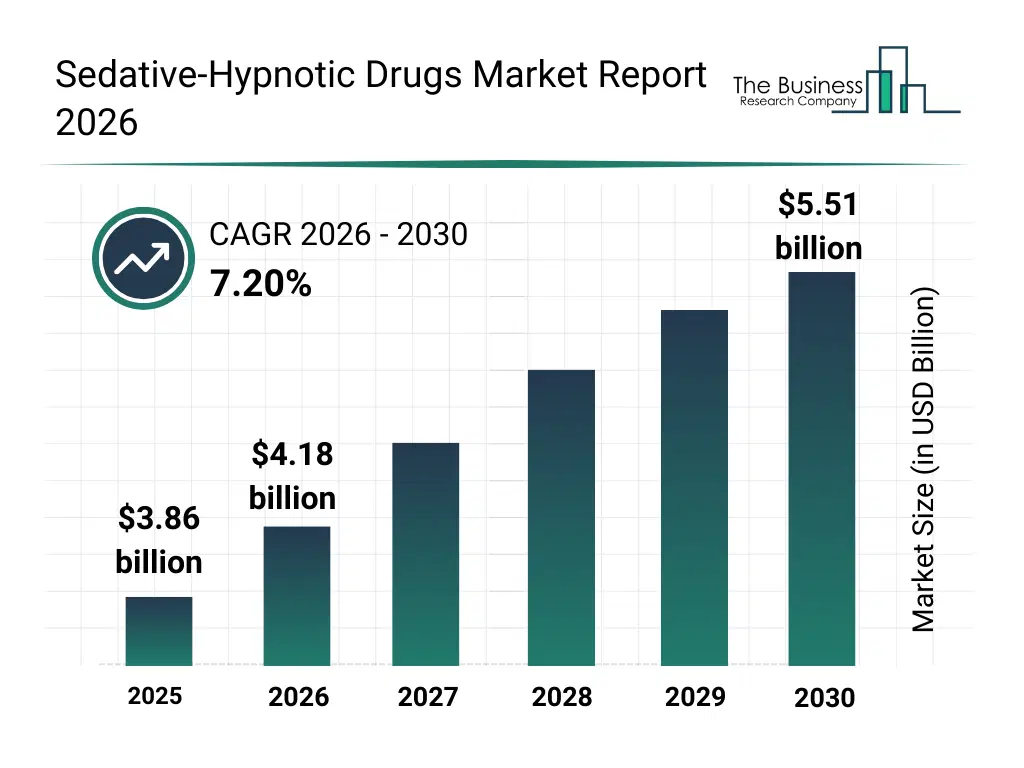
What Is The Sedative-Hypnotic Drugs Market Size and Share 2026?
The sedative-hypnotic drugs market size has grown strongly in recent years. It will grow from $3.86 billion in 2025 to $4.18 billion in 2026 at a compound annual growth rate (CAGR) of 8.3%. The growth in the historic period can be attributed to high prevalence of sleep disorders, widespread use of benzodiazepines in anxiety treatment, increased surgical procedures requiring anesthesia, rising stress-related disorders, availability of low-cost generic sedatives.What Is The Sedative-Hypnotic Drugs Market Growth Forecast?
The sedative-hypnotic drugs market size is expected to see strong growth in the next few years. It will grow to $5.51 billion in 2030 at a compound annual growth rate (CAGR) of 7.2%. The growth in the forecast period can be attributed to growing incidence of insomnia and sleep disorders, increasing aging population, rising demand for safer long-term sleep medications, expansion of nonbenzodiazepine drug classes, greater awareness of mental health conditions. Major trends in the forecast period include growing shift toward nonbenzodiazepine sleep aids, rising preference for short-acting sedative formulations, increasing focus on reduced dependency and abuse potential, expansion of home-based sleep disorder management, greater emphasis on safety profiles in chronic use.
Global Sedative-Hypnotic Drugs Market Segmentation
1) By Drug Class: Benzodiazepines, Barbiturates, Antihistamines, Nonbenzodiazepine, Other Drug Classes 2) By Route of Administration: Oral, Parenteral, Other Routes of Administration 3) By Disease Type: Sleep Disorders, Anesthesia, Pain, Other Disease Types 4) By Distribution Channel: Hospital Pharmacy, Retail Pharmacy, Online Pharmacy, Other Distribution Channels 5) By End-Users: Hospitals, Specialty Clinics, Homecare, Other End-Users Subsegments: 1) By Benzodiazepines: Diazepam, Lorazepam, Alprazolam 2) By Barbiturates: Phenobarbital, Thiopental, Pentobarbital 3) By Antihistamines: Diphenhydramine, Hydroxyzine 4) By Nonbenzodiazepine: Zolpidem, Eszopiclone, Zaleplon 5) By Other Drug Classes: Melatonin Receptor Agonists, Orexin Receptor AntagonistsWhat Are The Drivers Of The Sedative-Hypnotic Drugs Market?
The rising stress levels are expected to propel the growth of the sedative-hypnotic drugs market going forward. Stress refers to the emotional or mental strain triggered by demanding or unpredictable circumstances, including economic challenges, workplace pressures, political instability, and broader social or psychological burdens. The increase in stress levels is due to factors such as financial insecurity, intensifying job expectations, and prolonged societal disruptions, which have collectively contributed to heightened emotional strain among adults. Sedative-hypnotic drugs support mental health by reducing anxiety, inducing calmness, and improving sleep quality, thereby addressing the rising stress burden experienced by individuals. For instance, in May 2024, according to the American Psychiatric Association, a US-based organization, in 2024, 43% of U.S. adults reported feeling more anxious than they did the year before, marking an increase from 37% in 2023 and 32% in 2022, indicating a growing trend in anxiety levels. Therefore, the rising stress levels are driving the growth of the sedative-hypnotic drugs industry. The increasing geriatric population is expected to propel the growth of the sedative-hypnotic drugs market going forward. Geriatric population refers to the group of individuals who are typically aged 65 years and older, representing older adults who may have unique healthcare, social, and physiological needs associated with aging. The increasing geriatric population is primarily due to rising life expectancy, which allows more people to live longer as a result of improved healthcare, better disease management, and enhanced living conditions. The sedative-hypnotic drugs help support the geriatric population by improving sleep quality, reducing nighttime agitation, and promoting overall cognitive and physical well-being in older adults. For instance, in July 2024, according to the UK Parliament's House of Commons Library, a UK-based government administration, in 2022, there were 12.7 million people aged 65 or older in the UK, representing 19% of the total population. This number is projected to rise to 22.1 million by 2072, accounting for 27% of the population. Therefore, the increasing geriatric population is driving the growth of the sedative-hypnotic drugs industry.Key Players In The Global Sedative-Hypnotic Drugs Market
Major companies operating in the sedative-hypnotic drugs market are Pfizer Inc., Sun Pharmaceutical Industries Inc., F. Hoffmann-La Roche Ltd., Merck & Co. Inc., Sanofi-Aventis AG, AstraZeneca Plc, GlaxoSmithKline plc, Takeda Pharmaceutical Company Limited, Boehringer Ingelheim International GmbH, Eli Lilly and Co., Teva Pharmaceutical Industries Ltd., Mylan N.V., Aurobindo Pharma Limited, Cipla Inc., Dr. Reddy’s Laboratories Ltd., Hikma Pharmaceuticals plc, Lupin Pharmaceuticals Inc., Glenmark Pharmaceuticals Inc., Torrent Pharmaceuticals Ltd., Abbott Laboratories
This chart is for illustrative purposes; the full report includes a detailed competitor analysis and comprehensive overview of the top 10 companies in the market.
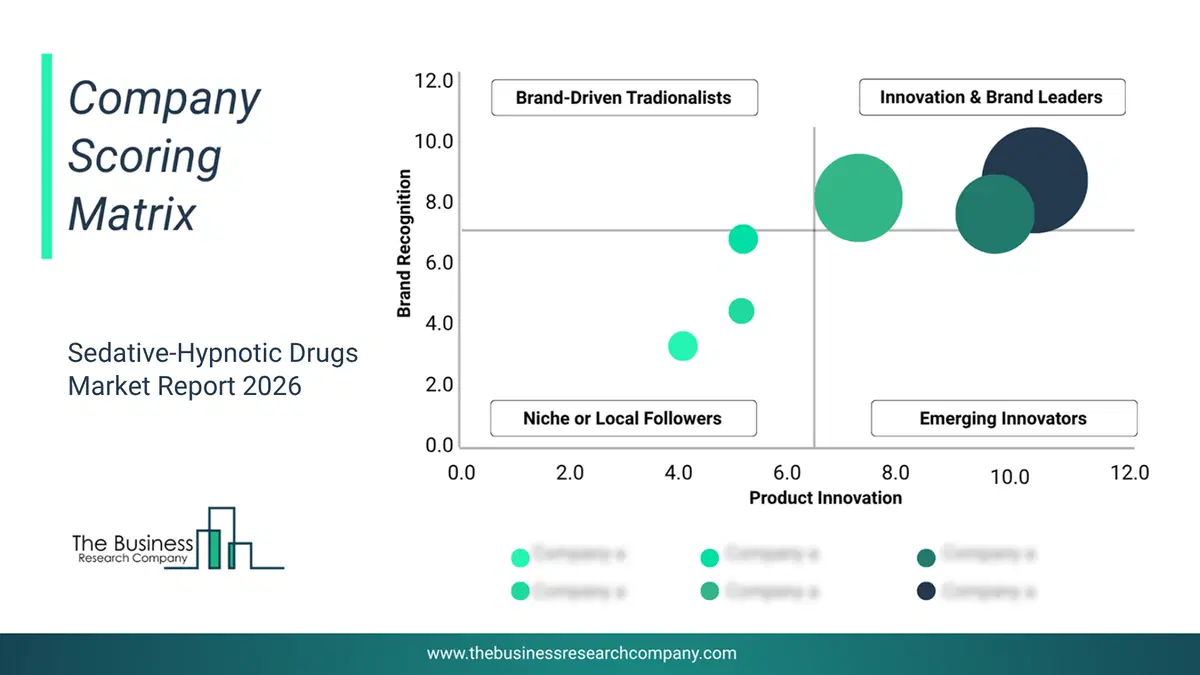
This chart maps companies by product innovation and brand strength, with bubble size indicating relative revenue, helping identify market leaders, challengers, and niche players. This is an illustrative chart; the full report provides a complete and accurate competitive analysis.
Global Sedative-Hypnotic Drugs Market Trends and Insights
Major companies in the sedative-hypnotic drugs market are focusing on developing innovative solutions such as next-generation insomnia therapies to improve sleep quality and safety. Next-generation insomnia therapies are advanced treatments designed to improve sleep quality and safety by targeting specific sleep mechanisms with fewer side effects than traditional sedative-hypnotics. For instance, in June 2025, Simcere Pharmaceutical Group Limited, a China-based biopharmaceutical company, partnered with Idorsia Ltd., a Switzerland-based biopharmaceutical company, to bring QUVIVIQ (Daridorexant Hydrochloride Tablets), an anti-insomnia drug, to the Chinese market. The drug was subsequently approved by the National Medical Products Administration (NMPA) for the treatment of adult patients with insomnia characterized by difficulty falling asleep and maintaining sleep. Notably, QUVIVIQ does not carry a psychotropic drug control classification, offering a treatment option without the regulatory restrictions typically associated with sedative-hypnotic drugs.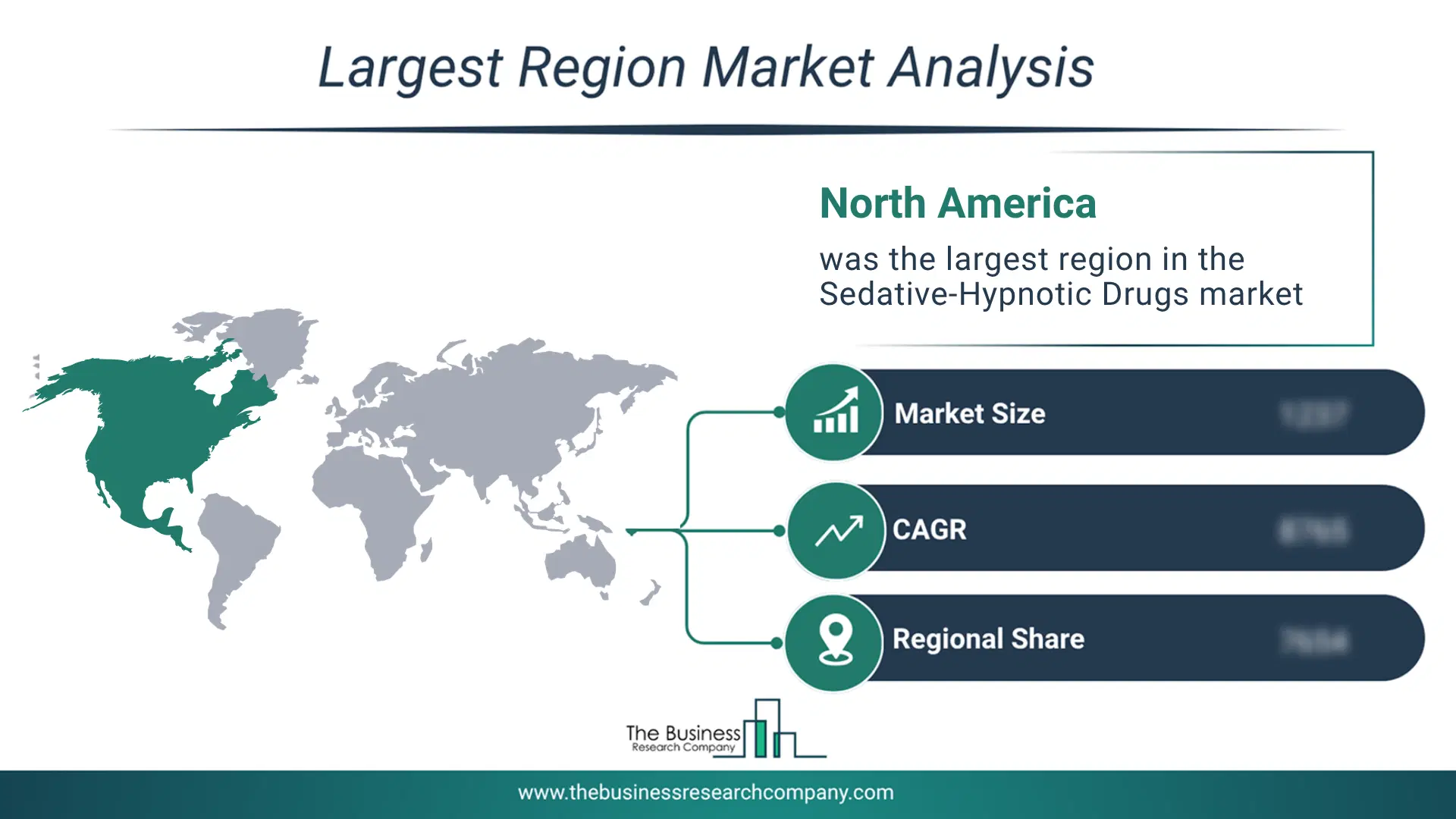
Regional Insights
North America was the largest region in the sedative-hypnotic drugs market in 2025. The regions covered in this market report are Asia-Pacific, South East Asia, Western Europe, Eastern Europe, North America, South America, Middle East, Africa. The countries covered in this market report are Australia, Brazil, China, France, Germany, India, Indonesia, Japan, Taiwan, Russia, South Korea, UK, USA, Canada, Italy, Spain.What Defines the Sedative-Hypnotic Drugs Market?
The sedative-hypnotic drugs market consists of sales of tablets, capsules, injectables, and liquid formulations. Values in this market are ‘factory gate’ values, that is the value of goods sold by the manufacturers or creators of the goods, whether to other entities (including downstream manufacturers, wholesalers, distributors and retailers) or directly to end customers. The value of goods in this market includes related services sold by the creators of the goods.How is Market Value Defined and Measured?
The market value is defined as the revenues that enterprises gain from the sale of goods and/or services within the specified market and geography through sales, grants, or donations in terms of the currency (in USD unless otherwise specified). The revenues for a specified geography are consumption values that are revenues generated by organizations in the specified geography within the market, irrespective of where they are produced. It does not include revenues from resales along the supply chain, either further along the supply chain or as part of other products.
This chart presents market attractiveness based on a quantitative evaluation of growth, competition, strategic alignment, and risk, offering a clear view of opportunity areas for decision-making. This chart is for illustrative purposes; the full report contains the complete analysis.

This chart highlights the Total Addressable Market (TAM) by estimating the maximum revenue opportunity using an assumption-driven approach, supporting strategic planning and opportunity sizing across markets. The chart is illustrative; the full report provides a more comprehensive analysis.
What Key Data and Analysis Are Included in the Sedative-Hypnotic Drugs Market Report 2026?
The sedative-hypnotic drugs market research report is one of a series of new reports from The Business Research Company that provides market statistics, including industry global market size, regional shares, competitors with the market share, detailed market segments, market trends and opportunities, and any further data you may need to thrive in the sedative-hypnotic drugs industry. The market research report delivers a complete perspective of everything you need, with an in-depth analysis of the current and future state of the industry.Sedative-Hypnotic Drugs Market Report Forecast Analysis
| Report Attribute | Details |
|---|---|
| Market Size Value In 2026 | $4.18 billion |
| Revenue Forecast In 2030 | $5.51 billion |
| Growth Rate | CAGR of 8.3% from 2026 to 2030 |
| Base Year For Estimation | 2025 |
| Actual Estimates/Historical Data | 2020-2025 |
| Forecast Period | 2026 - 2030 |
| Market Representation | Revenue in USD Billion and CAGR from 2026 to 2030 |
| Segments Covered | Drug Class, Route of Administration, Disease Type, Distribution Channel, End-Users |
| Regional Scope | Asia-Pacific, Western Europe, Eastern Europe, North America, South America, Middle East, Africa |
| Country Scope | The countries covered in the report are Australia, Brazil, China, France, Germany, India, Indonesia, Japan, Taiwan, Russia, South Korea, UK, USA, Canada, Italy, Spain. |
| Key Companies Profiled | Pfizer Inc., Sun Pharmaceutical Industries Inc., F. Hoffmann-La Roche Ltd., Merck & Co. Inc., Sanofi-Aventis AG, AstraZeneca Plc, GlaxoSmithKline plc, Takeda Pharmaceutical Company Limited, Boehringer Ingelheim International GmbH, Eli Lilly and Co., Teva Pharmaceutical Industries Ltd., Mylan N.V., Aurobindo Pharma Limited, Cipla Inc., Dr. Reddy’s Laboratories Ltd., Hikma Pharmaceuticals plc, Lupin Pharmaceuticals Inc., Glenmark Pharmaceuticals Inc., Torrent Pharmaceuticals Ltd., Abbott Laboratories |
| Customization Scope | Request for Customization |
| Pricing And Purchase Options | Explore Purchase Options |