
Selective Catalytic Reduction (SCR) System Market Report 2026
Global Outlook – By Type (Urea Selective Catalytic Reduction (SCR), Ammonia Selective Catalytic Reduction (SCR), Other Types), By Component (Catalytic Converter, Urea Tank, Pump, Control Unit, Injector), By Vehicle Type (Passenger Cars, Commercial Vehicles, Off-Highway Vehicles), By Application (Automotive, Marine, Industrial, Power Generation, Other Applications) – Market Size, Trends, Strategies, and Forecast to 2030
Selective Catalytic Reduction (SCR) System Market Overview
• Selective Catalytic Reduction (SCR) System market size has reached to $6.26 billion in 2025 • Expected to grow to $9.64 billion in 2030 at a compound annual growth rate (CAGR) of 8.9% • Growth Driver: Rising Air Pollution Driving Growth Of Market Due To Stricter Emission Regulations • Market Trend: Advancements In Emission Control Technologies For Reducing NO? Emissions • Asia-Pacific was the largest region and fastest growing region.Market Gains By 2030 – Top Opportunities By Segment
Market Gain identifies the most promising market opportunities by highlighting the segments or products expected to generate the highest incremental revenue growth over the next five years.
What Is Covered Under Selective Catalytic Reduction (SCR) System Market?
The selective catalytic reduction (SCR) system refers to an advanced emission control technology designed to reduce harmful nitrogen oxides (NOx) from exhaust gases. It works by injecting a urea-based solution, commonly called Diesel Exhaust Fluid (DEF), into the exhaust stream, which reacts with a catalyst to convert NOx into harmless nitrogen and water vapor. SCR systems are widely used in vehicles, power plants, and industrial applications to meet stringent environmental regulations and improve air quality. The main types of selective catalytic reduction (SCR) system are urea selective catalytic reduction (scr), ammonia selective catalytic reduction (scr), others. Urea-based SCR systems utilize a solution known as Diesel Exhaust Fluid (DEF), composed of urea and deionized water, which is injected into the exhaust stream of diesel engines. The various components include catalytic converter, urea tank, pump, control unit, injector used by various vehicle types such as passenger cars, commercial vehicles, off-highway vehicles. These are used in various applications such as automotive, marine, industrial, power generation, others.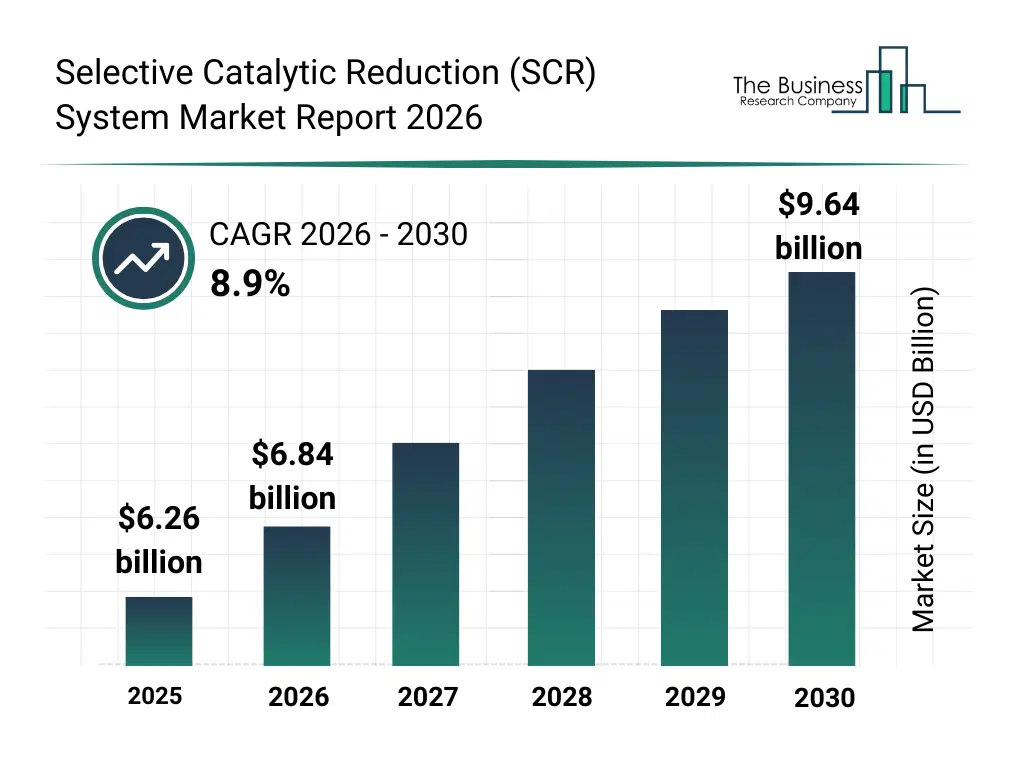
What Is The Selective Catalytic Reduction (SCR) System Market Size and Share 2026?
The selective catalytic reduction (scr) system market size has grown strongly in recent years. It will grow from $6.26 billion in 2025 to $6.84 billion in 2026 at a compound annual growth rate (CAGR) of 9.2%. The growth in the historic period can be attributed to stricter emission regulations across regions, widespread adoption of diesel engines in commercial vehicles, expansion of power generation infrastructure, increasing industrial air quality standards, technological advancements in catalytic materials.What Is The Selective Catalytic Reduction (SCR) System Market Growth Forecast?
The selective catalytic reduction (scr) system market size is expected to see strong growth in the next few years. It will grow to $9.64 billion in 2030 at a compound annual growth rate (CAGR) of 8.9%. The growth in the forecast period can be attributed to rising penetration of scr systems in emerging markets, increasing adoption in marine and industrial sectors, growing investments in low-emission technologies, expansion of off-highway vehicle applications, continuous tightening of global emission norms. Major trends in the forecast period include increasing adoption of advanced emission control systems, rising integration of smart sensors and control units, growing demand for DEF optimization technologies, expansion of scr systems in off-highway applications, enhanced focus on regulatory compliance.
Global Selective Catalytic Reduction (SCR) System Market Segmentation
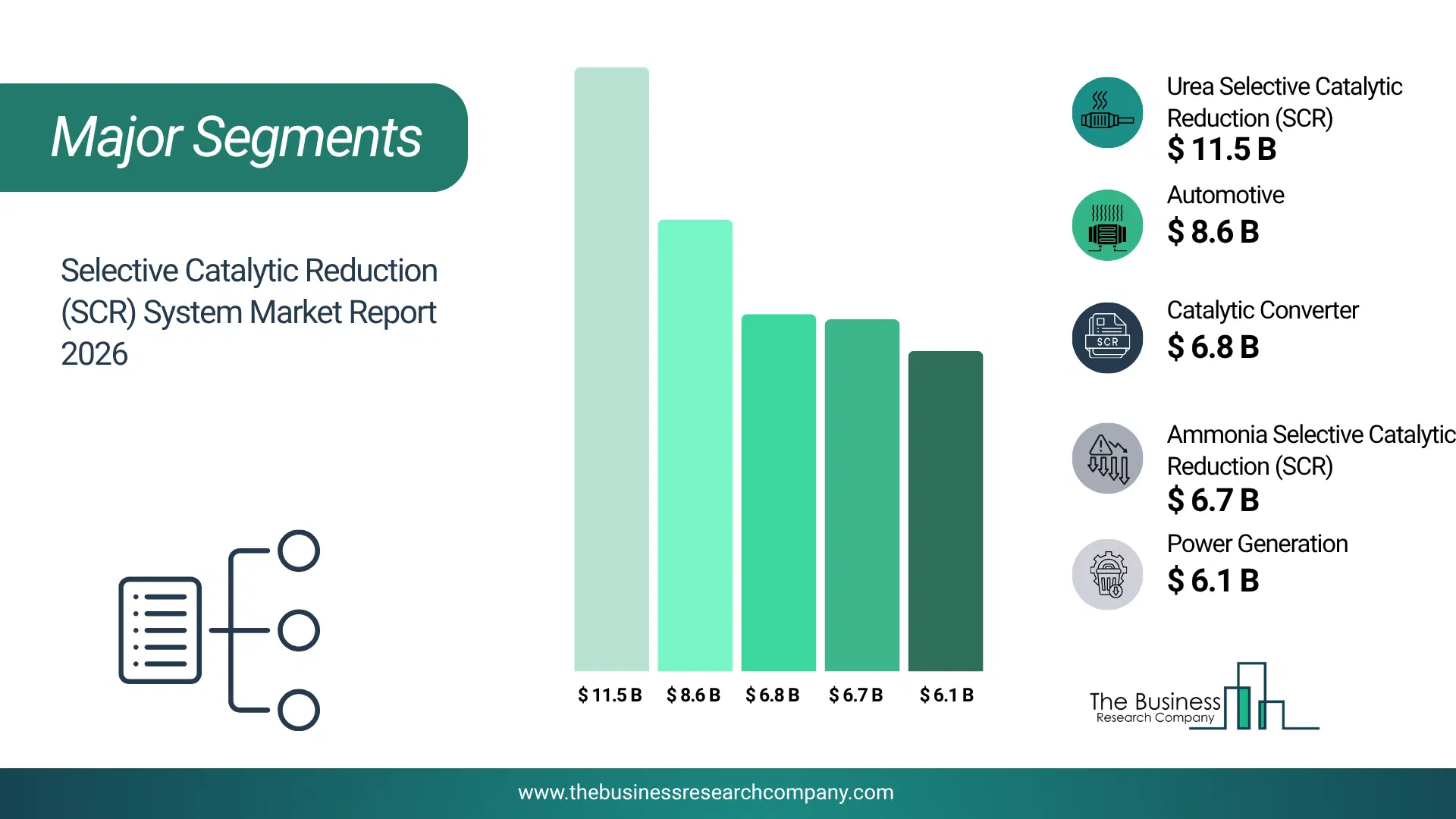
1) By Type: Urea Selective Catalytic Reduction (SCR), Ammonia Selective Catalytic Reduction (SCR), Other Types 2) By Component: Catalytic Converter, Urea Tank, Pump, Control Unit, Injector 3) By Vehicle Type: Passenger Cars, Commercial Vehicles, Off-Highway Vehicles 4) By Application: Automotive, Marine, Industrial, Power Generation, Other Applications Subsegments: 1) By Urea Selective Catalytic Reduction (SCR):Diesel Exhaust Fluid (DEF) Injection Systems, Urea Dosing Systems, Selective Catalytic Reduction (SCR) Catalysts, Urea Storage And Tank Systems, Integrated Selective Catalytic Reduction (SCR) Aftertreatment Modules 2) By Ammonia Selective Catalytic Reduction: Anhydrous Ammonia Storage And Delivery Systems, Ammonia Dosing And Injection Systems, Industrial Selective Catalytic Reduction (SCR) Catalysts, Stationary Power Plant Selective Catalytic Reduction (SCR) Units, Process Control And Monitoring Systems 3) By Other Types: Lean NOx Trap (LNT) Systems, Hybrid SCR–LNT Systems, Hydrocarbon-Based SCR Systems, Plasma-Assisted SCR Systems, Non-Thermal Plasma SCR Units, Emerging Low-Temperature SCR Technologies The top segments in the selective catalytic reduction (scr) system market will be: • Urea Selective Catalytic Reduction (SCR) will reach $11535.01 Million by 2030. • Automotive will reach $8631.54 Million by 2030. • Catalytic Converter will reach $6872.25 Million by 2030. • Power Generation will reach $6134.46 Million by 2030. • Ammonia Selective Catalytic Reduction (SCR) will reach $6788.71 Million by 2030.What Is The Driver Of The Selective Catalytic Reduction (SCR) System Market?
The rising air pollution concerns are expected to propel the growth of the selective catalytic reduction (SCR) system market going forward. Air pollution refers to the presence of harmful substances, such as gases, particles, and biological molecules, in the atmosphere that can negatively affect human health, ecosystems, and the environment. The rising air pollution concerns are due to increasing industrialization and vehicle emissions, which release large amounts of pollutants such as nitrogen oxides, sulfur dioxide, and particulate matter into the atmosphere, significantly impacting human health and the environment. Selective Catalytic Reduction (SCR) system supports rising air pollution concerns by reducing harmful nitrogen oxide (NOₓ) emissions from vehicles and industrial engines, converting them into harmless nitrogen and water, thereby supporting cleaner air and compliance with stringent environmental regulations. For instance, in December 2024, according to the European Environment Agency (EEA), a Denmark-based government agency, in 2022, EU deaths from PM2.5 fell 45% compared to past years, approaching the 55% reduction target set for 2030 in the Zero Pollution Action Plan. Therefore, the rising air pollution concerns are driving the growth of the selective catalytic reduction (SCR) system industry.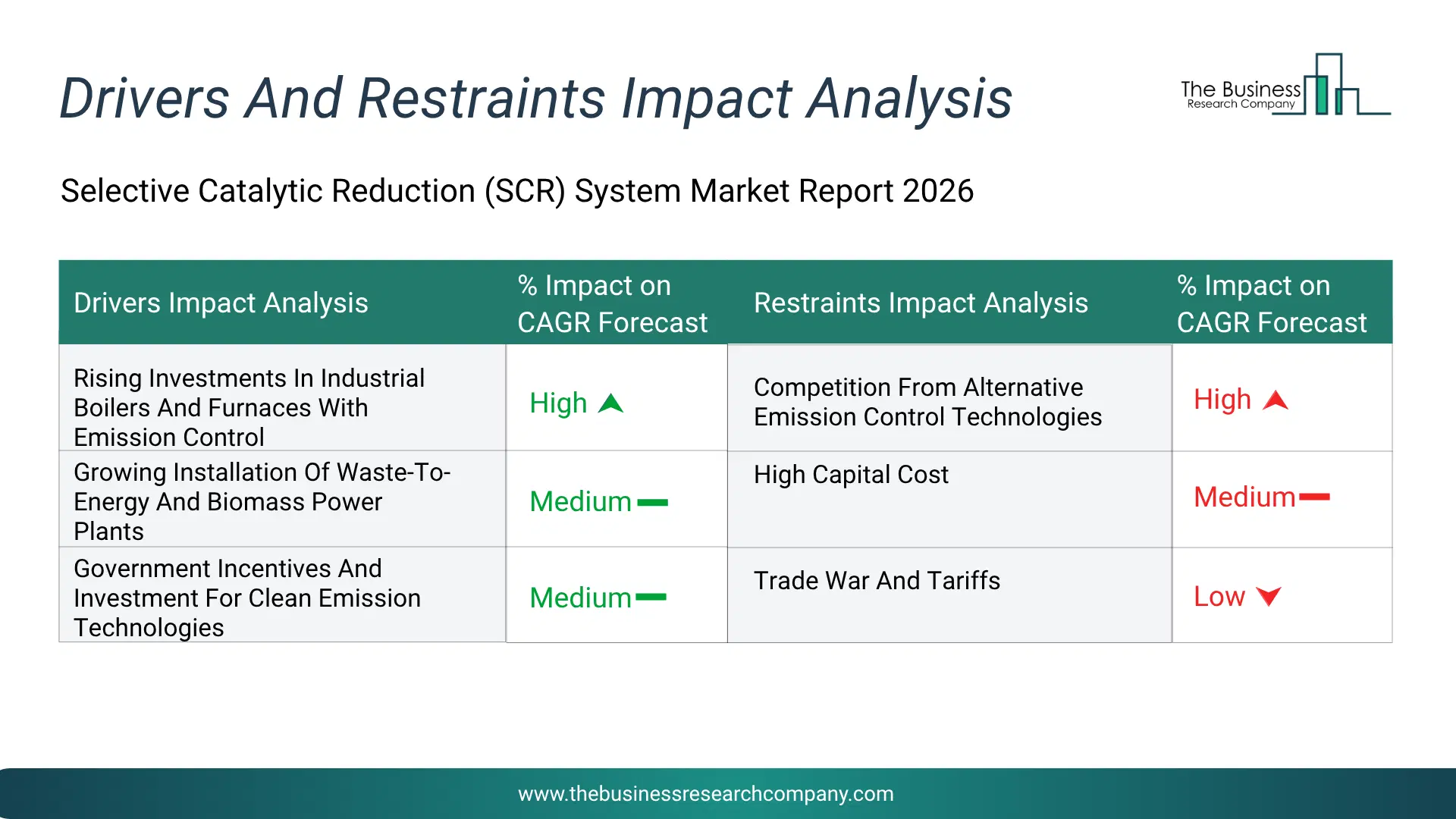
Infographic Chart Showing Key Market Drivers Analysis And Restraints For Selective Catalytic Reduction (Scr) System Market
The chart presents an impact analysis of key drivers and restraints, quantifying their relative influence on the market's growth rate and helping assess the balance between growth enablers and limiting factors. This chart offers a high-level perspective; the full report contains more detailed insights.
How Will The Drivers Impact Growth In The Global Selective Catalytic Reduction (SCR) System Market?
• Rising Investments In Industrial Boilers And Furnaces With Emission Control (High) – During the forecast period, rising investments in industrial boilers and furnaces with emission control are accelerating the adoption of selective catalytic reduction (scr) system. industrial facilities, including power generation plants, chemical processing units, refineries and manufacturing sites, are increasingly implementing nitrogen oxide (nox) control technologies to comply with stringent environmental regulations. scr systems are widely utilized to treat flue gas emissions from large-scale combustion units, significantly reducing nox emissions and supporting regulatory compliance. as industries modernize combustion infrastructure and prioritize environmental performance, demand for scr systems is expected to increase. the rising investments in industrial boilers and furnaces with emission control growth contribution during the forecast period in 2025 is 2.3%. • Growing Installation Of Waste-To-Energy And Biomass Power Plants (Medium) – During the forecast period, the growing installation of waste-to-energy and biomass power plants is driving demand for selective catalytic reduction (scr) system. as governments and private operators expand renewable and alternative energy generation capacity, there is an increasing need for effective nitrogen oxide (nox) emission control solutions. combustion processes in biomass and waste-to-energy facilities generate nox emissions that must meet strict air quality standards. scr systems play a critical role in reducing these emissions and ensuring regulatory compliance. consequently, the expansion of waste-to-energy and biomass power generation facilities is expected to create sustained demand for scr systems. the growing installation of waste-to-energy and biomass power plants growth contribution during the forecast period in 2025 is 1.8%. • Government Incentives And Investment For Clean Emission Technologies (Medium) – During the forecast period, the government incentives and investment for clean emission technologies is accelerating the adoption of selective catalytic reduction (scr) system. regulatory authorities across major economies are implementing stricter nitrogen oxide (nox) emission standards to improve air quality and reduce environmental impact. financial incentives, subsidies, tax benefits and compliance programs encourage industries and original equipment manufacturers (oems) to adopt advanced emission control systems such as scr technology. these measures reduce the effective cost of implementation and accelerate technology adoption across automotive, industrial, marine and power generation sectors. the government incentives and investment for clean emission technologies growth contribution during the forecast period in 2025 is 1.0%. • Increase In Mining And Heavy Machinery Operations (Low) – During the forecast period, the increase in mining and heavy machinery operations is driving increased demand for selective catalytic reduction (scr) system. mining, construction and infrastructure development projects rely heavily on diesel-powered off-highway equipment, including excavators, haul trucks and loaders. these machines are subject to stringent nitrogen oxide (nox) emission regulations such as united states environmental protection agency (epa) tier 4 and equivalent international standards. to comply with these regulations, manufacturers and fleet operators are increasingly integrating scr systems into heavy-duty diesel engines. the increase in mining and heavy machinery operations growth contribution during the forecast period in 2025 is 0.8%.How Will The Restraints Impact Growth In The Global Selective Catalytic Reduction (SCR) System Market?
• Competition From Alternative Emission Control Technologies (High) – During the forecast period, the competition from alternative emission control technologies limits a significant barrier to market expansion. technologies such as exhaust gas recirculation (egr) and selective non-catalytic reduction (sncr) offer nitrogen oxide (nox) reduction in certain applications and may present lower capital investment requirements or simpler system integration. in specific industrial or mobile applications, these alternatives can be considered viable substitutes for scr systems, thereby limiting broader market penetration. growth affected by competition from alternative emission control technologies limits during the forecast period in 2025 is -2.0%. • High Capital Cost (Medium) – During the forecast period, the high capital cost remains a significant barrier to market expansion. selective catalytic reduction installations—particularly retrofits on existing utility and industrial units require substantial upfront capital for catalyst modules, reactors, urea/ammonia storage and dosing systems, structural modifications, auxiliary fans and engineering and installation labour. regulatory assessments and engineering studies show that site-specific retrofit capital costs vary widely by unit size and configuration; typical historical retrofit ranges reported by regulators and industry studies fall roughly between usd 25–200 per kilowatt (site-specific) and epa examples use project estimates in the millions of dollars for individual non-utility stationary installations, illustrating material project-level capital burdens. these high upfront costs increase the payback period for operators, reduce the attractiveness of scr relative to lower-capex alternatives in price-sensitive settings and can delay or defer compliance investments—especially in markets with constrained capital or uncertain regulatory horizons. growth affected by high capital cost during the forecast period in 2025 is -1.0%. • Trade War And Tariffs (Medium) – During the forecast period, the trade war and tariffs remains a significant barrier to market expansion, by increasing the cost of importing critical components such as catalysts, dosing modules, electronic control units and sensors. many scr system components rely on globally integrated supply chains. import duties, geopolitical tensions and trade restrictions can elevate procurement costs, disrupt supply chains and delay project implementation. additionally, uncertainty in international trade policies may discourage cross-border investments and technology collaborations. growth affected by trade war and tariffs during the forecast period in 2025 is -0.3%.Key Players In The Global Selective Catalytic Reduction (SCR) System Market
Major companies operating in the selective catalytic reduction (scr) system market are BASF SE, Johnson Matthey Plc, Cummins Inc., Denso Corporation, Continental AG, Bosch GmbH, Tenneco Inc., OPmobility, Wärtsilä Oyj Abp, Babcock & Wilcox Enterprises Inc., Albonair GmbH, Eminox Limited, DCL International Inc., Faurecia SE, Hitachi Zosen Corporation, Mitsubishi Heavy Industries Ltd., Haldor Topsoe A/S, Umicore SA, Clariant AG, Cormetech Inc., Shell Catalysts & Technologies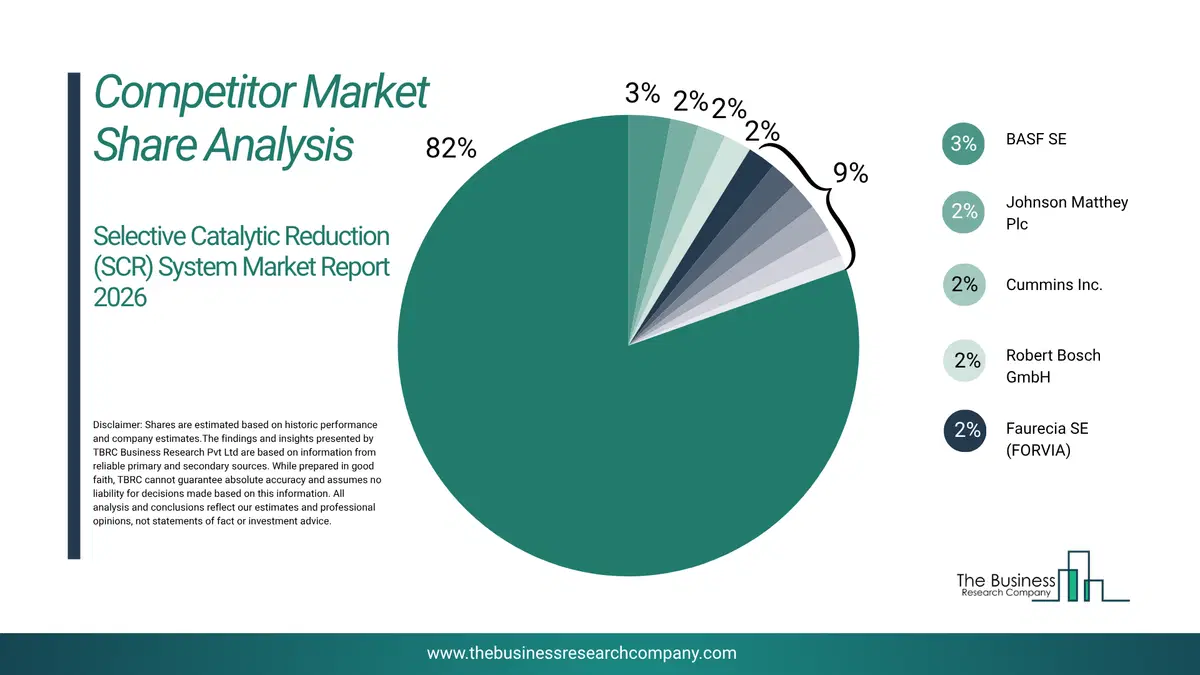
This chart is for illustrative purposes; the full report includes a detailed competitor analysis and comprehensive overview of the top 10 companies in the market.
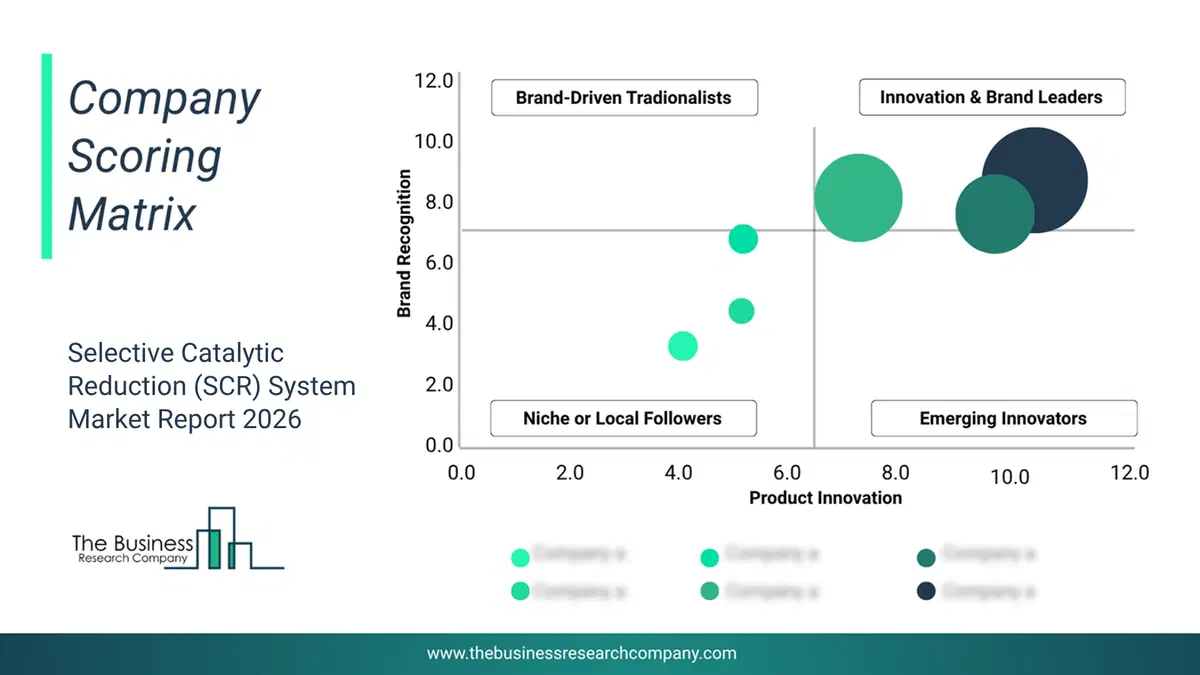
This chart maps companies by product innovation and brand strength, with bubble size indicating relative revenue, helping identify market leaders, challengers, and niche players. This is an illustrative chart; the full report provides a complete and accurate competitive analysis.
Global Selective Catalytic Reduction (SCR) System Market Trends and Insights
Major companies in the selective catalytic reduction (SCR) system market are focusing on technological innovations in emission control to enhance efficiency, reduce nitrogen oxide (NOₓ) emissions, and meet strict environmental regulations. Emission control involves technologies that minimize harmful pollutants from engines and industrial processes. For instance, in June 2025, Yanmar Marine International, a Europe-based manufacturing company, launched an advanced SCR system for its 6LY400-440 engine series, reducing NOₓ emissions by up to 90% and exceeding IMO Tier III standards for marine engines in Emission Control Areas (ECAs). The system integrates with YANMAR’s 6LY common rail engines, using sensors and an ECU to inject Diesel Exhaust Fluid (DEF or AdBlue) that converts NOₓ into nitrogen and water. Lightweight and compact at 86 kg, it suits commercial vessels over 130 kW and leisure vessels over 24 meters, enabling easier retrofits. Although not certified for U.S. waters, the technology demonstrates YANMAR’s commitment to sustainable marine solutions while maintaining engine performance.What Are Latest Mergers And Acquisitions In The Selective Catalytic Reduction (SCR) System Market?
In April 2024, OGEPAR Group, a Belgium-based diversified financial holding company, acquired Hug Engineering AG from Forvia for an undisclosed amount. Through this acquisition, Ogepar’s aim is to expand Ogepar’s footprint in the exhaust after-treatment systems (EATS) market and strengthen its sustainability-focused portfolio by adding Hug’s expertise in emission reduction technologies. Hug Engineering is a Switzerland-based engineering company that provides services for Selective Catalytic Reduction (SCR) systems.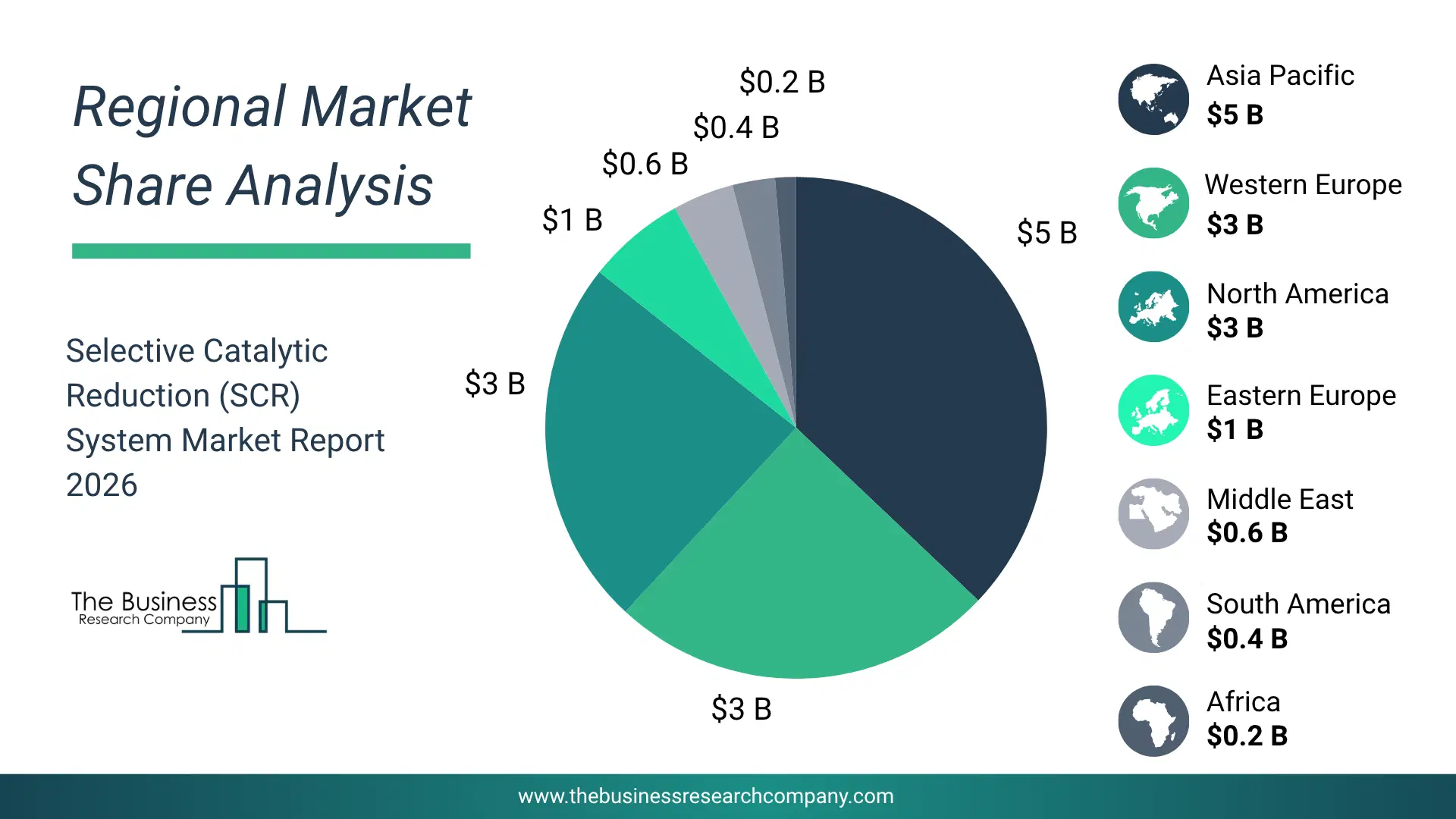
Regional Outlook
Asia-Pacific was the largest region in the selective catalytic reduction (SCR) system market in 2025. Asia-Pacific is expected to be the fastest-growing region in the forecast period. The regions covered in this market report are Asia-Pacific, South East Asia, Western Europe, Eastern Europe, North America, South America, Middle East, Africa The countries covered in this market report are Australia, Brazil, China, France, Germany, India, Indonesia, Japan, Taiwan, Russia, South Korea, UK, USA, Canada, Italy, Spain.What Defines the Selective Catalytic Reduction (SCR) System Market?
The selective catalytic reduction (SCR) system market consists of revenues earned by entities by providing services such as system installation, maintenance, retrofitting, and technical support. The market value includes the value of related goods sold by the service provider or included within the service offering. The selective catalytic reduction (SCR) system market also consists of sales of products including catalysts, urea or diesel exhaust fluid (DEF), injectors, dosing systems, control units, sensors, exhaust pipes, and complete SCR kits. Values in this market are ‘factory gate’ values, that is, the value of goods sold by the manufacturers or creators of the goods, whether to other entities (including downstream manufacturers, wholesalers, distributors, and retailers) or directly to end customers. The value of goods in this market includes related services sold by the creators of the goods.How is Market Value Defined and Measured?
The market value is defined as the revenues that enterprises gain from the sale of goods and/or services within the specified market and geography through sales, grants, or donations in terms of the currency (in USD unless otherwise specified). The revenues for a specified geography are consumption values that are revenues generated by organizations in the specified geography within the market, irrespective of where they are produced. It does not include revenues from resales along the supply chain, either further along the supply chain or as part of other products.
This chart presents market attractiveness based on a quantitative evaluation of growth, competition, strategic alignment, and risk, offering a clear view of opportunity areas for decision-making. This chart is for illustrative purposes; the full report contains the complete analysis.

This chart highlights the Total Addressable Market (TAM) by estimating the maximum revenue opportunity using an assumption-driven approach, supporting strategic planning and opportunity sizing across markets. The chart is illustrative; the full report provides a more comprehensive analysis.
What Key Data and Analysis Are Included in the Selective Catalytic Reduction (SCR) System Market Report 2026?
The selective catalytic reduction (scr) system market research report is one of a series of new reports from The Business Research Company that provides market statistics, including industry global market size, regional shares, competitors with the market share, detailed market segments, market trends and opportunities, and any further data you may need to thrive in the selective catalytic reduction (scr) system industry. The market research report delivers a complete perspective of everything you need, with an in-depth analysis of the current and future state of the industry.Selective Catalytic Reduction SCR System Market Report Forecast Analysis
| Report Attribute | Details |
|---|---|
| Market Size Value In 2026 | $6.84 billion |
| Revenue Forecast In 2030 | $9.64 billion |
| Growth Rate | CAGR of 9.2% from 2026 to 2030 |
| Base Year For Estimation | 2025 |
| Actual Estimates/Historical Data | 2020-2025 |
| Forecast Period | 2026 - 2030 - 2035 |
| Market Representation | Revenue in USD Billion and CAGR from 2026 to 2030 |
| Segments Covered | Type, Component, Vehicle Type, Application |
| Regional Scope | Asia-Pacific, Western Europe, Eastern Europe, North America, South America, Middle East, Africa |
| Country Scope | The countries covered in the report are Australia, Brazil, China, France, Germany, India, Indonesia, Japan, Taiwan, Russia, South Korea, UK, USA, Canada, Italy, Spain. |
| Key Companies Profiled | BASF SE, Johnson Matthey Plc, Cummins Inc., Denso Corporation, Continental AG, Bosch GmbH, Tenneco Inc., OPmobility, Wärtsilä Oyj Abp, Babcock & Wilcox Enterprises Inc., Albonair GmbH, Eminox Limited, DCL International Inc., Faurecia SE, Hitachi Zosen Corporation, Mitsubishi Heavy Industries Ltd., Haldor Topsoe A/S, Umicore SA, Clariant AG, Cormetech Inc., Shell Catalysts & Technologies |
| Customization Scope | Request for Customization |
| Pricing And Purchase Options | Explore Purchase Options |