

Self-Administered Parenteral Market Report 2026
Global Outlook – By Product (Pre-Filled Syringes, Autoinjectors, Pen Injectors, Other Products), By Usage (Disposable, Reusable), By Distribution Channel (Hospital Pharmacies, Online Pharmacies, Home Healthcare Providers, Specialty Clinics, Other Distribution Channels), By Application (Cardiovascular Diseases, Diabetes, Osteoporosis, Pain Management, Hormone Replacement, Other Applications) - Market Size, Trends, Strategies, and Forecast to 2030
Self-Administered Parenteral Market Overview
• Self-Administered Parenteral market size has reached to $25.84 billion in 2025 • Expected to grow to $32.19 billion in 2030 at a compound annual growth rate (CAGR) of 4.5% • Growth Driver: Chronic Diseases Fueling Self-Administered Parenteral Market Expansion • Market Trend: Innovative Autoinjector Solutions Revolutionizing the Self-Administered Parenteral Market • North America was the largest region in 2025.What Is Covered Under Self-Administered Parenteral Market?
Self-administered parenteral refers to the administration of medication or substances into the body by oneself through injection methods. This method provides patients with greater autonomy and convenience, allowing them to manage the conditions in a more flexible and comfortable environment without the need for frequent visits to healthcare facilities. The main types of products in self-administered parenterals are pre-filled syringes, autoinjectors, pen injectors, and others. Pre-filled syringes are ready-to-use medical devices designed for the administration of liquid medications. The usage is both disposable and reusable, and are distributed through hospital pharmacies, online pharmacies, home healthcare providers, specialty clinics, and others. It is used for cardiovascular diseases, diabetes, osteoporosis, pain management, hormone replacement and others.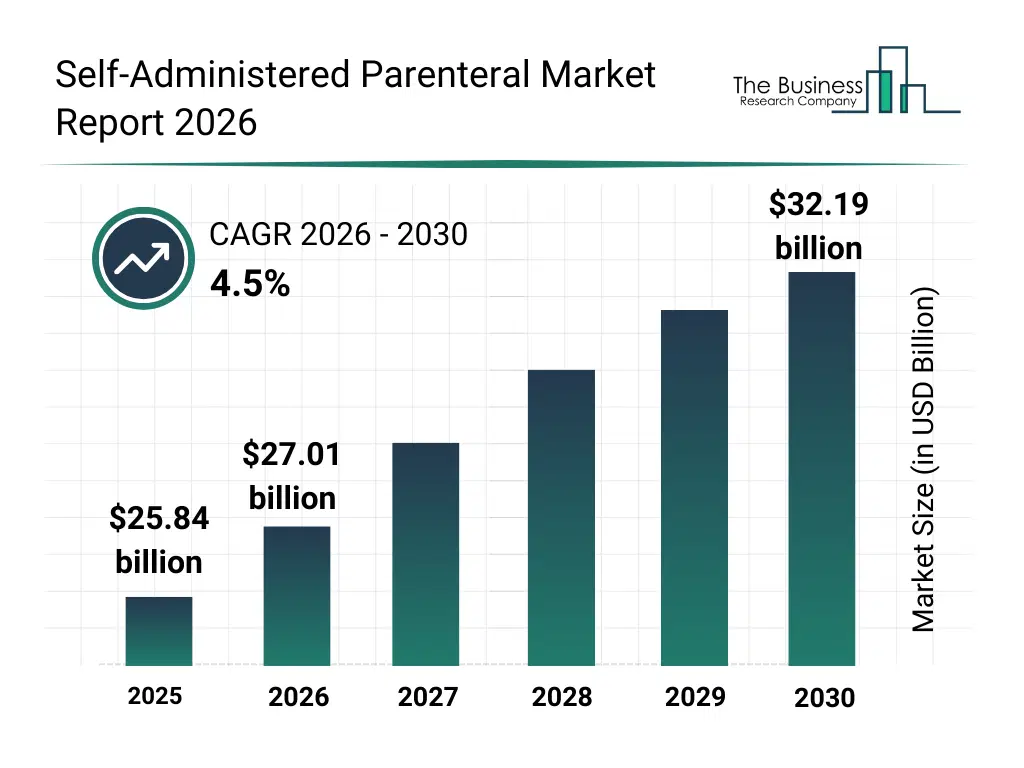
What Is The Self-Administered Parenteral Market Size and Share 2026?
The self-administered parenteral market size has grown steadily in recent years. It will grow from $25.84 billion in 2025 to $27.01 billion in 2026 at a compound annual growth rate (CAGR) of 4.5%. The growth in the historic period can be attributed to increasing chronic disease prevalence, adoption of home-based treatments, advances in prefilled syringes, rising awareness of self-injection therapy, biopharma growth.What Is The Self-Administered Parenteral Market Growth Forecast?
The self-administered parenteral market size is expected to see steady growth in the next few years. It will grow to $32.19 billion in 2030 at a compound annual growth rate (CAGR) of 4.5%. The growth in the forecast period can be attributed to growth of smart injector technologies, integration with mobile health apps, personalized dosage solutions, expansion in autoimmune and oncology therapy, regulatory support for self-administration. Major trends in the forecast period include smart auto-injectors, prefilled syringe adoption, on-demand therapy delivery, telemedicine-linked devices, personalized drug dosage solutions.
Global Self-Administered Parenteral Market Segmentation
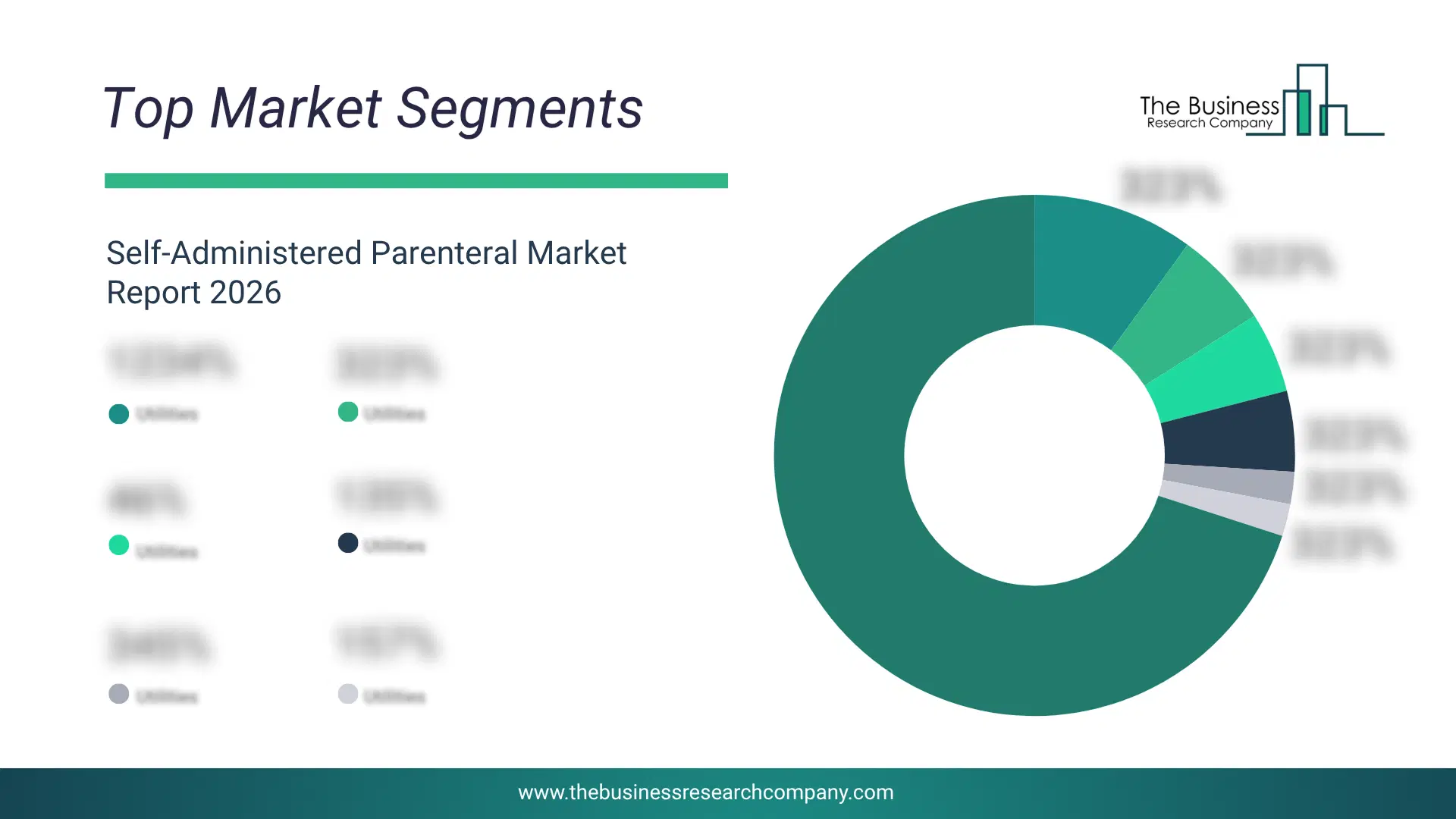
1) By Product: Pre-Filled Syringes, Autoinjectors, Pen Injectors, Other Products 2) By Usage: Disposable, Reusable 3) By Distribution Channel: Hospital Pharmacies, Online Pharmacies, Home Healthcare Providers, Specialty Clinics, Other Distribution Channels 4) By Application: Cardiovascular Diseases, Diabetes, Osteoporosis, Pain Management, Hormone Replacement, Other Applications Subsegments: 1) By Pre-Filled Syringes: Glass Pre-Filled Syringes, Plastic Pre-Filled Syringes 2) By Autoinjectors: Disposable Autoinjectors, Reusable Autoinjectors 3) By Pen Injectors: Insulin Pen Injectors, Growth Hormone Pen Injectors, Other Pen Injectors 4) By Other Products: Infusion Pumps, Needle-Free Injectors, Combination DevicesWhat Is The Driver Of The Self-Administered Parenteral Market?
The growing incidence of chronic diseases is expected to propel the growth of the self-administered parenteral market going forward. Chronic diseases are long-lasting medical conditions that generally progress slowly over time and often require ongoing management and treatment. Self-administered parenteral products are used in the management of chronic diseases to manage treatment independently, which can significantly improve adherence compared to oral medication. For instance, in June 2023, the Institute for Health Metrics and Evaluation, a US-based public health research institute, reported that over half a billion people globally were living with diabetes. This number is expected to more than double, reaching 1.3 billion people by 2050. Therefore, the growing incidence of chronic diseases is driving the growth of the self-administered parenteral industry.Key Players In The Global Self-Administered Parenteral Market
Major companies operating in the self-administered parenteral market are Pfizer Inc., Johnson & Johnson, Merck & Co. Inc., Sanofi S.A., AstraZeneca PLC, Roche Holding AG, Eli Lilly and Company, Novo Nordisk A S, Becton Dickinson and Company, Teva Pharmaceutical Industries Ltd., Mylan N V, Terumo Corporation, Catalent Inc., West Pharmaceutical Services Inc., Gerresheimer AG, Biocon Limited, Insulet Corporation, Halozyme Therapeutics Inc., Ypsomed AG, Antares Pharma Inc., SHL Medical AG, Owen Mumford Ltd., Novartis AG, Kaleo Inc., Haselmeier AG, ScPharmaceuticals Inc., Fresenius Kabi AG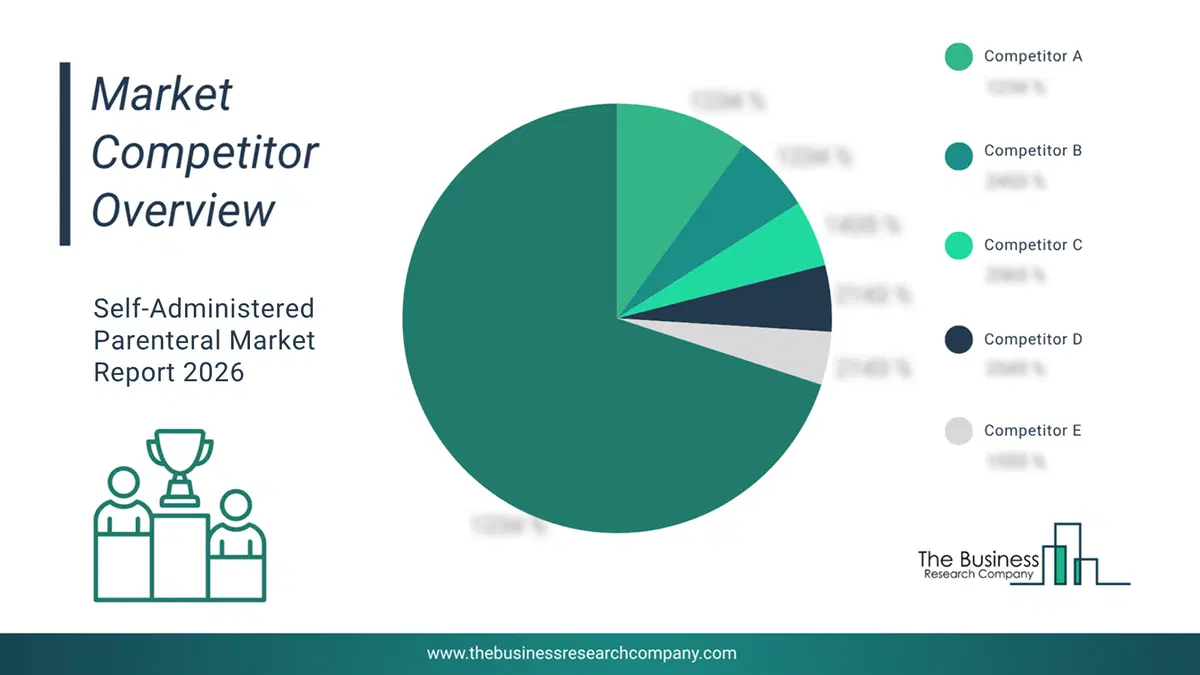
This chart is for illustrative purposes; the full report includes a detailed competitor analysis and comprehensive overview of the top 10 companies in the market.
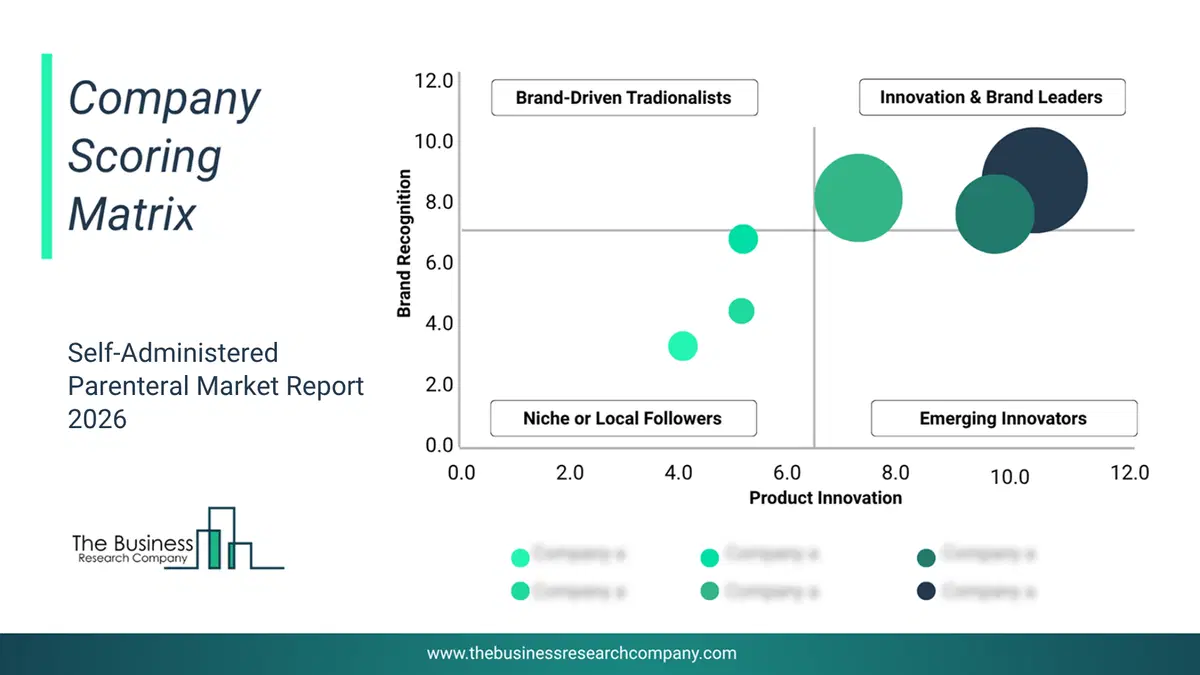
This chart maps companies by product innovation and brand strength, with bubble size indicating relative revenue, helping identify market leaders, challengers, and niche players. This is an illustrative chart; the full report provides a complete and accurate competitive analysis.
Global Self-Administered Parenteral Market Trends and Insights
Major companies operating in the self-administered parenteral market are focusing on developing innovative products, such as the UDENYCA autoinjector, to provide increased choice and control, ultimately making treatment more accessible to patients. An autoinjector is a medical device designed to deliver a single dose of a particular drug. It is an intuitive design with administration triggered immediately and reliably by push-on-skin activation. For instance, in May 2023, Coherus BioSciences Inc., a US-based biotech company, launched the UDENYCA autoinjector, a self-administered parenteral medication in the US. The UDENYCA Autoinjector is a single-dose, prefilled autoinjector that offers patients an additional administration option for pegfilgrastim. It is designed to be intuitive, with administration triggered by push-on-skin activation, allowing for reliable and immediate delivery of a full pegfilgrastim dose. Additionally, it offers several user-friendly features that promote successful delivery, including fast dosing, intuitive design, dual coverage, at-home and in-office use, and a reduction of febrile neutropenia risk.What Are Latest Mergers And Acquisitions In The Self-Administered Parenteral Market?
In May 2024, Roche Holding AG, a Switzerland‑based provider of pharmaceuticals and diagnostics, partnered with Enable Injections Inc. to combine its proprietary molecules with Enable’s enFuse wearable drug‑delivery technology, enabling high‑volume subcutaneous self‑administration instead of intravenous infusion. Enable Injections is a US-based company that specializes in providing wearable, on‑body drug delivery systems that can deliver large-volume small-molecule and biologic therapeutics subcutaneously.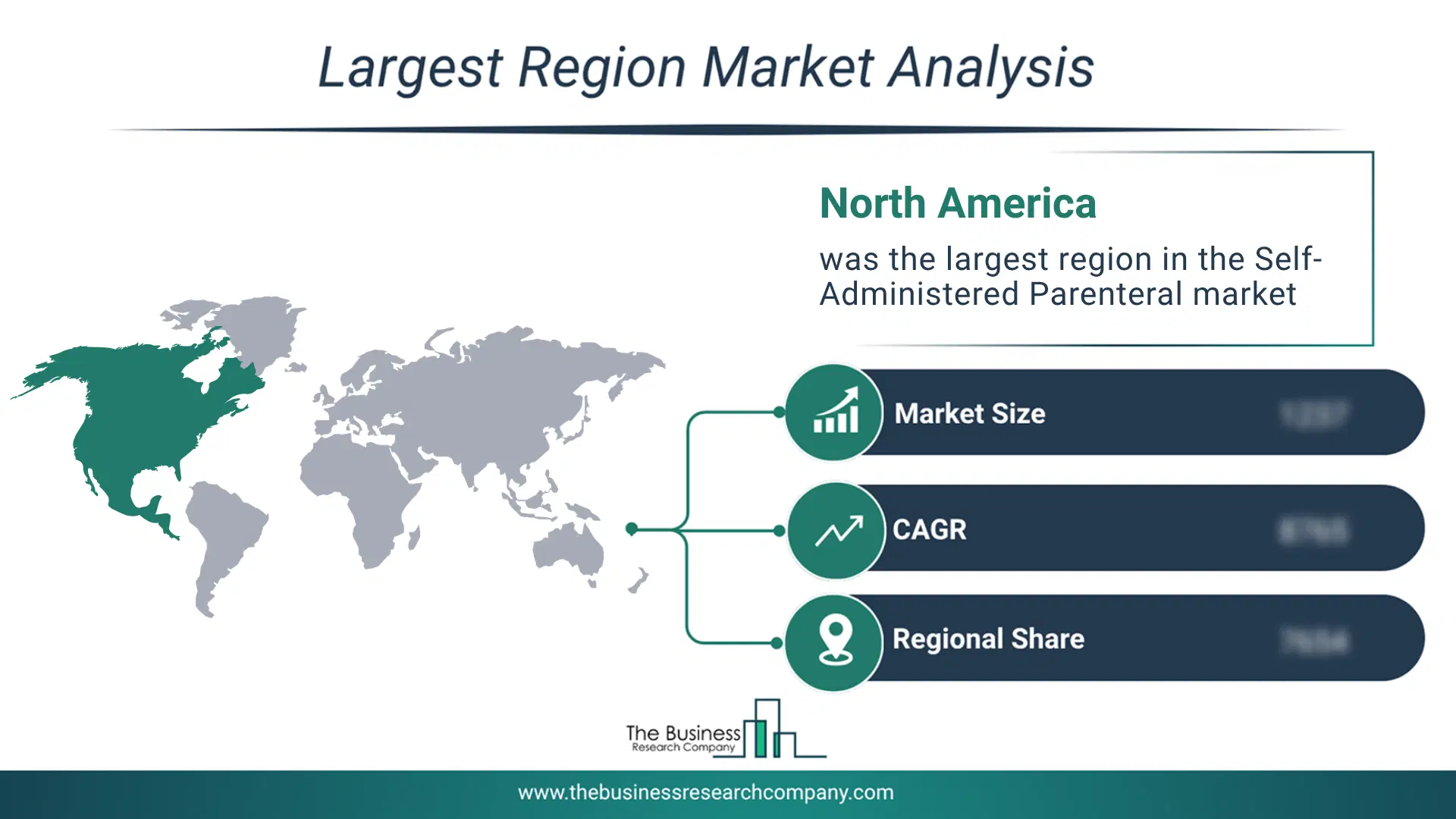
Regional Outlook
North America was the largest region in the self-administered parenteral market in 2025. The regions covered in this market report are Asia-Pacific, South East Asia, Western Europe, Eastern Europe, North America, South America, Middle East, Africa. The countries covered in this market report are Australia, Brazil, China, France, Germany, India, Indonesia, Japan, Taiwan, Russia, South Korea, UK, USA, Canada, Italy, Spain.What Defines the Self-Administered Parenteral Market?
The self-administered parenteral market consists of sales of biologic drugs, blood thinners, fertility drugs, osteoporosis medications, and insulin and inhaler devices. Values in this market are ‘factory gate’ values, that is, the value of goods sold by the manufacturers or creators of the goods, whether to other entities (including downstream manufacturers, wholesalers, distributors, and retailers) or directly to end customers. The value of goods in this market includes related services sold by the creators of the goods.How is Market Value Defined and Measured?
The market value is defined as the revenues that enterprises gain from the sale of goods and/or services within the specified market and geography through sales, grants, or donations in terms of the currency (in USD unless otherwise specified). The revenues for a specified geography are consumption values that are revenues generated by organizations in the specified geography within the market, irrespective of where they are produced. It does not include revenues from resales along the supply chain, either further along the supply chain or as part of other products.
This chart presents market attractiveness based on a quantitative evaluation of growth, competition, strategic alignment, and risk, offering a clear view of opportunity areas for decision-making. This chart is for illustrative purposes; the full report contains the complete analysis.

This chart highlights the Total Addressable Market (TAM) by estimating the maximum revenue opportunity using an assumption-driven approach, supporting strategic planning and opportunity sizing across markets. The chart is illustrative; the full report provides a more comprehensive analysis.
What Key Data and Analysis Are Included in the Self-Administered Parenteral Market Report 2026?
The self-administered parenteral market research report is one of a series of new reports from The Business Research Company that provides market statistics, including industry global market size, regional shares, competitors with the market share, detailed market segments, market trends and opportunities, and any further data you may need to thrive in the self-administered parenteral industry. The market research report delivers a complete perspective of everything you need, with an in-depth analysis of the current and future state of the industry.Self-Administered Parenteral Market Report Forecast Analysis
| Report Attribute | Details |
|---|---|
| Market Size Value In 2026 | $27.01 billion |
| Revenue Forecast In 2030 | $32.19 billion |
| Growth Rate | CAGR of 4.5% from 2026 to 2030 |
| Base Year For Estimation | 2025 |
| Actual Estimates/Historical Data | 2020-2025 |
| Forecast Period | 2026 - 2030 |
| Market Representation | Revenue in USD Billion and CAGR from 2026 to 2030 |
| Segments Covered | Product, Usage, Distribution Channel, Application |
| Regional Scope | Asia-Pacific, Western Europe, Eastern Europe, North America, South America, Middle East, Africa |
| Country Scope | The countries covered in the report are Australia, Brazil, China, France, Germany, India, Indonesia, Japan, Taiwan, Russia, South Korea, UK, USA, Canada, Italy, Spain |
| Key Companies Profiled | Pfizer Inc., Johnson & Johnson, Merck & Co. Inc., Sanofi S.A., AstraZeneca PLC, Roche Holding AG, Eli Lilly and Company, Novo Nordisk A S, Becton Dickinson and Company, Teva Pharmaceutical Industries Ltd., Mylan N V, Terumo Corporation, Catalent Inc., West Pharmaceutical Services Inc., Gerresheimer AG, Biocon Limited, Insulet Corporation, Halozyme Therapeutics Inc., Ypsomed AG, Antares Pharma Inc., SHL Medical AG, Owen Mumford Ltd., Novartis AG, Kaleo Inc., Haselmeier AG, ScPharmaceuticals Inc., Fresenius Kabi AG |
| Customization Scope | Request for Customization |
| Pricing And Purchase Options | Explore Purchase Options |