
Self-Healing Concrete Market Report 2026
Global Outlook – By Type (Biotic, Abiotic), By Form (Intrinsic, Extrinsic, Capsule Based, Vascular), By End User (Residential, Industrial, Commercial, Civil Infrastructure) – Market Size, Trends, Strategies, and Forecast to 2030
Self-Healing Concrete Market Overview
• Self-Healing Concrete market size has reached to $1.4 billion in 2025 • Expected to grow to $3.75 billion in 2030 at a compound annual growth rate (CAGR) of 21.6% • Growth Driver: Growth Of Construction Industry Propelling The Self-Healing Concrete Market • Market Trend: Innovative Self-Healing Concrete Products Transforming The Construction Industry • Europe was the largest region in 2025.What Is Covered Under Self-Healing Concrete Market?
Self-healing concrete is a type of concrete with an innovative design to repair cracks that develop over time without needing external intervention. Its use can contribute to improved durability, reduced maintenance costs, and increased sustainability in construction projects. The main type of self-healing concrete are biotic and abiotic. Biotic self-healing concrete is a type of concrete that has the ability to heal itself when cracks appear. This is achieved through the inclusion of agents such as minerals, bacteria, and other microorganisms that promote healing. It comes in intrinsic, extrinsic, capsule based, and vascular form that are used in residential, industrial, commercial and civil infrastructure purpose.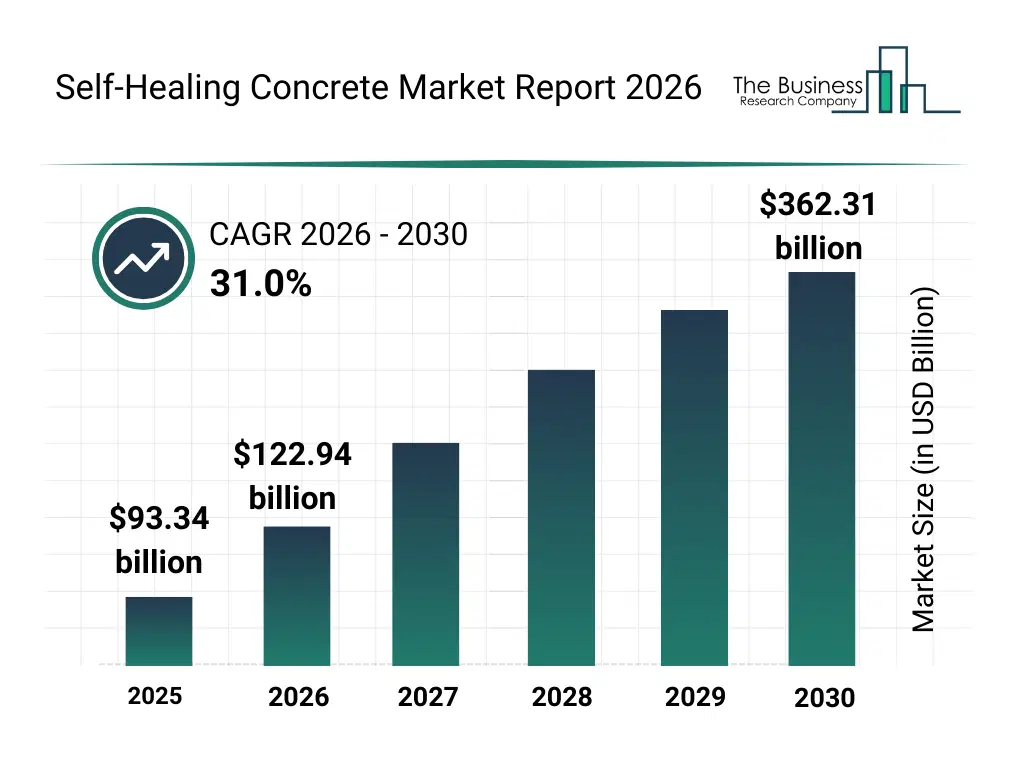
What Is The Self-Healing Concrete Market Size and Share 2026?
The self-healing concrete market size has grown exponentially in recent years. It will grow from $1.4 billion in 2025 to $1.71 billion in 2026 at a compound annual growth rate (CAGR) of 22.1%. The growth in the historic period can be attributed to increasing adoption of durable construction materials, rising infrastructure repair needs, early research into bacterial concrete, expansion of large-scale civil projects, growth in advanced concrete additives.What Is The Self-Healing Concrete Market Growth Forecast?
The self-healing concrete market size is expected to see exponential growth in the next few years. It will grow to $3.75 billion in 2030 at a compound annual growth rate (CAGR) of 21.6%. The growth in the forecast period can be attributed to rising use of nano-enhanced healing agents, expansion of automated structural monitoring, increasing investment in sustainable construction technologies, growth in high-performance infrastructure projects, rising adoption of smart material systems. Major trends in the forecast period include growing use of sustainable construction materials, increased adoption of automated crack monitoring, expansion of smart infrastructure solutions, rise of durable concrete formulations, growth in performance-enhancing additives.
Global Self-Healing Concrete Market Segmentation
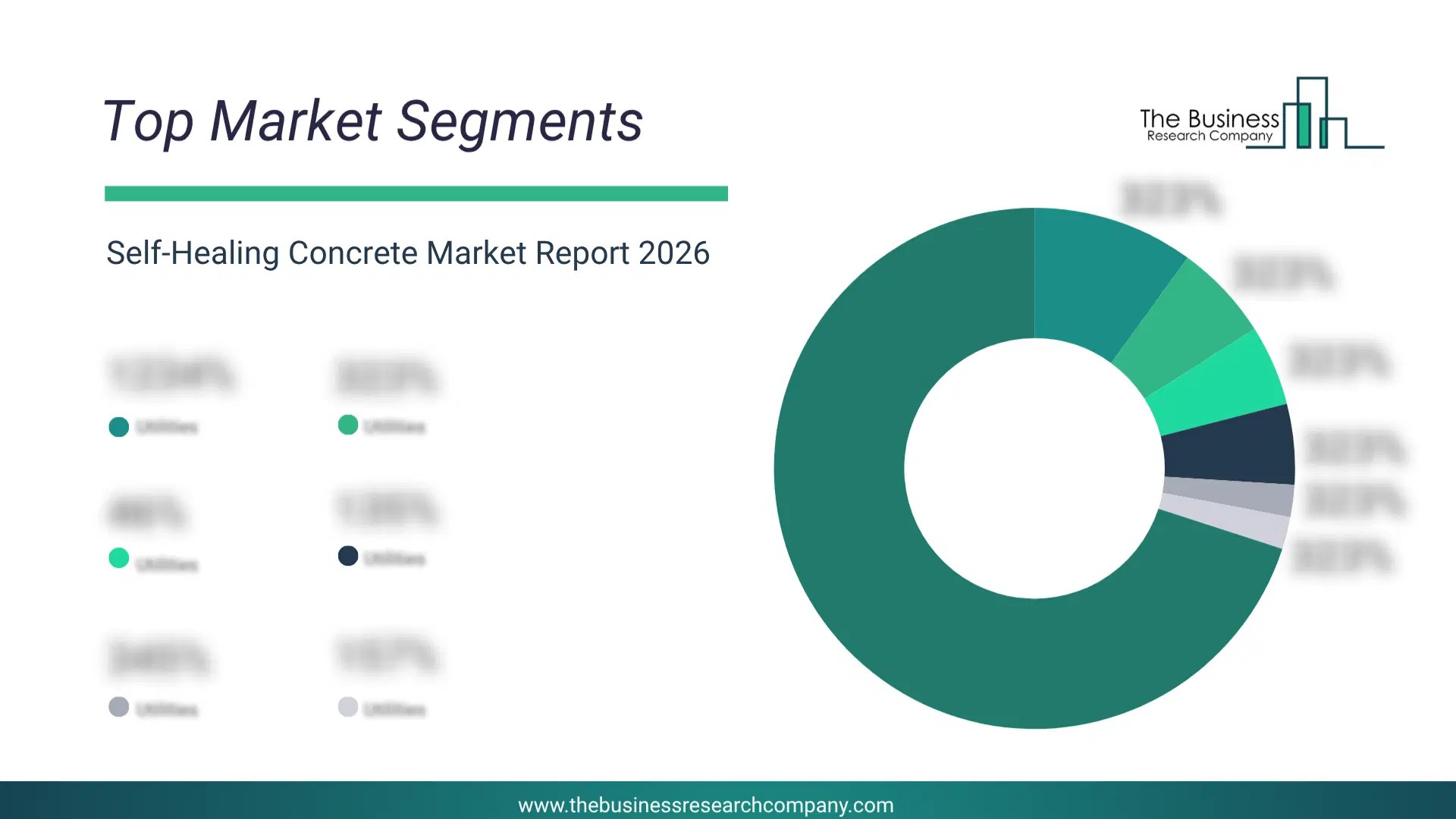
2) By Form: Intrinsic, Extrinsic, Capsule Based, Vascular 3) By End User: Residential, Industrial, Commercial, Civil Infrastructure Subsegments: 1) By Biotic: Bacterial-Based Healing Systems, Bio-Based Additives 2) By Abiotic: Chemical Healing Agents, Mineral-Based Healing AgentsWhat Is The Driver Of The Self-Healing Concrete Market?
The ascending growth of the construction industry globally is expected to propel the growth of the self-healing concrete market going forward. The construction industry encompasses various activities related to the planning, design, development, and execution of structures, facilities, and infrastructure projects. Self-healing concrete is used in the construction industry to repair cracks and damage autonomously by mitigating the progression of micro-cracks; it can significantly extend the lifespan of infrastructure. For instance, In July 2024, according to the US Census Bureau, a US-based government agency, the value of construction operations increased from $2.01 trillion in May 2023 to $2.14 trillion in May 2024. Therefore, the growth of the construction industry is driving the self-healing concrete industry.Key Players In The Global Self-Healing Concrete Market
Major companies operating in the self-healing concrete market are BASF SE, Holcim, HeidelbergCement, CEMEX S.A.B. de C.V., Sika AG, Acciona Infraestructuras S.A., Akzo Nobel N.V., RPM International, Wacker Chemie AG, Tarmac, Breedon Group plc, Corbion, GCP Applied Technologies, COWI A/S, Kryton, Giatec Scientific Inc., Xypex Chemical Corporation, Polycoat Products, PENETRON, Fescon Oy., Oscrete Construction Products, Buzzi Unicem USA, Hycrete Inc., Kwik Bond Polymers, Avecom N.V., Green-Basilisk BV, Firth, Basilisk, Devan Micropolis, Comercializadora Espanola De Innovaciones Y Materiales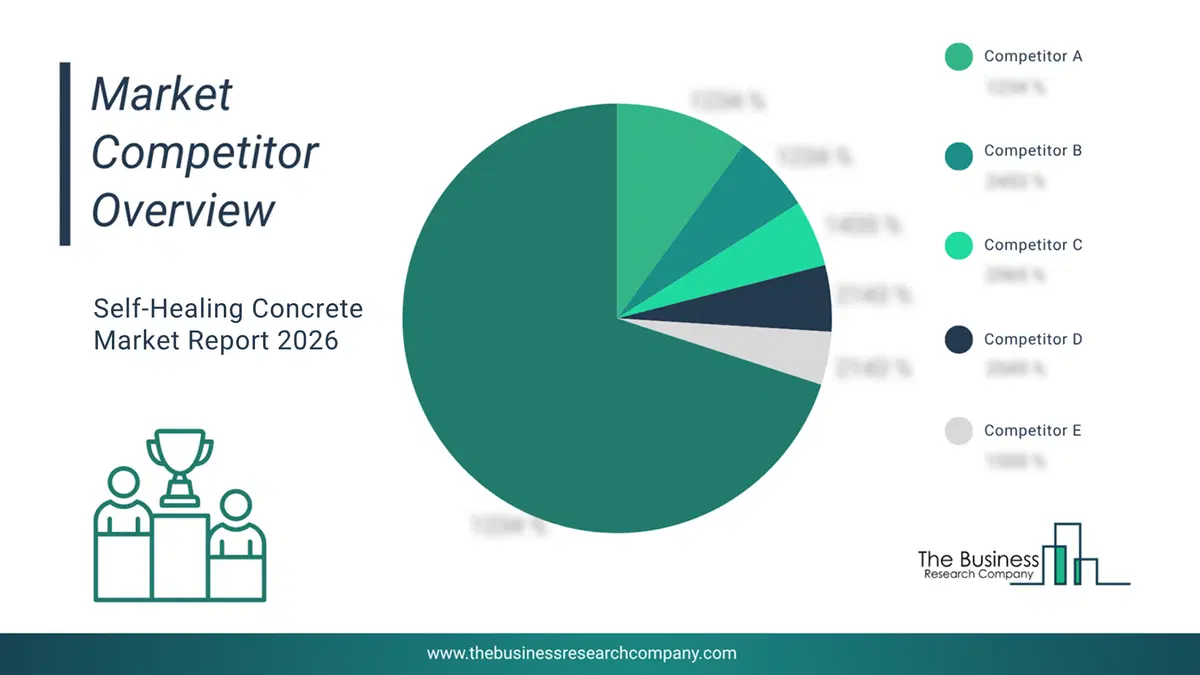
This chart is for illustrative purposes; the full report includes a detailed competitor analysis and comprehensive overview of the top 10 companies in the market.
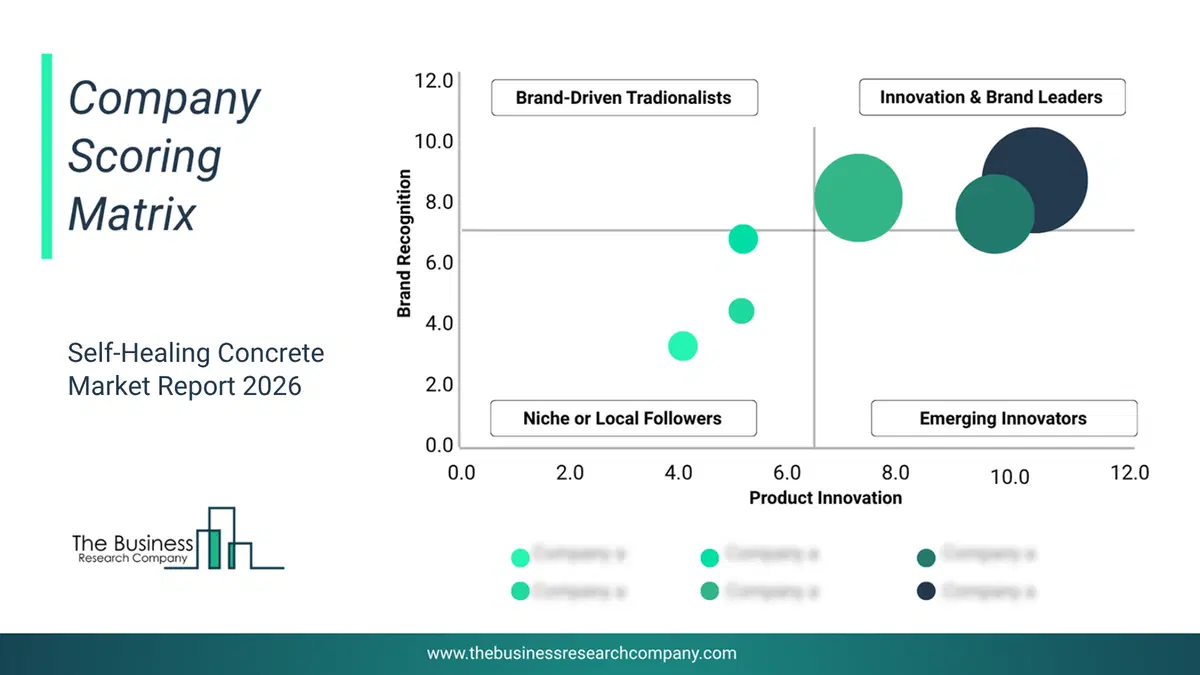
This chart maps companies by product innovation and brand strength, with bubble size indicating relative revenue, helping identify market leaders, challengers, and niche players. This is an illustrative chart; the full report provides a complete and accurate competitive analysis.
Global Self-Healing Concrete Market Trends and Insights
Major companies operating in the self-healing concrete market are focusing on developing innovative products, such as autonomous healing agent-infused concrete — a concrete mixture embedded with microcapsules or bacteria that activate upon crack formation to release a healing substance and restore structural integrity. For instance, in April 2025, Aizawa Concrete Corporation, a Japan-based construction materials company, introduced the product “Basilisk Self-Healing Concrete,” which features bacterial spores for mineral precipitation, enhanced microcapsule resilience under cyclic stress, and compatibility with standard concrete mixes. This trend supports increased infrastructure durability, lower lifecycle maintenance costs and reduced carbon emissions. It also accelerates material differentiation and premium pricing. However, it involves higher upfront cost compared to conventional concrete, requires contractor education and long-term performance validation remains limited.What Are Latest Mergers And Acquisitions In The Self-Healing Concrete Market?
In June 2024, Saint-Gobain, a France-based manufacturer of construction materials including high-performance solutions for construction chemicals, acquired Fosroc for $1.025 billion in cash. With this acquisition, Saint-Gobain aims to reinforce its worldwide presence in construction chemicals, particularly strengthening its footprint in high-growth emerging markets such as India and the Middle East, expanding its profitable growth platform in the sector. Fosroc is a UAE-based provider of construction chemical solutions, including admixtures and additives for concrete and cement, adhesives, sealants, waterproofing, concrete repair, and flooring.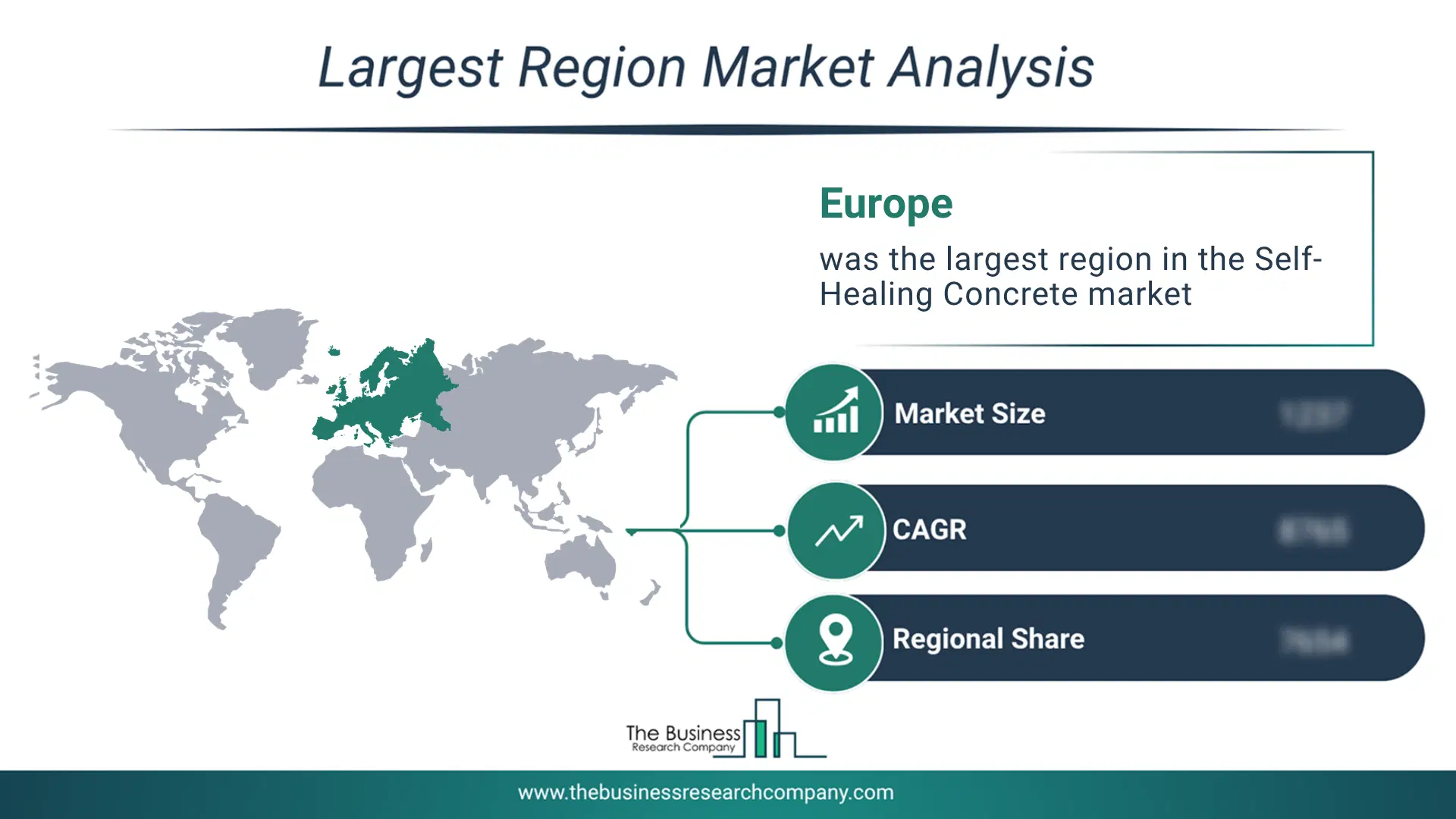
Regional Outlook
Europe was the largest region in the self-healing concrete market in 2025. The regions covered in this market report are Asia-Pacific, South East Asia, Western Europe, Eastern Europe, North America, South America, Middle East, Africa. The countries covered in this market report are Australia, Brazil, China, France, Germany, India, Indonesia, Japan, Taiwan, Russia, South Korea, UK, USA, Canada, Italy, Spain.What Defines the Self-Healing Concrete Market?
The self-healing concrete market consists of sales of bacterial concrete, polymer-based self-healing, mineral precipitation and nano-additives. Values in this market are ‘factory gate’ values, that is the value of goods sold by the manufacturers or creators of the goods, whether to other entities (including downstream manufacturers, wholesalers, distributors and retailers) or directly to end customers. The value of goods in this market includes related services sold by the creators of the goods.How is Market Value Defined and Measured?
The market value is defined as the revenues that enterprises gain from the sale of goods and/or services within the specified market and geography through sales, grants, or donations in terms of the currency (in USD unless otherwise specified). The revenues for a specified geography are consumption values that are revenues generated by organizations in the specified geography within the market, irrespective of where they are produced. It does not include revenues from resales along the supply chain, either further along the supply chain or as part of other products.
This chart presents market attractiveness based on a quantitative evaluation of growth, competition, strategic alignment, and risk, offering a clear view of opportunity areas for decision-making. This chart is for illustrative purposes; the full report contains the complete analysis.

This chart highlights the Total Addressable Market (TAM) by estimating the maximum revenue opportunity using an assumption-driven approach, supporting strategic planning and opportunity sizing across markets. The chart is illustrative; the full report provides a more comprehensive analysis.
What Key Data and Analysis Are Included in the Self-Healing Concrete Market Report 2026?
The self-healing concrete market research report is one of a series of new reports from The Business Research Company that provides market statistics, including industry global market size, regional shares, competitors with the market share, detailed market segments, market trends and opportunities, and any further data you may need to thrive in the self-healing concrete industry. The market research report delivers a complete perspective of everything you need, with an in-depth analysis of the current and future state of the industry.Self-Healing Concrete Market Report Forecast Analysis
| Report Attribute | Details |
|---|---|
| Market Size Value In 2026 | $1.71 billion |
| Revenue Forecast In 2030 | $3.75 billion |
| Growth Rate | CAGR of 21.6% from 2026 to 2030 |
| Base Year For Estimation | 2025 |
| Actual Estimates/Historical Data | 2020-2025 |
| Forecast Period | 2026 - 2030 |
| Market Representation | Revenue in USD Billion and CAGR from 2026 to 2030 |
| Segments Covered | Type, Form, End User |
| Regional Scope | Asia-Pacific, Western Europe, Eastern Europe, North America, South America, Middle East, Africa |
| Country Scope | The countries covered in the report are Australia, Brazil, China, France, Germany, India, Indonesia, Japan, Taiwan, Russia, South Korea, UK, USA, Canada, Italy, Spain. |
| Key Companies Profiled | BASF SE, Holcim, HeidelbergCement, CEMEX S.A.B. de C.V., Sika AG, Acciona Infraestructuras S.A., Akzo Nobel N.V., RPM International, Wacker Chemie AG, Tarmac, Breedon Group plc, Corbion, GCP Applied Technologies, COWI A/S, Kryton, Giatec Scientific Inc., Xypex Chemical Corporation, Polycoat Products, PENETRON, Fescon Oy., Oscrete Construction Products, Buzzi Unicem USA, Hycrete Inc., Kwik Bond Polymers, Avecom N.V., Green-Basilisk BV, Firth, Basilisk, Devan Micropolis, Comercializadora Espanola De Innovaciones Y Materiales |
| Customization Scope | Request for Customization |
| Pricing And Purchase Options | Explore Purchase Options |